
The history of the baby stroller shows how one parenting tool changed with society, cities, safety expectations, and family life. What began as an 18th-century luxury for wealthy families became a practical everyday aid for parents who needed safer, easier ways to move with babies. As stroller design evolved, each major change reflected a new idea about childhood, mobility, comfort, and independence.
Quick Answer
The baby stroller evolved from an ornate 18th-century carriage for wealthy families into a common parenting essential. Key changes included pushable frames, reversible seats, safer wheels, folding designs, jogging models, and modern harness systems. Its history reflects changing views on childhood, public life, women’s mobility, safety, and modern convenience.
Key Takeaways
- Early baby strollers were status symbols, often built for wealthy families rather than everyday public use.
- Design shifted from decorative carriages to practical pushchairs as cities, sidewalks, and middle-class parenting changed.
- Royal approval, especially Queen Victoria’s interest in perambulators, helped make strollers more fashionable and widely accepted.
- Modern strollers focus on safety, portability, comfort, and lifestyle needs, from compact travel models to jogging strollers.
- The stroller’s future will likely center on lighter materials, sustainability, smarter features, and more adaptable designs.
The Origin of the Baby Stroller
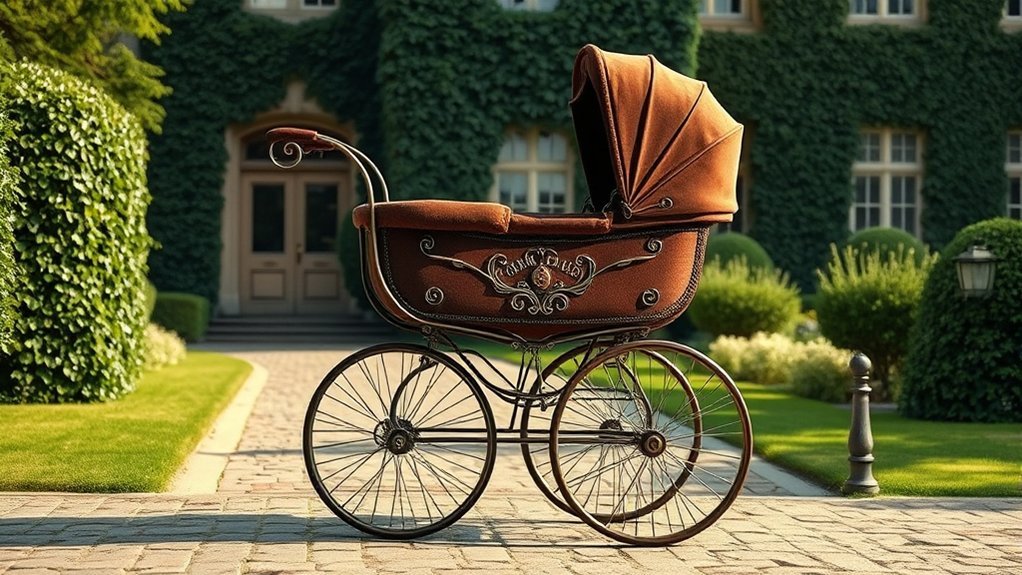
Although people have carried infants for centuries in arms, slings, baskets, and carts, the baby stroller as a wheeled child carriage began to take shape in the early 18th century. One of the best-known early examples was William Kent’s 1733 carriage for the Duke of Devonshire’s children. It featured a decorative, shell-shaped basket on wheels and was designed to be pulled by a small animal, such as a goat or pony.
That early design was more of a fashionable carriage than a practical stroller. It showed wealth, status, and leisure, but it also marked the beginning of a major shift in parenting culture. Families were starting to see outdoor movement, fresh air, and visible public child-rearing as part of family life.
By the 1800s, the stroller moved closer to the tool parents recognize today. Benjamin Potter Crandall is often associated with early American baby carriage designs, including pushable models. Later designs added better steering, braking ideas, and sturdier frames. The perambulator, often shortened to “pram,” became more popular in the Victorian era, especially after royal and upper-class families helped make it fashionable.
William H. Richardson’s 1889 reversible baby carriage was another important step. His design allowed the child to face either the caregiver or the direction of travel, and it improved maneuverability compared with earlier rigid designs. Each innovation served a practical need, but it also reflected a larger social change: parents wanted more freedom to move through public spaces with their children.
The stroller’s history is not just about wheels and frames. It is also a story about status, public space, safety, and the growing visibility of family life outside the home.
Evolution of Design and Functionality
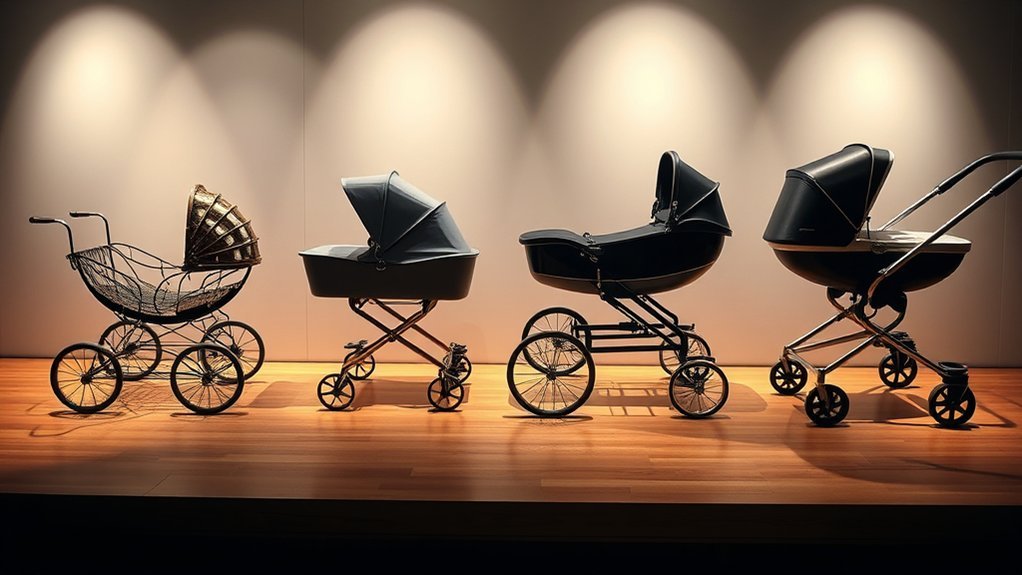
As you explore the evolution of baby strollers, you can see a clear transformation in both design and functionality. Early strollers often focused on style, status, and decorative detail. Later designs focused more on comfort, control, portability, safety, and daily use.
Today’s strollers reflect a long pattern of improvement. Parents now expect features that earlier families would not have imagined, including folding frames, swivel wheels, padded seats, storage baskets, adjustable handles, weather covers, car seat compatibility, and multi-point harnesses. This evolution shows how one simple idea became a highly specialized parenting product.
Early Designs and Materials
In the evolution of baby strollers, early designs and materials shaped both function and style. The first models often used wood, metal, wicker, leather, fabric, and decorative trim. These materials made the stroller look refined, but they could also make it heavy and hard to maneuver.
Early stroller design developed through several important stages:
- Wicker Shells: William Kent’s early carriage used a decorative shell-shaped basket that reflected luxury more than everyday practicality.
- Pushable Designs: Benjamin Potter Crandall helped move stroller design toward models that caregivers could push themselves.
- Three-Wheel Perambulators: Victorian-era designs made baby transport more visible and fashionable in public spaces.
- Reversible Bassinets: William H. Richardson’s carriage design improved the user experience by allowing the child to face different directions.
- Stronger Frames: Wood and metal construction helped strollers support more weight, though early models were still bulky.
These early materials and design influences laid the groundwork for more accessible and versatile strollers. They also reflected evolving family needs, from public status to daily convenience.
Functional Innovations Over Time
While early strollers often prioritized ornate designs, later models turned baby transport into a practical necessity for modern families. William Kent’s early carriage focused on visual appeal. By the 1800s, designers began to focus more on movement, balance, and caregiver control.
Benjamin Potter Crandall’s pushable stroller designs helped make strollers easier for caregivers to use without an animal or attendant. William H. Richardson’s 1889 reversible carriage then improved everyday usability with a seat that could change direction. These features helped parents interact with their child during walks or turn the child outward to see the surroundings.
The 20th century brought even more practical changes. Collapsible frames made storage easier. Lightweight metals reduced strain. The 1965 umbrella stroller introduced a compact folding style that made travel and city use much simpler. Later, jogging strollers gave active parents a safer way to walk or run with children on smoother outdoor paths.
Modern strollers now combine multiple priorities at once. A single model may need to fold quickly, fit in a car trunk, recline for naps, roll over uneven sidewalks, hold shopping bags, and keep a child securely restrained. That mix of comfort, safety, and portability defines the stroller market today.
Modern Safety Features
Modern baby strollers have changed greatly to prioritize safety, stability, and ease of use. Current designs usually include features that protect the child while also helping the caregiver stay in control.
- Five-point harness systems help secure the child at the shoulders, waist, and between the legs.
- Parking brakes help keep the stroller from rolling when stopped.
- Larger wheels and suspension systems can improve handling and create a smoother ride.
- Adjustable handlebars help different caregivers push with better posture.
- Reclining seats support naps and help younger children rest more comfortably.
- Locking folding mechanisms reduce the risk of accidental collapse during use.
These advancements reflect a stronger commitment to safety and function. They also show how stroller design now responds to real parenting situations, from crowded sidewalks to parks, airports, and public transit.
Warning: A stroller’s safety depends on proper use as much as design. Caregivers should use the harness, lock the brakes when parked, avoid hanging heavy bags from the handle, and follow the stroller’s weight and age limits.
Legal and Social Challenges Faced

As you look at the history of baby strollers, you also see legal and social friction. Strollers did not immediately fit into public life. In crowded cities, they could be viewed as obstacles on narrow paths. Some people also saw them as luxuries rather than practical tools for family care.
Over time, perceptions shifted. Strollers moved from elite status objects to common tools for modern parenting. This change highlights broader shifts in public space, city design, women’s mobility, family independence, and child-rearing practices.
Public Path Restrictions
In the late 19th century, moving through public spaces with a baby stroller could be difficult. Narrow sidewalks, crowded streets, and strict public expectations made stroller use more controversial than it is today. Some communities treated strollers as public obstructions, especially when city paths were not designed for them.
Public path restrictions reflected several social concerns:
- Bans or objections in busy city footpaths where space was limited.
- Social stigma that framed strollers as unnecessary luxuries.
- Legal pressure that limited caregivers’ mobility and independence.
- Practical difficulty moving through narrow sidewalks, steps, curbs, and crowded markets.
These obstacles show that stroller acceptance was not automatic. Families had to adapt to public spaces that were often not built with children, caregivers, or wheeled mobility in mind.
Shifting Perceptions Over Time
Public path restrictions once created legal and social challenges for people using baby strollers, especially women navigating urban environments with children. In the late 19th century, societal perceptions often treated strollers as fashionable objects for wealthier families instead of everyday tools.
That view changed as more families used strollers and as public child-rearing became more accepted. Queen Victoria’s endorsement and upper-class adoption helped make the perambulator fashionable, but wider middle-class use helped make it practical. As cities grew and families spent more time outside the home, the stroller became more useful.
By the early 20th century, strollers supported greater mobility. They made walks, errands, and social outings easier for caregivers and children. This acceptance reflected a broader shift toward recognizing accessible parenting tools as part of modern family life.
Innovations in Safety and Materials
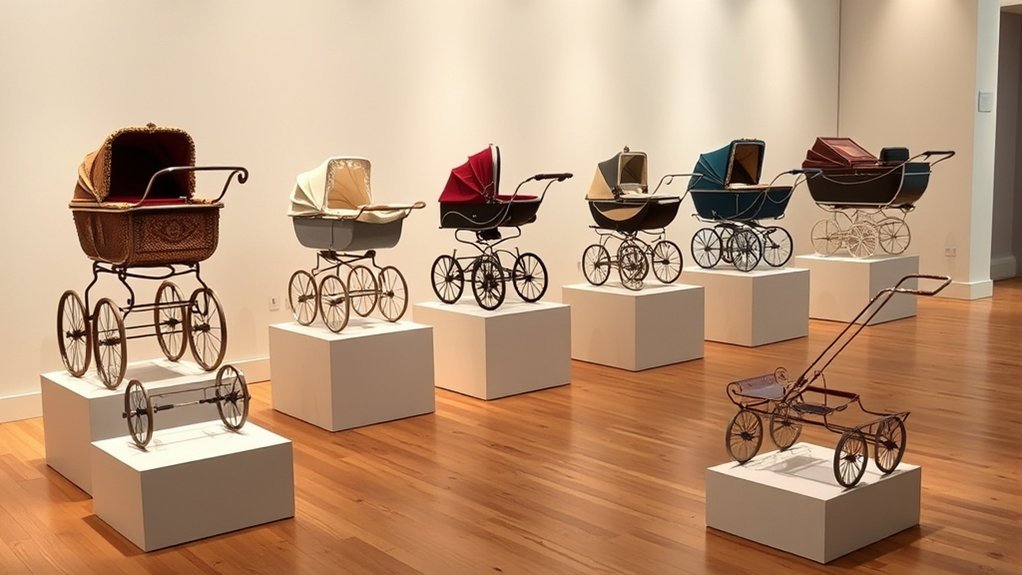
While the evolution of the baby stroller has many causes, innovations in safety and materials stand out as some of the most important developments. Better materials made strollers lighter and easier to push. Better safety features helped protect children during everyday use.
Consider these key innovations:
- Spring Suspension: Designs with improved suspension helped create a more comfortable ride on uneven paths.
- Rubberized Tires: Rubber tires helped reduce vibration and made stroller rides smoother.
- Multi-Point Harness Systems: Modern strollers often use these restraints to secure a child more effectively.
- Lightweight Materials: Aluminum, plastics, and engineered fabrics improved maneuverability for parents.
- Foldable Frames: Collapsible designs made strollers easier to store, carry, and transport.
- Weather Protection: Canopies, rain covers, and ventilated fabrics helped strollers adapt to outdoor conditions.
Today, stroller safety focuses on stability, restraint, braking, folding security, and age-appropriate use. These changes help caregivers navigate daily life with more confidence while keeping children more comfortable.
Note: The biggest stroller improvements often came from everyday problems: heavy frames, rough wheels, poor steering, awkward storage, and limited child restraint. Each solved problem made strollers more useful for ordinary families.
The Impact of Royal Endorsement

As Queen Victoria embraced baby carriages and perambulators in the mid-19th century, her public influence helped change how society viewed the stroller. Royal approval made the stroller more fashionable and respectable. It also helped move the product from a rare luxury toward a more accepted parenting item.
This royal influence did not make strollers affordable for everyone overnight. However, it helped create demand. As manufacturers produced more models, the stroller became more visible among the growing middle class. The term “perambulator” became strongly associated with Victorian family life, outdoor walks, and respectable parenting.
| Impact of Royal Endorsement | Resulting Societal Change |
|---|---|
| Royal endorsement of strollers | Shift from luxury symbol toward accepted parenting aid |
| Increased demand for stylish models | Greater visibility across social classes |
| Association with refinement and status | More interest from manufacturers and urban families |
| Public approval from elite families | Stronger connection between outdoor walks and good child care |
Through these changes, you can see how royal approval shaped consumer behavior and public perception. The stroller became more than a baby carrier. It became a sign of modern parenting, social aspiration, and family mobility.
Modern Developments and Market Trends
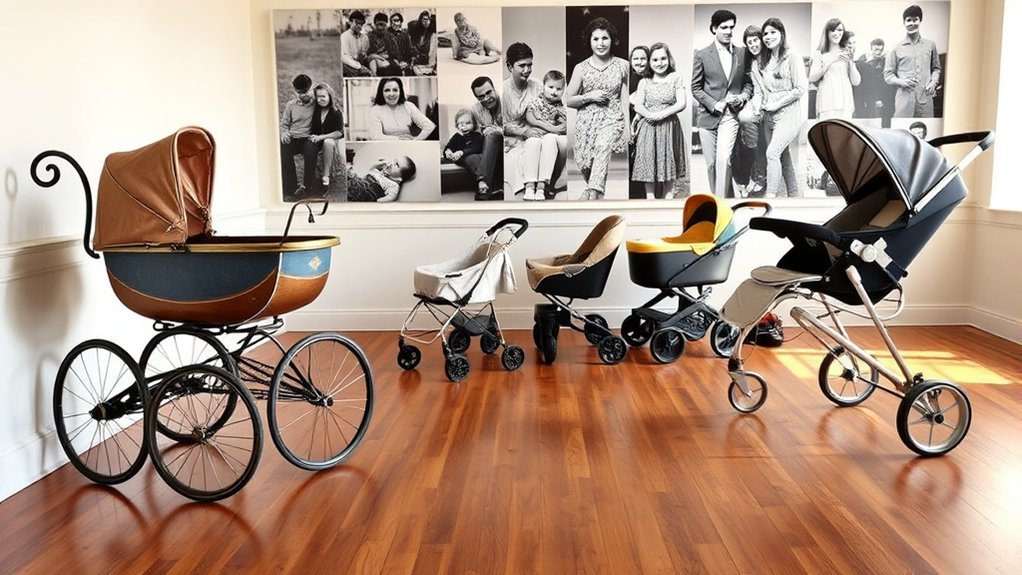
Royal endorsement helped shape early perceptions, but modern stroller design now responds to many different family lifestyles. Today’s market includes compact city strollers, full-size travel systems, jogging strollers, double strollers, lightweight umbrella strollers, wagon-style models, and luxury designs.
You’ll find strollers that blend function with style, appealing to many budgets, homes, cars, and routines. Parents now compare strollers based on weight, fold size, wheel quality, suspension, storage, car seat compatibility, seat recline, terrain handling, and long-term value.
Common modern developments include:
- Umbrella Strollers: Lightweight frames and compact folds for errands, travel, and quick trips.
- Jogging Strollers: Three-wheel designs with larger tires for active parents on suitable paths.
- Luxury Models: Premium fabrics, refined frames, modular seats, and high-end styling.
- Travel Systems: Strollers that pair with infant car seats for easier transfers.
- Convertible Strollers: Models that adapt from single to double seating as a family grows.
- Compact Travel Strollers: Small-fold designs made for apartments, public transit, and air travel.
As you explore these options, you can see how brands emphasize user-friendly designs. Parents want strollers that feel safe, fold quickly, fit daily routines, and support children through different stages.
Pro Tip: When comparing modern strollers, focus first on your daily environment. A city parent may need a compact fold and strong swivel wheels, while a suburban parent may value storage, car seat compatibility, and a smoother ride.
Cultural Significance and Future Innovations

Baby strollers have transformed from luxury symbols in the 18th century to everyday tools in modern parenting. That change illustrates deep shifts in family life, city design, consumer culture, and ideas about childhood. A stroller now represents care, convenience, independence, and adaptation.
Strollers also reflect different parenting styles. Some families choose compact models for small homes and transit. Others choose rugged strollers for parks and uneven paths. Some prefer stylish premium models, while others prioritize budget, durability, or easy cleaning.
| Cultural Symbolism | Future Technology |
|---|---|
| Represents care | Smart technology integration |
| Reflects family dynamics | Sustainability innovations |
| Indicates consumer trends | Adaptable designs for diversity |
| Supports caregiver independence | Lighter, safer, more modular frames |
The rise of jogging strollers shows how fitness and parenting can overlap. Compact travel strollers show how urban living and global travel affect product design. Modular strollers show how families want products that grow with their needs.
Looking ahead, future stroller innovation will likely focus on sustainability, lighter materials, safer folding systems, better storage, improved all-terrain handling, and smarter accessories. Strollers will continue to symbolize the changing nature of family life, balancing practical needs with comfort and design.
Related Guides
Frequently Asked Questions
Who invented the first baby stroller?
William Kent is often credited with creating one of the earliest recognizable baby carriages in 1733. His design was made for the Duke of Devonshire’s children and looked more like a decorative wheeled carriage than a modern stroller.
When did baby strollers become popular in the United States?
Baby strollers became more common in the United States during the 19th and early 20th centuries as carriage designs improved, cities expanded, and middle-class families adopted more outdoor routines. Their popularity grew further as folding and lightweight designs made them easier to use.
What materials were used in early baby strollers?
Early baby strollers and carriages often used wood, wicker, metal, leather, fabric, and decorative trim. Wealthier families could afford more ornate materials, while later mass-market models focused more on strength, weight, and practical daily use.
How have baby strollers affected parenting styles?
Baby strollers gave caregivers more freedom to leave the home, run errands, take walks, and include children in public life. They also helped normalize outdoor routines, social outings, and shared caregiving in public spaces.
Are there any unique stroller designs from different cultures?
Yes. Stroller design often reflects local lifestyles. Compact strollers suit dense urban areas and public transit, while larger weather-resistant models are common in places where outdoor walks are part of daily family life. Design priorities can vary by climate, housing size, transportation habits, and parenting culture.
Why were early strollers considered luxury items?
Early strollers were expensive, decorative, and often built for families with wealth, leisure time, and domestic help. They were less about quick errands and more about status, display, and fashionable outdoor child care.
What was the biggest change in stroller design?
The biggest change was the shift from heavy, decorative carriages to practical, caregiver-pushed strollers. Later improvements, such as reversible seats, folding frames, better brakes, rubber tires, and harness systems, made strollers safer and easier for everyday families.
Conclusion
In understanding the baby stroller’s evolution, you see how it transformed from a royal and aristocratic luxury into an essential parenting tool. Its journey reflects changes in class, city life, safety standards, public space, and everyday family routines.
Today, a stroller does far more than carry a child. It helps parents move through busy sidewalks, parks, airports, stores, and neighborhoods with greater comfort and control. Since those early animal-pulled carriages, stroller design has moved toward lighter frames, safer restraints, smoother wheels, and more flexible layouts.
The future will likely bring even more practical improvements, from sustainable materials to smarter folding systems and adaptable designs. Yet the stroller’s core purpose will remain the same: helping caregivers keep little ones safe, comfortable, and included in daily life.
