
There is no single age when every baby can safely face forward in a stroller. Around 6 months is a common starting point for many upright stroller seats, but the safest answer depends on your stroller’s instructions, its recline and support, and your baby’s head, neck, and trunk control. A baby should never be moved into a seat configuration that the manufacturer does not approve for their age, size, or developmental stage.
Quick Answer
Most babies can use an upright forward-facing stroller seat at about 6 months, but there is no universal age. Follow your stroller manual first. Your baby should fit the harness correctly and maintain a stable head, neck, and trunk position without slumping. Some birth-rated reclining stroller seats have different rules.
Key Takeaways
- Around 6 months is common for many upright stroller seats, but your specific stroller manual takes priority over a general age rule.
- Forward-facing and sitting fully upright are not the same thing. Recline, support, inserts, and seat design matter.
- Your baby should maintain steady head and body posture and fit securely in the complete harness without slumping.
- A stroller is not recommended as a routine infant sleep space. If your baby falls asleep, follow safe-sleep guidance.
- Jogging or off-road stroller use may have a later minimum age than ordinary walking.
Understanding Newborn Stroller Requirements
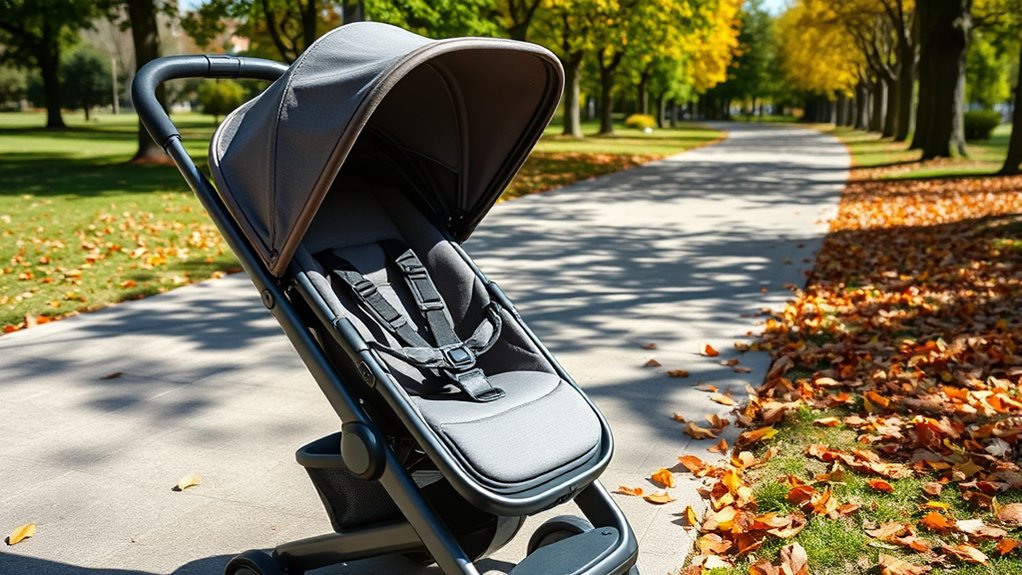
Newborns have limited head, neck, and trunk control, so they need a stroller configuration specifically approved for newborn use. Depending on the model, that may be a bassinet, a compatible infant car seat attached to the stroller frame, or a stroller seat that the manufacturer explicitly approves from birth at the required recline.
A seat simply reclining far backward does not automatically make it newborn-safe. Check the manual for the approved minimum age or developmental stage, weight limits, required infant inserts, permitted recline settings, and seat orientation.
Manufacturer rules can differ significantly. For example, UPPAbaby lists the CRUZ Toddler Seat as suitable from 6 months, while approved infant accessories can allow earlier use. Other stroller systems have seats specifically designed for use from birth. That variation is why the manual matters more than a single age found online.
Warning: Do not place a newborn in an upright stroller seat simply because the harness seems to fit. Use only a configuration that your stroller manufacturer approves for a newborn or young infant.
Signs Your Baby Is Ready to Face Forward

Age can help you estimate readiness, but posture and the stroller’s instructions are more useful. Before using an upright forward-facing seat, look for steady control rather than relying on curiosity alone.
| Readiness Check | What to Look For |
|---|---|
| Stroller manual permits it | The seat configuration is approved for your baby’s age, weight, size, and required recline. |
| Steady head control | Your baby’s head does not repeatedly fall forward, backward, or sideways during normal movement. |
| Adequate trunk control | Your baby remains supported by the seat instead of collapsing or twisting out of position. |
| Secure harness fit | The complete harness fits correctly and keeps your baby positioned as the manufacturer intended. |
| Comfort in the position | Your baby remains comfortable rather than slumping, becoming distressed, or tiring quickly. |
Curiosity about people, cars, trees, or other surroundings may make forward-facing enjoyable, but curiosity is not a safety milestone. A baby who wants to look around may still need a more reclined or parent-facing position if their posture is not stable enough for the seat.
Note: Facing forward in a stroller is completely different from turning a car seat forward-facing. Car-seat orientation follows separate crash-safety rules and the car-seat manufacturer’s height and weight limits.
Recommended Stroller Types for Infants
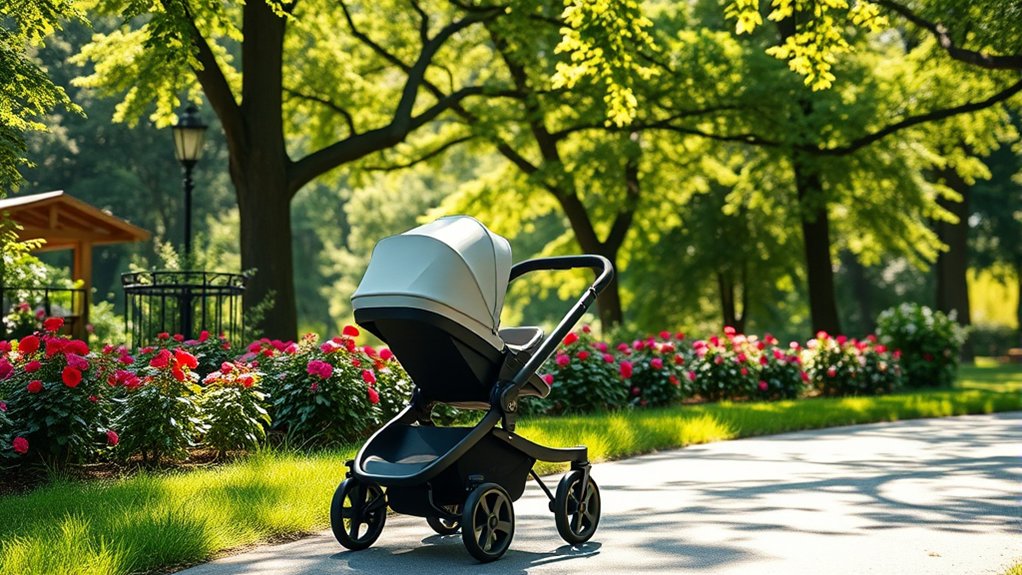
For a newborn or young infant, choose a stroller system that provides the level of support required for that stage. Common options include an approved bassinet, a compatible infant car seat used according to both manufacturers’ instructions, or a stroller seat specifically rated for newborn use.
For an older baby moving into a regular stroller seat, look for a secure harness, useful recline positions, stable construction, and clear age and weight limits. A reversible seat can be convenient because you can keep your baby parent-facing when you want closer interaction and turn the seat toward the direction of travel when the stroller permits it and your baby is comfortable.
Do not assume that all “toddler seats,” umbrella strollers, compact strollers, or travel strollers have the same minimum age. Some have limited recline and are intended only after a baby develops stronger postural control.
Safety Considerations for Forward-Facing Strollers

A forward-facing stroller can be safe when the seat is approved for your baby and used correctly. The most important checks are posture, harness fit, recline, brakes, stability, and the stroller’s own instructions.
Proper Head Support
Your baby should have enough head and neck control for the position required by the stroller. Watch them while the stroller is moving. If their head repeatedly falls forward, flops to the side, or cannot stay comfortably aligned, the position may be too upright or they may not be ready for that seat configuration.
Around six months, many babies have much stronger head control than they did as newborns, but development varies. The safest test is not simply the calendar. Check your baby’s posture in the approved seat position and follow the manufacturer’s instructions.
Developmental Milestones
Developmental milestones are useful context, but they should not be turned into rigid stroller rules. According to the CDC’s current six-month milestones, most babies at that age can lean on their hands for support while sitting. The CDC lists sitting without support as a nine-month milestone.
That does not mean every baby must wait until nine months to use a stroller seat. It means the original idea that independent sitting is automatically a six-month milestone is too simple. A stroller that provides substantial recline and body support may have different requirements from a fixed upright seat.
Safety Features Required
Use the stroller’s full harness every ride. The American Academy of Pediatrics recommends a five-point stroller harness with straps over both shoulders, at the hips, and between the legs. Adjust it according to the manufacturer’s instructions so your baby cannot slide into an unsafe position.
Use the parking brake whenever you stop. Keep bags and heavy items off the stroller handle unless the manufacturer provides an approved location for them, because extra weight can affect stability. Keep children away from folding hinges while opening or closing the stroller.
U.S. stroller safety requirements address hazards involving restraint systems, brakes, stability, latches, occupant retention, wheels, and related components under CPSC stroller regulations.
Forward-Facing Is Not the Same as Sitting Fully Upright
This distinction solves much of the confusion around stroller age recommendations. A seat can face the direction of travel while still providing substantial recline and body support. Another stroller may have a permanently forward-facing seat that stays relatively upright.
Because those two seats place different demands on a baby’s posture, the words “forward-facing” alone do not tell you whether a particular setup is appropriate. Check the approved seat position, not just which direction your baby is looking.
Developmental Milestones for Stroller Use

As your baby develops, stronger head, neck, and trunk control usually makes upright stroller seating more comfortable. Use milestones as supporting information rather than treating one age as an automatic green light.
Head and Neck Control
Before using an upright stroller position, your baby should be able to keep their head reasonably steady for the demands of that seat. During a short test ride, watch for repeated head dropping, chin-to-chest slumping, or the head falling to one side.
If you see those signs, return to the stroller’s approved more supportive position, such as additional recline, a parent-facing configuration, bassinet, or compatible infant seat, depending on the product instructions.
If your baby was born prematurely, has low muscle tone, has a developmental condition, or you are uncertain about their head and trunk control, ask your pediatrician or another qualified healthcare professional for individualized guidance.
Sitting Independently Milestone
Independent sitting develops over time rather than appearing at exactly six months. CDC milestone guidance shows that many six-month-olds still use their hands for support while sitting, while sitting without support is listed among the milestones most babies achieve by nine months.
For a stroller with an upright seat and little recline, stronger independent sitting and trunk stability can be especially important. For a stroller seat that provides more support and is explicitly approved for younger babies, independent floor sitting may not be a required milestone. Follow the manual for your exact seat.
What If Your Baby Slumps or Tires Quickly?
Slumping is a reason to reassess the setup, not something to solve by adding unapproved pillows or padding. First check whether the stroller allows more recline. Confirm that the harness is routed and adjusted correctly and that any manufacturer-approved infant insert is installed as instructed.
If your baby continues to fold forward, lean heavily to one side, or lose head control, return to a more supportive approved configuration and try the regular seat again later.
Choosing the Right Stroller for Your Lifestyle

The right stroller should match both your baby’s current stage and the way you actually travel. Consider these factors:
- Versatility: A reversible seat, bassinet compatibility, useful recline, or approved infant-car-seat connection can help the stroller adapt as your baby grows.
- Maneuverability: A stroller that is easy to steer, brake, fold, and lift can make errands and public transport easier.
- Storage: Use the stroller’s approved storage basket instead of hanging heavy bags from the handle, which can increase tipping risk.
- Harness and brakes: Look for an easy-to-adjust harness and reliable parking brake.
- Activity-specific design: A stroller used for running or rough terrain should be specifically approved for that activity and your child’s age.
Warning: Do not assume that being old enough for ordinary stroller walks means your baby is old enough for jogging. Running creates different motion and forces. For example, BOB Gear recommends its Rambler stroller seat for walking from 8 weeks but recommends waiting until 8 months for jogging or off-road use.
Proper Stroller Features for Newborns
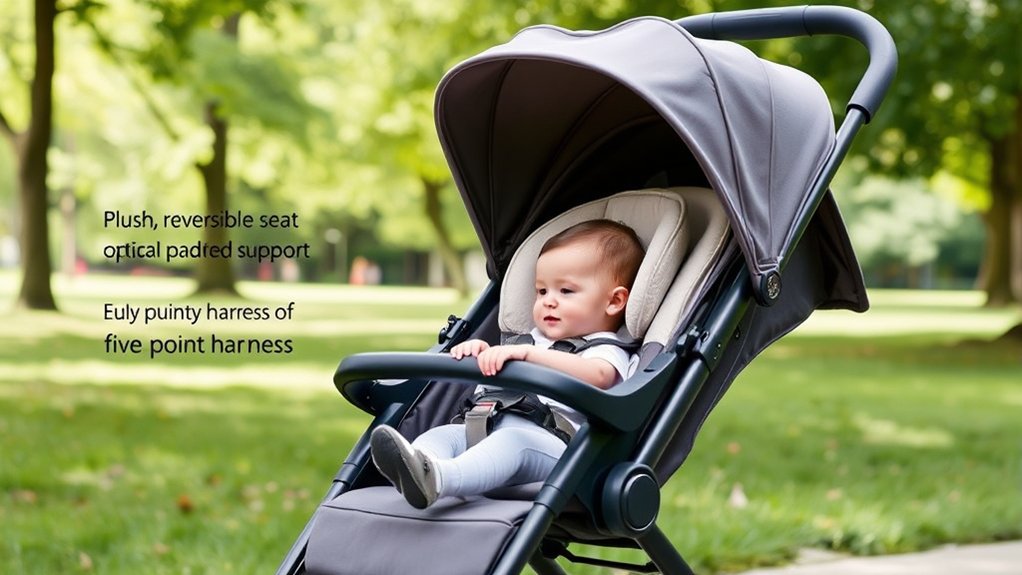
When selecting a stroller for a newborn, prioritize a configuration that the manufacturer specifically approves from birth. Depending on the stroller, that may include a bassinet, an infant car seat attached with the approved adapters, or a stroller seat designed for newborn use.
Check the minimum and maximum weight, age guidance, required recline, approved accessories, harness configuration, and instructions for any infant insert. The baby should remain well supported without sliding down or having the chin forced toward the chest.
A canopy or sunshade can help protect your baby from direct sun, while ventilation can improve comfort in warm conditions. Use only padding, liners, inserts, and accessories permitted by the stroller manufacturer so you do not interfere with harness fit or seat function.
How to Transition Your Baby to Forward-Facing
If your stroller permits both directions, you do not have to make the change all at once. A short, calm trial can show you whether your baby is physically comfortable and enjoys the new view.
- Read the manual first. Confirm that your baby meets the seat’s age, size, weight, recline, and accessory requirements.
- Set the approved recline. Do not move directly to the most upright position unless your baby is ready for it and the manual permits it.
- Fasten the complete harness. Adjust the straps as instructed and check that your baby cannot slide down or twist out of position.
- Start with a short walk. Watch your baby’s head, shoulders, trunk, breathing, and comfort.
- Reassess after several minutes. If your baby slumps, tires, or becomes uncomfortable, return to the previous approved position and try again later.
Pro Tip: A reversible stroller does not have to stay in one direction permanently. You can use parent-facing for easier interaction or monitoring and forward-facing when your baby is comfortable seeing the surroundings, provided both configurations are approved.
Tips for Stroller Safety and Maintenance

Good stroller safety continues after you choose the right seating position. Use these habits on every outing:
- Check the stroller manual for age, weight, height, seating, and accessory limits.
- Buckle your child into the complete harness for every ride, even on short walks.
- Use the parking brake whenever you stop or place your child in or out of the stroller.
- Keep heavy bags off the push handle unless the manufacturer specifically approves that setup.
- Make sure the stroller is fully open and locked before placing your child inside.
- Keep your baby’s fingers away from folding hinges and moving wheels.
- Inspect straps, buckles, wheels, brakes, latches, frame joints, and seat attachments regularly for damage or unusual looseness.
- Stop using a damaged stroller until it is repaired according to the manufacturer’s instructions or replaced.
Stroller Naps and Safe Sleep
Babies often fall asleep during walks, but a stroller should not become your baby’s routine sleep space. The American Academy of Pediatrics safe-sleep recommendations state that sitting devices such as strollers, car seats, swings, carriers, and slings are not recommended for routine infant sleep, particularly for young infants.
If your baby falls asleep in the stroller, move them to an appropriate firm, flat, noninclined sleep surface on their back as soon as it is safe and practical. Do not loosen or partially unbuckle the stroller harness while the baby remains in the seat.
Warning: A stroller’s reclined position does not automatically make it an approved sleep surface. Follow safe-sleep guidance and the manufacturer’s intended use of the product.
Resources for Parents on Stroller Use
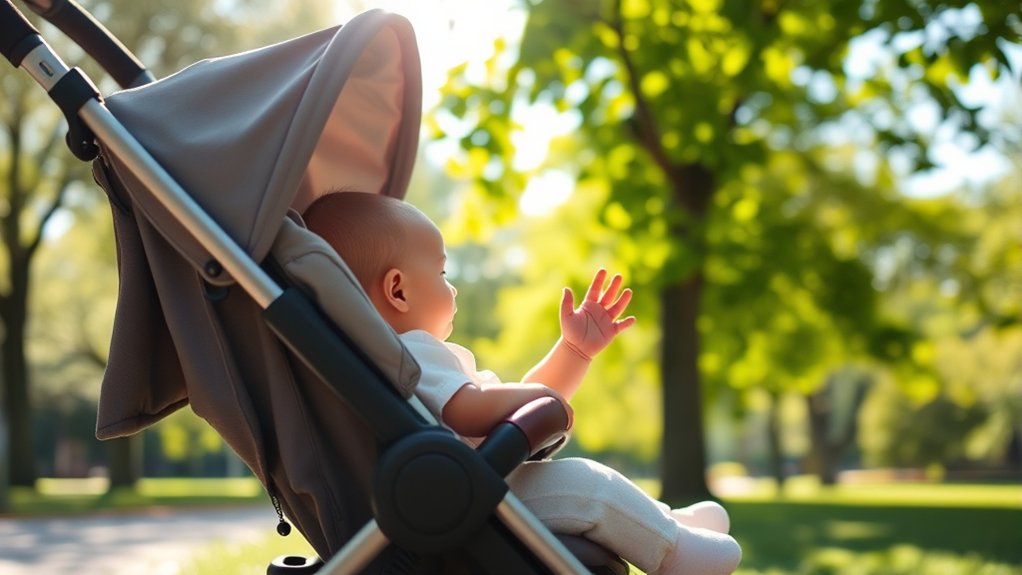
Your stroller’s own manual should be your first reference because it tells you the approved configurations for that exact product. Check the age or developmental guidance, weight and height limits, recline positions, harness instructions, seat orientation, compatible car seats, and approved inserts or accessories.
For broader safety guidance, the American Academy of Pediatrics provides stroller-safety recommendations, while the U.S. Consumer Product Safety Commission explains stroller safety requirements and regulated hazards.
For developmental context, use the CDC milestone checklists rather than assuming every child reaches the same skill at the same month. If your baby has lost a skill, is not progressing as expected, was born prematurely, has unusual muscle tone, or cannot maintain a safe stroller posture, discuss your concerns with your pediatrician.
Note: This article provides general stroller-safety information and does not replace the instructions for your specific stroller or individualized advice from your child’s healthcare professional.
Related Guides
Frequently Asked Questions
Can I use a forward-facing stroller for a younger baby?
Possibly, but only if your exact stroller seat is approved for the baby’s age, size, recline, and configuration. There is no universal forward-facing minimum age. Many upright stroller seats begin around 6 months, while some birth-rated reclining seats have different instructions. Never use a configuration that the manufacturer does not approve.
How do I transition my baby to a forward-facing position?
Check the stroller manual, select an approved recline, secure the full harness, and begin with a short walk. Watch for steady head and trunk posture. If your baby slumps, falls forward, leans heavily to one side, becomes distressed, or tires quickly, return to a more supportive approved position and try again later.
What are the benefits of a forward-facing stroller?
An older baby may enjoy seeing people, traffic, animals, trees, and other surroundings more directly. That can make walks more interesting for a curious baby. However, parent-facing remains perfectly acceptable, and forward-facing should not be treated as a developmental requirement.
Can my baby nap in a forward-facing stroller?
Babies commonly fall asleep during stroller rides, but the American Academy of Pediatrics does not recommend strollers or other sitting devices for routine infant sleep. If your baby falls asleep, move them to a firm, flat, noninclined sleep surface on their back as soon as it is safe and practical.
Are there age limits for using a forward-facing stroller?
Yes, individual stroller models can have minimum ages, developmental requirements, weight limits, or instructions for specific seats and accessories. Around 6 months is common for many upright stroller seats, but the product manual should determine when your baby can use your particular setup.
Does my baby have to sit independently before facing forward?
Not for every stroller. Independent sitting may be important for a relatively upright seat with limited support, but some stroller seats provide more recline and are approved for younger babies. Follow the manufacturer’s instructions and make sure your baby can maintain the posture required by the seat without unsafe slumping.
Is forward-facing in a stroller the same as forward-facing in a car seat?
No. They are completely different safety decisions. Stroller orientation concerns how a stroller seat is designed and supported. Car-seat direction is governed by separate crash-safety requirements and the car-seat manufacturer’s rear-facing height and weight limits.
Conclusion
Many babies begin using an upright forward-facing stroller seat at around six months, but age alone should never make the decision. Check the manual for your exact stroller, confirm that the seat configuration is approved, use the complete harness, and make sure your baby can maintain a stable head and body position without slumping.
There is also no need to rush. Parent-facing remains a good option even after your baby is physically ready to face forward. If your baby is comfortable, supported, and riding in an approved configuration, you can choose the direction that works best for that outing. Ask your pediatrician for individualized guidance if your baby’s development or posture gives you concern.
Sources
- American Academy of Pediatrics — How to Choose a Safe Baby Stroller — supports harness, brake, stability, folding, storage, and supervision guidance.
- U.S. Consumer Product Safety Commission — Carriages and Strollers — explains federal stroller safety requirements involving restraints, brakes, stability, latches, wheels, and occupant retention.
- CDC — Milestones by 6 Months — supports the current developmental context for six-month-old babies, including supported sitting.
- CDC — Milestones by 9 Months — supports the current milestone guidance for sitting without support.
- American Academy of Pediatrics — 2022 Safe Sleep Recommendations — supports guidance that strollers and other sitting devices are not recommended for routine infant sleep.
- UPPAbaby CRUZ guidance and Nuna MIXX next guidance — demonstrate why stroller-seat age and configuration rules must be checked model by model.

