
Rotary welding positioners help you turn pipes, flanges, fittings, and round workpieces at a steadier pace while you weld. That can mean cleaner beads, less re-clamping, less fatigue, and a smoother workflow in a small garage shop or a professional fabrication area.
In this guide, you will find compact 10 kg welding turntables, mid-capacity shop positioners, heavy-duty industrial models, and pipe turning rolls for larger round work. Use the capacity, speed range, chuck style, tilt range, and shop setup notes below to choose the safest fit for your regular jobs.
This roundup is reader-supported. When you click through links, we may earn a referral commission on qualifying purchases. As an Amazon Associate I earn from qualifying purchases. Product specs can change, so confirm load capacity, voltage, included accessories, and current availability on Amazon before buying.
Quick Verdict
Best overall heavy-duty pick: KAKA Industrial Welding Positioner if you need high load capacity, slow rotation, and a shop-ready turntable.
Best compact pick: VEVOR 10KG if you want a small bench-friendly positioner for light pipe, flange, and hobby fabrication work.
Best pipe rolling setup: BREVELTION Rotary Welding Positioner if you work with larger pipe or tank sections and need turning rolls instead of a chuck-style table.
Top Picks
|
Category |
Product |
Best For |
|---|---|---|
|
🔰 Best Compact |
Small bench work |
|
|
⭐ Best Mid-Range Power |
General shop jobs |
|
|
🎯 Best For Mid-Large Work |
Slower heavy rotation |
|
|
💼 Best Industrial |
Heavy fabrication |
|
|
🚀 Best For Pipe Rolling |
Pipe rotation |
|
|
🎨 Best Precision |
Small TIG work |
|
|
🛠️ Best Workhorse |
Daily shop use |
|
|
💰 Best Budget Bench Pick |
Light repairs |
|
|
🔩 Most Robust Rollers |
Large round work |
|
|
🏆 Best Basic Starter |
Starter turntable setup |
How We Picked These Positioners
You want a positioner that matches the work you do and the way your shop is set up. We focused on listed load capacity, vertical versus horizontal support, rotation speed range, speed control type, table tilt, chuck size, roller diameter range, foot pedal control, portability, and whether the design fits pipe welding, flange work, TIG work, cutting, grinding, or heavier fabrication.
We also looked for buyer-friendly features that make a positioner easier to use, such as stepless speed control, lockable tilt, stable clamping, digital speed displays, torch holders, and bench-mounting options. Because product listings can change, treat the specs below as a starting point and confirm the latest details on Amazon before ordering.
Before You Buy
- Check vertical and horizontal capacity separately. A positioner may hold more weight flat than tilted.
- Think about the center of gravity. Off-center pipe, fittings, and fixtures can reduce safe working capacity.
- Match the machine to your workpiece. Use chuck-style turntables for flanges and short sections, and turning rolls for longer pipe or tanks.
- Confirm speed range. Low and steady RPM matters when you want smoother heat input and more consistent bead appearance.
- Do not skip safety checks. Clamp securely, ground correctly, wear proper PPE, and never exceed the rated load.

You get a compact, workbench-friendly welding positioner that makes small pipe, flange, and part welding easier to control. The tilting table helps you bring the joint into a better working angle, while the 3-jaw chuck helps keep round parts centered.
The main reason to choose this model is portability. It is a better fit for hobby welders, small repair work, and light fabrication than for large pipe spools or heavy fixtures. If you need very slow industrial rotation under heavier loads, step up to a larger positioner.
Why You’ll Like It
The stepless speed range and foot pedal help you keep both hands free while welding. That can reduce starts and stops when you are trying to keep a steady bead on small round parts.
Who Should Buy This
Choose it if you need a small welding turntable for light pipe, small flanges, practice pieces, or compact bench fixtures.
Who Should Avoid This
Skip it if your normal workpieces are near the limit, long, off-center, or heavy enough to need a larger table, tailstock, or turning rolls.
Ease of Use
|
Feature |
Ease Level |
|---|---|
|
Setup & Mounting |
Easy |
|
Speed Adjustment |
Moderate |
|
Tilting & Locking |
Easy |
|
Foot Pedal Control |
Easy |
|
Chuck Clamping |
Moderate |
Benefits
- Compact size for bench work and small shops
- Stepless 1–12 rpm listed speed range
- 0–90° tilting table for better weld positioning
- 205 mm 3-jaw chuck for small round parts
- Foot pedal support for hands-free rotation
Check Product Details on Amazon
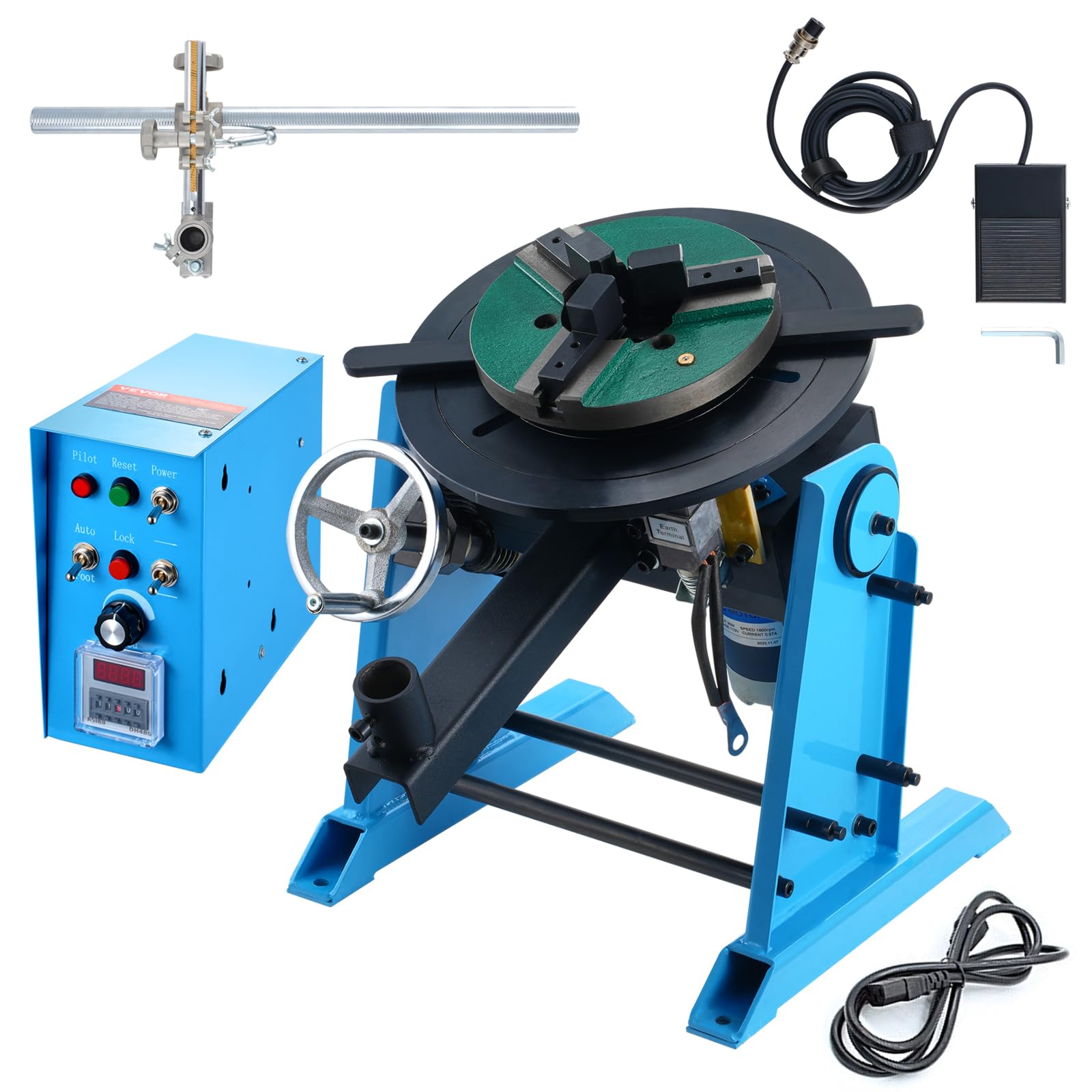
The VEVOR 30KG gives you more working capacity than the compact 10 kg model while keeping the same general turntable style. It is a sensible step up if you work with heavier fittings, short pipe sections, or repeated shop repairs.
The larger chuck gives you more clamping range, and the foot pedal makes it easier to keep rotation steady while your hands stay on the torch. It still needs careful balancing and secure mounting, especially when the part is tilted or off-center.
Why You’ll Like It
It gives you a useful middle ground between a light hobby turntable and a much heavier industrial machine. The listed 1–12 rpm speed range is flexible for general shop work.
Who Should Buy This
Choose it if you want a stronger welding positioner for regular bench work, pipe repair, flanges, and small fabrication runs.
Who Should Avoid This
Skip it if you need very slow rotation for heavy industrial work or if your workpieces are long enough to require tailstock support or rollers.
Ease of Use
|
Feature |
Ease Level |
|---|---|
|
Setup & Mounting |
Moderate |
|
Speed Adjustment |
Moderate |
|
Tilting & Locking |
Easy |
|
Foot Pedal Control |
Easy |
|
Chuck Clamping |
Moderate |
Benefits
- 30 kg listed horizontal capacity for mid-range shop tasks
- Large 12.4 inch 3-jaw chuck for round parts
- 0–90° tilting table for more flexible weld angles
- Stepless speed control for smoother travel
- Foot pedal operation for better torch control
Check Product Details on Amazon

The VEVOR 50KG is the better VEVOR choice when you want slower listed rotation and more capacity than the 10 kg and 30 kg versions. The 0.5–6 rpm range is useful when you want a slower, more controlled turn on heavier parts.
The included torch holder is also helpful if you are building a more repeatable welding setup. Just remember that a higher listed capacity does not remove the need for safe mounting, proper grounding, and balanced loading.
Why You’ll Like It
It gives you more room to work with heavier pieces while keeping the familiar tilting table and foot-control workflow.
Who Should Buy This
Choose it for small-to-mid fabrication, heavier flanges, repeat pipe work, and jobs where slower rotation is more important than high speed.
Who Should Avoid This
Skip it if your work is mostly tiny TIG parts or if you need an industrial system for very large or long pipe sections.
Ease of Use
|
Feature |
Ease Level |
|---|---|
|
Setup & Mounting |
Moderate |
|
Speed Adjustment |
Moderate |
|
Tilting & Locking |
Easy |
|
Foot Pedal Control |
Easy |
|
Chuck Clamping |
Moderate |
Benefits
- 50 kg listed horizontal capacity for heavier bench work
- Slower 0.5–6 rpm listed speed range
- 315 mm 3-jaw chuck for larger round parts
- 0–90° tilting table for angled weld access
- Includes torch holder for repeatable setup work
Check Product Details on Amazon

The KAKA Industrial model is the strongest chuck-style table in this roundup. It makes the most sense if you weld heavier pipe sections, fittings, and assemblies often enough that a light bench unit feels limiting.
The slower 0–5 rpm listed speed range is also a good fit for controlled weld travel. The tradeoff is size and handling. This is a heavier shop tool, so plan where it will live, how it will be powered, and how you will secure it before loading workpieces.
Why You’ll Like It
It gives you higher capacity, slower control, and a wider tilt range than most compact turntables. That makes it better for heavier fabrication and repeat jobs.
Who Should Buy This
Choose it if you need a more serious welding positioner for industrial-style shop work, heavier pipe, and repeated weld setups.
Who Should Avoid This
Skip it if you need something lightweight, portable, or mainly suited to small hobby parts.
Ease of Use
|
Feature |
Ease Level |
|---|---|
|
Setup & Mounting |
Moderate |
|
Speed Adjustment |
Moderate |
|
Tilting & Locking |
Easy |
|
Foot Pedal Control |
Easy |
|
Moving / Handling |
Moderate |
Benefits
- Slow 0–5 rpm listed range for controlled weld travel
- Manual 0–135° tilt range for more positioning options
- Foot-switch control for hands-free rotation
- Stronger build for heavier fabrication work
- Better fit for shops that need more than a small hobby turntable
Check Product Details on Amazon
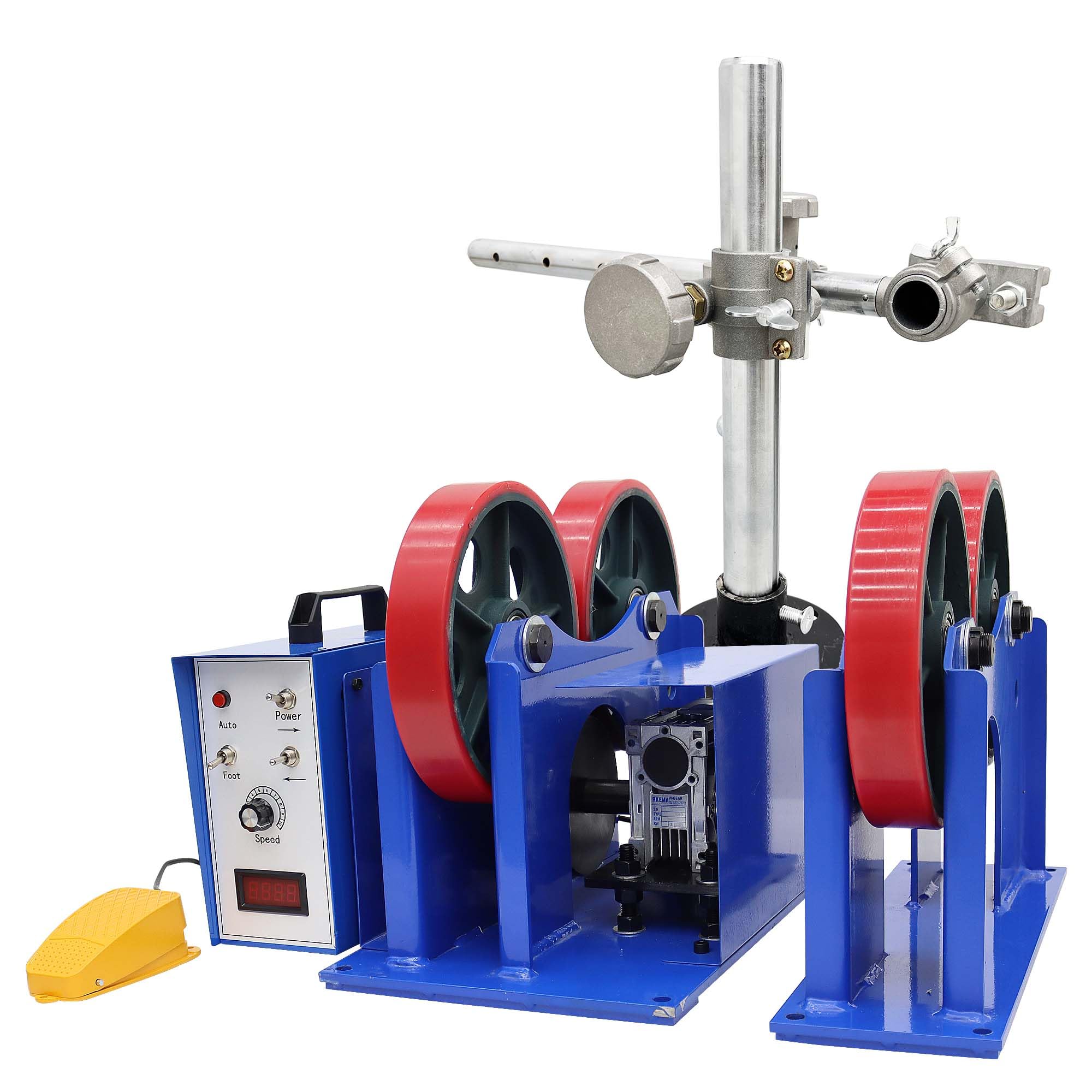
The Yokoma rotary rolls are different from a chuck-style welding turntable. Instead of clamping a short part on a tilted table, they support and rotate pipe or cylindrical workpieces on rollers. That makes them better for pipeline work, tank sections, and longer round parts.
The digital speed display and gun holder help you build a more repeatable pipe welding setup. The main thing to confirm is whether your pipe diameter, weight, and work area match the roller setup.
Why You’ll Like It
It is built for pipe rotation, not just small bench work. That gives you a more suitable setup when your workpiece is too long or awkward for a normal chuck-style table.
Who Should Buy This
Choose it if you weld pipe, tube, or round sections often and need smoother, hands-free rotation.
Who Should Avoid This
Skip it if you mostly weld small flanges, brackets, or compact fittings that need a 3-jaw chuck and tilting table.
Ease of Use
|
Feature |
Ease Level |
|---|---|
|
Setup & Mounting |
Moderate |
|
Speed Adjustment |
Easy |
|
Digital Control Box |
Easy |
|
Welding Gun Holder Adjustment |
Easy |
|
Moving / Handling |
Moderate |
Benefits
- Designed for pipe and round workpiece rotation
- Source-listed 50–600 mm working diameter range
- Digital speed display for repeatable setup
- Adjustable welding gun holder for hands-free positioning
- Better fit for pipeline-style welding than a small turntable
Check Product Details on Amazon
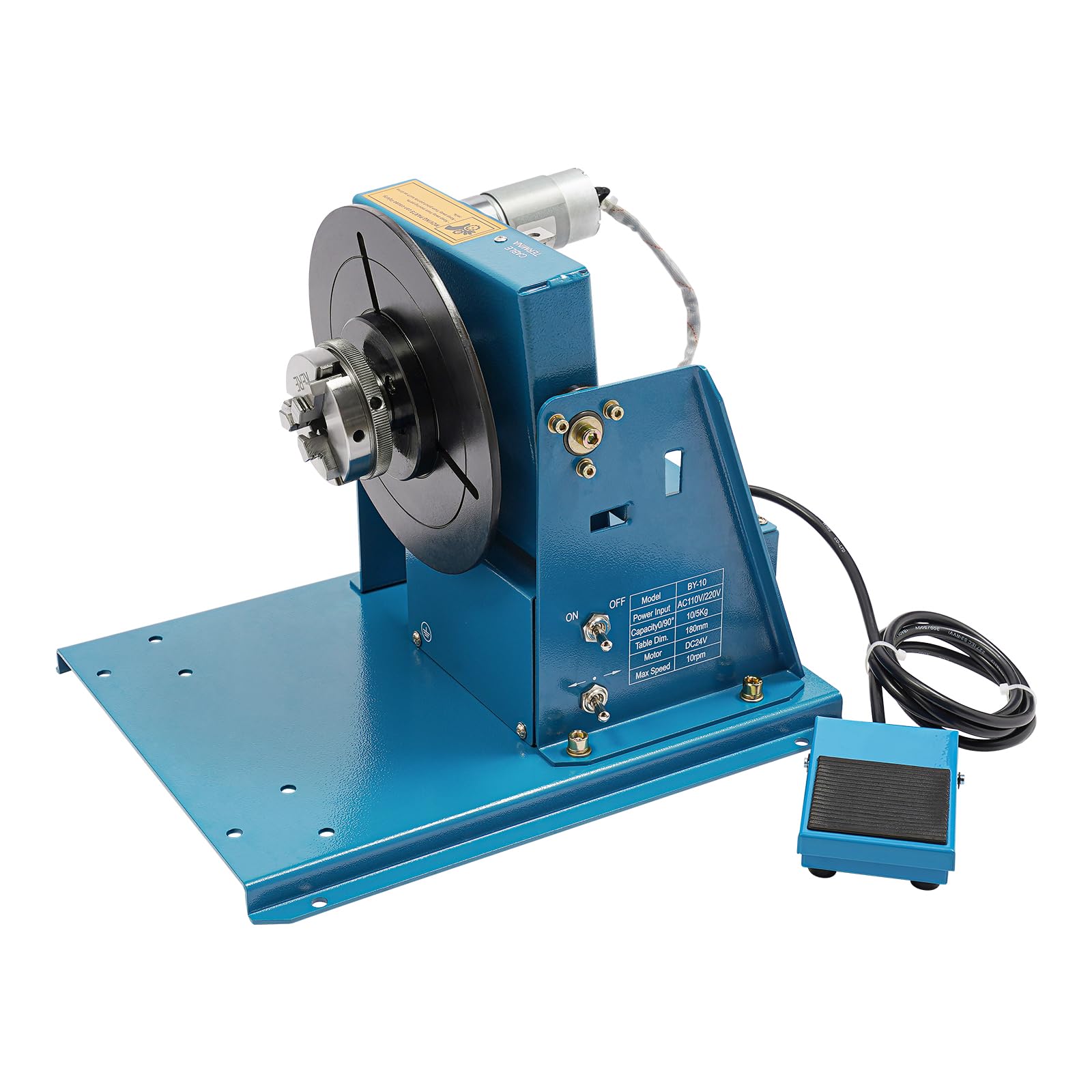
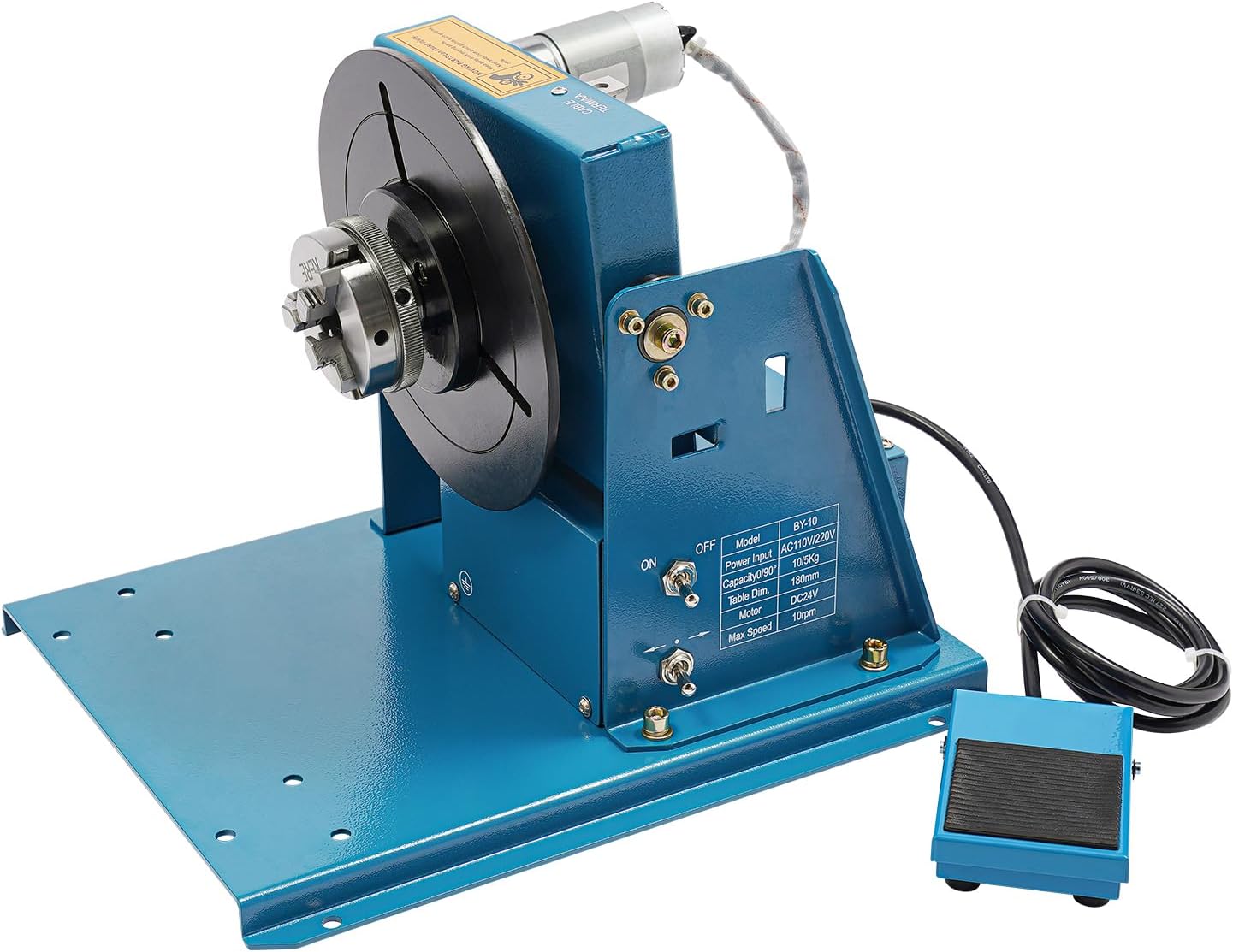
The DRRSBRP positioner is a compact option for small parts, light TIG work, tack-up, and detailed bench fabrication. The cast-iron body helps the small footprint feel more stable, while the tilting table lets you position a joint at a more comfortable angle.
It is not the right choice for heavy pipe or larger fixtures. Its appeal is control, bench convenience, and space savings.
Why You’ll Like It
The small footprint, stepless speed control, and 3-jaw chuck make it useful when you need repeatable positioning for small parts.
Who Should Buy This
Choose it if you do delicate bench work, light fabrication, small pipe sections, or TIG-style welds where steady rotation matters.
Who Should Avoid This
Skip it for heavy fabrication, long pipe, or large assemblies that need more support and capacity.
Ease of Use
|
Feature |
Ease Level |
|---|---|
|
Setup & Assembly |
Easy |
|
Speed Adjustment |
Easy |
|
Tilt Locking |
Easy |
|
Chuck Clamping |
Moderate |
|
Moving / Handling |
Moderate |
Benefits
- Compact design for tight bench spaces
- Cast-iron build for better stability
- Stepless speed adjustment for controlled rotation
- 0–90° tilt for angled weld access
- Good fit for small parts and precision work
Check Product Details on Amazon

The Yokoma 300mm positioner is a stronger workhorse option for shops that want a larger chuck, foot control, and more listed capacity than small 10 kg machines. It fits repair work, pipe fittings, flanges, and light production setups where repeatable rotation matters.
The optional tailstock support mentioned in the source details is worth considering if you work with longer pieces. Long or off-center workpieces need more support than a chuck alone can provide.
Why You’ll Like It
It balances capacity, control, and shop practicality. The 300 mm chuck and foot switch make it more useful for daily fabrication than the smallest bench positioners.
Who Should Buy This
Choose it if you regularly weld pipes, flanges, and round assemblies and want a more capable turntable setup.
Who Should Avoid This
Skip it if your shop mainly needs a lightweight portable unit or a roller system for long pipe sections.
Ease of Use
|
Feature |
Ease Level |
|---|---|
|
Setup & Assembly |
Moderate |
|
Speed Control |
Easy |
|
Tilt Adjustment |
Easy |
|
Clamping |
Moderate |
|
Integration with welding machines |
Easy |
Benefits
- Source-listed 100 kg capacity for stronger shop use
- 300 mm chuck for larger workholding
- Stepless speed control for adjustable rotation
- 0–90° tilt range for flexible weld angles
- Foot switch keeps your hands free while welding
Check Product Details on Amazon
This portable 10 kg model is aimed at light-duty bench work. It gives you the basic features most small-shop users want: compact size, tilt, foot-pedal operation, and adjustable rotation speed.
It is a practical choice if you only need occasional help with small pipes, flanges, tack-up, or repetitive bench jobs. Keep expectations realistic, because this is not a heavy fabrication positioner.
Why You’ll Like It
It covers the basics without taking up much bench space. The 2–10 r/min listed range is useful for small parts that do not need ultra-slow industrial rotation.
Who Should Buy This
Choose it if you want an affordable, compact welding turntable for light repairs and occasional small fabrication.
Who Should Avoid This
Skip it if you regularly weld heavier pieces, long pipe, or parts that need a large chuck and stronger motor.
Ease of Use
|
Feature |
Ease Level |
|---|---|
|
Setup & Assembly |
Moderate |
|
Speed Control |
Easy |
|
Tilt Adjustment |
Easy |
|
Clamping |
Moderate |
|
Foot Pedal Control |
Easy |
Benefits
- Portable size for small shop benches
- 0–90° tilt for repeatable angles
- Source-listed 2–10 r/min speed range
- Foot pedal control for hands-free use
- Good fit for small flanges, short pipes, and light repairs
Check Product Details on Amazon
The BREVELTION turning rolls are the best fit here when your work is too large for a standard benchtop welding positioner. They are designed to rotate round workpieces like pipe and tank sections, not to hold small parts in a chuck.
The listed load capacity and diameter range make this a serious option for larger fabrication work, but it also means you need the right space, lifting plan, and safe workholding process before use.
Why You’ll Like It
The roller layout supports heavier round work and helps keep pipe moving smoothly while you focus on the weld bead.
Who Should Buy This
Choose it if you work with larger pipe, tanks, or round sections and need turning rolls with a strong listed load capacity.
Who Should Avoid This
Skip it if you need a small tilting turntable with a chuck for compact parts, flanges, or TIG bench work.
Ease of Use
|
Feature |
Ease Level |
|---|---|
|
Setup & Assembly |
Moderate |
|
Speed Adjustment |
Easy |
|
Wheel Positioning |
Moderate |
|
Foot Switch Modes |
Easy |
|
Handling & Loading |
Moderate |
Benefits
- Turning-roll design for larger round workpieces
- Source-listed 1,000 kg / 2,200 lb capacity
- Source-listed 80–1,100 mm/min adjustable speed range
- Foot switch with automatic and pedal control modes
- Polyurethane wheels for grip on round workpieces
Check Product Details on Amazon
This basic 10 kg rotary welding positioner is another compact starter option for light-duty work. It focuses on the core features that matter most for beginners: a tilting table, adjustable speed, a chuck, and a small bench footprint.
It is best for small welding tasks where you want repeatable rotation without investing in a larger shop machine. If you already know you will weld heavier or longer parts, choose a higher-capacity positioner instead.
Why You’ll Like It
It gives you a simple entry point into rotary welding positioners and helps reduce manual turning on small round parts.
Who Should Buy This
Choose it for hobby welding, practice parts, small flanges, and basic bench repairs.
Who Should Avoid This
Skip it if you need industrial torque, long-pipe support, or a larger table and chuck.
Ease of Use
|
Feature |
Ease Level |
|---|---|
|
Setup & Assembly |
Moderate |
|
Speed Adjustment |
Easy |
|
Angle Locking |
Easy |
|
Chuck Adjustment |
Moderate |
|
Handling & Moving |
Moderate |
Benefits
- Simple starter setup for light welding jobs
- Compact footprint for desktop or small bench use
- 0–90° tilt for repeatable angled welds
- Stepless speed control for smoother rotation
- Three-jaw chuck for small round workpieces
Check Product Details on Amazon
How To Choose The Right Welding Positioner
Start with the workpiece, not the machine. A compact chuck-style welding turntable is better for flanges, small pipe sections, fittings, and short round parts. A pipe turning roll system is better for long pipe, tank sections, and heavier round work that needs support along its length.
Next, compare capacity carefully. Look at vertical capacity, horizontal capacity, and how the workpiece will sit when tilted. A part that is safe when centered flat may not be safe when tilted or mounted off-center. When in doubt, choose more capacity than you think you need and use proper fixtures.
Finally, think about control. Stepless speed control, foot pedal operation, and a low RPM range can make a big difference when you want a consistent bead. If your shop does repeat work, a torch holder, tailstock support, or digital speed readout can also save time.
Safety Note
Always clamp the workpiece securely, confirm the positioner is properly grounded, and stay within the manufacturer’s rated load. Bolt or secure the positioner when needed, especially with tilted or off-center loads. Inspect wiring, insulation, foot switches, and fasteners before use, and follow lockout/tagout procedures before servicing any electrical or drive components.
FAQ
How Do I Choose The Right Welding Positioner For Pipe Work?
Match the positioner to the pipe size, weight, and length. Short pipe sections and flanges usually work well on a chuck-style tilting turntable. Longer pipe, tank sections, and heavier round work usually need turning rolls or added support such as a tailstock. Always check vertical and horizontal capacity, pipe diameter range, power requirements, and safe mounting instructions before buying.
Will A Rotary Welding Positioner Improve Weld Quality?
It can help when used correctly because steady rotation makes it easier to keep a consistent travel speed and torch angle. That can reduce rework and make beads more uniform. The positioner will not fix poor fit-up, wrong settings, weak grounding, or unsafe clamping, so use it as part of a proper welding setup.
What Speed Range Should I Look For?
For many pipe and flange jobs, you want slow, controllable rotation rather than high speed. A lower RPM range can help with TIG work, heavier parts, and more controlled heat input. For pipe turning rolls, compare linear speed ranges in mm/min or similar units instead of only looking for RPM.
What Safety And Maintenance Steps Should I Follow?
Securely clamp and ground every workpiece, wear proper PPE, and never exceed the rated load. Check wiring, foot pedals, fasteners, chucks, rollers, and drive components before use. Keep clamping faces clean, lubricate moving parts according to the manufacturer’s guidance, and stop using the positioner if it slips, binds, overheats, or rotates unevenly.
Final Recommendation
Choose capacity first, then control. If you weld small parts and need portability, a 10 kg class welding turntable is usually enough. If you handle heavier fittings or repeat shop work, step up to a 30 kg, 50 kg, or 100 kg model. If you work with long pipe or tanks, choose turning rolls instead of forcing the job onto a chuck-style table.
For most small shops, the best value comes from matching your normal workpiece size to the right style of positioner, then confirming the latest capacity, voltage, included accessories, and safe operating limits before ordering.
| Product | Image | Best For | Listed Load Capacity | Listed Rotation Speed | Item Weight |
|---|---|---|---|---|---|
| VEVOR Rotary Welding Positioner 10KG |
 |
Compact bench work | 10 KG (22 lbs) | 1-12 RPM | 22 pounds |
| VEVOR Rotary Welding Positioner 30KG |
 |
Mid-range shop jobs | 30 KG (66 lbs) | 1-12 RPM | 85.4 pounds |
| VEVOR Rotary Welding Positioner 50KG |
 |
Slower heavier rotation | 50 KG (110 lbs) | 0.5-6 RPM | 84.9 pounds |
| KAKA INDUSTRIAL Welding Positioner |
 |
Heavy fabrication | 220 KG class | 0-5 RPM | 106 pounds |
| Yokoma Rotary Rolls Welding Positioner |
 |
Pipe turning rolls | Confirm on Amazon | 100-1001 mm/min listed range | 260 pounds |
| DRRSBRP Rotary Welding Positioner |
 |
Small precision work | Confirm on Amazon | Max 10 RPM listed | 21.7 pounds |
| Yokoma Welding Positioner |
 |
Daily shop work | 100 KG (220 lbs) | Confirm on Amazon | 152 pounds |
| 110V 10KG Portable Welder Positioner |
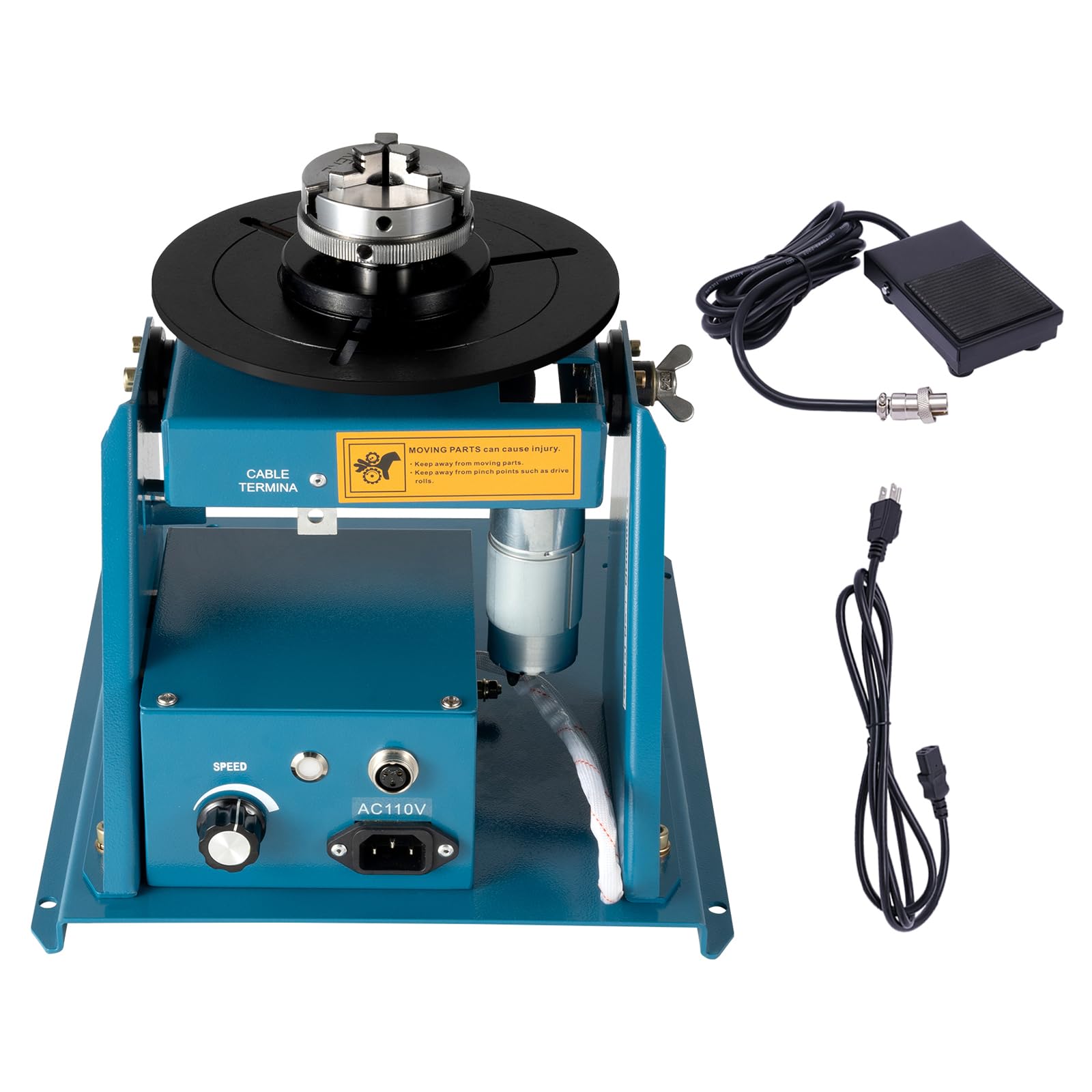 |
Budget bench work | 10 KG horizontal / 5 KG vertical | 2-10 r/min | Confirm on Amazon |
| BREVELTION Rotary Welding Positioner |
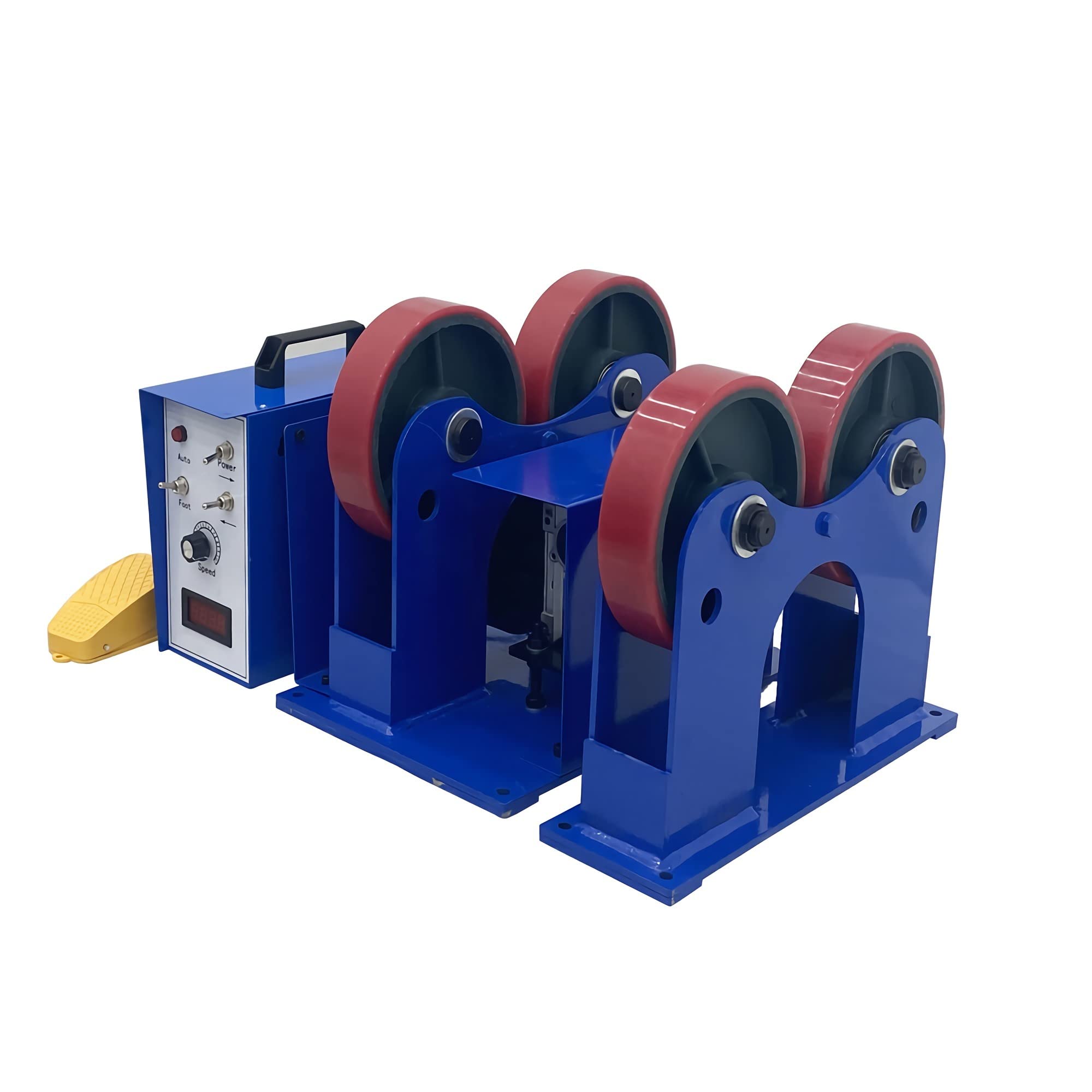 |
Robust pipe rollers | 1,000 KG / 2,200 lbs listed | 80-1,100 mm/min listed range | Confirm on Amazon |
| Rotary Welding Positioner 10KG |
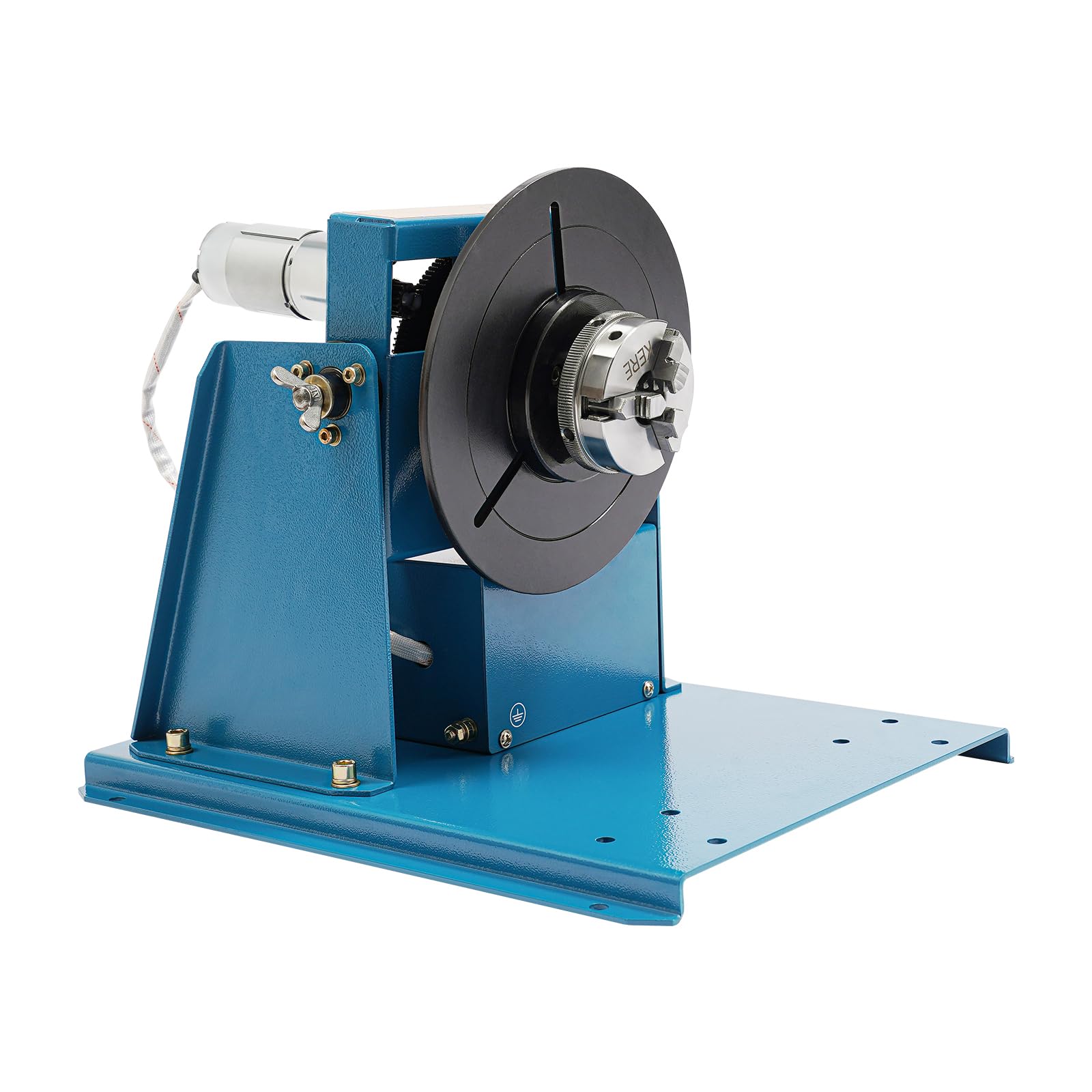 |
Basic starter setup | 10 KG class | Max 10 RPM listed | Confirm on Amazon |
This Roundup is reader-supported. When you click through links we may earn a referral commission on qualifying purchases.
