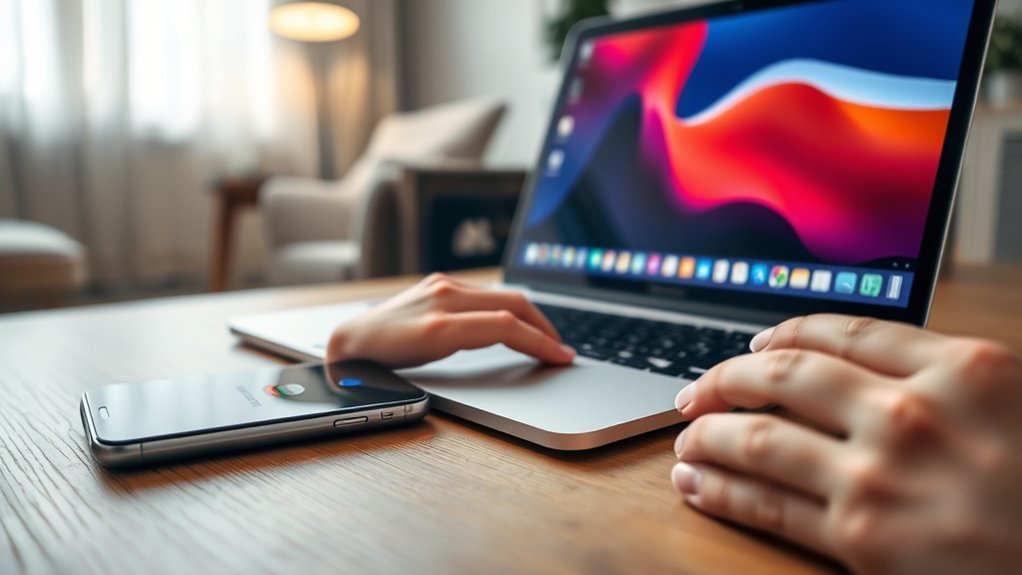
Using your phone’s hotspot on a laptop is a simple way to get online when home Wi-Fi, office Wi-Fi, or public Wi-Fi is unavailable. In most cases, you only need to turn on the hotspot, choose it from your laptop’s Wi-Fi list, and enter the password. A few extra settings can also help you protect your data, save battery, and keep the connection stable.
Quick Answer
To use your phone’s hotspot on a laptop, turn on Personal Hotspot or Mobile Hotspot in your phone settings, open Wi-Fi settings on your laptop, select your phone’s hotspot name, and enter the hotspot password. Keep your phone nearby, watch your data usage, and use a strong password for security.
Key Takeaways
- Your phone’s hotspot shares your mobile data connection with your laptop through Wi-Fi.
- Set a strong hotspot password before connecting your laptop.
- Keep your phone close to your laptop for a stronger and more stable signal.
- Hotspot use can drain battery and use mobile data quickly, so monitor both while connected.
- If Wi-Fi hotspot is unstable, USB tethering can be a better option when your phone and laptop support it.
At a Glance
| Time Required | 2 to 5 minutes |
| Difficulty | Easy |
| Tools Needed | A smartphone with mobile data, a laptop with Wi-Fi, and your hotspot password |
| Cost | Usually included with your mobile plan, but hotspot data limits or extra charges may apply |
Enable Your Phone’s Hotspot
To enable your phone’s hotspot, start by opening your device’s settings. The exact menu name depends on whether you use an iPhone or an Android phone, but the process is similar.
Turn On Hotspot on iPhone
On an iPhone, open Settings, then tap Personal Hotspot. Turn on Allow Others to Join. Check the Wi-Fi password shown on the same screen because you will need it when connecting your laptop.
If you do not see Personal Hotspot, check under Cellular first. Some carriers also require hotspot support in your mobile plan before the option appears.
Turn On Hotspot on Android
On Android, open Settings and look for Network & Internet, Connections, or a similar menu. Tap Hotspot & Tethering, Mobile Hotspot, or Wi-Fi Hotspot, then toggle it on.
You may also be able to turn on the hotspot from the quick settings panel. Swipe down from the top of your screen and look for a Hotspot or Mobile Hotspot tile.
Before connecting your laptop, review the hotspot name and password. Choose a strong password that is not easy to guess. If your phone offers a security option, use WPA2 or WPA3 when available.
Warning: Avoid using an open hotspot with no password. Anyone nearby may be able to connect, use your mobile data, slow your connection, or create security risks.
Some devices allow you to set data limits, auto-turn-off timers, or maximum connected devices. Consider using these options to avoid unexpected charges and reduce battery drain.
Once you enable the hotspot, your phone broadcasts a Wi-Fi signal. This lets you connect your laptop or other devices without relying on public networks.
Connect Your Laptop to the Hotspot
Connecting your laptop to your phone’s hotspot is similar to joining any other Wi-Fi network. Keep your phone unlocked and nearby while you connect for the first time.
| Step | Action | Notes |
|---|---|---|
| 1 | Open Wi-Fi settings on laptop | Look for the Wi-Fi icon |
| 2 | Find your hotspot name | It may match your phone’s name or the name you set |
| 3 | Click on your hotspot | Select it to connect |
| 4 | Enter the password | Use the password shown in your phone’s hotspot settings |
| 5 | Confirm the connection | You are now online |
Connect on Windows
On a Windows laptop, click the Wi-Fi icon in the taskbar. Choose your phone’s hotspot name, select Connect, enter the password, and wait for the connection to complete.
If Windows asks whether you want your laptop to be discoverable on the network, choose the safer option for your situation. For a personal hotspot, most users should keep discovery off unless they need file sharing or device sharing.
Connect on Mac
On a Mac, click the Wi-Fi icon in the menu bar or open System Settings and choose Wi-Fi. Select your phone’s hotspot name, enter the password, and wait for the Wi-Fi symbol to show a connection.
With these simple steps, you can enjoy the flexibility of using your laptop in more places. You can browse, work, check email, or handle urgent tasks without being tied to a fixed Wi-Fi network.
Note: Hotspot speed depends on your phone signal, mobile plan, network congestion, laptop distance, and the number of connected devices.
Optimize Your Connection for Best Performance
Once your laptop is connected to your phone’s hotspot, optimizing your connection can greatly improve your browsing experience. Small changes can help your hotspot feel faster and more reliable.
Start by positioning your phone near your laptop to help maintain a strong signal. Keep the phone in an open spot instead of under a bag, pillow, or stack of papers.
Keep your phone close to your laptop and in a clear spot. A stronger signal usually gives you a smoother hotspot connection.
Reduce interference by moving away from crowded Wi-Fi areas when possible. If your phone supports both 2.4 GHz and 5 GHz hotspot bands, try the one that works best for your situation. The 2.4 GHz band may reach farther, while 5 GHz may feel faster at short range.
Close unnecessary applications on your laptop to free up bandwidth. Pause large downloads, cloud backups, software updates, and video streams if you need a smoother connection for work or browsing.
If your hotspot plan allows it, adjust the settings for better performance. Some phones include options for compatibility, battery saving, device limits, or hotspot auto-off. These settings can affect speed and reliability.
Pro Tip: For video calls, keep only the meeting app and essential browser tabs open. This reduces data use and helps prevent lag.
Regularly check your data usage to avoid throttling by your carrier. Hotspot data can run out faster than normal phone browsing, especially when your laptop loads desktop websites, syncs files, or streams video.
Finally, consider using a VPN for secure browsing, especially when handling sensitive accounts. Be mindful that a VPN may slow your connection, so turn it off temporarily if speed matters more than privacy for a low-risk task.
[Amazon Products Picked for You]

📶 𝐁𝐨𝐨𝐬𝐭 𝐒𝐢𝐠𝐧𝐚𝐥 - HiBoost cell phone signal booster for 2000 Sq.ft. Enjoy lag-free cell phone signal, faster internet connections for streaming, faster to download and upload. High power outside antenna, receive longer distance signal. (It requires at least one bar of signal for the cell phone booster to enhance the signal.)

【Ideal Cell Booster for Truck】Serves as a ideal, in-vehicle connectivity solution for stationary and mobile use. Multi User Concurrent: smart phone, pad, data modem all connected directly at the same time

1.The antenna is to be placed outside of the car window.
Save Data and Battery While Using Hotspot
Your laptop can use more data than your phone because desktop apps often update, sync, and load larger pages in the background. Before using your hotspot for a long session, take a few minutes to reduce unnecessary data use.
- Turn off automatic app updates while connected to the hotspot.
- Pause cloud syncing tools such as photo backup, file backup, or drive syncing.
- Lower video quality when streaming or joining video calls.
- Close unused browser tabs, especially tabs with videos, dashboards, or live feeds.
- Use your phone’s data warning or hotspot data limit if available.
Hotspot use can also drain your phone battery quickly. Keep your phone plugged in when possible, reduce screen brightness, and turn off the hotspot when you finish using it.
Troubleshoot Common Hotspot Problems
If your laptop cannot connect to your phone’s hotspot, start with the simple fixes first. Most hotspot problems come from signal issues, password errors, carrier limits, or temporary software glitches.
[Amazon Products Picked for You]

𝐑𝐨𝐚𝐦 𝟔 𝐀𝐗𝟏𝟓𝟎𝟎 𝐃𝐮𝐚𝐥-𝐁𝐚𝐧𝐝 𝐓𝐫𝐚𝐯𝐞𝐥 𝐑𝐨𝐮𝐭𝐞𝐫 - Delivers fast Wi-Fi 6 speeds (1201 Mbps on 5 GHz, 300 Mbps on 2.4 GHz) for uninterrupted video streaming, downloading, and online gaming all at the same time. Actual Wi-Fi speeds vary based on source bandwidth, environment, and distance to devices.

High Speed Internet Access: 4G Mobile WiFi mobile router is designed to provide users with 3G 4G high speed Internet access, supporting the 3G 4G main frequency band of most countries and operators in the world. Not applicable to the Americas countries.

[Portable Design] Lightweight and compact for easy portability, allowing you to stay connected on the go.
Hotspot Name Does Not Appear
If your hotspot name does not appear in the laptop’s Wi-Fi list, make sure the hotspot is still turned on. Some phones turn it off automatically when no device connects for a while.
Move your phone closer to the laptop, toggle Wi-Fi off and on, and refresh the laptop’s available networks. If your phone has a compatibility setting, turn it on and check again.
Password Does Not Work
If the password does not work, open your phone’s hotspot settings and confirm the exact password. Hotspot passwords are case-sensitive, so capital letters, numbers, and symbols must match.
You can also change the hotspot password, save the new setting, and reconnect your laptop using the updated password.
Connected but No Internet
If your laptop connects but has no internet, check whether your phone has mobile data turned on and a working cellular signal. Open a website on your phone using mobile data, not Wi-Fi, to confirm the phone itself is online.
If your phone has internet but the laptop does not, restart the hotspot, reconnect the laptop, and restart both devices if needed. Also check whether your mobile plan allows hotspot use.
Hotspot Is Slow or Keeps Disconnecting
If the hotspot is slow, move to a place with a stronger cellular signal. Close background apps, reduce connected devices, and avoid large downloads during hotspot use.
If the connection keeps dropping, keep the phone charged and disable aggressive battery-saving settings while using the hotspot. Some battery modes may limit background network sharing.
Use USB Tethering as an Alternative
If Wi-Fi hotspot is unstable, USB tethering may give you a steadier connection. This option shares your phone’s mobile data through a USB cable instead of Wi-Fi.
Connect your phone to your laptop with a compatible cable. On Android, look for USB Tethering under hotspot or tethering settings. On iPhone, connect the phone by cable and use Personal Hotspot if your laptop supports the connection.
USB tethering can also help keep your phone charged during use. However, availability depends on your phone, laptop, cable, operating system, and mobile carrier settings.
[Amazon Products Picked for You]
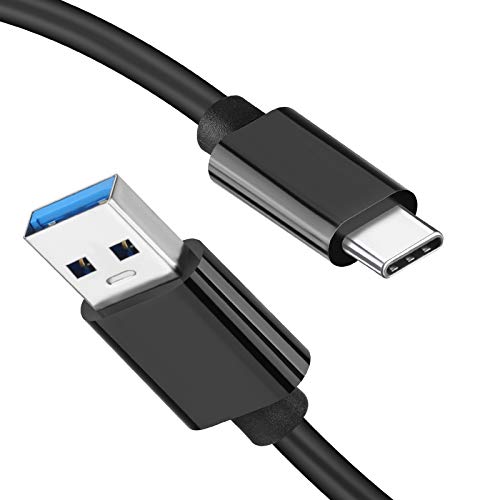
[ Excellent Performance ] This USB C 3.1 cable connects a portable external USB C 3.1 SSD to a computer for speedy file transfer or syncs and charges Samsung smartphones or tablets equipped with the USB C port. Data synchronization is 20 times faster than USB 2.0 cables (480Mbps). (Does not support video output.)

[Finder’s Red]: Quickly identify your Data-Sync cable in a tangle of different functions wires. No more guessing: Red = Fast Charge = Data Sync". Lab study: Red data cables reduce‘wrong unplugging’ by 62%. Spotted 3X faster than black in bags/offices. Ideal for travel, meetings, and late-night charging.

【40Gbps High-Speed Data Transfer】Experience fast data transfer with this usb 4 cable featuring up to 40Gbps bandwidth. Built for tethered shooting, it quickly transfers high-resolution RAW photos and 8K video files between cameras and computers. Ideal for Sony A7IV, Canon EOS R5/R6, Nikon Z8, external SSDs, and other usb c devices.
Related Guides
Frequently Asked Questions
Will using my phone’s hotspot drain its battery quickly?
Yes, using your phone’s hotspot can drain its battery quickly because your phone is sharing mobile data and broadcasting a Wi-Fi signal at the same time. To conserve power, limit usage time, reduce connected devices, lower screen brightness, and charge your phone while using the hotspot.
Can I use my phone’s hotspot for gaming on my laptop?
Yes, you can use your phone’s hotspot for gaming on your laptop, but performance depends on signal strength, latency, data limits, and network congestion. Online games may lag if your cellular signal is weak. For better results, keep your phone close, use a strong signal area, and avoid downloads while gaming.
Is there a data limit for using my phone’s hotspot?
Yes, many mobile plans include a hotspot data limit or reduce speeds after you use a certain amount of hotspot data. Check your provider’s plan details before using your laptop for streaming, large downloads, cloud backups, or long video calls.
Can multiple devices connect to my phone’s hotspot simultaneously?
Yes, multiple devices can connect to your phone’s hotspot simultaneously if your phone and plan support it. However, each connected device shares the same mobile data connection, so speed may drop and data usage may rise quickly.
How can I secure my phone’s hotspot from unauthorized access?
To secure your phone’s hotspot, use a strong password, choose WPA2 or WPA3 security if available, and avoid sharing the password publicly. You should also check connected devices and change the password if you see a device you do not recognize.
Why is my laptop connected to the hotspot but not loading websites?
Your laptop may be connected to the hotspot Wi-Fi signal while your phone has no mobile data connection. Check your phone’s cellular signal, mobile data setting, and plan status. Then restart the hotspot and reconnect your laptop.
Is USB tethering better than Wi-Fi hotspot?
USB tethering can be better when you want a more stable connection or need to charge your phone while sharing data. Wi-Fi hotspot is more convenient because it does not require a cable, but it can use more battery and may be affected by wireless interference.
Conclusion
Now you know how to use your phone’s hotspot on a laptop in a safe and reliable way. Turn on the hotspot, connect from your laptop’s Wi-Fi settings, and keep your phone close for a stronger signal. With a strong password, careful data use, and a few performance tweaks, your phone can become a useful backup internet connection whenever regular Wi-Fi is not available.
