
A concealed carry holster does more than keep a firearm out of sight. It helps protect the trigger, keeps the handgun secure during everyday movement, and reduces the risk of unauthorized access. Choosing the wrong holster—or using a good one incorrectly—can create serious safety problems.
Comfort matters, but it should never come at the expense of security. A holster that feels fine while standing may shift when you sit, bend, drive, or reach for something. Similarly, a design that conceals a handgun effectively may still be unsuitable if it leaves the trigger exposed or fails to hold the firearm securely.
There is also the legal side. In 2026, concealed carry regulations continue to differ across the United States. Permit requirements, restricted locations, vehicle transportation rules, and recognition of out-of-state permits all require careful attention.
This guide explains how concealed carry holsters work, what safety features matter, how common designs compare, and which legal responsibilities firearm owners should understand before carrying in public.
Legal note: This article focuses on the United States and reflects information reviewed as of September 26, 2026. It provides general safety and legal information, not individualized legal advice. Always verify current requirements with the appropriate state authorities.
What Is a Concealed Carry Holster?
A concealed carry holster is a device designed to hold a handgun securely while allowing it to be carried discreetly, where permitted by law.
Unlike simply placing a firearm inside a pocket, bag, or waistband, a properly designed holster provides a defined compartment for the handgun. It should protect the trigger, maintain the firearm’s position, and prevent unintended movement.
The most important distinction is that concealment and safety are not the same thing.
A handgun can be completely hidden while sitting in a poorly designed holster. Conversely, a well-made holster may offer excellent retention and trigger protection but feel uncomfortable or difficult to conceal with certain clothing.
A suitable concealed carry setup balances security, proper firearm fit, comfort, and applicable legal requirements.
Why Holster Safety Matters More Than Appearance
A holster is one part of a larger firearm safety system. It cannot replace safe handling, training, or secure storage.
A reliable design should help prevent several avoidable problems.
The first is accidental contact with the trigger. Clothing, fingers, and foreign objects must not be able to enter the trigger area while the handgun is secured.
The second is unintended movement. A firearm that shifts, rotates, or slips out of its holster can create a dangerous situation, particularly during ordinary activities such as sitting down, climbing stairs, or getting into a vehicle.
The third concern is unauthorized access. A loose handgun in an unattended bag or vehicle may be accessible to children or other individuals.
The Bureau of Alcohol, Tobacco, Firearms and Explosives (ATF) emphasizes treating every firearm as loaded, keeping the muzzle pointed in a safe direction, and keeping fingers outside the trigger guard unless intentionally firing.
A good holster supports safe behavior. It does not make unsafe behavior acceptable.
Essential Features of a Safe Concealed Carry Holster
Before considering style, material, or appearance, evaluate how the holster performs its primary safety functions.
[Amazon Products Picked for You]

【Wide Adaptability】This Universal Hybrid Kydex&Nylon holster fits over 50+ handguns. Please check the image to see specific gun models that fit in this holster. Compatible with G17 G19, Taurus G2C G3C, Sig P365XL P320, Springfield 1911 XD45, S&W SD9 VE M&P9 M&P Shield and More.

【US Kydex & Design, Perfectly fit】Compatible with Glock 19/ 19X/ 44/ 45 Gen 1-6 & Glock 23/32 Gen 3-4 & Glock 17 Gen 3-5 (muzzle extends ~0.5" past holster) & Glock 26/27/33 Gen 3-5 (muzzle sits ~0.9" inside) & listed models' MOS & Ruger RXM & Shadow Systems MR920 /MR920L ELITE / MR920 ELITE. The holster Open muzzle design fits threaded barrels & compensators. NOTE: Not fit G23/32 Gen 5 & model equipped with laser / light / Red dot

THE ONLY BELLY BAND THAT EFFECTIVELY ALLOWS YOU TO CARRY WITH YOUR OWN HOLSTER FOR ULTIMATE SAFETY AND SECURITY– Stop compromising with unsafe elastic pockets. Our modular belly band system is designed to carry your actual IWB holster (Kydex, leather, etc.), ensuring complete trigger guard protection and a secure, positive-retention fit. Nothing is more important than carrying safely, and this is the only belly band that provides the peace of mind you get from your trusted, everyday-carry holster.
Complete Trigger Guard Protection
The holster must provide adequate protection around the trigger guard.
When the firearm is properly seated, the trigger should not be accessible through the holster material or an opening in its construction.
A loose fabric pocket or an overly flexible holster may allow pressure from an outside object to reach the trigger. This is particularly concerning when a firearm is carried close to the body.
Choose a design that maintains its protective shape during normal use.
Some holsters made for firearms with mounted accessories have different openings around the trigger guard. These require especially careful evaluation against the manufacturer’s approved firearm and accessory combinations.
Proper Firearm Compatibility
Not every holster fits every handgun.
Even models from the same manufacturer can differ in dimensions, controls, and trigger guard shape.
A holster advertised as universal may accommodate multiple firearms, but its broad compatibility does not automatically make it suitable for every configuration.
For safety, confirm the manufacturer’s stated compatibility with the exact firearm model and any attached accessories.
Avoid forcing a handgun into an incompatible holster or modifying its internal shape to accommodate a firearm that was not intended to fit.
Reliable Retention
Retention describes how securely a holster holds a firearm in place.
A suitable holster should prevent the firearm from slipping out during ordinary movement while remaining compatible with the manufacturer’s intended handling procedures.
Some designs rely on friction or molded contours. Others incorporate additional retention mechanisms.
The appropriate design depends on the firearm, the holster, and the owner’s training.
Excessive looseness is a concern, but additional retention hardware is not automatically better if the user does not understand how it functions.
Secure Attachment
A quality holster also needs a dependable attachment system.
Clips, loops, fasteners, and supporting belts should maintain their intended position during normal movement.
If the holster repeatedly shifts or comes loose, the problem should be corrected before continued use.
Durable Construction
A holster must retain its protective shape over time.
Cracked shells, weakened clips, damaged stitching, and loose screws can affect performance.
Inspect the holster periodically rather than assuming that a product remains safe simply because it worked when new.
Common Types of Concealed Carry Holsters
There is no single holster design that suits every person, firearm, or daily routine.
Each category has practical advantages and limitations.
| Holster Type | Main Characteristics | Important Considerations |
|---|---|---|
| Inside-the-waistband (IWB) | Worn inside the waistband | Fit, secure attachment, and pressure against the body |
| Appendix IWB (AIWB) | Positioned toward the front of the waistband | Requires particular care with muzzle direction and safe handling |
| Outside-the-waistband (OWB) | Worn outside the waistband | Concealment depends on clothing and applicable law |
| Pocket holster | Designed for compatible smaller handguns | Must maintain trigger protection and remain secure |
| Shoulder holster | Uses a shoulder-mounted support system | Requires careful evaluation of muzzle orientation and retention |
| Off-body holster | Integrated into a bag or other carrying item | Greater risk of loss, theft, or unauthorized access |
Inside-the-Waistband Holsters
IWB holsters are designed to fit between the body and the waistband.
They are commonly considered because they can offer discreet carry without requiring a separate outer carrying bag.
However, waistband pressure, clothing interference, and poor attachment can create problems.
A rigid, properly fitted holster is important, especially when the firearm is carried close to the body.
Appendix Inside-the-Waistband Holsters
AIWB holsters are positioned toward the front of the waist.
Their location makes careful firearm handling particularly important because the handgun is close to sensitive areas of the body.
A properly designed holster, complete trigger protection, and qualified instruction are essential considerations.
A person should never attempt to compensate for an uncomfortable or incompatible setup by disregarding the manufacturer’s safety instructions.
Outside-the-Waistband Holsters
OWB holsters sit outside the waistband.
Some users find that this arrangement distributes pressure differently from an inside-the-waistband design.
However, an OWB holster may become visible when clothing moves or changes position.
Because open and concealed carry are regulated differently in some jurisdictions, visibility can also have legal implications.
Pocket Holsters
A pocket holster is intended for a compatible handgun and should prevent objects inside the pocket from contacting the trigger.
A loose firearm should never be placed in a pocket with keys, coins, or other objects.
The holster must maintain its shape and provide adequate retention.
Off-Body Holsters
Some bags and carrying cases include dedicated firearm compartments.
These products create additional considerations because the firearm is no longer continuously secured to the person’s body.
An unattended bag can be misplaced, stolen, or accessed by someone else.
If off-body storage is used, maintaining direct control and preventing unauthorized access are essential.
Kydex vs. Leather vs. Nylon Holsters
Material influences durability, comfort, moisture resistance, and how consistently a holster maintains its shape.
| Material | Characteristics | Safety Considerations |
|---|---|---|
| Kydex and rigid polymers | Molded construction, structural consistency, and easy cleaning | Inspect for cracking, poor fit, and damaged hardware |
| Leather | Traditional appearance and potentially comfortable carrying surface | Watch for deformation, moisture damage, and changes around the trigger area |
| Nylon and fabric | Lightweight and flexible construction | Ensure adequate trigger protection, retention, and shape stability |
[Amazon Products Picked for You]

CARRY WITH CONFIDENCE: Please feel free to use our portable holster to protect your Glock 19 pistol. This is our high-quality Carbon Fiber Kydex Holster Custom Fit: Glock 19 / Glock 19X / Glock 25 / Glock 44 / Glock 45 (Gen 1-5) & Glock 23 / Glock 32 (Gen 3-4) Pistol. It is not only highly precise, but also rugged and durable, and can be hidden and portable, so you can protect yourself anytime, anywhere.
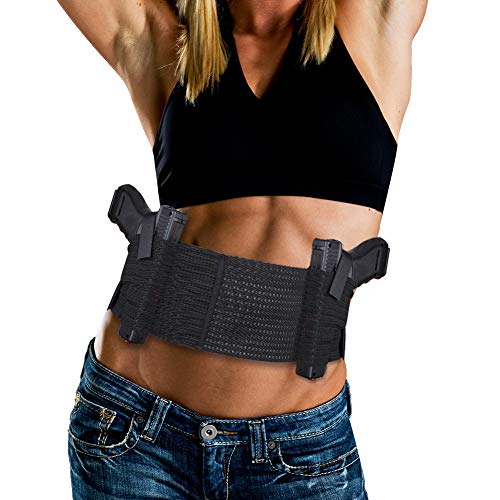
Accmor Belly Band is made of high elastic breathable fabric, lightweight, ventilated, anti-sweat, that is easy to wear against your skin, it’s comfortable to wear for long periods

Fits Most Gun Sizes: Our pistol holster was designed to accommodate most size firearm from a sub-compact handgun all the way up to a full-size. Fits perfectly on Glock 17, 19, 23, 38, 25, 32, 26, 27, 29, 30, 39, 28, 33,36 42, 43, 43x. It is also compatible with 1911, Sig Sauer P226&P238&P365, S&W, M&P, Ruger, Springfield, Kimber, Walther, and more 9mm, 380, 45ACP pistols,NOTICE: Gun attachments like laser sight and flashlight are not recommended to use with our holster
Kydex and Other Rigid Polymer Holsters
Rigid polymer holsters can be molded to specific firearm shapes and generally retain their structure well.
They are also relatively easy to clean, although cracks, damaged hardware, and poor fit remain concerns.
Leather Holsters
Leather can provide a comfortable carrying surface and a traditional appearance.
However, moisture, wear, and long-term deformation may affect fit and trigger protection.
Inspect leather carefully, particularly if the material has softened or changed shape near the trigger guard.
Nylon and Fabric Holsters
Fabric holsters can be lightweight and flexible.
Their suitability depends heavily on construction, including whether the trigger area is adequately protected and the holster maintains its intended shape.
Material alone does not determine safety. A poorly fitted rigid holster can be unsuitable, just as a properly engineered design made from another material may meet its intended requirements.
The critical factors remain fit, trigger protection, retention, and structural integrity.
Concealed Carry Holster Safety Rules Everyone Should Follow
Safe firearm ownership depends on consistent habits, not occasional caution.
The following checklist applies whether someone is new to concealed carry or has years of experience.
- Use a holster specifically approved for the firearm.
- Confirm that the trigger guard is adequately protected.
- Inspect clips, fasteners, and retention components regularly.
- Keep fingers away from the trigger during handling.
- Never force a firearm into a holster.
- Keep loose clothing and foreign objects away from the holster opening.
- Avoid unnecessary firearm handling in public.
- Maintain control of any bag containing a firearm.
- Use secure, locked storage when the firearm is not under direct control.
- Follow all applicable laws and manufacturer instructions.
An important point deserves emphasis: there is no reason to rush when returning a firearm to its holster. Clothing or another object entering the trigger guard can create a serious hazard.
Manufacturers also warn against using holsters with incompatible firearm configurations or attempting to reholster without adequate visibility and control.
Whenever uncertainty exists about a particular holster or firearm combination, seek instruction from a qualified firearms professional.
Concealed Carry Laws in 2026: What You Need to Know
A concealed carry holster may be legal to own without giving its owner permission to carry a firearm in public.
That distinction is essential.
In the United States, legal requirements depend on several factors, including the jurisdiction, the person’s eligibility to possess firearms, the type of firearm, and the location.
The ATF maintains a state-by-state firearms law reference. Its 36th edition was updated in January 2026. The agency advises consulting state or territorial attorneys general for questions about applicable requirements.
Permitless Carry Does Not Mean Carrying Anywhere
Some states allow eligible individuals to carry concealed firearms without obtaining a separate concealed carry permit.
However, permitless carry does not eliminate restrictions on prohibited persons, age requirements, restricted locations, or other applicable rules.
It also does not automatically authorize a person to carry in another state.
Always verify the specific conditions of the jurisdiction where you intend to carry.
Concealed Carry Permits and Reciprocity
Reciprocity refers to one jurisdiction recognizing a concealed carry permit issued by another.
Recognition is not universal.
A permit valid in one state may not be accepted in another, and some jurisdictions distinguish between resident and nonresident permits.
Before crossing state lines, review the destination state’s official permit-recognition guidance.
The National Park Service likewise advises visitors to verify the laws of each state they enter rather than assuming an out-of-state permit provides universal authorization.
Federal and State Firearm Restrictions
Federal firearm prohibitions apply independently of a state’s concealed carry rules.
Certain individuals are legally prohibited from possessing firearms under federal law. State laws may establish additional eligibility requirements or restrictions.
A concealed carry permit, holster, or permitless carry provision does not override those prohibitions.
Restricted Locations
Even where concealed carry is otherwise lawful, particular properties and facilities may be restricted.
Common categories requiring specific legal review include schools, federal facilities, courthouses, airports, government buildings, and certain private properties.
Rules differ significantly by jurisdiction and property type.
For example, federal law generally restricts firearm possession in federal facilities under 18 U.S.C. § 930, subject to statutory exceptions.
The federal Gun-Free School Zones Act also establishes restrictions involving schools and defined surrounding areas, with specific exceptions. State-issued licensing and out-of-state permit recognition must not be assumed to operate identically under that federal law.
Postal property is governed by separate regulations concerning firearms and other weapons.
A practical rule: Check the legal status of a destination before arriving, rather than waiting until you encounter a security checkpoint or restricted entrance.
Can You Carry a Concealed Firearm in a National Park?
Possessing a firearm in a national park is not automatically prohibited, but it is not universally permitted either.
The National Park Service explains that firearm possession generally depends on whether the individual may legally possess the firearm and whether possession complies with the applicable state and local laws.
Some parks cross state boundaries, meaning the governing rules may change within the same park.
Federal facilities inside parks, including visitor centers and ranger stations, generally remain subject to separate firearm restrictions.
Before visiting, consult the park’s official website and the firearms laws of the relevant jurisdiction.
Traveling With a Concealed Carry Firearm
Travel creates legal situations that do not necessarily arise during ordinary daily activities.
A person may be permitted to carry a handgun at home but face different requirements when crossing into another state.
Interstate Vehicle Transportation
Federal law provides certain protections for lawful interstate firearm transportation under 18 U.S.C. § 926A.
The statute establishes conditions involving lawful possession at the origin and destination, an unloaded firearm, and restrictions on access to the firearm and ammunition during transportation.
In vehicles without a separate storage compartment, the statute specifies locked-container requirements and excludes the glove compartment and console as qualifying locked containers.
This provision should not be interpreted as a general authorization to carry a loaded, concealed firearm in every state.
Additional state and local requirements may apply, and the facts of an individual journey matter.
Flying With a Firearm
For ordinary civilian air travel, a firearm cannot simply remain in a concealed carry holster inside carry-on baggage.
The Transportation Security Administration (TSA) requires firearms transported in checked baggage to be unloaded, secured in a locked hard-sided container, and declared to the airline.
Ammunition also has packaging requirements, and travelers must comply with airline policies and applicable laws at their origin and destination.
Review the latest TSA and airline instructions before traveling.
Vehicle Carry and Storage Safety
A handgun carried in a vehicle presents two separate questions: Is it being carried legally, and is it secured against unintended access?
Vehicle carry laws vary by state. Some jurisdictions distinguish between loaded and unloaded firearms or impose specific requirements involving permits and storage locations.
From a safety perspective, leaving a handgun loose in a vehicle creates risks.
An unsecured firearm may move during sudden braking. It may also become accessible to passengers or someone who enters the vehicle.
A vehicle holster should never be treated as a replacement for appropriate secured storage.
When leaving a firearm in a vehicle, a properly secured lock box or similar locking device offers more protection than an unlocked glove compartment or center console.
The ATF specifically recommends secure storage devices for firearms left in vehicles because of theft concerns.
Concealed Carry Holsters and Child Safety
A holster that keeps a handgun secure during daily movement is not necessarily sufficient to prevent a child from accessing it.
Children may discover firearms in places adults assume are hidden.
A firearm placed in a drawer, backpack, closet, or vehicle can still be accessible.
The Centers for Disease Control and Prevention (CDC) recommends storing firearms unloaded in a locked safe or lock box, with ammunition stored separately. Merely keeping a firearm out of sight is not secure storage.
Households with children should establish clear storage practices and ensure that keys, access codes, and other means of opening storage devices remain inaccessible to unauthorized users.
The same consideration applies when children visit a home, even temporarily.
Training: The Part a Holster Cannot Replace
Buying a well-made holster is relatively straightforward. Developing consistent firearm safety habits requires education and continued attention.
A qualified instructor can help a person understand safe handling, equipment limitations, and applicable legal responsibilities.
Training should address more than the mechanical operation of a firearm.
It should also cover avoiding confrontation, understanding the consequences of firearm use, emergency communication, and recognizing when carrying is legally prohibited.
Firearm owners should seek instruction appropriate to their experience and equipment.
Understanding Self-Defense Laws
Concealed carry authorization and lawful use of deadly force are separate legal matters.
A permit does not provide general permission to threaten or use a firearm.
Self-defense laws address circumstances such as an imminent threat, necessity, reasonable perception, and applicable duties concerning retreat. The precise legal standards differ by jurisdiction.
States also differ in how they define and apply stand-your-ground and castle-doctrine provisions.
Those rules should never be treated as interchangeable.
For jurisdiction-specific questions, consult the governing statutes and a qualified attorney.
De-escalation, avoiding unnecessary confrontation, and contacting emergency services remain important safety practices.
Common Concealed Carry Holster Mistakes
Many holster-related problems arise from ordinary habits rather than dramatic equipment failures.
Choosing a Holster Based Only on Price or Appearance
One common mistake is choosing a holster primarily because it is inexpensive or discreet.
If its construction allows trigger access or it cannot maintain firearm retention, those advantages are not enough.
Using an Incompatible Holster
Another mistake is using a holster intended for a different handgun model.
Even when the firearm appears to fit, the holster may contact controls incorrectly or fail to protect the trigger adequately.
Ignoring Clothing Interference
Some owners overlook clothing compatibility.
Loose garments, drawstrings, and other objects can interfere with safe handling.
Clothing should never compromise the holster’s protective function.
Frequently Adjusting the Firearm
Unnecessary adjustment is another concern.
Repeatedly touching or repositioning a carried firearm increases handling and creates opportunities for mistakes.
Confusing Concealment With Secure Storage
Finally, some people mistake concealment for secure storage.
A firearm hidden beneath clothing or inside a bag is not automatically protected from unauthorized access.
These problems reinforce a simple principle: equipment should support safe behavior, not require unsafe compromises.
How to Maintain a Concealed Carry Holster
Holsters experience regular wear from clothing, movement, moisture, and temperature changes.
A basic inspection should include checking the shell or body for deformation, examining attachment hardware, and looking for damaged stitching or worn retention components.
Leather holsters deserve attention for changes in shape, particularly around the trigger area.
Rigid polymer holsters should be checked for cracks and loose fasteners.
Use cleaning and maintenance methods recommended by the manufacturer. Avoid unapproved modifications or chemicals that might weaken the material.
If a holster no longer provides its intended protection, discontinue its use until the manufacturer or a qualified professional can evaluate it.
Do not continue using damaged equipment simply because the firearm still appears to fit.
How to Choose a Concealed Carry Holster in 2026
The number of available designs can make choosing a holster feel more complicated than it needs to be.
Start with safety requirements rather than appearance.
Confirm that the holster is manufactured for the exact firearm configuration. Evaluate whether its construction protects the trigger, maintains retention, and stays securely attached.
Then consider how the design interacts with ordinary clothing and daily movement.
A comfortable holster should not create sharp pressure, repeated shifting, or other problems that encourage unnecessary firearm handling.
Manufacturer documentation is especially important when the firearm has mounted accessories or modifications.
For someone unfamiliar with concealed carry equipment, consulting a qualified instructor or reputable firearms professional can help identify compatibility and safety concerns before regular use.
No holster should be considered safe solely because it is popular, expensive, or advertised as suitable for concealed carry.
[Amazon Products Picked for You]

Fits Most Gun Sizes: Our pistol holster was designed to accommodate most size firearm from a sub-compact handgun all the way up to a full-size. Fits perfectly on Glock 17, 19, 23, 38, 25, 32, 26, 27, 29, 30, 39, 28, 33,36 42, 43, 43x. It is also compatible with 1911, Sig Sauer P226&P238&P365, S&W, M&P, Ruger, Springfield, Kimber, Walther, and more 9mm, 380, 45ACP pistols,NOTICE: Gun attachments like laser sight and flashlight are not recommended to use with our holster

CONCEAL CARRY POCKET HOLSTER - The Desantis Nemesis is a discrete and secure ambidextrous pocket holster. It was made to fit the the Glock 43 and Glock 43X
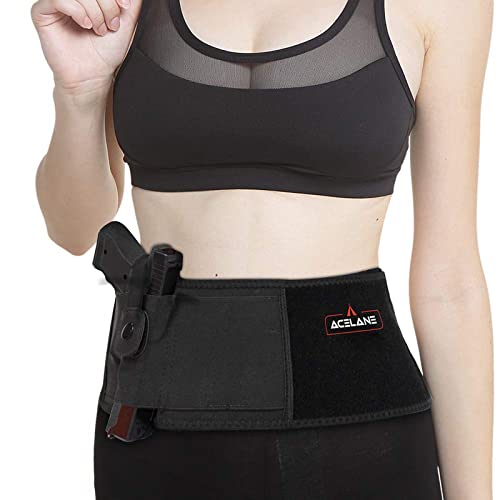
One Holster Fits All Hand Gun - The holster fits small subcompact, compact, and even full size pistols and revolvers, Glock 19, 23, 38, 25, 32, 26, 27, 29, 30, 39, 28, 33, 42, 43, 36, Smith and Wesson, Bodyguard, M&P Shield, Sig Sauer, Ruger, Kahr, Beretta, Springfield, Taurus, Kimber, Rock Island, Bersa, Kel Tec, Walther, and more.
Frequently Asked Questions
What is the safest type of concealed carry holster?
There is no universally safest style for every person and firearm. Important considerations include complete trigger protection, appropriate retention, secure attachment, and manufacturer-approved firearm compatibility. Proper handling and training remain essential.
Is Kydex better than leather for concealed carry?
Rigid polymer holsters generally maintain their molded shape well, while leather may offer different comfort characteristics. The suitability of either material depends on construction, fit, wear, and trigger protection.
Can I use a universal holster for concealed carry?
A universal holster should not be assumed suitable simply because a handgun fits inside it. Confirm the manufacturer’s compatibility guidance and ensure that retention and trigger protection remain adequate.
Do I need a concealed carry permit in 2026?
The answer depends on the jurisdiction and the individual. Some states have permitless carry provisions, while others require permits or impose additional conditions. Verify current requirements with the appropriate state authority.
Can I use my concealed carry permit in another state?
Not automatically. Permit recognition differs among states and may depend on residency or other conditions. Check the destination state’s official reciprocity guidance before carrying.
Can I leave my firearm inside its holster at home?
A holster is not a substitute for secure firearm storage. When a firearm is not under direct control, use an appropriate locking storage device that prevents unauthorized access. The CDC recommends storing firearms unloaded and locked, separate from ammunition.
Is it safe to carry a handgun without a holster?
Carrying a handgun loose in clothing or a bag creates avoidable risks involving trigger contact, movement, and unauthorized access. A properly fitted holster provides protective features that ordinary pockets and compartments generally do not.
How often should I replace my holster?
There is no universal replacement interval. Replace or professionally evaluate a holster when wear, deformation, damaged hardware, or loss of retention compromises its intended safety function.
Final Thoughts
Choosing a concealed carry holster is not simply about finding something small enough to disappear under clothing.
The right equipment must protect the trigger, hold the firearm securely, maintain its intended fit, and remain dependable during ordinary daily activities.
However, even an excellent holster cannot compensate for unsafe handling, inadequate training, or failure to follow the law.
In 2026, concealed carry owners must pay particular attention to jurisdiction-specific requirements, permit recognition, restricted locations, and transportation rules.
Prioritize safe equipment, responsible handling, secure storage, and verified legal information. Those habits matter far more than the appearance or popularity of any particular holster.
Authoritative Sources and Further Reading
For current firearm safety guidance and legal requirements, consult the following official resources:
- Bureau of Alcohol, Tobacco, Firearms and Explosives (ATF) — Firearms Information
- Transportation Security Administration (TSA) — Transporting Firearms and Ammunition
- National Park Service — Firearms in National Parks
- Centers for Disease Control and Prevention (CDC) — Firearm Injury Prevention
- United States Code — Federal Firearms Laws
