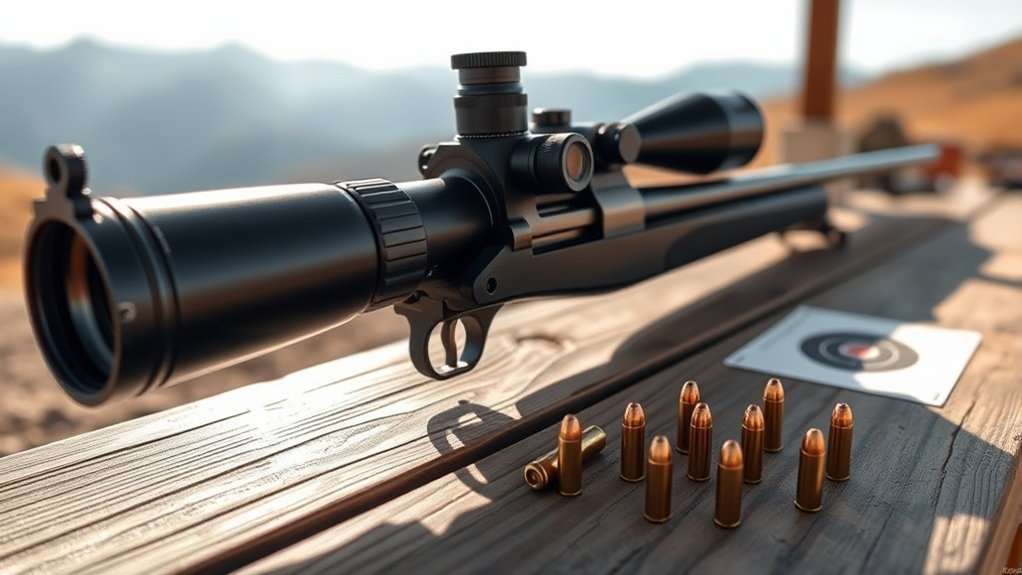
Rifle scope magnification controls how large a distant object appears through the optic, but more power is not automatically better. Increasing magnification usually gives a closer view while reducing field of view and making movement, eye position, optical quality, and parallax more noticeable. The useful setting depends on the scope itself, the viewing distance, target size, conditions, and how much surrounding area needs to remain visible.
Quick Answer
Rifle scope magnification describes how many times larger an object appears compared with the unaided eye. Higher magnification reveals more apparent detail but normally reduces field of view and makes the sight picture less forgiving. There is no universal magnification-to-distance formula, so power should be chosen according to the optic, conditions, and intended lawful use.
Key Takeaways
- A designation such as 3-9×40 means 3× to 9× magnification with a 40 mm objective lens.
- Higher magnification normally gives a narrower field of view and makes small movements easier to notice.
- Magnification alone does not establish the useful or safe distance of a rifle-and-scope combination.
- Eye relief, field of view, parallax behavior, and image quality vary by scope model.
- FFP and SFP reticles behave differently as magnification changes, so the scope manual matters.
- Before handling or adjusting an optic mounted on a firearm, verify that the firearm is unloaded and keep it pointed in a safe direction.
What Does Rifle Scope Magnification Mean?
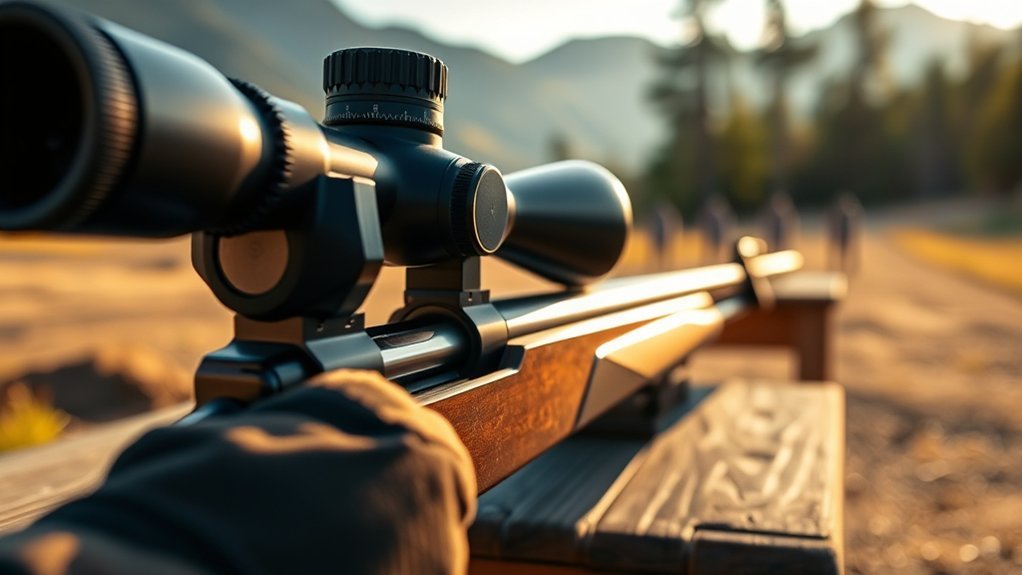
Rifle scope magnification is the optical enlargement of the scene seen through the scope. An optic at 1× presents an object at roughly the same apparent scale as normal vision, while 3× makes it appear about three times larger. Leupold describes magnification as a measurement of how strongly an optic enlarges the object being viewed.
A marking such as 3-9×40 contains two different specifications. The first two numbers describe the adjustable magnification range: 3× at the low end and 9× at the high end. The final number, 40, is the approximate objective-lens diameter in millimeters. It is not another magnification value.
Magnification enlarges the apparent image; it does not by itself determine a firearm’s useful range.
A fixed-power scope has one magnification setting. A variable-power scope covers a range such as 3-9×, 4-12×, or 5-25×. Variable optics allow the user to trade a wider view at lower power for a larger apparent image at higher power.
The familiar “1× per 100 yards” saying is sometimes used as a rough rule of thumb, but it should not be treated as a range formula. A 9× scope does not automatically make a firearm, cartridge, shooter, or target appropriate for 900 yards. Optical quality, target size, atmospheric conditions, stability, eyesight, equipment, training, and range rules all matter.
How Much Rifle Scope Magnification Do You Need?
There is no single correct magnification for a particular distance. A useful setting provides enough apparent detail while preserving a comfortable field of view and a stable sight picture. The best choice also varies with target size, lighting, terrain, optical quality, eyesight, and whether the object is stationary or moving.
Lower magnification normally makes it easier to see more of the surrounding area. Higher power enlarges the apparent image but reduces how much of the scene fits inside the scope at one time. Leupold’s magnification guidance similarly notes that maximum power is not always desirable because field of view becomes smaller and apparent movement becomes more noticeable.
Note: Do not convert magnification directly into a maximum shooting distance. A scope’s power is only one part of a much larger system, and no magnification setting makes an otherwise unsuitable shot safe or appropriate.
When comparing scopes, consider the entire magnification range rather than only the maximum number. A very high top-end setting may be useful in some controlled range or competition contexts, while a lower minimum setting can provide a wider, easier-to-navigate view. The scope manufacturer’s field-of-view, eye-relief, exit-pupil, and parallax specifications provide more useful information than magnification alone.
Fixed or Variable Rifle Scope Magnification?
Fixed-power scopes use one magnification level, while variable-power scopes allow the user to change power within a specified range. Neither design is automatically better in optical quality. Glass quality, coatings, internal design, manufacturing tolerances, and the individual model all affect clarity and performance.
Fixed Scope Benefits
A fixed scope has no magnification range to manage, which makes operation simple and predictable. Depending on the model, fixed-power designs may also be lighter or mechanically simpler than variable alternatives.
The same magnification is presented every time the optic is used, so field of view and apparent image scale remain consistent. That can be convenient when the intended viewing conditions rarely change.
However, a fixed design should not automatically be assumed to have better glass, greater sharpness, or better low-light performance. Those qualities depend on the individual optic rather than the absence of a zoom mechanism.
Variable Scope Advantages
Variable scopes allow magnification to be changed as viewing conditions change. Common examples include 3-9×, 4-12×, and wider zoom ranges found on newer optics.
- Lower power generally provides a wider field of view.
- Middle settings can provide a balance between apparent detail and visual coverage.
- Higher power enlarges the target image but normally narrows the visible area and makes movement easier to notice.
Variable optics contain additional moving optical components, so specifications such as eye relief, exit pupil, field of view, and reticle behavior should be checked across the full magnification range rather than assumed from the model name alone.
How Rifle Scope Magnification Changes Field of View
Field of view is the width of the scene visible through the scope at a specified distance. As magnification increases, field of view normally becomes narrower.
The exact numbers are model-specific. For example, Leupold lists one current 3-9×40 scope at approximately 33.7 feet at 100 yards on 3× and 13.6 feet at 100 yards on 9×. A current Bushnell 3-9×40 model lists approximately 37.5 feet at 3× and 13 feet at 9×. The shared pattern is more important than the exact figures: higher magnification shows a smaller slice of the surrounding scene.
This narrower view can make it harder to relocate an object that leaves the sight picture or to follow rapid movement. For that reason, maximum magnification should not be treated as the default setting for every situation.
How Magnification Changes Exit Pupil
Exit pupil is the small disk of light leaving the eyepiece toward the eye. In simplified terms, it is closely related to the effective objective diameter divided by magnification. As magnification rises, the exit pupil commonly becomes smaller.
A smaller exit pupil can make exact eye positioning more noticeable, particularly when light levels are low or the user’s eye is not centered behind the optic. This is one reason a high-power sight picture can feel less forgiving even when the scope’s published eye-relief distance changes very little.
Exit pupil should not be confused with eye relief. Exit pupil describes the bundle of light leaving the optic; eye relief describes the distance between the eye and eyepiece at which the full image can be seen.
How Rifle Scope Magnification Affects Parallax and Eye Relief
Parallax error occurs when the target image and reticle are not effectively in the same optical plane. When the viewer moves the eye behind the scope, the reticle may appear to move relative to the target. Bushnell notes that this effect can become more noticeable when a scope is used at higher power.
Some scopes have a fixed parallax setting, while others use a side-focus or adjustable-objective control. There is no universal distance, such as 150 yards, at which parallax suddenly becomes relevant. Current scopes can have fixed parallax specifications of 50, 100, or 150 yards, while adjustable models may focus across a much broader range.
Eye relief is the distance from the eyepiece at which the viewer can see the complete image. It is model-specific and may change across the zoom range. Some scopes lose a small amount of eye relief at higher magnification; other designs remain nearly constant or behave differently.
Pro Tip: When checking a variable scope’s mounting position, consult its manual and verify a full, shadow-free sight picture at the manufacturer’s recommended magnification. Several manufacturers specifically recommend checking eye relief at maximum power because that setting can be the least forgiving on some models.
How FFP and SFP Reticles React to Magnification
First Focal Plane (FFP) and Second Focal Plane (SFP) describe where the reticle is positioned within a variable scope’s optical system.
With an FFP scope, the apparent reticle size changes with the image as magnification changes. Vortex explains that the image and reticle grow or shrink together, keeping their scale relative to one another consistent throughout the magnification range.
With an SFP scope, the target image changes size as magnification changes but the reticle appears to remain the same visual size. Any reticle measurements or subtensions therefore depend on the magnification setting specified by the manufacturer.
This distinction is more useful than broad claims that one focal-plane type is universally preferable. The right design depends on the intended use, reticle, magnification range, visibility preferences, and manufacturer’s instructions.
How to Adjust Rifle Scope Magnification
Warning: Before working on or adjusting an optic mounted to a firearm, verify that the firearm is unloaded according to its manufacturer’s instructions, keep the muzzle pointed in a safe direction, and keep your finger away from the trigger. Do not use a firearm-mounted scope as a substitute for binoculars or a spotting scope when identifying objects.
At a Glance
| Time Required | Less than a minute for a normal power change |
| Difficulty | Easy once the optic’s controls are identified |
| Tools Needed | None for ordinary magnification-ring adjustment |
| Cost | No additional cost |
On most variable scopes, magnification is changed with the power selector ring near the eyepiece. The ring carries marked values showing the available magnification settings.
Rotate the ring until the desired marked value aligns with the scope’s index mark. Do not assume that clockwise or counterclockwise rotation has the same effect on every model; follow the markings and the manufacturer’s manual.
Magnification Ring Adjustment
Begin by identifying the scope’s magnification scale. On a 3-9× optic, for example, the scale runs from approximately 3× at the low end to 9× at the high end, with intermediate settings between them.
- Moving toward the lower end gives a wider field of view.
- Moving toward the higher end makes the image appear larger while narrowing the visible scene.
- If black edges appear around the image, check eye position and the scope’s specified eye-relief range.
The ring should move smoothly through its intended range. If it binds, slips, or no longer corresponds with the marked settings, consult the manufacturer’s support information rather than forcing it.
Set Proper Power
A practical magnification setting is the lowest power that still provides the apparent detail needed for the lawful viewing task. This preserves more field of view and usually makes the image easier to acquire and maintain.
Increase magnification only when additional image detail is useful. If the image becomes difficult to hold steady, field of view becomes too restrictive, or eye position becomes uncomfortable, reducing power can produce a more usable sight picture.
Changing magnification normally does not require re-zeroing a properly functioning scope. If a repeatable point-of-impact shift appears when zoom changes, check the optic and mounting system according to the manufacturer’s troubleshooting guidance.
Common Rifle Scope Magnification Mistakes
One of the most common mistakes is assuming that maximum magnification always produces better results. Higher power enlarges apparent detail, but it also reduces field of view and makes normal movement easier to see.
Choose magnification for a usable sight picture, not simply for the largest possible image.
- Treating magnification as a range rating: a 9× scope is not automatically a “900-yard scope.”
- Ignoring model-specific field of view: scopes with the same magnification range can have different FOV specifications.
- Assuming eye relief is constant: check the manufacturer’s low- and high-power specifications.
- Confusing parallax adjustment with eyepiece focus: the diopter focuses the reticle for the user’s eye, while parallax adjustment addresses the relationship between the reticle and target image.
- Misunderstanding SFP reticles: reticle subtensions on many SFP designs correspond to a particular magnification specified by the manufacturer.
- Using a firearm-mounted scope for general observation: use binoculars or a spotting scope instead so the firearm is not pointed at something merely to identify it.
- Forcing a stiff power ring: unusual resistance can indicate contamination, damage, or another problem that should be checked rather than forced.
Rifle Scope Magnification Troubleshooting
Black ring or shadow around the image: the eye may be outside the optic’s usable eye-relief or eye-box position. Move your head naturally until the full image appears and check the scope’s published eye-relief specification.
Reticle appears to move across the target when your head moves: this can indicate parallax error. If the scope has adjustable parallax or side focus, follow the manufacturer’s instructions for that control.
Image becomes less comfortable at high power: a smaller exit pupil, narrower field of view, atmospheric distortion, or normal body movement may be contributing. Reducing magnification can improve usability.
Apparent zero changes unexpectedly: do not assume magnification itself changed bullet trajectory. Manufacturer troubleshooting guidance identifies possible causes throughout the system, including mounts, fasteners, ammunition, the optic, firearm, shooting position, and adjustment limits.
Frequently Asked Questions
Does Changing the Magnification on a Scope Change the Point of Impact?
Magnification does not change bullet trajectory. A properly functioning scope should maintain its zero through its intended magnification range. If point of impact changes repeatedly with zoom, inspect the mounting system and optic according to manufacturer guidance. Also remember that SFP reticle subtensions can represent different angular values at different magnification settings.
How Much Magnification Do You Need to Shoot 1000 Yards?
There is no universal minimum or ideal magnification for a fixed distance such as 1,000 yards. Target size, optical resolution, eyesight, conditions, equipment, stability, training, and range rules all affect what is appropriate. High magnification can reveal more apparent detail, but excessive power can also reduce field of view and make movement and atmospheric distortion more obvious.
Do Snipers Prefer FFP or SFP?
There is no single focal-plane preference that applies to every professional user or organization. FFP scopes keep the reticle scale proportional to the image throughout the zoom range, while an SFP reticle stays the same apparent size and normally has calibrated subtensions at a specified magnification. Equipment selection depends on the optic, reticle, role, procurement requirements, and user preference.
How to Change Scope Magnification?
After confirming that the firearm is safely unloaded when handling or working on it, locate the variable scope’s power-selector ring near the eyepiece. Rotate the ring until the desired numbered magnification aligns with the index mark. Follow the scope manual because control direction, markings, and eye-relief behavior vary by model.
Conclusion
Rifle scope magnification changes apparent image size, field of view, exit pupil, and how noticeable movement or parallax can become. Higher power can reveal more apparent detail, but it is not automatically more useful and should never be treated as a simple measure of shooting distance.
The most useful approach is to understand the complete optic: its magnification range, field of view, eye relief, focal plane, exit pupil, parallax system, and manufacturer instructions. Selecting only as much magnification as the situation requires generally provides a more manageable sight picture than simply defaulting to maximum power.
Sources
- Leupold — Riflescope Magnification 101 — explains magnification, field-of-view tradeoffs, and choosing power according to viewing conditions.
- Leupold — Understanding the Numbers on Your Riflescope — explains magnification ranges and objective-lens specifications.
- Leupold — Riflescope Owner’s Manual — supports eye-relief setup, optic controls, and unloaded-firearm precautions.
- Vortex Optics — FAQs — explains the optical difference between first- and second-focal-plane reticles.
- Bushnell — Adjusting Parallax — explains parallax error and adjustable parallax controls.
- NSSF — Rules of Safe Gun Handling — supports the firearm-safety precautions used in this guide.