Understanding National Firearms Act (NFA) items matters because these firearms and devices follow a different legal process than standard firearms. The NFA covers specific categories such as suppressors, machine guns, short-barreled rifles, short-barreled shotguns, destructive devices, and certain “any other weapon” firearms. If you plan to buy, transfer, make, store, or transport one, you need to understand the paperwork, tax requirements, registration rules, and legal responsibilities before you begin.
Quick Answer
NFA items are firearms or devices regulated under the National Firearms Act, including suppressors, machine guns, short-barreled rifles, short-barreled shotguns, destructive devices, and some “any other weapon” firearms. They require federal registration, ATF approval for most transfers, background checks, and usually a tax stamp before lawful possession.
Key Takeaways
- NFA items are not the same as standard firearms. They fall under stricter federal rules because of their design, function, or intended use.
- Most transfers require ATF approval first. You generally cannot take possession until the required form is approved.
- A tax stamp is usually required. Many NFA transfers or making applications involve a federal tax, commonly $200 depending on the item and form.
- State and local laws still matter. Federal approval does not automatically make possession legal in every state, county, or city.
- Good records and secure storage help protect you. Keep approved paperwork accessible and treat compliance as an ongoing responsibility.
What Is the National Firearms Act (NFA)?
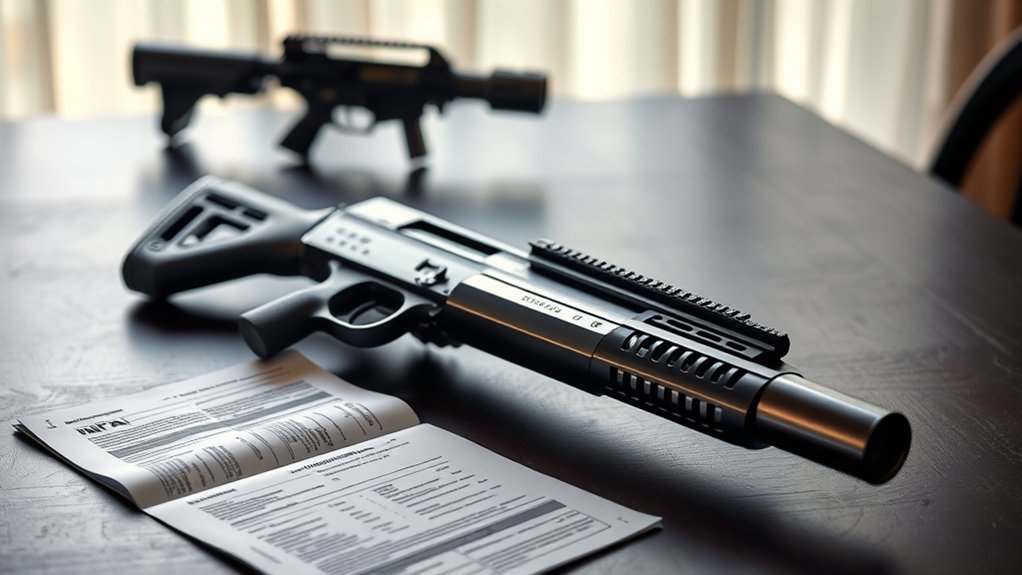
The National Firearms Act, often called the NFA, is a federal law that regulates certain firearms and firearm-related devices in the United States. It was enacted in 1934 and created a federal registration and taxation system for specific weapons and devices that Congress placed under tighter control.
The NFA does not ban every item it covers. Instead, it creates rules for lawful making, transfer, registration, and possession. These rules apply to items such as machine guns, suppressors, short-barreled rifles, short-barreled shotguns, destructive devices, and some firearms classified as “any other weapon.”
For gun owners, the most important point is simple: an NFA item usually requires more than a normal firearm purchase. You may need an approved ATF form, fingerprints, photographs, a background check, registration, and a tax payment before you can legally possess the item.
The Bureau of Alcohol, Tobacco, Firearms and Explosives, known as the ATF, administers federal NFA registration and transfer rules. Because state and local rules can also restrict NFA items, you need to check every layer of law before buying or building one.
Warning: This article is general educational information, not legal advice. NFA violations can carry serious criminal penalties. Always confirm current federal, state, and local rules before making, buying, transporting, or transferring an NFA item.
Overview of NFA Items
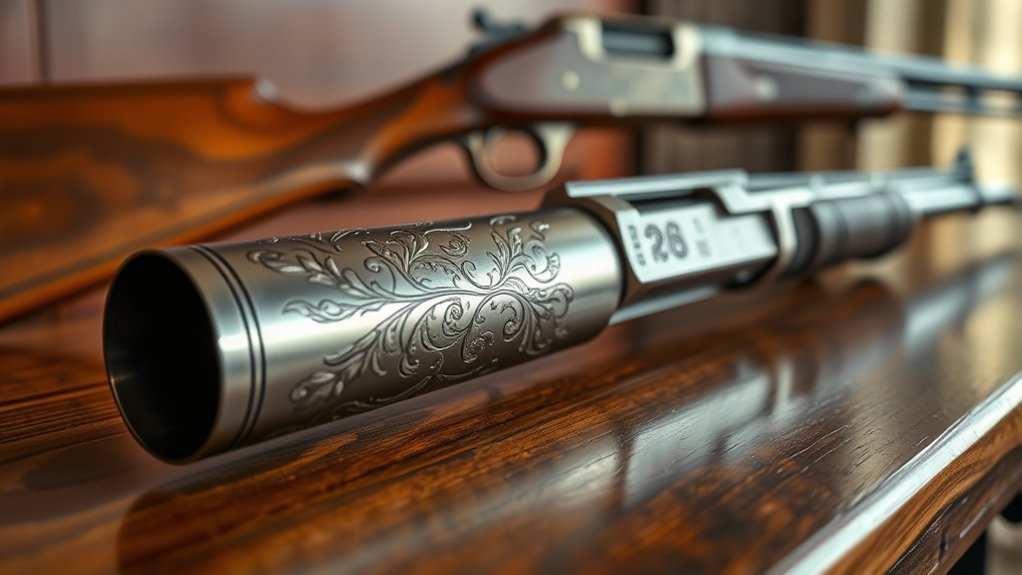
NFA items are specific weapons and devices regulated under the National Firearms Act. They include suppressors, short-barreled rifles, short-barreled shotguns, machine guns, destructive devices, and certain firearms that fall into the “any other weapon” category.
These items are different from standard handguns, rifles, and shotguns because they trigger a separate federal registration and approval process. The exact process depends on whether you are buying an existing item, making one, transferring one through a dealer, or receiving one through another lawful method.
Understanding the basic categories helps you avoid common mistakes. For example, a rifle with a barrel below the legal length threshold may become an NFA-regulated short-barreled rifle. A device designed to reduce firearm sound may be regulated as a suppressor, even if someone calls it by another name.
Definition of NFA Items
Firearms enthusiasts often use the term “NFA items” as shorthand for firearms and devices controlled by the National Firearms Act. The label does not describe one single type of firearm. Instead, it covers several categories that federal law treats differently from standard firearms.
NFA items include machine guns, short-barreled rifles, short-barreled shotguns, suppressors, destructive devices, and some any other weapon firearms. These categories can depend on design, barrel length, overall length, firing function, bore size, or concealability.
When you own an NFA item, you are responsible for keeping it registered and maintaining lawful possession. That responsibility may include retaining approved ATF paperwork, following transfer rules, understanding transport requirements, and confirming that your state allows the item.
Types of NFA Items
Understanding the main types of NFA items is essential before you shop, build, or modify a firearm. The NFA categories include several items that may look familiar but have specific legal definitions.
Suppressors, also commonly called silencers, are devices designed to reduce the sound signature of a firearm. Despite the casual term “silencer,” they do not make firearms silent. They reduce sound, and they remain regulated under the NFA.
Short-barreled rifles, or SBRs, are rifles that fall below certain barrel length or overall length requirements. Short-barreled shotguns, or SBSs, are similar in concept but apply to shotguns. These classifications can be triggered by modifications, not just by factory-built firearms.
Machine guns are firearms that can fire more than one round with a single function of the trigger. This category is heavily restricted, and civilian possession of newly made machine guns is generally not available under current federal restrictions.
Destructive devices include certain explosive, incendiary, or large-bore weapons. The category can be complex because it covers more than one kind of item. Some large-bore firearms may be treated differently depending on design and lawful sporting-use determinations.
Any Other Weapon, often shortened to AOW, is a catchall NFA category. It can include certain concealable weapons that do not fit neatly into the standard rifle, shotgun, pistol, machine gun, suppressor, or destructive device categories.
Legal Considerations Explained
Owning an NFA item requires careful attention to federal, state, and local law. At the federal level, you generally need an approved ATF form before taking possession through a transfer. You may also need to submit fingerprints, a photograph, identifying information, and payment for the required tax.
The approval process can take time. Processing times vary based on the form type, filing method, ATF workload, and the details of the application. You should not assume approval is immediate, and you should not take possession before approval when approval is required.
Legal responsibility continues after approval. You need to store the item securely, keep registration documents accessible, and avoid unauthorized transfers or possession by prohibited persons. If you move, travel, or plan to take some NFA items across state lines, additional rules may apply.
State law can be stricter than federal law. Some states ban or limit suppressors, short-barreled firearms, machine guns, or other NFA categories. Federal registration does not override a state ban.
Note: “ATF approval” and “legal everywhere” are not the same thing. You need both federal compliance and permission under your state and local laws.
Categories of NFA Items
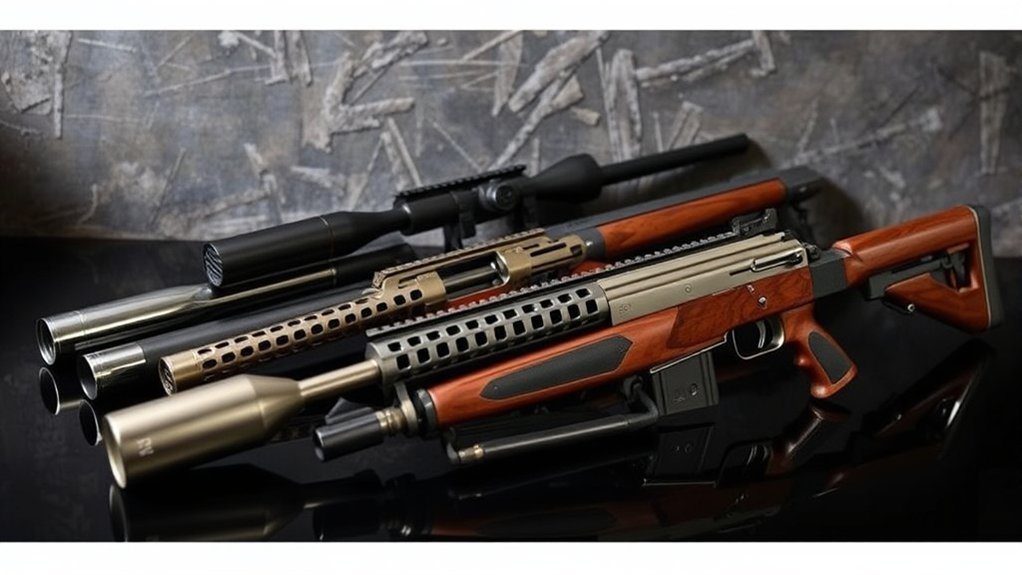
NFA items can be categorized into several distinct types, each governed by specific regulations and requirements. Understanding these categories is essential for compliance and responsible ownership.
The table below gives a simple overview. It does not replace the legal definitions, but it helps you understand how the main categories differ.
| Category | Description |
|---|---|
| Machine Guns | Fully automatic firearms that fire more than one round with a single function of the trigger. |
| Short-Barreled Rifles | Rifles with barrels shorter than 16 inches or an overall length below the federal threshold. |
| Short-Barreled Shotguns | Shotguns with barrels less than 18 inches or an overall length below the federal threshold. |
| Suppressors | Devices designed to reduce the report or sound signature of a firearm. |
| Any Other Weapon (AOW) | Certain concealable firearms or unusual weapons that do not fit other categories, such as some disguised firearms. |
Familiarizing yourself with these categories can help you navigate the complexities of NFA regulations more effectively. It also helps you ask better questions before changing a firearm configuration, buying an accessory, or starting an application.
The Process of Acquiring NFA Items
Acquiring NFA items involves a series of steps that require careful attention to detail and adherence to federal regulations. The exact process depends on whether you are buying an existing NFA item or making one yourself.
At a Glance
| Time Required | Several weeks to several months, depending on form type, filing method, and ATF processing. |
| Difficulty | Moderate to high because forms, identity documents, tax payments, and legal restrictions must be correct. |
| Tools Needed | Correct ATF form, fingerprints, photograph, applicant details, dealer or manufacturer information when applicable, and payment method. |
| Cost | Usually the item price plus the required federal tax stamp, commonly $200 for many NFA items, with some exceptions. |
Here’s the basic process most individual buyers should understand:
- Choose Your Item: Decide which NFA item you want, whether it is a suppressor, short-barreled rifle, short-barreled shotgun, machine gun, destructive device, or AOW.
- Confirm State and Local Legality: Before paying for anything, confirm that your state and local laws allow the item. Some places restrict or prohibit certain NFA categories.
- Choose the Correct Filing Path: Use the proper ATF process for your situation. A transfer of an existing item commonly uses Form 4, while making an item commonly involves Form 1.
- Complete the Required ATF Form: Provide accurate applicant information, item details, and responsible person information when required.
- Submit Payment, Fingerprints, and Photos: Pay the required tax, then submit fingerprints and passport-style photos when required for the application type.
- Wait for Approval: Do not take possession when prior approval is required. Wait until the approved paperwork is returned.
- Keep the Approved Paperwork: Store the approved form and tax stamp records safely. Many owners keep digital and paper copies available.
Each step is essential for a smooth acquisition process. Rushing the process can create serious legal problems, especially if you take possession too early, file the wrong form, or misunderstand your state’s restrictions.
Pro Tip: Before you submit an application, compare the firearm or device details against the legal category you selected. A small mistake in barrel length, model details, serial number, or applicant information can delay approval.
Legal Considerations and Responsibilities
When you decide to own NFA items, it is crucial to understand the legal landscape surrounding their possession and use. Violating NFA regulations can lead to severe penalties, including fines, forfeiture of the item, and possible imprisonment.
You must guarantee compliance with federal, state, and local laws because they can vary greatly. You should also understand who may legally access the item. Unauthorized possession by another person can create legal risk, especially when the item is registered to an individual rather than a properly structured legal entity.
| Legal Aspect | Responsibility |
|---|---|
| Registration | File the correct ATF form, such as Form 1 for making or Form 4 for many transfers. |
| Taxes | Pay the required tax stamp fee, commonly $200 for many NFA transfers or making applications. |
| Storage | Use secure storage and prevent unauthorized access by prohibited or unapproved persons. |
| Transfers | Obtain ATF approval before transferring ownership or possession when approval is required. |
| Usage | Follow all federal, state, local, range, hunting, and transport rules that apply to the item. |
Understanding these responsibilities will not only protect you legally but also promote responsible ownership of NFA items. Good compliance habits include keeping copies of approved forms, checking rules before travel, and never assuming that informal advice replaces official legal guidance.
Differences Between NFA Items and Standard Firearms
When comparing NFA items to standard firearms, you’ll notice significant legal classification differences that impact ownership, usage, transfer, and storage. Standard firearms are still regulated, but they generally do not require the same federal NFA registration and tax-stamp process.
NFA items are heavily regulated because they fall into special federal categories. The extra requirements can include more paperwork, longer approval times, more detailed background checks, and stricter transfer rules.
Legal Classification Differences
How do NFA items differ from standard firearms regarding legal classification? The main distinctions involve the regulatory framework and the requirements for ownership.
- Definition: NFA items include suppressors, short-barreled rifles, short-barreled shotguns, machine guns, destructive devices, and certain AOW firearms. Standard firearms typically include ordinary handguns, rifles, and shotguns that do not fall under an NFA category.
- Tax Stamp: Purchasing or making many NFA items requires a federal tax stamp and an approval process. Standard firearm purchases usually do not involve a federal NFA tax stamp.
- Regulatory Oversight: NFA items are subject to stricter federal oversight by the ATF. Standard firearms still follow federal and state laws, but the transaction process is usually less complex.
A standard firearm can also become an NFA item if it is modified in certain ways. For example, changing barrel length, overall length, stock configuration, or other features can affect classification. That is why you should check the rules before modifying a firearm.
Ownership Restrictions Explained
Ownership of NFA items comes with significant restrictions that set them apart from standard firearms. First, you must complete the required application process, which can include submitting fingerprints and photographs to the ATF.
Unlike standard firearms, many NFA items also require a tax stamp fee for each item. In addition, NFA applications can involve a more detailed review process, which can delay approval. You cannot simply buy and sell NFA items freely in the same way many standard firearms are transferred.
Transfers usually require ATF approval before the new owner takes possession. Some NFA items may also require advance approval before interstate transport. State laws may impose extra restrictions, and some states may not allow certain NFA categories at all.
Because of these restrictions, responsible owners usually keep their approved forms organized, store the item securely, and confirm the rules before moving, loaning, transporting, or selling the item.
Common Misconceptions About NFA Items
Although many people are intrigued by NFA items, they often fall prey to common misconceptions that can lead to confusion and misinformation. Understanding the facts can clear up these misunderstandings and help you avoid risky assumptions.
Many people are fascinated by NFA items, but confusion about legality, paperwork, transport, and ownership can lead to costly mistakes.
- All NFA items are illegal: This is not true at the federal level. NFA items like suppressors and short-barreled rifles can be legal to own when you follow the required regulations and paperwork. However, state or local law may still restrict them.
- You can transport every NFA item the same way: Transport rules vary by item and destination. Some interstate movement requires advance ATF approval, and state restrictions still apply.
- Ownership always requires a Federal Firearms License (FFL): Individual ownership does not automatically require an FFL. Many individuals can own certain NFA items if they comply with NFA rules, pass the required checks, and pay the required tax.
- A suppressor makes a firearm silent: Suppressors reduce sound, but they do not eliminate it. Hearing protection may still be needed, depending on the firearm, ammunition, and environment.
- Once approved, you can ignore paperwork: Approval is not the end of your responsibility. You should keep records, follow storage rules, and comply with transfer and transport requirements.
Common Mistakes to Avoid With NFA Items
NFA compliance often comes down to details. A small mistake can delay approval or create legal risk. Before you buy, build, transfer, or transport an NFA item, watch for these common problems.
- Starting a build before approval: If your project requires an approved Form 1, wait for approval before making the NFA item.
- Using the wrong form: A transfer and a making application are not the same process. Choose the correct route before submitting.
- Ignoring state law: Federal rules are only one layer. Your state may ban or limit certain NFA categories.
- Assuming a dealer handles everything: Dealers can help, but you are still responsible for understanding your legal obligations.
- Letting unauthorized people access the item: Storage and possession rules matter, especially when the item is registered to one person.
- Forgetting transport rules: Some NFA items require approval before crossing state lines. Always check before traveling.
Safe Storage and Recordkeeping
Safe storage is part of responsible NFA ownership. You should prevent theft, unauthorized access, and accidental possession by someone who is not allowed to control the item.
Many owners use a locked safe, secure cabinet, or other controlled-access storage method. The right setup depends on your household, state law, and the type of item. If other people live in the home, access control becomes even more important.
Recordkeeping also matters. Keep your approved ATF forms and tax stamp records in a safe place. Consider keeping a secure digital copy and a physical copy. When transporting or using an NFA item, having documentation available can help answer questions about lawful possession.
Note: Good recordkeeping does not replace compliance, but it can help you prove that the item is lawfully registered and possessed.
Transporting NFA Items
Transporting NFA items requires more planning than transporting many standard firearms. You need to consider federal rules, state laws, local laws, and the policies of your destination.
Some NFA items may require advance written approval before interstate transport. Others may not follow the same requirement, but you still need to confirm state legality before crossing a border. A legal item in your home state may be restricted or prohibited in another state.
Before traveling, check whether the item is legal at the destination, whether approval is required for interstate movement, and whether your route passes through restricted jurisdictions. Secure the item during transport and keep documentation available.
You should also confirm rules for ranges, hunting areas, competitions, and private property. Even when possession is legal, a specific range or event may have its own restrictions.
NFA Trusts vs. Individual Registration
Some owners register NFA items as individuals, while others use a legal entity such as a trust. Each option has different responsibilities, paperwork, and access rules.
Individual registration is often simpler because the item is registered to one person. That person controls possession and responsibility. The downside is that other people generally should not have independent access to the item unless the law allows it.
A trust can allow multiple responsible persons to be listed, but it also adds legal complexity. Responsible persons may need to provide fingerprints, photographs, and information during the application process. The trust document must be prepared correctly and kept current.
Because trusts involve legal drafting and long-term ownership planning, you should not rely on generic templates without understanding the consequences. A firearms attorney familiar with NFA rules in your state can help you choose the right structure.
Conclusion
In conclusion, understanding NFA items is essential for responsible gun ownership. These items follow stricter rules than standard firearms because they require special federal treatment, registration, and often ATF approval before lawful possession or transfer.
If you are considering a suppressor, short-barreled rifle, short-barreled shotgun, machine gun, destructive device, or AOW, take the process seriously. Confirm legality first, use the correct ATF form, submit accurate information, wait for approval, and keep your records organized.
Failing to follow the proper process could lead to serious legal consequences. By staying informed and following the rules, you can reduce legal risk while promoting safer, more responsible ownership of NFA items.
Sources
- Bureau of Alcohol, Tobacco, Firearms and Explosives: National Firearms Act — supports the overview of federal NFA regulation.
- ATF Firearms Forms — supports references to ATF forms used for making, transfer, and registration processes.
- Cornell Legal Information Institute: 26 U.S. Code § 5845 — supports legal definitions for NFA firearm categories.
- ATF: What firearms are regulated under the NFA? — supports the list of NFA-regulated firearm types.