Last updated: September 22, 2026
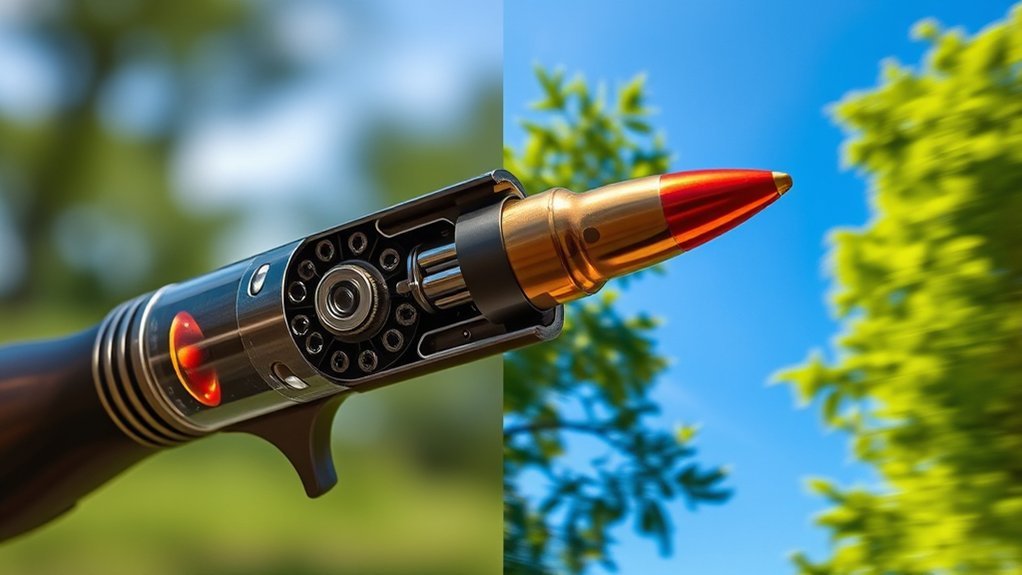
Internal ballistics, also called interior ballistics, covers the thermochemical and physical events from primer ignition until the projectile exits the muzzle. External ballistics, also called exterior ballistics, covers the projectile’s flight after muzzle exit until it reaches the target. The simplest dividing line is the muzzle: internal ballistics establishes starting conditions such as muzzle velocity and spin, while external ballistics explains how gravity, drag, wind, air density, and stability affect the projectile in flight.
Quick Answer
Internal ballistics is what happens before the projectile leaves the muzzle: primer ignition, propellant combustion, chamber pressure, barrel time, acceleration, and muzzle velocity. External ballistics begins after muzzle exit and describes the projectile’s flight through the air, including bullet drop, drag, wind drift, and atmospheric effects.
Think of the muzzle as the dividing line: internal ballistics determines the projectile’s launch conditions, while external ballistics describes how those conditions change during free flight. Industry references commonly use the equivalent terms interior ballistics and exterior ballistics.
Key Takeaways
- Internal ballistics establishes the projectile’s starting conditions through primer ignition, propellant combustion, pressure, barrel time, and firearm condition.
- External ballistics describes the projectile’s flight after muzzle exit, when gravity, drag, wind, air density, and stability become the main considerations.
- Precision and point of impact depend on both consistent launch conditions and changing external conditions such as wind, distance, and weather.
- Safety matters: ammunition, firearm maintenance, and any load-related decisions should follow the firearm manufacturer’s manual and recognized safety standards.
Warning: This article is for general educational understanding of ballistics only. Always follow local laws, range rules, firearm manufacturer instructions, and approved ammunition guidance. Do not modify ammunition, propellant charges, or firearm components without qualified training and authoritative published data.
What Happens During Internal Ballistics?
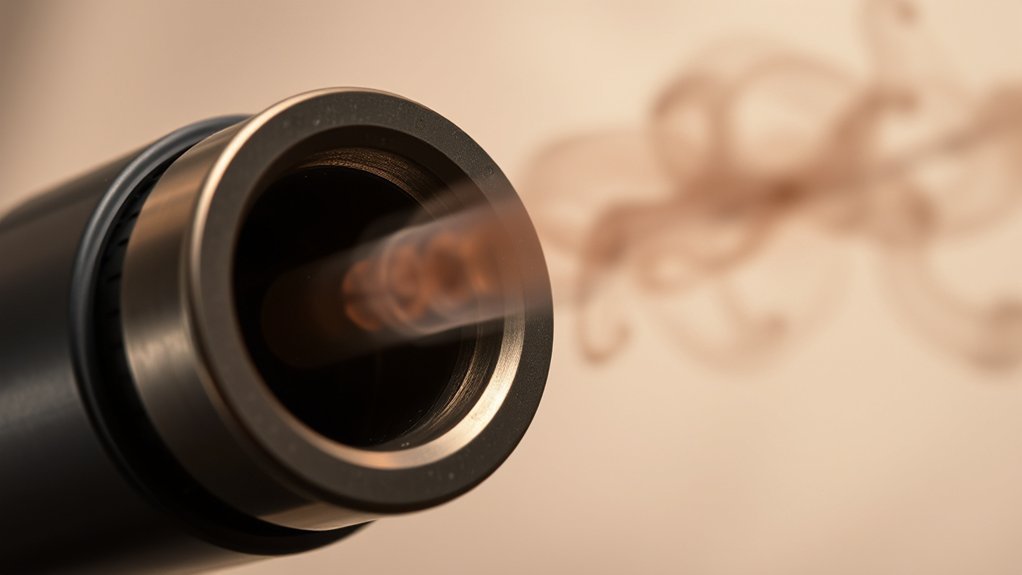
Understanding internal ballistics means looking at the events inside a firearm from primer ignition until the projectile exits the muzzle. In a typical cartridge firearm, the firing pin or striker actuates the primer, the primer initiates propellant combustion, and expanding gas creates pressure that accelerates the projectile through the bore. This definition matches the terminology used by SAAMI.
Broad factors include the ammunition, projectile weight, firearm chamber and bore condition, and barrel length. These variables can influence pressure, muzzle velocity, recoil characteristics, and shot-to-shot consistency. In a rifled barrel, the interaction between the projectile and rifling also imparts spin that contributes to stability after muzzle exit. These relationships explain how internal conditions establish the starting point for external ballistics.
Note: Internal ballistics is not simply about producing more velocity. Consistency matters because differences in ignition, pressure, barrel time, ammunition, or firearm condition can change the projectile’s launch conditions from shot to shot.
The Firearm’s Mechanics and Internal Pressure

When a firearm is discharged, propellant combustion produces expanding gas and a rapid rise in internal pressure inside the chamber and bore. That pressure accelerates the projectile through the barrel. Firearm design, ammunition compatibility, and established pressure limits therefore matter for both reliable operation and safety.
Pressure Generation Mechanism
After the primer initiates the propellant, combustion produces hot, expanding gases. Because those gases are initially confined by the cartridge, chamber, and projectile, pressure rises rapidly and begins accelerating the projectile forward.
The exact pressure curve depends on the firearm, cartridge, propellant, projectile, and ammunition specification. Pressure changes throughout the firing event rather than remaining constant. Commercial ammunition and firearms should be used only within their intended specifications and recognized standards; SAAMI publishes voluntary industry standards covering pressure, velocity, dimensions, and compatibility.
Barrel Dynamics Impact
The dynamics within the barrel also influence consistency. Expanding gas continues to accelerate the projectile while pressure remains sufficient to overcome resistance, and the barrel must contain those pressures within its design limits.
Barrel length, bore dimensions, rifling, crown condition, and material behavior can influence the projectile’s launch conditions. The barrel also vibrates during firing. Variations in these vibrations, commonly discussed as barrel harmonics, can change the muzzle’s orientation at projectile exit and contribute to changes in point of impact or shot dispersion.
Ignition and Propellant Role
The ignition process begins when the primer is actuated and initiates propellant combustion. The interaction among the primer, propellant, cartridge case, chamber, and firearm mechanics influences how consistently pressure develops.
Key factors influencing this process include:
- Primer Function: Consistent primer operation supports repeatable ignition.
- Propellant Characteristics: Propellant composition and physical characteristics influence combustion and the resulting pressure curve.
- Chamber Design: The chamber contains the cartridge and manages pressure during firing.
- Case Fit and Condition: Proper ammunition condition and compatibility support safe, consistent function.
- Firearm Condition: Fouling, corrosion, damage, or mechanical wear can affect reliability and consistency.
The Role of Propellant and Ignition
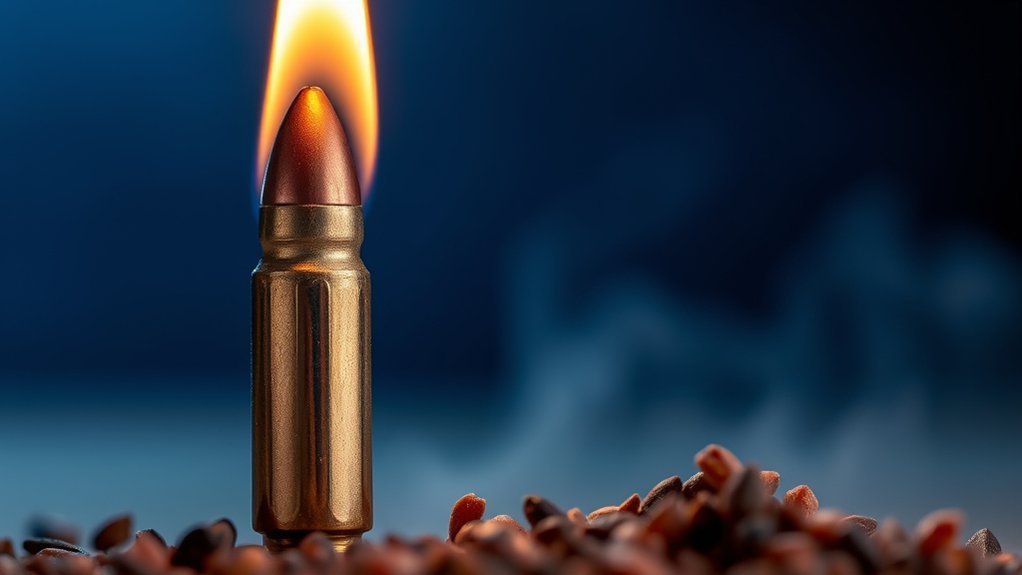
The propellant is the cartridge’s chemical energy source. During firing it undergoes rapid combustion, producing hot gas that creates pressure and accelerates the projectile. Repeatable ignition helps produce more consistent pressure and muzzle velocity.
Propellant type, ammunition construction, storage conditions, and ignition consistency can all affect internal-ballistic behavior. These variables are why ammunition should be used according to the firearm manufacturer’s instructions and recognized specifications rather than altered based on informal advice. For standardized terminology and pressure information, see SAAMI.
Pro Tip: For ordinary range use, focus on proper firearm maintenance, compatible factory ammunition, safe handling, and consistent observation rather than changing ammunition components.
What Happens During External Ballistics?
As the projectile exits the muzzle, external ballistics begins in the common three-part model of ballistics. The projectile is no longer being continuously accelerated down the bore, and its flight is shaped primarily by gravity, aerodynamic drag, wind, spin stability, and atmospheric conditions.
- Air Resistance (Drag): Aerodynamic drag slows the projectile, reducing velocity and retained energy over distance.
- Gravity: Gravity accelerates the projectile downward throughout its free flight, producing the curved trajectory commonly described as bullet drop.
- Wind: Air moving across the projectile’s flight path can cause lateral drift.
- Spin Stability: In rifled firearms, spin imparted by the barrel helps a compatible projectile maintain stable flight.
- Distance: Longer flight time gives gravity, drag, wind, and atmospheric conditions more opportunity to influence the projectile.
These factors act together rather than independently. For more detail about spin and bullet stability, see the related guide to twist rate and bullet stabilization.
Terminology note: Some technical references recognize a brief transitional or intermediate ballistics phase immediately after muzzle exit, between interior ballistics and fully developed exterior flight. Introductory explanations often use the simpler internal–external–terminal three-part framework.
What Factors Affect Bullet Trajectory?
A projectile’s trajectory reflects both its launch conditions and the forces acting after muzzle exit. Initial velocity, often called muzzle velocity, comes from internal-ballistic conditions such as ammunition design, pressure behavior, barrel length, and firearm condition. After muzzle exit, projectile weight, shape, length, aerodynamic characteristics, spin stability, and atmospheric conditions influence how velocity and direction change in flight.
The firearm’s orientation at muzzle exit establishes the projectile’s initial direction. Barrel vibration can affect that initial departure angle, while gravity, drag, and wind shape the subsequent trajectory. Keeping the internal and external phases separate makes it easier to understand whether a change originated before or after the projectile left the barrel.
Ballistic Coefficient and Bullet Shape
The ballistic coefficient describes a projectile’s ability to resist aerodynamic drag relative to a reference model. A projectile with a higher BC within the same comparison system generally loses velocity more slowly and is less affected by drag over distance. However, BC values should be compared using the same reference model, such as G1-to-G1 or G7-to-G7; a G1 number and a G7 number are not directly interchangeable. For a deeper explanation, see ballistic coefficient explained for beginners.
Muzzle Velocity and Consistency
Muzzle velocity establishes one of the projectile’s main starting conditions, but repeatability also matters. Variation in muzzle velocity can contribute to changes in vertical dispersion, especially as flight time increases. Velocity data should therefore be viewed as one measurement of ammunition and firearm consistency rather than as a guarantee of accuracy.
How Do Wind and Weather Affect Bullet Flight?
Weather affects external ballistics because the projectile is moving through air. Wind can change lateral movement, while temperature, pressure, humidity, and altitude influence air density and therefore aerodynamic drag.
Wind, distance, drag, and air density can change a projectile’s point of impact even when its launch conditions remain consistent.
- Wind Drift: Crosswind can deflect a projectile laterally. The effect becomes more significant as time of flight increases.
- Temperature and Humidity: Warmer air is generally less dense than colder air at the same pressure, and humid air is slightly less dense than dry air at the same temperature and pressure. Lower density generally means less aerodynamic drag.
- Elevation (Altitude): Higher elevations often have lower atmospheric pressure and lower air density, but actual density also depends on temperature and humidity.
- Barometric Pressure: Pressure is one of the main variables that determines air density. Lower pressure, with other conditions held constant, means lower density.
- Rain or Moisture: Light rain is generally less influential on trajectory than wind or major density changes, but wet conditions can affect visibility, grip, equipment, and range safety.
Note: Atmospheric effects usually become more noticeable as flight time and distance increase. Pressure, temperature, and humidity should be considered together because all three contribute to air density.
How Is Ballistic Performance Measured?
Ballistic performance is often described with measurements such as velocity, energy, dispersion, and point of impact. It helps to distinguish precision from accuracy: a tightly clustered group indicates low dispersion and good repeatability, while accuracy also considers how closely the group corresponds with the intended reference point. Velocity alone does not determine either one.
Velocity and Energy
Velocity describes how quickly a projectile is moving and is commonly reported in feet per second in U.S. ammunition data. Kinetic energy describes energy associated with the projectile’s motion and is commonly expressed in foot-pounds. Both velocity and kinetic energy change as aerodynamic drag slows the projectile during flight.
- Higher initial velocity can reduce flight time over the same distance, all else being equal.
- Kinetic energy depends on both projectile mass and velocity.
- Initial velocity is influenced by ammunition, firearm, barrel, and pressure conditions.
- Velocity normally decreases during atmospheric flight because of aerodynamic drag.
Accuracy, Precision, and Consistency
Shot groups and velocity data can reveal different aspects of repeatability. The following table separates common measurements so that group dispersion is not confused with point-of-impact accuracy:
| Metric | Definition | Importance |
|---|---|---|
| Shot Dispersion | The overall spread or distribution of shots on a target | Shows how closely repeated shots cluster |
| Group Size | A measurement of shot dispersion, commonly reported as center-to-center extreme spread between the two farthest shots | Provides a quantitative measure of group dispersion |
| Standard Deviation (SD) | A statistical measure describing variation in measured velocity values | Helps describe velocity consistency but does not by itself measure accuracy |
| Extreme Spread (ES) | The difference between the highest and lowest measured velocity in a shot string | Shows the total measured velocity range |
| Point of Impact Shift | A change in the location of a group or impact relative to a reference point | Helps distinguish a location change from simple group dispersion |
Practical Applications for Shooters
The practical value of ballistics knowledge is understanding why safe ammunition selection, firearm condition, repeatability, and environmental awareness matter. It should not be treated as a reason to make unverified ammunition or firearm modifications.
- Safe Ammunition Selection: Use only ammunition that matches the firearm manufacturer’s specifications and intended chambering.
- Barrel and Firearm Condition: Heat, fouling, damage, or mechanical wear can change reliability or consistency and should be addressed according to manufacturer guidance.
- Ammunition Consistency: Different ammunition types or production lots may produce different launch conditions, so unexplained changes should not automatically be blamed on weather or the shooter.
- Range Notes: Recording general conditions such as ammunition used, weather, distance, and observed group behavior can help separate repeatable patterns from one-off results.
- Safety Awareness: Follow established firearm safety rules, range procedures, and manufacturer instructions during any live-fire activity.
Warning: Never exceed published pressure limits, use unidentified or inappropriate ammunition, or make load changes based solely on informal advice. Reloading requires recognized published data, suitable equipment, and appropriate training.
Internal vs External Ballistics: Main Differences
The simplest distinction is location and timing. Internal ballistics covers the firing event from primer ignition through muzzle exit. External ballistics covers projectile flight after muzzle exit and before impact. The conditions established internally become the starting conditions for external flight.
| Category | Internal Ballistics | External Ballistics |
| When It Happens | From primer ignition until the projectile exits the muzzle | From muzzle exit until the projectile reaches the target |
| Main Factors | Ignition, propellant combustion, pressure, resistance, barrel dynamics | Gravity, aerodynamic drag, wind, spin stability, air density |
| Main Result | Launch conditions including muzzle velocity, spin, and shot-to-shot consistency | Trajectory, velocity loss, drop, drift, and stability during flight |
| Reader Focus | Ammunition compatibility, firearm condition, ignition, and consistency | Distance, atmospheric conditions, trajectory, and projectile characteristics |
Common Misunderstandings About Ballistics
Ballistics can sound straightforward, but several common assumptions blur the difference between velocity, precision, and trajectory.
Faster Does Not Always Mean More Accurate
Higher muzzle velocity can shorten flight time over the same distance, but it does not automatically produce a tighter group. Dispersion and accuracy also depend on launch consistency, projectile stability, firearm condition, sights, shooter input, and environmental effects.
Wind Matters More as Distance Increases
At shorter distances, wind may produce a relatively small visible change. As flight time increases, the projectile remains exposed to moving air for longer, so lateral drift can become more noticeable.
Barrel Length Has Limits
A longer barrel may allow expanding gases to act on a projectile for more time, but the effect is cartridge- and firearm-dependent. Pressure falls as gas expands, while resistance continues to act on the projectile, so additional barrel length does not produce an unlimited increase in muzzle velocity.
Safety and Responsible Use
Ballistics knowledge should support safer and more responsible firearm use rather than careless experimentation. Treat every firearm as loaded, keep the muzzle pointed in a safe direction, keep your finger away from the trigger until you are ready to fire, and identify your target and what lies beyond it.
Use only ammunition appropriate for the firearm. Inspect equipment according to manufacturer guidance, stop shooting if something sounds or feels abnormal, and consult a qualified instructor or gunsmith when you are unsure. The NSSF firearm safety rules provide additional safe-handling guidance.
Conclusion: Internal vs External Ballistics
The muzzle is the easiest boundary to remember. Internal ballistics covers primer ignition, propellant combustion, pressure, acceleration, and other events that establish the projectile’s launch conditions before it exits. External ballistics covers the flight that follows, when gravity, drag, wind, atmospheric density, and stability influence the trajectory.
Keeping those phases separate makes concepts such as muzzle velocity, bullet drop, wind drift, ballistic coefficient, and shot dispersion easier to understand. For practical firearm use, pair that knowledge with manufacturer instructions, established ammunition standards, safe range procedures, and responsible handling.
Related Guides
Frequently Asked Questions
What is the main difference between internal and external ballistics?
Internal ballistics covers events inside the firearm from primer ignition through muzzle exit, including propellant combustion, pressure, barrel time, and muzzle velocity. External ballistics covers projectile flight after muzzle exit, including gravity, drag, wind drift, air density, and stability.
How does barrel length affect internal ballistics?
Barrel length changes how long expanding propellant gases can act on the projectile before muzzle exit. The effect on muzzle velocity depends on the cartridge, firearm, pressure curve, and resistance, so additional barrel length does not provide an unlimited velocity increase.
Does temperature affect external ballistics?
Yes. Ambient temperature affects air density, which influences aerodynamic drag during projectile flight. Separately, ammunition temperature may influence muzzle velocity through internal-ballistic effects, so the two effects belong to different phases of ballistics.
What is terminal ballistics?
Terminal ballistics studies what happens when a projectile reaches and interacts with a target. It follows external ballistics and focuses on projectile and target behavior during impact.
Why does wind affect bullets more as distance increases?
A projectile traveling farther normally spends more time in flight, giving moving air more time to influence its lateral motion. The final amount of drift also depends on projectile characteristics, velocity, atmospheric conditions, and wind direction.
Can internal ballistics affect external ballistics?
Yes. Internal ballistics establishes the projectile’s starting conditions, including muzzle velocity and spin. External ballistics begins with those conditions already established, so variations before muzzle exit can carry into the projectile’s subsequent flight.
What is transitional or intermediate ballistics?
Transitional, or intermediate, ballistics is a term some technical references use for the brief phase immediately around muzzle exit as the projectile moves from the firearm’s internal environment into free flight. Many introductory sources use a simpler three-part model and discuss this transition within internal or external ballistics.
Sources
- SAAMI Ballistics Glossary — definitions of ballistics, interior ballistics, exterior ballistics, and related industry terminology.
- NIST OSAC Lexicon — forensic-science terminology, including exterior ballistics.
- NSSF Firearm Safety Rules — safe firearm handling principles.
- National Weather Service: Air Density — relationship among pressure, temperature, humidity, altitude, and air density.
- EBSCO: Ballistics in Crime Scene Investigation — overview of internal, transitional, external, and terminal ballistics terminology.
