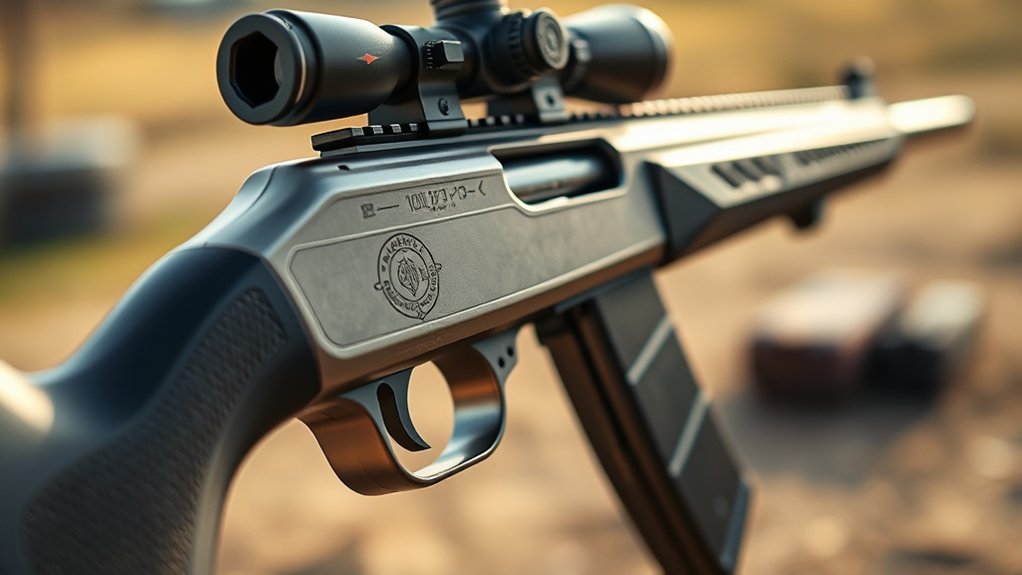
Bullpup rifles use an uncommon layout that places the action and magazine behind the trigger. That design keeps the barrel length useful while shortening the firearm’s overall length. For readers comparing modern rifle layouts, bullpups stand out because they change balance, handling, ergonomics, and maintenance in ways that traditional rifles do not.
Quick Answer
A bullpup rifle places the chamber, action, and magazine behind the trigger, which creates a shorter overall firearm without cutting barrel length. This can improve handling in tight spaces, but it can also create trade-offs in trigger feel, reload ergonomics, ejection direction, and user comfort.
Key Takeaways
- Bullpup rifles shorten overall length by moving the action and magazine behind the trigger.
- The main advantage is compactness without giving up as much barrel length as a short-barreled traditional layout.
- Common drawbacks include heavier or less refined trigger feel, different reload habits, and ejection issues for some left-handed shooters.
- Military adoption has been mixed because bullpups solve some handling problems while creating new training and logistics considerations.
- Modern bullpup designs focus on modular rails, improved controls, better ambidextrous features, and lighter materials.
The Evolution of Bullpup Design

As military and law-enforcement needs changed during the 20th century, firearm designers looked for ways to keep useful barrel length while reducing overall size. The bullpup configuration became one answer to that problem. Instead of placing the magazine and action in front of the trigger, a bullpup moves them behind it.
This layout creates a compact rifle that can still use a full-length or near-full-length barrel. Early and influential examples include experimental rifles such as the British EM-2, along with later service rifles such as the French FAMAS, Austrian Steyr AUG, British L85, and Israeli Tavor family.
The design brought clear benefits, especially in vehicles, buildings, and other confined spaces. It also created challenges. Designers had to address ejection direction, trigger linkage, cheek weld, magazine changes, and safety controls. Over time, manufacturers refined these areas with better materials, improved controls, modular accessory rails, and more left-hand-friendly layouts.
Advantages of the Bullpup Configuration
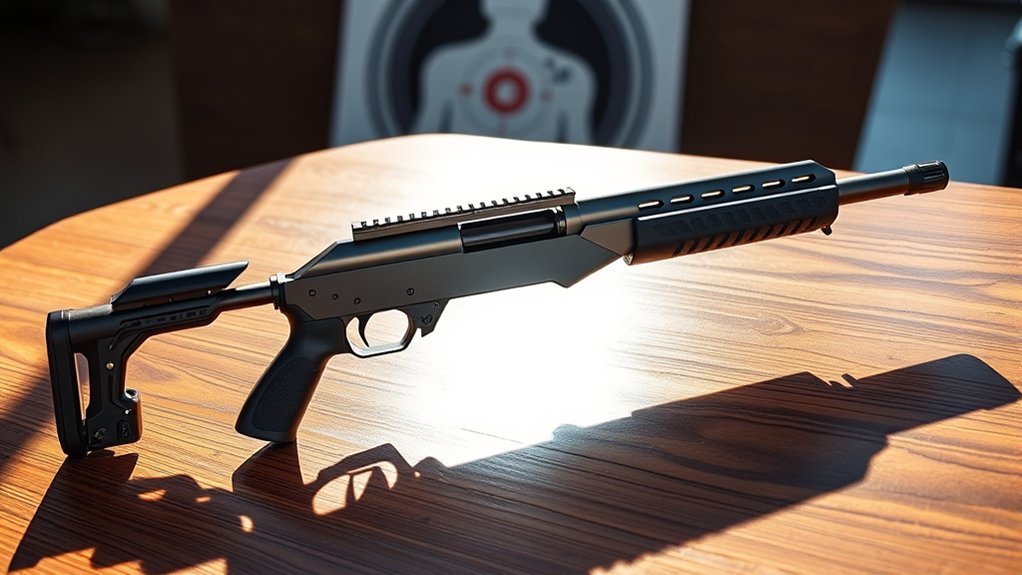
The biggest advantage of the bullpup configuration is its ability to combine a compact design with a useful barrel length. A shorter overall rifle can be easier to carry, store, and handle in confined spaces. At the same time, the barrel does not need to be shortened as much as it would in many traditional layouts.
That balance explains why bullpups attract interest from military users, law-enforcement agencies, sport shooters, and firearm collectors. The benefits usually fall into three main areas:
- Improved maneuverability: A shorter overall length can make the rifle easier to handle around obstacles, in vehicles, and in tight environments.
- Efficient barrel use: The layout preserves barrel length better than many compact traditional rifle setups.
- Rearward balance: More weight sits closer to the shooter’s body, which some users find stable and compact-feeling.
These advantages do not make every bullpup better than every traditional rifle. They simply show why the layout remains relevant. The best choice depends on the user’s needs, training, legal requirements, and comfort with the platform.
Note: Laws, magazine restrictions, barrel-length rules, and ownership requirements vary by location. Always check current federal, state, and local rules before buying or modifying any firearm.
Historical Milestones in Bullpup Development
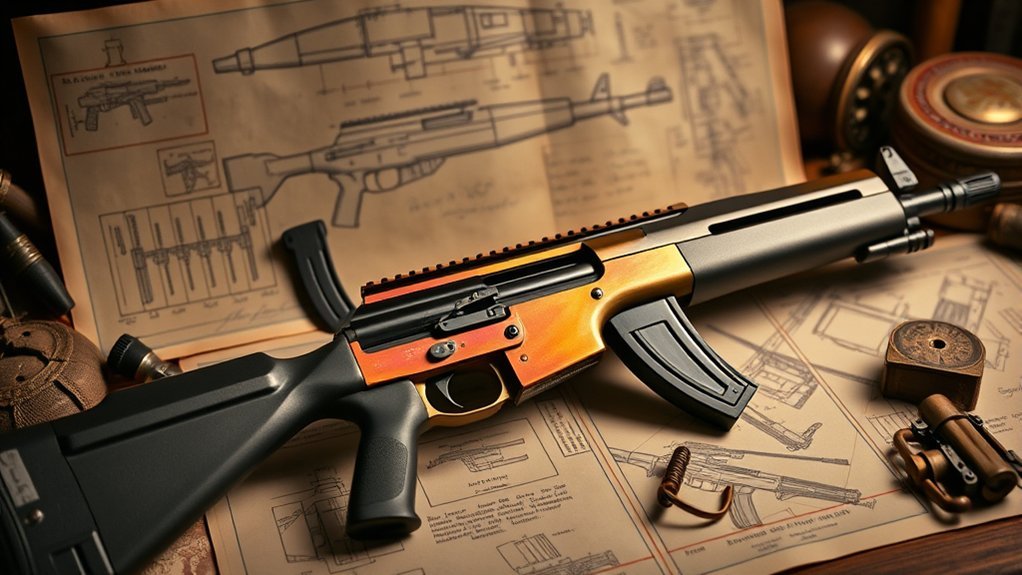
Bullpup development did not happen through one single invention. It grew through decades of experiments, military trials, and service-rifle programs. Each milestone helped prove what the layout could do and what problems designers still needed to solve.
Early designs showed that a rifle could be shortened without dramatically reducing barrel length. Later service rifles proved that bullpups could be issued at scale. Modern models now focus on better ergonomics, improved modularity, and more flexible controls.
Early Innovations in Design
Early bullpup designs explored a simple but important idea: move the working parts behind the trigger and use the saved space to shorten the firearm. That required new thinking about stocks, triggers, ejection, magazines, and sight placement.
- Integrated components: Designers combined the stock, action, and magazine area in a compact package.
- Reduced length: The layout shortened the firearm without reducing barrel length as much as many traditional compact designs.
- User-focused controls: Later designs added better selectors, charging handles, sight rails, and ambidextrous features.
These early design choices changed how rifle makers thought about balance and space. They also revealed the need for better trigger linkages and safer, more comfortable ejection solutions.
Military Adoption and Impact
Military adoption gave the bullpup concept more visibility. Countries including France, Austria, the United Kingdom, Australia, and Israel adopted or fielded bullpup rifles for different service roles. Examples include the FAMAS, Steyr AUG, L85, F88, and Tavor family.
The appeal was practical. A compact rifle can be easier to carry inside vehicles, aircraft, and urban environments. A shorter package may also reduce fatigue during long movement, especially when soldiers carry other equipment.
Adoption also showed the limits of the design. Some users disliked the trigger feel. Others needed more training for reloads, malfunction clearing, or transitions between shoulders. Ejection direction also mattered for left-handed users and for shooting around cover. Because of those trade-offs, some militaries kept bullpups, while others favored updated traditional rifle platforms.
Modern Advancements and Trends
Modern bullpup rifles reflect lessons learned from older designs. Manufacturers now focus on making the layout more adaptable, more comfortable, and easier to configure for different users.
- Improved ergonomics: Newer designs often include better grips, selectors, charging handles, and stock geometry.
- Enhanced modularity: Rails and mounting systems allow easier use of optics, lights, slings, and other lawful accessories.
- Advanced materials: Polymer and aluminum components can reduce weight while keeping the platform durable.
- Better ambidextrous support: Some newer rifles use forward ejection, downward ejection, or reversible ejection systems.
These improvements help bullpups stay relevant, but they do not erase every drawback. Trigger feel, parts availability, cost, and user familiarity still matter when comparing a bullpup with a traditional rifle.
Popular Bullpup Models in the Market
Bullpup rifles have gained attention in the firearms market because they look different, handle differently, and offer a compact format. Several models are especially well known among collectors, sport shooters, and professional users.
The IWI Tavor X95 is often noted for its compact layout, modern controls, and modular design. The earlier IWI Tavor SAR helped introduce many civilian shooters to the platform and remains a recognizable bullpup rifle. The FN P90 uses a distinctive top-mounted horizontal magazine and a compact personal-defense-weapon layout rather than a standard rifle profile.
Other well-known bullpup firearms include the Steyr AUG, KelTec RDB, Desert Tech MDRX, and Springfield Armory Hellion. Each model uses the same broad layout idea, but they differ in controls, caliber options, ejection design, weight, price, and parts support.
When comparing models, look beyond appearance. Consider reliability history, manufacturer support, legal availability, warranty coverage, magazine compatibility, optic mounting height, left-handed usability, and how easy the platform is to maintain.
[Amazon Products Picked for You]

Authentic Type 95 Bullpup Design , Highly Detailed Military Model:Accurately reproduced from the iconic Chinese bullpup rifle, this 526+ piece building set captures the distinctive silhouette, integrated carry handle, and compact layout of the original. The realistic molding and structural precision make it a standout addition to any modern military collection or desk display.

Authentic AUG Bullpup Design Compact & Distinctive:Accurately recreates the iconic bullpup rifle silhouette with its integrated carry handle/scope and rear-mounted magazine. The realistic molding delivers an impressive, space-efficient display piece.

Realistic Working Features: Includes operating hammer, trigger, frizzen, and patch cover, delivering an authentic and interactive model-building experience.
Bullpup Rifles in Military Applications
In military settings, bullpup rifles have been valued mainly for compactness. A shorter overall firearm can help personnel move more easily in vehicles, buildings, checkpoints, and other confined spaces. This does not make the layout universally better, but it does explain why several armed forces tested or adopted bullpup rifles.
Military use also highlights the importance of training. A bullpup’s controls, magazine placement, and balance feel different from a conventional rifle. Users must learn those differences before the layout becomes comfortable.
Compact Design Advantages
The compact design of bullpup rifles can support practical handling in space-limited environments. Because the barrel extends farther back into the stock area, the overall firearm can stay short without giving up as much barrel length.
- Space efficiency: The shorter layout can be easier to carry in tight areas.
- Reduced front-heavy feel: Rearward weight can make the rifle feel compact and close to the body.
- Useful barrel length: The configuration can preserve barrel length while reducing overall size.
These benefits are strongest when compactness matters. In open environments, the difference may feel less important, and traditional rifles may offer simpler controls or broader parts compatibility.
Enhanced Maneuverability Features
The compact design of bullpup rifles directly affects maneuverability. By relocating the action and magazine behind the trigger, the rifle keeps a shorter profile. That can make it easier to move around barriers, vehicle interiors, and narrow passages.
Weight distribution also changes the handling feel. More mass sits closer to the shoulder, which can reduce the front-heavy sensation common to some traditional rifles. Some users find this steadier, while others need time to adjust.
The trade-off appears during reloads and certain handling tasks. Because the magazine sits behind the firing hand, reloads feel different. Some shooters adapt quickly. Others prefer the familiar magazine placement of a traditional rifle.
Tactical Versatility in Combat
The tactical versatility of bullpup rifles comes from their compact size, accessory compatibility, and ability to preserve barrel length. For military users, those traits can matter in changing environments. For civilian readers, they are best understood as design features rather than a guarantee of better performance.
Common versatility points include:
- Rearward weight distribution: The balance sits closer to the shooter, which may reduce arm fatigue for some users.
- Shorter overall length: The rifle stays compact without requiring the same barrel reduction as many traditional compact setups.
- Accessory support: Modern bullpups often include rails or mounting points for lawful optics, lights, and sling setups.
Warning: Firearms require safe handling, secure storage, and proper training. Treat every firearm as loaded, follow range rules, and never rely on article information as a substitute for qualified instruction.
Bullpup vs. Traditional Rifle Designs
Bullpup and traditional rifle designs solve the same problem in different ways. A traditional rifle places the action and magazine ahead of the trigger. A bullpup places them behind the trigger. That single layout change affects length, balance, controls, reloads, and maintenance.
Bullpups usually win on compactness. They can provide a shorter overall profile while keeping a useful barrel length. This is why they often appeal to users who value storage efficiency, vehicle handling, or a compact feel.
Traditional rifles often win on familiarity. Many shooters already understand their controls, magazine placement, trigger feel, and parts ecosystem. Traditional designs also tend to offer wider aftermarket support, depending on the platform.
The trigger is one of the most discussed differences. Because the trigger sits forward of the action, bullpups need a linkage system. Older designs sometimes had heavier or less crisp triggers than comparable traditional rifles. Newer designs have improved, but trigger feel remains an important comparison point.
Ejection is another key issue. Some bullpups eject near the shooter’s face, which can be uncomfortable or impractical for left-handed users unless the rifle has reversible, forward, or downward ejection. Traditional rifles can also have left-hand challenges, but the issue is more noticeable on many bullpups because of the action’s rearward position.
[Amazon Products Picked for You]

300RD HIGH CAPACITY MAGAZINE BUILT WITH A METAL SHELL FOR DURABILITY.

Compatible with the .22 caliber Umarex Gauntlet PCP Air Rifle (item number 2252604), the Umarex Iconix PCP Air Rifle (item number 2252135), and the Umarex Origin PCP Air Rifle (item numbers 2251378 and 2251389)

Holds 10 round mages and ammo or other essentials
Common Drawbacks and Trade-Offs
A balanced look at bullpup rifles must include the downsides. The layout is clever, but it is not perfect for every shooter or every use case.
- Trigger feel: Trigger linkage can create a different feel than a direct traditional trigger system.
- Reload ergonomics: The magazine sits farther back, so reloads require different muscle memory.
- Ejection concerns: Some models need parts changes or specific setups for left-handed use.
- Optic height: Some bullpups place optics higher over the bore, which can affect sight picture and close-range holds.
- Parts and service: Depending on the brand, replacement parts and qualified service may be less common than for popular traditional platforms.
- Cost: Many bullpups cost more than widely available traditional rifle options.
These trade-offs do not make bullpups poor choices. They simply mean buyers should handle, compare, and research a specific model before making a decision.
What to Check Before Buying a Bullpup Rifle
Before choosing a bullpup rifle, compare practical details instead of focusing only on the compact shape. A rifle that looks efficient may still feel awkward if the controls, weight, or ejection pattern do not suit you.
- Legal status: Confirm that the model, barrel length, overall length, magazine type, and features are legal where you live.
- Fit and comfort: Check length of pull, cheek weld, optic height, grip angle, and shoulder feel.
- Controls: Test the safety selector, charging handle, bolt release, and magazine release if you can do so safely and legally.
- Left-handed support: Look for reversible, forward, or downward ejection if left-hand use matters.
- Maintenance: Review how easy the rifle is to field strip, clean, and inspect according to the manufacturer’s manual.
- Parts availability: Check magazines, spare parts, warranty service, and accessory support.
- Training needs: Plan for practice with safe handling, reloads, malfunction procedures, and storage practices.
Pro Tip: Before buying, read the manufacturer’s manual for the exact model. It often explains ejection setup, cleaning steps, approved ammunition, safe handling rules, and warranty limits better than a sales page.
[Amazon Products Picked for You]

[ULTRA DURABLE] - Constructed With Heavy Duty Industrial 600D PVC Nylon

Designed to hold 15 magazines of 20 or 30 round 223/5.56 magazines in precut military grade foam padding; Ideal for easy transport of stored and organized magazines.

[Portable Design] Ludex is the only .22 /22lr/22s tubular magazine speed loader available on the market today,with all-in-one portable design.
The Future of Bullpup Firearms
As firearms technology continues to evolve, the future of bullpup firearms will likely depend on ergonomics, modularity, and user acceptance. The layout already solves the compactness problem well. The next improvements need to address comfort, trigger feel, ambidextrous handling, and serviceability.
Expect future designs to focus on lighter materials, cleaner controls, more flexible accessory mounting, and better ejection systems. Manufacturers may also continue refining trigger linkage so bullpup triggers feel closer to traditional rifle triggers.
- Improved reliability and service access: Easier maintenance can make the platform more practical for long-term ownership.
- Enhanced user comfort: Better cheek weld, grip shape, and control placement can reduce the learning curve.
- More flexible configurations: Modular barrels, rails, and ejection systems can make one platform useful for more users.
Bullpups are unlikely to replace traditional rifles across the entire market. Instead, they will continue serving users who value compactness and are willing to learn the platform’s unique handling style.
Key Considerations for Bullpup Enthusiasts
When selecting a bullpup rifle, start with the model’s purpose and your local laws. Then compare the details that affect real ownership. Compactness matters, but comfort, safety, reliability, and support matter just as much.
First, consider the caliber and platform design. Caliber can affect recoil, ammunition cost, magazine compatibility, and intended use. Next, evaluate ergonomics. A rear-heavy rifle may feel stable to one person and awkward to another.
Pay close attention to the trigger mechanism. Some bullpups have improved triggers, while others still feel heavier or less direct than traditional rifles. Also check modularity and accessory compatibility. Optics, slings, lights, cases, and spare magazines should be easy to source.
Finally, review the manufacturer’s safety guidance and warranty support. A strong design is easier to trust when the company provides clear manuals, parts access, and responsive service.
Sources
- IWI US Tavor X95 — supports model identification and general platform context.
- FN America PS90 — supports information about the civilian P90-style bullpup platform.
- Steyr Arms AUG A3 — supports the AUG’s role as a well-known modern bullpup rifle family.
- Springfield Armory Hellion Series — supports current-market bullpup model context.
- Bureau of Alcohol, Tobacco, Firearms and Explosives — supports the reminder to check current firearm laws and requirements.
Conclusion
Bullpup rifles remain one of the most distinctive layouts in modern firearm design. By moving the action and magazine behind the trigger, they create a compact profile while preserving useful barrel length. That design can improve handling in tight spaces and give the rifle a balanced, close-to-body feel.
The same layout also brings trade-offs. Trigger feel, reload ergonomics, ejection direction, cost, and parts support can affect whether a bullpup is the right choice. For some users, the compact design is worth the learning curve. For others, a traditional rifle may feel simpler and more natural.
If you are interested in bullpups, compare specific models carefully, review the manufacturer’s manual, follow all applicable laws, and prioritize safe handling. The best bullpup is not just the shortest or most modern-looking option. It is the one that fits your needs, training, comfort, and responsibilities as a firearm owner.
