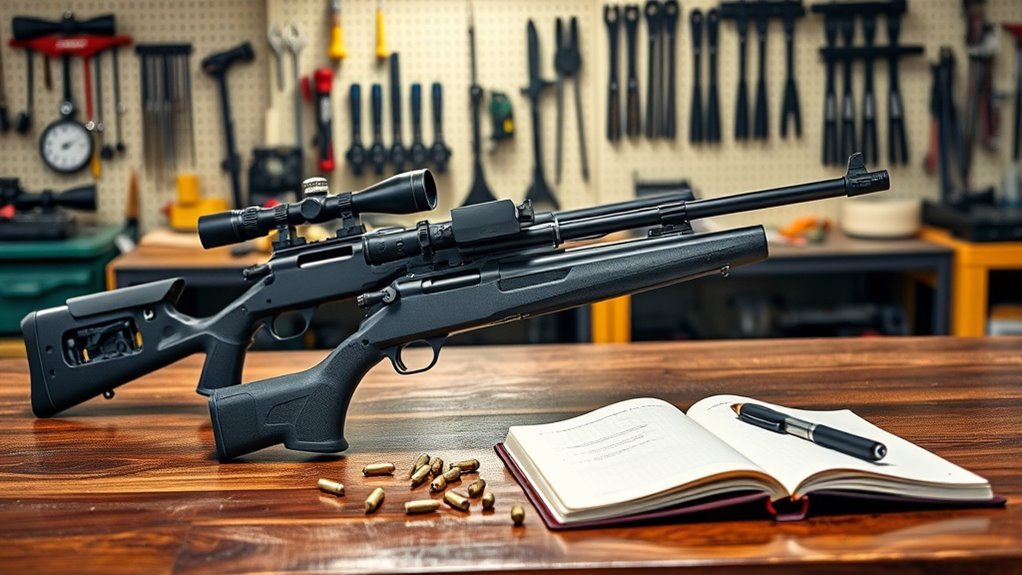
A PCP semi auto airgun fires one pellet each time you pull the trigger and loads the next pellet from a magazine by itself. There is no bolt to work and no barrel to break. The guns below are real models with figures taken from the maker’s own pages: the Hatsan Invader rifle, the Hatsan Blitz rifle, and the Sortie Tact and Velox pistols. Most fill to 200 or 250 bar (about 2,900 to 3,600 psi), so you also need a pump, a compressor, or a tank.
Key Takeaways
- Semi auto means one shot per trigger pull, with the gun loading the next pellet for you.
- Many popular PCP rifles, such as the Umarex Gauntlet 2, are bolt action, not semi auto.
- Fill pressure for the Hatsan models here is 200 bar (Invader, Sortie Tact) or 250 bar (Velox, Blitz).
- Shot counts are given at optimal velocity. Real counts depend on pellet, temperature and how you fill.
- Age limits, local airgun laws and hunting rules differ by state and city. Check yours before you buy.
What Is a PCP Semi Auto Airgun?
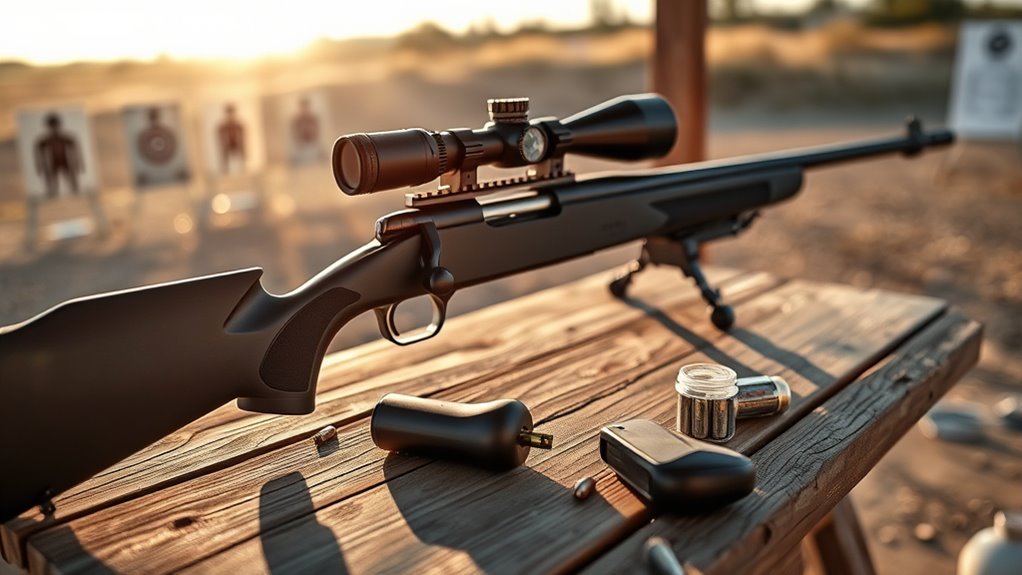
PCP stands for pre-charged pneumatic. The gun has an air cylinder that you fill to high pressure before you shoot. Each shot uses a small part of that air. A semi auto PCP also cycles itself after every shot, so the next pellet moves into the barrel without you doing anything.
This is different from a bolt-action PCP, where you pull the bolt back and forward for every shot. It is also different from a spring or gas-piston gun, where you cock the whole gun first.
How PCP Semi-Auto Airguns Work
Air Supply and Fill Pressure
The cylinder holds the air. You fill it to the maximum pressure printed on the gun, never higher. For the Hatsan models in this guide, the maker lists 200 bar for the Invader and Sortie Tact, and 250 bar for the Velox and Blitz. That is about 2,900 psi and 3,600 psi.
Some PCP guns, like the Umarex Gauntlet 2, are rated to 4,500 psi. Always check the rating for your own gun. A gauge on the gun shows what is left in the cylinder.
Magazines and Cycling
Semi auto PCPs use a magazine that turns or indexes after each shot. The Hatsan Invader comes with detachable magazines, and its .22 magazine holds 12 pellets. The Sortie Tact pistol uses Roto-Index magazines that hold 14 (.177), 12 (.22) or 10 (.25) pellets. A bigger magazine means fewer reloads, but shot count per fill is often the real limit.
Why Choose a PCP Semi Auto Airgun?
The main reason is speed. You can take a second shot as fast as you can pull the trigger and reacquire your aim. That helps with pest control and with fast target drills.
PCP guns also have no spring or piston slap, so recoil is light. The Hatsan Invader has a fully shrouded barrel that Hatsan calls QuietEnergy, which helps to cut the noise of each shot. Even so, a pellet gun is not silent, so keep neighbours and pets in mind.
The cost is higher than a basic spring rifle. You pay for the gun and for a way to fill it. Semi auto guns can also be more fussy about pellets and magazines than a bolt action.
Semi Auto PCP Airguns Compared
This table lists figures from the makers. Hatsan lists the Invader at up to 28 ft-lbs, and about 50 shots per fill at optimal velocity from its 255 cc cylinder. The Velox pistol is rated at 12.6 ft-lbs in .22 and 15 ft-lbs in .25. Hatsan lists the Blitz at up to 53 ft-lbs and says it has semi-auto and full-auto modes.
| Model | Type | Calibers | Magazine | Max fill |
|---|---|---|---|---|
| Hatsan Invader | Rifle | .22, .25 | 12 (.22), 10 (.25) | 200 bar |
| Hatsan Blitz | Rifle | .22, .25, .30 | Varies by caliber | 250 bar |
| Hatsan Sortie Tact | Pistol | .177, .22, .25 | 14, 12 or 10 | 200 bar |
| Hatsan Velox | Pistol | .22, .25 | 12 (.22), 10 (.25) | 250 bar |
Benjamin also sells a semi-auto version of its Armada PCP rifle. Check Benjamin’s site for its current specs and availability. Models change often, and availability varies, so confirm the figures on the maker’s page before you order.
PCP Semi Auto vs Break Barrel Airguns
A break barrel gun is a spring or gas-piston rifle. You bend the barrel to cock it, then load one pellet by hand for every shot. It needs no tank or pump, and it usually costs less. The trade-off is more felt recoil and a slower rate of fire.
A PCP semi auto needs a fill setup, but it shoots faster and kicks less. If you shoot a few pellets a week and want the simplest setup, a break barrel is fine. If you want fast follow-up shots and can handle filling, a PCP semi auto makes sense.
What to Check Before You Buy
- Caliber: .177 is common for paper targets. .22 and .25 carry more energy and are common for pest control where it is legal.
- Magazine: check the pellet count for your caliber and whether spare magazines are sold.
- Fill pressure and shot count: compare the maker’s max fill and shots per fill. Treat the count as a best case.
- Regulator: not every listing mentions one. If steady velocity matters to you, confirm it on the maker’s page.
- Noise: a shrouded barrel helps, but check owner reviews for real noise levels.
- Weight and fit: hold the gun if you can, or check the weight and length against how you will use it.
How to Fill a PCP Airgun
You can fill with a hand pump, a compressor made for high-pressure air, or a tank. A standard scuba-style tank is rated 3,000 psi (about 207 bar), so confirm that the gun’s max pressure is not lower before you fill from one. Use only clean compressed air or dry nitrogen. Never use oxygen.
Fill slowly and watch the gauge. Stop at the max pressure on the gun. Hand pumps are cheap but tiring, especially near the top of the fill. Compressors and tanks are faster but cost more to set up.
Safety and Legal Basics
- Buyers usually have to be adults. The exact age limit depends on the seller and your state.
- Some states and cities limit or add rules for airguns, and some sellers will not ship there. Check local law.
- Hunting with an airgun is controlled by your state wildlife agency. Rules can set a minimum caliber or energy for certain game.
- Treat every airgun like a firearm. Use eye protection, a safe backstop and secure storage.
- A full-auto mode, such as the one on the Hatsan Blitz, may be treated differently by local rules. Check before you buy.
Frequently Asked Questions
What Are the Disadvantages of a PCP Air Rifle?
You need fill gear, such as a pump, compressor or tank, and that adds cost. You must watch the fill pressure and check for air leaks over time. PCP guns can also be heavier than spring guns.
What Is the Best Semi-Automatic PCP Air Rifle?
No single gun is best for everyone. The Hatsan Invader is a plain 200-bar rifle in .22 or .25. The Hatsan Blitz offers more power and a .30 option. Pick by caliber, power and the rules where you shoot.
Which PCP Air Gun Is the Most Accurate?
There is no single answer. Accuracy depends on the barrel, the pellet, the shooter and the conditions. Bolt-action and single-shot PCP guns are often chosen when the tightest groups matter most. Test a few pellet types in your own gun.
What Is the Best PCP Air Rifle for a Beginner?
A regulated bolt-action rifle is a common first PCP. The Umarex Gauntlet 2 is one example. Umarex lists it as bolt action with a 10-shot magazine, a regulator and a 4,500 psi max fill. A semi auto is not required to start.
Conclusion
A PCP semi auto airgun gives fast follow-up shots and light recoil, but it needs fill gear and a careful read of the specs. Compare the real figures on the maker’s page, check your local rules, and buy for how you will actually shoot.
Last checked: October 2026. Models, availability and local laws change, so confirm details with the maker and your state.
