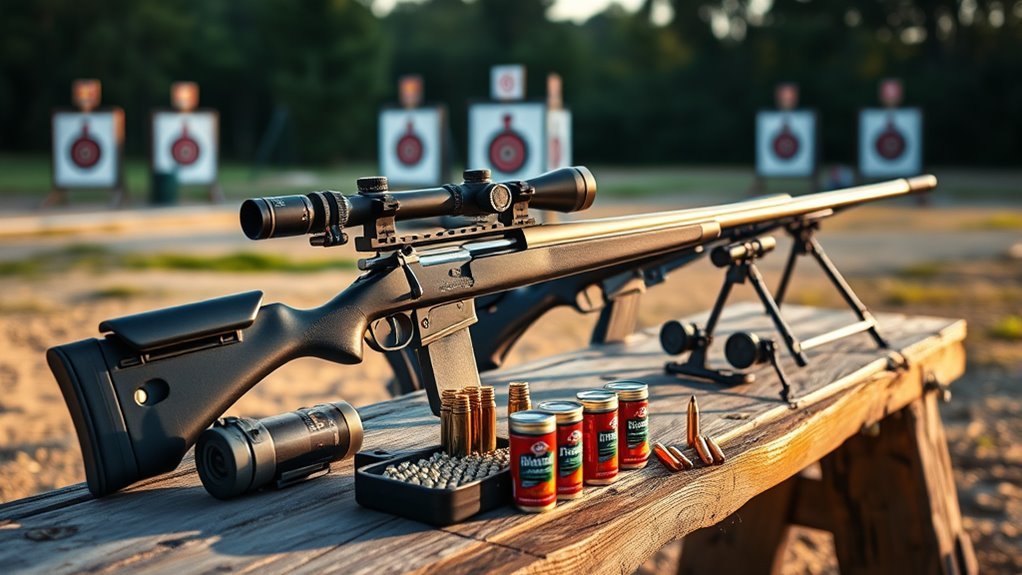
The most powerful PCP air guns are big-bore rifles in .30 to .50 caliber, and the top models are rated by their makers at around 1,000 ft-lbs of muzzle energy. A typical .22 PCP rifle makes about 30 ft-lbs. This guide lists real models with the figures the makers publish, explains what power costs in air and weight, and covers the legal and safety basics.
What Makes a PCP Air Gun Powerful?
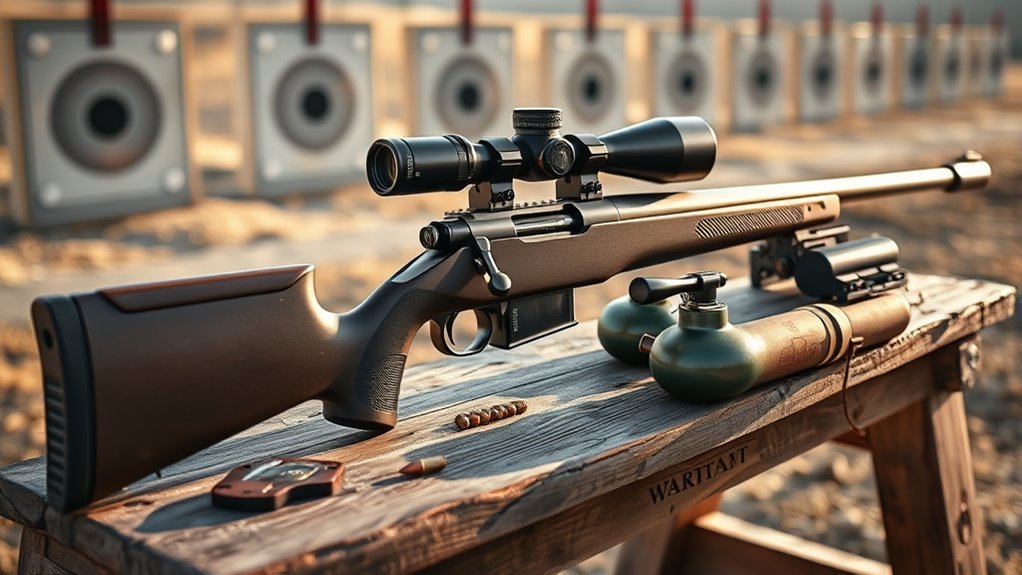
Power is measured in foot-pounds of energy (ft-lbs) at the muzzle. It depends on the weight of the projectile and its speed. The formula is weight in grains times speed in fps squared, divided by 450,240. A heavy slug at a modest speed can carry far more energy than a light pellet that is fast. The Umarex Hammer Carbine is a good example. Umarex lists 523 ft-lbs with a 350-grain slug at 820 fps.
Big bore usually means .30 caliber and larger. These guns use a lot of air per shot, so shots per fill fall as power rises. Hatsan lists the Hercules Bully at 36 shots per fill in .25 caliber, but only 8 in .45 caliber, both at optimal velocity. The Hammer Carbine gives 4 full-power shots per fill.
Why Power and Accuracy Do Not Always Match
A higher number does not mean a smaller group. Heavy slugs drop faster and lose speed over distance, and wind pushes them off line. Each gun also likes some slugs better than others, so test a few. For most small game and paper targets, a gun in the 30 to 75 ft-lbs range is easier to shoot and uses far less air.
Most Powerful PCP Air Guns by Maker Figures
All figures below come from the maker pages. Power numbers are the maker’s own claims, so real results depend on the slug, the fill and the barrel.
| Model | Caliber | Maker power figure | Notes |
|---|---|---|---|
| AirForce Tex-Rex Air Rifle | .510 | 1,100+ ft-lbs | 500 cc carbon fiber bottle |
| AirForce Tex-Rex Air Rifle | .457 | 1,000+ ft-lbs | 500 cc carbon fiber bottle |
| AirForce Texan LSS | .257 to .50 | Over 650 ft-lbs | Single shot, 200 bar (3,000 psi) fill |
| Umarex Hammer Carbine | .50 | 523 ft-lbs | Bolt action, 2-shot magazine, 4,400 psi max fill |
| Hatsan Hercules Bully | .45 | 290 ft-lbs | Side lever, 7-shot magazine, 250 bar max fill |
AirForce also lists a .308 Tex-Rex at 400+ ft-lbs, and a Texan LSS CF Series rated at 800 ft-lbs. The Hercules Bully comes in .25, .30, .35 and .45, rated at 75, 115, 150 and 290 ft-lbs. Umarex also sells a full-size Hammer rifle in .50 caliber.
[Amazon Products Picked for You]

Sidelever PCP Pellet Air Rifle available in .22, .25, and .30 Caliber. Available in Black, Silver, Red and Green colors.
The most powerful production air rifle on the planet; Dumps a ton of energy into its target instead of carrying the energy with it through the target

IN THE BOX: 1x Hatsan BT 65 SL QE Big Bore Carnivore .30 Cal PCP Air Rifle w/ Scope; 1x Fill Probe; 1x Repair Kit; 2x Rotary Mag; 1x Bi-Pood; 1x Belt; 1x Pack of 100x Paper Targets; 1x Pack of 100x .30 Cal Pellets; 1x Hard Case
High-Power Rifles That Are Easier to Handle
You do not need 500 ft-lbs to hunt small game. The Hatsan Hercules Bully in .25 caliber is rated at 75 ft-lbs and 36 shots per fill, and its .30 version is rated at 115 ft-lbs. Hatsan also lists the semi-auto Blitz at up to 53 ft-lbs in .22, .25 and .30, with semi-auto and full-auto modes.
The FX Impact M4 is a high-end regulated PCP with a side lever. FX offers it from .177 to .35 caliber. It is not a bullpup, and it is not in the 500 ft-lbs class. For a lighter entry point, Umarex lists the Gauntlet 2 in .22 at 1,130 fps with an 11.9-grain pellet. That works out to about 33 ft-lbs.
[Amazon Products Picked for You]

RAIDER .25 PCP 3500 PSI AIR RIFLE

PCP-POWERE HUNTING AIR RIFLE

POCKET GUN-CLEANING SET: It’s never been easier or more convenient to clean your air guns thanks to the PatchWorm pocket field kit. Our compact gun-cleaning kit fits in a shirt pocket and uses a flexible polymer "rod" that coils up for transport.
Why Budget Guns Sit Far Below Big Bore
Big-bore guns need large cylinders, strong valves and heavy barrels. That is why they are bulky and cost more than small-bore rifles. A mid-power rifle is the better fit for pest control and target shooting, and it is easier on the air supply. Compare caliber, power and shots per fill on the maker page, and match them to the job.
[Amazon Products Picked for You]

Delivers impressive power from its short 11.75-inch barrel launching a 12 grain .22 caliber pellet at 700 fps

【STURDY & DURABLE】- The hand air pump is made of high-quality stainless steel. It has excellent fading-free and rust-proof performance. Spare parts are also manufactured under advanced CNC technology.

VERSATILE & BEGINNER-FRIENDLY – Designed with ease of use in mind, the GOYOJO 4500 PSI Pcp Air Compressor is the ideal entry-level choice for hobbyists and outdoor enthusiasts. From inflating PCP airguns to topping off mini dive tanks and other small high-pressure gear, this compact unit delivers dependable performance across a wide range of applications.
Choose the Right Caliber and Fill Setup
.177 and .22 suit targets and small pests. .25 adds energy and is a common step up. .30, .35, .45 and .50 are for big-bore hunting where the law allows it. Check each gun’s max fill pressure. It can be 200 bar (about 2,900 psi), 250 bar (about 3,600 psi) or 4,400 to 4,500 psi, and it must match your pump, compressor or tank. Use only clean compressed air or dry nitrogen, and never exceed the pressure printed on the gun.
Safety and Legal Basics
Shot Count and Air Use
Shot count drops fast as caliber rises. Plan for a pump, compressor or large tank if you want to shoot more than a few times. A weak fill gives lower power and a wider spread of speeds.
Safety and Hunting Rules
- A big-bore airgun at 500 ft-lbs or more is a serious tool. Use a solid backstop, and treat it like a firearm.
- Wear eye protection. Big-bore airguns can be loud, so wear hearing protection too.
- High-pressure cylinders and tanks have test dates. Check them and keep them in date.
- In the US, airguns are generally not treated as firearms under federal law, but states and cities differ. Some places regulate high-power airguns like firearms.
- Hunting rules come from your state wildlife agency. Many states set rules for which game you may take with an airgun, and may set a minimum caliber or energy. Check before you hunt.
- Outside the US the limits can be much lower. In the UK, for example, the limit without a licence is 12 ft-lbs for a rifle.
Frequently Asked Questions
Which PCP Air Pistol Is the Most Powerful?
Pistols are limited by size and air volume, so big-bore power belongs to rifles. The Umarex Hammer is a rifle, not a pistol. For comparison, the Hatsan Velox semi-auto pistol is rated at 12.6 ft-lbs in .22 and 15 ft-lbs in .25.
What Is the Most Reliable PCP Air Rifle for the Money?
No maker page can prove reliability, so read owner reviews and check the warranty. For a regulated entry rifle, the Umarex Gauntlet 2 is a common pick. Umarex lists it as bolt action with a regulator and a 10-shot magazine.
Which Is the Most Powerful PCP Air Rifle?
Among the maker figures listed here, the AirForce Tex-Rex .510 air rifle leads at 1,100+ ft-lbs. Other makers build very large bores too, so check their current pages. Figures change as new models appear.
How Many Shots Do Big-Bore Airguns Get Per Fill?
Very few. Hatsan lists 8 shots per fill for the Hercules Bully in .45, at optimal velocity. Umarex lists 4 full-power shots for the Hammer Carbine. Smaller calibers get more: the Bully in .25 gets 36.
Conclusion
The most powerful PCP air guns are big-bore rifles. They trade shots per fill, weight and cost for energy. Choose the caliber and power you actually need, read the maker figures with care, and learn your local airgun and hunting rules first.
Last checked: October 2026. Models, figures and laws change, so confirm them with the maker and your state wildlife agency.
