Last updated: September 21, 2026
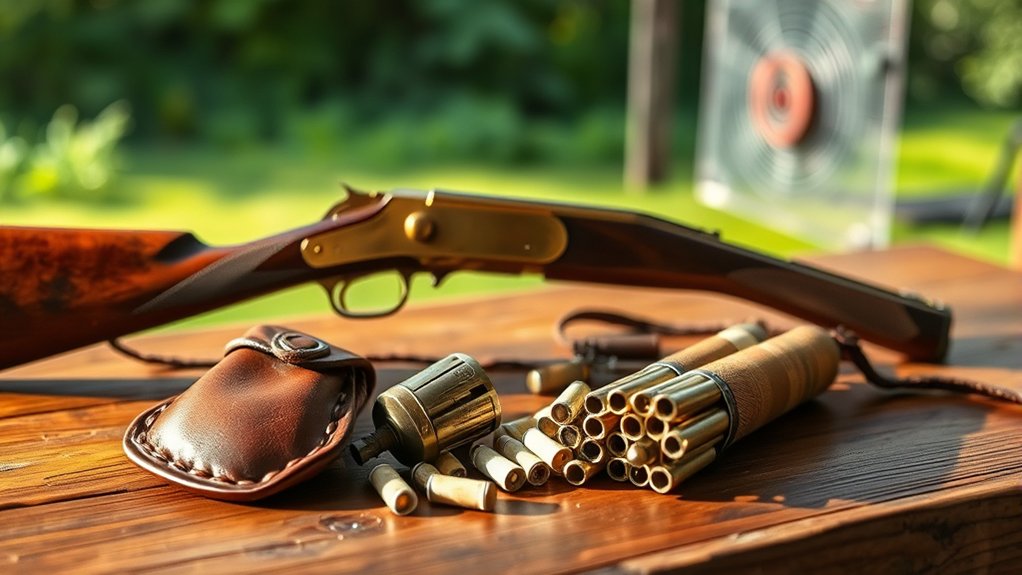
The history of muzzleloaders reaches back to early European hand-held gunpowder arms of the 14th century. More recognizable matchlock muzzleloaders developed later, followed by flintlock, percussion, rifled, and eventually modern in-line designs. A muzzleloader is defined by where it is loaded: the propellant and projectile enter through the front of the barrel rather than through the breech. Across several centuries, these firearms influenced warfare, hunting, shooting sports, craftsmanship, and historical preservation.
Quick Answer
Muzzleloaders evolved from early hand-held gunpowder weapons into matchlock, flintlock, percussion, rifled, and modern in-line firearms. Major advances included more dependable ignition, rifling, improved projectiles, and later manufacturing changes. Breech-loading firearms largely replaced muzzleloaders for military use during the 19th century, but muzzleloaders remain part of hunting, target shooting, competition, reenactment, and historical education.
Key Takeaways
- Early European hand-held gunpowder arms appeared before the mature matchlock systems commonly associated with 15th-century muzzleloading.
- Flintlock and percussion ignition improved reliability, while rifling and improved projectiles increased practical accuracy.
- Muzzleloaders shaped infantry tactics before breech-loading and metallic-cartridge firearms became dominant.
- Modern muzzleloading includes traditional flintlock and caplock shooting as well as in-line firearms used for hunting and sport.
- Hunting rules vary by state and season, so current wildlife-agency regulations should always be checked before equipment is chosen or used.
When Did Muzzleloaders Begin?
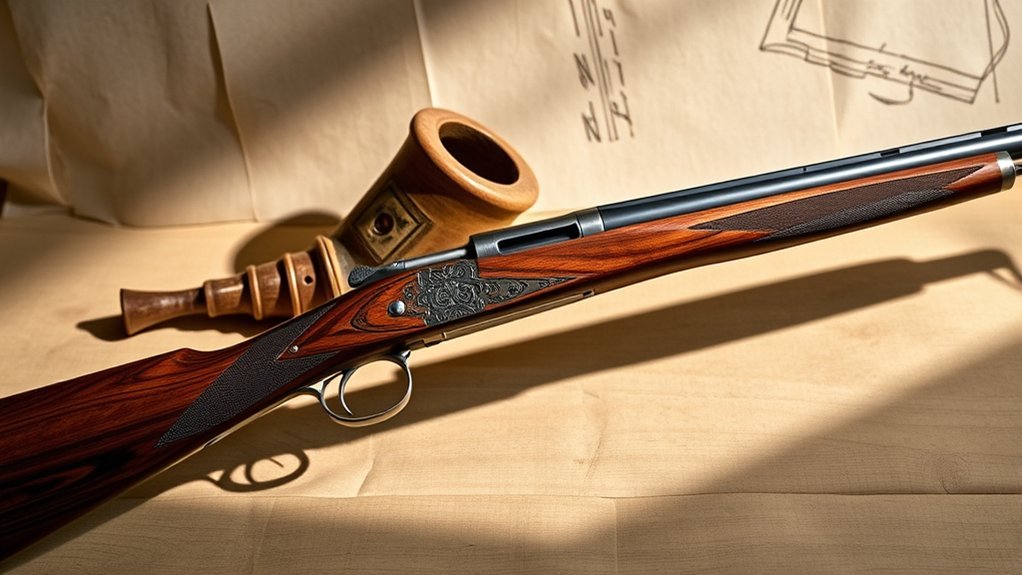
The history of muzzleloading predates the classic muskets and long rifles most people picture today. European hand-held gunpowder weapons appeared during the 14th century, building on earlier developments in gunpowder and cannon technology. These early arms were comparatively simple tubes fired through a touch hole. By the following century, more organized ignition systems such as the matchlock were becoming established.
The matchlock used a mechanically controlled burning match to ignite priming powder, giving the shooter more control than earlier hand-fired systems. This was an important step toward a practical shoulder-fired firearm (Britannica, matchlock). Historical teaching material from university extension programs also traces European firearm development into the 14th century before the later matchlock era (University of Arizona Extension, muzzleloading history).
These early firearms were muzzleloaders because the propellant and projectile were inserted through the open end of the barrel. That loading method remained standard for centuries even as lock mechanisms, barrels, sights, projectiles, and manufacturing improved.
How Did Muzzleloaders Evolve?
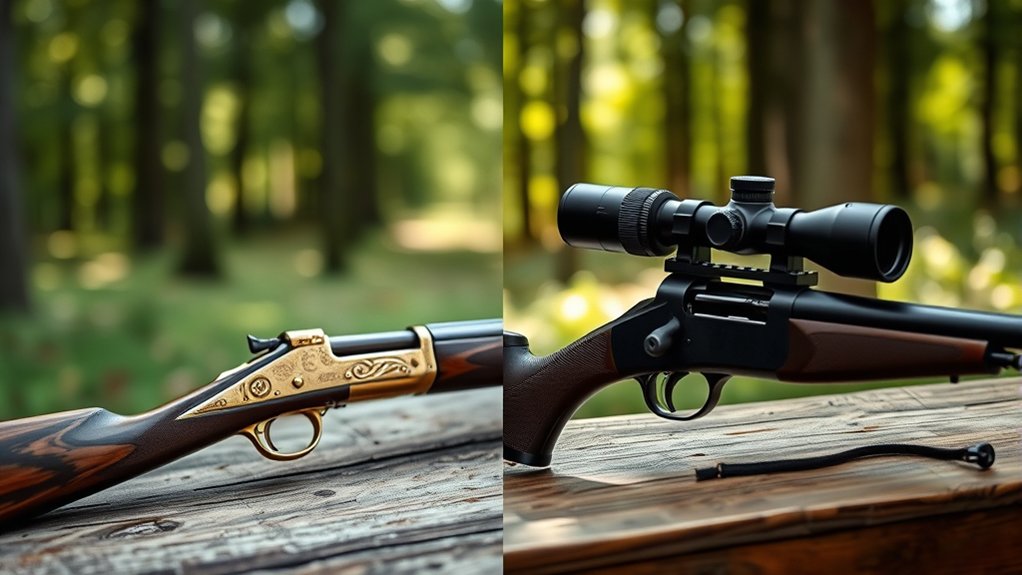
Early muzzleloaders were often smoothbore firearms. Over time, the use of rifling—spiral grooves inside a barrel—helped stabilize suitable projectiles and improved accuracy compared with a smooth bore (Britannica, firearm bore and rifling).
Ignition systems changed as well. Matchlocks were followed by wheel-lock and flint-ignition systems. Mature flintlock designs became important during the 17th century and remained widely used for generations. In 1807, Scottish clergyman and inventor Alexander John Forsyth patented a percussion-based ignition principle using impact-sensitive compounds, an important step toward the percussion systems that later displaced flintlocks (Britannica, Alexander John Forsyth).
Projectile design also changed muzzleloading firearms. The Minié ball, patented by Claude-Étienne Minié in 1849, used a hollow base that expanded on firing and engaged a rifled barrel more effectively. This helped make rifled muzzleloading military arms more practical during the mid-19th century (HISTORY, Minié ball).
Breech-loading mechanisms and metallic cartridges eventually displaced traditional muzzleloading in most military roles because ammunition could be loaded from the rear of the barrel more quickly. The transition from muzzleloaders to breechloaders formed an important step toward later firearm systems; readers interested in that later development can also see the site’s history of the bolt-action rifle.
Definition: A muzzleloader is defined by how it is loaded, not by a single ignition system. Matchlock, flintlock, percussion, and many modern in-line firearms can all be muzzleloaders when the main propellant and projectile are loaded through the muzzle.
A Short Muzzleloader Timeline
| Era | Development | Why It Mattered |
|---|---|---|
| 14th century | Early European hand-held gunpowder arms | Established the basic concept of a portable firearm loaded from the front |
| 15th century | Matchlock systems spread | Mechanized ignition made shoulder-fired firearms more practical |
| Early 17th century | Mature flintlock systems appeared | Created a more self-contained ignition system than the matchlock |
| 1807 | Forsyth patented percussion ignition | Helped establish the principle behind later percussion-cap firearms |
| 1849 | Minié patented his expanding-base bullet | Made rifled muzzleloading military arms more practical |
| Mid-19th century | Breechloaders and metallic cartridges spread | Reduced the military importance of muzzleloading firearms |
| 1933 | National Muzzle Loading Rifle Association founded | Helped preserve muzzleloading competition, history, and related crafts |
| Mid-1980s | Modern in-line muzzleloaders gained wider attention | Modern materials and in-line ignition renewed hunting interest in the format |
How Did Muzzleloaders Change Military Tactics?
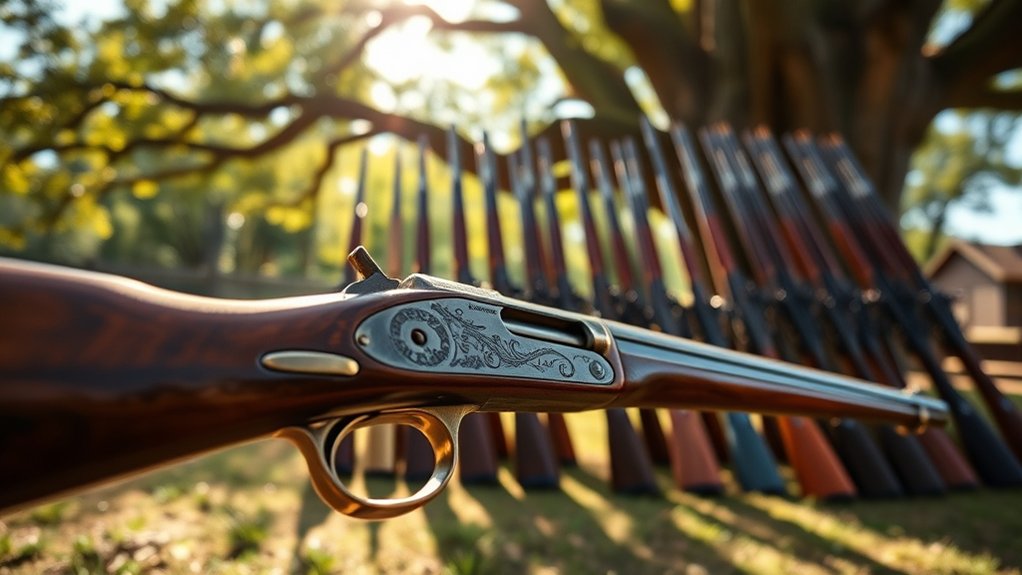
Muzzleloading firearms affected military organization as much as firearm design. Smoothbore muskets had limited practical accuracy compared with later rifled arms, encouraging armies to use disciplined formations and massed volleys so many soldiers could fire together.
The spread of rifled barrels and improved projectiles increased effective accuracy. Dense formations became more vulnerable as infantry weapons became capable of more precise fire at greater distances. Military tactics therefore evolved alongside firearm technology, with greater emphasis on dispersed formations, terrain, and cover.
Muzzleloading also imposed logistical and training limits. Soldiers had to perform a comparatively slow loading cycle under pressure, so drill, timing, and coordination were major parts of infantry training. Volley fire and organized ranks helped compensate for the limits of individual muzzleloading weapons.
Breech-loading arms eventually reduced those limitations by allowing ammunition to be inserted from the rear of the barrel. The U.S. National Park Service notes that breechloaders offered much faster loading, although early designs had technical limitations before improved cartridges solved many of them (National Park Service, evolution of weapons).
Why Are Muzzleloaders Still Used for Hunting?
Muzzleloaders remain part of modern hunting because they combine historical tradition with a different pace from conventional cartridge firearms. Hunters often have to place greater emphasis on preparation, range judgment, and making a carefully considered shot rather than depending on rapid follow-up fire.
Modern hunting also preserves several distinct forms of muzzleloading. Some hunters prefer traditional flintlock or percussion firearms because of their historical connection, while others use modern in-line muzzleloaders designed around contemporary materials and ignition systems.
Many states provide dedicated muzzleloader or primitive-weapons hunting opportunities, but there is no single national equipment standard. Regulations can differ on ignition systems, optics, projectiles, seasons, permits, and other equipment.
Warning: Muzzleloader hunting regulations change by state, location, species, and season. Check the current wildlife-agency regulations for the place you plan to hunt rather than relying on a general article or an older rule summary.
What Skills Matter for Safe Muzzleloading?
Safe muzzleloading depends on familiarity with the specific firearm, careful handling, and following the firearm maker’s instructions. Historical muzzleloaders and modern in-line designs are not interchangeable systems, so components, maintenance procedures, and manufacturer guidance can differ.
For beginners, a hunter-education or supervised shooting program is more useful than trying to learn from isolated instructions online. Training should emphasize safe direction, identifying the firearm’s condition, understanding the manufacturer’s approved components, recognizing damaged or obstructed equipment, and maintaining the firearm according to its manual.
| Skill Area | Primary Focus |
|---|---|
| Safe Handling | Muzzle awareness and firearm condition |
| Equipment Knowledge | Using only manufacturer-approved components and procedures |
| Range Practice | Building consistency under supervised, controlled conditions |
| Maintenance | Inspection and cleaning according to the firearm manual |
Safety Tip: New muzzleloader users should start with a qualified instructor, hunter-education program, or supervised range session and use the manual for their exact firearm as the controlling reference.
What Are the Main Types of Muzzleloaders?
Modern shooters generally encounter three major ignition categories—flintlock, percussion or caplock, and in-line—along with both smoothbore and rifled barrels. The best way to distinguish them is by ignition layout and historical period rather than by age alone.
Flintlocks use flint striking a steel surface to create sparks that ignite priming powder. They are strongly associated with historical shooting and reenactment and represent one of the most recognizable traditional muzzleloader systems.
Caplocks, or percussion muzzleloaders, use percussion ignition rather than a flint-and-pan arrangement. Percussion systems became an important 19th-century improvement because they were less dependent on exposed priming powder than flintlocks.
In-line muzzleloaders position the ignition source in line with the bore rather than on a traditional side lock. In-line concepts have historical precedents, but the modern hunting format gained much wider attention during the 1980s. Missouri gunsmith Tony Knight’s MK-85, introduced in the mid-1980s, helped popularize the modern in-line design (Missouri Department of Conservation, modern in-line muzzleloaders).
Barrel construction creates another distinction. Smoothbores have no spiral rifling, while rifled barrels use internal grooves to stabilize compatible projectiles. For a broader explanation of how rifle characteristics differ from related firearm categories, see carbine vs. rifle.
| Muzzleloader Type | Common Context | Main Distinction |
|---|---|---|
| Flintlock | Traditional shooting and reenactment | Flint-and-steel ignition |
| Caplock | Historical shooting, hunting, and target use | Percussion ignition |
| In-line | Modern muzzleloader hunting and sport | Ignition source aligned behind the bore |
| Smoothbore | Historical firearms and certain traditional uses | No rifling in the bore |
| Rifled Barrel | Single-projectile accuracy | Spiral grooves stabilize compatible projectiles |
How Do Modern Muzzleloader Regulations Differ?
There is no single U.S. equipment definition that controls every state muzzleloader hunting season. Wildlife agencies establish their own season dates and equipment requirements, so a firearm that qualifies for one state’s muzzleloader season may not automatically qualify elsewhere.
Texas illustrates this state-specific approach. Its current 2026–2027 regulations define a muzzleloader for its muzzleloader-only white-tailed deer season as a firearm loaded only through the muzzle, and muzzleloader seasons apply in selected counties (Texas Parks & Wildlife, 2026–2027 muzzleloader regulations).
Other states use different equipment rules. North Dakota’s 2026–2027 deer proclamation, for example, includes specific requirements for legal muzzleloading firearms and limits magnifying optics during its muzzleloader season (North Dakota Game and Fish, 2026–2027 deer regulations). These differences are why hunters should check the current agency rules for their state, species, unit, and season instead of assuming another state’s definition applies.
Many states also allow muzzleloaders during specific hunting seasons. Separate licenses, tags, permits, or location-specific restrictions may apply.
Muzzleloading remains active beyond hunting. Clubs, ranges, museums, and historical organizations host competitions, living-history events, workshops, and demonstrations that preserve both shooting traditions and related crafts.
What Does the Muzzleloader Community Look Like Today?
Muzzleloading is supported by hunters, competitive shooters, collectors, craftspeople, reenactors, museums, and historical organizations. Participants meet at organized shoots, rendezvous events, living-history programs, hunting camps, educational workshops, and historical demonstrations.
The National Muzzle Loading Rifle Association was founded in 1933 and continues to support muzzleloading competition, education, historical preservation, hunting, gun making, reenactment, and related heritage activities (National Muzzle Loading Rifle Association).
Online communities have expanded access to historical research and discussion, while in-person organizations preserve skills such as stock finishing, flint knapping, leatherwork, traditional gun making, and other heritage crafts.
This combination of organized sport and historical education helps explain why muzzleloading survived long after breech-loading cartridge firearms replaced it in most practical military roles.
Where Does Muzzleloading Fit Today?
Modern muzzleloading now occupies two overlapping worlds. Traditional shooters continue to use flintlock and percussion systems because they value historical technique and craftsmanship, while hunters using modern in-line firearms benefit from contemporary manufacturing, corrosion-resistant materials, modern sights where regulations allow them, and designs intended for easier maintenance.
The continuity is visible in organized muzzleloading as well. The National Muzzle Loading Rifle Association continues to run competitions and historical programs while maintaining modern educational resources. At the same time, modern in-line muzzleloaders remain part of state-managed hunting seasons.
That combination makes muzzleloading unusual in firearm history: the basic defining feature—loading the primary charge and projectile through the muzzle—survived even after military technology moved overwhelmingly toward breech-loading systems.
Frequently Asked Questions
What is a muzzleloader?
A muzzleloader is a firearm in which the main propellant and projectile are loaded through the muzzle, or front end of the barrel. The term describes the loading method, so muzzleloaders can use different ignition systems, including matchlock, flintlock, percussion, and modern in-line designs.
When were muzzleloaders first used?
European hand-held gunpowder arms appeared during the 14th century, although the more recognizable matchlock muzzleloading systems developed later. Muzzleloading remained the dominant loading method for many firearms until breech-loading technology became practical and widespread during the 19th century.
What is the difference between flintlock, percussion, and in-line muzzleloaders?
The main difference is the ignition system. Flintlocks generate sparks with flint and steel, percussion firearms use impact-sensitive percussion ignition, and in-line muzzleloaders position the ignition source directly behind the bore.
Why did muzzleloaders stop being standard military firearms?
Breech-loading firearms could be loaded from the rear of the barrel and eventually offered much faster and more practical operation, especially after improved cartridges became available. Those advantages caused muzzleloaders to decline in military use during the 19th century.
Are muzzleloaders still used today?
Yes. Muzzleloaders are still used for hunting, competition, recreational shooting, reenactment, collecting, and historical education. Hunting regulations vary significantly by state, so current wildlife-agency rules should be checked before using a muzzleloader for hunting.
Conclusion
The history of muzzleloaders spans the transition from early hand-held gunpowder weapons to matchlock, flintlock, percussion, rifled, and modern in-line firearms. Improvements in ignition, rifling, projectiles, and manufacturing changed what muzzleloaders could do before breech-loading cartridge firearms eventually replaced them in most military roles.
Muzzleloading nevertheless remains part of U.S. outdoor culture. The 2022 National Survey of Fishing, Hunting, and Wildlife-Associated Recreation estimated that 14.4 million people age 16 or older hunted in the United States (U.S. Fish & Wildlife Service). National Deer Association data show that muzzleloaders accounted for approximately 9% of the reported U.S. deer harvest in 2022 (National Deer Association, 2024 Deer Report).
Today, muzzleloaders connect several activities that would otherwise seem separate: hunting, competitive shooting, craftsmanship, military history, living history, and conservation education. Anyone participating in modern muzzleloader hunting should pair that historical interest with current manufacturer safety instructions, qualified training, and the latest wildlife-agency regulations.
Sources
- University of Arizona Extension — Muzzleloading history materials — supports the chronology of early European firearms and muzzleloading development.
- Britannica — Matchlock — supports the discussion of early mechanically controlled ignition systems.
- Britannica — Bore and rifling — supports the explanation of smoothbore and rifled barrels.
- Britannica — Alexander John Forsyth — supports the percussion-ignition discussion.
- HISTORY — Minié Ball — supports the section on the 1849 Minié projectile and 19th-century rifled arms.
- National Park Service — Evolution of Weapons — supports the muzzleloader-to-breechloader transition.
- Missouri Department of Conservation — Modern in-line muzzleloaders — supports the modern in-line history discussion.
- National Muzzle Loading Rifle Association — supports the organization’s 1933 founding and modern historical-education role.
- Texas Parks & Wildlife — 2026–2027 Muzzleloader Regulations — supports the discussion of current state-specific muzzleloader rules.
- North Dakota Game and Fish — 2026–2027 Deer Regulations — demonstrates how muzzleloader equipment rules differ by state.
- U.S. Fish & Wildlife Service — 2022 hunting participation — supports the 14.4 million hunters age 16 and older statistic.
- National Deer Association — 2024 Deer Report — supports the 9% U.S. deer-harvest-by-muzzleloader statistic for 2022.

