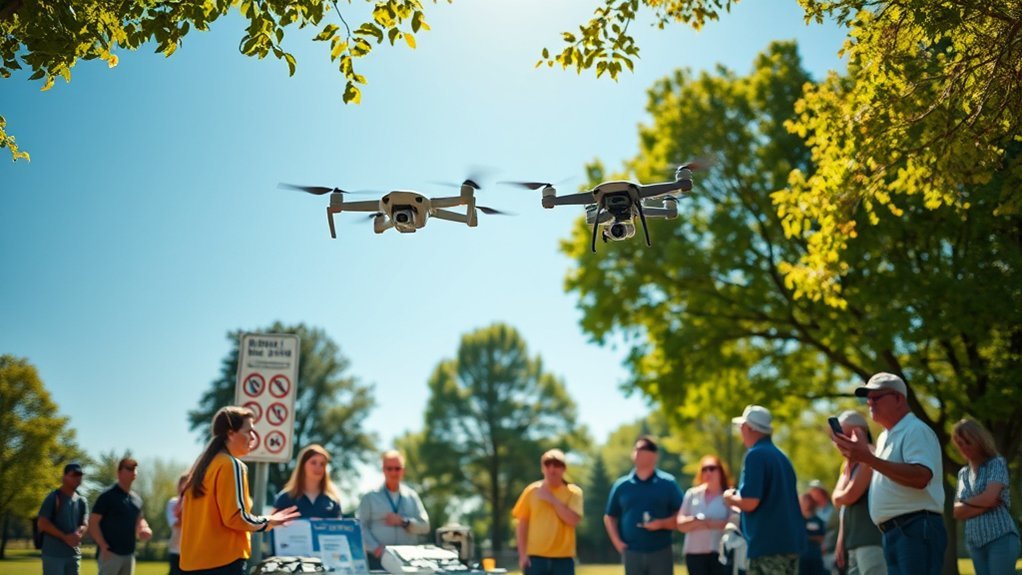
As a hobbyist drone pilot, understanding the evolving regulations is essential for safe and responsible flying. Rules for 2026 mandate strict compliance with Remote ID, completion of the TRUST exam, and adherence to state-specific privacy laws. These updates aim to enhance accountability and guarantee safety within the drone community. However, with various factors at play, steering through these requirements can be complex. What implications do these changes have for your flying experience?
Key Takeaways for 2026
- Remote ID is Mandatory: The enforcement deadline has passed. All registered drones (over 0.55 lbs) must broadcast Remote ID signals unless flying in a specific FRIA zone.
- Registration is Required: Drones over 0.55 lbs (250g) must be registered with the FAA ($5 for 3 years).
- DJI Status: Existing DJI drones are generally legal to fly, but the FCC has restricted authorizations for new models following the late 2025 security audit deadline.
- Privacy Matters: States like California and Florida have tightened laws regarding aerial surveillance and privacy in 2026.
Overview of Drone Regulations for Hobbyists
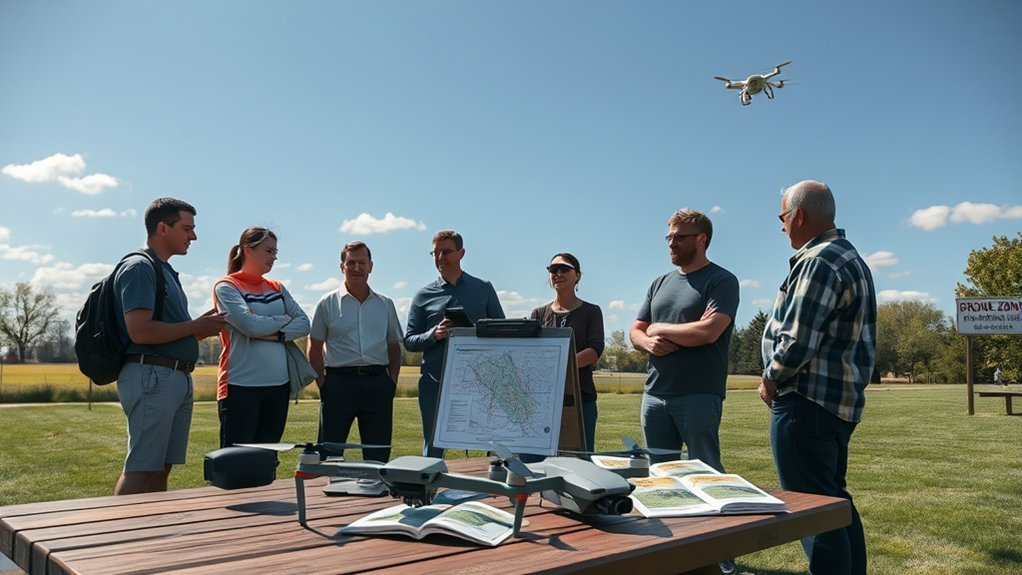
When you take to the skies as a hobbyist drone pilot, understanding the regulatory framework is vital for guaranteeing both compliance and safety.
The FAA mandates that you pass the TRUST exam, carrying proof of completion during your flights. If your drone weighs over 0.55 lbs (250 grams), you must register it with the FAA, which requires a $5 fee for a three-year period.
It’s important to maintain a visual line of sight with your drone at all times to avoid collisions and guarantee safety. Additionally, you must adhere to a maximum flight altitude of 400 feet above ground level.
If you plan to fly in controlled airspace, obtaining prior authorization is necessary, and utilizing the FAA’s B4UFLY service or similar approved apps will provide real-time information on airspace restrictions.
Registration Requirements for Recreational Drones
If your recreational drone weighs over 0.55 pounds, you must register it with the FAA, which involves a nominal fee and a straightforward process.
This registration not only guarantees compliance but also mandates that you prominently display your FAA registration number on the drone. Understanding these requirements is essential to avoid penalties and enhance safety in the skies.
[Amazon Products Picked for You]


You get 2 sets of 3 Labels, 1 FAA ID Card - All customized with your FAA information

You get 2 sets of 3 Labels, 1 FAA ID Card, 1 TRUST certificate - All customized with your FAA & TRUST information (crystal clear lamination of cards is optional)
Weight Threshold Compliance
Understanding the weight threshold for drone registration is essential for hobbyists to guarantee compliance with FAA regulations.
If your drone weighs over 0.55 pounds (250 grams), you must register it with the FAA, paying a $5 fee valid for three years. This registration is critical, as drones below this weight don’t require registration if flown exclusively for recreational purposes, simplifying compliance for lighter models like “Mini” series drones.
It’s significant to recognize that the weight is calculated at takeoff and includes all attached accessories and payloads (e.g., prop guards, strobe lights). Failing to register a heavier drone can lead to substantial penalties, including fines and potential confiscation.
Registration Process Overview
To guarantee you’re legally compliant as a hobbyist drone operator, you need to navigate the registration process effectively.
If your drone weighs over 0.55 lbs (250 grams), you must register it with the FAA DroneZone for a $5 fee, valid for three years. Additionally, you’ll need to complete the TRUST exam and carry proof while flying. The FAA registration number must be displayed on your drone’s exterior.
- Register your drone to avoid penalties, including civil fines.
- Complete the TRUST exam for safety compliance.
- Use an FAA-approved app (like AutoPylot or B4UFLY) to check airspace restrictions.
TRUST Exam: What You Need to Know
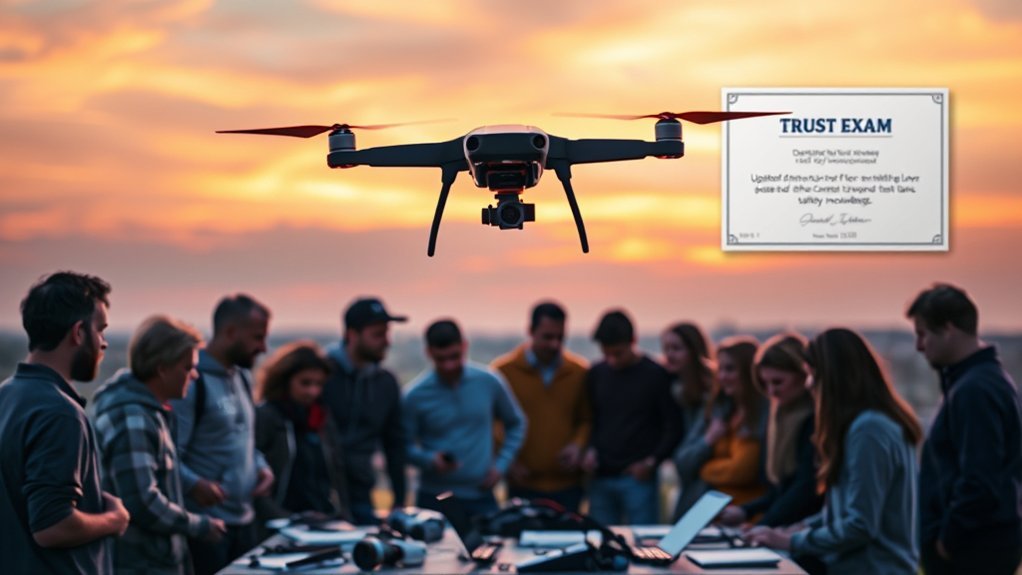
While many hobbyists are enthusiastic to fly their drones, it’s vital to recognize that passing the TRUST (The Recreational UAS Safety Test) exam is a mandatory step for all recreational pilots in the U.S.
This exam guarantees you understand essential rules and safety guidelines for drone operation. You can take the TRUST exam online for free through FAA-approved test administrators. It typically consists of roughly 20 multiple-choice questions focused on airspace classifications, airport operations, and safety best practices.
There’s no age restriction, making it accessible for both young and adult pilots. Upon passing, you’ll receive proof of completion that you must carry (digitally or physically) during all drone flights to demonstrate compliance with FAA regulations.
Maximum Altitude and Flight Restrictions
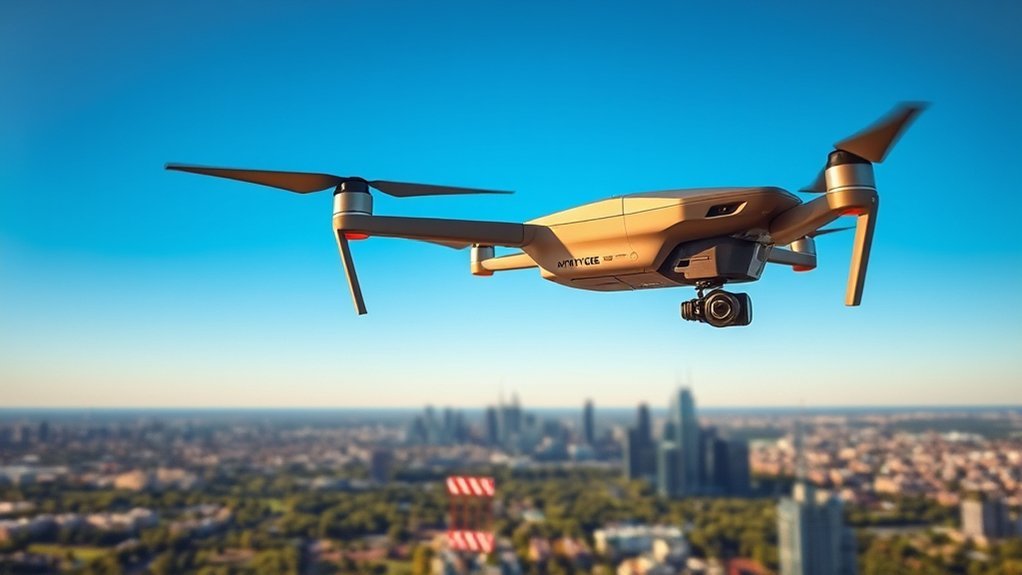
As a hobbyist drone pilot, you must adhere to the FAA’s maximum altitude limit of 400 feet to guarantee safe operations.
Understanding airspace restrictions is essential, as certain areas, like airports, national parks, and military zones, may prohibit your flights altogether.
[Amazon Products Picked for You]

【2K Ultra HD Camera with Adjustable Angle】Capture stunning aerial footage with the 2K HD camera (90° remotely adjustable angle), perfect for scenic landscapes or family moments. Enjoy real-time FPV transmission to your smartphone via Wi-Fi, and instantly share your adventures on social media with just one tap!
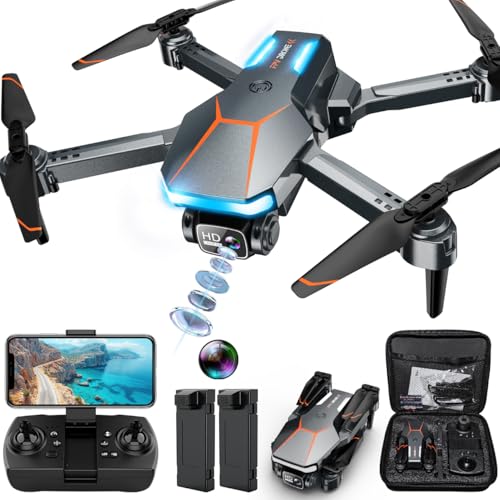
1080P HD Camera Adjustable FPV Drone & APP Control: Equipped with a 1080P HD 90° Electric adjustable lens, combined with the upgraded hover system and optical flow positioning technology, our RAGPIP camera drone is more stable when shooting. It assists you to catch every wonderful moment from a birds-eye perspective. Using the "X66 DRONE" app and FPV transmission, you can enjoy live 1080P HD pictures and videos and easily share on your social media.

Drone with 1080P HD Camera for Beginners: capture stunning 1080p hd aerial photos and videos with this easy-to-use quadcopter, perfect for beginners and hobbyists. If you wanted to learn how to use a throne before buying something more expensive, and I definitely recommend it.
Altitude Limitations Overview
Hobbyist drone pilots must adhere to strict altitude limitations to guarantee safe and legal operation. The Federal Aviation Administration (FAA) mandates a maximum flight altitude of 400 feet above ground level for recreational use.
Exceeding this limit in controlled airspace requires LAANC authorization. Staying within this altitude not only complies with regulations but also makes it easier for you to maintain a direct visual line of sight with your drone.
- Flying above 400 feet poses legal risks and collision hazards with manned aircraft.
- Compliance secures safety for both pilots and the public.
- Awareness of local airspace restrictions is essential for responsible flying.
Airspace Restrictions Explained
Understanding airspace restrictions is essential for any drone pilot aiming to fly legally and safely. The FAA mandates that you fly your drone at or below 400 feet in uncontrolled (Class G) airspace.
Maintaining visual line of sight with your drone is also vital. Be aware that certain areas, such as near airports or military bases, are controlled airspace (Classes B, C, D, E) and require instant authorization via LAANC (Low Altitude Authorization and Notification Capability) before you take off.
To stay informed, use a B4UFLY-compatible mobile app for real-time information on airspace restrictions. Non-compliance with these regulations can result in fines, penalties, and serious legal consequences for operators.
Remote ID Regulations for Hobbyists
As of 2026, Remote ID regulations are fully enforced. The grace period ended in March 2024, meaning most hobbyists must now guarantee their drones broadcast identification and location information during flight. This requirement is essential for enhancing safety and accountability in the airspace.
To meet these regulations, you should be aware of the following key points:
- Who must comply: All drones weighing over 0.55 lbs (250 grams) required to be registered must broadcast Remote ID.
- How to comply: Most modern drones (e.g., DJI Mini 4 Pro, Air 3) have “Standard Remote ID” built-in. Older models may require a separate Remote ID broadcast module attached to the drone.
- The Exception: You may fly without Remote ID only if you are operating within the boundaries of an FAA-Recognized Identification Area (FRIA), typically managed by community-based organizations like the AMA.
Failure to comply with Remote ID rules can lead to enforcement action, especially if flying in sensitive areas.
[Amazon Products Picked for You]

FAA Regulation Compliance: Holy Stone is committed to working out a solution to the US FAA Declaration of Compliance for our rc drone consumers; here we got the Remote ID Module Parts to solve the FAA Compliance issue. No more worry about the FAA Regulations.

【FAA Compliance】Easily meets FAA requirements for drones over 250 g (0.55 lb). This RID module replaces bulky add‑on RID units, enabling legal flight for Mavic 3, Mini 4 Pro, Phantom 4, ATOM 3‑Axis, HS720 series, FPV drones, and 20+ other models.

𝗦𝗮𝗳𝗲 𝗖𝗵𝗮𝗿𝗴𝗲 𝗖𝗮𝗯𝗹𝗲: Without worrying about any charging safety hazards. The original type-c cable of Potensic remote id module has overcharge protection and will automatically stop charging when fully charged
Privacy Considerations When Flying Drones
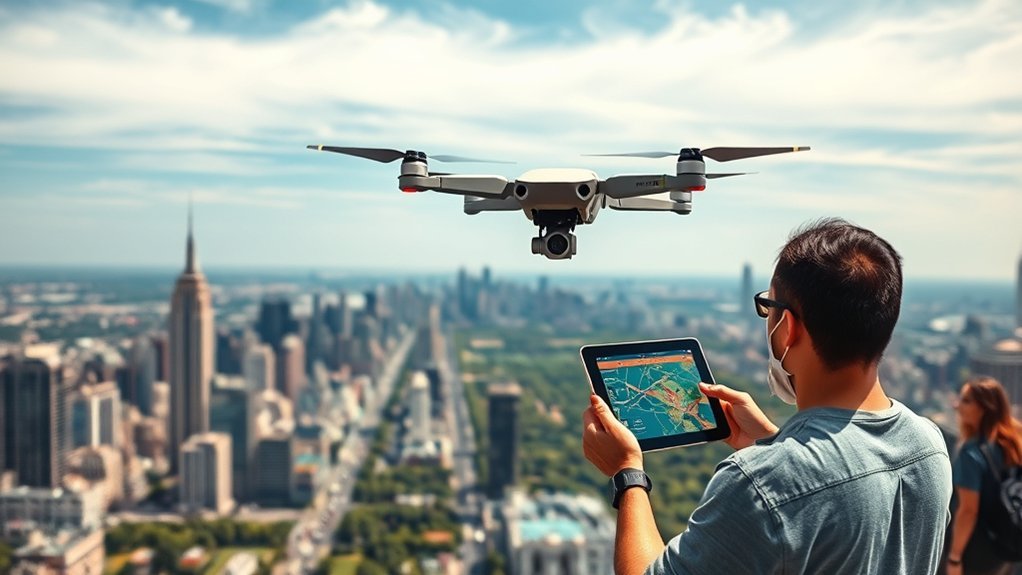
Understanding Remote ID regulations lays the groundwork for responsible drone operation, but privacy considerations are equally important.
As a hobbyist drone operator, you should be acutely aware of varying state laws regarding privacy. States like California and Florida enforce strict regulations to protect individuals from non-consensual filming. To comply with local laws and avoid legal repercussions, it’s vital to avoid capturing images or videos of private properties or individuals without permission.
The FAA strongly advises familiarizing yourself with state-specific privacy regulations, as these may impose additional restrictions beyond federal guidelines. Violating these laws can result in fines or legal action, underscoring the necessity of responsible flying practices.
State-Specific Drone Laws for Hobbyists
While maneuvering through the complexities of drone laws, it’s crucial to recognize that state-specific regulations can greatly impact your experience as a hobbyist. Each state has unique restrictions that you must understand to operate legally and safely.
Consider these key aspects:
- California: Civil Code Section 1708.8 (anti-paparazzi law) penalizes capturing footage of individuals in private settings where they have a reasonable expectation of privacy.
- Florida: The Freedom from Unwarranted Surveillance Act prohibits using drones to record images of privately owned real property or the owner/tenant without written consent if a reasonable expectation of privacy exists.
- Texas: State laws restrict flying over “critical infrastructure facilities,” which is broadly defined to include refineries, power plants, and even large sports venues.
In states like Alaska and New York, additional limitations focus on wildlife protection and urban safety. By staying informed about the specific laws in your state, you can guarantee a compliant and enjoyable hobbyist experience while flying your drone.
Related Guides
Frequently Asked Questions
What Is the New Drone Legislation for 2026?
In 2026, the primary legislative focus is the full enforcement of Remote ID for all non-exempt drones and stricter state-level privacy laws. Additionally, the FAA is working on finalizing rules for Beyond Visual Line of Sight (BVLOS) operations, which may eventually benefit advanced hobbyists.
Are DJI Drones Banned in the US in 2026?
As of early 2026, there is no blanket ban on owning or flying existing DJI drones for hobbyists. However, following the security audit deadline in December 2025, the FCC has restricted authorizations for new foreign-made drone models. This means while your current Mavic or Mini is likely safe to fly, new models released after late 2025 may face import restrictions. Always check the latest FCC authorization status before purchasing a new drone.
How Will the Drone Industry Change in 2026?
In 2026, the industry is shifting toward full accountability via Remote ID, increased automation, and tighter privacy protections. You will likely see more drones with built-in compliance features and potentially new opportunities for long-distance flights as BVLOS regulations mature.
What Are the Current Rules for Flying Drones?
You must register drones over 0.55 lbs, pass the TRUST exam, maintain visual line of sight, fly below 400 feet, and use an FAA-approved app for airspace checks. Crucially, unless you are in a FRIA, your registered drone must now broadcast Remote ID signals.
Conclusion
In a world where drones can now outsmart your average house cat, it’s essential to stay informed. By adhering to these regulations, you not only avoid hefty fines but also help foster a community that values safety and responsibility. So, while you’re busy capturing aerial selfies, remember that following the rules isn’t just a good idea—it’s the law. After all, nothing says “I’m a responsible hobbyist” quite like a drone that’s registered, ID’d, and compliant with every rule in the book.
