Flying a drone above 400 feet can put you in the same airspace used by helicopters, small planes, agricultural aircraft, and emergency responders. That is why altitude limits matter for both safety and legality. For most recreational drone flights in the United States, the practical ceiling is 400 feet above ground level. Commercial Part 107 pilots have a few legal exceptions, but they still need to understand when those exceptions apply and when FAA approval is required.
Quick Answer
If you fly a drone above 400 feet without the right authorization or exception, you may violate FAA rules, increase the risk of a conflict with manned aircraft, and expose yourself to enforcement action. Recreational pilots must generally stay at or below 400 feet AGL, while Part 107 pilots have limited exceptions near structures or through approved waivers.
Key Takeaways
- The 400-foot limit usually means 400 feet above ground level, not 400 feet above sea level.
- Recreational pilots must normally stay at or below 400 feet AGL and follow FAA-recognized safety guidelines.
- Part 107 pilots may fly higher than 400 feet only in specific situations, such as close to a structure or with an approved waiver.
- Flying too high can create collision risks with manned aircraft and may lead to fines, certification action, or insurance problems.
- Altitude planning, app checks, controller warnings, and careful flight logs help you stay compliant.
Understanding the 400-Foot Rule
Understanding the 400-foot rule is vital for anyone operating a drone, as it directly affects safety and legality. The rule is based on altitude above ground level, often shortened to AGL. That means you measure your drone’s height from the ground below it, not from sea level.
For recreational pilots, the FAA’s safety guidance generally requires you to keep your drone at or below 400 feet AGL in uncontrolled airspace. This limit helps reduce the chance of a drone meeting a helicopter, small aircraft, crop duster, air ambulance, or other manned aircraft at low altitude.
Altitude can feel confusing because your controller may show different values depending on how the drone calculates height. Some drones show height from the takeoff point, while maps and aviation charts often use elevation above mean sea level, or MSL. For everyday compliance, your main concern is the drone’s height above the terrain directly under it.
At 1,000 feet mean sea level, you may still be able to fly your drone up to 1,400 feet MSL if the ground below you is also around 1,000 feet MSL and you stay within the 400-foot AGL limit. The legal limit follows the ground, not a fixed sea-level number.
If you’re a Part 107 pilot, you have some flexibility in limited cases. Under Part 107, you may fly higher than 400 feet AGL when operating within 400 feet of a structure, as long as you do not fly more than 400 feet above the structure’s immediate uppermost limit. For example, near a 200-foot building, a Part 107 pilot may be able to fly up to 600 feet AGL if all other requirements are met.
Note: Your drone’s technical maximum altitude does not override aviation rules. Even if the aircraft can climb higher, you still need to follow the legal altitude limit for your operation.
Legal Pathways to Exceeding 400 Feet
While the 400-foot altitude restriction is a core safety rule for drone operators, some legal pathways allow Part 107 pilots to fly higher under specific conditions.
Part 107 pilots can legally exceed 400 feet only when a rule-based exception or FAA authorization applies.
If you are a Part 107 pilot, the most common exception involves flying near a structure. You may fly within a 400-foot radius of the structure and up to 400 feet above the structure’s immediate uppermost limit. This exception helps with inspections, mapping, construction documentation, tower work, roof surveys, and similar operations.
You may also apply for a waiver when your operation needs to go beyond standard Part 107 limits. Waivers are not automatic. You must explain the operation, identify the risks, and show how you will keep the flight safe.
Here are key points to consider:
- Submit waiver requests through the FAA’s DroneZone before the planned operation.
- Allow enough time for review, especially if the operation is complex or unusual.
- Describe how you will manage airspace, visibility, crew coordination, aircraft performance, and emergency procedures.
- In controlled airspace, get the required airspace authorization before flying, often through LAANC when available.
- Keep your authorization or waiver available during the operation.
Recreational flyers have fewer options. They must follow the recreational rules and safety guidelines, which generally keep flights at or below 400 feet AGL. Recreational pilots should not assume the Part 107 structure rule applies to them.
Warning: Do not climb above 400 feet just because your app shows no nearby airport. Low-flying manned aircraft can appear outside airport areas, especially helicopters, medical flights, utility patrols, and emergency response aircraft.
Safety Data and Close-Call Statistics
When you review close-call reports and drone sighting data, one pattern stands out: higher flights create more risk. Manned aircraft may legally and safely operate at low altitudes for takeoff, landing, emergency work, inspection, agriculture, news, law enforcement, and medical transport.
The consequences of altitude violations can be serious. They may include FAA enforcement, certification issues for commercial pilots, insurance disputes, and civil liability if the flight causes damage or injury.
Understanding these risks helps you make safer choices before launch. It also helps you explain your flight plan if a client, landowner, visual observer, or nearby person asks why you are keeping the drone lower than the aircraft can technically fly.
Close-Call Incident Reports
Close calls between drones and manned aircraft remain a major safety concern in aviation. Drone pilots often focus on the drone itself, but the bigger issue is shared airspace. A small drone can be hard for a pilot to see, especially at speed, near glare, or against a busy background.
Reports of drones operating above 400 feet show why the altitude limit exists. Once a drone climbs into the low-altitude band used by manned aircraft, the time to spot, react, and avoid a conflict becomes much shorter.
- A helicopter crew may not see a small drone until it is dangerously close.
- A small aircraft descending toward an airport may have little time to avoid an unexpected object.
- An emergency response pilot may be distracted by mission demands and changing terrain.
These scenarios are why drone altitude rules are built around prevention. Staying below the limit gives everyone more separation and lowers the chance of a serious incident.
Altitude Violation Consequences
Altitude violations carry serious consequences that can affect both recreational and commercial drone operators. FAA enforcement depends on the facts of the case, including altitude, location, airspace, pilot behavior, and whether the flight created a hazard.
Possible consequences include warning notices, civil penalties, certificate action, and further legal exposure if the flight is reckless or interferes with manned aircraft. For Part 107 pilots, repeated or serious violations may also put your remote pilot certificate at risk.
Insurance can become another problem. If you fly outside legal limits or violate the terms of a policy, an insurer may question coverage after a crash or claim. That can leave you personally responsible for damage, injury, or legal costs.
Many altitude problems happen when pilots rely only on habit or on the drone’s app. A better approach is to plan the flight, check airspace, set altitude alerts, and monitor height throughout the operation.
Recreational Pilot Risks
Recreational pilots face significant risks when flying drones above the allowed altitude. The most common mistake is assuming that open space means unrestricted space. A field, beach, ridge, or rural road may look empty, but manned aircraft can still pass through the area.
Recreational pilots also lack the waiver pathway available to Part 107 operators. That makes strict compliance even more important.
- Flying above 400 feet can move your drone into airspace used by low-flying manned aircraft.
- Breaking altitude rules may lead to FAA attention, fines, or other enforcement action.
- Unsafe flights can damage the public reputation of responsible drone pilots.
The safest approach is simple: keep the drone within visual line of sight, stay below the limit, avoid emergency activity, and land immediately if manned aircraft approach the area.
Consequences of Violating Altitude Limits
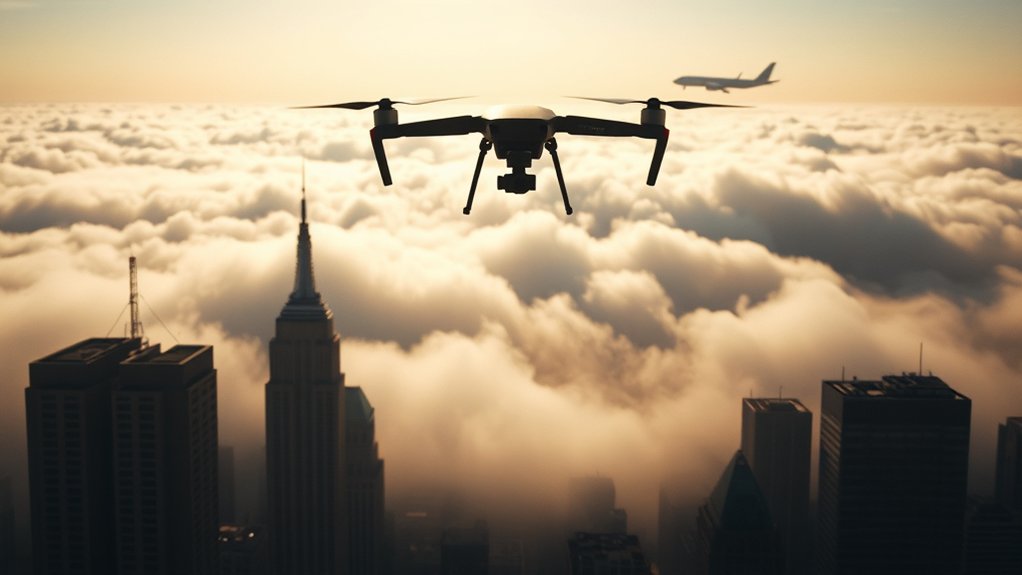
Violating altitude limits can lead to major financial, legal, and professional consequences. The exact outcome depends on the situation, but the risk is never worth ignoring.
FAA penalties can increase when the violation is careless, reckless, repeated, or connected to a dangerous event. A pilot who flies high near an airport, stadium, wildfire, emergency response scene, or helicopter route may face much more scrutiny than someone who makes a minor error and corrects it quickly.
Altitude violations can also affect your ability to earn money with a drone. If you rely on Part 107 work, a certificate suspension or reputation damage can cost more than the fine itself.
Financial Penalties and Fines
When you operate a drone, understanding the financial repercussions of exceeding altitude limits helps you avoid expensive mistakes.
Violating these limits can lead to consequences such as:
- FAA civil penalties for unsafe or noncompliant operations.
- Higher legal exposure if the flight endangers people, aircraft, or property.
- Denied or disputed insurance claims if the flight violates rules or policy terms.
- Lost income if a commercial client, agency, or partner no longer trusts your operations.
A single careless flight can cost far more than the drone. You may also spend time responding to complaints, producing flight logs, explaining your operation, or defending your actions.
If you are a Part 107 pilot, failing to follow altitude rules may also affect your remote pilot certificate. That can limit your ability to accept paid drone work, inspection jobs, media projects, or mapping assignments.
Stay informed and compliant to protect your finances, your equipment, and your future as a drone operator.
Certification and Legal Risks
Understanding the certification and legal risks associated with exceeding altitude limits is essential for every drone operator. Recreational pilots generally must stay within the 400-foot rule. Commercial pilots may exceed it only when a Part 107 rule, waiver, or authorization allows it.
| Violation Type | Potential Consequences | Affected Pilot Type |
|---|---|---|
| Exceeding 400 feet without authority | FAA enforcement, civil penalties, safety investigation, possible liability | Recreational & Commercial |
| Unauthorized commercial flight above the limit | Certificate action, client risk, lost commercial operating trust | Commercial |
| Flying too high in controlled airspace | Airspace violation, legal action, possible fines | Recreational & Commercial |
| Altitude breach near manned aircraft | Increased scrutiny, reckless-operation concerns, higher liability risk | Recreational & Commercial |
Measuring and Managing Altitude in Different Environments
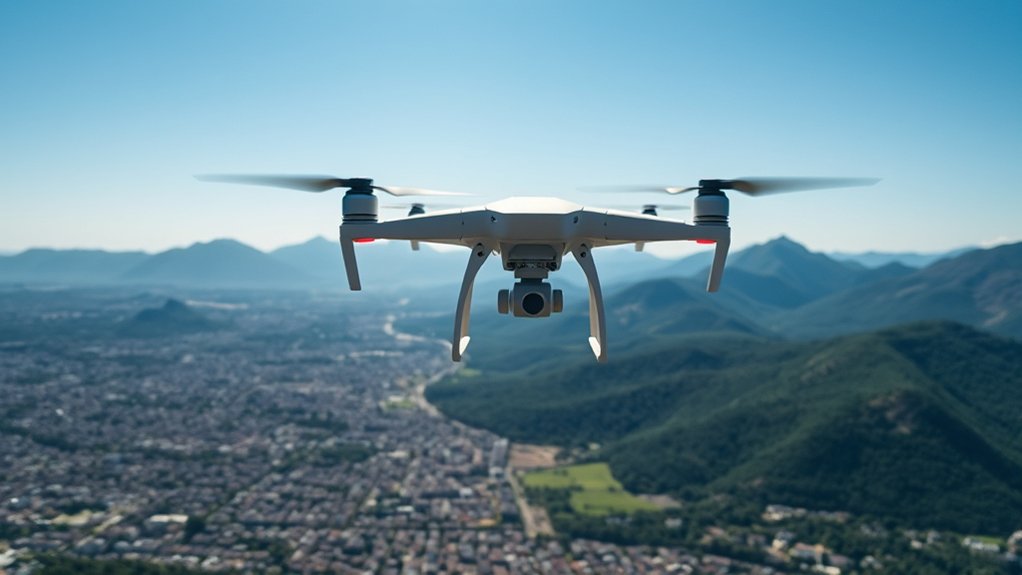
Measuring and managing altitude in different environments is essential for safe drone operations. The 400-foot rule sounds simple, but terrain, structures, launch points, and software readings can make real-world altitude management harder.
In mountainous areas, the ground may rise quickly under your drone. If your controller measures height from the takeoff point, it may not clearly show your height above the ground below the aircraft. That matters because the limit is based on AGL, not only takeoff height.
The towering peaks might seem inviting, but they can restrict your safe flight range. A drone that is 300 feet above your launch point could be much closer to a slope, ridge, or treetop than the screen suggests.
Urban landscapes filled with skyscrapers create different challenges. Buildings can block signal, distort GPS accuracy, create wind tunnels, and make visual line of sight harder to maintain. If you are using the Part 107 structure exception, you still need to stay within the allowed radius and manage all other safety requirements.
Weather also affects altitude decisions. Strong winds can increase with height, cold air can reduce battery performance, and gusts near ridges or buildings can make the drone harder to control. Even if a flight is legal, it may not be safe.
To manage these risks, program altitude alarms, use flight planning apps, check terrain before launch, and climb in small steps. Regular pre-flight weather checks help you choose a safer route while staying aligned with FAA regulations.
Pro Tip: Set your controller’s altitude warning below the legal ceiling, such as around 350 to 375 feet. That gives you time to react before you accidentally cross the limit.
Common Myths About Drone Altitude Limits
Many drone operators hold misconceptions about altitude limits that can lead to unsafe practices and regulatory violations. Clearing up these myths helps you avoid costly mistakes.
One common myth is that you can fly your drone to its maximum technical capability. In reality, your drone’s firmware ceiling, battery power, and signal range do not define the legal limit. Aviation rules do.
Another myth is that the 400-foot limit only matters near airports. It does not. The limit also matters in open fields, rural areas, parks, beaches, mountains, and other places where manned aircraft may pass through low-altitude airspace.
Some pilots also assume the altitude limit does not apply at night. The rule does not disappear after sunset. Night operations bring extra visibility challenges, so altitude discipline becomes even more important.
Another common misconception is that flying over tall structures automatically allows anyone to exceed 400 feet. That is not correct. The structure-based exception applies to Part 107 operations under specific conditions. Recreational flyers should not rely on it unless the applicable rules and safety guidelines clearly allow the operation.
Finally, some operators think a drone app warning is the same as legal clearance. Apps are helpful, but they are not a complete legal shield. You are responsible for understanding the airspace, altitude, weather, flight purpose, and operating rules before takeoff.
Best Practices for Compliance and Safety
Flying a drone can be exciting, but compliance and safety must come first. A simple pre-flight routine can prevent most altitude mistakes.
Start by checking airspace with trusted flight planning tools such as B4UFLY, Aloft, Air Control, or your drone manufacturer’s flight app. Confirm whether you are in uncontrolled airspace, controlled airspace, or a restricted area. If controlled airspace authorization is required, get it before launch.
- Maintain visual line of sight with your drone at all times.
- Set controller altitude warnings before takeoff.
- Check the maximum altitude setting in your flight app.
- Use incremental climbs instead of rising quickly to the ceiling.
- Watch for helicopters, small aircraft, emergency flights, and agricultural aircraft.
- Land or descend immediately if manned aircraft enter the area.
- Keep flight logs, including date, location, purpose, altitude, and authorizations.
If you are flying for work under Part 107, document your safety plan. Include your maximum planned altitude, the reason for that altitude, airspace status, observer roles, emergency landing zones, and communication steps.
If you are flying recreationally, keep the plan even simpler: stay low, stay close, stay within sight, and do not push the aircraft higher just for a better view.
Global Perspectives on Drone Altitude Regulations
Drone altitude rules vary by country, but many aviation authorities use a limit near 120 meters or 400 feet for typical small drone operations. The shared goal is to keep drones separated from manned aircraft as much as possible.
Before traveling with a drone, check the official aviation authority for the country you plan to visit. Do not assume your home-country rules apply abroad. Registration, pilot testing, insurance, airspace apps, and altitude limits may all differ.
| Country/Region | Typical Max Altitude (AGL) | Special Conditions |
|---|---|---|
| United States | 400 feet / 122 m | Part 107 structure exception or waiver may apply in specific cases |
| European Union | 120 m / about 394 feet | Category, class, location, and authorization rules may apply |
| Australia | 120 m / about 400 feet | CASA rules include visual line of sight and distance requirements |
| Canada | 122 m / about 400 feet | Higher operations require the correct certificate, location approval, or authorization |
| Other Countries | Varies widely | Local permits, no-fly zones, and stricter limits may apply |
Frequently Asked Questions
What happens if I fly my drone above 400 feet?
If you fly above 400 feet without the right exception or authorization, you may violate FAA rules and create a safety risk for manned aircraft. Possible consequences include FAA enforcement, civil penalties, certificate action for Part 107 pilots, insurance disputes, and liability if the flight causes harm.
What drones can fly at 50,000 feet?
Some military and specialized high-altitude unmanned aircraft can operate around or above 50,000 feet, but those systems are not consumer drones. Everyday civilian drones must follow small UAS rules, which usually keep recreational flights at or below 400 feet AGL.
What altitude can you legally fly a drone at?
In the United States, most recreational drone flights must stay at or below 400 feet above ground level. Part 107 pilots also generally follow the 400-foot limit, but they may exceed it near structures or with an approved waiver when the rules allow.
How does altitude affect drones?
Altitude can affect lift, wind exposure, GPS performance, signal reliability, and battery life. Higher flights often expose the drone to stronger winds and colder temperatures, which can reduce control, shorten flight time, and make safe return harder.
Does the 400-foot limit mean above sea level or above the ground?
The rule usually refers to above ground level, or AGL. That means your drone’s height is measured from the ground below it, not from sea level. This distinction matters in mountains, valleys, and elevated launch locations.
Can I fly above 400 feet near a building?
A Part 107 pilot may be able to fly above 400 feet when operating within 400 feet of a structure and no more than 400 feet above that structure’s uppermost limit. Recreational pilots should not assume this exception applies to them.
Sources
- FAA Recreational Flyers & Community-Based Organizations — supports recreational drone altitude and safety guidance.
- 14 CFR Part 107 — supports Part 107 altitude rules, structure operations, and waiver framework.
- FAA DroneZone — supports registration, waivers, and drone authorization pathways.
- EASA Civil Drones — supports European drone rule context and altitude framework.
- Transport Canada Drone Safety — supports Canadian drone safety and altitude rule context.
- Civil Aviation Safety Authority Drone Rules — supports Australian drone rule context.
Conclusion
Flying above 400 feet is not just a technical decision. It is a safety and legal decision that affects everyone sharing the sky. For most recreational pilots, the safest and most compliant choice is to stay at or below 400 feet AGL, keep the drone within visual line of sight, and land or descend when manned aircraft appear.
Part 107 pilots have more options, but those options come with responsibility. If you need to fly near a structure, inside controlled airspace, or above the standard limit, confirm the rule, get the right approval, and document the flight. When you respect altitude limits, you protect your drone, your certificate, your finances, and the safety of the airspace around you.
