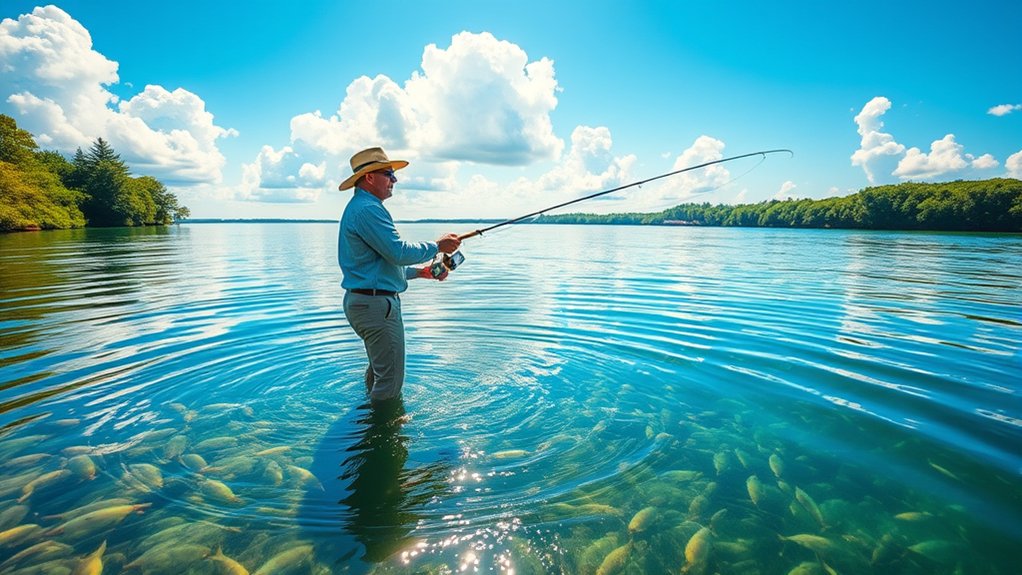
Fishing in clear water can feel like trying to sneak up on a deer in broad daylight. Fish can see line, shadows, movement, boat noise, and unnatural lure action much sooner than they would in stained water. That does not mean clear water is impossible to fish. It means you need to slow down, stay quiet, use natural presentations, and make every cast count. With the right approach, clear water can help you spot cover, read fish behavior, and choose better targets.
Quick Answer
To catch fish in clear water, use lighter line, natural-colored lures, long casts, quiet movement, and precise presentations. Focus on shade, vegetation, rocks, current seams, docks, and other cover where fish feel protected. Fish early, late, or during wind and cloud cover when fish are less wary.
Key Takeaways
- Clear water makes fish more cautious, so stealth matters as much as lure choice.
- Use fluorocarbon or light, low-visibility line when the water is calm and clear.
- Choose natural colors, smaller profiles, and realistic lure movement that match local forage.
- Long casts help you stay away from fish before they notice your shadow or movement.
- Wind, shade, cloud cover, dawn, and dusk can make clear-water fish more willing to bite.
At a Glance
| Best Time | Dawn, dusk, cloudy periods, windy banks, and low-light windows |
| Difficulty | Moderate, because fish can see movement, shadows, line, and unnatural lure action |
| Tools Needed | Light tackle, fluorocarbon line, natural lures, polarized sunglasses, quiet footwear, and accurate casting gear |
| Best Approach | Stay back, cast long, keep quiet, match the local forage, and work cover carefully |
Understanding Clear Water Challenges
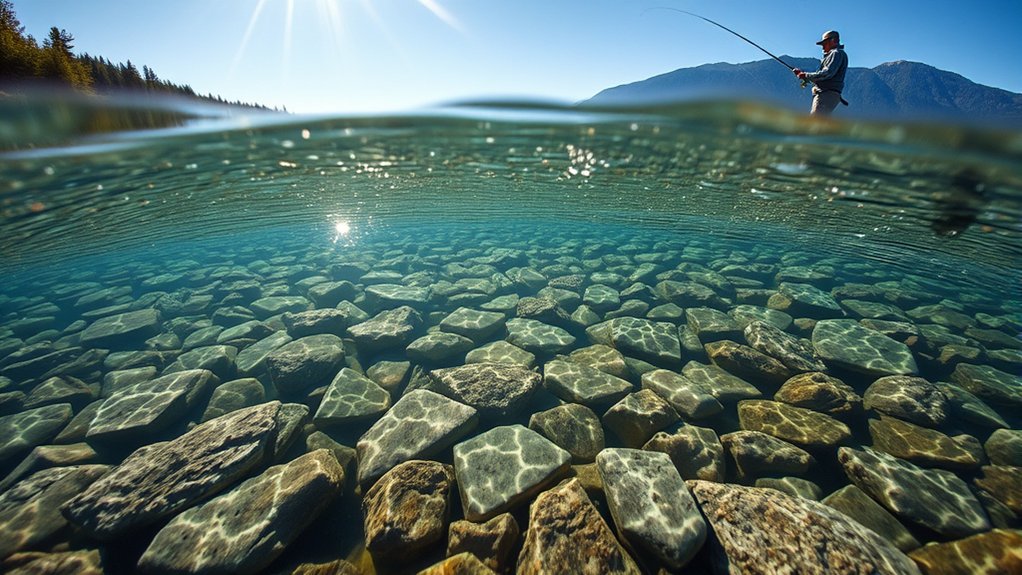
When you’re fishing in clear water, you’ll quickly notice that fish can see you just as well as you can see them. That extra visibility often makes them more cautious, especially in shallow water, calm conditions, or areas with heavy fishing pressure. A fish that might chase a bright lure in stained water may ignore it in clear water if the line, splash, or movement looks wrong.
To succeed, you need a stealthy approach. Keep your distance from target areas so you do not spook fish before your lure reaches them. Using long casts helps you maintain that distance while still presenting your bait effectively. Bank anglers should avoid stomping near the edge, and boat anglers should limit trolling motor noise, dropped tackle, and sudden movement.
In clear conditions, lighter tackle and smaller lures often create a less intimidating presentation. Pay close attention to fish behavior. Many fish hold near cover, shade, rocks, vegetation, docks, or deeper edges during bright parts of the day. You’ll often find more activity during dawn, dusk, windy periods, and overcast conditions. By understanding these challenges and adjusting your tactics, you can improve your chances of landing wary fish in clear water.
Note: Clear water does not always mean fish are inactive. It usually means they are easier to spook and more selective about what they chase.
Essential Gear for Clear Water Fishing
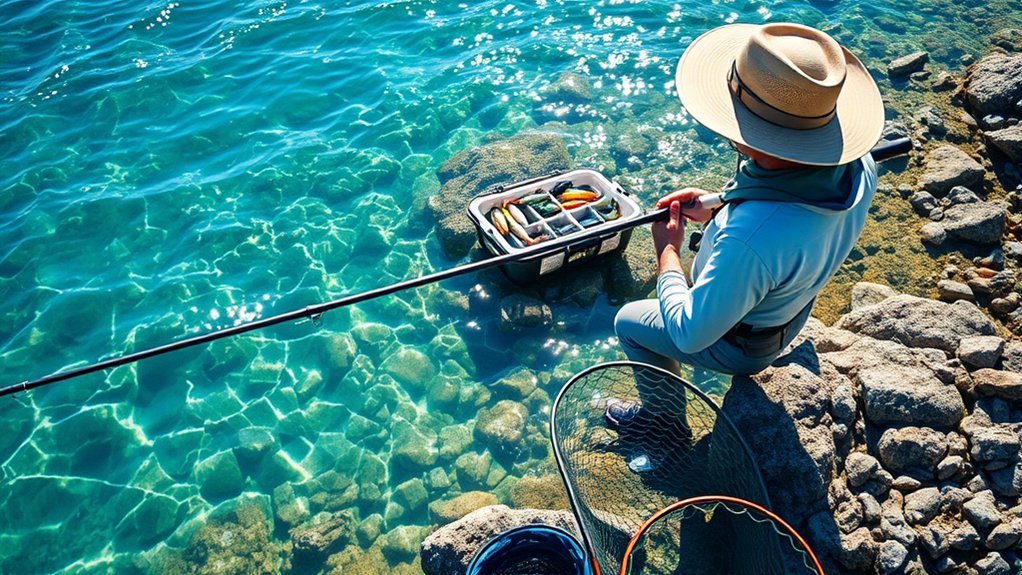
Fishing in clear water means you need gear that helps you stay subtle. Start with lighter tackle when the fish, cover, and target species allow it. A lighter setup helps small lures move naturally and makes your presentation look less threatening.
Fluorocarbon line is a popular choice because it has low visibility underwater and sinks better than many monofilament lines. It works well for finesse rigs, soft plastics, jigs, jerkbaits, and other clear-water presentations. If you use braid for strength or casting distance, consider adding a fluorocarbon leader to reduce visibility near the lure.
Choose sensitive rods that let you feel light bites. Clear-water fish may nip, follow, or gently load the rod instead of striking aggressively. A sensitive rod helps you detect those subtle changes before the fish drops the bait.
Opt for smaller hooks and lures when fish are pressured or following without committing. Natural colors that mimic local baitfish, insects, crawfish, or other forage are often safer choices than bright neon colors. Green pumpkin, watermelon, shad, smoke, silver, brown, and translucent patterns can work well in many clear-water situations.
To boost your performance, invest in high-quality gear that improves sensitivity and casting control. G Loomis NRX+ rods paired with Shimano reels can provide excellent feel and smooth casting distance. You do not need premium gear to catch fish, but balanced, reliable equipment helps when bites are light and casts need to be accurate.
Best Line for Clear Water Fishing
Your fishing line can make or break a clear-water presentation. Fish may not understand what line is, but they can react to unnatural flash, drag, tension, or movement. The right line helps your lure move freely and keeps the setup less visible.
- Fluorocarbon: Best for many clear-water situations because it is less visible underwater and works well around finesse baits, soft plastics, crankbaits, and jerkbaits.
- Monofilament: Useful for topwater lures because it floats better than fluorocarbon and can add stretch on treble-hook baits.
- Braid with leader: Good when you need casting distance, strength, or hook-setting power, but add a fluorocarbon leader in clear water to reduce visibility.
Match your line strength to the fish and cover. Open water may allow lighter line, while rocks, docks, vegetation, or bigger fish require stronger line. The goal is not to use the lightest line possible. The goal is to use the lightest line that still lets you land fish safely and confidently.
Warning: Do not go so light that you cannot control the fish. Broken line can leave hooks and lures in fish, cover, or the water.
Effective Lure Selection and Presentation
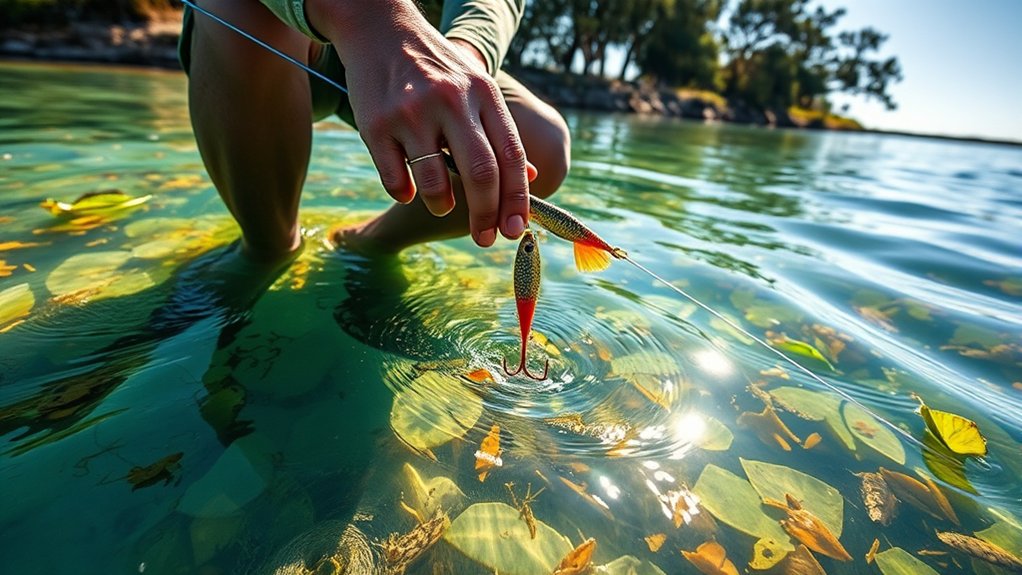
Choosing the right lure is essential for success in clear water fishing. Your lure needs to look natural, enter the water quietly, and move like something fish already expect to eat. A loud splash, oversized profile, or unnatural color can push cautious fish away before they bite.
Use lighter lures and finesse presentations when the water is calm and fish are pressured. A Yamamoto Senko on a wacky rig can fall slowly with a subtle shimmy. A Ned Rig with a Z-Man TRD can stay compact and natural near the bottom. Drop shots, small swimbaits, tubes, shaky heads, hair jigs, jerkbaits, and small topwater lures can also work well when matched to the situation.
Choose natural color patterns that resemble local baitfish, crawfish, insects, or bluegill. Bright neon colors can still work at times, especially around reaction bites or stained edges, but they often look too bold in clear water. Translucent lures can be especially useful because they allow light to pass through and create a softer profile.
Employ realistic profiles by selecting lures that mimic the size, shape, and movement of available prey. If fish are feeding on small shad, use a slim baitfish profile. If they are rooting around rocks, try a craw-style bait. If they are suspended and following but not striking, slow down and use pauses, twitches, or subtle changes in retrieve speed.
Remember to cast from a distance. Long, accurate casts let your lure reach the strike zone before the fish sees you. Focus on structures and cover first, including weed edges, rocky points, laydowns, docks, shade lines, and current seams. Make your first cast count because the first presentation often has the best chance in clear water.
Clear Water Lure Colors That Work
Color matters more in clear water because fish can inspect your lure closely. Start with shades that match the water, bottom, and local forage. Then adjust based on light, depth, and fish response.
- Green pumpkin and watermelon: Strong choices around grass, rocks, and bluegill-heavy areas.
- Shad, pearl, silver, and smoke: Useful when baitfish are present or fish are chasing suspended forage.
- Brown, craw, and natural orange accents: Good around rocks, gravel, and crawfish habitat.
- Translucent patterns: Helpful in very clear water because they look softer and less bulky.
- Black or darker shades: Useful during low light, shade, or when fish need a stronger silhouette.
Do not choose color by habit alone. Watch how fish react. If they follow but turn away, try a smaller bait, lighter line, a slower retrieve, or a more natural color. If they ignore subtle colors, add a little flash or contrast to trigger a reaction.
Techniques for Stealthy Approaches
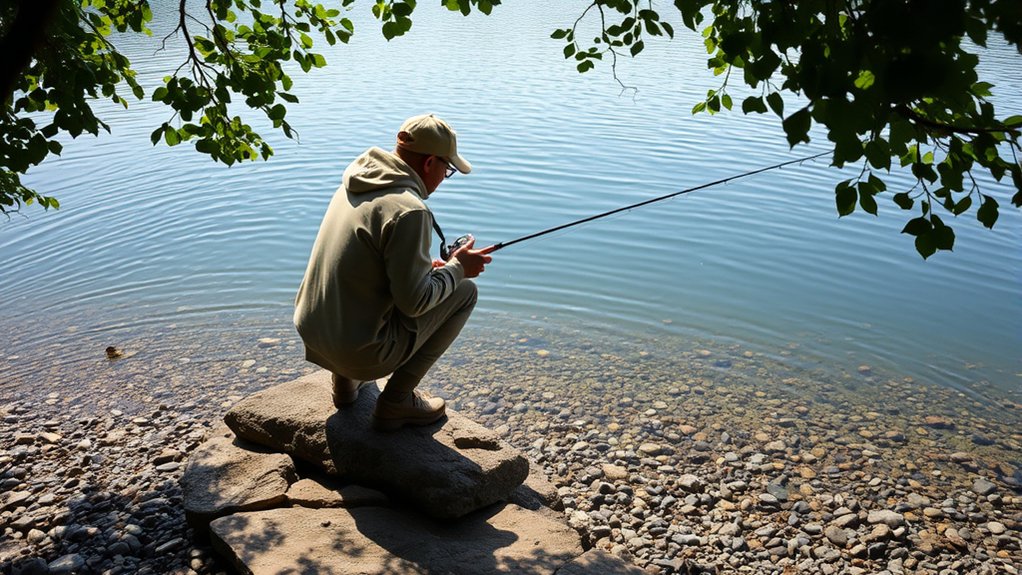
When you’re heading to your fishing spot, keeping your distance is key. Stay back from the water’s edge or target area whenever possible. Move quietly, whether you’re using a trolling motor, kayak paddle, wading boots, or bank-fishing approach. Always be mindful of your shadow, profile, and noise.
Clear-water fish often react before you make a cast. They may slide away from the bank, stop feeding, tuck deeper into cover, or follow your lure without biting. A stealthy approach keeps fish comfortable long enough for your presentation to work.
Quietly Approach Areas
To successfully catch fish, you need to master the art of stealth, particularly in clear water where even a small disturbance can send them away. Start your approach from a distance. If you are in a boat, use a trolling motor at low speeds and avoid sudden changes. If you are bank fishing, step softly and avoid scraping rocks, snapping sticks, or casting a shadow over shallow fish.
Dress in neutral colors to blend into your surroundings. You do not need camouflage for every trip, but bright clothing can make your movement easier to spot in shallow, clear water. Shorter, accurate pitches can help when close to cover, but use longer casts when fish are cruising or holding away from the bank.
Observe fish movement before casting. If fish are cruising, wait until they turn or settle before making your presentation. Casting too soon can land the lure directly on top of them and end the opportunity. Keep a calm rhythm and avoid excessive noise because sudden disturbance can disrupt natural fish behavior.
Maintain Distance and Stealth
While fishing in clear water, keeping your distance and maintaining stealth can greatly enhance your success. Use these strategies to reduce your impact on fish behavior:
- Maintain Distance: Stay well back from the bank, shallow flat, or visible cover. In very clear water, fish may react from farther away than you expect.
- Use Natural Cover: Position yourself behind trees, rocks, reeds, docks, or shoreline angles to reduce your outline and shadow.
- Make Precise Casts: Land your lure gently near the target instead of dropping it directly on top of fish. Quiet entry keeps fish unaware of your presence.
- Limit Repeated Casts: Do not pound the same visible fish with the same lure. Change angle, size, color, or retrieve if the first few casts do not work.
Use Shadows Effectively
Shadows can be your best ally in stealthy fishing approaches, especially in clear water where fish are easily spooked. Position yourself based on the sun’s location to minimize your shadow’s impact on fishing spots. If your shadow crosses a shallow fish, the fish may stop feeding or leave.
Cast into dark areas or shadows along banks, docks, trees, grass edges, and rocks. These spots may conceal fish seeking cover from predators and bright sunlight. Shade can also make fish more confident because it breaks up visibility and reduces exposure.
As the sun moves, reposition frequently to maintain better angles. Use natural cover like trees, reeds, boulders, and dock posts to block your outline when fishing from the bank. Be mindful of the time of day. Longer shadows during early morning and late evening can create more secure feeding areas and improve your chances of a successful catch.
Pro Tip: Before casting to visible fish, watch them for a moment. Their direction, speed, and depth tell you where to place the lure without startling them.
Utilizing Environmental Factors
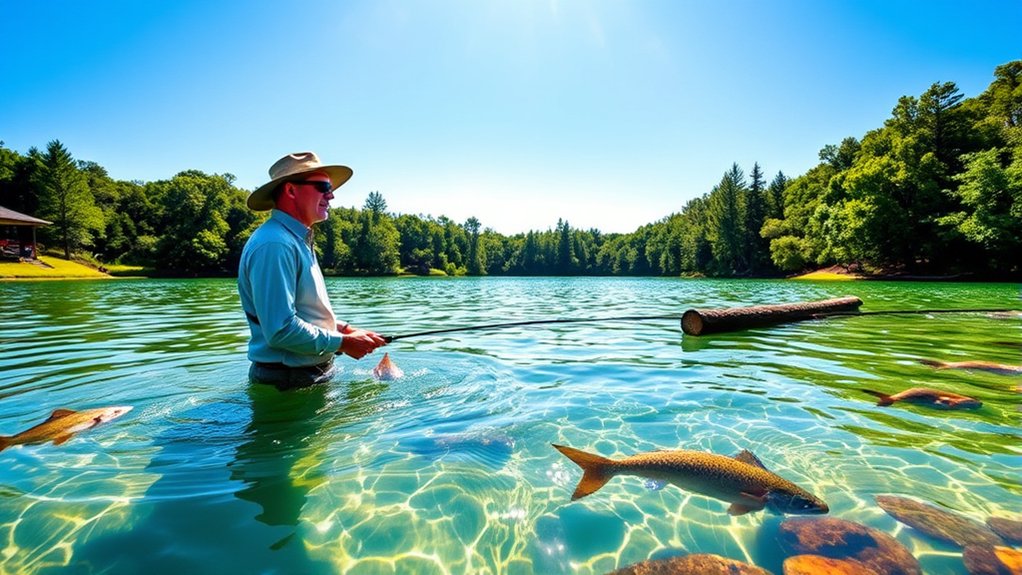
Understanding how to utilize environmental factors can greatly enhance your fishing success. Clear water gives fish a visual advantage, but changing conditions can reduce that advantage and make fish feed more actively.
- Wind Patterns: Fish often feed more actively along windy banks, where food is stirred up and surface chop breaks light penetration. Wind also makes your line and shadow harder for fish to detect.
- Cloud Cover: Overcast skies can make fish more willing to roam and chase. During cloudy periods, try covering water with moving baits before slowing down with finesse rigs.
- Light Levels: Dawn, dusk, and shade lines can create prime feeding windows. Fish may move shallower when the light is low and slide deeper when the sun gets high.
- Bottom Composition: Look for changes such as darker rocks, gravel, sand patches, weeds, and transitions. These areas can hold bait and give fish a place to ambush prey.
- Water Movement: Current, riffles, inflows, and wind-blown points can position fish. Cast upstream or upwind when possible so your lure moves naturally with the flow.
Use stealthy techniques when working these areas. Approach with a low-speed trolling motor, quiet paddle strokes, or careful bank movement. Keep your distance and make controlled casts so your lure enters the strike zone before your presence does.
Targeting Prime Fishing Locations
Have you ever wondered where the best fishing spots are hiding? To maximize your catch in clear water, focus on high-percentage locations where fish can feed while staying protected. Clear water fish often avoid wide-open, bright areas unless they are chasing bait or moving between cover.
Start by casting near natural cover like stumps, downed trees, grass lines, docks, boulders, and rocky structures. Fish often use these areas to hide from predators and ambush prey. Do not overlook shady spots along banks. These darker sections provide relief from bright sunlight and often attract both baitfish and predators.
Next, pay attention to bottom composition changes. Darker rocks, gravel bars, weed patches, shell beds, sand-to-rock transitions, and depth breaks can all become clear-water hotspots. Even a small change can hold fish when the surrounding area looks empty.
Utilize current and structure, like riffles, eddies, points, cuts, and submerged cover. These features can funnel food and position fish in predictable places. Approach your fishing spots quietly and from a distance. This way, you can make stealthy presentations that won’t spook the fish, increasing your chances of landing that big catch.
Best Times to Fish Clear Water
Timing matters in clear water. Bright sun and calm water can make fish cautious, especially in shallow areas. Low light, wind, and changing weather can help you get more bites.
- Early morning: Fish often move shallow to feed before sunlight gets intense.
- Late evening: Lower light can make fish more comfortable around banks, flats, and shallow cover.
- Cloudy days: Reduced light can encourage fish to roam and chase moving baits.
- Windy periods: Surface chop hides line, shadows, and small mistakes in presentation.
- After pressure drops: Changing weather can trigger feeding, though results vary by species and location.
If you must fish under bright midday sun, target deeper edges, shade, docks, grass, rocks, and current. Slow down, downsize, and focus on precise lure placement.
Common Clear Water Fishing Mistakes
Many anglers struggle in clear water because they use the same approach they use in stained or muddy water. Small mistakes become more obvious when fish have a clear view.
- Standing too close to the water: Fish may see you before your first cast.
- Using line that is too heavy or visible: This can make finesse lures look unnatural.
- Throwing oversized lures: Big profiles can intimidate pressured fish in clear conditions.
- Using loud colors at the wrong time: Neon colors can look unnatural when fish are inspecting baits closely.
- Making repeated casts to the same fish: Too much pressure can make fish shut down.
- Ignoring wind and shade: These conditions can turn a tough clear-water day into a productive one.
- Retrieving too fast: Fish may follow but refuse if the lure does not look natural.
Fix these mistakes by slowing down, staying farther back, choosing natural colors, and changing angles before changing locations. Often, a slight adjustment is enough to turn followers into bites.
Clear Water Bank Fishing Tips
Bank fishing clear water requires extra patience because you cannot always reposition as easily as a boat angler. Still, you can catch plenty of fish from shore if you manage your profile and casting angles.
Walk softly and stay low when approaching shallow banks. Avoid stepping directly to the water’s edge right away. Instead, stop several feet back and make your first casts from a hidden position. Cast parallel to the bank before casting straight out because fish often cruise close to shore.
Use trees, brush, grass, rocks, and docks to break up your outline. If the sun is behind you, watch your shadow carefully. A long shadow crossing the water can alert fish before your lure lands.
Choose compact lures that cast well and land softly. Weightless soft plastics, small swimbaits, Ned rigs, drop shots, inline spinners, and finesse jigs can all work depending on the species and cover. Keep your tackle simple so you can move quietly and make quick adjustments.
Clear Water Boat and Kayak Fishing Tips
Boat and kayak anglers have more mobility, but they also create more noise and shadow. In clear water, that can hurt your chances if you get too close too fast.
Start farther away from your target than you would in stained water. Use wind or current to drift into position when possible. If you use a trolling motor, keep it steady and avoid sudden bursts. In a kayak, avoid banging paddles, rods, or tackle boxes against the hull.
Make long casts to the outside edges of cover before moving closer. Fish the most obvious targets first, but do not ignore subtle changes such as isolated rocks, grass holes, small shade pockets, and depth transitions. Clear water allows you to see more, but it can also tempt you to move too quickly. Slow down and fish the best targets thoroughly.
Frequently Asked Questions
What is the 80/20 rule in fishing?
The 80/20 rule in fishing means you often catch most of your fish from a small percentage of the water. Instead of casting everywhere, focus on productive areas such as points, cover, shade, baitfish activity, current seams, and structure.
What is the 90/10 rule in fishing?
The 90/10 rule in fishing means a large percentage of fish may hold in a small percentage of the available water. In clear water, that small percentage often includes cover, shade, depth changes, vegetation, current, rocks, docks, or baitfish schools.
What is the best bait for clear water fishing?
The best bait for clear water fishing is usually a natural-looking bait that matches local forage. Good options include finesse worms, wacky-rigged stick baits, Ned rigs, drop shots, small swimbaits, jerkbaits, tubes, live minnows, and natural-colored craw-style lures.
What bait should you use in clear water?
In clear water, use baits in green pumpkin, watermelon, shad, pearl, smoke, brown, silver, or translucent colors. Match the size and shape of the local forage. If fish follow without biting, downsize, slow your retrieve, or switch to lighter line.
Is fluorocarbon better for clear water?
Fluorocarbon is often a strong choice for clear water because it is less visible underwater and works well with many subsurface lures. Monofilament can still be better for topwater baits, while braid with a fluorocarbon leader works well when you need strength and casting distance.
Do bright lures work in clear water?
Bright lures can work in clear water when fish are aggressive, when you need a reaction strike, or when the lure is moving fast. However, natural and translucent colors are usually safer starting points because clear-water fish can inspect lures closely.
Conclusion
As you begin your clear water fishing adventures, remember that patience and precision are your greatest allies. Picture yourself gliding silently across a shimmering lake at dawn, the sun just touching the surface, while fish move beneath the water’s clarity. That clear view can be intimidating, but it also gives you clues about cover, bait, structure, and fish behavior.
Stay quiet, keep your distance, use natural presentations, and let the conditions guide your choices. Focus on shade, wind, low light, subtle bottom changes, and areas where fish can feed while feeling protected. By honing your stealth techniques and choosing the right gear, you’ll increase your chances of a catch and enjoy the calm challenge that makes clear-water fishing so rewarding.
