Baitcasting reels give you more control, stronger lure placement, and better accuracy once you learn the setup. They also punish sloppy casts with backlash, so the right adjustments matter. Use this guide to spool your reel, tune the brakes and tension knob, practice clean casts, choose the right line, and fix common baitcasting problems before they ruin your time on the water.
Quick Answer
To use a baitcasting reel well, spool the line under steady tension, set the spool tension so your lure falls slowly, start with higher brake settings, and control the spool with your thumb. Practice overhead, sidearm, and pitching casts with a hookless lure before fishing around cover.
Key Takeaways
- A baitcaster works best when the line is spooled tightly and evenly.
- Start with higher brake settings, then lower them as your thumb control improves.
- Use the tension knob to match the lure weight before you cast.
- A smooth casting motion prevents more backlash than extra force does.
- Beginners usually learn faster with moderate line strength, simple controls, and regular practice.
At a Glance
| Time Required | 15 to 30 minutes for setup, plus short practice sessions |
| Difficulty | Beginner to intermediate |
| Tools Needed | Baitcasting reel, rod, line, lure or practice plug, scissors, and optional tape or line spooler |
| Cost | Varies by rod, reel, and line choice |
Setting Up Your Baitcasting Reel
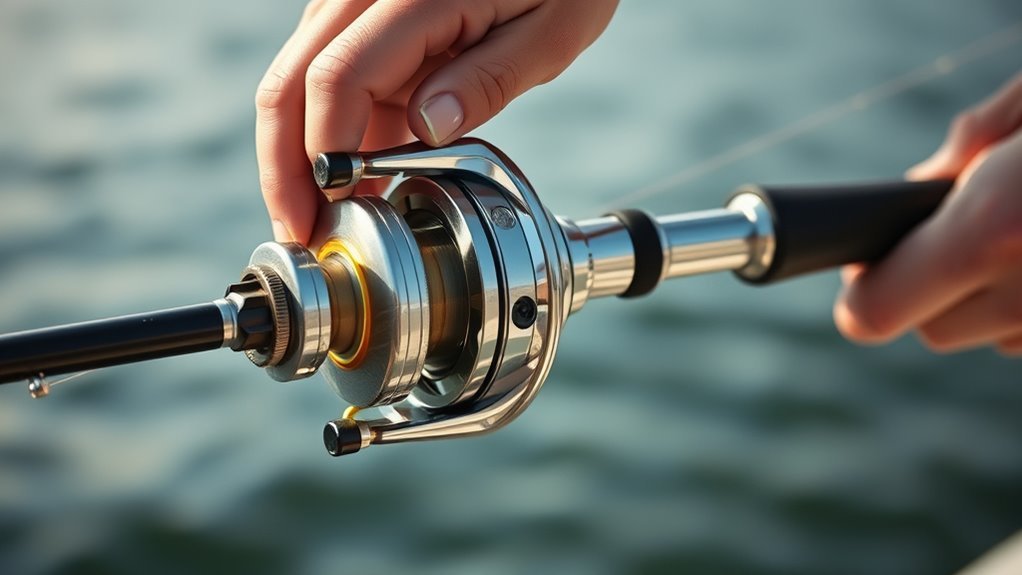
A good cast starts before the lure ever leaves your rod tip. Your line, spool tension, brakes, and drag all need simple adjustments before you begin fishing.
Start by spooling your baitcasting reel with steady pressure. Keep the line tight between your fingers or through a soft cloth, and make sure it lays evenly across the spool. Loose wraps can dig into themselves later, especially with braided line.
Secure the line with an arbor knot. If you use braided line, add backing or a small strip of tape to help prevent the braid from slipping on the spool. You can also place athletic tape over the knot on the spool to create a smoother base.
A tight, even spool helps prevent loose loops, line dig-in, and early backlashes when you start casting.
Fill the spool close to full, but do not overfill it. Leave a small gap near the spool rim so the line can come off smoothly without jumping too fast during the cast.
Next, tie on the lure you plan to use. Hold the rod at about a 45-degree angle, press the thumb bar, and let the lure drop. Adjust the tension knob until the lure falls slowly and the spool stops spinning when the lure touches the ground.
Then set your magnetic braking system or centrifugal brakes higher than normal for your first few casts. Higher brakes reduce distance, but they give you more control while you learn.
Warning: Never cast near people, pets, windows, vehicles, or overhead power lines during practice. Use a hookless lure or practice plug when learning in a yard or open field.
Finally, adjust the drag system. Pull the line by hand while the reel is engaged. The drag should give under firm pressure, not slip too easily and not lock down completely. This helps protect your line when a fish surges.
With these steps, your setup will be easier to cast, easier to control, and less likely to backlash on the first few casts.
[Amazon Products Picked for You]

Package Contents: Includes 6 durable casting plugs in varying weights (5g, 7g, 10g, 12g, 15g, 20g), suitable for different practice scenarios to improve accuracy and distance

Reliable material: the fishing practice plug is made of quality PVC material, sturdy and durable, and not easy to break; Crossed wear belts are helpful for its longer service life

For practicing casting in open field, increase your familiarity to bait casting
Matching Line and Lure to Your Baitcaster
The line and lure you choose can make baitcasting easier or harder. Beginners often struggle when the lure is too light, the line is too stiff, or the reel is tuned for a different weight.
Start with a medium-weight lure while learning. Very light lures need a skilled thumb and a properly matched reel. Heavier practice plugs, spinnerbaits, jigs, and crankbaits are usually easier to cast because they load the rod better.
For line, choose a strength that fits your target fish and cover. A 10lb line can work for lighter bass fishing and open water, but 12 to 15lb line gives beginners a little more forgiveness. Braided line casts well and has low stretch, while fluorocarbon sinks and stays less visible underwater. Monofilament is often easier to manage because it is forgiving and affordable.
Note: Fluorocarbon can be useful, but it may feel springy on some baitcasters. If you are brand new, monofilament or braid with backing can make practice smoother.
Avoid mixing a light lure with heavy line during practice. That pairing makes the lure harder to launch and gives the spool more chance to overrun.
Mastering Casting Techniques
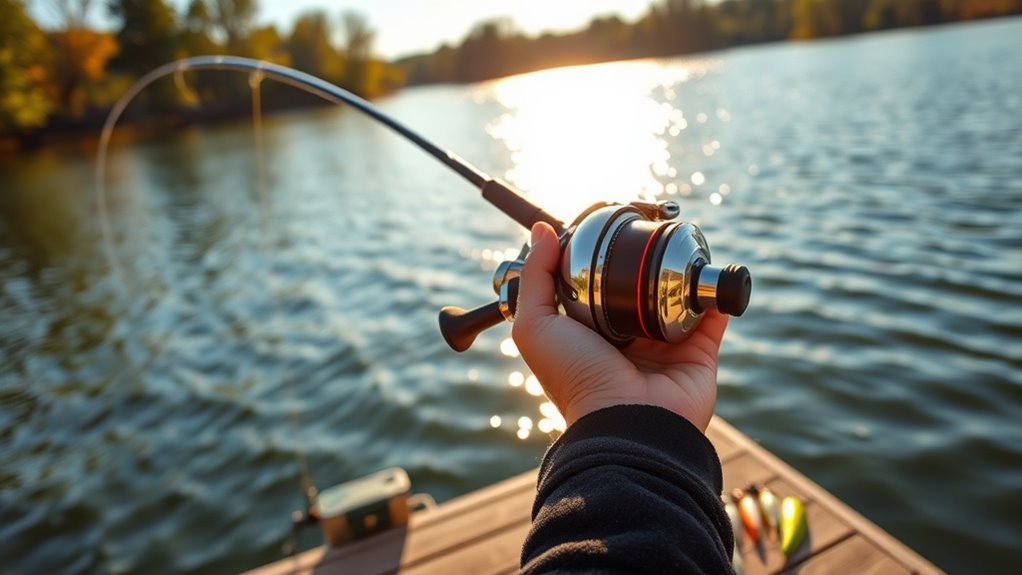
Mastering casting techniques is essential for getting better accuracy and control with a baitcasting reel. The goal is not to whip the lure as hard as possible. The goal is a smooth rod load, clean release, and steady thumb control.
Start by pressing the thumb button and holding the spool lightly with your thumb. Keep the lure hanging 8 to 12 inches from the rod tip. Make a smooth motion and release your thumb as the rod begins to send the lure forward.
The basic overhead cast is the best starting point. Move the rod back in a controlled motion, then bring it forward smoothly. Stop the rod tip higher than you might expect. This sends the lure forward instead of driving it down into the water.
As the lure flies, feather the spool with your thumb. Do not clamp down too early. Let the line flow, then press the spool right before the lure lands. This final thumb stop is one of the biggest skills in baitcasting.
For obstacles, use the sidearm cast. Hold the rod more to the side of your body and swing through in a smooth arc. This helps you cast under branches, docks, and low cover.
If you’re aiming for finesse in bass fishing, the underhand pitch is your go-to technique. Lower the rod, hold the lure in your free hand, and swing it outward and upward as you release line. This creates a low, quiet cast that works well around close targets.
Pro Tip: Practice accuracy before distance. Place buckets, paper plates, or small targets at different ranges and try to land a hookless lure near each one.
Practicing these casting techniques with a hookless lure will sharpen your overall control and accuracy. Short sessions help more than one long, frustrating session.
How to Adjust Brakes and Spool Tension
Your baitcaster has two main controls that affect casting: spool tension and brakes. They sound similar, but they do different jobs.
The spool tension knob controls side-to-side spool movement and helps match the reel to your lure weight. Set it after you tie on each lure. If you switch from a heavy jig to a light crankbait, check the tension again.
The braking system controls spool speed during the cast. Magnetic brakes use an external dial on many reels. Centrifugal brakes usually use internal brake blocks or pins. Some reels use both systems.
For beginners, start with more braking. Your cast will not travel as far, but it will be easier to manage. Once you can cast without backlash, lower the brake setting one step at a time.
A simple starting setup looks like this:
- Set the spool tension so the lure drops slowly.
- Turn magnetic brakes to a medium-high or high setting.
- Make short casts first, not full-power casts.
- Use your thumb to slow the spool during flight.
- Stop the spool completely as the lure lands.
If the lure falls too fast during the drop test, tighten the tension slightly. If your cast feels choked and short, loosen tension a little and use the brake dial for control.
Tips for Improving Your Baitcasting Skills
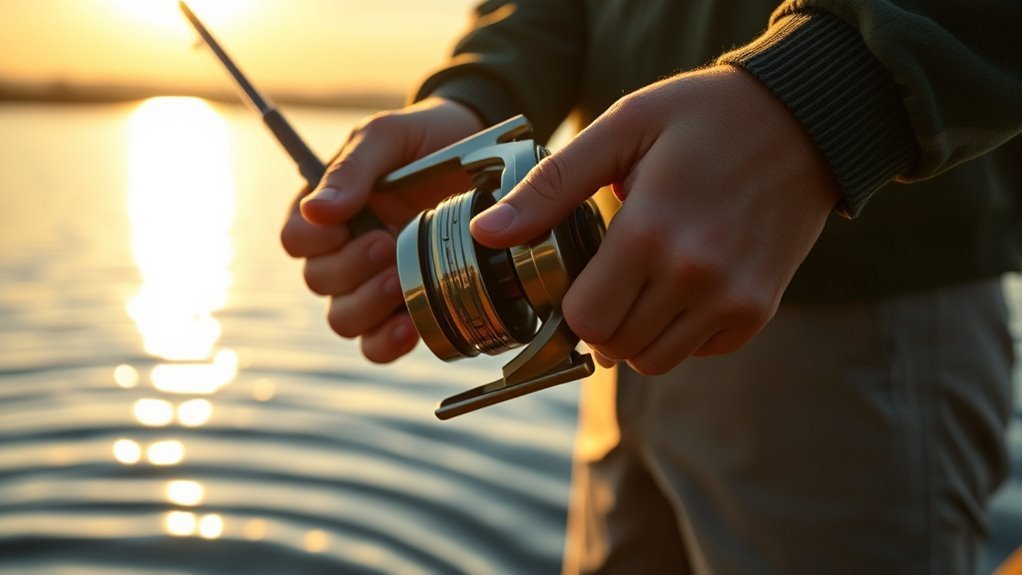
While developing your baitcasting skills might seem intimidating at first, a few focused habits can improve your performance quickly.
Start by practicing with a hookless lure. Focus on the timing of your thumb release, the rod motion, and the way your thumb slows the spool before the lure lands.
Keep your first casts short. A 20-foot cast with no backlash is better than a long cast that buries line in the spool. Once your timing feels natural, add distance.
Adjust the tension knob on your baitcasting reel to suit your lure’s weight. The lure should fall under control, not rocket toward the ground. This small setup step helps minimize backlash.
Experiment with different casting techniques, like overhead and sidearm casts, to improve your versatility in different fishing situations. Practice in open areas first, then work around targets after you gain control.
Finally, use suitable line and consider a line-winding jig to maintain pressure while spooling. This helps prevent loose braid issues and supports smoother casts.
Here is a simple practice routine:
- Make 10 short overhead casts with a hookless lure.
- Make 10 sidearm casts toward a safe target.
- Practice stopping the spool before the lure hits the ground.
- Move the target 5 feet farther away once your casts land cleanly.
- Lower the brake setting only after you can cast without backlash.
These steps will build smoother casts, better control, and more confidence with your baitcasting setup.
Fixing Backlash and Common Baitcaster Problems
Backlash happens when the spool spins faster than the lure pulls line. The extra line piles up and creates loops or knots. Every baitcaster user deals with it, especially in the beginning.
If you get a small backlash, do not pull hard right away. Press your thumb on the spool, turn the handle slightly, and pull the line out gently. If it catches, look for the loop that is locking the line and free it with your fingers.
For a deeper backlash, keep steady pressure on the spool and pull slowly. Avoid digging with sharp tools because they can damage the line. If the line is badly kinked or weakened, cut out the damaged section and retie.
Common baitcaster problems usually come from one of these causes:
- Backlash at the start of the cast: The spool starts too fast. Add brake or use a smoother casting motion.
- Backlash near the end of the cast: You are not stopping the spool before the lure lands. Use more thumb pressure at the end.
- Short casting distance: The brakes or spool tension may be too tight, or the lure may be too light.
- Line digging into itself: The spool may have loose line. Rewind with more pressure.
- Lure drops too quickly: Tighten the tension knob slightly before casting.
Warning: Replace line that looks frayed, flattened, kinked, or damaged after a severe backlash. Weak line can break during a cast or while fighting a fish.
Understanding Baitcasting Reel Features
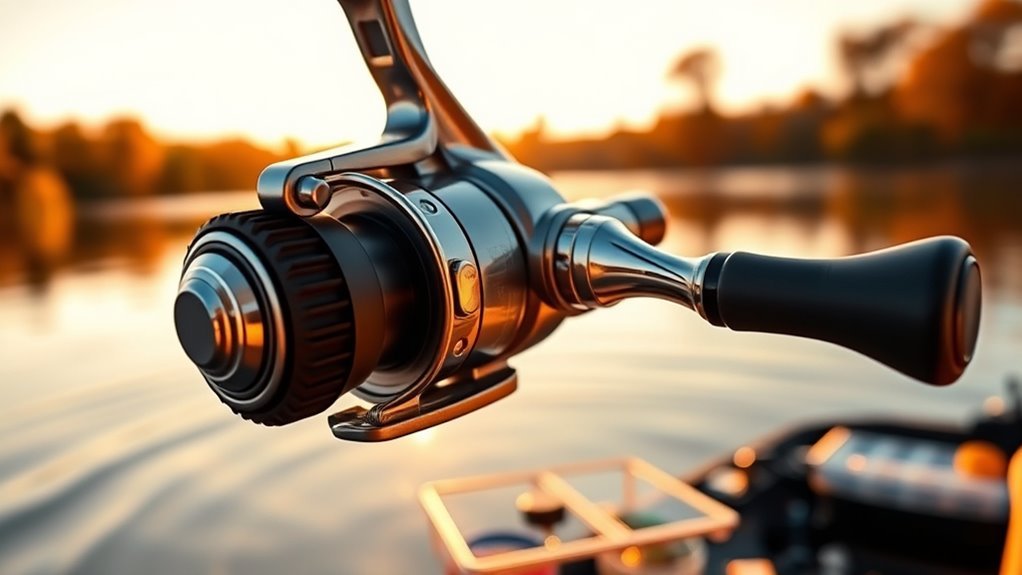
Understanding the features of baitcasting reels helps you get more from your setup. These parts directly affect your casting accuracy, control, retrieve speed, and fish-fighting power.
The spool sits across the reel and rotates during the cast. This design gives baitcasters strong lure control, but it also means the spool needs proper braking and thumb control.
Many baitcasting reels include advanced braking systems, either magnetic or centrifugal. These systems help manage spool speed and reduce backlash during casting.
The gear ratio tells you how many times the spool turns with one handle turn. Ratios around 6.2:1 to 8.0:1 are common. A lower ratio gives more power for slow-moving baits, while a faster ratio helps pick up line quickly.
A reliable drag system lets line slip under pressure when a fish pulls hard. This protects your line and helps keep hooks from tearing free.
For beginners, external controls for drag and spool tension make tuning easier. A clear brake dial and star-shaped drag control help you make fast changes without opening the reel.
[Amazon Products Picked for You]

1 YEAR SUPPORT - We give 100% heart to our customers, so whatever the problem you have, as long as you ask for help about our products, Sougayilang will help you solve it within 24 hours!

Innovative Design: The Piscifun Torrent II Low Profile Casting Reel features a matte gray body with black handle and EVA knobs, a great choice for your next reel

Innovative Design: The Piscifun Torrent II Low Profile Casting Reel features a matte gray body with black handle and EVA knobs, a great choice for your next reel
Choosing the Right Baitcasting Combo
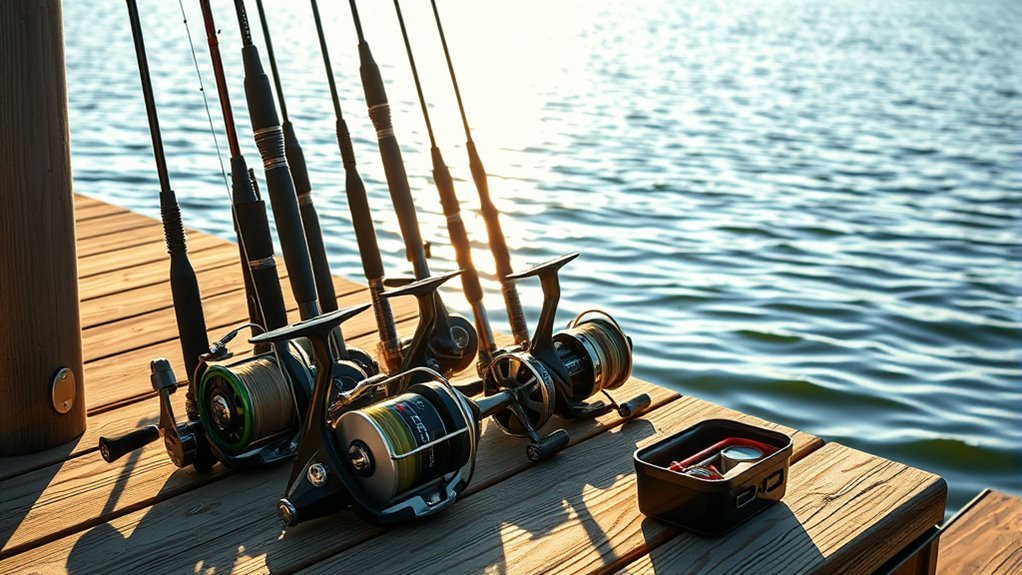
Choosing the right baitcasting combo can greatly improve your fishing experience, especially as a beginner. A balanced rod and reel will feel easier to cast and control.
Aim for a setup that fits your budget without choosing the cheapest reel you can find. A smoother reel with simple adjustments can shorten the learning curve.
Opt for a low profile baitcasting reel if comfort matters. Low profile reels sit closer to the rod and often feel easier to palm during casting and retrieve.
For beginners, a gear ratio between 6.8:1 and 7.3:1 is a useful middle ground. A 7:1 reel offers a good balance of speed and control for many bass fishing techniques.
Pair this reel with a 7-foot medium heavy power rod featuring fast action. This type of rod gives you versatility for jigs, Texas rigs, spinnerbaits, chatterbaits, and many other common lures.
Look for baitcasting combos with intuitive adjustment features like external brake controls and star-shaped drag controls. These elements make the learning curve smoother, allowing you to adapt quickly and enjoy your time on the water.
Investing wisely in your baitcasting combo sets the foundation for better casts, cleaner hooksets, and more enjoyable fishing trips.
[Amazon Products Picked for You]

Lightweight and Sensitive IM6 Graphite Blanks – Centron Lite Baitcasting Combos feature a sensitive and light-weight IM6 Graphite blank designed to provide exceptional value and performance for all anglers. All combos are 2 pc and come in 3 lengths from 6’ to 7’.
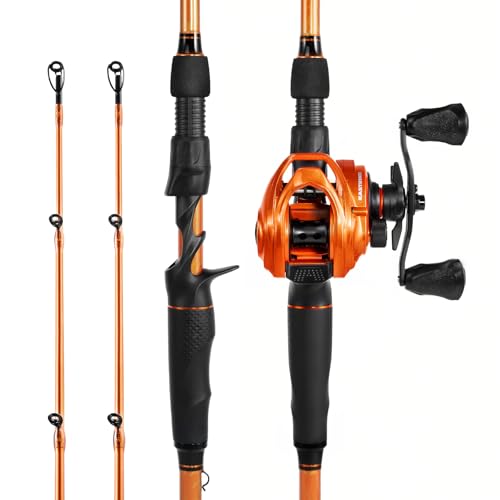
High Sensitivity 2-piece Fishing Rod – Premium KastFlex IM6 graphite blanks give exceptional bite detection for bass fishing, trout fishing, walleye fishing, and more. The Power Transition System (PTS) delivers the seamless sensitivity of a one-piece rod with the convenience of a 2-piece design for easy transport. Includes two matching tip sections for backup.

Lightweight and Sensitive IM6 Graphite Blanks – Centron Baitcasting Combos feature a sensitive and light-weight IM6 Graphite blank designed to provide exceptional value and performance for all anglers. All combos are 2 pc and come in 2 lengths from 6’6’’ to 7’.
Basic Baitcaster Maintenance
A baitcasting reel works better when it stays clean. Dirt, sand, old line, and dried water spots can reduce casting distance and make the reel feel rough.
After fishing, wipe the reel with a soft cloth. If you fished in dirty or salty conditions, use a lightly damp cloth and dry the reel well. Do not spray high-pressure water into the reel because it can push grit deeper inside.
Check the line after each trip. Look for rough spots, frays, or flattened sections near the lure. Cut away damaged line and retie before your next cast.
Keep the level wind clean so the line lays evenly across the spool. If the reel starts grinding, squeaking, or losing smoothness, follow the reel maker’s maintenance instructions or have it serviced.
Pro Tip: Retie often when fishing around rocks, wood, docks, grass, or heavy cover. A clean knot and fresh line near the lure prevent many lost fish.
Related Guides
Frequently Asked Questions
Should a Beginner Use a Baitcaster?
A beginner can use a baitcaster, but it takes more patience than a spinning reel. Start with higher brakes, a moderate lure weight, and short practice casts. If you are brand new to fishing, a spinning reel is easier. If you already cast well, learning a baitcaster is worth it.
Is a 10LB Line Good for Baitcasters?
A 10lb line can work on a baitcaster for lighter lures, open water, and smaller bass. Beginners may find 12 to 15lb line easier because it handles better and offers more forgiveness around cover. Match your line to the lure, fish size, and fishing conditions.
What Is the Best Line for a Baitcaster Beginner?
For many beginners, monofilament or braided line with backing is easiest to practice with. Monofilament is forgiving and affordable, while braid casts smoothly and has low stretch. Fluorocarbon works well for many techniques, but it can be harder to manage for a brand-new baitcaster user.
What Is the Best Baitcaster Reel for Beginners?
A good beginner baitcaster should have smooth braking, easy external adjustments, a comfortable low profile body, and a moderate gear ratio. Reels such as the 13 Fishing Origin C and Lews Mach 1 are beginner-friendly choices, while the Shimano Curado is a stronger upgrade for anglers who want more durability and performance.
Why Does My Baitcaster Keep Backlashing?
Your baitcaster may backlash because the spool is spinning faster than the lure is pulling line. Add more brake, tighten the spool tension slightly, use a smoother casting motion, and stop the spool with your thumb before the lure lands.
How Do You Practice With a Baitcaster at Home?
Tie on a hookless lure or casting plug and practice in a safe open area. Start with short overhead casts, then try sidearm casts toward small targets. Keep the brakes high at first, and focus on stopping the spool before the lure touches down.
Conclusion
Mastering baitcasting takes patience, but the reward is better lure control, cleaner accuracy, and more confidence around cover. Start with a properly spooled reel, set your tension and brakes conservatively, and practice with a hookless lure until your thumb timing feels natural.
As your skills improve, you can lower the brakes, try longer casts, and use more advanced techniques like pitching around docks, grass, and wood. Keep refining your setup and your casting motion, and you’ll spend less time fighting backlash and more time fishing effectively.