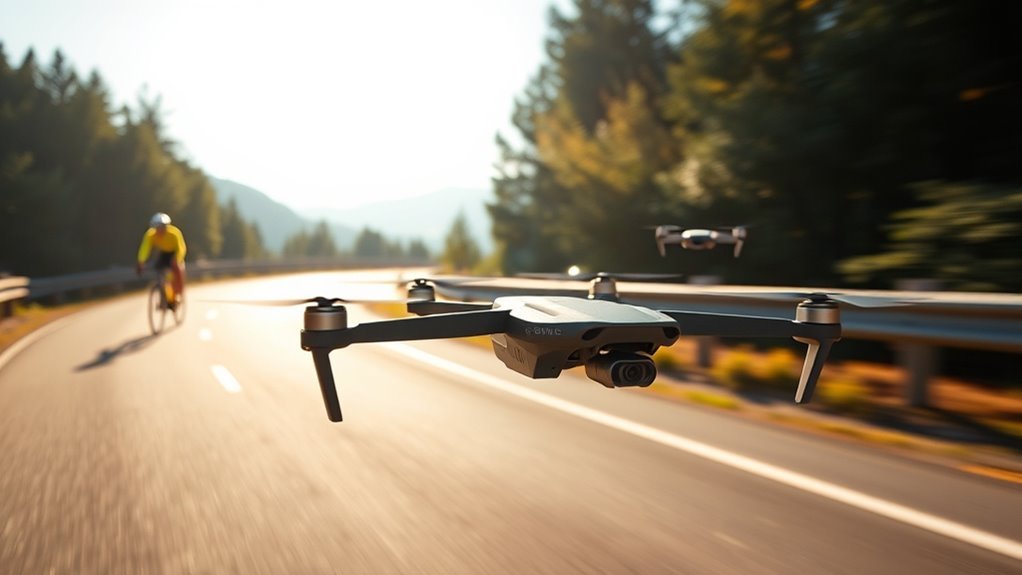
The HoverAir X1 Pro and X1 ProMax aim to make hands-free filming easier for cyclists, runners, and travelers. Both promise compact design, simple autonomous flight, and strong image quality, but the ProMax adds higher-end video and extra safety features. The question is whether those upgrades matter in real use, especially when battery life, control options, and terrain performance enter the equation. The answer is less obvious than it first appears.
HoverAir X1 Pro vs ProMax: Key Differences
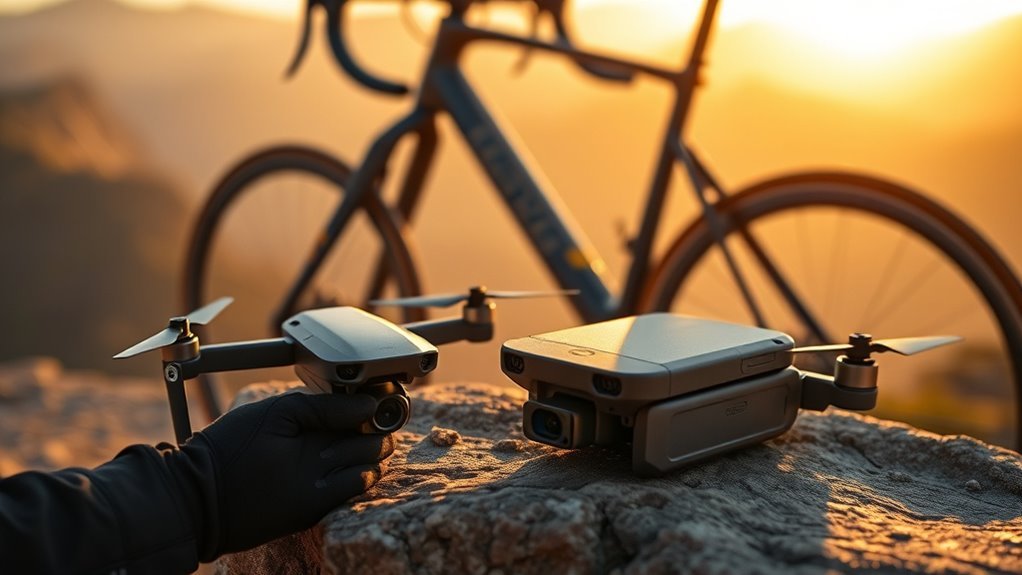
When comparing the HoverAir X1 Pro and X1 ProMax, the differences are clear enough to matter without making either model obsolete.
The Pro records in 4K at 60fps, while the HoverAir X1 ProMax reaches 8K at 30fps, giving it greater detail and cropping flexibility for users who value visual freedom. Storage also favors the ProMax, with 64 GB built in versus 32 GB on the Pro, reducing the need to manage files mid-trip.
Both models can follow subjects autonomously, but the ProMax adds rear collision detection, strengthening obstacle avoidance during close tracking. Its top speed of 42 km/h, compared with 37 km/h, helps it keep pace better in dynamic flight modes.
The ProMax also extends use beyond dry ground, operating over water and snow, whereas the Pro remains limited to solid terrain.
HoverAir X1 Pro and ProMax Design
The HoverAir X1 Pro and X1 ProMax adopt a compact, foldable build that measures 6.81 x 5.86 x 1.53 inches when unfolded, giving both drones a clear advantage in portability.
Their sub-249g weight, combined with a 6.75oz and 6.79oz footprint respectively, keeps them lightweight enough for travel while avoiding FAA and CAA registration requirements.
The matte black plastic construction and cage-like exterior add a practical balance of durability, propeller protection, and restrained visual appeal.
Compact Foldable Build
HoverAir X1 Pro and X1 ProMax emphasize portability through a compact folding design that measures 6.81 x 5.86 x 1.53 inches unfolded, making each drone easy to carry for travel and outdoor use.
This compact foldable build makes the pair highly portable and easy to store in a large pocket, supporting spontaneous movement.
Their lightweight construction, under 249g, also avoids FAA/CAA registration, reducing friction for users seeking freedom.
The matte black plastic shell balances durability with a restrained profile, while the cage-like exterior helps shield propellers during active use.
- Easy transport
- Less setup burden
- More movement freedom
Lightweight Travel-Friendly Design
Portability is one of the HoverAir X1 Pro and X1 ProMax’s clearest advantages, with each drone using a compact folding form that measures 6.81 x 5.86 x 1.53 inches unfolded for easier packing and transport during travel.
Their lightweight travel-friendly design keeps both models under 249g, avoiding FAA or CAA registration and reducing friction for users who want movement without administrative limits.
Built from matte black plastic, the X1 Pro weighs 6.75oz and the X1 ProMax 6.79oz, while the ProMax’s 195g frame fits large pockets with unusual ease.
The crash-resistant cage-like exterior adds practical durability, protecting propellers during outdoor use.
This makes the drones portable, easy to use, and well suited to travelers seeking freedom, flexibility, and dependable gear.
How HoverAir X1 Pro and ProMax Fly
With a set of autonomous flight patterns at its core, the HoverAir X1 Pro and X1 ProMax are built for hands-free shooting during activities like biking, running, and travel. The HoverAir X1 Pro uses flight patterns that reduce the need for manual piloting, while subject tracking keeps subjects centered as movement accelerates.
- A sense of freedom emerges when the drone keeps pace without demanding attention.
- Orbit and Dolly Track add creative motion, turning routine paths into cinematic scenes.
- Stable framing can make fast travel feel controlled rather than chaotic.
Both models offer 10 intelligent flight modes, giving users flexible options for different angles and speeds. Tracking remains reliable at up to 37 mph, and a two-axis gimbal with electronic image stabilization helps suppress shake.
The X1 ProMax extends that confidence with a 500-meter range and wind resistance up to 10.7 m/s, suggesting broader utility in demanding outdoor conditions.
HoverAir X1 Pro and ProMax Controls
After the flying behavior, the control experience shows the same emphasis on simplicity. The hoverair x1 pro uses a circular button and directional selector, keeping launch and mode changes approachable for riders and runners who want freedom from constant tinkering. Hands-free operation remains the core idea, letting the drone follow activity without demanding attention.
| Control method | Strength | Limitation |
|---|---|---|
| App | Manages intelligent flight modes | No flyzone restriction information |
| Manual control | Offers direct command | Less fluid than autonomy |
| Optional JoyStick | Improves precision | Adds extra hardware |
The smartphone app expands access to autonomous modes, but it feels more like a settings hub than a full cockpit. For users seeking exact framing, manual control is available, yet it is the optional JoyStick that best answers the need for finer maneuvering. Overall, the system balances ease and agency, giving the user room to move while keeping control intentionally light.
Beacon and Joystick Controls
The optional Beacon extends the HoverAir X1 Pro and X1 ProMax’s control range to 1 km, or 0.6 miles, while adding an OLED touchscreen that makes core functions easier to access than the phone app alone.
The optional Beacon extends control to 1 km, with an OLED touchscreen for quicker, easier access than the phone app.
For users seeking freedom from a tethered workflow, the beacon can feel like a practical step toward a more liberated user experience.
Docked joystick modules sharpen handling further, and many users prefer these joystick controls over the smartphone app when movement is quick or unpredictable.
Yet the system is not flawless: some reports mention connection drops, frozen screens, and audio-sync issues that interrupt confidence.
The $228 joystick remote package also raises the entry cost.
- Relief when control becomes more immediate.
- Frustration when the interface stalls.
- Hope that firmware updates will make the setup feel truly reliable and empowering.
HoverAir X1 Pro and ProMax Flight Modes
HoverAir X1 Pro and X1 ProMax center much of their appeal on a set of 10 intelligent flight modes that automate framing and movement for different shooting needs.
Follow, Dolly Track, and Birds Eye handle common angles, while the ProMax adds Zoom Out and Orbit for more varied compositions. These intelligent flight modes rely on facial and body recognition, allowing the drones to lock onto a subject without constant manual input.
That automation suits users seeking a more liberated shooting experience during biking, running, or travel. Performance is tuned for motion, with tracking speeds up to 37 mph and auto-follow at 26 mph, so the aircraft can keep pace in active environments.
The ProMax’s 16-minute battery life further supports longer sessions, though it remains a modest ceiling for extended outings. Together, the modes create a practical balance of autonomy, flexibility, and mobility.
HoverAir X1 Pro and ProMax Video Quality
The HoverAir X1 Pro records sharp 4K video at 60fps, while the ProMax extends that capability to 8K at 30fps, giving it a clear edge in resolution for detailed scenes.
Both drones rely on a two-axis gimbal and electronic image stabilization to maintain smooth, stable footage during movement, preserving clarity across varied flight conditions.
The ProMax also adds 4K vertical video at 30fps, expanding its utility for creators working in portrait-oriented formats.
8K And 4K Capture
While the X1 Pro and X1 ProMax share a strong imaging foundation, their video capabilities target different needs: the ProMax records in 8K at 30 fps for maximum detail and post-production flexibility, whereas the X1 Pro delivers 4K at 60 fps for smoother motion and a more practical workflow for everyday high-definition shooting.
The ProMax’s 8K video suits creators seeking expansive framing and room to refine later, while 4K on the Pro favors efficient capture with less processing burden. Both models rely on electronic image stabilization, reinforcing confidence during active use.
Firmware updates extend 8K across flight modes, broadening creative freedom.
- Precision that feels liberating
- Motion that stays fluid
- Detail that supports bold storytelling
Stabilization And Clarity
Steady footage is a clear strength of both the HoverAir X1 Pro and X1 ProMax, which combine a two-axis gimbal with electronic image stabilization to keep motion controlled in active or unpredictable shooting conditions.
The result is footage that stays composed while a rider, runner, or traveler moves with more freedom. The X1 Pro records at 4K resolution and 60 frames per second, while the ProMax pushes to 8K resolution at 30 frames per second, giving each model a distinct balance of speed and detail.
In practice, users report strong clarity, vibrant color, and no obvious pixelation on large displays. The ProMax’s expanded 8K support across flight modes further strengthens its appeal for serious work, and both cameras can serve as handheld stabilized tools.
Vertical Video Options
Vertical video is another area where the HoverAir X1 Pro and X1 ProMax show clear differences in capability and workflow.
The Pro records vertical video at 4K/30fps, while the ProMax raises the ceiling with 8K/30fps, giving creators more room to frame liberation-focused stories for social platforms.
Both models support oversampling, so detail remains strong and artifacts stay controlled. Their advanced stabilization technology keeps footage smooth during running, cycling, or travel, preserving a composed look even in motion.
- Pro: practical, efficient, freedom-first.
- ProMax: higher-resolution vertical video options for ambitious edits.
- Both: quick switching between horizontal and vertical modes, with 64 GB on the ProMax and 32 GB on the Pro for longer sessions.
Battery Life and Charging Speed
The HoverAir X1 Pro and X1 ProMax each offer a maximum flight time of 16 minutes, placing them behind some rivals such as the DJI Neo, which reaches 18 minutes. In practice, battery life settles closer to 15 minutes in typical use, so flight time is respectable rather than expansive.
The X1 ProMax does improve on earlier HoverAir models, rising from 12 minutes to 16 minutes, which is a meaningful step toward greater autonomy for riders, runners, and travelers seeking less dependence on outlets.
Charging is also efficient: direct charging takes about 45 minutes, enabling quick resets between sessions. An optional charging hub can fully charge two batteries in under an hour, adding flexibility for extended outings.
The result is a system that favors mobility and ease over endurance, with enough speed in replenishment to keep pace with spontaneous, movement-driven filming, even if it does not lead the class in raw battery capacity.
Who Should Buy HoverAir X1 Pro and ProMax?
The HoverAir X1 Pro and ProMax suit beginners and casual creators who want an approachable drone that is lightweight, easy to operate, and free from registration concerns in many regions.
They also fit travel and action shooters, since autonomous modes like Follow and Orbit support hands-free capture during biking, running, and similar activities.
The ProMax is the stronger choice for serious creators who value 8K recording and more advanced tracking, while the Pro remains a more accessible option for simpler high-quality footage.
Beginners and Casual Creators
For beginners and casual creators, the HoverAir X1 Pro and ProMax make a compelling case as low-friction camera drones that prioritize simplicity over complexity.
Their user-friendly controls, compact bodies, and 10 autonomous flight modes reduce the learning curve, letting users focus on motion and expression rather than piloting.
The X1 Pro’s 4K/60fps and the ProMax’s higher-resolution option broaden creative flexibility, while modes like Dolly Zoom add cinematic range without technical strain.
Under 249g, both avoid FAA registration, lowering barriers to ownership.
A 16-minute flight time is modest but practical for casual outings and planned clips.
- Relief from setup anxiety
- Freedom to create quickly
- Confidence in first results
Travel and Action Shooters
Travelers and action shooters stand out as the clearest fit for the HoverAir X1 Pro and ProMax, because both models combine portability with enough automation to keep pace with movement-heavy shooting. Under 249g, they avoid FAA registration hassles, and their folding bodies slip into a backpack with ease. The full HoverAir X1 Pro suits quick trips, while ProMax adds 8K/30fps detail and a 500m Wi-Fi range.
| Feature | Value | Benefit |
|---|---|---|
| Weight | <249g | Easy transport |
| Modes | 10 | Hands-free tracking |
| Video | 8K 30fps | Strong image quality |
| Range | 500m | Wider scene capture |
| Style | Dolly, DJI Neo | Flexible travel use |
For users seeking liberation, the appeal is clear: less setup, more motion, and better control over dynamic scenes.
HoverAir X1 Pro and ProMax Verdict
Verdict-wise, the HoverAir X1 Pro and X1 ProMax carve out a compelling niche for users who want high-quality aerial footage without the learning curve of a traditional drone.
The X1 ProMax is the more ambitious option, pairing 8K capture with facial and body tracking, while the Pro delivers solid 4K/60fps performance at a lower price tag.
Both stay under 249g, fold neatly, and avoid FAA or CAA registration, reinforcing a sense of lightweight freedom.
With 16 minutes of flight time, they suit runs, rides, and quick travel moments rather than extended cinematic work.
As consumer drones, they trade manual control for simplicity, and that trade feels deliberate rather than limiting.
- Liberation through portability.
- Relief from complex piloting.
- Confidence in capturing motion.
Frequently Asked Questions
Is the Hoverair X1 Pro Worth the Price?
The HoverAir X1 Pro is worth the price for users seeking a lightweight, self-flying camera with strong portability and solid 4K capture.
In a price comparison with rivals, its value depends on priorities: convenience and simplicity over longer battery life.
Usability features are practical, though not class-leading, and customer feedback suggests the app still needs refinement.
For liberated creators, it offers freedom of movement, but not the most complete package.
What Are the Key Differences Between the Hoverair X1 Pro Max and X1?
The key differences between the HoverAir X1 Pro Max and X1 are clear as sunrise versus candlelight: the ProMax delivers 8K/30fps camera quality, 64GB storage, rear collision detection, water and snow operation, and a 500m Wi‑Fi range.
The X1 Pro offers 4K/60fps, 32GB storage, a proximity sensor, and 50m range.
Both are under 249g, yet the ProMax feels like freer, safer flight with stronger drone features and steadier flight stability.
What Is the Best Drone for Biking?
The best drone for biking is the HoverAir X1 ProMax, because its lightweight frame, autonomous tracking, and 26 mph speed suit fast, hands-free riding.
Its drone features include 8K aerial photography, foldable portability, and optional Beacon or joystick control, making it practical among biking accessories.
The 16-minute flight time fits short rides, while balanced performance offers riders more freedom to create dynamic footage without carrying bulky gear or managing a remote.
How Much Is the Hover Air Drone at Costco?
At Costco, the HoverAir drone typically costs $499 for the X1 Pro and $699 for the X1 ProMax, though promotions and membership discounts can shift the final price.
The decision often hinges on drone features, camera quality, and user reviews, since the Pro favors 4K at 60fps while the ProMax offers 8K at 30fps.
Availability may vary, so checking stock before purchase supports a freer, more informed choice.
Conclusion
The HoverAir X1 Pro and ProMax largely confirm the theory that a truly useful self-flying camera must be simple, portable, and dependable before it is flashy. The Pro is the better fit for most users, with strong 4K/60fps performance and easy travel appeal. The ProMax adds meaningful upgrades for demanding creators, especially 8K capture and improved obstacle awareness. Both remain best for active users who want quick, hands-free footage without a steep learning curve.