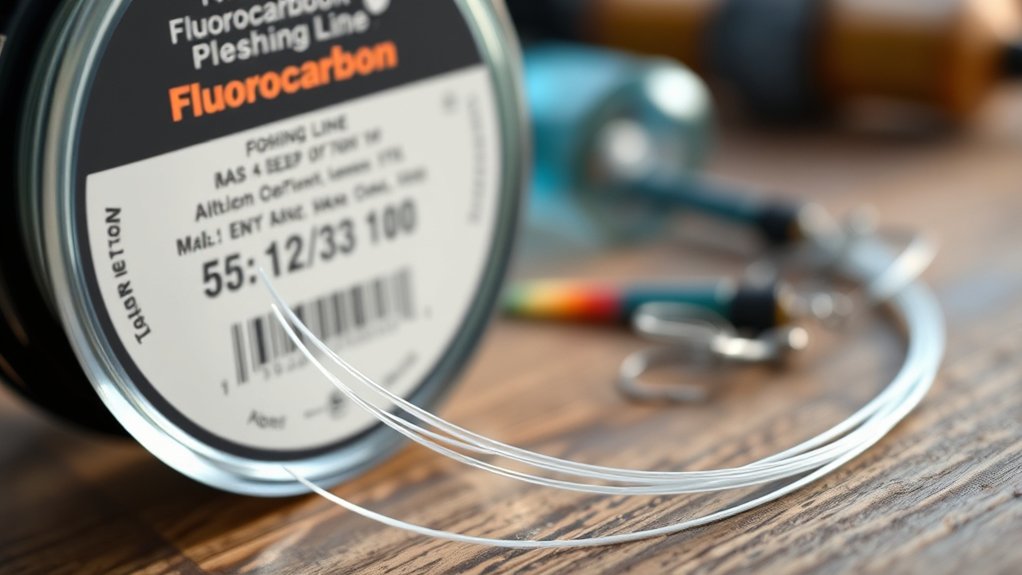
When it comes to fishing, choosing the right line can make all the difference in your success. Fluorocarbon fishing line stands out because it is low-visibility underwater, sensitive, abrasion resistant, and useful for both main line and leader setups. For beginners, the key is knowing when fluorocarbon helps, when it does not, which pound-test to choose, and how to tie knots that hold. You’ll also want to manage line memory so your casts stay smooth and your bait looks natural. This guide walks you through the essential basics so you can fish fluorocarbon with more confidence.
Quick Answer
Fluorocarbon fishing line is best when you need stealth, sensitivity, and abrasion resistance. Use it in clear water, around rocks or cover, for finesse rigs, or as a leader with braid. Beginners should start with lighter pound-test line, tie knots carefully, moisten every knot, and avoid overfilling the reel.
Key Takeaways
- Fluorocarbon works well in clear water because it is harder for fish to see than many other line types.
- It sinks faster than monofilament, which helps with bottom-contact baits, drop shots, jigs, and deep presentations.
- Use lighter pound-test line for finesse fishing and heavier line around rocks, docks, brush, or saltwater structure.
- Knots matter more with fluorocarbon because the line is stiffer and can weaken if you tighten it dry or unevenly.
- Line memory is common, so spool carefully, keep tension on the line, and avoid filling the reel too close to the lip.
At a Glance
| Best For | Clear water, finesse fishing, leaders, bottom-contact rigs, and fishing around abrasive cover |
| Beginner Difficulty | Moderate, mainly because knot tying and line memory need extra care |
| Starter Pound-Test | 4–10 lb for many freshwater finesse setups, 10–17 lb for bass around cover, and heavier leaders for saltwater or toothy fish |
| Main Trade-Off | Less forgiving than monofilament because it is stiffer, costlier, and has less stretch |
Understanding Fluorocarbon Fishing Line
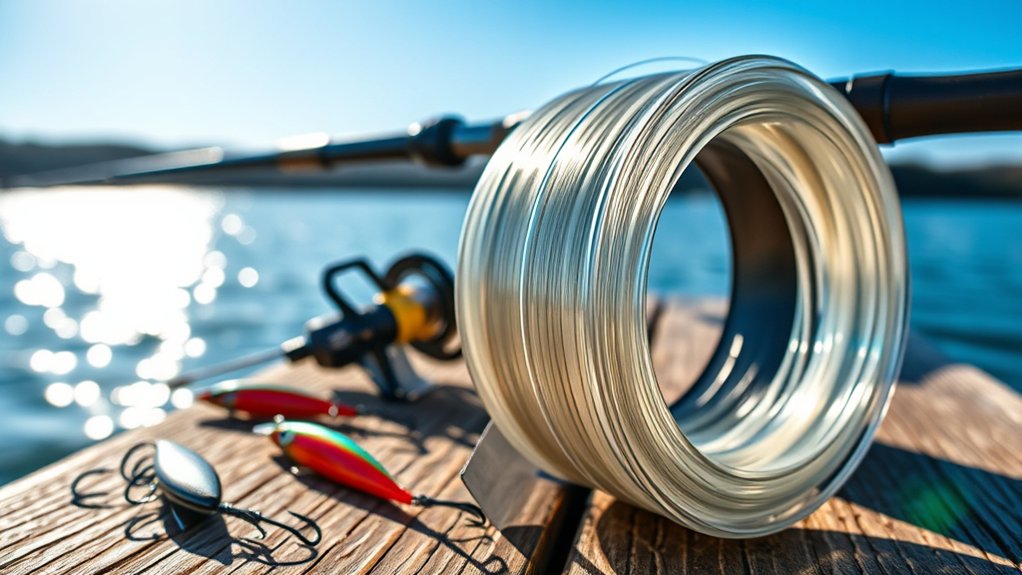
Fluorocarbon fishing line represents a notable advancement in angling technology, especially for anglers who want stealth and performance. Most fluorocarbon line is made from polyvinylidene fluoride, often called PVDF. This material has a refractive quality that helps the line appear less visible underwater than many traditional nylon monofilament lines.
Fluorocarbon fishing line offers stealth, sensitivity, and abrasion resistance, making it a strong choice for clear-water fishing and subtle bait presentations.
In addition to its stealth, fluorocarbon offers high sensitivity, allowing you to detect light taps, soft pressure, and bottom changes. That sensitivity matters for finesse techniques, where a bite may feel more like added weight than a hard strike.
Its excellent abrasion resistance also helps when your line rubs against rocks, docks, shell beds, timber, grass edges, or other rough surfaces. Fluorocarbon is not unbreakable, but it often handles contact better than many soft monofilament lines of similar diameter.
Fluorocarbon lines also sink faster than monofilament. This makes them useful for deep-water fishing, bottom-contact lures, and precise bait presentations where you want the bait to stay down.
While you might find fluorocarbon pricier than monofilament, investing in high-quality brands like P-Line can improve handling, knot strength, and overall performance. Not all lines labeled as fluorocarbon feel or perform the same, so check whether the product says “100% fluorocarbon” if you want true fluorocarbon rather than a coated line.
Advantages of Using Fluorocarbon
When choosing the right fishing line, the advantages of fluorocarbon become clear once you understand how it behaves in the water. Its low visibility underwater makes it an excellent choice for targeting wary fish in clear lakes, pressured ponds, rivers, and calm saltwater flats.
With high sensitivity and abrasion resistance, you can detect subtle bites and fish around rough surfaces with more confidence. This helps when you drag a worm over rocks, work a jig near wood, or fish a leader near barnacles and shell.
Fluorocarbon sinks faster than monofilament, making it effective for deep-water fishing or techniques where your bait needs to stay closer to the bottom. That sinking quality can help drop shots, shaky heads, Texas rigs, Carolina rigs, ned rigs, jigs, and certain swimbaits look more natural.
The low visibility also enhances the realism of your bait presentation. In clear water, small details matter, and a less visible line can help your lure look less suspicious to fish that see heavy fishing pressure.
You can also use fluorocarbon as a leader material with braided or monofilament lines. This setup combines the stealth and abrasion resistance of fluorocarbon with the casting distance, strength, or manageability of another main line.
Pro Tip: If you are new to fluorocarbon, start by using it as a leader instead of filling your whole reel. A braid-to-fluorocarbon or mono-to-fluorocarbon setup lets you learn its benefits without dealing with as much stiffness or line memory.
Applications for Fluorocarbon Line
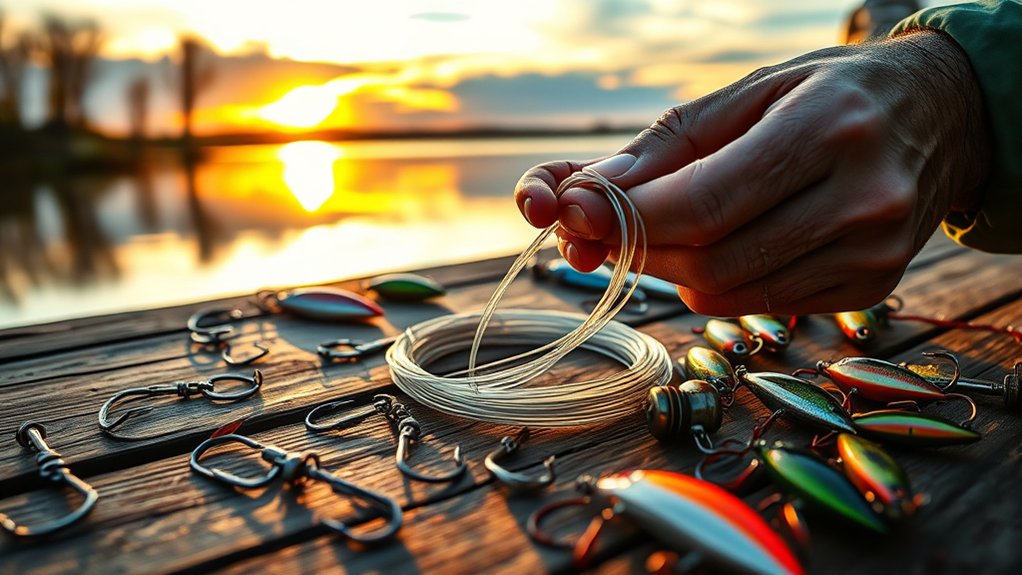
Whether you’re targeting bass in a clear lake or chasing redfish along the coast, fluorocarbon line has versatile applications that can improve your fishing setup.
Its low-visibility quality underwater makes it useful for clear water situations where fish may be line-shy. For finesse fishing techniques, such as drop shot and Carolina rigs, its high sensitivity and abrasion resistance are valuable because they help you present baits subtly while still feeling contact with the bottom.
Fluorocarbon also sinks faster than monofilament, enabling deeper presentations that reach fish holding near structure. This makes it a smart option for deep points, ledges, offshore brush piles, rock transitions, and submerged grass edges.
You can use it as a leader material tied to monofilament or braided lines. This can reduce line visibility near the bait while keeping the strength, casting distance, or floating behavior of your main line.
Moreover, fluorocarbon performs well in both fresh and saltwater, especially when you need a tougher leader around cover. It can improve bait realism and success rates in heavily pressured waters, but you should still match the line size to the species, structure, and lure.
Fluorocarbon vs. Monofilament vs. Braid
Beginners often wonder whether fluorocarbon is better than monofilament or braid. The best answer depends on your fishing style. Each line type has strengths, and many anglers use more than one in the same setup.
| Line Type | Best Strengths | Main Drawbacks | Best Beginner Use |
|---|---|---|---|
| Fluorocarbon | Low visibility, sensitivity, abrasion resistance, sinking action | Stiffer, more expensive, less forgiving knots | Leaders, clear water, finesse rigs, jigs, soft plastics |
| Monofilament | Affordable, easy to handle, stretchy, floats better | More visible, more stretch, less sensitivity | Starter line, topwater lures, general bait fishing |
| Braid | Very strong, thin diameter, long casts, little stretch | Highly visible, can dig into the spool, needs careful drag settings | Main line with a fluorocarbon leader, heavy cover, spinning reels |
If you want the easiest beginner setup, monofilament is often more forgiving. If you want a stealthier setup for clear water, fluorocarbon becomes more useful. If you want strength and casting distance, braid with a fluorocarbon leader can be a strong combination.
How to Choose the Right Fluorocarbon Line
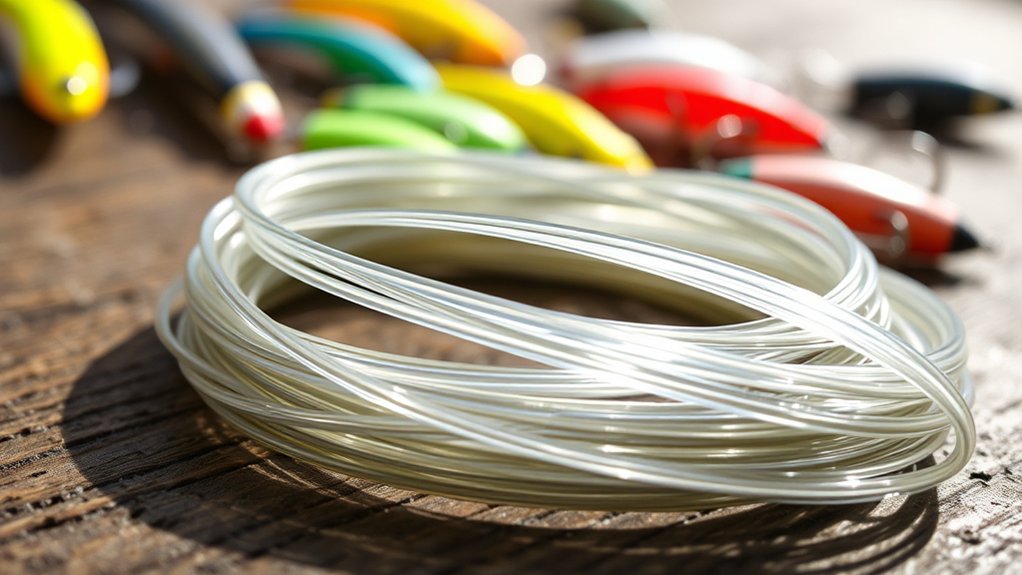
Choosing the right fluorocarbon line can greatly impact your fishing success. Start by matching the pound-test to your target species, cover, lure weight, and water clarity.
For many freshwater finesse setups, a test range between 4–10 lb works well in clear water. Lighter line gives you better bait action and less visibility, but it also offers less strength around cover.
For bass fishing near grass, rocks, docks, or wood, many anglers move into the 10–17 lb range. For heavy cover, large lures, saltwater leaders, or toothy fish, you may need heavier fluorocarbon or a specialized leader.
Always look for labels that indicate “100% Fluorocarbon” if you want a true fluorocarbon line. Some lines are fluorocarbon-coated, which may cost less but will not always offer the same sinking behavior, sensitivity, or abrasion resistance.
Look for “100% Fluorocarbon” labels when you want a true fluorocarbon line that offers low visibility, strong sensitivity, and a faster sink rate than monofilament.
Match the line to your fishing technique. Thinner diameter fluorocarbon lines provide better sensitivity and more natural action in finesse presentations. Heavier fluorocarbon handles abrasion better but can reduce lure movement and casting distance.
When using braided or monofilament lines, fluorocarbon serves as an excellent leader material, minimizing visibility while maintaining strength near the bait.
While fluorocarbon lines tend to be pricier than monofilament, their low visibility and high abrasion resistance make them a worthwhile investment when clear water, wary fish, or rough cover make line choice more important.
Matching Line Test to Common Fishing Situations
The right pound-test depends on where and how you fish. Use the chart below as a starting point, then adjust based on your local water, target species, and the size of your lures.
| Fishing Situation | Suggested Fluorocarbon | Why It Works |
|---|---|---|
| Panfish, trout, or light finesse fishing | 2–6 lb | Small diameter helps tiny baits move naturally in clear water. |
| Bass finesse rigs, drop shots, ned rigs | 6–10 lb | Balances stealth, sensitivity, and manageable handling. |
| Texas rigs, shaky heads, light jigs | 10–15 lb | Adds strength for hooksets and light cover. |
| Jigs, worms, docks, rocks, grass edges | 15–20 lb | Improves abrasion resistance around structure. |
| Saltwater leaders or larger species | 20 lb and up | Handles rough mouths, shell, rocks, and stronger fish. |
Note: These ranges are starting points, not fixed rules. If fish are not biting in clear water, try a lighter leader. If you keep breaking off near cover, move heavier.
Spooling Fluorocarbon Line on Your Reel
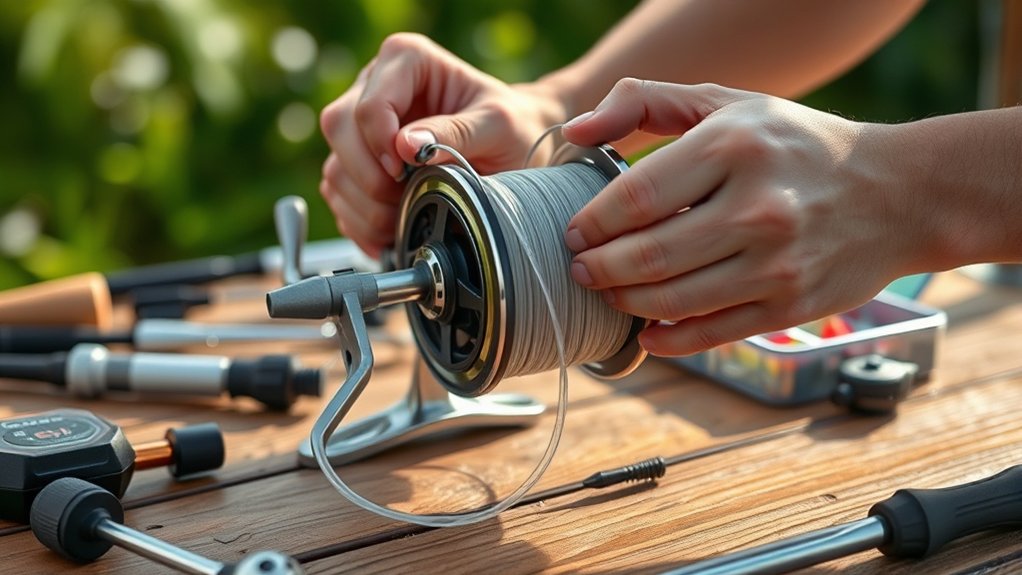
Spooling fluorocarbon line onto your reel requires careful attention to detail to ensure better performance. Fluorocarbon is stiffer than monofilament, so poor spooling can create loops, twists, and tangles.
Follow these steps to make the process smoother:
- Direction Matters: Make sure the line comes off the filler spool in the same direction your reel spool takes it on. This helps prevent tangles and twists.
- Secure Attachment: Use an arbor knot or another secure reel-spooling knot to attach the fluorocarbon to your reel. If you use a slick spool, add a small piece of tape or backing so the line does not slip.
- Maintain Tension: Keep slight tension on the line while spooling. This helps avoid slack, which can lead to line twists and loose coils.
- Avoid Overfilling: Fill the spool to about 1/8 inch from the edge. Overfilling can cause loops, backlash, or wind knots during casting.
Additionally, consider soaking the line in warm water before spooling to reduce stiffness and improve handling. Do not use boiling water because too much heat can damage or weaken fishing line.
Warning: Do not pull fluorocarbon knots tight while dry. Friction can weaken the line. Always moisten the knot, tighten it slowly, and test it with steady pressure before you cast.
Connecting Fluorocarbon to Other Lines
When connecting fluorocarbon to other lines, choosing the right knot is essential for maintaining strength and reliability.
You can use a blood knot for monofilament or a double uni knot for braided line to create a smooth connection. Many anglers also use an FG knot for braid-to-fluorocarbon connections because it passes through rod guides well, but it takes more practice.
Additionally, consider using swivels to enhance your rig’s versatility and reduce line twist during retrieval.
Knot Selection Techniques
To effectively connect fluorocarbon to other types of fishing line, selecting the right knot is vital for maintaining line integrity and performance.
Here are four reliable knot options to consider:
- Blood Knot: Ideal for creating a clean connection between fluorocarbon and monofilament lines of similar diameter.
- Double Uni Knot: Quick and effective for joining lines of varying diameters, especially when connecting braid to fluorocarbon.
- Palomar Knot: Often used for hooks, swivels, and lures. It can work well with fluorocarbon when tied neatly and moistened before tightening.
- Moisten Knots: Always moisten knots before tightening to enhance strength and reduce slippage, especially with stiffer fluorocarbon.
Practice these techniques at home before fishing. A knot that looks good in your hands will be faster and more reliable when wind, waves, or low light make tying harder.
Connecting With Swivels
Connecting fluorocarbon to swivels is a critical step in enhancing your fishing setup. Swivels help prevent line twisting and allow for quick lure changes without needing to retie your whole rig.
To connect fluorocarbon to a swivel, thread the line through the swivel’s eye and tie a reliable knot, like the improved clinch knot or Palomar knot, to secure the connection. Pull slowly, check that the wraps seat neatly, and trim the tag end close enough to avoid snagging.
Here’s a quick reference table for selecting swivels and knots:
| Swivel Type | Recommended Knot |
|---|---|
| Ball Bearing Swivel | Improved Clinch Knot |
| Snap Swivel | Palomar Knot |
| Barrel Swivel | Blood Knot |
| Twist Lock Swivel | Double Uni Knot |
Always choose a swivel rated for the same or higher breaking strength as your fluorocarbon line, and trim the knot closely to prevent snagging.
Techniques for Using Fluorocarbon Effectively
Using fluorocarbon fishing line effectively requires understanding its unique properties and how to leverage them to your advantage. Here are some techniques to maximize your success:
- Finesse Fishing: Use fluorocarbon in finesse scenarios to take advantage of its low visibility underwater, increasing your chances of enticing line-shy fish.
- Knot Connection: Connect fluorocarbon to monofilament with blood knots. This method maintains low visibility while allowing for the stretch of mono.
- Rig Experimentation: Try various rig setups like drop shot rigs. This allows you to utilize fluorocarbon’s stealth characteristics, especially in clear water.
- Controlled Testing: Test your fluorocarbon line in controlled environments, such as a clear bucket, sink, or swimming pool, to see how bait appears without visible line interference.
You can also use fluorocarbon for jerkbaits, crankbaits, soft plastics, jigs, shaky heads, and leader rigs. Because it sinks, fluorocarbon is usually not the best choice for floating topwater lures unless the bait design still performs well with a sinking line.
Common Mistakes to Avoid With Fluorocarbon
When using fluorocarbon, improper knot techniques can lead to weak connections, resulting in lost catches.
You should also pay attention to line memory; if you ignore it, you’ll face tangles, coiling, and poor performance on the water.
Improper Knot Techniques
Improper knot techniques can greatly undermine your fishing experience with fluorocarbon line. To ensure your knots are effective and reliable, be mindful of the following:
- Use Appropriate Knots: Stick to knots that work well with fluorocarbon, like the Palomar, improved clinch, San Diego jam, double uni, or blood knot, depending on the connection.
- Tighten Properly: Always apply steady tension when tightening your knot; fluorocarbon’s stiffness means it requires careful seating.
- Avoid Excessive Twists: Limit twists and turns in your knot to reduce kinking, which can create weak points in the line.
- Moisten Before Tightening: Moisten the line before tightening to minimize friction, which can otherwise weaken your knot and lead to breakage.
Regularly check your knots for any signs of wear to maintain your fishing success.
Ignoring Line Memory
Even the best knot techniques won’t save your fishing experience if you ignore line memory, a common issue with fluorocarbon fishing line.
Fluorocarbon tends to retain more memory than many monofilament lines, leading to coils, tangles, and poor casting. To minimize this, avoid overfilling the reel spool; aim for about 1/8 inch from the edge.
When spooling, make certain the line unwinds in the same direction as the reel to prevent twists. Additionally, consider using a line conditioner to help relax the fluorocarbon, improving its handling and performance.
Regularly stretching and working the line before use can also reduce memory issues, enhancing your overall fishing experience.
Don’t overlook these techniques if you want to maximize your fluorocarbon line’s effectiveness.
Recommended Brands of Fluorocarbon Line
Selecting the right fluorocarbon fishing line can greatly enhance your performance on the water. With several brands available, it’s essential to choose one that meets your needs. Here are some top recommendations:
- P-Line: Known for quality and performance across various conditions, this brand is a favorite among anglers.
- Seaguar: A reputable choice, Seaguar’s lines are praised for their strength and low-visibility presence underwater.
- Berkley Vanish: This line is popular for its affordability and effectiveness, especially in clear water scenarios.
- Sunline: Recognized for premium fluorocarbon lines, Sunline excels in sensitivity and abrasion resistance, ideal for finesse techniques.
Each of these brands offers unique advantages, so consider your fishing style and conditions when making a selection. If you are new to fluorocarbon, buy one spool in a common size before investing in several pound-test options.
How to Maintain and Store Fluorocarbon Line
Good fluorocarbon line lasts longer when you store and inspect it properly. After each trip, run your fingers along the last few feet of line to check for rough spots, nicks, or flat areas. If the line feels damaged, cut off the weak section and retie.
Keep spare spools away from heat, direct sunlight, and harsh chemicals. Store line in a cool, dry place, and avoid leaving it in a hot vehicle for long periods. Heat can make line harder to manage and may weaken it over time.
Before each trip, test your drag, check your knots, and pull gently on your leader or main line. This simple habit helps catch small problems before a fish exposes them.
Related Guides
Frequently Asked Questions
What is the downside of fluorocarbon fishing lines?
Fluorocarbon fishing lines can be stiffer, harder to handle, and more expensive than monofilament. They also have less stretch, so poor drag settings or rushed hooksets can lead to break-offs. Line memory can cause coils and tangles if you spool it poorly or overfill the reel.
What is the 80/20 rule in bass fishing?
The 80/20 rule in bass fishing means a large share of your bites often comes from a small share of the water. Focus on productive areas like points, grass edges, docks, drop-offs, creek channels, brush piles, and shade lines where bass are more likely to gather.
Should you soak a fluorocarbon line before spooling?
Yes, soaking fluorocarbon line in warm water for about 10–15 minutes can reduce stiffness and make it easier to spool. Avoid boiling water. Keep light tension on the line while spooling, and stop about 1/8 inch below the spool lip.
What is the best fishing line for beginners?
For many beginners, monofilament is the easiest first fishing line because it is affordable, flexible, and forgiving. Fluorocarbon is a great next step when you need better stealth, sensitivity, and abrasion resistance, especially in clear water or as a leader.
Can you use fluorocarbon as your main line?
Yes, you can use fluorocarbon as your main line on spinning or baitcasting reels. It works best when you choose the right diameter, spool it carefully, and manage line memory. Many beginners find it easier to start with braid or mono as the main line and add a fluorocarbon leader.
Is fluorocarbon good for topwater fishing?
Fluorocarbon is usually not the first choice for topwater fishing because it sinks. That sinking action can pull down the nose of some floating lures and hurt their action. Monofilament or braid often works better for topwater baits.
Conclusion
To sum up, fluorocarbon fishing line is a smart choice for anglers who want stealth, sensitivity, and durability. It shines in clear water, around rough cover, and with finesse or bottom-contact techniques.
Still, fluorocarbon is not perfect for every situation. It costs more than monofilament, has more memory, and requires careful knot tying. If you are a beginner, start with a fluorocarbon leader or a manageable pound-test before filling every reel with it.
By understanding its properties, choosing the right test range, spooling it correctly, and practicing reliable knots, you’ll get more value from fluorocarbon and increase your chances of landing that prized catch in both fresh and saltwater.
