
River walleye fishing gets easier when you match your timing, location, tackle, and presentation to how walleyes use current. Focus on low-light windows, current seams, wing dams, eddies, deep holes, gravel bars, and dam areas. Use jigs, live bait, soft plastics, controlled drifts, and careful boat positioning to keep your bait near bottom without snagging constantly.
Quick Answer
For successful walleye river fishing, fish early morning, evening, cloudy days, and moving-water transitions. Target wing dams, current seams, eddies, deep holes, gravel bars, and dam bases. Use a sensitive medium or medium-light fast rod, 2500 to 3000 reel, braid with a fluorocarbon leader, and jigs matched to current speed.
Key Takeaways
- Walleyes often feed best in low light, stained water, and areas where current pushes baitfish into predictable lanes.
- The best river spots include wing dams, current seams, outside bends, eddies, sand breaks, gravel bars, bridge pilings, and deep wintering holes.
- Jig weight matters. Use just enough weight to feel bottom while keeping the bait natural in the current.
- Boat control, shore angle, and line angle often matter as much as bait choice because river walleyes hold tight to current edges.
- Always check local size limits, bag limits, seasons, bait rules, and special river sections before you fish.
At a Glance
| Best Time | Dawn, dusk, cloudy days, spring runs, fall feeding periods, and stable water levels after sudden changes settle. |
| Difficulty | Beginner to intermediate, depending on current speed, boat control, and snaggy structure. |
| Core Gear | Sensitive spinning rod, 2500 or 3000 reel, braid, fluorocarbon leader, jigs, soft plastics, live bait, net, pliers, and life jacket. |
| Best Presentations | Vertical jigging, pitching jigs cross-current, dragging live bait, slip-sinker rigs, crankbaits, and slow trolling along flats or breaks. |
Understanding Walleye Behavior in Rivers
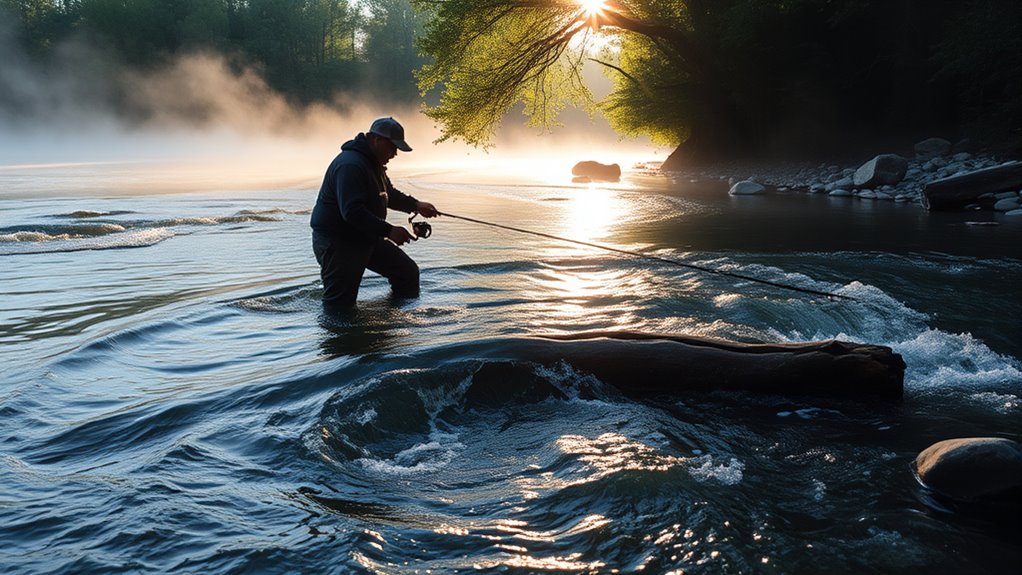
When you’re fishing for walleye in rivers, understanding their behavior is essential to your success. Walleye are light-sensitive and often feed more confidently during low-light conditions, so plan your best efforts around dawn, dusk, cloudy weather, and stained water.
They often spend brighter parts of the day in deeper water, behind current breaks, near structures, or along the edges of feeding lanes. At night, they may slide shallower to feed on minnows, shad, perch, young-of-year fish, crayfish, and other forage.
During early spring, many walleye move toward shallow gravel, rock, or current-washed spawning areas. This can make spring one of the most productive seasons, but it also means you need to respect closed seasons, protected areas, and special spawning regulations where they apply.
As water warms in summer, many river walleyes use deeper holes, shaded banks, wing dams, outside bends, and faster current edges where oxygen and baitfish concentrate. As temperatures drop in autumn, they often feed heavily and use deeper holes, gravel bars, dam bases, and migration routes.
Focus on key river features like current seams and wing dams, where walleye often congregate. A current seam gives walleye a place to rest in slower water while watching food drift past in faster water.
Note: River walleyes do not sit in the strongest current all day. They usually hold near current, not directly in the hardest flow, so look for edges, breaks, slack pockets, and bottom changes.
Essential Techniques for River Walleye Fishing
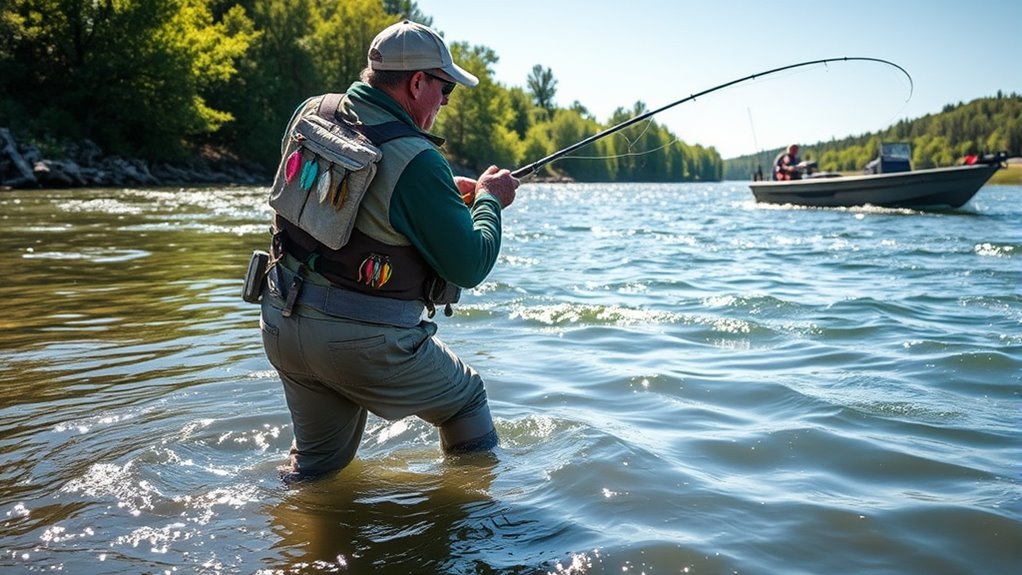
Understanding walleye behavior lays the groundwork for using effective fishing techniques in rivers. Your goal is simple: keep the bait close to bottom, move it naturally with the current, and place it where walleyes can ambush it without wasting energy.
Focus your efforts during the early morning and late afternoon when walleye often become more active. These windows can be especially good in summer, when bright sun and warm surface water push fish toward shade, depth, or current.
Target key river features like wing dams, current seams, outside bends, bridge pilings, riprap banks, eddies, dam tailwaters, and shallow water pools, where walleye seek shelter and food.
Target walleye during early mornings and late afternoons around river features where they find shelter and food.
When jigging, use jigs with clearly stamped weights to make quick adjustments and communicate with fellow anglers. Start with the lightest jig that still lets you feel bottom, then go heavier if the current lifts your bait too high.
Employ a stop-and-wait technique while jigging; a stationary bait can entice curious walleye. Let the jig touch bottom, pause, lift lightly, and let it fall again. Many bites feel like extra weight, a small tick, or sudden slack.
Experiment with various bait options, including live bait like fatheads or leeches, as well as soft plastics, to discover what works best for the specific river conditions. In cold water, slower live bait often wins. In warmer water, plastics and crankbaits can help you cover more water.
These techniques will enhance your chances of landing walleye, making your river fishing experience more rewarding.
How to Read Current Seams
A current seam is the visible or subtle line where fast water meets slower water. You may see foam, bubbles, floating leaves, ripples, or a color change along the seam.
Cast slightly upstream or cross-current and let your jig drift along that edge. Keep your rod tip high enough to reduce snags, but low enough to stay connected to the bait.
If you are in a boat, hold just upstream of the seam and drift or slip downstream at a controlled pace. If you are on shore, cast across the seam and retrieve slowly so the bait sweeps naturally through the strike zone.
Shore Fishing for River Walleye
You do not need a boat to catch river walleye. Shore anglers can do well near public access points, riprap banks, bridge areas, dam tailwaters, sandbars, creek mouths, and outside bends with deeper water nearby.
Use a jig and minnow, jig and plastic, slip-sinker rig, or shallow-running crankbait. Cast upstream at a slight angle, keep contact with the lure, and let the current help carry your bait through natural feeding lanes.
At night, try slow retrieves with stickbaits or shallow crankbaits along riprap, sand flats, and current breaks. Keep your light use low, move carefully, and wear a life jacket around steep banks or fast water.
Recommended Gear for Walleye Anglers
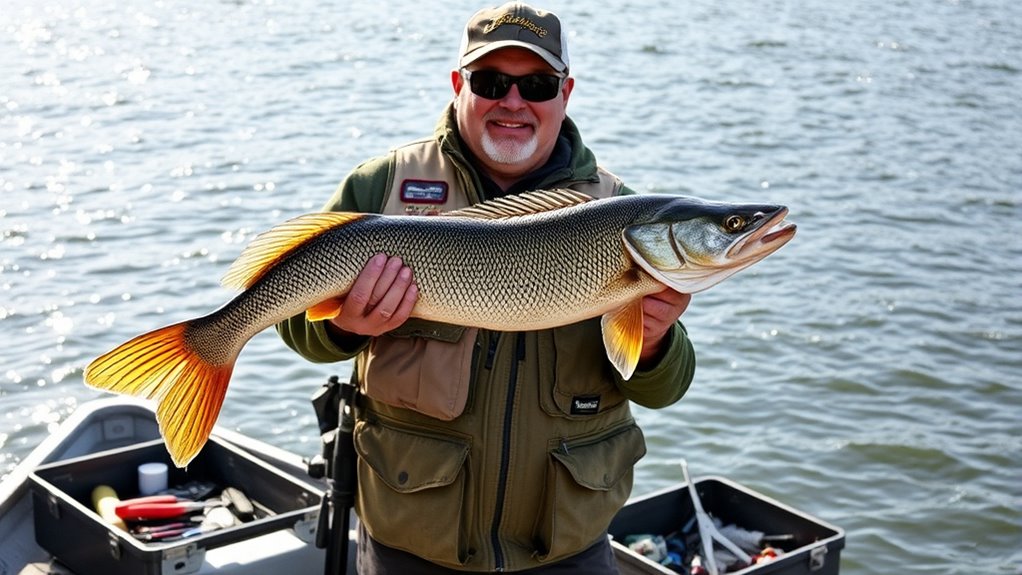
To maximize your success while walleye fishing in rivers, having the right gear is essential. Start with a medium extra-fast rod, ideally between 6-foot, 3-inches and 6-foot, 8-inches, like the St. Croix Eyecon Snap Jig rod, which offers a crisp action for feeling bottom and detecting light bites.
A medium-light or medium fast-action spinning rod also works well for many river situations. Choose medium-light for lighter jigs, smaller rivers, and clear water. Choose medium power when current is stronger, jigs are heavier, or big fish are possible.
Pair it with a 2500 or 3000 sized reel for smooth operation. This size balances well on common walleye rods, holds enough line, and gives you a good drag system for fighting fish in current.
Use light 10-pound Fireline braid for excellent sensitivity and casting distance, complemented by quality fishing line, such as a fluorocarbon leader in the 8- to 15-pound range, to reduce visibility and abrasion near rocks.
Don’t forget to bring jigs with weights stamped for easy communication with fellow anglers, allowing you to adjust tackle for changing conditions.
Finally, consider color preferences for jigs. White, gold, orange, chartreuse, purple, natural minnow, and bubble gum variations can greatly enhance your catch rates when matched to water clarity and forage.
With this recommended gear, you’ll be well on your way to a successful walleye fishing trip.
Basic River Walleye Tackle Checklist
- 6-foot, 3-inch to 7-foot spinning rod in medium-light or medium power
- 2500 or 3000 spinning reel with a smooth drag
- 8- to 10-pound braid or fused line for sensitivity
- 8- to 15-pound fluorocarbon leader for abrasion resistance
- Jigs from 1/16 ounce to 1/2 ounce for different depths and current speeds
- Soft plastics, paddle tails, ringworms, minnows, leeches, crawlers, and creek chubs where legal
- Slip-sinker rigs, barrel swivels, hooks, split shot, snap weights, and crankbaits
- Long-nose pliers, jaw spreader if needed, landing net, measuring board, and line cutters
- Life jacket, headlamp, first-aid kit, weather gear, and a dry bag for phone and keys
Pro Tip: If you snag every cast, your jig may be too heavy or your rod tip may be too low. If you never touch bottom, go heavier or slow your drift.
Boat Control and Technology for Effective Fishing
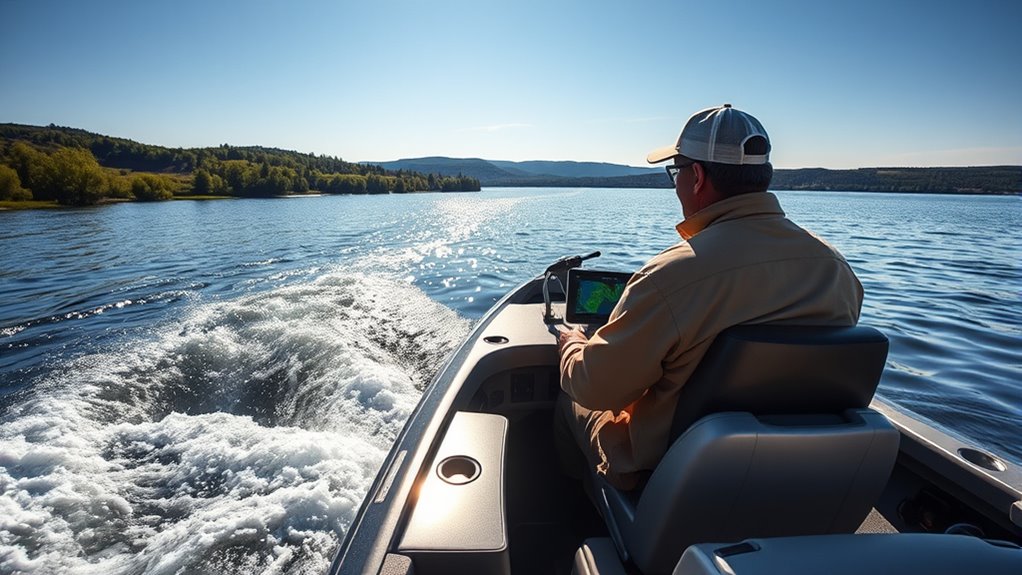
To maximize your success on the walleye river, mastering boat control and using technology carefully can help you fish the right line longer.
Using Side Imaging, you can pinpoint underwater structures and track fish-holding areas more efficiently, while a trolling motor with Spot-Lock helps you stay precisely positioned in prime spots.
Side Imaging Benefits
Many anglers are discovering the game-changing advantages of Side Imaging technology when it comes to walleye fishing. This tool allows you to visualize underwater structures and fish locations more clearly, pinpointing key fishing areas such as wing dams and submerged rocks.
With Side Imaging, you can assess depth and structure composition, which means you’ll find likely active fish areas more efficiently. Real-time data lets you adapt your bait presentation and fishing techniques faster. It also enhances boat control, allowing you to maintain better positioning near those identified structures without relying only on traditional anchors.
| Benefits | Description |
|---|---|
| Visual Clarity | Detailed views of underwater structures |
| Targeting Precision | Identify key fishing areas effectively |
| Depth Assessment | Quickly assess depth and structure composition |
| Strategy Adaptation | Adjust bait presentation based on real-time data |
| Enhanced Control | Maintain positioning near structures with ease |
Trolling Motor Techniques
Maximizing your walleye fishing success often hinges on effective boat control, and using a trolling motor can greatly enhance your experience on the water.
With features like Spot-Lock, you can maintain precise positioning near wing dams and current seams, making it easier to target those elusive fish locations.
Side Imaging technology helps you identify underwater structures, allowing for more strategic fishing.
Consistent boat control is essential, especially with fluctuating water depths and currents; your trolling motor lets you drift while keeping lines vertical, which is vital for successful jigging techniques.
Advanced motors reduce the need for traditional anchoring, enabling dynamic fishing strategies that adapt to changing conditions.
Embrace these techniques to elevate your walleye fishing game.
Boat Positioning in Current
Good boat positioning starts before you make a cast. Approach a spot from downstream or off to the side when possible so you do not run directly over shallow fish.
For vertical jigging, keep the boat moving close to the same speed as the current so your line stays nearly vertical. For pitching jigs, hold the boat slightly away from the seam and cast upstream or cross-current.
When trolling or pulling rigs, move upstream slowly enough that your lure or bait works near bottom. If you move too fast, your bait rises above the strike zone. If you move too slowly, you may snag constantly.
Warning: Fast current, cold water, dams, and low-head structures can be dangerous. Wear a properly fitted life jacket, keep distance from restricted areas, and avoid anchoring from the stern in strong current.
Seasonal Patterns and Migration of Walleye
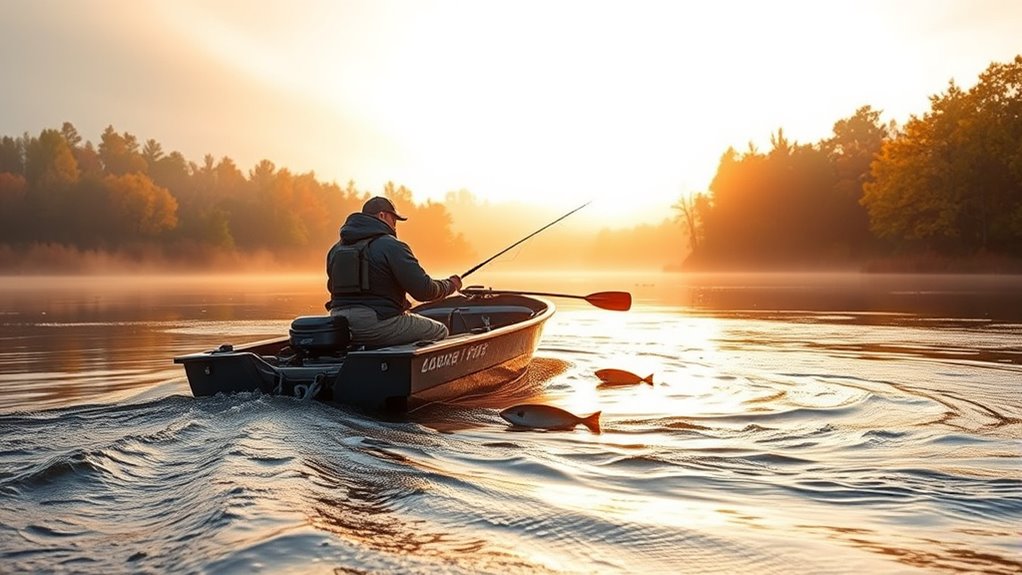
As water temperatures rise in early spring, walleye begin their annual spawning ritual in shallow waters, marking the start of a dynamic seasonal cycle.
Once spawning is complete, these fish often migrate to deeper areas as summer settles in, preferring cooler water conditions, current breaks, shade, and forage-rich structure. During this time, you’ll find walleye hanging out in deeper spots, which makes locating them a bit more challenging.
Come fall, walleye start their migration upstream or toward seasonal feeding areas, preparing for winter. They’ll position themselves in deep holes, gravel bars, outside bends, and near dam bases, becoming increasingly aggressive in their feeding as water temperatures drop.
This is an ideal time to scout for deep water spots, as their feeding often improves during low-light conditions, especially at dawn and dusk.
Understanding these seasonal patterns and migration behaviors will enhance your chances of catching walleye throughout the year, making your fishing experience more rewarding.
Spring River Walleye Pattern
Spring walleye often use shallow rock, gravel, riprap, tributary mouths, and dam areas. Jigs tipped with minnows, plastics, or hair can work well because they stay close to bottom and move naturally in cold water.
Use slower retrieves and shorter lifts when water is cold. If the river is high and muddy, look for fish in softer water near banks, inside turns, eddies, flooded cover, and current breaks.
Summer River Walleye Pattern
Summer walleyes may spread out, but they still relate to current and food. Look for wing dams, deeper pools, bridge shade, outside bends, and oxygen-rich areas.
Early morning and evening can be strong. During brighter hours, slow down with live bait rigs or target deeper current breaks. Crankbaits can help you cover long flats and riprap edges when fish are actively chasing bait.
Fall and Winter River Walleye Pattern
Fall can produce some of the year’s best river walleye fishing because baitfish movements concentrate predators. Try bigger minnows, soft plastics, blade baits, jigging minnows, and crankbaits near deep holes and adjacent feeding shelves.
In winter, slow presentations usually work best. Fish may group tightly, so spend more time searching until you find a concentration. Once you get bit, make repeated casts or controlled drifts through the same line.
Effective Bait and Presentation Strategies
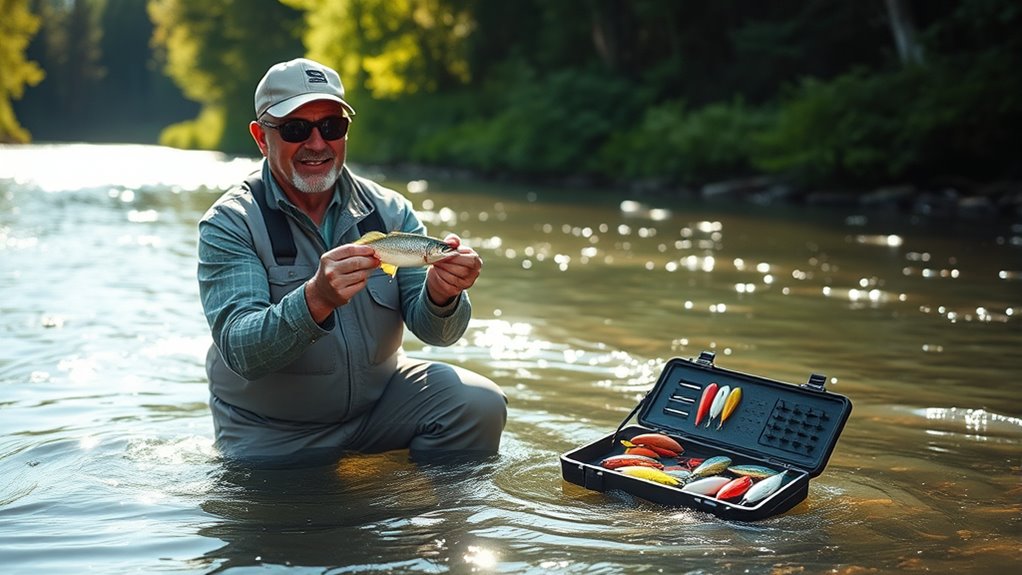
When it comes to walleye fishing, choosing the right bait and mastering your presentation can make all the difference.
You’ll want to experiment with various options and techniques, adjusting your approach based on the season, water clarity, current speed, forage, and river conditions.
Bait Selection Tips
Effective bait selection is essential for successful walleye fishing in rivers, especially since these fish can be particular about what they bite.
For river walleye fishing, consider using live bait options like fatheads, leeches, creek chubs, nightcrawlers, and shiners where legal. Soft plastics like ringworms, paddle tails, flukes, and minnow-style plastics give you more durability and let you change colors quickly.
When fishing near wood structures, weedless jigs are important to avoid snagging.
Adjusting your jig weight is critical; heavier jigs pair well with live bait in strong current, while lighter ones often work best with soft plastics in slower seams or shallow water.
Pay attention to color preferences, as they can greatly impact catch rates based on local water conditions. Try white, gold, orange, chartreuse, purple, black, natural minnow, and bubble gum variations for the best results.
Presentation Techniques
How can you make your bait presentation more enticing to walleyes? Start by employing effective presentation techniques like the stop-and-wait method while jigging. This technique is especially potent in current seams and pools, where walleyes often move into shallow water.
Use weedless jigs near wood structures to reduce snags, maximizing your chances to catch walleyes. Experiment with different bait types, such as half a crawler or soft plastics, and adjust your jig weight accordingly to encourage natural movement in the water column.
When casting, aim cross current and allow your jigs to bounce along the bottom, mimicking natural prey movement. These strategies can greatly boost your success rate on the water, making every outing more fruitful.
Seasonal Adjustments
As the seasons change, so do the strategies you’ll need to adopt for walleye fishing.
In summer, focus on using fatheads and jigs, especially with weedless designs near wood structures. Try the stop-and-wait technique; stationary bait can entice summer walleye lurking in current seams.
As fall and winter approach, switch to live bait like gold shiners and nightcrawlers, paired with fluorescent or metallic spinner blades for deeper holes. Trolling upriver along flats and gravel bars can yield big walleye during autumn when they’re more aggressive.
Don’t hesitate to experiment with different bait types and adjust jig weights to optimize your action while fishing from shore. These seasonal adjustments will help you catch a lot more walleye.
Jig Weight Selection for River Current
The right jig weight changes with depth, current, wind, line diameter, and bait size. Use the lightest jig that still lets you feel bottom every few seconds.
In shallow or slower water, a 1/16- to 1/8-ounce jig may be enough. In moderate current, 1/4 ounce is common. In deeper holes, tailwaters, or strong current, you may need 3/8 to 1/2 ounce or more.
If your jig sweeps downstream without touching bottom, go heavier. If it wedges into rocks every cast, go lighter, lift your rod tip, or switch to a snag-resistant head design.
Crankbaits and Trolling for River Walleye
Crankbaits can be excellent when walleyes spread along riprap, sand flats, wing dams, and shallow night-feeding areas. Choose diving depth based on the water you want to cover.
Cast upstream or across current and retrieve just fast enough to make the bait wobble and occasionally tick bottom. At night, slow retrieves often work better than aggressive ones.
When trolling from a boat, move upstream along current breaks, flats, and channel edges. Watch your rod tip for bottom contact and adjust line length, speed, or lure depth until the bait runs in the strike zone.
Local Regulations and Conservation Practices
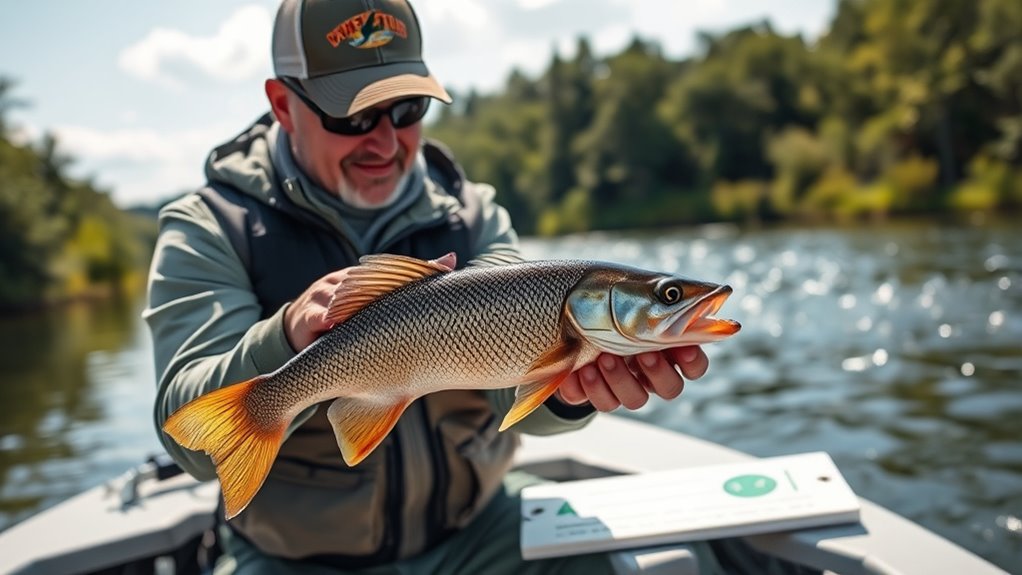
Understanding local regulations and conservation practices is vital for any angler looking to fish a walleye river successfully. Each state, province, and river section can have unique rules, so it’s important to check current regulations before you fish to protect sustainable fish populations.
Here are some key points to keep in mind:
- Minimum size limits vary by state, river, season, and special management area.
- Daily bag limits differ, and some waters use slot limits to protect certain size classes.
- Special regulations may apply to certain river sections, dam areas, border waters, spawning areas, and tributaries.
- Practicing catch and release helps protect breeding stock, especially large females during seasonal movements.
- Use environmentally friendly fishing gear, handle fish carefully, and consider barbless hooks when release survival matters.
Before keeping fish, measure each walleye on a flat board with the mouth closed and tail pinched or laid naturally according to local rules. Keep only legal fish you plan to eat, and release the rest quickly.
Note: Border rivers can have different rules depending on which side you fish, where you launch, and which license you carry. Check the exact waterbody before your trip.
Safe Handling and Release
Good fish handling protects the resource and helps released walleyes survive. Wet your hands before touching a fish, support its belly, and keep it out of the water for the shortest time possible.
Use pliers or a hook remover to unhook fish quickly. If a fish is deeply hooked and legal to keep, consider keeping it within your limit. If you must release it, cut the line close to the hook instead of causing heavy damage.
Revive tired fish in the current by holding them upright facing upstream until they kick away on their own. Avoid squeezing the gills, touching the eyes, or dropping fish onto rocks, boat carpet, or dry ground.
Common River Walleye Mistakes
Many anglers miss river walleyes because they fish too fast, too high in the water column, or too far away from current breaks. Slow down and make repeated casts to the best-looking lanes before moving.
Another mistake is using one jig weight all day. River conditions change quickly, so carry several sizes and adjust when depth, current, or wind changes.
Finally, do not ignore water level changes. Rising water can push fish toward banks, flooded cover, and softer edges. Falling water can pull them toward holes, channel edges, and deeper current breaks.
Frequently Asked Questions
What is the best time of day for walleye fishing?
The best times for walleye fishing are usually early morning and late evening. Low light helps walleyes feed more confidently, especially in clear water. Cloud cover, stained water, wind, stable weather, moonlight, and seasonal patterns can also extend the bite window.
How do weather conditions affect walleye fishing success?
Weather conditions can greatly affect walleye fishing success. Water temperature, cloud cover, wind speed, barometric pressure, and rain influence where walleyes hold and how actively they feed. Adjust your depth, speed, bait size, and location as conditions change.
Can beginners catch walleye with this guidance?
Yes. Beginners can catch river walleye by starting with simple tactics: fish low-light periods, use a jig and minnow or jig and plastic, target current seams, keep the bait near bottom, and check local regulations before keeping fish.
Are there age restrictions for fishing with a guide?
There usually are not strict universal age restrictions for fishing with a guide, but rules vary by guide service, waterbody, and local law. Minors may need a parent or guardian, and fishing license requirements can depend on age and location.
What safety measures should we follow while fishing?
Always wear a life jacket near fast current, cold water, dams, steep banks, or when fishing from a boat. Pack an emergency kit, check weather, carry lights for night fishing, communicate with your group, stay hydrated, and follow all fishing and boating regulations.
What is the best bait for river walleye?
The best bait depends on season and water conditions. Minnows, leeches, nightcrawlers, creek chubs, and shiners can work well where legal. Soft plastics, paddle tails, ringworms, blade baits, and crankbaits also catch river walleyes when matched to current and depth.
How deep should I fish for walleye in a river?
Fish the depth that connects current, cover, and food. Walleyes may feed shallow at night, during spring, or in stained water. During bright sun, summer heat, or winter, they often hold deeper near holes, channel edges, wing dams, and dam bases.
Conclusion
As you cast your line into the shimmering waters, remember that walleye fishing is more than just a sport; it’s a dance with nature. Each technique you master and every seasonal shift you anticipate draws you closer to the thrill of the catch.
Start with the basics: fish low-light periods, read current seams, choose the right jig weight, keep your bait near bottom, and stay flexible as water levels change. Then refine your approach with boat control, Side Imaging, seasonal bait choices, and safe handling habits.
Embrace the challenge, respect local regulations, and cherish the stunning landscapes around you. With patience and persistence, you’ll not only reel in walleye but also weave unforgettable memories into the fabric of your fishing adventures.
Sources
- U.S. Fish & Wildlife Service — general fish conservation, habitat, and responsible angling guidance.
- National Park Service Water Safety — water safety reminders for rivers, boats, and changing conditions.
- Minnesota Department of Natural Resources Walleye Information — walleye behavior, habitat, and management background.
- Association of Fish & Wildlife Agencies — state fish and wildlife agency resources and conservation context.
