
Flats fishing techniques come down to three things: moving water, stealth, and accurate presentation. Fish grass, sand, mud, oyster edges, potholes, and drains when current is moving. Approach quietly, use polarized sunglasses, cast ahead of visible fish, and match your retrieve to shrimp, crabs, or baitfish. This guide shows you how to read tide, wind, light, and fish signs so you can make cleaner shots and spook fewer fish.
Last updated: September 11, 2026 — revised tide guidance, safety advice, FAQs, gear framing, and internal links.
Quick Answer
To fish the flats well, start where shallow water meets a feeding lane: grass edges, oyster edges, potholes, drains, creek mouths, or channels. Prioritize moving water and keep your approach quiet. Use polarized sunglasses to spot wakes and shadows, lead visible fish instead of casting on top of them, and change lure or fly action to match the forage you see.
Flats fishing is shallow-water angling, usually in coastal water with relatively even bottoms of seagrass, sand, mud, shell, or hard bottom. The most reliable pattern is not simply “high tide” or “incoming tide”; it is usable depth plus moving water, active forage, and a quiet approach. Wading, kayaks, paddleboards, and shallow-draft skiffs can all work when conditions and access allow.
Key Takeaways
- Moving water matters more than a single “best” tide stage. Incoming water opens new feeding ground, while falling water can funnel bait toward drains and edges.
- Polarized lenses, quiet feet, and a careful approach are as important as your rod, reel, lure, or fly.
- Lead visible fish and match presentation speed to what the forage is doing instead of using one retrieve everywhere.
- If visibility drops, stop forcing sight-fishing and work high-percentage edges, potholes, drains, and channels.
At a Glance
| Time Required | Plan around a moving-water window; duration varies with local tide cycle, access, weather, and target species |
| Difficulty | Beginner-friendly to learn; sight-fishing, wind casting, and boat positioning take practice |
| Tools Needed | Polarized sunglasses, rod and reel, leader material, lures or flies, sun protection, pliers, and a tide plan |
| Cost | Varies widely by access method; wading with existing tackle costs less than renting a kayak, booking a skiff, or adding specialty fly gear |
How Flat Type Changes Your Fishing Technique
Start by identifying what kind of flat you are fishing, because bottom type changes where fish show and how quietly you can approach. Seagrass can shelter baitfish and crustaceans. Sand makes shadows easier to see. Mud can cloud quickly under foot or hull pressure. Hard structure such as oyster bars creates edges and ambush points. Tidal channels, drains, and potholes also give fish deeper travel lanes when water leaves the flat.
Fish position changes as depth and current change. Watch for pushing wakes, dimples, flashes, shrimp skipping, bait spraying, mud puffs, tails, and shadows. Then connect the sign to nearby structure. A wake along a grass edge suggests a travel lane. Repeated mud puffs near a pothole can point to fish feeding on the bottom. For habitat context, see NOAA’s overview of Essential Fish Habitat and seagrass importance.
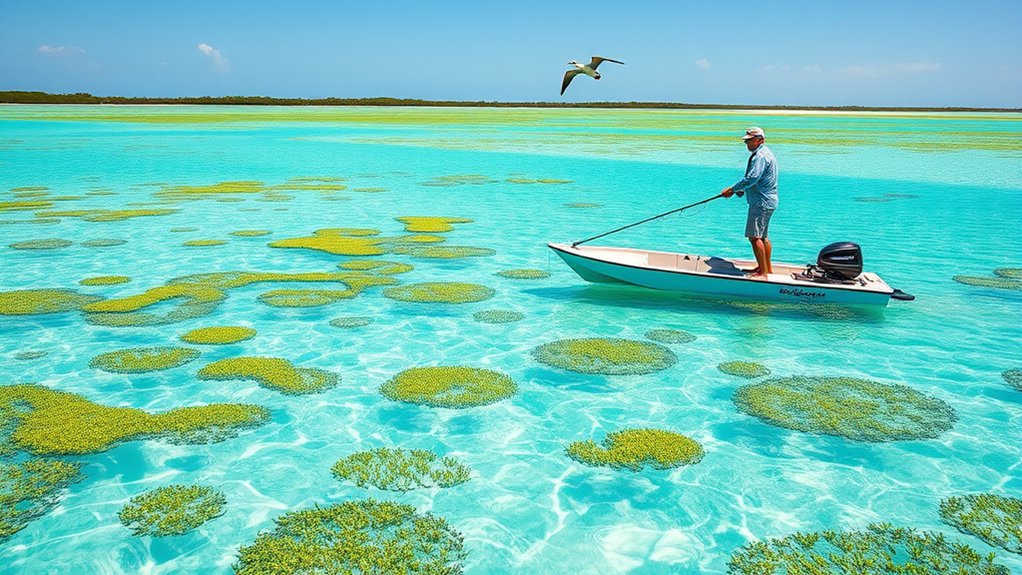
Do not fish every flat the same way. On grass, work clean edges, holes, and lanes rather than dragging through vegetation. On sand, use the contrast to spot shadows and lead cruising fish. On mud, move especially slowly because each step or push can create a visible disturbance. Around oysters, potholes, creek mouths, and drains, position your cast so the lure or fly crosses the route fish are already using.
How Tide, Wind, Light, and Clarity Affect Flats Fishing
The best flats conditions combine usable depth, moving water, manageable wind, and enough visibility for the technique you plan to use. Incoming water can let fish push onto newly flooded ground, while falling water can concentrate prey near drains, potholes, and channel edges. A light breeze may hide some noise, but stronger wind makes boat control and precise presentation harder. Clearer water improves sight-fishing; stained water shifts the advantage toward obvious structure and moving-water edges. Water temperature and seasonal patterns also matter by species, so avoid using one universal temperature target.
| Condition | Ideal state | Effect on fishing |
|---|---|---|
| Tide | Moving; incoming or falling depending on the flat | Incoming can open new feeding water; falling can funnel bait toward exits and depth changes |
| Wind | Light breeze | Masks your noise; manageable casting |
| Water clarity | Clear to lightly stained | Improves sighting and shot timing |
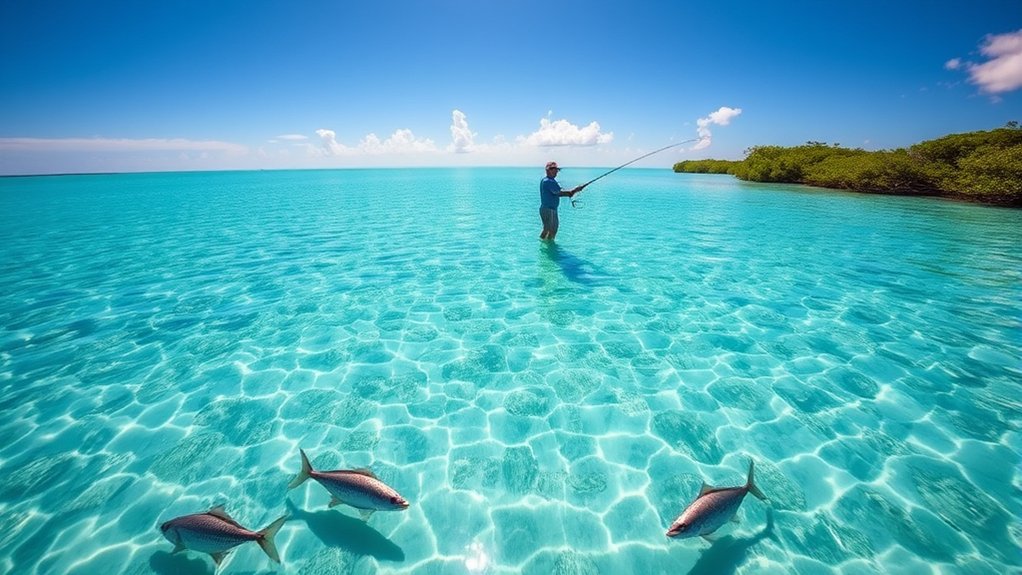
Before you go, check local harmful algal bloom advisories if applicable. Florida anglers, for example, can review the FWC red tide status dashboard.
Note: The best tide is local. Some flats fish better on the first push of incoming water, while others turn on when falling water drains bait toward potholes, cuts, and creek mouths.
Flats fishing decision guide
| What you see | First adjustment |
|---|---|
| Clear water + moving fish | Sight-fish, stay farther back, and lead the fish with one clean cast |
| Falling water | Shift toward drains, potholes, creek mouths, and channel edges |
| Clouds, glare, or stained water | Shorten casts and fish visible edges, seams, holes, and bait activity instead of forcing sight-fishing |
| Slack water + little bait movement | Reposition near deeper lanes or wait for current to restart rather than covering dead water at random |
Best tide stage for flats fishing
If you are new to a flat, incoming water is a useful starting point because rising depth can open fresh feeding ground. But do not treat incoming tide as a universal rule. On falling water, fish often reposition toward drains, potholes, channel edges, and exits where prey is leaving the shallows. The practical target is moving water plus a predictable travel lane, not a tide label by itself.
Best light and wind direction
When possible, position the sun behind you or over your shoulder. That makes glare easier to manage and fish shadows easier to read. Early and late light can still produce, but low sun can create glare. A gentle ripple may help hide small noises; stronger wind reduces casting accuracy and boat control. When visibility drops, shorten casts and focus on edges, drains, potholes, and obvious bait movement.
Flats Fishing Techniques: How to Fish the Flats
Approach quietly by skiff, kayak, or wading. A stealthy track prevents pressure waves, paddle slap, dropped gear, and hull slap from warning fish before you cast. Use polarized sunglasses to read light and bottom color. Scan for nervous water, V-wakes, puffs over mud, bronze or gray shapes, bait scattering, or tails flicking in skinny water.
Access the flats quietly by skiff, kayak, or wading. Read nervous water and shadows, then make a single clean shot.
Match your approach to the tide. On a push of water, fish often travel edges and micro-channels; on a falling tide, they funnel off the flat toward potholes and creeks. Keep presentations short and accurate. Lead the fish, let the fly or lure settle, then move it like the forage it imitates.
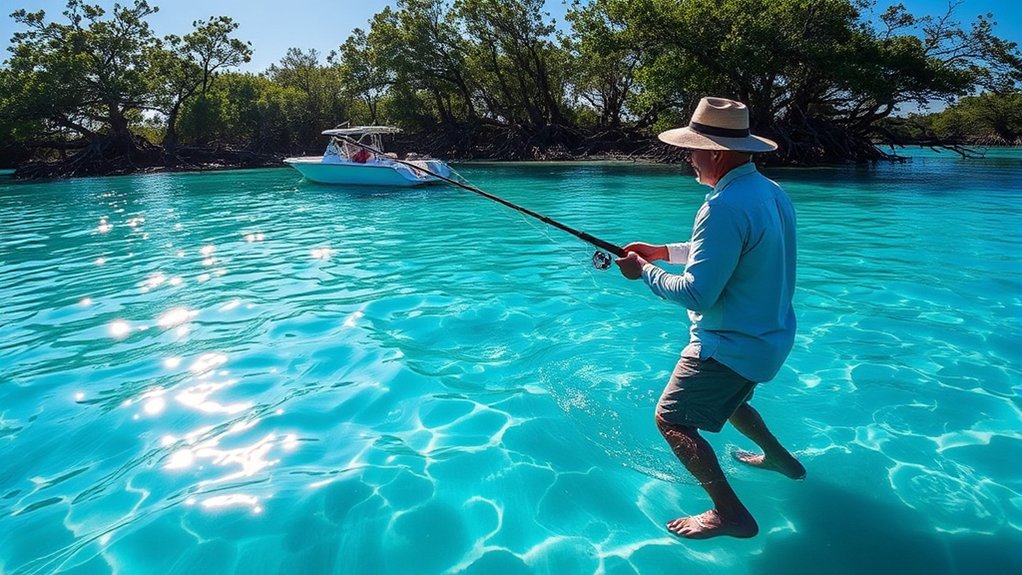
Step 1: Start with a tide plan
Pick one flat and decide how you will fish it as water rises or falls. Before the trip, compare the tide prediction with an aerial or satellite view. Mark the entry, exit, deeper edge, grass line, potholes, drains, and nearby channel. On the water, confirm those features before committing to a route. This keeps you from wandering randomly and gives you a fallback when fish leave the shallowest zone.
Step 2: Move slower than you think
Most missed chances happen before the cast. Step softly when wading, avoid scraping the bottom, and keep your rod, paddle, push pole, and tackle quiet. If you are in a boat or kayak, drift, paddle, or pole when practical near visible fish instead of making unnecessary motor noise or hull slap.
Step 3: Read signs before casting
A tail can mean a feeding fish with its head down. A V-wake may show a cruising fish. Mud puffs can reveal fish rooting along the bottom. Nervous bait usually means something is pushing it. When you spot a sign, stop moving, choose an angle, and wait for the fish to show its direction.
Step 4: Lead the fish and keep the presentation natural
Do not cast on top of the fish. Place the lure or fly ahead of its path, let it settle, and move it only when the fish can notice it naturally. Shrimp patterns often work with short hops. Crab patterns usually need slower bottom contact. Baitfish lures can swim, pause, and dart through lanes.
| Fish sign | Presentation idea |
|---|---|
| Tailing or rooting | Try a shrimp or crab imitation with short, controlled movement near the feeding lane |
| Bait spraying or fast wakes | Use a baitfish profile and retrieve it through the direction of travel, not across the fish’s head |
| No visible fish, but active edge or drain | Cover the lane with a soft plastic, jig, or other locally proven search bait while keeping the presentation above snags and grass |
| Low light + aggressive surface activity | Consider a topwater presentation if it suits the target species and local conditions |
Pro Tip: When a fish is moving toward you, cast farther ahead than feels necessary. You need time for the lure or fly to land, sink, and come alive without splashing the fish.
Step 5: Set the hook the right way
With spinning gear, reel down until the line is tight, then sweep firmly. With fly gear, keep the rod tip low and strip-set before lifting the rod. Lifting too early can pull the fly away from the fish, especially when there is slack between you and the target.
Flats Fishing Equipment
Use tackle that matches the fish, wind, cover, and presentation instead of treating one setup as universal. A light-to-medium inshore spinning outfit works for many shallow-water situations. Flats fly anglers commonly use roughly 7- to 9-weight rods for species such as redfish and bonefish. Move heavier as wind, fly size, or target fish increase. Prioritize a smooth drag and a leader suited to local water clarity and abrasion risk. Add polarized sunglasses, sun protection, pliers, and a compact selection of proven lures or flies.
Spinning setup
For general flats fishing, choose a spinning reel and rod that balance comfortably and have enough drag and line capacity for the species you expect. Braided mainline can improve sensitivity and casting with lighter lures, while a fluorocarbon leader can add abrasion resistance and reduce visibility in clear water. Around oysters, mangroves, or stronger fish, move up in leader strength rather than relying on an ultralight setup.
Fly setup
A 7- or 8-weight fly rod is a common starting range for many redfish and bonefish situations. Heavier rods can help with larger flies, stronger wind, or bigger target species. The exact choice is local. Use a leader that turns over the fly without landing too heavily. If fish are spooky, lengthen the leader only if you can still cast it accurately and control the presentation.
Lures, flies, and bait choices
- Shrimp imitations: Best when fish are rooting, tailing, or feeding near grass and potholes.
- Crab patterns: Good for slow presentations around clear water, sand, and bottom-feeding fish.
- Baitfish lures: Useful when fish are chasing mullet, minnows, pinfish, or other small forage.
- Soft plastics: Versatile for covering potholes, drains, and grass edges with subtle movement.
- Topwater plugs: Best in low light, along edges, or when fish are aggressive enough to look upward.
Safety and comfort gear
Bring sun protection, water, a hat, polarized sunglasses, pliers, a small first-aid kit, and footwear that matches the bottom. In stingray habitat, FWC recommends the “stingray shuffle” when wading. Avoid stepping blindly into potholes, and know your exit route before the tide changes.
Warning: Flats can look calm but still carry risks such as sharp oysters, soft mud, stingrays, heat, lightning, and fast-changing tides. Check weather before launch, carry water, and avoid wading unfamiliar bottoms alone. The National Weather Service advises getting to safe shelter when thunderstorms threaten; small open boats offer little protection from lightning.
If you use a skiff in seagrass country, protect the habitat you came to fish. NOAA advises boaters to stay in deeper water and marked channels where possible. If water becomes too shallow, stop and trim the motor up because propeller scars can damage seagrass beds. See NOAA’s seagrass boating guidance.
Tips and Common Mistakes
- Stay tight to the fly or lure. Remove slack so you can feel the eat and set quickly.
- Don’t rush the backcast. Let the line unroll to avoid a noisy splashdown on the first shot.
- Pause before the shot. Stop moving, confirm the fish’s direction, and choose the cast angle before you lift the rod.
- Trust your eyes. If you see a push or shadow, set up and wait for the angle.
- Adapt. Shift with tide and light; adjust retrieve to match shrimp, crabs, or baitfish.
Common mistakes that spook fish
- Casting too close. Landing a lure or fly on a fish’s head usually ends the shot.
- Making too many false casts. Extra movement creates shadows and delay. Make the cleanest cast you can.
- Wading too fast. Pressure waves travel through skinny water and warn fish ahead of you.
- Ignoring the sun angle. If glare blinds you, change position before you push into the best water.
- Using too much tackle. Carry fewer proven lures or flies so you spend more time fishing and less time sorting gear.
Troubleshooting slow flats fishing
If you are not seeing fish, move to the edge where shallow water meets a channel, creek, or deeper trough. If you see fish but they refuse, downsize the lure or fly, lengthen the leader, slow the retrieve, or change the angle. If you keep spooking fish, stop wading, let the flat settle, and watch before making another move.
A Repeatable Flats Fishing Game Plan
Start with one flat and one moving-water window. Identify your entry, exit, and nearest deeper lane, then spend a full minute scanning before the first cast. If you see fish, lead them with one clean presentation. If you do not, work high-percentage edges, drains, potholes, and channels instead of covering open water at random. After the trip, note the tide stage, wind, light, fish signs, and presentation that produced each good shot. Local patterns are more useful than a universal “best tide.”
Before you keep any fish, check the current license and season. Also check size and harvest limits, protected species rules, and area restrictions for the exact water you are fishing.
Related Guides
Frequently Asked Questions
What is flats fishing?
Flats fishing is shallow-water angling on relatively even bottoms such as seagrass, sand, mud, shell, or hard bottom. Anglers often sight-fish, but they also work edges, drains, potholes, bars, and channels when fish are hard to see.
What tide is best for flats fishing?
There is no single best tide for every flat. Incoming water can open new feeding ground, while falling water can pull bait toward drains, potholes, creek mouths, and channels. Focus on moving water and learn which route fish use at your location.
How do you spot fish on the flats?
Use polarized sunglasses and scan slowly for tails, shadows, V-wakes, mud puffs, flashes, nervous water, shrimp skipping, and bait spraying. Watch one area long enough to decide whether the sign is moving with purpose before you cast.
Do you need a boat for flats fishing?
No. You can fish many flats by wading, kayak, paddleboard, or shallow-draft skiff when access and conditions allow. A boat covers more water, but a quiet wading or paddle approach can be effective in shallow areas.
Where should you cast when sight-fishing a flat?
Cast ahead of the fish rather than on top of it. Leave enough room for the lure or fly to land, settle, and begin moving naturally before the fish reaches it. The exact lead distance depends on water depth, fish speed, wind, and how heavily the presentation lands.
What should you do when fish keep refusing your lure or fly?
First change the angle and presentation speed. If refusals continue, downsize, lengthen the leader if you can still cast accurately, or switch to a closer match for the forage. If fish spook before the lure arrives, stop moving and increase your casting distance instead.
Related articles
Sources
- NOAA Fisheries: Essential Fish Habitat and Seagrass — supports habitat context for seagrass, shallow-water ecosystems, and fish habitat value.
- Florida FWC: Current Red Tide Status — supports checking local harmful algal bloom conditions before fishing affected coastal waters.
- Salt Water Sportsman: How to Fish the Flats — supports reading wakes, nervous water, surface signs, and region-specific shallow-water positioning.
- Florida FWC: Fish Handling and Gear — supports the stingray-shuffle safety recommendation for wading anglers.
- National Weather Service: Lightning Safety — supports avoiding exposed water and small open boats when thunderstorms threaten.
- NOAA Fisheries: Fishing Smart Around Essential Fish Habitats — supports reducing propeller damage to seagrass habitat.
