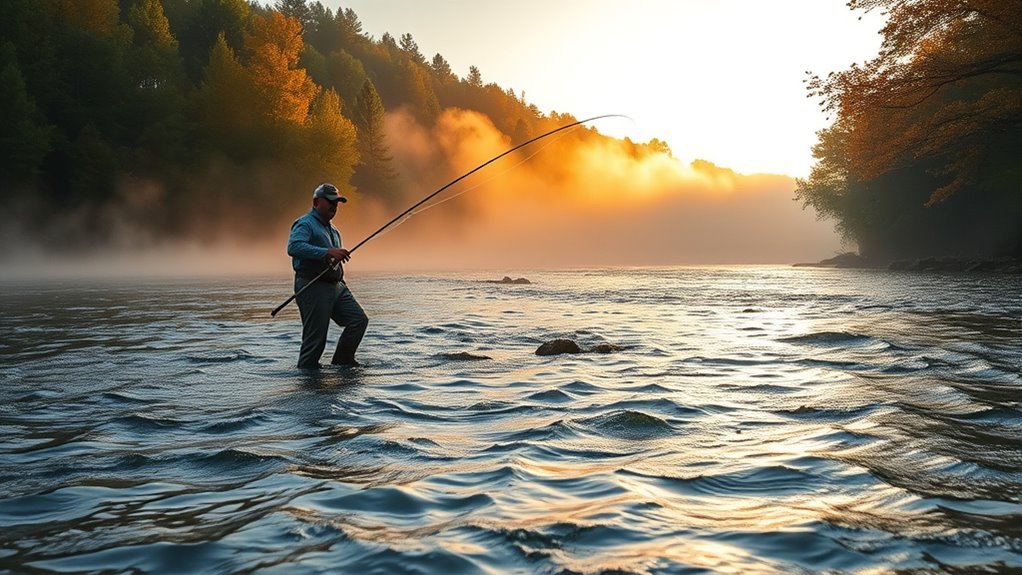
Fly fishing is an engaging fishing method that uses lightweight artificial flies instead of heavy bait or traditional lures. You cast the weight of the fly line, not the fly itself, to present insects, baitfish, and other natural food sources in a lifelike way. With the right specialized gear, basic casting techniques, and smart fly selection, you can target trout, bass, panfish, salmon, and even saltwater species. Patience matters, but a simple plan helps you learn faster and enjoy each trip more.
Quick Answer
Fly fishing is a technique where you use a fly rod, reel, weighted fly line, leader, tippet, and artificial flies to imitate insects, larvae, baitfish, or other fish food. Beginners should start with a 9-foot, 5-weight or 6-weight setup, learn the overhead cast and roll cast, and choose flies that match local fish food.
Key Takeaways
- Fly fishing works because the fly, line, and presentation imitate natural food in a convincing way.
- A 9-foot, 5-weight or 6-weight fly rod with a matching reel and floating line is a beginner-friendly setup for trout, bass, and panfish.
- Good casting comes from smooth timing, short practice sessions, and learning both the overhead cast and roll cast.
- Fly selection improves when you watch insects, water conditions, fish behavior, and local advice.
- Safe fish handling, local regulations, and clean gear protect both fish and the waters you enjoy.
At a Glance
| Time Required | 30 to 60 minutes to practice basic casting; several trips to build confidence on the water |
| Difficulty | Beginner to moderate, depending on wind, water depth, current, and target species |
| Tools Needed | Fly rod, fly reel, fly line, leader, tippet, flies, nippers, hemostats, polarized sunglasses, and a landing net |
| Cost | Entry-level starter kits are usually the most budget-friendly path; premium rods, reels, waders, and packs cost more |
Understanding the Basics of Fly Fishing
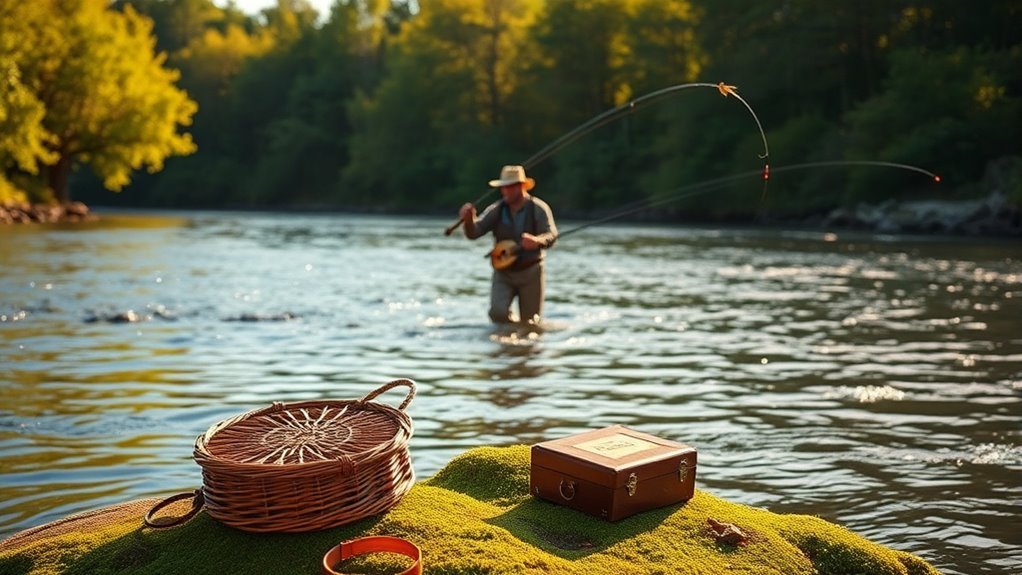
When you step into the world of fly fishing, it helps to understand what makes it different from other fishing methods. Instead of casting a heavy lure, you cast a lightweight fly line. The line carries the fly to the fish, while the fly imitates insects, larvae, small baitfish, or other natural food.
That difference changes almost everything: your rod, reel, line, knots, casting motion, and presentation. A fly rod bends to load energy into the cast, and the line unrolls through the air before the fly lands on the water.
As a beginner, focus on the basic overhead cast and roll cast. The overhead cast works well in open areas. The roll cast helps when trees, brush, or steep banks block your back cast.
Understanding local waters and the aquatic ecosystem also improves your results. Watch for insects, rising fish, current seams, shade lines, undercut banks, rocks, weeds, and deeper pools.
Pay attention to “matching the hatch,” which means choosing flies that look and behave like the insects fish are already eating. If no insects are obvious, you can still catch fish with nymphs, streamers, or general attractor patterns.
Whether you fish a quiet stream, a farm pond, a mountain lake, or a busy river, these fundamentals help you connect with the water and enjoy the art of fly fishing.
Note: Always check local fishing regulations before you fish. Seasons, bag limits, size limits, barbless-hook rules, and catch-and-release areas can change by waterbody and species.
Essential Gear for Beginners
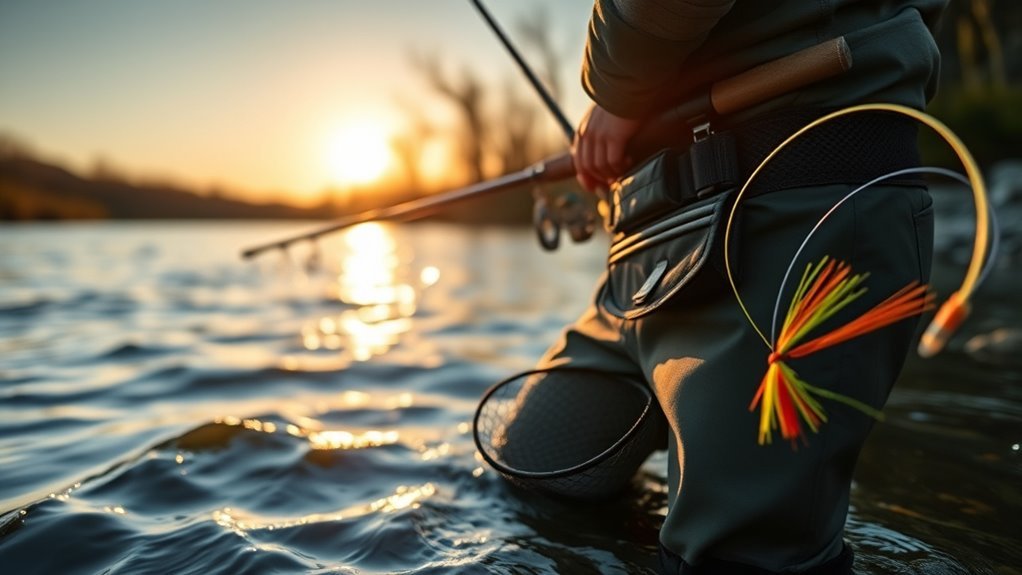
To begin your fly fishing journey, start with simple, dependable gear. You do not need a crowded vest, dozens of fly boxes, or advanced specialty rods on your first trip.
A 9-foot fly rod in the 5-weight or 6-weight range is a strong beginner choice. A 5-weight rod works well for trout and panfish. A 6-weight rod gives you a little more power for bass, larger flies, wind, and mixed conditions.
Starting your fly fishing journey is easier with a 9-foot rod and matching reel, ideally in the 5-weight or 6-weight category.
Pair your rod with a matching fly reel and a quality fly line. For most beginners, a weight-forward floating fly line is the most versatile option because it casts well and handles dry flies, nymphs, and small streamers.
You will also need a leader, tippet, and a selection of flies that fit your local waters. Leaders connect the fly line to the fly. Tippet lets you extend or repair the fine end of the leader after changing flies.
Useful accessories include nippers for trimming line, pliers or hemostats for removing hooks, a landing net, a fly box, floatant for dry flies, split shot for deeper nymphing where legal, and polarized sunglasses for eye protection and better water visibility.
As a beginner, focus on these fundamental items before buying advanced gear like neoprene waders, chest packs, sinking lines, or multiple specialty rods. You can add those later once you know where and how you like to fish.
Visit your local fly shop for guidance on rod weight, fly sizes, hatch timing, regulations, and nearby beginner-friendly waters.
[Amazon Products Picked for You]

COMPLETE FLY FISHING STARTER KIT, READY OUT OF THE BOX: Open the case and fish — this kit includes a 9' 5wt 4-piece fly rod, pre-spooled reel, waterproof fly box with 9 flies, 6 packs of tapered leaders, 2 zingers, line nippers, fishing forceps, and a protective rod tube. No extra purchases stand between you and your first cast.

🎣【Complete 5/6 weight Fly Rods Kit】- 4 piece fly rod , a large arbor reel, preinstalled line, a fly box, flies, and a lightweight rod case with a zippered storage pouch. It's the best gift to send father, son, husband, fiancé, boyfriend.

Fly FISHING OUTFIT KIT: Aventik best value fly fishing combos are designed for new angler to get started right away. Includes Aventik PF 9’0’’ LW5/6 fly rod, SADC Alu 5/6 fly reel with line, backing and leaders pre-loaded. 12 hand tied lures in a waterproof box. A wader zinger and stainless steel nipper. All in a one carrier rod case,very easy to carry aroud.
Beginner Fly Rod, Reel, and Line Setup
A balanced setup makes casting easier. Match the rod weight, reel size, and fly line weight so the rod loads properly.
- Rod: Choose a 9-foot, 5-weight or 6-weight rod for the most beginner-friendly range.
- Reel: Use a reel designed for the same line weight, with enough capacity for fly line and backing.
- Line: Start with a weight-forward floating line for easy casting and broad usefulness.
- Leader: Use a tapered leader around 7.5 to 9 feet for most beginner situations.
- Tippet: Carry a few sizes so you can match fly size and water clarity.
What Flies Should Beginners Carry?
You do not need hundreds of flies. A small box with proven patterns can cover many situations.
- Dry flies: Adams, Elk Hair Caddis, Parachute Adams, and small terrestrial patterns.
- Nymphs: Hare’s Ear, Pheasant Tail, Prince Nymph, and small midge patterns.
- Streamers: Woolly Bugger, small baitfish patterns, and leech-style flies.
- Warmwater flies: Poppers, foam bugs, and small streamers for bass and panfish.
Choose sizes based on local fish and food sources. When in doubt, carry a few small, medium, and larger options so you can adjust quickly.
Casting Techniques for New Anglers
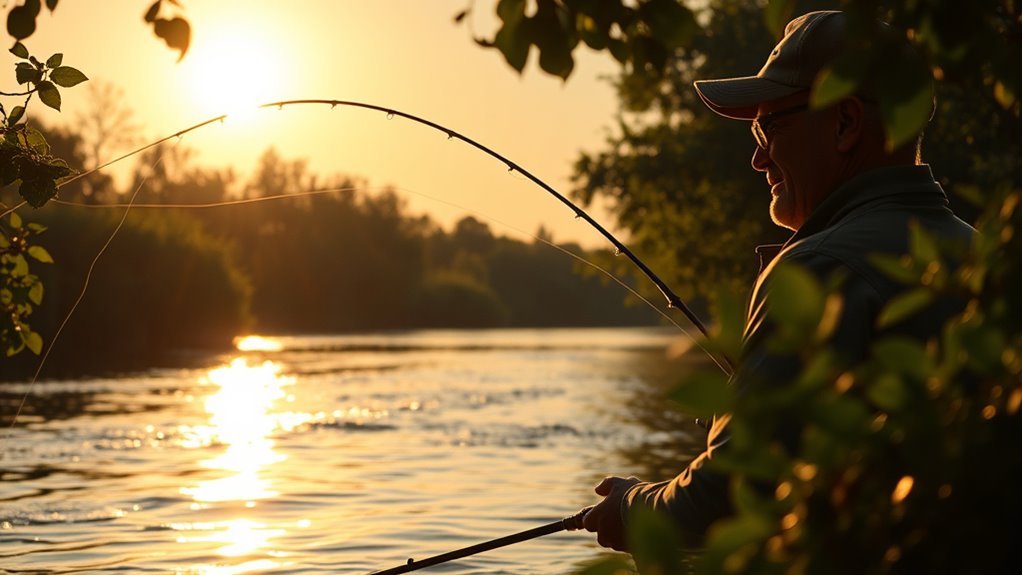
Mastering casting techniques is crucial for any new angler who wants a smoother fly fishing experience. You do not need perfect form to catch fish, but clean timing helps you cast farther, land flies softer, and avoid tangles.
Start with the basic overhead cast. Lift the line, make a controlled back cast, pause long enough for the line to straighten, then make a smooth forward cast. Stop the rod high so the loop unrolls cleanly.
Practice casting in open spaces, such as a yard or park, without a hook. Tie on a small piece of yarn instead of a fly so you can focus on timing and muscle memory.
The roll cast is critical for tight spots where a back cast is not possible. It uses the water tension on the line to load the rod, then sends the line forward in one smooth motion.
As you progress, learning the single haul and double haul techniques can improve casting distance, line speed, and control in wind. These techniques add a pull with your line hand during the cast.
Experiment with different casting styles, but keep your early practice simple. Short, accurate casts often catch more fish than long casts with poor presentation.
Pro Tip: Start with 20 to 30 feet of line on the grass. Practice smooth stops and straight-line rod movement before trying longer casts.
[Amazon Products Picked for You]

You can get excited about the premium items

Made of IM8 graphite, keep high-performance tapers

Casting Practice and Form Improvement: The Form Game Rod offers beginners and veteran fly casters alike, the chance to tighten and tune their casting and improve form
Common Casting Mistakes to Avoid
Most beginner casting problems come from speed, timing, or too much wrist movement. Slow down and let the rod do the work.
- Starting too fast: A rushed cast can create tailing loops and knots.
- Skipping the pause: If the line does not straighten behind you, the forward cast loses power.
- Using too much wrist: Keep the motion controlled so the rod tip travels in a steady path.
- False casting too often: Extra false casts can spook fish and create more chances for mistakes.
- Ignoring the wind: Adjust your angle and keep the fly away from your face and body.
The Importance of Fly Selection
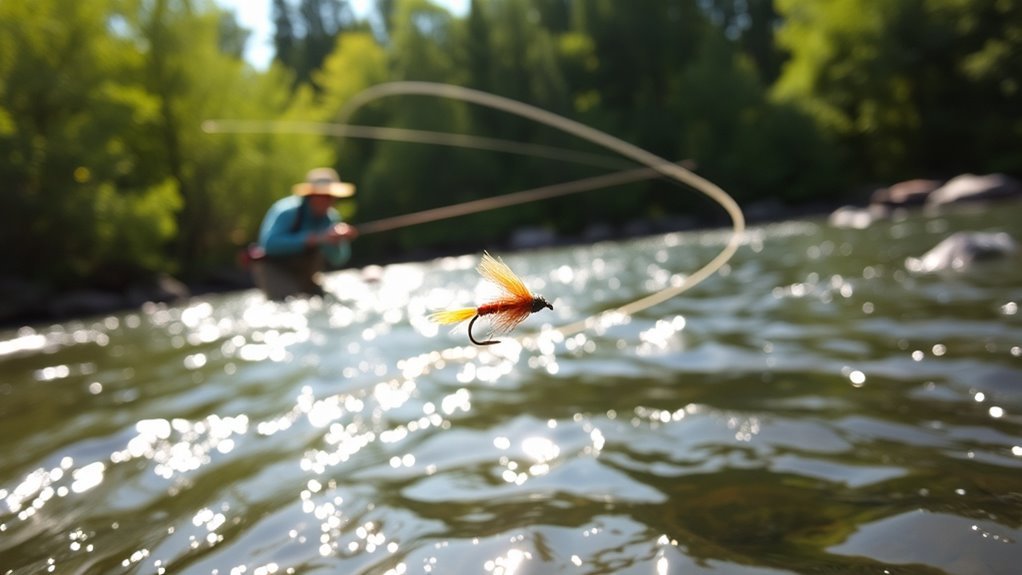
Choosing the right fly can greatly impact your success on the water. The goal is often matching the hatch, but the best fly also depends on water temperature, clarity, depth, current speed, light level, and fish behavior.
Look for clues before you tie on a fly. Watch the surface for rises, check rocks for nymphs, notice flying insects, and study where fish are feeding.
If mayflies are hatching and fish are rising, use dry flies that match their size and shape. If fish are feeding below the surface, nymphs can imitate larvae and emerging insects.
Streamers can attract larger fish because they resemble minnows, leeches, crayfish, or other moving prey. They can work especially well in deeper pools, stained water, and low-light conditions.
As a beginner angler, mastering a few essential fly patterns like the Adams dry fly, Hare’s Ear nymph, Pheasant Tail nymph, Elk Hair Caddis, and Woolly Bugger streamer can cover many fishing scenarios.
Do not forget to experiment with different colors and sizes. Fish can be picky based on current feeding habits, water clarity, and fishing pressure. If you are not getting bites, change size first, then depth, then pattern.
By paying attention to the environment and adapting your fly selection, you will increase your chances of success on the water.
[Amazon Products Picked for You]

Complete 24PCS Selection for Trout: Stop guessing which fly to use. This professional fly assortment includes 10 Dry Flies, 12 Nymphs, and 2 Streamers, featuring classics like Elk Hair Caddis and Czech Nymph. Designed specifically for North American freshwater species like Rainbow, Brown, and Brook Trout, it ensures you're prepared for any hatch or water condition

【Effective Flies】-30/50/60/100/168 pieces flies cover greatest flies of all time.Such as Wolly Bugger,Popper,Bumble,Peackcock Nymph,Whether you are a starter or just want to up your game,the chance of catching fish is big.

Well-Made Flies Kit: All fly fishing lures are hand-tied by professionals. The flies are tied with well-chosen quality feathers and sharp fly fishing hooks. Lifelike fly fishing flies are the best gift for anglers
Dry Flies, Nymphs, and Streamers Explained
Understanding the three main fly categories helps you make better decisions quickly.
- Dry flies: Float on the surface and imitate adult insects, terrestrials, or emerging bugs.
- Nymphs: Drift below the surface and imitate immature aquatic insects.
- Streamers: Move through the water to imitate baitfish, leeches, crayfish, or other larger food.
If fish are rising, try a dry fly. If you see no surface activity, start with a nymph. If you want to cover water or target aggressive fish, try a streamer.
Techniques for Presenting Flies

Successfully matching the hatch with your fly selection is only the beginning. How you present those flies can make the difference between a refusal and a strike.
To mimic the natural drift of aquatic insects, make sure your fly moves at the same speed as the current. If the line pulls the fly faster or slower than the water, fish may reject it.
Use the reach cast to position your line upstream or downstream before the fly lands. This helps the fly drift naturally for longer before drag begins.
Mending is crucial. Lift and reposition your line to reduce drag, letting your fly float or drift naturally. Mend gently so you do not yank the fly away from the fish.
When fishing with nymphs, set a strike indicator at a distance that matches the water depth and current speed. A fixed 24-inch distance can work in shallow water, but deeper or faster water often needs more space between the indicator and fly.
Adjusting your leader and tippet length can also enhance presentation. Longer tippets offer a more delicate approach in clear, calm water. Shorter leaders can help with control in wind, pocket water, or heavy flies.
Master these techniques, and you will greatly increase your chances to catch fish, turning your fly fishing experience into a successful adventure.
Reading Water Before You Cast
Reading water helps you spend more time fishing productive spots. Fish often hold where they can save energy while food drifts past.
- Seams: Look where fast and slow currents meet.
- Eddies: Watch slow swirling water behind rocks, logs, or bends.
- Riffles: Fish may feed in oxygen-rich broken water.
- Pools: Deeper water can hold fish during bright sun, cold weather, or low flows.
- Banks and shade: Undercut banks, overhanging trees, and shaded edges can hide feeding fish.
Fighting and Landing Fish
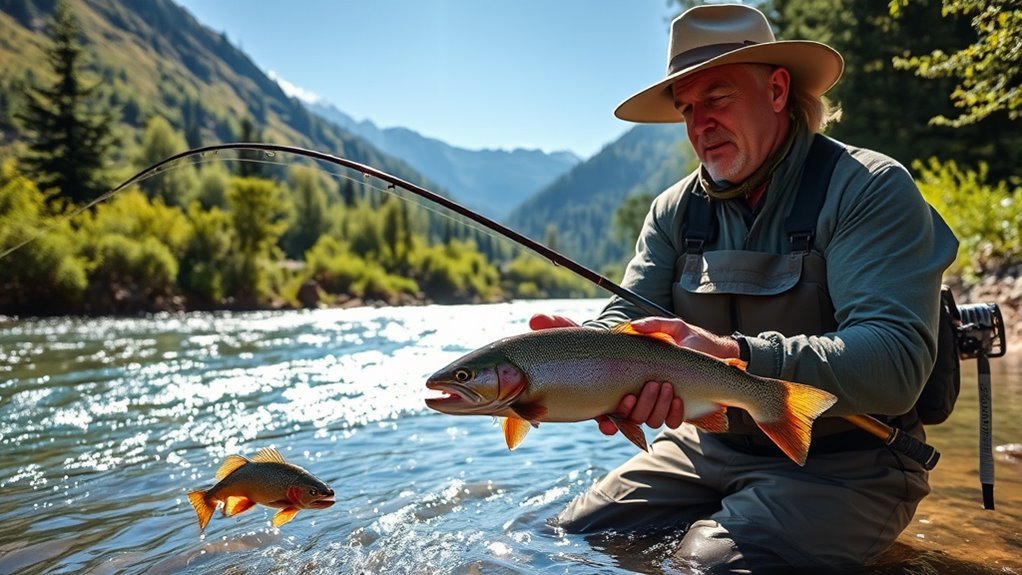
As you hook a fish, the real excitement begins. Knowing how to fight and land it effectively can make all the difference, especially when you use light tippet.
Mastering the art of fighting fish on a fly rod involves a few key techniques:
Mastering the fight with fish on a fly rod requires steady pressure, smart rod angles, and careful handling once the fish reaches the net.
- Maintain a rod angle of around 45 degrees for steady pressure and control.
- Use side pressure to steer and tire the fish, then switch angles as needed.
- Make quick landings to support the fish’s survivability and avoid exhausting it.
- Adjust your reel’s drag system so the fish can take line without breaking the tippet.
Always use sharp hooks and strong knots to reduce the risk of losing your catch. Check your tippet often for frays after rocks, weeds, branches, or fish teeth.
Staying calm and focused during the fight will help you land fish successfully. Keep the line tight, guide the fish away from snags, and avoid lifting large fish by the leader.
If you plan to release the fish, wet your hands before touching it, keep it in the water when possible, and remove the hook quickly with hemostats or pliers.
Warning: Never place a fly in your hat brim while walking or casting. Use a fly patch or hook keeper, and wear glasses to protect your eyes from wind-blown hooks.
Tips for a Successful Fly Fishing Experience
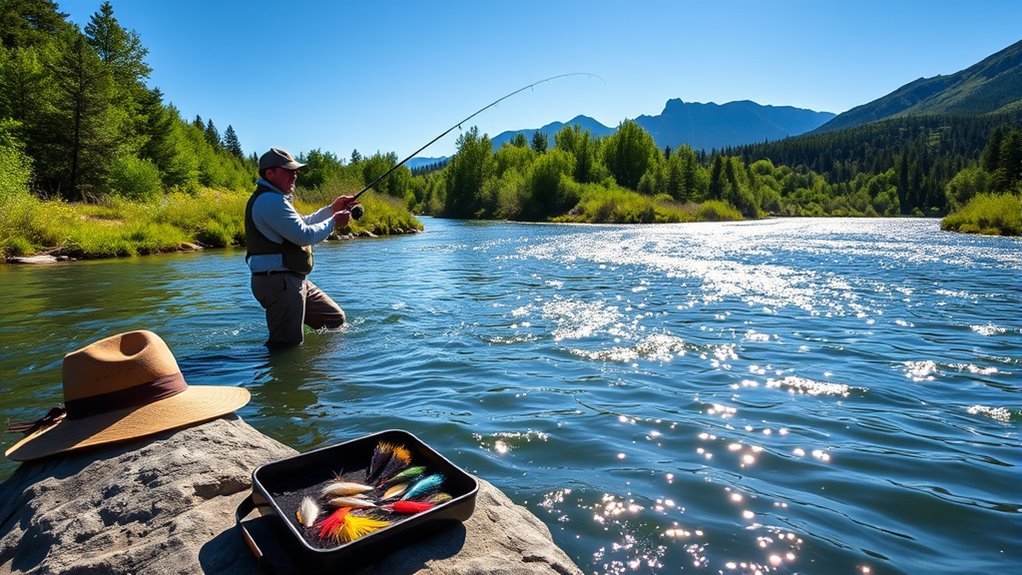
To make your fly fishing adventure successful, start with the right gear, like a sturdy 9-foot rod and quality floating line.
Once you have your essentials, head to an open area and practice casting techniques to boost your confidence.
With these foundational steps, you will be well on your way to reeling in fish and enjoying more relaxed time on the water.
Essential Gear Checklist
Starting your fly fishing journey requires the right tools to create a rewarding experience on the water.
As a beginner, focus on essential fishing gear that simplifies your setup and improves your skills. Here is a checklist to get you started:
- 9-foot fly rod: A versatile length for casting, mending, and line control.
- Matching fly reel: Make sure it pairs well with your rod and line weight.
- Weight-forward floating fly line: Vital for effective casting and line management.
- Leader and tippet: Needed for natural fly presentation and quick fly changes.
- Polarized sunglasses: Improve visibility on the water and help protect your eyes.
- Landing net: Helps you land fish quickly and handle them more safely.
- Nippers and hemostats: Useful for trimming line and removing hooks.
- Fly box: Keeps dry flies, nymphs, and streamers organized.
Do not forget a selection of flies that mimic local aquatic insects and baitfish. Organizing your flies in a box keeps everything manageable, allowing you to concentrate on mastering your casting techniques.
Practice Casting Techniques
With your essential gear in hand, it is time to focus on one of the most important skills in fly fishing: casting.
Start by practicing casting in open spaces, like your backyard or a park, to build technique without distractions. Master the basic overhead cast, which includes a back cast, a pause, and a forward cast.
Next, incorporate the roll cast for tight fishing situations where back casts are blocked. Work on single and double haul techniques once your basic loop control feels steady.
Regularly seek feedback from experienced anglers to refine your style. With dedication, these casting techniques will elevate your fly fishing experience and help you handle different fishing situations with confidence.
Beginner Trip Planning Tips
A good first trip does not need to be complicated. Choose easy access, safe footing, and fish that are willing to bite.
- Pick forgiving water: Ponds, small streams, and stocked waters can be easier than big rivers.
- Check the weather: Strong wind makes fly casting harder, so calm mornings are beginner-friendly.
- Pack light: Bring only the gear you need so you can move and learn comfortably.
- Start close: Fish nearby water before planning a long destination trip.
- Ask local experts: Fly shops, clubs, and fisheries offices can help you choose legal and productive spots.
Safety and Etiquette on the Water
Good safety habits and respectful etiquette make fly fishing better for everyone. Move slowly, give other anglers space, and avoid walking through water someone else is fishing.
If you wade, use a wading staff when needed and avoid water that feels too fast, deep, or cold for your skill level. Felt, rubber, and studded soles each have benefits, but local rules may restrict some types to prevent the spread of invasive species.
Clean, drain, and dry your boots, waders, nets, and boats between waters. This simple habit helps reduce the spread of aquatic invasive species and protects fisheries.
The best beginner fly anglers do not just cast farther. They observe more, adjust faster, handle fish carefully, and keep learning from each trip.
Frequently Asked Questions
What types of fish can I catch fly fishing?
You can catch many fish with fly fishing, including trout, bass, panfish, salmon, carp, pike, and some saltwater species. The best target depends on your local waters, season, regulations, and fly patterns. Beginners often start with trout, bluegill, or bass because they are common and respond well to simple flies.
How do weather conditions affect fly fishing?
Weather affects insect activity, water temperature, fish location, and casting conditions. Cloud cover can make fish feel safer in shallow water. Wind can make casting harder but may push food toward banks. Sudden temperature swings, heavy rain, and fast-changing water levels can make fishing more difficult.
Are there specific times of day for fly fishing?
Yes. Early morning and evening often fish well because light is lower, temperatures are cooler, and insect activity may increase. Midday can still work, especially during cooler seasons, cloudy weather, deeper nymphing, or streamer fishing. Watch the water because insect hatches and fish feeding windows matter more than the clock alone.
Can I fly fish in saltwater?
Yes, you can fly fish in saltwater. Saltwater fly fishing often targets species such as redfish, bonefish, striped bass, snook, tarpon, and sea trout. You need corrosion-resistant gear, stronger leaders, larger flies, and careful attention to tides, wind, casting accuracy, and local regulations.
What are common mistakes beginners make in fly fishing?
Common beginner mistakes include buying too much gear too soon, rushing the cast, using the wrong fly size, ignoring water depth, standing too close to fish, and changing flies before fixing presentation. Beginners also forget to check knots, tippet damage, local regulations, and safe wading conditions.
Is fly fishing hard to learn?
Fly fishing has a learning curve, but it is not too hard for beginners. The fastest path is to learn one basic setup, practice short casts, fish simple flies, and focus on presentation. A lesson, local club, or fly shop can shorten the learning process.
Do I need waders to start fly fishing?
No, you do not need waders to start. You can learn from banks, docks, shallow edges, ponds, and small streams. Waders become useful when you need better casting angles, safer footing in shallow water, or access to runs you cannot reach from shore.
Conclusion
In the world of fly fishing, you are not just casting a line; you are learning how water, insects, fish, and weather connect. The more you observe, the better your choices become.
Start with simple gear, practice your cast, choose a few proven flies, and focus on natural presentation. Patience and practice are your best allies, but every trip teaches you something useful.
As you explore rivers, ponds, lakes, and saltwater flats, remember that successful anglers develop an intuitive understanding of their environment over time. Gear up, respect the water, and let each cast bring you closer to the thrill of the catch.
Sources
- Take Me Fishing: Fly Fishing — supports beginner fly fishing concepts, gear basics, and technique overview.
- National Park Service: Fishing — supports responsible fishing, regulations awareness, and conservation-minded angling.
- U.S. Fish & Wildlife Service: Catch-and-Release Fishing Best Practices — supports safe fish handling and release guidance.
- U.S. Fish & Wildlife Service: Aquatic Invasive Species Program — supports cleaning gear and preventing the spread of invasive species.