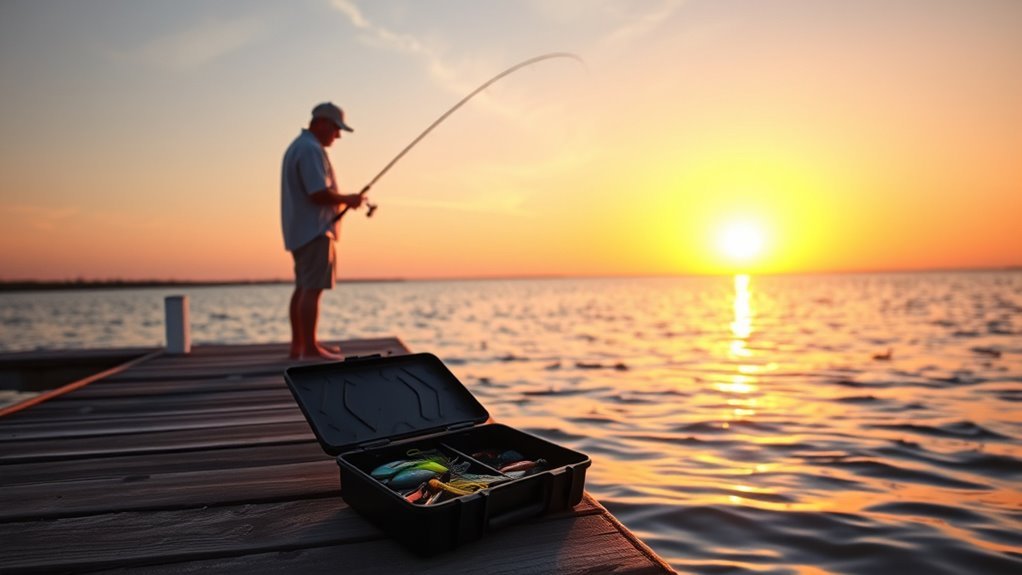
Brackish water fishing means targeting fish in the changing zone where freshwater and saltwater mix. The most reliable beginner pattern is to find moving water, bait, and structure together around estuaries, tidal rivers, creek mouths, marsh drains, bridges, docks, jetties, and current seams. Species vary by region and salinity, but may include red drum, snook, tarpon, striped bass, sheepshead, speckled trout, catfish, flounder, black drum, and freshwater species that tolerate some salt.
Last updated: September 21, 2026 — revised salinity guidance, tide timing, tackle recommendations, licensing language, FAQs, sources, and internal links.
Quick Answer
To fish brackish water well, target places where fresh and saltwater mix, then look for moving current, bait, and structure. Fish creek mouths, marsh drains, bridge pilings, oyster edges, channel drops, and similar feeding lanes. Match your bait or lure to local forage, scale your tackle to the fish and cover, rinse salt-exposed gear after the trip, and verify the fishing rules for your exact jurisdiction and target species.
Key Takeaways
- Brackish water occurs where freshwater and saltwater mix, and its salinity can shift with tides, rain, drought, wind, and river flow.
- Prioritize moving current rather than relying on a fixed number of hours before or after high or low tide.
- Shrimp, small baitfish, cut bait, paddle tails, spoons, jigs, and topwater plugs can all work when they match the local forage.
- A medium inshore spinning setup is a useful starting point, but rod power, reel size, line, leader, and hooks should match your target species and structure.
- License rules, size limits, bag limits, seasons, and gear requirements can vary by jurisdiction and species, so verify local regulations before each trip.
At a Glance
| Best Places | Estuaries, tidal rivers, marsh drains, creek mouths, docks, bridges, jetties, oyster bars, grass edges, channel drops, and current seams |
| Best Tide Window | Periods of useful moving current; incoming and outgoing water can both produce, and the timing at your spot may lag the published high or low tide |
| Starter Gear | Medium or medium-heavy inshore spinning rod, matching spinning reel, braided or monofilament main line, abrasion-resistant leader, pliers, landing net, and polarized sunglasses; scale tackle to your target fish and cover |
| Common Baits | Shrimp, small baitfish, cut bait, live minnows, paddle tail shads, bucktail jigs, spoons, and topwater plugs |
What Is Brackish Water?
Brackish water is a mixture of freshwater and saltwater. According to NOAA Ocean Service, estuarine brackish water can range from about 0.5 to 35 parts per thousand salinity, and the salinity at one location can change with tides, weather, freshwater runoff, and other local conditions. NOAA’s estuary guide explains why these mixing zones are so variable.
For anglers, the important point is that the fresh-to-salt boundary is not fixed. Heavy rainfall can push fresher water farther toward the coast, while drought or strong saltwater intrusion can move saltier water farther upstream. Fish that tolerate changing salinity may move with that transition, so a productive stretch can change after storms, long dry periods, or major shifts in river flow.
At each stop, check five things in order: current, bait, structure, water clarity, and depth. If several are missing, moving to a different creek mouth, bridge, drain, channel edge, or shoreline is usually more productive than repeatedly changing lures in unproductive water.
Brackish Fish Information
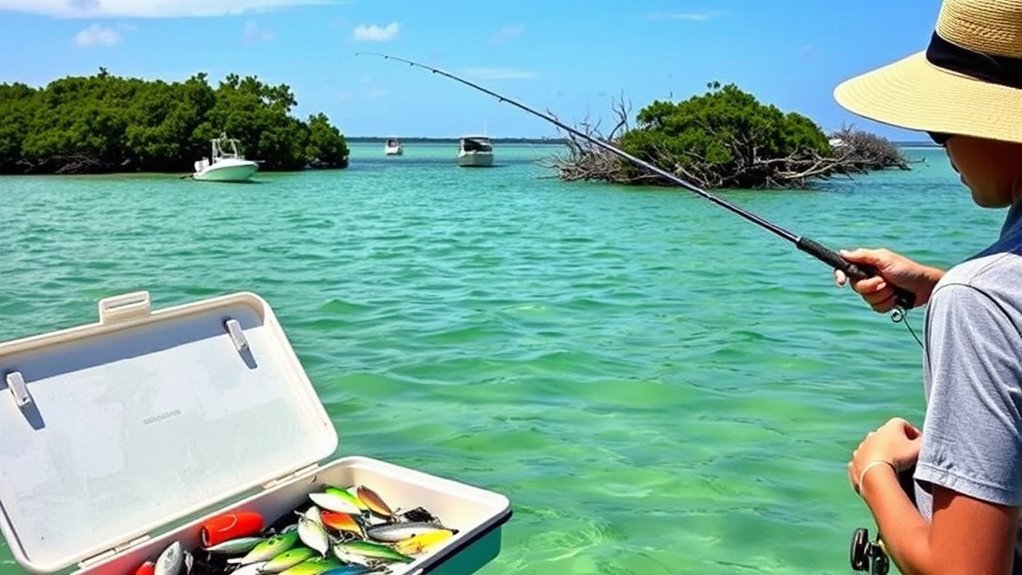
Brackish fisheries can contain both freshwater-tolerant and saltwater-tolerant species because salinity changes throughout the system. Rivers, creeks, bays, lagoons, and marshes can therefore produce a wider species mix than many purely freshwater or offshore locations.
Depending on your location, brackish areas can hold red drum, snook, tarpon, sheepshead, striped bass, speckled trout, flounder, black drum, largemouth bass, catfish, gar, mangrove snapper, and juvenile saltwater species. The exact mix depends on region, salinity, season, temperature, habitat, and migration patterns.
To locate fish, watch tidal flow, salinity changes, water temperature, bait movement, depth, and structure. Moving current can carry shrimp, minnows, crabs, and other forage through narrow feeding lanes where predators can hold with less effort.
Brackish fishing also changes through the year, but the pattern is regional rather than universal. Fish may change depth, location, or feeding activity as water temperature, rainfall, river discharge, forage, and salinity change.
Fishing regulations also vary. A brackish location may be governed by freshwater rules, saltwater rules, special boundary rules, or species-specific regulations. The required license can depend on the jurisdiction and species you target or keep rather than the salinity alone.
Measure kept fish carefully, follow current size and bag limits, release protected or undersized fish promptly, and check for seasonal closures before the trip.
Treat each trip as a set of clues. Check the current, clarity, bait activity, water level, and structure before deciding where to spend your time.
Note: Brackish water can change quickly after rain, drought, storm surge, or strong wind. If bites slow down after a major weather change, search for bait activity, suitable clarity, structure, and moving water rather than assuming yesterday’s productive zone is still in the same place.
Brackish Water Fishing Spots
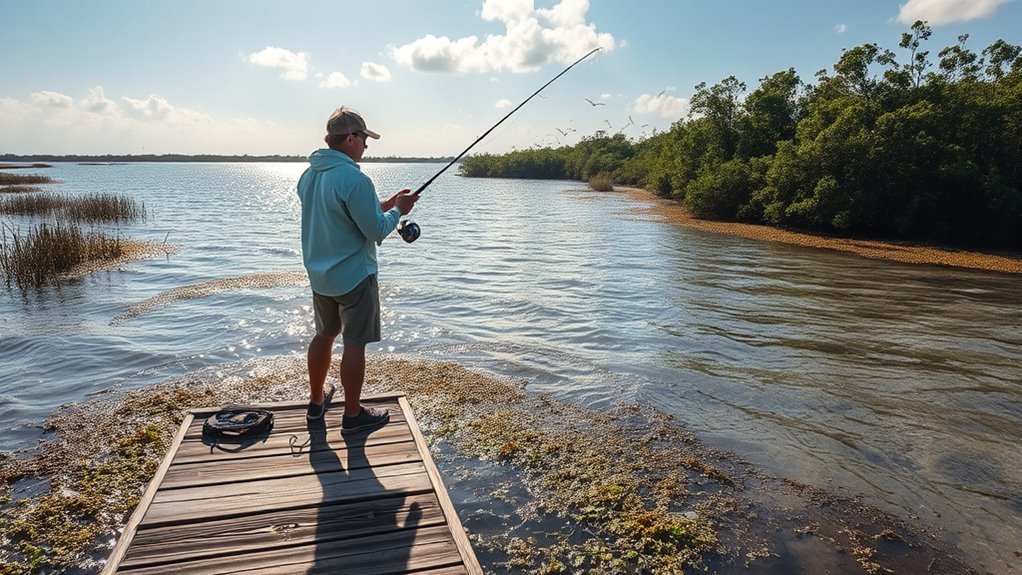
The best brackish-water spots usually combine moving water, prey, and structure. Start with creek mouths, channel bends, marsh drains, bridge pilings, docks, oyster edges, grass lines, riprap, and other places that create a current break or depth change.
Coastal estuaries and tidal rivers can hold snook, tarpon, and red drum in some warmer regions, plus striped bass, white perch, catfish, flounder, trout, drum, and other species in different coastal systems.
Structural features such as bridges, jetties, docks, oyster bars, grass lines, riprap banks, mangrove edges, channel bends, and weirs can provide shelter, shade, current breaks, or feeding opportunities.
Start where moving water crosses structure. A creek mouth, piling, oyster edge, channel drop, grass point, or drain gives predators a place to hold while current delivers forage.
Incoming and outgoing tides can both produce. A falling tide may pull bait from marsh grass, creeks, and backwaters, while a rising tide may give fish access to flooded banks, shallow flats, grass edges, and other feeding areas.
Always verify local fishing regulations for the exact waterbody and species you plan to target. Do not assume the rules are determined only by how salty the water tastes or looks.
Use nautical charts, satellite images, tide or current information, and local access maps to identify channel edges, shoals, deeper holes, drains, and structure before you arrive.
Brackish areas may include mud flats, oyster beds, boat traffic, changing water levels, and strong current. Choose safe footing, wear non-slip footwear, and keep track of rising or falling water so you are not cut off from shore.
Good Brackish Spots From Shore
You do not need a boat. Productive shore access often puts you directly beside current and structure.
- Public piers: Cast near pilings, lights, shade lines, current seams, and deeper edges.
- Bridge walkways: Fish current breaks and the down-current side of supports where bait can be swept past holding fish. For more detail, see this bridge fishing guide.
- Marsh banks: Work small drains, points, and grass edges while water is moving.
- Boat ramps: Stay clear of active launch lanes and fish nearby drop-offs, riprap, or current edges where legal.
- Jetties and seawalls: Use caution on wet surfaces and target pockets, eddies, drop-offs, and visible bait.
Good Brackish Spots From a Boat or Kayak
A boat or kayak lets you follow changing depth and salinity, but route planning matters. Avoid running through shallow grass, oyster bars, mud flats, or other hazards as water levels fall.
- Creek mouths: Fish where a smaller creek meets the main river, channel, or bay.
- Channel bends: Target the transition between shallow flats and deeper water.
- Marsh drains: Fish outflow when falling water carries forage from the marsh.
- Oyster bars: Work the edges rather than repeatedly dragging tackle through sharp shell.
- Backwater ponds: Check them when sufficient water gives fish access to shallow feeding habitat.
Brackish Tidal Flow
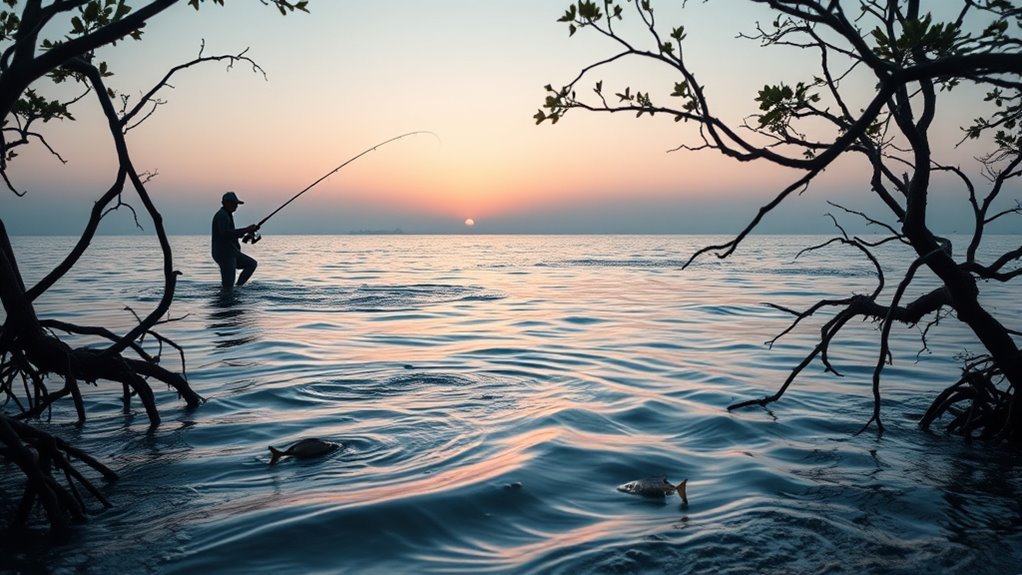
For brackish fishing, usable current matters more than a universal tide-time formula. Incoming and outgoing water can both trigger feeding by moving bait through drains, creek mouths, bridge openings, channel edges, points, and other funnels.
The published time of high or low tide does not always match the moment current slows or reverses at your fishing spot. Upriver locations, narrow channels, bays, marshes, wind, and river discharge can create a noticeable lag. Learn the behavior of each spot instead of assuming every location peaks at the same number of hours around high or low tide.
Use these steps:
- Check local tide and current information: Use the nearest relevant station as a planning reference, then compare it with what the water is actually doing at your location.
- Watch the direction of flow: Note when a drain, creek, bridge opening, or point starts creating a distinct seam or eddy.
- Follow the forage: Shrimp, minnows, crabs, and baitfish moving with current often reveal where predators will position.
- Adjust weight and depth: Use enough weight or jig head to reach the strike zone without making the presentation unnaturally heavy.
Cast up-current or across the flow and let the bait or lure pass naturally through eddies, seams, bridge shadows, grass points, drain mouths, and drop-offs.
When current weakens, fish may stop feeding aggressively in the same lane. Try deeper holes, shade, slower presentations, or another area where water is still moving.
Pro Tip: Keep a tide log for each spot. Record the published tide, the actual current direction and strength, wind, water clarity, bait activity, lure or bait, and catches. That record helps you learn the local lag instead of relying on a generic tide rule.
Structure Areas
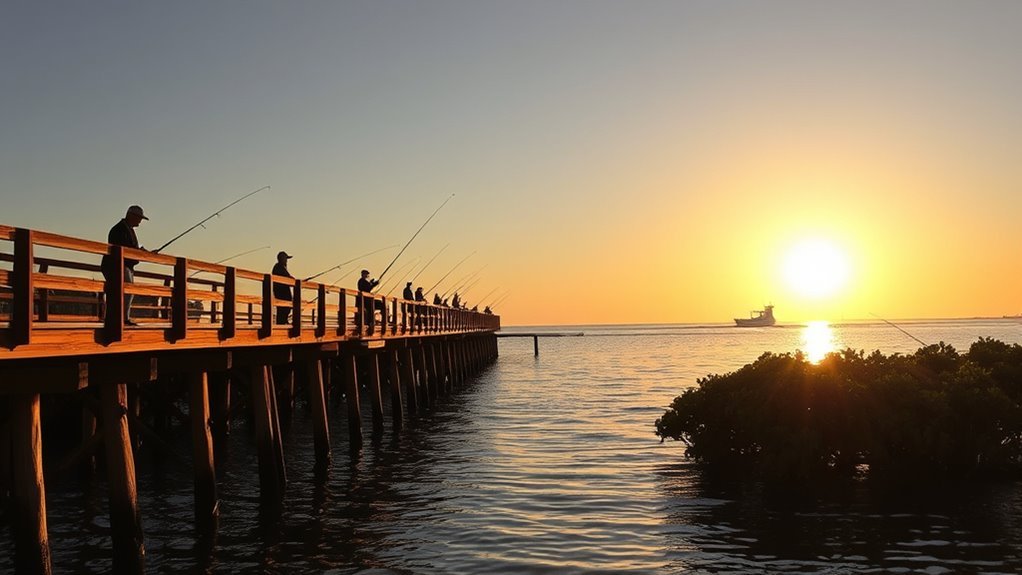
Structure is most useful when it also changes the current, depth, shade, or forage. Bridges, weirs, oyster bars, rocks, vegetation, mangrove roots, laydowns, submerged logs, grass edges, and channel drops can all create feeding or holding zones.
Natural and man-made structure can hold bait and give larger fish an ambush point. The most productive side often changes with current direction.
Watch for soft water behind an obstruction, a visible seam between fast and slow flow, a drop-off beside shallow cover, or bait repeatedly passing one edge.
Scout and map productive structure so you can revisit it under similar water conditions.
A piece of structure becomes more valuable when current, depth, shade, or forage concentrates fish around one specific edge.
Make several casts from different angles before leaving a promising target. A presentation that misses the seam by a few feet may pass outside the feeding lane.
How to Fish Bridges, Docks, and Jetties
Bridges, docks, and jetties can provide shade, current breaks, attached marine life, baitfish, and ambush points. Start with the down-current edge, then work pilings, corners, deeper sides, and shadow lines.
Shrimp, cut bait, bucktail-style jigs, paddle tails, or appropriately sized live bait can work around pilings. If fish are feeding near the surface, try a topwater presentation in suitable conditions. Increase weight only as much as needed to maintain depth and control in stronger current.
How to Fish Grass Lines and Marsh Drains
Grass lines and marsh drains become especially useful when water carries prey into or out of cover. On falling water, position outside a drain and present shrimp, small baitfish, paddle tails, or jigs through the flow.
On rising water, fish may gain access to grass edges, flooded banks, and shallow pockets. Approach quietly and watch for wakes, flicking shrimp, nervous bait, birds, or surface disturbances.
Brackish Water Baits And Lures
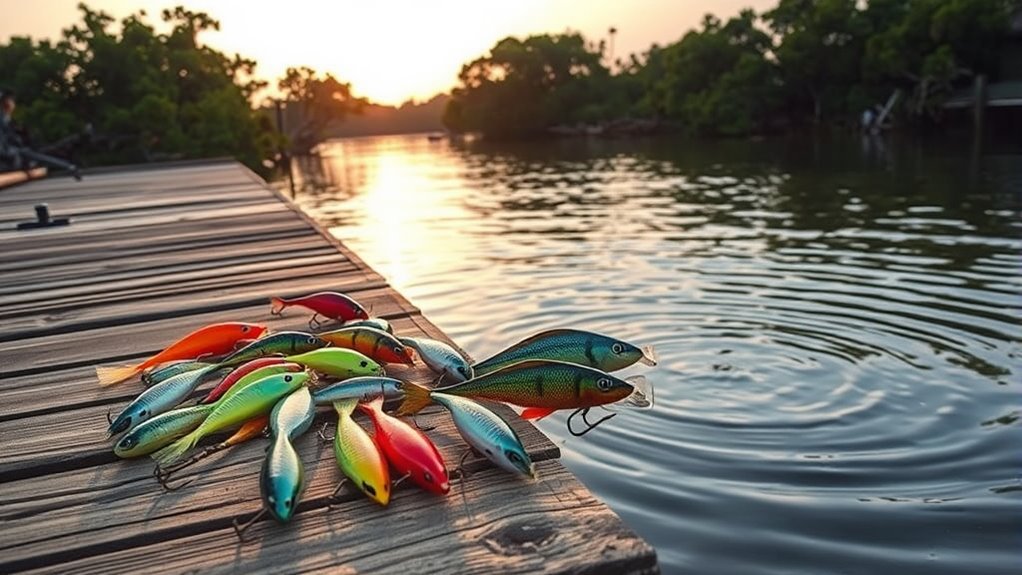
The best bait or lure is the one that matches the forage, target species, depth, current, and water clarity at your spot. Shrimp and small baitfish are useful natural options, while jigs, paddle tails, spoons, and topwater plugs let you cover water quickly.
Do not choose a bait solely because the water is brackish. First identify what the local fish are feeding on and where that prey is moving.
Natural Bait Options
Natural bait works well when it matches prey already present in the estuary.
- Shrimp: A versatile bait for many drum, trout, snook, sheepshead, catfish, and other estuarine species, depending on region.
- Small mullet or other local baitfish: Useful for larger predators when those baitfish are naturally present.
- Cut bait: Provides scent and can work well for drum, catfish, striped bass, and other species that feed near the bottom or locate prey by scent.
- Live minnows or other legal baitfish: Useful around creek mouths, current seams, bridges, docks, and active feeding areas.
Match bait size to the target species and local forage. Also verify bait-possession and live-bait regulations because legal bait species and collection rules vary.
For light bites, reduce unnecessary terminal tackle and use the lightest weight that still gives you control. Around oysters, rocks, pilings, roots, or larger fish, use tackle with enough abrasion resistance and strength for the cover.
Effective Artificial Lures
Artificial lures are useful when you need to search water efficiently or imitate a specific prey type.
Spoons, bucktail-style jigs, soft-plastic paddle tails, shrimp imitations, and topwater plugs can all produce in brackish water. Surface lures are often worth trying during low-light periods or whenever fish are visibly feeding near the top.
Three- to five-inch paddle tails are a practical inshore starting range for many medium-size predators, but lure size and jig-head weight should be adjusted to forage size, depth, current, and target species.
In clearer water, natural-looking colors and subtle presentations can be useful. In stained water, stronger contrast, vibration, or scent may make the lure easier for fish to detect.
If fish follow without striking, change retrieve speed, add a pause, alter depth, or downsize before abandoning productive-looking structure.
Seasonal Bait Considerations
Seasonal brackish-water patterns depend on region. Instead of following one nationwide spring/summer/fall/winter rule, match your bait to the conditions and forage present in your estuary.
- Warm water: Check shallow feeding areas during cooler parts of the day and watch for active shrimp or baitfish.
- Cooling water: Follow bait toward channels, holes, creek mouths, and other areas that provide stable depth or current.
- Heavy rain or runoff: Expect salinity and clarity to change; search different parts of the system if fish leave a previously productive area.
- Dry periods: Saltier water may extend farther upstream in some systems, changing which species and forage occupy a location.
The most reliable clue is local forage. Match the size, depth, and movement of what fish are already eating.
Bait and Lure Selection Table
| Situation | Useful Starting Option | Why |
| Stained water | Scented or natural bait, darker/contrasting soft plastics, or vibration-producing lures | Scent, vibration, and contrast can help fish detect a presentation when visibility is reduced. |
| Clear water | Live shrimp, small baitfish, natural-colored soft plastics, or subtle spoons | Natural profiles and movement can reduce visual mismatch with local forage. |
| Strong current | Heavier jig head, sliding-sinker rig, or weighted bait rig sized to the flow | Enough weight helps maintain the intended depth and feeding lane. |
| Low light | Topwater plug, wake bait, or shallow-running lure when fish are feeding high | Surface disturbance can attract actively feeding fish when they are using shallow water. |
Brackish Water Gear
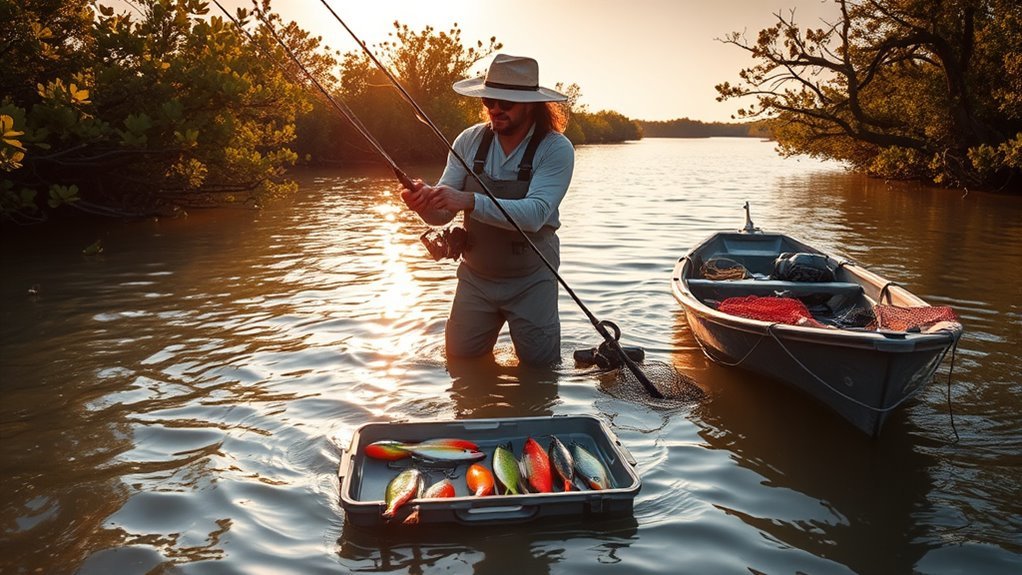
There is no single brackish-water rod and reel for every fish. For general inshore fishing, a medium or medium-heavy spinning setup is a practical starting point; lighter tackle suits smaller species and open water, while larger fish, stronger current, and heavy structure may require substantially heavier gear.
If you already own suitable inshore saltwater equipment, it can usually cover many brackish situations. For broader beginner tackle guidance, see the site’s saltwater fishing basics guide.
Brackish water still contains salt, so corrosion resistance and post-trip maintenance matter even when the water does not taste as salty as the ocean.
Recommended Rod and Reel
Choose tackle by target species, lure or bait weight, current, and cover rather than by salinity alone.
- Rod: A roughly 7-foot medium or medium-heavy spinning rod is a versatile starting point for many medium inshore applications.
- Reel: Match reel capacity and drag capability to the rod, line, and fish you expect rather than relying on one universal reel size.
- Leader: Use an abrasion-resistant leader appropriate for the fish, water clarity, teeth, shell, rocks, roots, and pilings at your spot.
- Lure weight: Choose enough jig-head or sinker weight to reach the feeding depth and maintain control without unnecessarily overpowering the presentation.
Rinse salt-exposed rods, reels, pliers, hooks, and reusable lures appropriately after the trip, then allow them to dry before storage.
Essential Fishing Line
Braid is useful for sensitivity, casting distance, and low stretch, while monofilament provides more stretch and is forgiving for many bait-fishing applications. Neither is automatically correct for every brackish-water situation.
Choose main-line strength for the target fish and cover, then choose leader strength for abrasion, visibility, structure, and teeth. A moderate-strength leader may work in open water, while pilings, oyster shell, rocks, mangrove roots, large predators, or toothy species can require a different material or strength.
Inspect line and leader frequently. Run your fingers along the leader after a fish, snag, or contact with shell or structure. Retie if you find nicks, flattening, abrasion, or damaged knots.
Hooks, Rigs, and Terminal Tackle
Match terminal tackle to the bait, target species, local regulations, current, and bottom type. Circle hooks are useful for many natural-bait applications, while jig heads and lure hooks suit active artificial presentations. Some fisheries require particular hook types, so verify local rules.
- Popping cork rig: Useful for shrimp, baitfish, and soft plastics over grass, flats, and shallow edges.
- Carolina or sliding-sinker rig: Useful for presenting bait near the bottom while allowing some natural movement. See the site’s Carolina rig guide for a detailed setup.
- Jig head rig: Useful for paddle tails, bucktails, shrimp imitations, and deeper channels.
- Free-line rig: Useful for live shrimp or small baitfish when current is light enough to maintain control.
Safety and Care Gear
Brackish water can hide sharp shell, soft mud, drop-offs, slippery surfaces, and strong current. Carry basic safety and fish-handling equipment.
- Polarized sunglasses: Help reveal shallow structure, bait, and hazards.
- Long-nose pliers: Help remove hooks while keeping hands away from teeth and sharp tackle.
- Landing net: Helps control fish without lifting larger catches by the line.
- Fish ruler: Helps verify legal length before keeping a regulated fish.
- Non-slip shoes: Improve footing on mud, ramps, docks, rocks, and wet surfaces.
- Fresh water for cleanup: Useful for washing salt and grime from hands and suitable equipment after exposure.
Warning: Do not assume nearby freshwater, estuary, and coastal saltwater areas share the same regulations. License requirements, protected species, seasons, slot limits, bag limits, hook rules, and legal bait can change across jurisdictional or species boundaries.
Basic Brackish Water Fishing Techniques
Once you find current, bait, and structure, present your bait or lure through the feeding lane rather than casting randomly across open water.
- Cast up-current or across-current: Let the presentation enter the strike zone with the flow when practical.
- Work edges first: Concentrate on transitions between shallow and deep water, fast and slow current, grass and open water, or hard and soft bottom.
- Vary your retrieve: Try steady retrieves, slow hops, pauses, twitches, and controlled bottom contact.
- Watch the forage: Nervous minnows, jumping shrimp, diving birds, wakes, or surface swirls can reveal feeding activity.
- Stay quiet: Reduce footsteps, dropped tackle, paddle noise, and unnecessary boat movement in shallow water.
For beginners, a soft-plastic paddle tail on an appropriately weighted jig head is a simple way to search different depths. Cast near productive structure, allow it to reach the intended depth, then retrieve it steadily enough to maintain control. If it drags bottom continuously, reduce weight or speed up. If it never reaches the target depth, slow down or increase weight.
Common Brackish Water Mistakes
Brackish fishing becomes easier when you treat the estuary as a changing system rather than a fixed freshwater pond or open saltwater shoreline.
- Fishing dead water: If there is no current, bait, useful structure, or depth change, search another zone.
- Following the tide table without watching actual current: Local flow can lag or differ from the published high and low tide.
- Ignoring rain and river flow: Freshwater input can shift salinity, clarity, forage, and fish location.
- Ignoring wind: Wind can move surface water, bait, floating debris, and dirty water into or out of a shoreline.
- Using tackle that is too light for structure: Oyster shell, rocks, pilings, roots, and large fish can damage line and leader quickly.
- Staying too long: After changing depth, angle, and presentation without finding fish or bait, move to another feeding lane.
- Skipping regulations: Mixed freshwater and saltwater species can be governed by different rules in the same general area.
Frequently Asked Questions
How do you fish brackish water for beginners?
Start where moving water meets structure, such as a creek mouth, bridge, marsh drain, dock, channel edge, or oyster edge. Use a versatile inshore spinning setup and begin with shrimp, local baitfish, a paddle tail, jig, or spoon. Watch current and bait activity, adjust depth before constantly changing lures, and verify local fishing regulations before keeping fish.
What is brackish water?
Brackish water is water in which freshwater and saltwater mix. It is common in estuaries, tidal rivers, marshes, and coastal creeks. Salinity can change with tide, rainfall, drought, wind, river flow, and distance from the sea, so the brackish zone can move within the same waterway.
What bait works best in brackish water?
There is no single best bait for every brackish fish. Shrimp, local baitfish, minnows, and cut bait are useful natural options, while paddle tails, jigs, spoons, and topwater plugs can imitate common forage. Match bait size and presentation to the prey, species, current, depth, and water clarity you see locally.
Is incoming or outgoing tide better for brackish fishing?
Either can be productive. Incoming current may push fish and forage onto flats, flooded banks, and grass edges, while outgoing current can pull prey through drains, creek mouths, channels, and bridge openings. Focus on how moving water concentrates bait at your specific spot rather than assuming one tide direction is always better.
What license do I need for brackish water?
The answer depends on your jurisdiction, waterbody, target species, harvest rules, and sometimes the fishing method. Do not choose a license solely from the water’s salinity. Check the current rules from the state, provincial, national, or local fish-and-wildlife authority responsible for the place you will fish.
What fish live in brackish water?
Depending on region and salinity, brackish water can hold red drum, black drum, snook, tarpon, sheepshead, speckled trout, flounder, striped bass, white perch, catfish, gar, largemouth bass, mangrove snapper, and many other species capable of tolerating changing salinity.
Is brackish water bad for fishing gear?
Brackish water contains salt and can contribute to corrosion of hooks, pliers, reel components, and other metal tackle. After a trip, clean suitable salt-exposed equipment with fresh water according to the manufacturer’s care guidance, let it dry, and inspect hooks, split rings, leaders, and moving reel parts for damage or corrosion.
Sources and Further Reading
- NOAA Ocean Service — What Is an Estuary? — brackish-water definition, salinity range, tides, and estuarine variability.
- NOAA Ocean Service — Is Change Important to Estuaries? — changing tides and environmental conditions in estuaries.
- Florida Fish and Wildlife Conservation Commission — Fishing License Requirements — example showing why brackish-water licensing can depend on target species rather than salinity alone. Anglers outside Florida should use their own jurisdiction’s official agency.
Conclusion
Successful brackish water fishing starts with understanding that the environment is always changing. Salinity, current, rainfall, water clarity, forage, and fish location can shift within the same river or estuary.
Start with the strongest pattern: moving water + bait + structure. Fish creek mouths, drains, bridge pilings, oyster edges, channels, grass lines, and similar feeding lanes with a bait or lure that matches local forage. Scale your tackle to the fish and cover rather than relying on one universal setup.
Before every trip, check local regulations and water conditions. Once on the water, pay attention to what the current and bait are doing, record productive tide stages, and move when the key ingredients disappear.