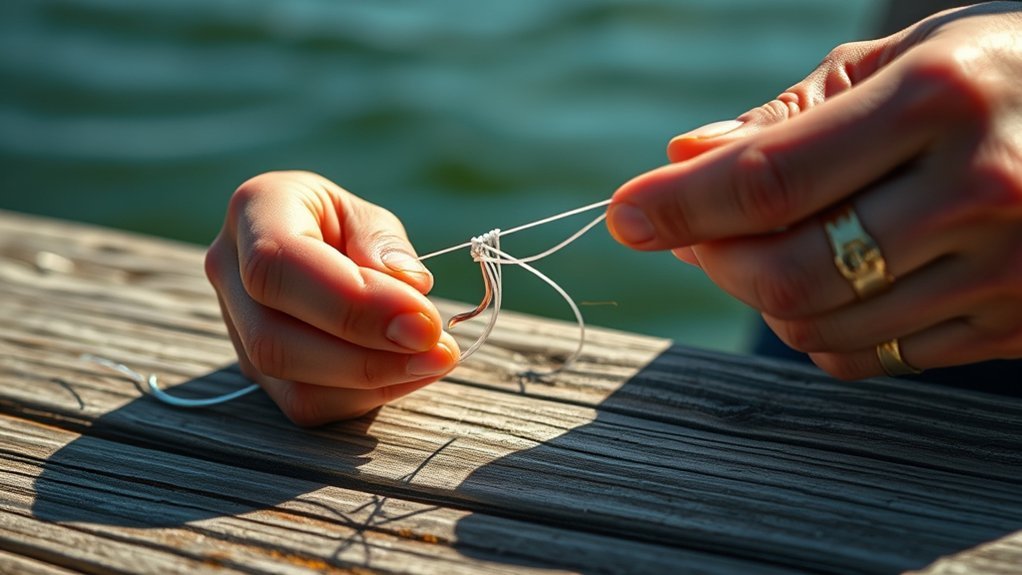
When you’re out on the water, knowing a couple of dependable fishing knots for monofilament can make all the difference. The Improved Clinch Knot and Uni Knot are two classic options for attaching hooks, lures, and swivels. Each has its place, and a little practice helps you tie them quickly and consistently.
Key takeaways
- For monofilament to hooks/lures, the Improved Clinch and Uni knots are reliable, easy-to-learn choices.
- Wet the knot and tighten slowly so the coils stack neatly and don’t damage the line.
- Use the Double Uni to join a main line to a leader, and the Palomar when you need a quick, strong tie (especially with braid).
Essential Knots for Monofilament Fishing

For most monofilament setups, you only need a few knots you can tie cleanly every time. The Uni Knot is popular because it’s versatile and works well for connecting mono to terminal tackle.
Pick a small set of knots, practice them, and tie them the same way every time.
For joining two lines—like a main line to a leader—the Double Uni (Uni-to-Uni) is a common, easy-to-learn connection knot, especially when the lines are similar in diameter.
The Palomar Knot is another strong, simple option. Many anglers like it with braided line, and it can also work with mono—though thicker monofilament and small hook eyes can make it harder to tie neatly.
If you want an alternative line-to-hook knot for mono/fluoro, the Trilene Knot is often recommended because the line passes through the eye twice for added grip.
Tip: Tighten knots slowly, and wet the line before snugging down. This helps the coils seat smoothly and reduces heat and friction. Trim tag ends close—don’t burn them, since heat can damage the line.
Step-by-Step Guide to the Improved Clinch Knot

Though you may encounter many fishing knots, the Improved Clinch Knot remains a go-to for securing monofilament or fluorocarbon to hooks, lures, or swivels.
To tie it, start by threading the tag end of your line through the hook eye. Next, wrap the tag end around the standing line 4 to 6 times (lighter line usually gets more turns; heavier line fewer).
After wrapping, pass the tag end through the small loop right above the hook eye, then take it through the larger loop you just formed.
Moisten the knot before tightening. Pull the standing line while guiding the coils down so they stack neatly. Then snug the tag end and trim the excess.
Tying the Uni Knot for Secure Connections

The Uni Knot is a dependable choice for tying monofilament to hooks, lures, snaps, or swivels. It’s also the building block for the Double Uni connection knot.
To tie the Uni Knot, pass the line through the eye and lay the tag end back alongside the standing line to form a loop. Wrap the tag end around the doubled lines 5 turns for average mono (use more wraps with thinner line). Then thread the tag end through the loop.
Wet the line and pull the tag end and standing line to snug the coils. Slide the knot down to the eye, give the tag end a final tug, and trim.
Using the Palomar Knot
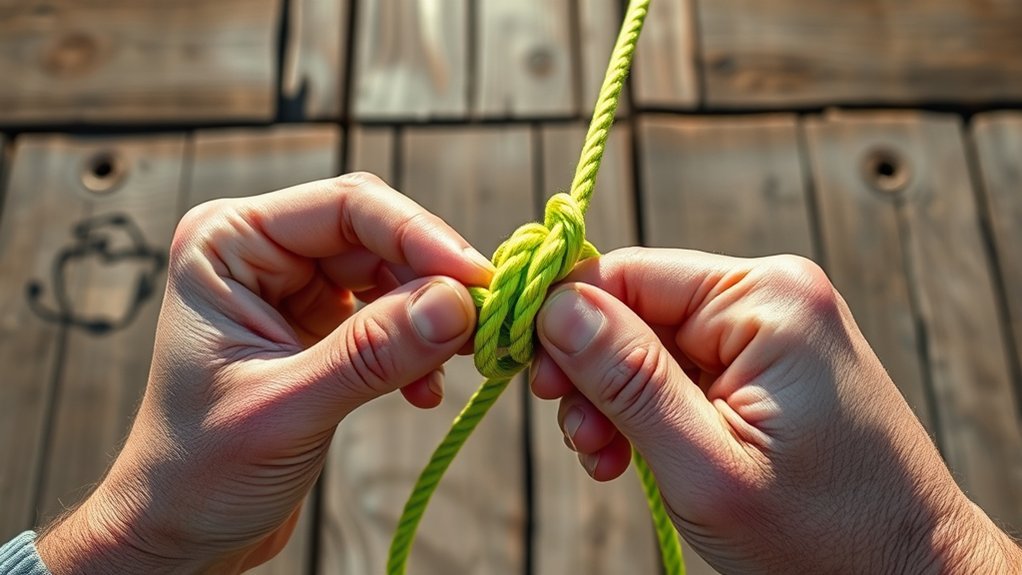
After mastering the Uni Knot, the Palomar Knot is another excellent knot to know. It’s especially popular with braided line because it’s quick and strong, and it can also be used with monofilament when the eye is large enough to pass a doubled line.
To tie it:
- Double the line and pass the loop through the hook eye.
- Tie a simple overhand knot with the doubled line.
- Pass the hook or lure through the loop, wet the knot, and pull tight.
Before you cinch down, make sure the wraps don’t cross over each other. Trim the tag end close for a clean finish.
Joining Lines With the Double Uni Knot

When you need to join two lines—like monofilament main line to a leader—the Double Uni Knot is a reliable choice, especially when the diameters are close.
Start by overlapping the two lines by several inches. Take the first tag end and make 3–5 wraps around both lines and through the loop it forms, then pull to snug. Repeat with the other tag end on the opposite side.
Wet the connection and slowly pull both standing lines so the two Uni knots slide together and lock. Trim both tag ends for a streamlined profile.
Related Guides
Frequently Asked Questions
What is the best knot for a monofilament fishing line?
There isn’t one “best” knot for every situation. For mono to a hook or lure, many anglers use an Improved Clinch or Palomar. If you’re using thicker mono or a small hook eye, the Uni Knot is also a solid choice.
How to tie a hook on a fishing line step by step?
Thread the line through the hook eye, tie a dependable terminal knot (like the Improved Clinch, Uni, or Palomar), wet it, then tighten slowly so the coils seat neatly. Trim the tag end close once the knot is snug.
What are common fishing knot mistakes?
Common mistakes include tightening a knot dry, rushing so the coils overlap, leaving an overly long (or overly short) tag end, and using a knot that doesn’t match the line type or hook eye size. Always test a fresh knot with a firm pull before you cast.
What are the best fishing knots for beginners?
For most beginners, the Improved Clinch and Uni knots cover a huge range of monofilament uses. Add the Palomar for quick ties (especially with braid) and the Double Uni for connecting a leader.
Conclusion
With a handful of proven knots, you can rig faster, lose fewer fish, and spend more time fishing. Practice the Improved Clinch and Uni until they’re automatic, then add the Palomar and Double Uni for extra versatility. Tight lines!