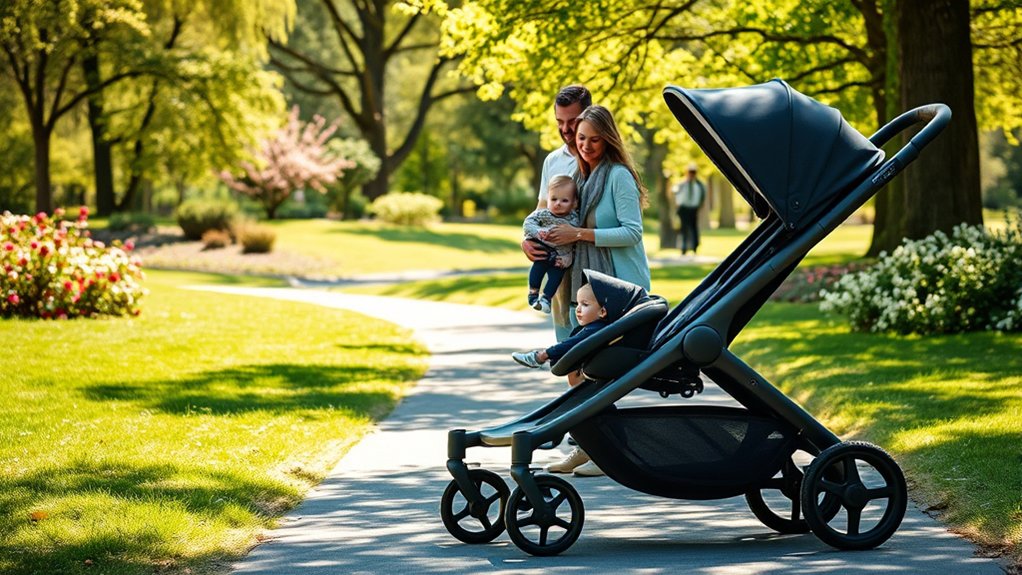
Did you know that the average family spends around $325 on a stroller? That number can move much lower or much higher, depending on the stroller type, build quality, brand, safety features, and how long you plan to use it. A simple umbrella stroller may cost under $100, while a premium travel system or convertible stroller can climb well over $1,000. The smartest choice is not always the cheapest or the most expensive one. It is the stroller that fits your child’s age, your daily routine, your storage space, and your real budget.
Quick Answer
Most families should expect to spend about $150 to $500 on a dependable stroller, with many good everyday options around $250 to $400. Spend more only if you need a travel system, stronger suspension, a convertible design, premium materials, or features that truly match your lifestyle.
Key Takeaways
- A practical stroller budget usually falls between $150 and $500, though prices vary by stroller type and feature set.
- Safety, comfort, durability, and daily usability matter more than luxury finishes or brand status.
- Lightweight strollers work well for quick trips, while full-size strollers offer more storage, support, and long-term flexibility.
- Travel systems, convertible strollers, and premium models can cost more, but they may save money if they replace multiple pieces of baby gear.
- Before buying, test the fold, brakes, harness, handle height, storage basket, and car seat compatibility.
Factors Influencing Stroller Prices
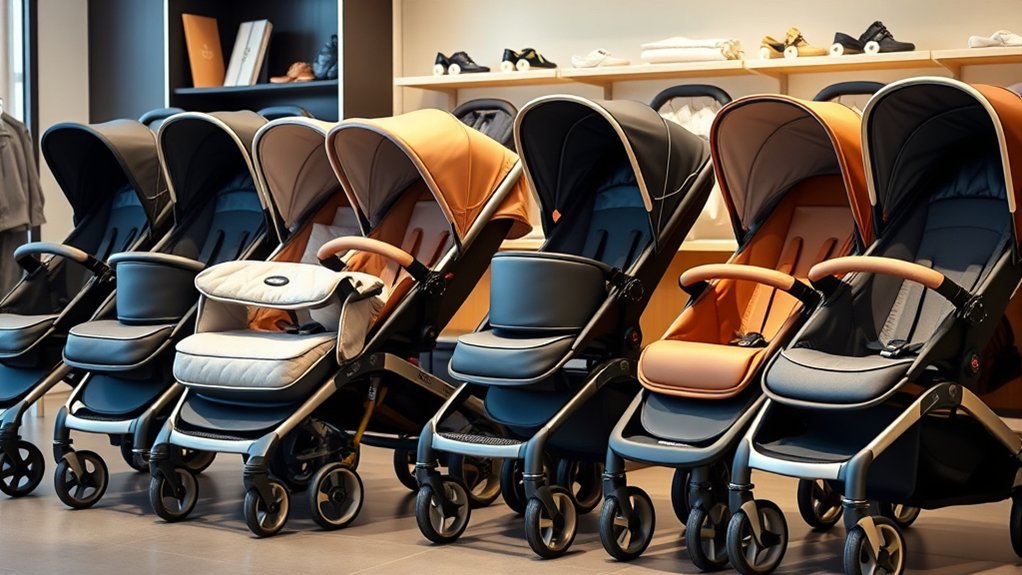
When considering how much to spend on a stroller, it helps to understand what actually drives the price. Material quality plays a major role. Strollers made with durable steel or aluminum frames, stronger wheels, better fabrics, and reinforced joints often cost more, but they can also handle daily use better.
Features also affect price. A stroller with adjustable seats, a smooth folding system, larger wheels, all-wheel suspension, weather protection, a roomy storage basket, and car seat compatibility will usually cost more than a basic lightweight model. These extras can be worth it if you walk often, travel frequently, or use the stroller every day.
Brand reputation can’t be overlooked either. High-end brands often charge more for design, accessories, customer support, and perceived quality. Still, some budget-friendly brands offer similar basic functions at a lower price. The average spending on baby strollers hovers around $325, but the right amount for your family depends on your lifestyle, not just the average number.
Note: A higher price can mean better materials or smoother handling, but it does not automatically mean the stroller is safer or easier to use. Always compare real features, weight limits, brakes, harness design, folding ease, and return policies.
Understanding Your Family’s Needs

Understanding your family’s needs is essential when selecting the right stroller, especially because every family’s routine looks different. Start by thinking about how often you plan to use it. If you only need a stroller for short errands, a compact model may be enough. If you walk daily, use public transportation, travel often, or live in a busy city, you may want a stronger stroller with better wheels and easier folding.
Also consider your children’s ages and the number of children you have. Families with newborns often need a stroller that reclines deeply, accepts an infant car seat, or offers a bassinet-style setup. Families with toddlers may care more about seat space, snack trays, easy cleaning, and a sturdy footrest. If you expect another child soon, a convertible stroller may cost more upfront but may reduce the need to buy a second stroller later.
Evaluate your storage needs based on your home, car, and daily routine. Compact strollers can suit apartment living and small trunks, while larger families may benefit from bigger baskets and more flexible seating. Prioritize essential features like safety, stability, foldability, and comfort before paying for non-essential accessories.
How Much Should You Budget for a Stroller?
A good stroller budget depends on how you plan to use it. For occasional errands, you may be comfortable spending under $150. For everyday use, many families find the best balance between $250 and $500. If you need a stroller that works from birth, handles rough sidewalks, or converts for more than one child, your budget may move closer to $600 or more.
Think about cost per use rather than price alone. A $350 stroller used every day for three years may offer better value than a $100 stroller that feels frustrating, breaks early, or does not fit your child comfortably. On the other hand, a $1,000 stroller may not be worth it if you only use it a few times a month.
The best stroller budget is the amount that gives you safe daily function, easy handling, and enough durability without paying for features you will rarely use.
Cost Breakdown by Stroller Type
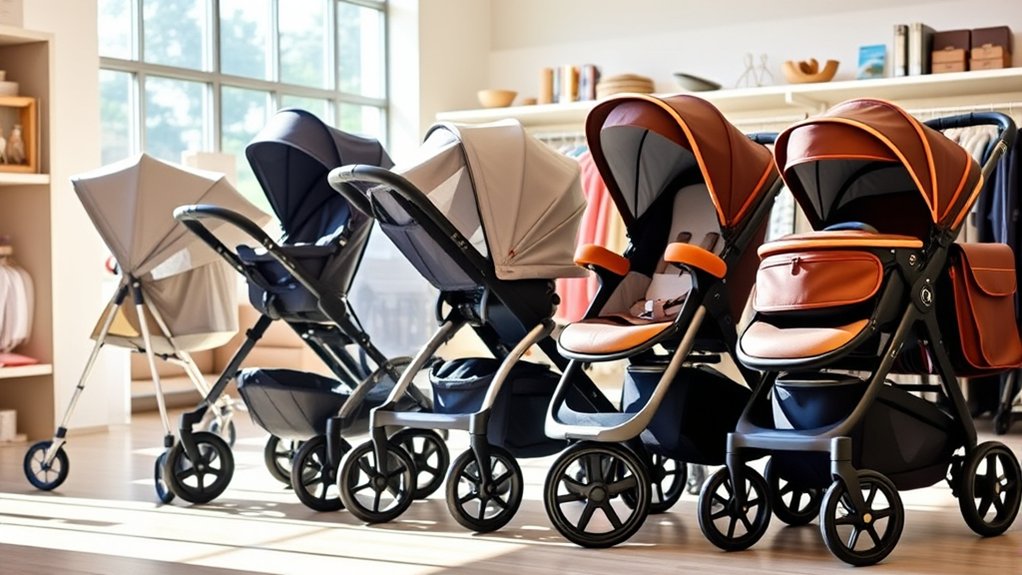
When choosing a stroller, understanding the cost differences between stroller types is essential. Lightweight strollers typically range from $100 to $300 and focus on portability. Full-size strollers usually cost between $200 and $500, offering a stronger mix of comfort, storage, and durability for everyday use. Travel systems, jogging strollers, doubles, and premium convertible models can cost more because they include extra parts or more complex designs.
Lightweight Stroller Pricing
How much should you expect to spend on a lightweight stroller? Typically, prices range from $100 to $300, striking a balance between affordability and essential features. If you’re on a tight budget, consider options like the 3Dlite Convenience Stroller, priced under $100, which is accessible for many families.
Mid-range strollers, such as the Bombi Bēbee, usually fall between $200 and $300, offering a blend of comfort and lightweight design. Premium lightweight models can exceed $300 when they use stronger materials, smoother wheels, one-hand folds, or travel-friendly designs. On average, parents may spend around $200 for a lightweight stroller that offers daily convenience without too many extras.
Full-Size Stroller Costs
Lightweight strollers may suit families looking for convenience, but full-size strollers offer a range of features and benefits that cater to everyday needs. These strollers typically cost between $100 and $1,200, with reliable models often averaging around $250 to $500.
Investing in a full-size stroller can give you adjustable seats, large storage baskets, better canopies, stronger frames, smoother steering, and improved comfort for longer outings. Brands like Mockingbird and Uppababy Vista provide popular options, though pricing can vary widely by model, accessories, and configuration.
Pricier models may offer better durability and resale value, but you should still compare the actual features you will use. Don’t forget that proper stroller maintenance, including cleaning wheels, checking brakes, and inspecting the frame, can prolong the life of your stroller and improve its resale appeal.
Travel System Costs
A travel system usually includes a stroller and an infant car seat that clicks into the stroller frame. These systems often cost more than a basic stroller, but they can be a smart value if you need both pieces from day one. Budget travel systems may cost under $300, while more feature-rich options can move into the $400 to $800 range.
The main benefit is convenience. You can move a sleeping baby from the car to the stroller without switching seats. The tradeoff is that travel systems can be heavier and bulkier than simple lightweight strollers. Before choosing one, check the stroller weight, folded size, car seat expiration date, and whether the infant seat fits your vehicle well.
Jogging and All-Terrain Stroller Costs
Jogging and all-terrain strollers usually cost more than basic models because they use larger wheels, stronger frames, and better suspension. Many cost between $250 and $700, though premium versions can go higher. These strollers are useful if you walk on uneven sidewalks, gravel paths, parks, or rougher surfaces.
Do not buy a jogging stroller only because it looks durable. Choose one only if you need that style of handling. Jogging strollers can be heavier, wider, and harder to store. Also, many are not suitable for running with a young infant unless the child meets the maker’s age and development guidelines.
Warning: Never jog with a baby in a stroller until the stroller maker says it is safe for that age and stage. Infants need proper head and neck control before faster movement or rougher terrain.
Double and Convertible Stroller Costs
Double and convertible strollers often cost more because they carry more weight and use more complex frames. A basic double stroller may cost around $200 to $400, while premium convertible models can cost $600 to more than $1,000 after seats, adapters, and accessories.
These strollers can be worth it for growing families. A convertible stroller may start as a single stroller and later adapt for two children. Before spending more, check the full cost of the second seat, car seat adapters, rider boards, rain covers, cup holders, and replacement parts. The base stroller price does not always show the true total cost.
Best Strollers Under $400
Finding the best stroller under $400 can be a game changer for new parents, offering a balance of safety, functionality, and affordability. You’ll discover excellent stroller brands and models that cover different needs without pushing your budget too far.
The Besrey gravity fold stroller weighs just 14.4 lbs and folds in one second, making it a useful option for busy lifestyles and quick trips. If you’re looking for a complete travel solution, the Graco NimbleLite Travel System combines a full-size stroller and an infant car seat for under $200. For parents who prioritize compactness, the 3Dlite Convenience Stroller is an accessible choice priced under $100.
These strollers can include helpful features like adjustable seats, sun canopies, cup holders, and storage options. You can also consider practical stroller accessories, such as a rain cover, parent organizer, weather shield, or snack tray, but only buy the ones you will actually use.
Pro Tip: Before buying a stroller under $400, compare the folded size, stroller weight, recline range, basket access, and warranty. These details affect daily use more than small style differences.
Evaluating Expensive Strollers
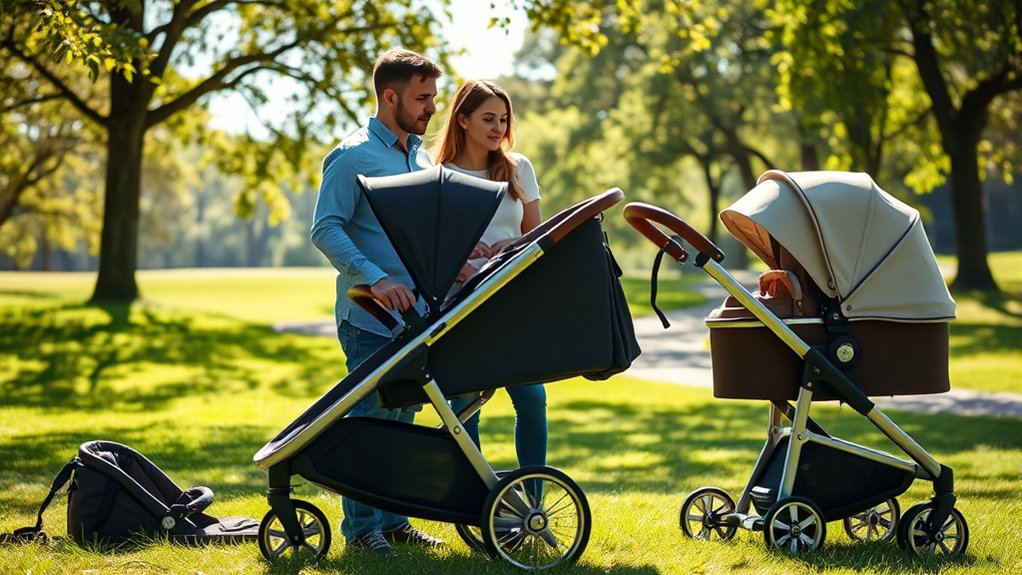
When considering expensive strollers, you’ll often find stronger materials, smoother steering, better fabrics, larger canopies, improved suspension, and more flexible seating. Many premium strollers also offer user-friendly folding mechanisms, higher weight limits, and a wider range of accessories.
However, a higher price tag doesn’t always equal better quality for your situation. Some costly options may be heavier, harder to fold, or too large for your trunk. Others may require separate purchases for cup holders, snack trays, bassinets, adapters, or weather covers. These add-ons can push the true cost much higher.
Brand reputation plays a significant role. Premium brands often charge more for design, customer service, resale value, and accessory ecosystems. That may be worthwhile if you plan to use the stroller for multiple children. If you only need a simple stroller for errands, a mid-range model may serve you better.
When a Premium Stroller Is Worth It
A premium stroller can be worth it if you use it daily, walk long distances, live in a city, rely on public transit, or want one stroller to last through multiple children. It can also make sense if you need a stroller that converts from a single to a double, accepts several car seat brands, or handles uneven sidewalks smoothly.
Premium strollers may also offer stronger resale value. If you keep the stroller clean, save the accessories, and maintain the wheels and frame, you may recover part of the purchase price later. Still, resale value should be a bonus, not the only reason to spend more.
When a Budget Stroller Is Enough
A budget stroller may be enough if you drive most places, use the stroller only for short errands, already own a separate car seat, or need a backup stroller for grandparents. Many affordable strollers still offer secure harnesses, sun canopies, storage baskets, and simple folding systems.
The key is to avoid buying too cheap if the stroller feels unstable, has poor brakes, lacks proper support, or becomes difficult to push after light use. A budget stroller should still feel safe, sturdy, and comfortable.
Tips for Budget-Friendly Stroller Shopping
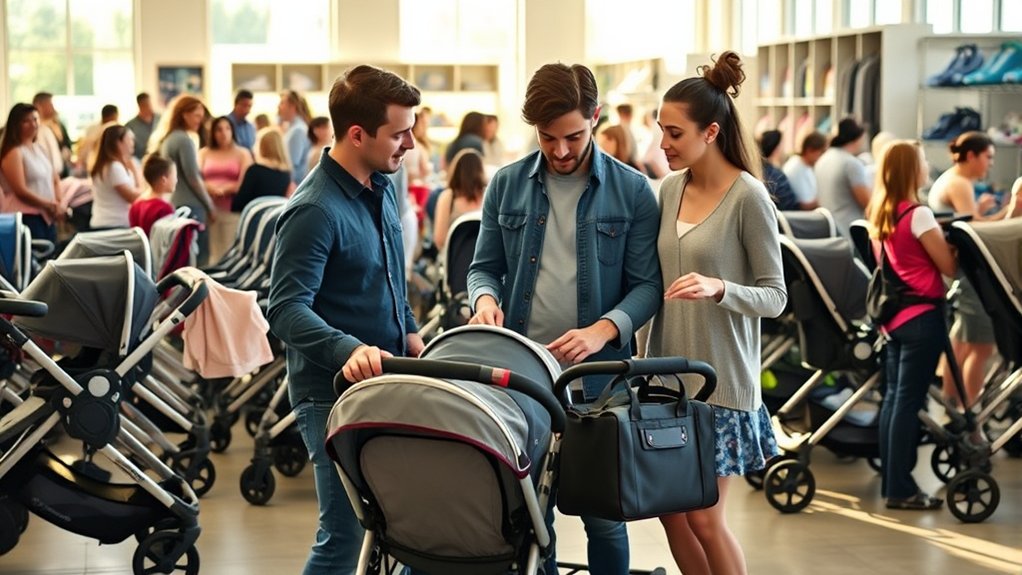
Investing in a stroller doesn’t have to break the bank, especially with so many budget-friendly options available. Start by separating essential features from nice-to-have extras. Prioritize safety, comfort, folding ease, weight, storage, and durability before paying for luxury fabrics or matching accessories.
Before purchasing, test strollers in retail stores when possible. Push them with one hand, try the brakes, adjust the harness, recline the seat, lift the folded frame, and check whether the storage basket is easy to reach. These small tests can prevent costly mistakes later.
Look for bundle deals or discounts when buying multiple baby items. A stroller and car seat bundle can sometimes cost less than buying each piece separately. You can also compare open-box items, seasonal sales, registry completion discounts, and clearance events.
Consider purchasing a used stroller, as many high-quality options retain their function and can be found at a fraction of the retail price. If you buy used, inspect the frame, brakes, wheels, harness, folding lock, and recall status before using it. Avoid used car seats unless you fully know their history, expiration date, and accident status.
What to Check Before Buying a Used Stroller
A used stroller can save money, but it needs a careful inspection. Check for cracks in the frame, loose screws, worn wheels, weak brakes, torn fabric, missing harness parts, and folding issues. Make sure the stroller locks open firmly and does not wobble when pushed.
Ask for the model name and manufacturing date if available. This helps you check for recalls and replacement parts. Also make sure the stroller still matches your child’s height and weight range. A cheap used stroller is not a bargain if it lacks important safety parts or no longer folds correctly.
Warning: Do not use a stroller with a broken frame, missing harness, unreliable brake, or recalled design unless the recall has been properly repaired.
The Importance of Safety and Comfort
When choosing a stroller, safety and comfort should be your top priorities. Look for essential features like a five-point harness, reliable brakes, stable wheels, and a seat that supports your child well. A proper fit not only supports your child’s safety but also makes outings easier for you.
Essential Safety Features
Safety and comfort are paramount when choosing a stroller, as they directly impact your child’s well-being during outings. First, prioritize harness safety. A five-point harness helps secure your child and reduces the risk of slipping or climbing out.
Make certain the stroller meets recognized safety standards for reliable protection. Look for proper seat recline options that allow younger babies to rest safely, especially if they cannot sit up yet. Adjustable handlebars can also improve your comfort while pushing the stroller and help prevent strain during longer walks.
Finally, never underestimate the importance of adequate braking systems. Strong brakes let you lock the stroller securely when stopped, especially on slopes, sidewalks, parking lots, or public transit platforms.
Comfort for Growing Child
Choosing a stroller that prioritizes comfort is just as important as ensuring safety features are in place. Look for strollers with adjustable seating that adapt as your child grows, providing support from infancy to toddlerhood.
A five-point harness is essential, keeping your little one secure while they explore the world. Ample seat cushioning, breathable fabric, and a large canopy can improve comfort during longer outings. Reclining seats can also support naps on the go, making your life easier when your child gets tired.
Opt for strollers that meet safety standards and offer practical comfort features for both parent and child. Adjustable handlebars, easy steering, a smooth push, and accessible storage can make the stroller feel better during real daily use.
Importance of Proper Fit
How can you guarantee your stroller provides the best fit for both safety and comfort? Securing a proper fit is essential for stroller safety and your child’s well-being. Here are four key features to take into account:
- Five-point harness: This secures your child safely and helps reduce the risk of falls or climbing out.
- Adjustable handlebars: These support your height and allow for better control while pushing.
- Supportive seat with reclining options: This accommodates your child’s growth and changing comfort needs.
- Car seat compatibility: This supports smoother transitions for newborns and infants from car to stroller.
Choosing a stroller that prioritizes these aspects can improve safety and create a more enjoyable experience for both you and your child.
Features Worth Paying More For
Some stroller upgrades are worth the extra cost because they improve daily use. A one-hand fold can help when you are holding your baby. Better suspension can make walks smoother. A larger canopy can protect your child from sun and light rain. A bigger storage basket can make errands easier.
Car seat compatibility may also be worth paying for if you have a newborn. Adjustable recline, washable fabric, a sturdy footrest, and a higher weight limit can extend the stroller’s useful life. These features often matter more than color choices or luxury trims.
Features You Can Skip to Save Money
You can often skip expensive accessories if you do not need them right away. Designer fabrics, leather-look handle covers, matching organizers, premium cup holders, and branded travel bags can add cost without changing the stroller’s basic function.
You may also skip a large all-terrain stroller if you mostly walk indoors or on smooth sidewalks. Likewise, you may not need a convertible double stroller if you do not plan to have another child soon. Spend more only when the feature solves a real problem in your routine.
Frequently Asked Questions
What brands are known for budget-friendly strollers?
Chicco, Graco, Summer Infant, Baby Trend, Evenflo, and Kolcraft are commonly considered budget-friendly stroller brands. They often offer practical models with basic safety features, storage, and everyday comfort without premium pricing.
How long should a stroller last with regular use?
A stroller should often last around three to five years with regular use, depending on build quality, storage, cleaning, and maintenance. Durable frames, reliable wheels, and careful upkeep can extend its lifespan.
Are there strollers that grow with my child?
Yes. Convertible strollers can adapt as your child grows and may offer infant car seat compatibility, toddler seats, bassinet options, or second-seat configurations. They usually cost more upfront, but they can provide longer use.
When is the best time to buy a stroller?
The best time to buy a stroller is often during baby registry completion periods, seasonal sales, holiday promotions, and clearance events. Buying before your baby arrives gives you time to test the fold, fit, and car seat setup.
Can I find strollers on sale or clearance?
Yes, you can often find strollers on sale or clearance. Watch for retailer promotions, open-box deals, older colorways, registry discounts, and end-of-season markdowns. Always confirm that the stroller is new, complete, and returnable.
Is it better to buy one expensive stroller or two cheaper strollers?
It depends on your routine. One higher-quality stroller may work best for daily walks and long-term use. Two cheaper strollers may make sense if you want one full-size stroller at home and one lightweight stroller for travel or grandparents.
What stroller features matter most for newborns?
For newborns, look for a deep recline, infant car seat compatibility, bassinet mode if needed, a secure harness, stable frame, good canopy coverage, and smooth handling. Newborns need proper support because they cannot sit upright on their own.
Conclusion
In the end, choosing the right stroller comes down to your family’s needs, daily routine, and budget. You do not have to buy the most expensive model to get a safe and comfortable stroller. You also should not choose the cheapest option if it feels flimsy, hard to push, or missing basic safety features.
Focus on safety and comfort, then compare durability, folding ease, storage, car seat compatibility, and long-term value. Whether you choose a budget-friendly model, a mid-range everyday stroller, or a premium option, the best stroller is the one that fits your lifestyle and gives you confidence every time you use it.

