
Cleaning stroller fabric is easier when you follow a simple order: check the care label, remove loose crumbs, treat stains, wash only approved fabric parts, and let everything dry fully before your next outing. A stroller collects snacks, spills, dust, sunscreen, and outdoor grime, so regular cleaning helps keep your child’s ride fresh, comfortable, and safer for daily use.
Quick Answer
To clean stroller fabric, vacuum crumbs first, spot-clean stains with mild soap and warm water, then machine-wash only removable fabric parts that the stroller manual says are washable. Wipe the frame and wheels separately, air-dry every fabric piece fully, and never reassemble the stroller while damp.
Key Takeaways
- Always check your stroller manual before washing fabric covers or removing parts.
- Vacuum first so crumbs and dirt do not turn into muddy stains during cleaning.
- Use mild, baby-safe soap and test cleaners on a hidden spot before treating stains.
- Air-dry fabric completely before reassembling the stroller to reduce mildew risk.
- Call a professional cleaner for mold, mildew, heavy odor, or bodily fluid incidents.
At a Glance
| Time Required | 20–30 minutes for light cleaning; 1–2 hours for deeper cleaning, plus air-drying time |
| Difficulty | Easy to moderate, depending on stains and removable parts |
| Tools Needed | Stroller manual, vacuum, soft cloths, mild soap, warm water, soft brush, disinfecting wipes, and a dry towel |
| Cost | Low if you already have basic cleaning supplies |
What You Need
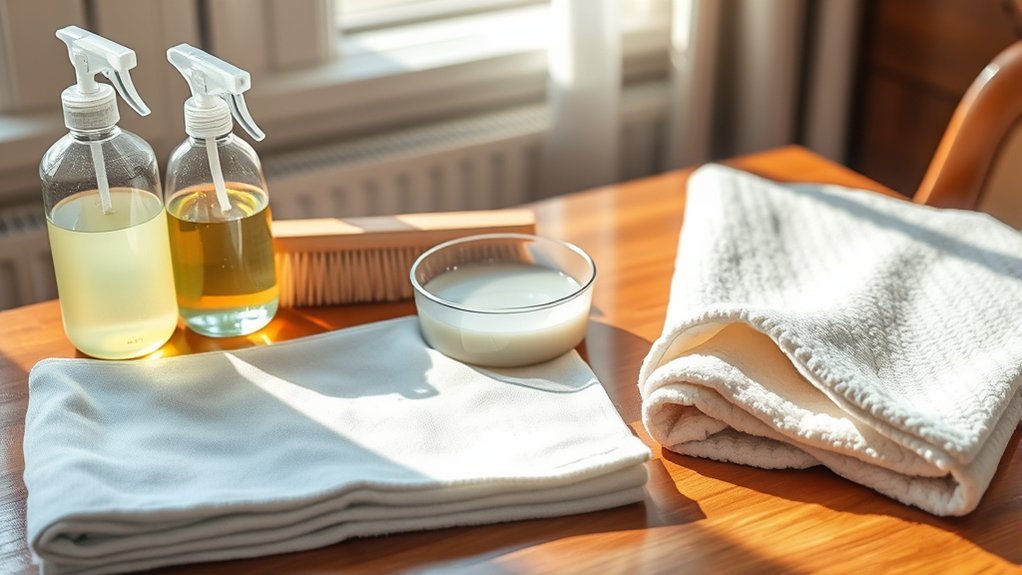
To clean stroller fabric well, gather everything before you start. You’ll save time, avoid soaking the fabric too much, and make the process feel less messy. Start with your stroller manual because it tells you which covers can come off, which pieces are machine-washable, and which parts need hand-cleaning only.
You’ll also need a handheld or upright vacuum with a crevice tool to remove crumbs, dust, and debris from seams, buckles, and storage pockets. Keep a soft cloth, a small bowl, warm water, and mild dish soap nearby for spot-cleaning. For tougher stains, choose a baby-friendly stain remover and test it on a hidden area before using it on a visible spot.
For the stroller frame and wheels, use disinfectant wipes or a gentle all-purpose spray. A soft brush or old toothbrush helps loosen dirt around wheel connections and tight corners. If the wheels squeak or feel stiff after cleaning, a silicone-based lubricant can help the axles move smoothly.
- Stroller manual or care label instructions
- Vacuum with crevice tool
- Mild dish soap or baby-safe cleaner
- Warm water and a small bowl
- Soft cloths or microfiber towels
- Soft brush or toothbrush
- Disinfecting wipes for the frame
- Silicone-based lubricant for wheel axles, if needed
Note: Avoid strong cleaners, bleach, and heavy fragrance products unless your stroller manual clearly says they are safe for the fabric.
[Amazon Products Picked for You]

The E-Cloth Stroller & Car Seat Cloth keeps baby's environment clean, using the power of microfiber plus water to remove spills, grime, fingerprints, and over 99% of bacteria from the stroller, car seat and other essential baby gear that's in constant use
Versatile Cleaning Solution: Baby Travel essential, Ideal for cleaning pacifiers, breast pumps and accessories, teethers, baby bottles, sippy cups, utensils, and more.

EFFECTIVE ALL PURPOSE WIPES: Powered by plants; effectively clean surfaces including toys, high chairs, swings, counters, backpacks, lunchboxes, and desks — great for daycare and back-to-school messes
How Long Will This Take to Clean?
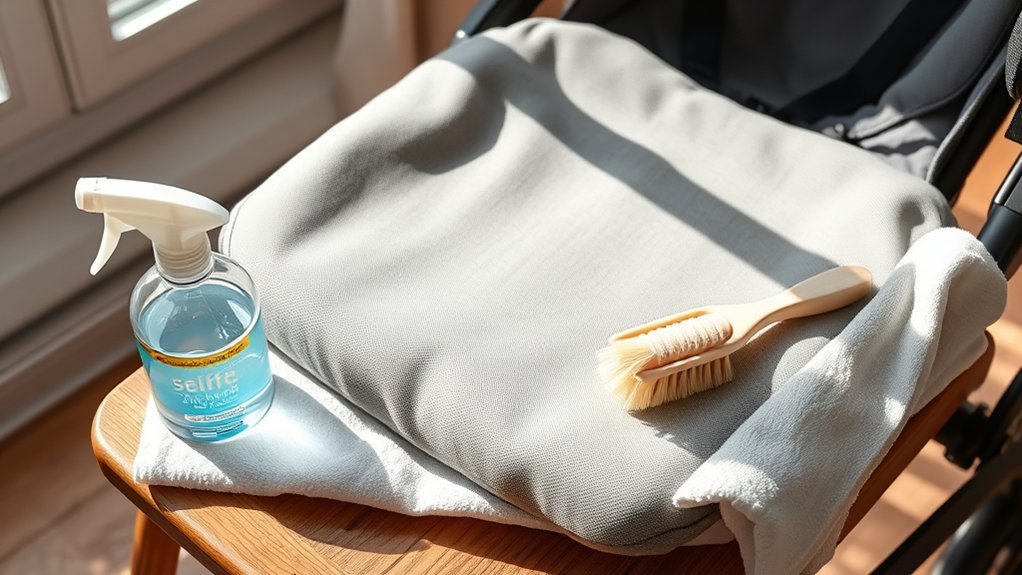
The time needed depends on how dirty the stroller is and whether the fabric parts come off. For light cleaning, such as vacuuming crumbs and treating one or two small stains, set aside about 20 to 30 minutes. This is enough for routine upkeep after park trips, snack spills, or quick errands.
For deeper cleaning, plan on 1 to 2 hours. This includes removing fabric covers, cleaning the storage basket, scrubbing wheels, wiping the frame, and checking straps and buckles. If you machine-wash approved fabric parts, remember that air-drying can take several hours or even a full day, depending on fabric thickness and airflow.
If the stroller has vomit, urine, diaper leaks, heavy food stains, or mildew odor, give yourself extra time. These situations need slower, more careful cleaning so the fabric does not keep smell or hidden moisture. A regular cleaning schedule helps prevent big cleanups and keeps your stroller ready for daily use.
Read Your Stroller Instructions
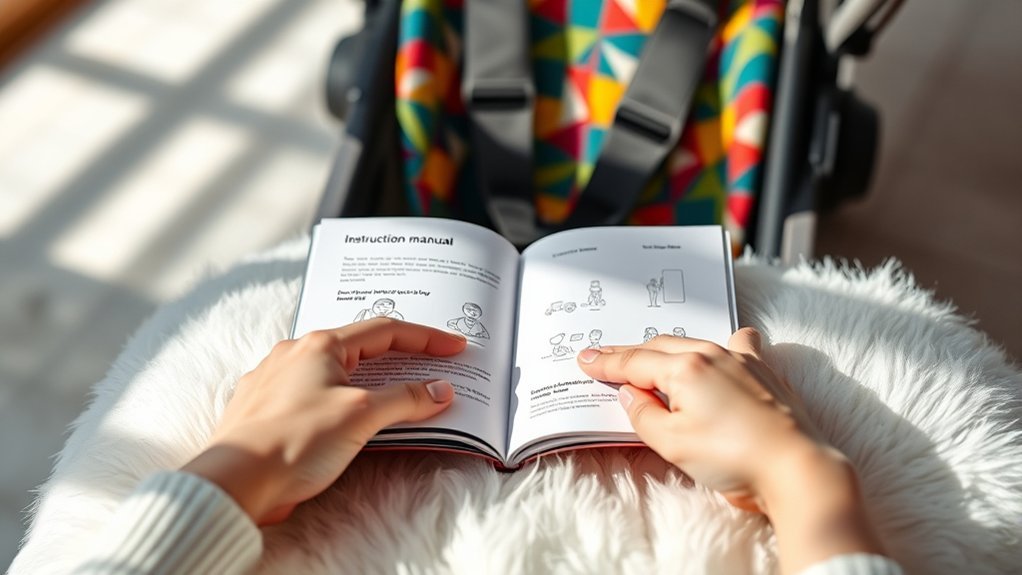
Before you clean anything, check your stroller’s manual or fabric care label. This step matters because stroller fabrics, padding, flame-retardant treatments, harness straps, and canopy materials can have different care rules. Some parts may be removable and washable, while others may need gentle hand-cleaning only.
Look for details about washing temperature, detergent type, removable upholstery, harness cleaning, and drying instructions. If the manual says a fabric piece is not machine-washable, do not put it in the washer. Washing the wrong part can cause shrinking, fading, weakened stitching, or misshaped padding.
If you no longer have the printed manual, check the stroller brand’s website for care instructions. Many brands offer downloadable manuals by model name or number. Once you understand the instructions, take photos before removing fabric pieces so reassembly is easier later.
Warning: Do not soak harness straps unless the manufacturer allows it. Over-washing or harsh scrubbing can weaken strap fibers and affect safety.
Machine-Wash
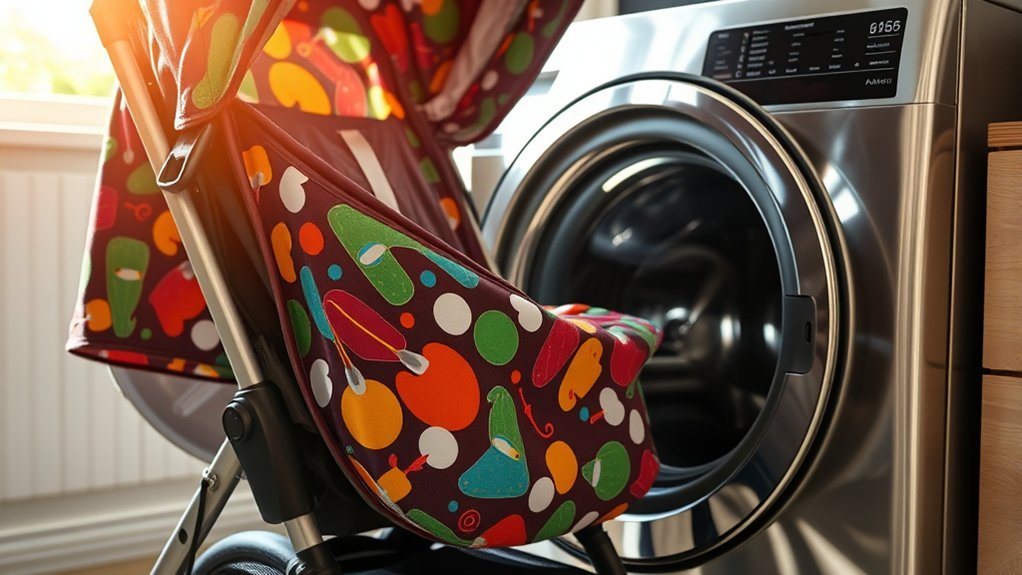
Once you’ve checked the manual and confirmed that certain fabric parts are machine-washable, you can wash those pieces with care. Remove loose crumbs first, detach only the approved covers, and close any hook-and-loop fasteners so they do not snag the fabric during the cycle.
- Detach removable fabric covers or components only if the manual allows it.
- Shake out crumbs and vacuum the fabric before washing.
- Use cold water and a mild detergent on a gentle cycle.
- Wash stroller fabric separately from heavy items like towels or jeans.
- Avoid bleach, fabric softener, and strong stain chemicals unless approved by the manual.
- Skip the dryer and air-dry the fabric to help preserve its fit and shape.
- Check that every part is fully dry before reassembling the stroller.
If your stroller fabric has padding, foam, or structured inserts, handle it gently. Twisting or wringing padded pieces can damage their shape. Instead, press out extra water with a clean towel and place the fabric in a well-ventilated area.
[Amazon Products Picked for You]

Removes Both Oil & Water-Based Stains

CHEMICAL GUYS LIGHTNING FAST STAIN EXTRACTOR (SPI_191_16) – Professional-strength stain remover formula penetrates deep into carpet, upholstery, and fabric to quickly break down and lift stains, dirt, and odors for a restored, like-new look

PROBIOTIC CLEANING THAT KEEPS WORKING - Powered by probiotics that continue breaking down odor-causing organic residue after cleaning to help keep fabrics fresher between cleanings.
Vacuum
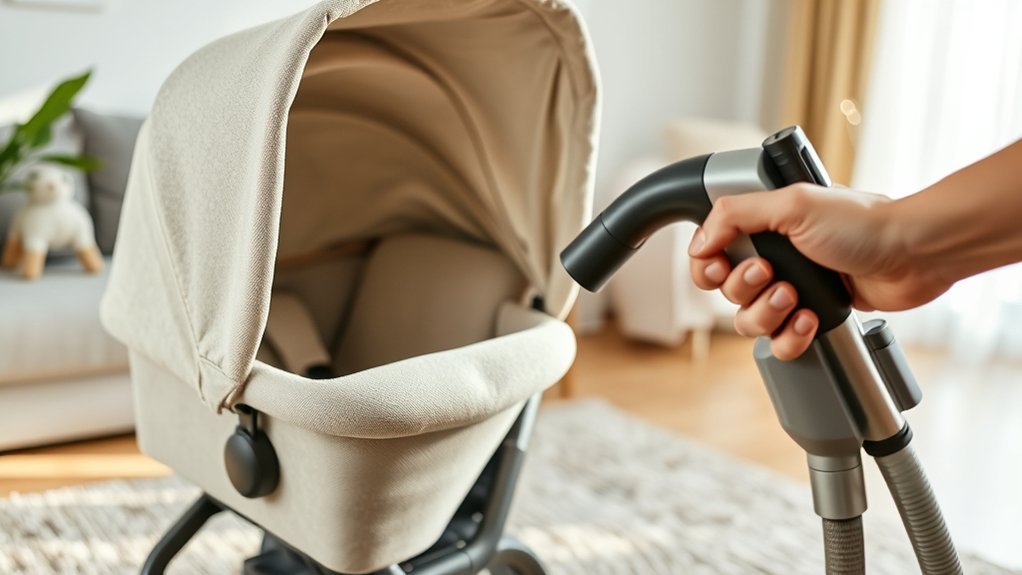
Vacuuming is the best first step because it removes dry debris before you add water. Crumbs, sand, dirt, and dried food can spread when wet, so clearing them first makes stain removal easier. Focus on high-contact areas like the seat, canopy folds, cupholders, storage basket, buckle area, and footrest.
[Amazon Products Picked for You]

The kit fits 1-1/4 inch diameter vacuum hoses. The 5 mini nozzles must be used with the 1-1/4" adapter in the set.

【1-1/4 Inch Compatibility, Instant Upgrade】 Engineered to fit vacuum cleaners with a 1-1/4-inch (32mm) inner diameter hose or port. Simply click it in and instantly extend your reach to tricky spots your main floor head can't get to.

Universal attachment picks up dust like no other!
Vacuuming Techniques Explained
Use a handheld vacuum or an upholstery attachment for the main seat and backrest. Then switch to a crevice tool for seams, corners, and tight gaps near buckles. If crumbs are stuck in stitching, loosen them with a soft toothbrush before vacuuming again.
- Start from the top of the stroller and work downward.
- Use short, slow passes instead of rushing over the fabric.
- Pull back canopy folds and seat corners where crumbs hide.
- Vacuum the storage basket because it often collects dirt from shoes and bags.
- Lay removable covers flat, if allowed, to clean both sides more thoroughly.
Regular vacuuming also helps reduce dust and outdoor particles that can build up in fabric over time. If your child often snacks in the stroller, vacuuming once a week can prevent bigger messes.
Targeting Stains Effectively
Vacuuming helps with stain control because it removes loose debris before it gets rubbed deeper into the fabric. It also lets you see the real stain more clearly, so you can treat only the affected area instead of soaking the whole seat.
| Stain Type | Vacuuming Benefits |
|---|---|
| Food Crumbs | Removes dry debris before it smears |
| Spills | Clears surrounding dirt before spot-cleaning |
| Dust and Dirt | Keeps fabric from looking dull and gritty |
| Hidden Particles | Improves overall cleanliness in seams and folds |
After vacuuming, check the stroller in good light. Small stains near buckles, snack trays, and leg openings are easier to miss when crumbs are still covering the fabric.
Spot-Clean
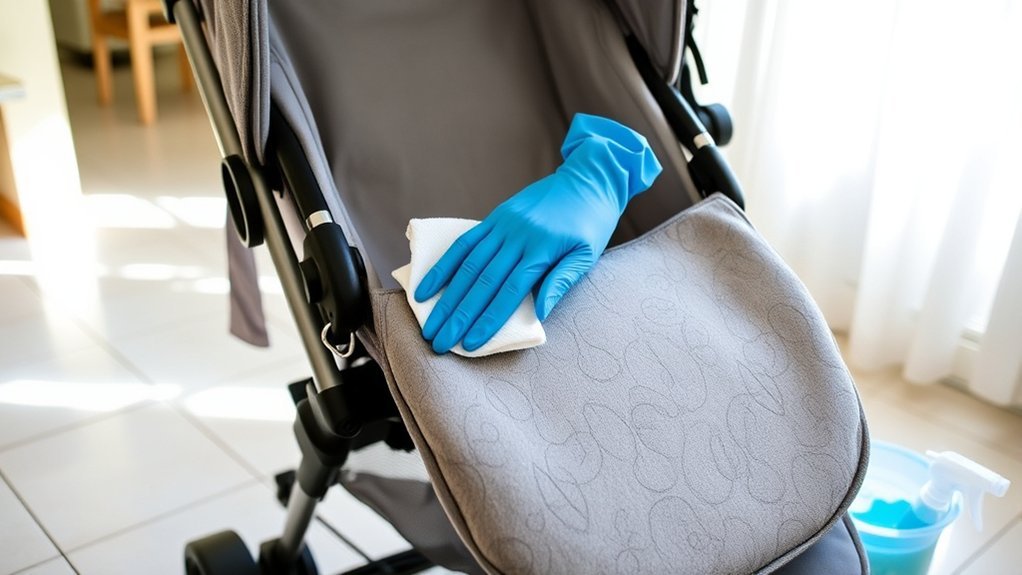
Spot-cleaning stroller fabric works well for small spills, sticky patches, and daily messes. It also helps you avoid washing the whole stroller when only one area needs attention. The key is to use a mild cleaner, avoid oversaturating the fabric, and dry the area fully.
Effective Stain Removal Techniques
Act quickly when you notice a stain. Fresh spills are easier to lift than dried stains. Mix a small amount of mild dish soap with warm water, dip a cloth into the solution, and blot the stain gently. Do not scrub aggressively because rough rubbing can damage fabric fibers or spread the stain.
- Blot wet spills first with a dry cloth or paper towel.
- Test your cleaner on a hidden area before treating the stain.
- Use a soft brush only when the fabric can handle gentle scrubbing.
- Work from the outside of the stain toward the center.
- Use a clean damp cloth to remove soap residue.
- Press with a dry towel to remove extra moisture.
- Let the spot air-dry completely before using the stroller.
For bodily fluids, clean the area as soon as possible and follow the stroller manual’s sanitation guidance. If odor remains after cleaning, professional help may be the safest option.
Recommended Cleaning Products
Choose gentle products when cleaning around children’s gear. A mild dish soap and warm water solution is often enough for minor dirt, snack stains, and sticky spots. Baby-safe stain removers can help with tougher stains, but you should still test them first on a hidden seam or underside area.
You can also use a small amount of white vinegar mixed with water for odor control on approved fabrics, but avoid soaking the fabric. Do not mix vinegar with bleach or other strong chemicals. If your stroller manual warns against vinegar, follow the manual instead.
Skip fabric softener, heavy perfume sprays, and harsh cleaners. These can leave residue on the fabric and may irritate sensitive skin. A clean rinse cloth is important because leftover soap can attract dirt and make fabric feel stiff.
Tools for Spot-Cleaning
The right tools make spot-cleaning more controlled. You do not need anything fancy, but you should avoid rough scrubbers that can tear or fuzz the fabric. Keep your tools clean so you are not rubbing old dirt into the stroller.
- Baby-friendly stain remover or mild dish soap
- Soft cloth or microfiber towel
- Soft brush or toothbrush for seams and textured fabric
- Small bowl for mixing soap and warm water
- Spray bottle for light application
- Dry towel for pressing out moisture
After cleaning, touch the fabric and padding to make sure they are not damp. Moisture trapped inside padding can cause odor and mildew.
Pro Tip: Keep a small pack of wipes and a dry cloth in the stroller basket so you can handle fresh spills before they turn into set-in stains.
Clean the Frame and Wheels
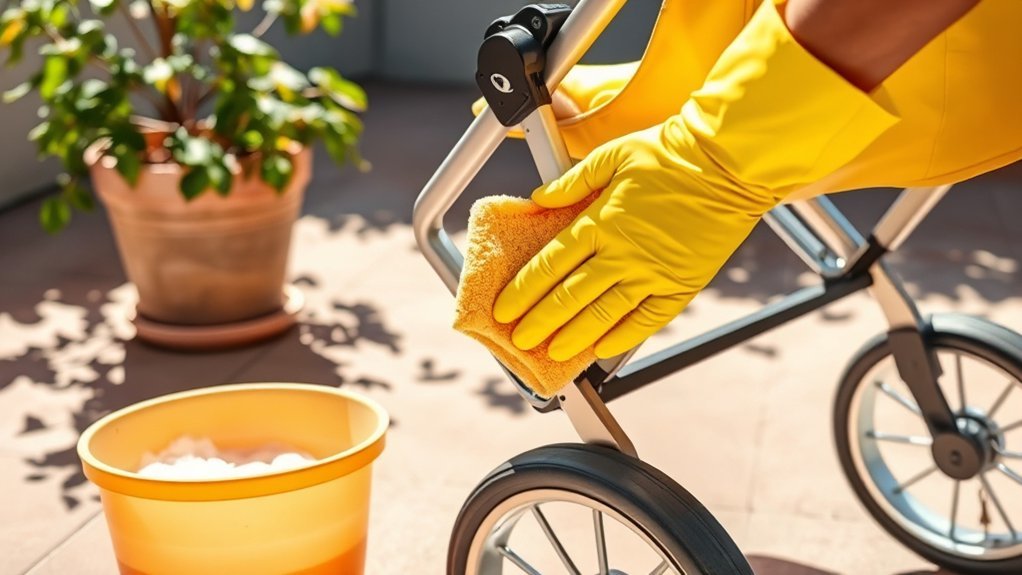
Cleaning the frame and wheels helps your stroller roll smoothly and keeps dirt from transferring back onto the fabric. Start by removing loose dirt from the wheels with a dry cloth or brush. Then wipe the frame with disinfectant wipes or a gentle all-purpose spray applied to a cloth.
Pay attention to corners, hinges, handlebar areas, wheel forks, and the underside of the chassis. These spots collect mud, dust, and sticky residue after outdoor trips. Avoid spraying cleaner directly into joints, brakes, or moving parts because extra moisture can sit inside the mechanism.
For wheel care, wipe each wheel with a damp cloth. If dirt is packed into the tread, loosen it with a brush. After the wheels dry, use a small amount of silicone-based spray on the axles if the manual allows it. Avoid oily products that attract grime or make the stroller slippery.
Before you finish, test the brakes, fold, recline, and wheel movement. Cleaning should not leave any part sticky, stiff, or wet. If a wheel still squeaks or feels loose after cleaning, inspect it before your next outing.
Reassemble and Air-Dry
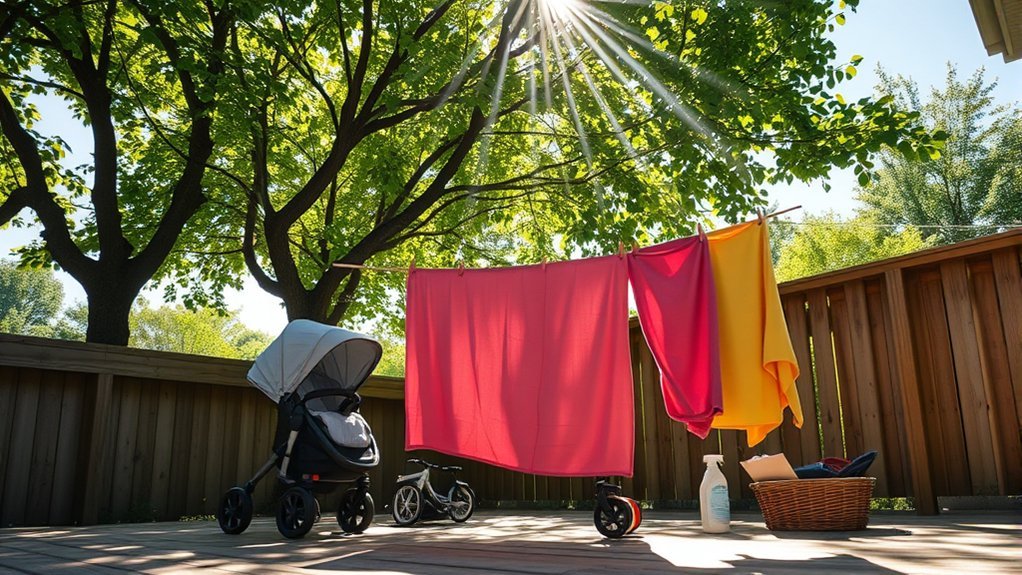
After cleaning, let every fabric piece dry fully before reassembling the stroller. This step is just as important as washing because damp fabric can trap odor and encourage mildew. Air-drying is usually safer than machine drying because heat can shrink fabric or affect padding shape.
- Place fabric in a well-ventilated area.
- Keep fabric out of harsh direct sunlight if fading is a concern.
- Press thick padded areas with a dry towel to remove extra moisture.
- Check seams, corners, and padding for hidden damp spots.
- Reattach covers only when they are fully dry unless your manual says otherwise.
- Confirm buckles, straps, snaps, and zippers are correctly reconnected.
Use the photos you took earlier to guide reassembly. Once the stroller is back together, gently tug the fabric, harness, and canopy to make sure everything sits securely. Do one final safety check before placing your child in the stroller.
When to Turn to a Professional Cleaner
Some stroller messes need more than a home cleaning routine. If you notice mold, mildew, strong odors, or bodily fluid stains that will not lift, a professional cleaner may be the safer choice. Professionals may have tools that clean deeper without over-wetting the fabric.
Professional help is also worth considering for expensive strollers, delicate fabrics, long-term storage odor, or secondhand strollers that need a full refresh. Before booking, ask whether the cleaner has experience with baby gear and whether they use child-safe cleaning products.
| Situation | Reason to Consider Professional Help | Key Consideration |
|---|---|---|
| Bodily Fluid Incidents | Helps with deep sanitation and odor control | Ask about child-safe cleaning products |
| Mold or Mildew | Needs careful treatment to reduce spread and odor | Check experience with stroller fabrics |
| Deep Cleaning Needs | Handles grime beyond routine spot-cleaning | Ask how they prevent over-wetting |
| Long-Term Storage | Restores freshness after dust, odor, or damp storage | Confirm all parts will be dried fully |
Do not ignore mold or a musty smell. If the smell returns after cleaning and drying, the padding may still hold moisture, and the stroller may need deeper cleaning or replacement parts.
Final Thoughts on Stroller Cleaning & Maintenance
Maintaining your stroller fabric is not only about appearance. It also helps create a cleaner, more comfortable space for your child. A stroller picks up crumbs, dust, sweat, outdoor debris, and spills, so small cleaning habits can prevent bigger problems later.
A clean stroller is easier to use, nicer to store, and more comfortable for your child during everyday outings.
- Follow the manufacturer’s cleaning instructions first.
- Vacuum and spot-clean regularly to prevent buildup.
- Use mild detergent and avoid harsh chemicals.
- Air-dry fabric completely before reassembly.
- Check for wear, loose stitching, and damaged straps during cleaning.
- Clean wheels and frame parts so dirt does not spread back to the fabric.
Try to clean light messes as soon as they happen. For normal use, a monthly fabric refresh and quick weekly vacuum can keep your stroller looking and smelling much better.
Related Guides
Frequently Asked Questions
Can I use bleach to clean stroller fabric?
You should usually avoid bleach on stroller fabric because it can weaken fibers, fade color, and leave harsh residue. Use mild soap and warm water instead. If you need stronger cleaning, check your stroller manual first or contact the manufacturer.
How often should I clean my stroller fabric?
For regular use, vacuum and spot-clean as needed, then do a deeper fabric cleaning about once a month. Clean more often if your child snacks in the stroller, you use it outdoors daily, or spills happen often.
What if the fabric has stubborn stains?
Blot the stain first, then use mild soap and warm water or a baby-safe stain remover. Let the cleaner sit briefly if the product directions allow it, then blot again with a clean damp cloth. Avoid hard scrubbing because it can damage fabric.
Is it safe to use fabric softener on stroller fabric?
It is best to skip fabric softener unless the stroller manual says it is safe. Fabric softener can leave residue and may change how the material feels. Use a mild detergent and rinse well instead.
Can I clean stroller fabric in the bathtub?
You can clean removable stroller fabric in the bathtub only if the manual allows hand-washing. Use warm water, mild soap, and gentle movement. Do not soak non-removable padded parts or harness straps unless the manufacturer says it is safe.
Can I put stroller fabric in the dryer?
Avoid the dryer unless your stroller manual clearly allows it. Heat can shrink fabric, affect padding, or change the fit. Air-dry fabric in a well-ventilated area and make sure it is fully dry before reassembly.
How do I remove bad smells from stroller fabric?
Start by vacuuming, spot-cleaning stains, and letting the stroller air-dry fully. If the manual allows it, use a mild soap solution and rinse residue with a clean damp cloth. Persistent musty smells may mean hidden moisture or mildew, which may need professional cleaning.
Conclusion
By regularly cleaning your stroller fabric, you help protect your child’s comfort, safety, and everyday riding space. Start with the manual, vacuum loose debris, spot-clean stains, wash only approved fabric pieces, and let everything dry fully before reassembly. A well-cared-for stroller lasts longer, smells fresher, and feels better to use on every trip.
