
When you’re traveling with a little one, knowing whether you can check a stroller on a plane can make your airport day much easier. Most U.S. airlines allow parents to check or gate-check one stroller per child at no extra charge, but the details can vary by airline, stroller size, airport setup, and whether you check it at the ticket counter or the gate. Understanding the process before you arrive helps protect your stroller, avoid delays, and keep your child comfortable until boarding.
Quick Answer
Yes, you can usually check a stroller on a plane, and most major U.S. airlines allow one stroller per child for free. You can often gate-check it at the boarding door, check it at the ticket counter, or bring a very compact stroller onboard if it meets carry-on size rules.
Key Takeaways
- Most U.S. airlines let you check or gate-check one stroller per child for free, but each airline can set its own size and handling rules.
- Gate checking is often the easiest option because you can use the stroller through the airport until boarding.
- Ticket counter checking may be better for large, heavy, or bulky strollers that are difficult to fold near the aircraft door.
- Always remove loose items, fold the stroller properly, label it clearly, and consider a padded travel bag for extra protection.
- After landing, inspect your stroller before leaving the gate area or baggage claim so you can report damage right away.
At a Glance
| Best Option | Gate check for everyday travel with babies or toddlers |
| Time Required | 5 to 10 minutes at the ticket counter or gate |
| Difficulty | Easy if your stroller folds quickly and is cleared of loose items |
| Tools Needed | Gate-check tag, luggage label, optional stroller travel bag, and a photo of the stroller before travel |
| Cost | Usually free for one stroller per child, but confirm with your airline before flying |
Understanding Airline Policies for Stroller Check-In
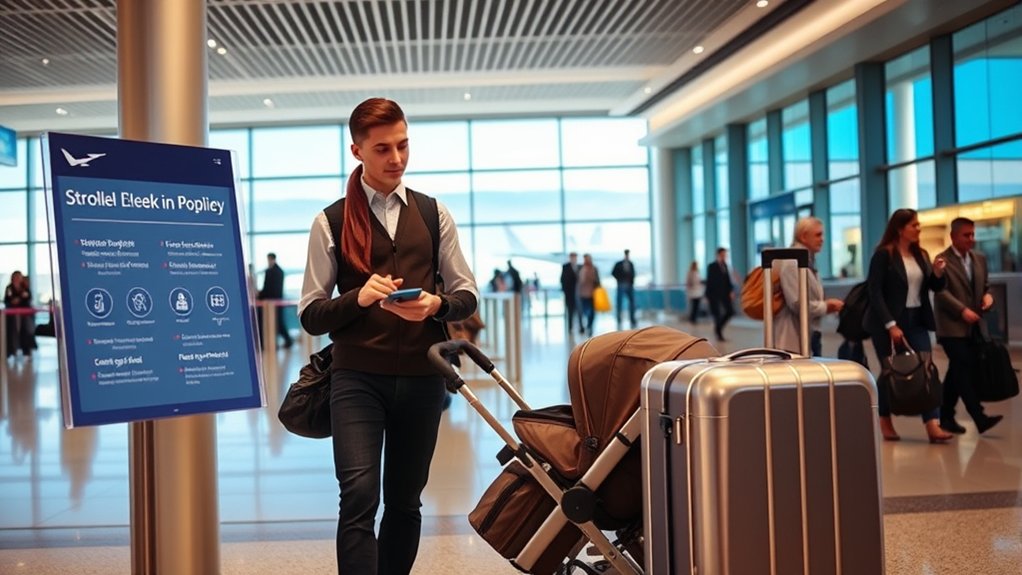
When you’re traveling with your little one, understanding airline policies for stroller check-in can make your journey smoother. Most U.S. airlines allow one stroller per child to be checked for free, but policies can vary, so airline comparisons are essential. Smaller, lightweight strollers are often recommended for gate-checking, as they’re easier to manage and may fit in the aircraft cabin only if they meet carry-on size limits. For larger strollers, you might need to check them at the ticket counter, so knowing stroller dimensions is important. Airlines like American and Delta generally let you gate-check your stroller, and if you’re flying with an infant, you can often check an approved car seat alongside it at no extra cost. Always review your specific airline’s stroller policy before you fly to avoid surprises.
Note: Airline stroller rules can change, and international carriers may use different size, weight, or carry-on standards. Check your airline’s family travel page before packing.
Gate Check vs. Ticket Counter Check: Which Is Better?
The best place to check your stroller depends on your stroller type, your child’s age, and how much help you need while moving through the airport. Gate checking is usually best when you want to use the stroller through security, while waiting, and during boarding. Ticket counter checking works better for bulky travel systems, double strollers, jogging strollers, or models that are hard to fold quickly.
If your stroller is compact and easy to fold, gate checking gives you the most flexibility. If it is expensive, oversized, or has detachable parts, packing it in a padded travel bag and checking it at the ticket counter may reduce stress at boarding. For connecting flights, gate checking can be especially helpful because the stroller may be returned at the aircraft door between flights, depending on airport and airline handling rules.
| Check Method | Best For | Main Drawback |
|---|---|---|
| Gate Check | Parents who need the stroller until boarding | You must fold and leave it near the aircraft door |
| Ticket Counter Check | Large, heavy, or bulky strollers | You will not have the stroller inside the airport |
| Carry-On Compact Stroller | Ultra-compact models that meet carry-on rules | Overhead bin space is limited and airline approval varies |
Benefits of Gate Checking a Stroller
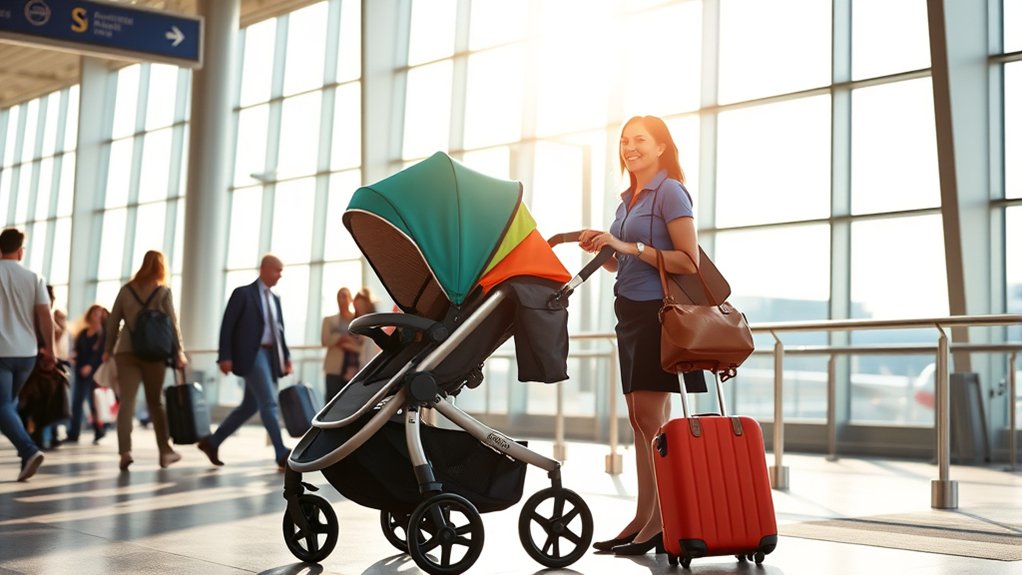
Gate checking your stroller is a game changer when maneuvering the airport with kids in tow. You can push it right up to the boarding gate, making travel less stressful and more efficient. Plus, this method can reduce handling compared with standard checked baggage, giving you peace of mind as you travel.
Simplifies Airport Navigation
Maneuvering an airport with children in tow can feel like an intimidating task, but gate checking your stroller can make it considerably easier. With your stroller available, you can move through check-in, security, long terminals, food stops, and boarding areas while keeping your child secure and comfortable. This also frees your hands for managing bags, passports, snacks, and boarding passes.
Having your stroller returned near the gate or jet bridge may also help you skip the baggage claim hassle, depending on the airport and airline. Best of all, most major airlines offer gate checking for free, giving you a cost-effective solution that lets you focus on your family instead of struggling with extra gear.
Reduces Damage Risks
Choosing to gate check your stroller may reduce the risk of damage because it is usually handled for a shorter part of the trip than standard checked luggage. Unlike checking it at the ticket counter, gate checking lets you keep the stroller with you until boarding and often receive it shortly after landing.
With fewer transfer points, you can feel more confident that your stroller will be ready when you arrive. Using a stroller bag can further protect against scratches, dirt, and loose straps catching during handling. Gate checking is especially useful for lightweight umbrella strollers, compact travel strollers, and simple foldable models.
A stroller is easiest to manage at the airport when it folds quickly, has no loose accessories attached, and is clearly labeled before you hand it to airline staff.
Step-by-Step Guide to Gate Checking Your Stroller
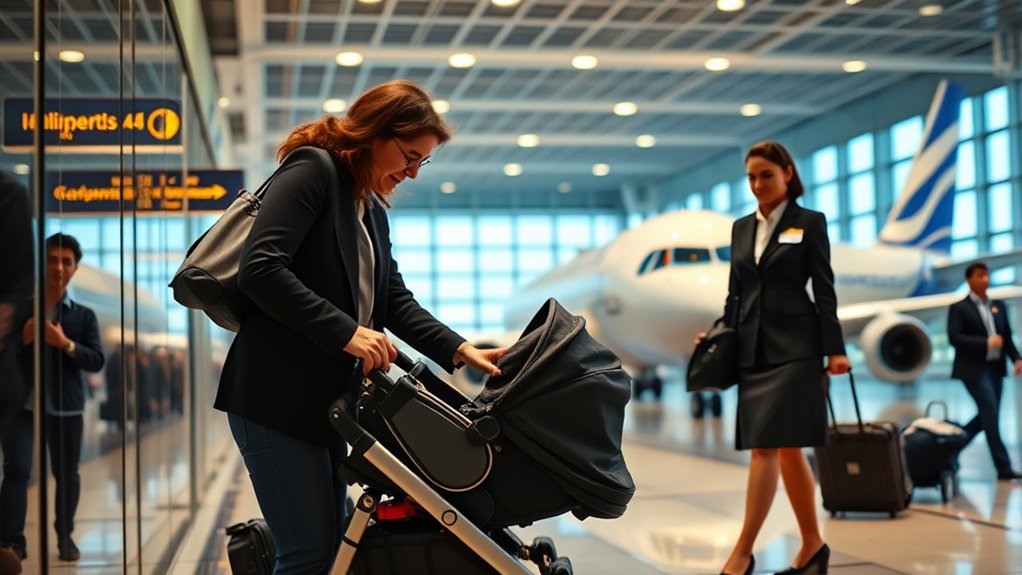
When you’re ready to gate check your stroller, start by making sure it is collapsed and free of any extra items. Next, visit the gate counter to get your gate-check tag before heading down the jet bridge. After your flight, watch for your stroller near the aircraft door or jet bridge and check it for damage before you roll away.
Preparing Your Stroller
Preparing your stroller for gate checking involves a few essential steps to ensure a smoother travel experience. First, stop at the gate counter to grab a tag that identifies your stroller for easy retrieval later. Before drop-off, collapse your stroller and make sure it’s free of additional items, including toys, blankets, cup holders, snack trays, diaper bags, and parent organizers.
For added protection during transport, consider using a padded travel bag, although it’s not always required. Familiarize yourself with your airline’s specific guidelines because stroller rules can vary by carrier, aircraft, and airport. Once you arrive at your destination, inspect your stroller for any damage before leaving the jet bridge or baggage area. With the right travel accessories and preparation, you’ll have a smoother travel day with your little one.
Obtaining Gate Check Tag
To ensure a smooth process for gate checking your stroller, start by visiting the gate counter after you arrive near your departure gate. Tell the airline staff that you want to gate check your stroller. Make sure it is collapsed or ready to collapse and free of any additional items to speed up the process.
The staff will provide you with a tag that needs to be securely attached to your stroller. This tag helps airline staff identify where the stroller should go and where it should be returned. Once tagged, you’ll usually leave the stroller at the jet bridge just before boarding the plane. After your flight, it may be waiting near the aircraft door, on the jet bridge, or in a nearby stroller pickup area, depending on airport procedures.
Retrieving After Flight
After you’ve successfully gate checked your stroller, the next step is retrieving it once your flight lands. In many cases, your stroller will be waiting for you at the jet bridge as you exit the aircraft. If your stroller is larger or local airport rules require different handling, you may need to pick it up at baggage claim or an oversized baggage area instead.
When you receive your stroller, inspect it for any damage before leaving the area. Check the wheels, frame, canopy, folding lock, brake, handlebar, and any removable parts. If you notice damage, report it to the airline immediately before leaving the airport. Familiarizing yourself with your airline’s stroller retrieval policy is essential because airport logistics can differ.
Tips for a Smooth Gate Checking Experience
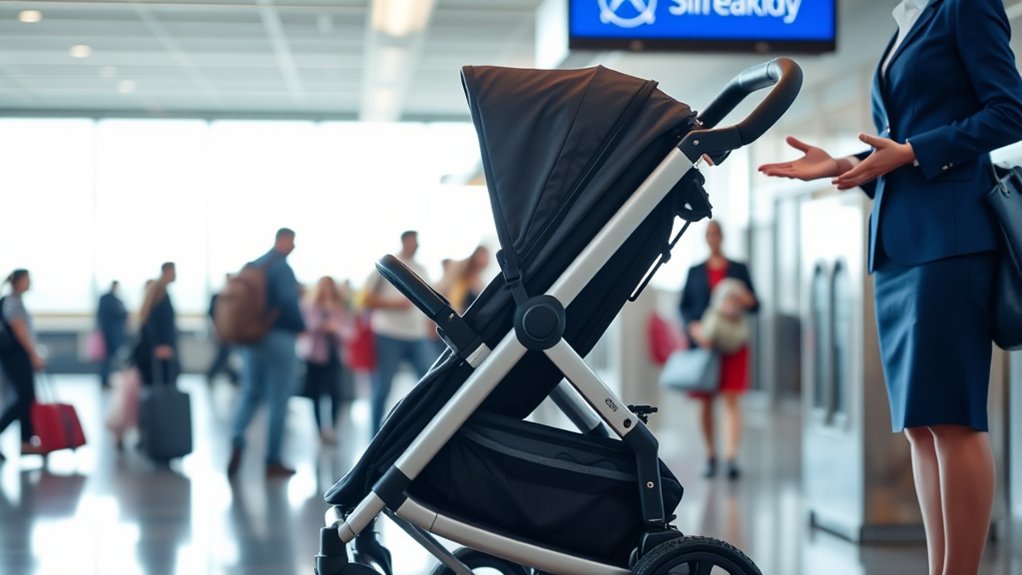
While maneuvering the airport with a stroller, ensuring a smooth gate-checking experience can make your journey considerably easier. First, stop at the gate counter to receive your tag and remember to collapse the stroller, removing any additional items. Familiarize yourself with your airline’s specific policies, as these can vary.
If you want extra protection, consider using a travel bag. It is not always mandatory, but it helps safeguard many stroller types from scratches, dirt, and scuffs. Practice folding and unfolding your stroller before your trip to speed up the boarding process. Finally, once you arrive, carefully inspect your stroller for any damage before leaving the jet bridge. This helps ensure it is ready for use when you reach your destination.
Pro Tip: Take a quick photo of your stroller before handing it over. If damage happens, the photo can help you explain the stroller’s condition when you file a report with the airline.
What to Remove Before Checking a Stroller
Before you check or gate-check your stroller, remove anything that could fall out, break, or get lost during handling. Airline staff usually expect the stroller to be empty, folded, and ready to load. Loose accessories can also catch on conveyor belts, cart edges, aircraft doors, or other luggage.
- Remove personal items: Take out phones, wallets, passports, toys, bottles, pacifiers, blankets, snacks, and tablets.
- Detach loose accessories: Remove cup holders, snack trays, stroller fans, hooks, parent organizers, and clip-on toys if they are not built in.
- Secure straps: Buckle the harness and tuck in loose shoulder straps so they do not drag or snag.
- Lock the fold: Make sure the stroller is fully collapsed and the frame lock is engaged.
- Label the stroller: Add your name, phone number, and email on a luggage tag or travel label.
Warning: Never leave medication, travel documents, valuables, keys, or electronics in a stroller that will be checked. Keep those items in your personal bag or carry-on.
Alternatives to Gate Checking Your Stroller
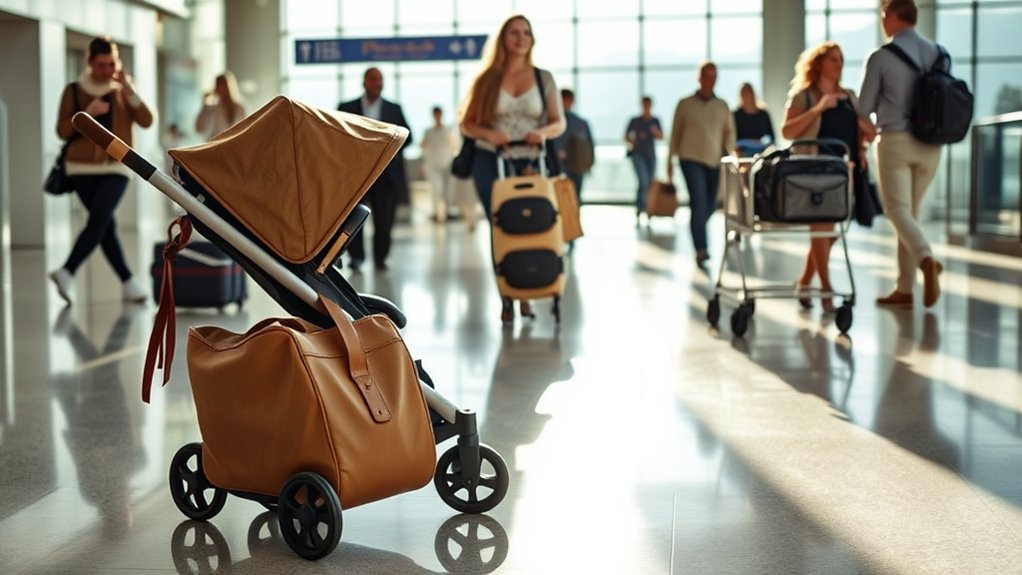
If you’re looking for alternatives to gate checking your stroller, consider checking it at the ticket counter instead. This may be the better option for a large stroller, a double stroller, a jogging stroller, or a model with several detachable parts. Alternatively, if you have a compact stroller that meets size restrictions, you might be able to store it in the overhead compartment for in-flight access.
You could also explore stroller rental options at your destination, which can simplify travel but may require some adjustment for your child. Rental can work well if you are visiting a theme park, resort, or major city where baby gear rental services are available. Always check with your airline regarding policies and fees associated with strollers before choosing your option.
| Option | Pros | Cons |
|---|---|---|
| Ticket Counter Check | Better for large or bulky strollers | Collected at baggage claim or oversized baggage |
| Compact Stroller | May fit in overhead bin if airline allows it | Limited to size restrictions and available bin space |
| Stroller Rental | Convenience at destination | Adjustment period needed for your child |
Packing Your Stroller for Air Travel
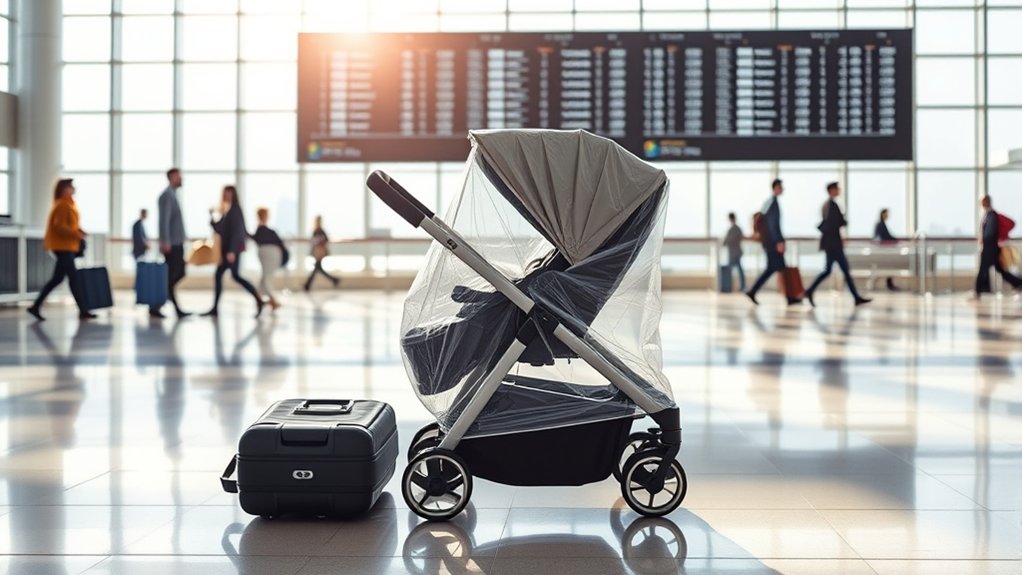
When traveling with a stroller, packing it properly for air travel is key to helping it arrive at your destination in good condition. Invest in a padded travel bag to shield your stroller from scratches, dirt, and handling damage. Some airlines may provide plastic covers for gate-checked strollers, but you should not rely on that being available at every airport.
Don’t forget to clearly label your stroller with your name and contact information to help retrieve it if it gets misplaced. For larger strollers, disassemble removable parts by taking off wheels, snack trays, cup holders, or adapters when allowed by the stroller manual. Fold the stroller as compactly as possible so it is easier to handle and more likely to comply with airline size restrictions. Proper packing not only safeguards your stroller but also streamlines the boarding process, making your journey smoother.
Traveling With a Car Seat and Stroller: Best Practices
Traveling with both a car seat and stroller can seem intimidating, but with the right approach, it becomes a manageable part of your journey. Many families bring both because the stroller helps in the airport and the car seat may be needed on the plane or in a vehicle after arrival.
Traveling with a car seat and stroller may seem daunting, but a simple plan can make the airport process much easier.
- Know Your Airline’s Policies: Familiarize yourself with specific rules regarding stroller types, car seats, gate checking, and ticket counter checking.
- Gate-Check Your Stroller: Use it until you reach the aircraft door, making your journey through the terminal easier.
- Collapse and Detach: Remove unnecessary attachments and collapse your stroller before drop-off for a smoother process.
- Use Travel Accessories: Use a padded stroller bag, car seat bag, luggage tags, and protective covers when helpful.
- Decide How You Will Use the Car Seat: If your child has a paid seat and the car seat is approved for aircraft use, you may be able to use it onboard. Otherwise, ask the airline where it should be checked.
How Early to Arrive When Flying With a Stroller
When flying with a stroller, plan to arrive earlier than you would when traveling alone. A good general rule is to arrive at least two hours before a domestic flight and three hours before an international flight, especially if you are checking bags, carrying a car seat, traveling with more than one child, or using a large stroller.
Extra time helps you handle check-in, security screening, feeding breaks, diaper changes, stroller folding, and gate-check tagging without rushing. If you are flying during holidays, early morning rush periods, or from a large airport, give yourself even more time. A calmer start can make the whole trip easier for both you and your child.
What to Do If Your Stroller Is Lost or Damaged
If your stroller is lost or damaged after a flight, report the issue before leaving the airport. Go to the airline’s baggage service office or speak with airline staff at the arrival gate. Explain whether the stroller was gate-checked or checked at the ticket counter, and show your claim tag if you have one.
Inspect the stroller carefully before using it. Look for cracked wheels, a bent frame, broken brakes, torn fabric, missing accessories, or a damaged folding mechanism. If the stroller is not safe to use, do not place your child in it until it has been repaired or replaced. Keep photos, receipts, and written reports in case you need to file a claim with the airline or travel insurance provider.
Frequently Asked Questions
Can I check a stroller for free on all airlines?
You can usually check or gate-check a stroller for free on many major U.S. airlines, but it is not guaranteed on every airline or fare type worldwide. Always verify your airline’s stroller policy before your flight to avoid surprise fees or size restrictions.
What size stroller can I gate-check without issues?
A lightweight, compact, quick-fold stroller is usually the easiest to gate-check. Many parents have fewer issues with umbrella strollers or travel strollers, but size rules vary by airline. If your stroller is large, heavy, or does not fold easily, ask whether it should be checked at the ticket counter.
Will my stroller be damaged if I check it?
A stroller can be damaged during airline handling, especially if it has loose parts, exposed wheels, or fragile accessories. You can lower the risk by folding it properly, removing detachable items, using a padded travel bag, labeling it clearly, and inspecting it as soon as it is returned.
Do I need to remove items from the stroller before checking?
Yes. Remove personal items, toys, blankets, bottles, parent organizers, cup holders, electronics, and valuables before checking your stroller. Loose items can fall out, get lost, or damage the stroller during handling.
How early should I arrive at the airport to check my stroller?
Arrive at least two hours before a domestic flight and three hours before an international flight when traveling with a stroller. Extra time helps with check-in, security, stroller tagging, folding, diaper changes, feeding, and boarding.
Can I bring a stroller as a carry-on?
Some ultra-compact strollers may be allowed as carry-on items if they meet the airline’s cabin baggage size rules and there is overhead bin space. However, many strollers must be gate-checked or checked at the ticket counter, so confirm before flying.
Where do I pick up a gate-checked stroller after landing?
Many gate-checked strollers are returned at the aircraft door or jet bridge after landing. At some airports, larger strollers or certain flights may require pickup at baggage claim or oversized baggage. Ask the gate agent before boarding so you know where to look.
Conclusion
Traveling with a stroller doesn’t have to be a hassle. Think of it like a trusty sidekick on your adventure, always there to support you and your little one. Just as superheroes rely on their gadgets, you can depend on smart planning and the airline’s stroller policies to make your journey smoother.
By gate-checking your stroller, removing loose items, labeling it clearly, and packing it carefully, you help ensure it stays by your side until the last practical moment and is ready to roll when you land. Check your airline’s current rules before your trip, arrive early, and inspect your stroller after the flight. Safe travels!

