
When you push a stroller, you are doing more than getting fresh air with your child. A steady stroller walk can raise your heart rate, challenge your legs, activate your arms and core, and make exercise easier to fit into a busy parenting routine. Stroller workouts work best when you use safe posture, choose the right route, and build intensity gradually.
Quick Answer
Pushing a stroller can help build muscle endurance, especially in your legs, arms, shoulders, back, and core. It also adds light resistance to walking, which can increase effort and calorie burn. For best results, use upright posture, keep both hands controlled, choose safe terrain, and add intervals, hills, squats, or lunges only when you feel ready.
Key Takeaways
- Pushing a stroller turns a regular walk into a light resistance workout for your lower body, upper body, and core.
- Your legs, glutes, shoulders, arms, back, and abdominal muscles help move and stabilize the stroller.
- Good form matters: stand tall, keep your shoulders relaxed, and avoid leaning heavily into the handlebar.
- Jogging, hills, weighted loads, and uneven terrain increase intensity, but they also increase safety demands.
- Stroller walks can support mental health and social connection, especially when done with other parents or caregivers.
At a Glance
| Best For | Parents and caregivers who want a practical walking workout with light strength benefits |
| Difficulty | Beginner to moderate, depending on pace, hills, stroller weight, and terrain |
| Muscles Used | Quads, hamstrings, glutes, calves, shoulders, biceps, triceps, upper back, and core |
| Tools Needed | A safe stroller, supportive shoes, water, weather-appropriate clothing, and a smooth route |
| Main Safety Rule | Keep the child buckled, follow your stroller manual, use the parking brake when stopped, and avoid hanging heavy bags from the handlebar |
Benefits of Stroller Workouts
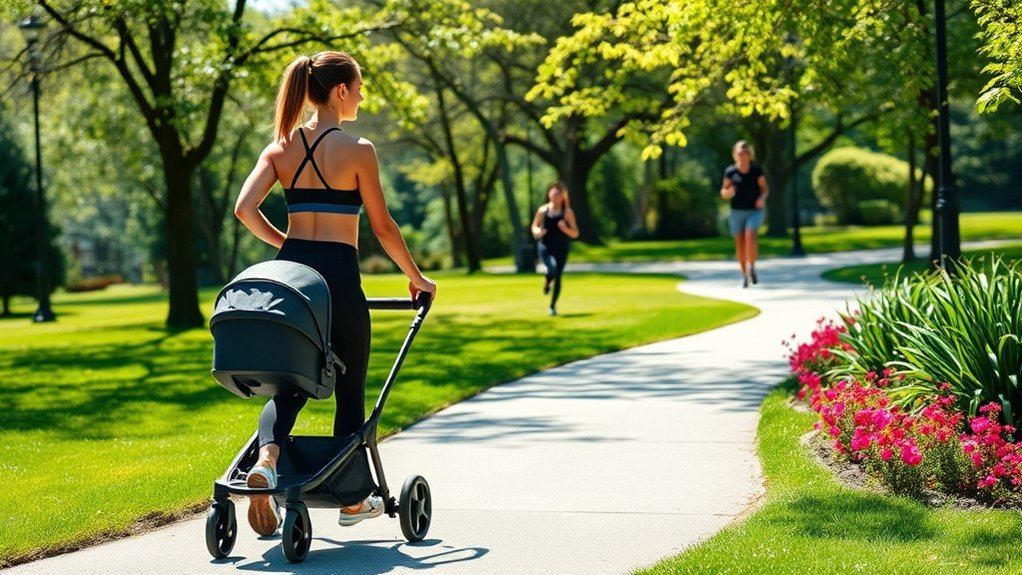
When you push a stroller, you’re not just taking a leisurely stroll; you’re reaping numerous fitness benefits that can elevate your overall health. Stroller walking combines low-impact cardio with light resistance because you are moving your own body while also guiding the stroller’s weight. That extra effort can make the same walking route feel more challenging than walking alone.
You engage several muscle groups at once, especially your legs, glutes, shoulders, arms, and core. Your lower body drives each step, while your upper body helps steer and stabilize the stroller. As your child grows, the stroller may feel heavier, which can further challenge your muscle endurance, particularly in your arms and shoulders.
Stroller workouts can also make exercise feel more realistic for busy parents. Instead of separating childcare and fitness, you can combine both into one routine. Adding safe movements such as bodyweight squats, walking lunges, gentle hills, or short faster intervals can turn a simple walk into a more complete full-body workout.
Pro Tip: Start with normal stroller walks before adding hills, jogging, or strength moves. Your form should feel controlled before you increase intensity.
Caloric Burn and Resistance
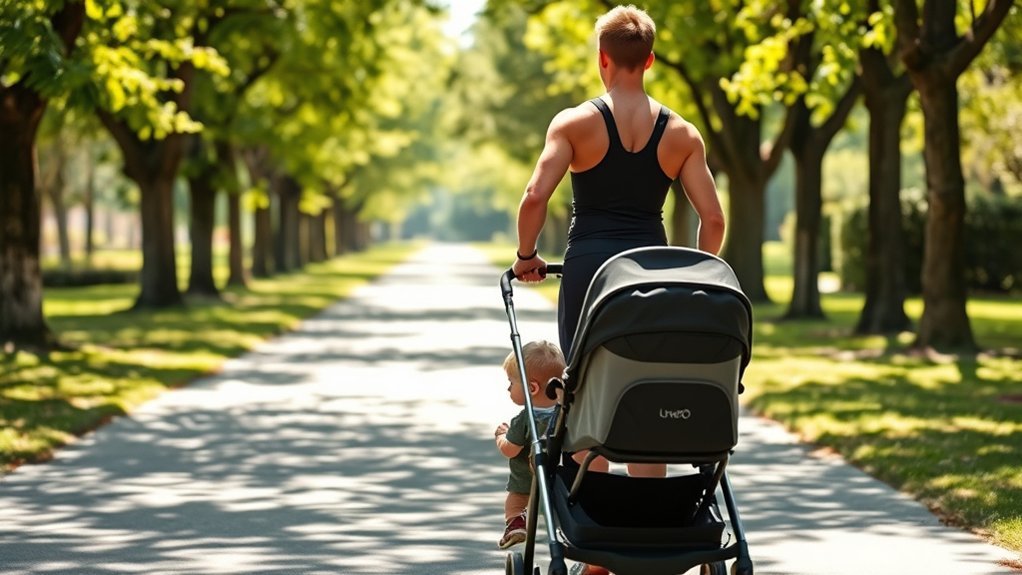
Pushing a stroller not only enhances your workout with various muscle engagements but can also increase your overall effort. Because you are pushing weight forward, steering, braking, and sometimes managing bumps or slopes, your body often works harder than it would during an unloaded walk.
Some estimates suggest stroller pushing may raise energy use compared with walking alone, although the exact amount depends on your pace, stroller weight, child weight, terrain, wind, and walking form. A flat sidewalk at an easy pace will feel very different from pushing a loaded stroller up a hill. Instead of relying on one fixed number, treat stroller walking as a flexible way to make walking more demanding.
This added resistance acts somewhat like pushing a light weighted sled, but with an important difference: a stroller carries a child, so safety and control matter more than intensity. The goal is not to push as hard as possible. The goal is to move smoothly, maintain posture, and use the stroller to support a consistent fitness habit.
A stroller workout is most effective when it feels controlled, steady, and repeatable. The resistance should challenge you without causing leaning, shoulder tension, or unsafe speed.
Muscle Engagement
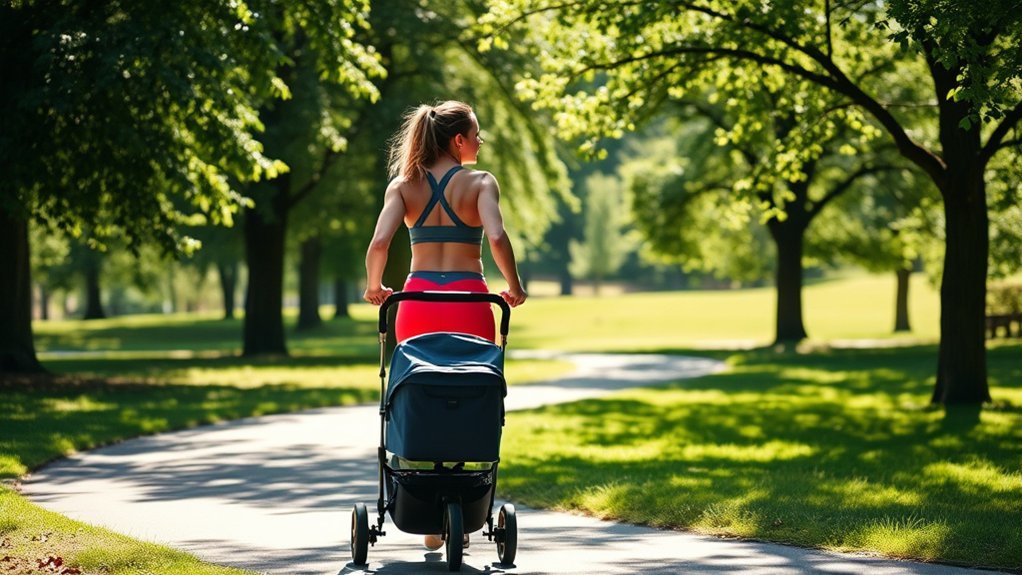
Pushing a stroller isn’t just about getting from point A to point B; it can become a practical full-body workout. Your legs create forward movement, your arms guide the stroller, and your core helps keep your body stable. You’ll notice this most when you walk uphill, turn corners, cross uneven surfaces, or slow the stroller on a slight downhill.
Full-Body Workout Benefits
Taking a stroll with a stroller isn’t just a leisurely activity; it’s an effective full-body workout that engages multiple muscle groups. As you push, your legs, core, biceps, triceps, and shoulders come into play, enhancing muscle endurance and strength. The stroller’s weight adds resistance, especially on varied terrains, making every step count.
Your glutes and hamstrings help extend your hips as you stride. Your quads help support your knees and control your steps. Your calves help with push-off, especially when walking uphill. Meanwhile, your upper body manages grip, steering, and stability. This is why stroller walking can feel more demanding than a normal walk, even if your pace is similar.
By incorporating stroller techniques into your routine, you not only improve your upper body endurance but also enjoy a more convenient fitness experience. So, embrace this workout and enjoy the physical benefits of your stroll.
Arm and Core Activation
A stroll with a stroller can considerably engage your arms and core, turning an ordinary walk into an effective workout. As you push, you activate your biceps, triceps, forearms, chest, upper back, and shoulder muscles. Your arms guide the stroller forward, while your shoulders help keep the handlebar steady.
The resistance from the stroller’s weight and varying terrain can enhance arm engagement. Additionally, stabilizing the stroller requires your back muscles and abdominal muscles to work hard, promoting core stability and helping protect your back. Your core is especially important when you turn, slow down, go uphill, or keep the stroller straight on uneven ground.
Varying your hand and arm positions may help reduce fatigue, but keep both hands available when you need control. Avoid pushing with one hand for long periods if it makes you twist through your back or shoulder. So, embrace the challenge and transform your stroll into a powerful workout for both your arms and core.
Improved Posture and Stability
While you stroll with your stroller, you might not realize how much it can contribute to improved posture and stability. Pushing the stroller engages your core muscles, including your abs and back, which enhances overall stability and may support better walking mechanics.
As you maintain an upright stance, you’re less likely to slouch. Keep your chest open, shoulders relaxed, ribs stacked over your hips, and elbows slightly bent. The effort to stabilize the stroller also activates your shoulders, arms, and legs, giving you a full-body workout. This consistent engagement can strengthen your upper body for daily parenting tasks such as lifting, carrying, folding the stroller, and loading it into a car.
Proper Stroller Workout Form
Good form makes stroller workouts safer and more effective. The most common mistake is leaning too far forward into the handlebar. That may feel powerful at first, but it can strain your shoulders, neck, wrists, and lower back over time.
- Stand tall: Keep your head over your shoulders and your shoulders over your hips.
- Relax your grip: Hold the handlebar firmly enough for control, but avoid squeezing hard the whole time.
- Use short, steady steps: Overstriding can increase stress on your knees, hips, and lower back.
- Keep the stroller close: Do not let it drift too far ahead, especially downhill.
- Engage your core: Gently brace your belly as if you are preparing for a cough.
- Control turns: Slow down before corners, curbs, driveways, and crowded paths.
Warning: Do not hang heavy bags from the stroller handlebar because it can make the stroller tip backward. Store items in the basket only if your stroller manual allows it and stay within the weight limit.
[Amazon Products Picked for You]

Material: Made from environmental and soft organic cotton, very gentle against baby's sensitive skin, comfortable for your wrist Great extra safety precaution: The pram wrist...
Mental Health and Social Connections
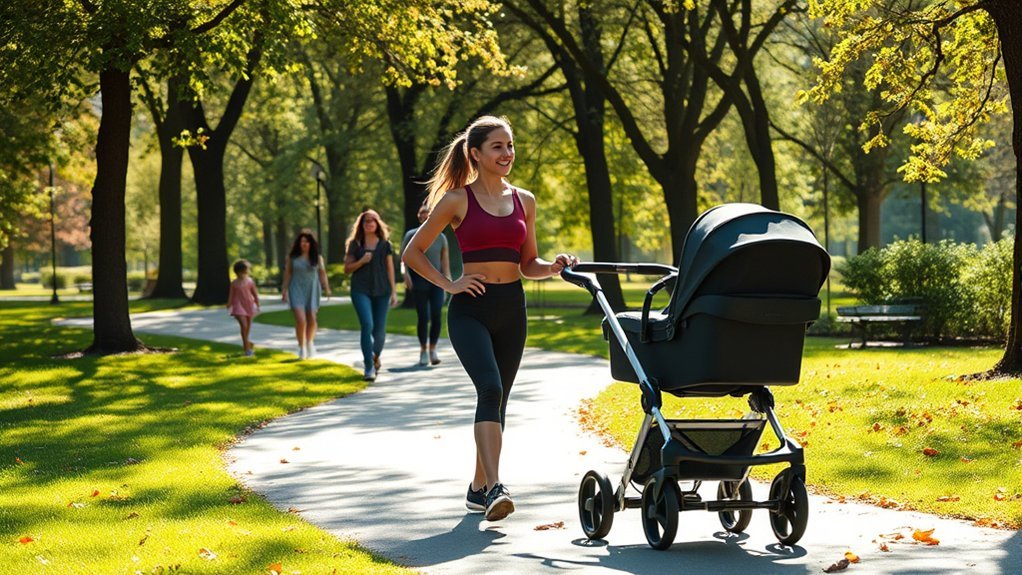
Engaging in stroller workouts not only enhances physical fitness but can also play a helpful role in supporting mental health and fostering social connections among parents. A walk outside can provide fresh air, routine, sunlight, and a change of scenery, all of which may help you feel more grounded during a demanding season of life.
Stroller walking groups can also reduce feelings of isolation. As you push your stroller, you may find opportunities for community interaction, leading to friendships and connections you may not have expected. This physical activity can improve your mood while giving you a simple way to meet other parents and caregivers.
The accountability of group workouts may help keep you motivated, encouraging a consistent routine. By engaging socially, you can build emotional resilience and create a supportive rhythm for both you and your little one.
Tips for Effective Stroller Workouts
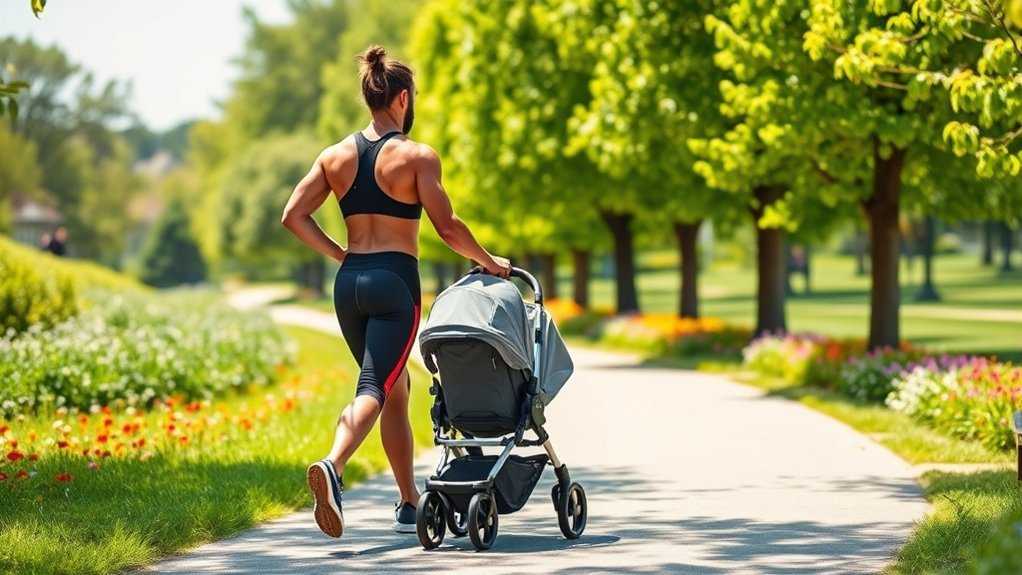
To make the most of your stroller workouts, focus on proper form and technique from the start. Engage your abdominal muscles while pushing the stroller to enhance stability and protect your back. Keep a straight posture, but do not lock your knees or stiffen your shoulders.
It also helps to measure progress rather than guess at it. Logging pace, distance, and heart rate over a few weeks shows whether the routine is actually getting harder, and our roundup of Garmin watches for everyday fitness tracking compares the options for that.
Don’t forget about stroller safety; secure any loose items to avoid distractions. Use the harness, check the wheels, and make sure the stroller is appropriate for the activity. A regular stroller may be fine for walking, but jogging usually requires a stroller designed for jogging, with better suspension, larger wheels, and stable tracking.
To boost workout motivation, alternate your route, pace, and terrain. You can include short bursts of faster walking, gentle jogging if your stroller is designed for it, or short strength breaks. Try this simple beginner structure:
- Warm up: Walk easily for 5 minutes.
- Main set: Walk briskly for 2 minutes, then slow down for 1 minute. Repeat 6 to 10 times.
- Strength break: Stop in a safe area and do 8 to 12 bodyweight squats while the stroller brake is locked.
- Cool down: Walk slowly for 5 minutes and stretch your calves, hips, and shoulders.
Remember, consistency is key. Regular stroller workouts can lead to improved strength and endurance over time, empowering you to embrace your fitness journey fully.
[Amazon Products Picked for You]

Fitness Tracker No Bluetooth — No App, No Phone Required: A truly standalone fitness tracker that works right out of the box — no smartphone pairing, no app downloads, no Bluetooth connection needed. Ideal for factory workers, privacy-conscious individuals, anyone who’s not tech-savvy, as well as parents, seniors, daily walkers, and anyone who wants a simple, offline tracker for everyday life. Just wear it anywhere and track your steps and calories without the hassle of Bluetooth or apps.

All-terrain bicycle tires for a smooth ride, with a lockable front swivel wheel for ease of maneuverability

[Fitness Trackers for Women Men & 2 Changeable Bands] - This fitness tracker watch features a slim and stylish look, equipped with a 1.47-inch HD full-touch display and light weight body for a smooth user experience. It comes with 2 changeable bands including a sport band and a stainless steel band, which are perfect for any outfit and occasion.
Mobile Gym Concept and Stroller Pushing Benefits
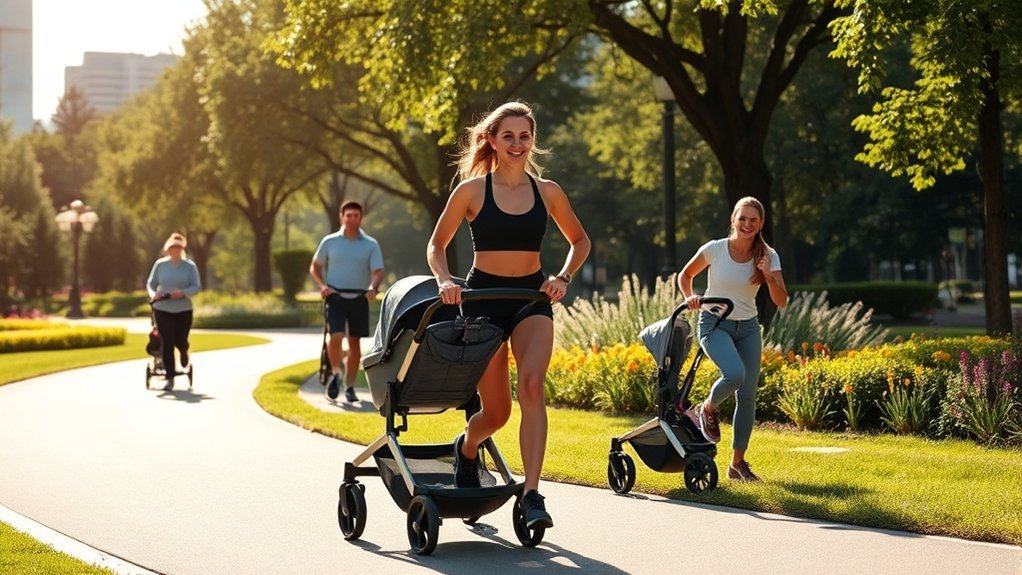
As you push a stroller, you’re not just transporting your child; you’re also transforming your routine into a mobile gym. This mobile fitness approach allows you to engage in stroller workouts that enhance both strength and cardiovascular fitness. You can walk, climb gentle hills, pause for bodyweight exercises, or meet friends for a stroller fitness session.
You’ll work various muscle groups, including arms, shoulders, and core, as you stabilize the stroller. Incorporating strength exercises like squats, reverse lunges, calf raises, and standing push-ups against a sturdy park bench can make your walk more complete. This versatility lets you adapt your fitness routine to daily life, turning ordinary walks into a robust exercise regimen that helps build muscle endurance and improve your overall strength.
If you add extra load, be careful. Do not overload the stroller, place weights near your child, or hang weights from the handlebar. Extra items should only go where your stroller manual allows, and the total load should stay within the manufacturer’s limit.
Note: The child’s safety comes first. A stroller workout should never require speed, weight, terrain, or movements that reduce your control of the stroller.
Exercise Routine Adaptations and Seasonal Changes
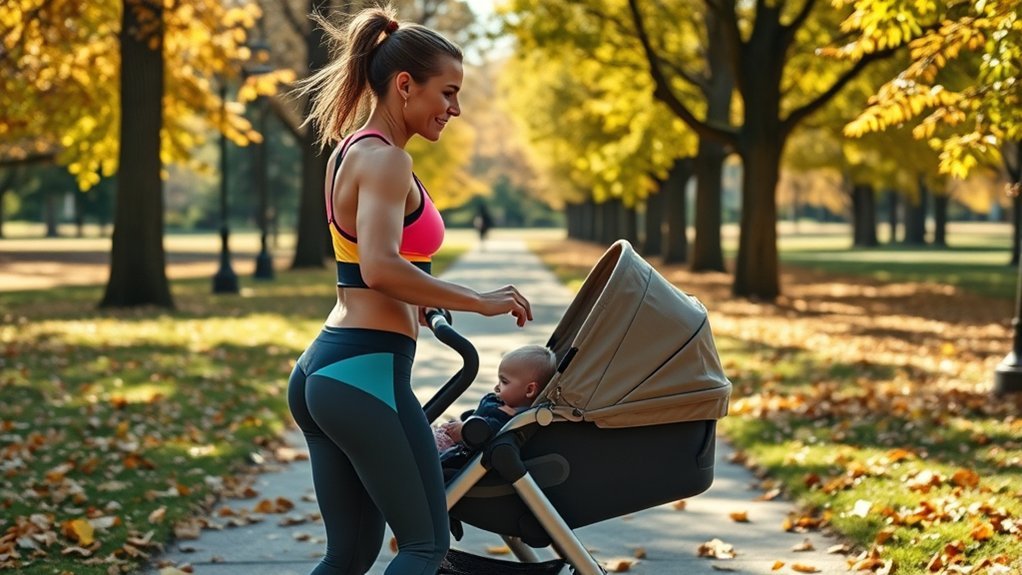
As the seasons change, your exercise routine can adapt to make the most of outdoor activities. You might find yourself swapping stroller workouts for swimming in the summer or hitting the gym when it’s cold outside. By adjusting your activities based on the weather, you can keep your fitness levels high while enjoying the great outdoors.
Seasonal Exercise Variation
While the seasons change, so can your exercise routine, especially when you’re a parent pushing a stroller. Embrace seasonal sports and outdoor adventures by adapting your workouts to the weather. During warmer months, consider incorporating shaded routes, early morning walks, and gentle hill repeats to boost your endurance while pushing that stroller.
In cooler seasons, mix in indoor walking areas, swimming, and gym strength training to keep things fresh and effective. This not only keeps you engaged but also allows for community interaction as other parents notice your commitment to fitness. Adjusting your routine helps you maintain your fitness levels while managing childcare. So, get out there, explore the seasons, and enjoy the benefits of pushing a stroller in your diverse exercise journey.
Weather-Related Routine Adjustments
When the weather shifts, it’s important to adapt your exercise routine to keep your fitness goals on track. Embracing weather adaptations can help you maintain consistency in your seasonal workouts. Here are three effective strategies:
- Stroller Workouts: Use your stroller for brisk walks, easy runs only if the stroller is designed for jogging, and simple bodyweight exercises to build muscle and endurance.
- Hill Repeats: Incorporate weekly hill repeats during stroller workouts to challenge yourself and increase intensity, making the most of outdoor conditions. Choose gentle hills and stay in control on the way down.
- Cross-Training: Try swimming, home workouts, or gym strength training on days when the weather isn’t favorable for outdoor activities.
Outdoor Activity Opportunities
Adapting your exercise routine to embrace outdoor activities can keep your fitness journey exciting and effective throughout the seasons. Incorporate park strolls and nature trails into your schedule to enjoy fresh air while pushing a stroller. These activities not only break the monotony of indoor workouts but also help build endurance and strength.
You can elevate your routine by adding hill repeat sessions to your stroller workouts, allowing you to challenge yourself and meet different fitness goals. As neighbors grow accustomed to seeing you stroll with purpose, you’ll inspire a sense of community and freedom in outdoor fitness. Embrace the changing seasons; your body and spirit will thank you.
Research Findings on Weighted Stroller Use
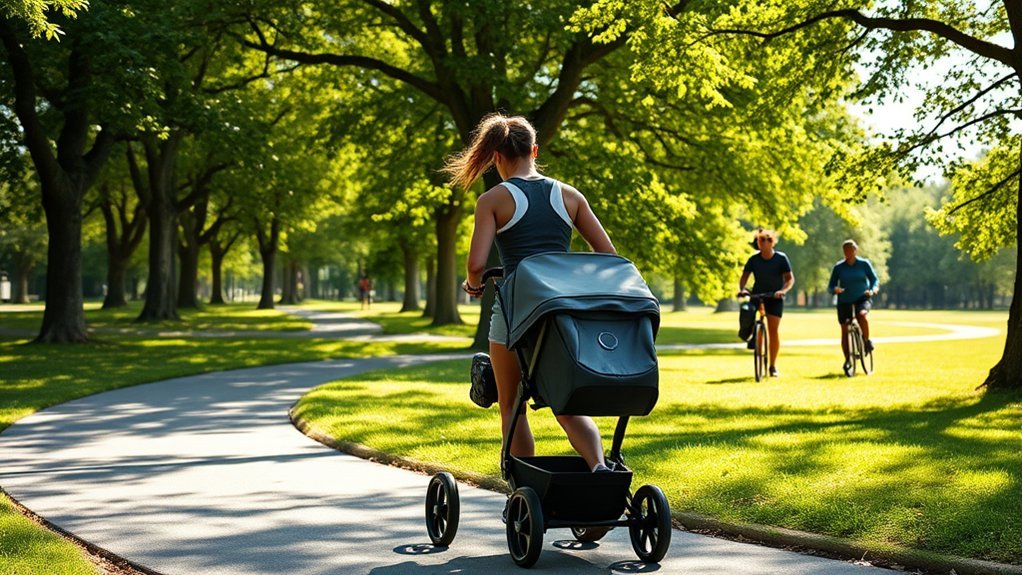
Research and exercise principles suggest that using a weighted stroller can enhance your workout by increasing the effort required to walk, steer, and stabilize. The exact increase in calorie burn varies by person and setup, but a heavier stroller generally requires more work than a lighter stroller on the same route.
This dynamic form of exercise not only incorporates resistance but also engages multiple muscle groups. Here are some benefits you can expect from careful weighted stroller use:
- Enhanced Muscle Engagement: You’ll activate your legs, core, and upper body, promoting overall endurance.
- Varied Techniques: Incorporating different safe pushing methods can tailor your workout to meet specific fitness goals.
- Integrated Workouts: Stroller workouts allow you to combine walking, strength training, and interval training for a more complete session.
Weighted stroller use should stay practical and safe. The child, diaper bag, water bottle, and approved basket storage may already provide enough load. Avoid placing loose weights inside the child’s seating area or attaching heavy items to the handlebar.
Stroller Workout Safety Checklist
Before you turn a normal walk into a workout, take a minute to check your setup. This helps protect your child and keeps your session smoother.
- Use the harness every time: Buckle your child in before moving.
- Check the brakes: Use the parking brake whenever you stop for squats, lunges, stretching, or water breaks.
- Inspect the wheels: Make sure tires, locks, and swivel settings match the route.
- Choose the right stroller: Use a jogging stroller for jogging. Use a regular stroller for walking unless your manual says otherwise.
- Avoid unsafe loads: Do not hang heavy bags or weights from the handlebar.
- Watch the weather: Avoid extreme heat, icy paths, poor air quality, and slippery surfaces.
- Stay visible: Use bright clothing, safe routes, and lights or reflectors in low light.
- Listen to your body: Stop if you feel pain, dizziness, shortness of breath beyond normal exertion, or pelvic heaviness.
[Amazon Products Picked for You]

New Improved Design - Keep your family and loved ones safe with this slim, lightweight, compact, and super bright safety light. Come preinstalled with batteries that last up to 100 hours of continuous use. (Extra Batteries Included) These are essential safety equipment for any low-light activity and great addition to your outdoor gear or reflective apparel.

New Improved Design - Keep your family and loved ones safe with this slim, lightweight, compact, and super bright safety light. Come preinstalled with batteries that last up to 100 hours of continuous use. (Extra Batteries Included) These are essential safety equipment for any low-light activity and great addition to your outdoor gear or reflective apparel.

***BATTERY POWERED — Uses CR2032 batteries. NOT USB RECHARGEABLE.
Postpartum and Pregnancy Considerations
Stroller workouts can be a helpful way to return to activity after birth, but your body may need time. If you recently gave birth, had a C-section, experienced pelvic floor symptoms, or have a medical condition, get guidance from your healthcare provider before adding intense stroller workouts.
Start with gentle walks. Keep the pace easy, avoid steep hills at first, and pay attention to symptoms such as pain, bleeding that increases with activity, pressure, leaking, dizziness, or unusual fatigue. These signs may mean your body needs more recovery time or professional support.
During pregnancy, pushing a stroller may be safe for many people, but comfort and balance can change as pregnancy progresses. Choose smooth routes, avoid overheating, and keep your effort moderate unless your clinician has cleared you for more vigorous exercise.
Future Challenges and Community Engagement
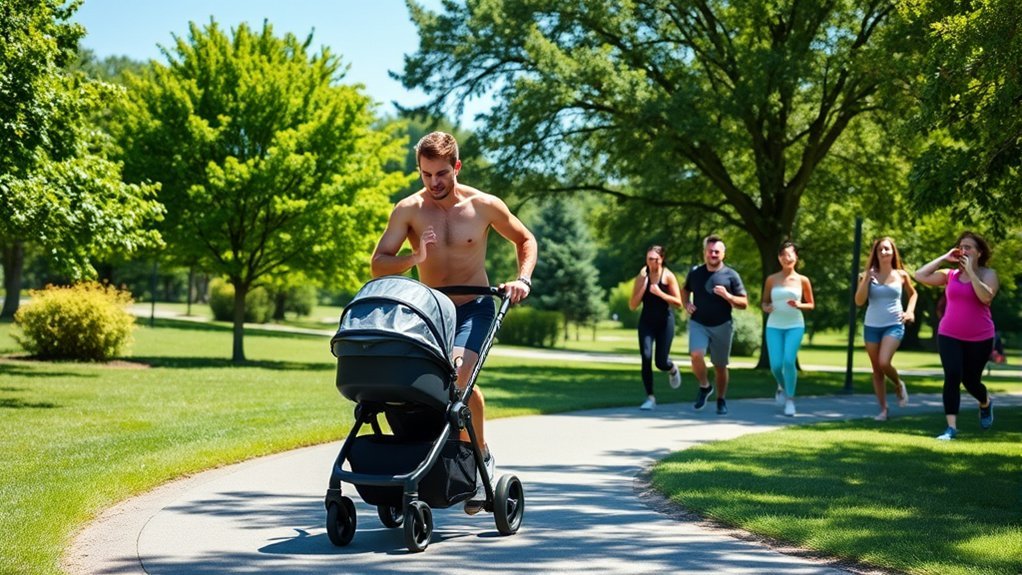
As you consider the future of stroller workouts, embracing community challenges can greatly enhance your fitness journey. Engaging in a one or two-month stroller gym challenge not only keeps you motivated but also fosters social connections with other parents and caregivers.
These community challenges promote shared experiences, allowing you to find support and friendship, especially during postpartum periods. Incorporating diverse exercises, like safe hill walks, bodyweight strength moves, and alternating brisk walking with recovery intervals, keeps your workouts enjoyable while enhancing your lower body and core strength.
Plus, encouraging community feedback helps tailor stroller fitness to individual needs, creating a supportive environment where everyone can thrive. So, rally your local community and take on these challenges together for a fulfilling fitness experience.
Sample Stroller Workout Plans
You do not need a complicated plan to get results. Use one of these simple routines and adjust the pace to your fitness level.
Beginner Stroller Walk
- 5 minutes easy walking
- 15 to 20 minutes steady walking at a comfortable pace
- 5 minutes easy cool down
- Optional: 2 sets of 8 bodyweight squats with the stroller brake locked
Moderate Interval Stroller Workout
- 5 minutes easy walking
- 1 minute brisk walking, then 2 minutes easy walking
- Repeat 8 to 10 rounds
- Stop in a safe flat area for 2 sets of 10 calf raises and 8 reverse lunges per side
- 5 minutes cool down
Hill-Focused Stroller Workout
- 5 to 8 minutes easy walking on flat ground
- Walk up a gentle hill for 30 to 60 seconds
- Walk down slowly with full stroller control
- Repeat 4 to 8 rounds
- Cool down on flat ground for 5 minutes
Related Guides
Frequently Asked Questions
Can pushing a stroller help with weight loss?
Pushing a stroller can support weight loss when it helps you stay active and maintain a consistent calorie balance. It may increase effort compared with walking alone, especially on hills or longer routes. For best results, combine stroller walks with strength training, enough sleep when possible, hydration, and balanced meals.
How often should I push a stroller for results?
For general fitness, aim for stroller walks three to five times per week if your schedule and recovery allow. Start with 15 to 30 minutes and build gradually. You can add intervals, hills, or bodyweight moves once regular walking feels comfortable and controlled.
Is pushing a stroller safe during pregnancy?
Pushing a stroller can be safe during pregnancy for many people, as long as you listen to your body and your healthcare provider has not limited exercise. Choose smooth routes, avoid overheating, use supportive shoes, and reduce intensity if you feel pelvic pressure, dizziness, pain, or unusual fatigue.
What type of stroller is best for workouts?
For walking workouts, choose a stable stroller with secure harnesses, reliable brakes, comfortable handle height, and smooth wheels. For jogging or running, use a stroller specifically designed for jogging. Jogging strollers usually have larger wheels, better suspension, and stronger stability for faster movement.
Can I push a stroller on uneven terrain?
Yes, you can push a stroller on uneven terrain if the stroller is designed for that surface and you stay in control. Use slower speeds, keep both hands on the handlebar, avoid steep or rocky areas, and make sure your child is securely buckled. Rough terrain can challenge your strength, but safety should come first.
Does pushing a stroller count as strength training?
Pushing a stroller provides light resistance and can improve muscle endurance, but it does not replace full strength training. It works well as a bridge between cardio and resistance exercise. Add safe bodyweight moves, dumbbell workouts away from the stroller, or gym sessions if you want more complete strength development.
When can I start stroller workouts after birth?
Many parents begin with gentle walking once they feel ready, but more intense stroller workouts should wait until your healthcare provider clears you. Recovery varies after vaginal birth, C-section, complications, pelvic floor symptoms, or diastasis recti. Start slowly and stop if symptoms worsen.
Conclusion
Incorporating stroller workouts into your routine isn’t just a stroll in the park; it’s a chance to flex your muscles physically, mentally, and socially. By embracing this mobile gym, you’re not only building strength and endurance but also creating meaningful moments with your little one.
The best stroller workout is safe, repeatable, and suited to your current fitness level. Start with steady walks, build your pace gradually, and add hills, intervals, or strength moves only when you can keep full control of the stroller. Whether you’re lunging, climbing gentle hills, or chatting with fellow parents, every careful push can be a step toward better health. Keep rolling, and let the journey shape you in more ways than one.
Sources
- Physical Activity Guidelines for Americans — supports general adult activity guidance and the value of regular aerobic and muscle-strengthening activity.
- ACOG: Exercise During Pregnancy — supports pregnancy exercise safety considerations.
- ACOG: Exercise After Pregnancy — supports gradual postpartum return-to-exercise guidance.
- HealthyChildren.org: Stroller Safety — supports stroller safety points such as buckling children in, using brakes, and avoiding unsafe handlebar loads.
