Ultralight winter tents force you to balance three things: carry weight, weather protection, and enough room for a cold-weather sleep system. A light shelter is useful only if its season rating and pitch style match the conditions you expect.
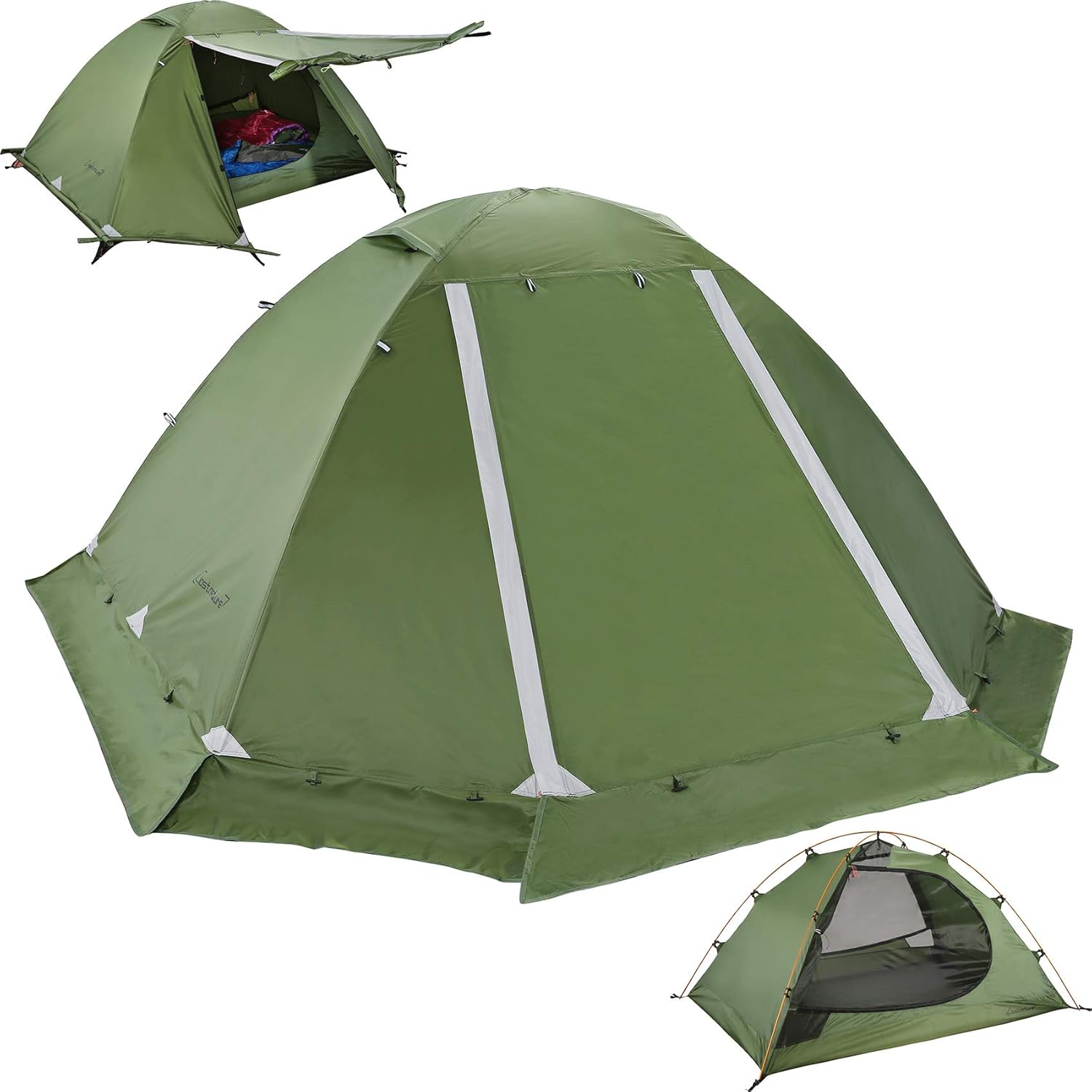
For the strongest verified winter-focused option here, Clostnature 2-Person Tent uses a 4-season design and PU 5000 mm rainfly. For a lighter, more balanced 3-season value, Naturehike Cloud-Up 2P includes a footprint and a freestanding two-person layout.
These picks were checked against current Amazon listings, manufacturer specifications, safety-recall searches, and model availability. Severe snow and alpine wind still call for a purpose-built winter shelter and a properly rated sleep system.
Ultralight Winter Tents Compared
| Product | Best for | Weight | Season | Water resistance | Score |
|---|---|---|---|---|---|
|
Budget
|
Solo backpackers who want simple setup and strong rain protection | 4.2 lb | 3-season | PU 5000 mm | 82/100 |
|
Budget
|
Cold-weather campers who prioritize a 4-season design over minimum weight | 6.6 lb | 4-season | PU 5000 mm | 85/100 |
|
Reference only
|
Reference: ultralight two-person trekking-pole shelter | 2 lb 8 oz pack / 2 lb 4 oz trail | 3-season | 2000 mm PU | 90/100 |
|
Mid-range
|
Backpackers who want an included footprint and a balanced two-person setup | 4.3 lb | 3-season | 3000 mm+ | 88/100 |
|
Reference only
|
Reference: premium ultralight two-person backpacking | About 3.0 lb | 3-season | 1200 mm | 95/100 |
|
Mid-range
|
Solo hikers who want low weight and strong published waterproof ratings | 2.2 lb | 3-season | Fly 5000 mm+; floor 6000 mm+ | 78/100 |
|
Budget
|
Budget-minded solo hikers who already carry trekking poles | 2.5 lb | 3-season | PU 5000 mm | 75/100 |
[Amazon Products Picked for You]

Lightweight and Durable: The OneTigris STELLA Camping Tent features a lightweight and durable 20D Nylon outer fabric with a single-layer silicone coating, making it both sturdy and easy to carry at only 4.4lb/2kg. Suitable for backpackers, bushcrafters, everyday campers, and families Waterproof: With a 3000mm waterproof rating, the STELLA camping tent is perfect for use in all weather conditions. The removable blackout outer tent allows for greater flexibility in use.

FOUR SEASON TENT: While other 3 season tents are only available for spring, summer and fall, this extreme weather tent is suitable for all seasons of the year. In winter, the snow skirt of this 2 person tent makes sure that it can keep snow away. The roll-able design makes it convenient when there is no snow around. In other seasons, the mesh design of the 4 season backpacking tent keeps bugs away while the double-layer door ensures ventilation
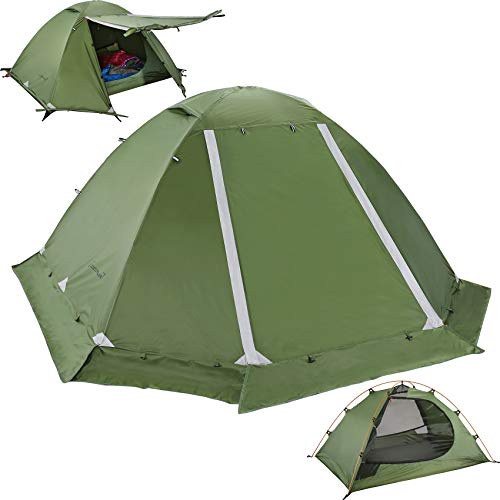
4 SEASON TENT: We offer a limited ONE-YEAR GUARANTEE. Polyester rain fly, groundsheet, and bathtub with PU 5000 coating are firmer than you expected. Weatherproof material with factory-sealed seams keeps you dry and comfortable in four seasons or cold weather! Better material but more affordable! You really need an appropriate lightweight 2-person tent for backpacking for ALL SEASON!
Ultralight Winter Tents: Our Top Picks
1. Clostnature 1-Person Tent

Bottom line: A practical solo shelter for cool-weather backpacking when you want a freestanding pitch and a full rainfly without moving to a heavier winter tent.
- Capacity: 1 person, space to plan your sleep system
- Season rating: 3-season, sets the weather-use ceiling
- Weight: 4.2 lb, directly affects pack load
- Water resistance: PU 5000 mm, helps compare wet-weather protection
- Support: Freestanding aluminum poles, changes setup and site flexibility
The double-skin layout gives you a mesh inner plus a full rainfly and bathtub floor. That makes it easier to manage moisture than a simple single-wall shelter, while the freestanding pole structure is straightforward when you are pitching in cold hands or fading light.
At 4.2 lb, it is not the lightest solo tent here. The trade-off is a familiar freestanding design and a waterproof coating that suits wet shoulder-season trips. Treat it as a 3-season tent for sheltered winter nights, not a shelter for heavy snow loading or exposed alpine wind.
- Freestanding setup is easy to reposition
- PU 5000 mm rainfly and bathtub floor
- Compact one-person footprint for solo trips
- Double-skin design helps separate you from condensation
- Heavier than the trekking-pole solo options
- 3-season design is not for heavy snow
- Narrow interior leaves limited room for bulky winter gear

2. Clostnature 2-Person Tent

Bottom line: This is the strongest verified winter-specific choice in the roundup. Its 4-season design, full rainfly and PU 5000 mm coating make more sense for cold, wet trips than the lighter 3-season options.
- Capacity: 2 people, space to plan your sleep system
- Season rating: 4-season, sets the weather-use ceiling
- Weight: 6.6 lb, directly affects pack load
- Water resistance: PU 5000 mm, helps compare wet-weather protection
- Support: Freestanding aluminum poles, changes setup and site flexibility
The two-person interior gives a solo camper extra room for winter clothing and gear, while the freestanding aluminum-pole structure is easier to manage than a tension-dependent trekking-pole pitch on awkward ground.
The main compromise is weight. At 6.6 lb, it stretches the meaning of ultralight, so it fits best when winter protection matters more than shaving every ounce. For long-distance fastpacking, one of the lighter 3-season shelters is easier to carry but offers less winter-focused protection.
- Verified 4-season design for colder conditions
- PU 5000 mm polyester rainfly
- Freestanding structure simplifies site selection
- Two-person space works well for solo winter gear
- 6.6 lb is heavy for an ultralight roundup
- Bulkier than trekking-pole shelters
- More tent than you need for mild summer trips

3. Featherstone Backbone 2P

Bottom line: The Backbone 2P remains in this article for reference, but it is not one of the current recommendations. Its verified design is a light, single-wall, 3-season trekking-pole shelter.
- Capacity: 2 people, space to plan your sleep system
- Season rating: 3-season, sets the weather-use ceiling
- Weight: 2 lb 8 oz pack / 2 lb 4 oz trail, directly affects pack load
- Water resistance: 2000 mm PU, helps compare wet-weather protection
- Support: Two trekking poles, not included, changes setup and site flexibility
Featherstone lists a 15-denier Sil-Nylon rainfly and floor with a 2000 mm polyurethane coating. The tent uses your own two trekking poles, has two-person dimensions, and includes aluminum stakes and reflective guylines.
Its single-wall construction keeps weight low but needs active ventilation in cold, damp weather. It also is not a dedicated 4-season shelter, so the design is better matched to mild winter or shoulder-season conditions than heavy snow.
- Low trail weight for a two-person shelter
- Two-person floor plan with vestibule storage
- Factory seam-sealed single-wall construction
- Pitches with trekking poles you may already carry
- Not one of the fully verified purchase options in this article
- 3-season design is not intended for severe winter weather
- Single-wall design can collect condensation in cold, still air

4. Naturehike Cloud-Up 2P
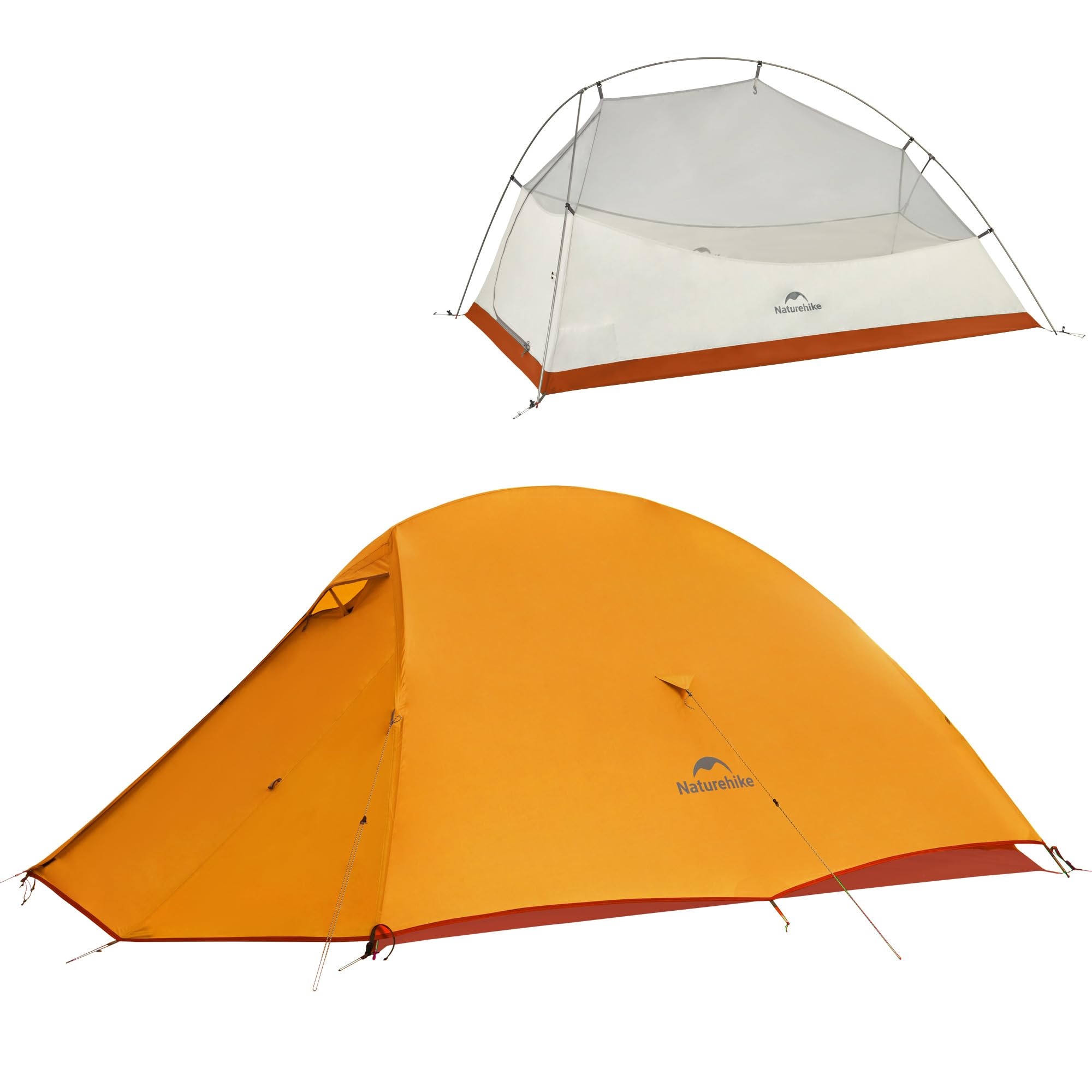
Bottom line: The Cloud-Up 2P offers a useful middle ground: a freestanding two-person shelter, 3000 mm+ water resistance and an included footprint without moving into premium pricing.
- Capacity: 2 people, space to plan your sleep system
- Season rating: 3-season, sets the weather-use ceiling
- Weight: 4.3 lb, directly affects pack load
- Water resistance: 3000 mm+, helps compare wet-weather protection
- Support: Freestanding pole set, changes setup and site flexibility
Its 82.7 by 51.2 inch floor gives more sleeping width than the narrow solo models, and the included footprint helps protect the floor on rough or wet ground. The freestanding structure is also less dependent on perfect stake placement than a trekking-pole tent.
This remains a 3-season tent, so it is better for protected winter camps, cold rain and shoulder-season trips than heavy snow or exposed alpine use. The single front-door layout is also less convenient for two people than a dual-door design.
- Included footprint adds floor protection
- Freestanding setup is simple for most campsites
- 3000 mm+ water resistance
- Two-person floor gives solo campers extra winter-gear room
- 3-season rating limits severe-winter use
- One front door is less convenient for two sleepers
- 4.3 lb is heavier than the lightest trekking-pole options

5. Big Agnes Copper Spur HV UL2

Bottom line: The linked ASIN identifies the older Copper Spur HV UL2, but the current Amazon page can default to another size variation. This section is retained for reference rather than as a current recommendation.
- Capacity: 2 people, space to plan your sleep system
- Season rating: 3-season, sets the weather-use ceiling
- Weight: About 3.0 lb, directly affects pack load
- Water resistance: 1200 mm, helps compare wet-weather protection
- Support: Freestanding DAC pole system, changes setup and site flexibility
The older 2-person Copper Spur HV UL configuration is a 3-season, freestanding backpacking tent with two doors, two vestibules and a 1200 mm waterproof coating. Its main appeal is the combination of low carry weight and livable interior space.
Big Agnes now sells the newer Copper Spur UL2 generation. If you are shopping today, confirm the exact size and generation before checkout rather than assuming the linked variation is still the same 2-person model shown here.
- Low weight for a freestanding two-person tent
- Two doors and two vestibules improve shared access
- High-volume layout gives useful headroom
- Freestanding pole structure is easy to position
- Linked Amazon page can default to a different variation
- 3-season design is not a dedicated winter shelter
- Older generation has been superseded by a newer Copper Spur UL2 line

6. LANSHAN Ultralight Tent
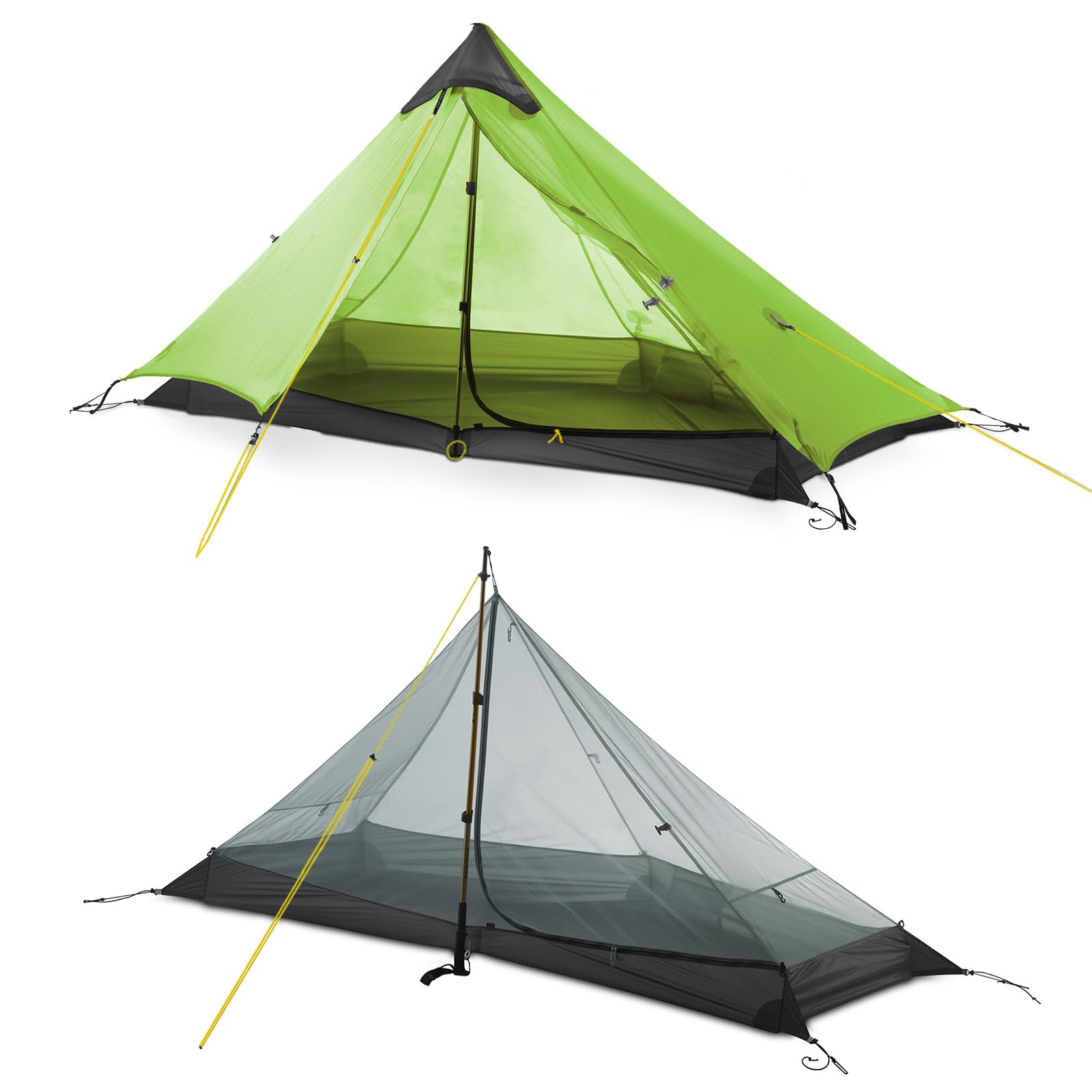
Bottom line: The LANSHAN stands out for verified 2.2 lb weight and high published waterproof ratings. It suits hikers already comfortable with a trekking-pole pitch and careful site selection.
- Capacity: 1 person, space to plan your sleep system
- Season rating: 3-season, sets the weather-use ceiling
- Weight: 2.2 lb, directly affects pack load
- Water resistance: Fly 5000 mm+; floor 6000 mm+, helps compare wet-weather protection
- Support: Trekking-pole pitch, changes setup and site flexibility
The linked Amazon model is a one-person, 3-season shelter with a 91 by 32 inch listed footprint and a 50 inch peak height. Its fly is rated at 5000 mm+ and the floor at 6000 mm+, giving it strong published water-resistance numbers for a lightweight backpacking tent.
Unlike a freestanding tent, the structure depends on staking and tension. That saves pole weight but makes rocky, frozen or very loose ground more demanding. It is still a 3-season shelter, so use it for sheltered cold-weather trips rather than heavy-snow conditions.
- 2.2 lb listed weight
- 5000 mm+ fly and 6000 mm+ floor ratings
- Tall 50 inch peak height for a solo shelter
- Trekking-pole structure avoids carrying a conventional pole set
- Requires a good stake-and-tension pitch
- 3-season design is not for heavy snow loading
- Trekking pole is not part of the tent structure package

7. Underwood Aggregator 1-Person Trekking Pole Tent

Bottom line: This is a simple, low-weight solo option for hikers who already carry a trekking pole and want a compact 3-season shelter with a PU 5000 mm coating.
- Capacity: 1 person, space to plan your sleep system
- Season rating: 3-season, sets the weather-use ceiling
- Weight: 2.5 lb, directly affects pack load
- Water resistance: PU 5000 mm, helps compare wet-weather protection
- Support: Trekking pole or suitable support, not included, changes setup and site flexibility
The listing identifies it as a 2.5 lb, one-person, 3-season tent. It uses 210T polyester with a PU 5000 coating and does not include a support pole, so your trekking pole or another suitable support is part of the pitch.
The pyramid-style layout keeps the design simple, but usable floor space is tighter than in a freestanding two-person tent. Like the other 3-season models here, it is a sheltered-cold-weather choice rather than a severe-winter shelter.
- 2.5 lb listed weight
- PU 5000 mm coating
- Compact one-person design
- Works with trekking poles you may already carry
- Support pole is not included
- 3-season design limits heavy-winter use
- Single-person interior has little spare winter-gear room

Clostnature 2-Person Tent vs Naturehike Cloud-Up 2P: Is the Upgrade Worth It?
The core trade-off is winter focus versus lower carry weight. The Clostnature is the verified 4-season option, while the Naturehike is lighter and easier to justify for mostly 3-season backpacking with occasional sheltered cold nights.
- Season rating: Clostnature is 4-season; Naturehike is 3-season.
- Weight: Naturehike is 4.3 lb; Clostnature is 6.6 lb.
- Waterproof rating: Clostnature lists PU 5000 mm; Naturehike lists 3000 mm+.
- Included ground protection: The linked Naturehike model includes a footprint.
[Amazon Products Picked for You]

TENTS FOR CAMPING 2 PERSON: With two D-Shaped doors and two vestibules to accommodate up to two people. Weight: 5.5lb(2.5kg). Interior floor dimensions: 88.6x53.1in(225x135cm), interior height: 43.3in(110cm).

Lightweight and Durable: The OneTigris STELLA Camping Tent features a lightweight and durable 20D Nylon outer fabric with a single-layer silicone coating, making it both sturdy and easy to carry at only 4.8lb/2.2kg. Suitable for backpackers, bushcrafters, everyday campers, and families Waterproof: With a 3000mm waterproof rating, the STELLA camping tent is perfect for use in all weather conditions. The removable blackout outer tent allows for greater flexibility in use.

【4 Season Tent】BISINNA all-season tent with snow skirt, it can keep inner dry and warm in snow or cold weather! And the rollable designe makes you can using this tent all season.Made from sturdy 210T tear-resistant polyester,with a PU 3000mm waterproof coating and offers excellent UV protection
Which Ultralight Winter Tent Should You Buy?
- Cold-weather protection first: get the Clostnature 2-Person Tent.
- Best balance of price, space and easy setup: get the Naturehike Cloud-Up 2P.
- Lightest verified option here: get the LANSHAN Ultralight Tent.
- Freestanding solo simplicity: get the Clostnature 1-Person Tent.
- Budget trekking-pole solo setup: get the Underwood Aggregator 1-Person Trekking Pole Tent.
[Amazon Products Picked for You]

Included rainfly offers extra weather protection


【Four Season Tent】 other 3 season tents are only available for spring, summer, and fall, this extreme weather tent is suitable for all seasons of the year. The mesh fabric used in the 4 season tent not only protects against mosquitoes but also promotes air circulation. The fully breathable fabric inner tent keeps you warmer in the winter.The double-door structure and 3 ventilation windows ensure a moisture-free and comfortable night's sleep.
How We Chose
- Season rating: We separated dedicated 4-season designs from 3-season shelters that only suit sheltered cold-weather use.
- Weight and packed burden: A winter shelter has to earn the weight it adds to your pack.
- Weather protection: We checked published rainfly and floor ratings, full-coverage fly designs, and the structure each tent uses.
- Setup: Freestanding tents are easier on difficult ground; trekking-pole tents save weight but depend more on staking and tension.
- Sources: Specs were checked against manufacturer pages and current Amazon listings, with recall searches used for safety screening.
How to Choose an Ultralight Tent for Winter Camping
Season Rating Comes Before Weight
A 3-season tent can work on cold, dry, sheltered nights, but it is not the same as a true winter shelter. If your trips include accumulating snow, exposed wind, or storms above treeline, prioritize a 4-season structure. In this list, the Clostnature 2-Person Tent is the verified winter-specific option.
Your Sleeping System Provides Most of the Warmth
A tent blocks wind and precipitation; it does not replace insulation. Match your sleeping bag or quilt and sleeping pad to the temperatures you expect. A warm sleep system also gives you more flexibility when a lightweight shelter has substantial mesh or extra ventilation.
Freestanding vs Trekking-Pole Setup
Freestanding tents are easier to position when the ground is frozen, rocky, or awkward. Trekking-pole shelters such as the LANSHAN Ultralight Tent cut dedicated pole weight, but they need secure stakes and careful tension to hold their shape.
Waterproof Ratings and Floor Protection
Higher hydrostatic-head numbers can indicate more resistance to water pressure, but construction and seam sealing also matter. A bathtub floor helps keep runoff outside. If you want an included ground layer, the Naturehike Cloud-Up 2P includes a footprint with the linked model.
Condensation Management
Cold air makes moisture management harder. Use vents, keep wet gear in the vestibule when possible, and avoid blocking airflow. Single-wall tents can save weight but put you closer to interior condensation, so ventilation and site choice matter more in damp, still conditions.
Space for Winter Gear
Winter sleeping bags, insulated clothing, boots and water storage take more room than summer gear. A two-person tent can be comfortable for one person in winter because it leaves space to organize dry gear without pressing it against the walls.
Mistakes to Avoid When Buying Ultralight Tents
- Buying by weight alone: check the season rating, structure and weather protection first.
- Assuming every “winter” trip is the same: sheltered cold rain is very different from alpine snow and high wind.
- Ignoring the pitch system: trekking-pole tents need reliable stake placement and tension.
- Forgetting sleep-system insulation: the tent is shelter, not your main heat source.
- Skipping a size check: make sure your pad, sleeping bag and winter gear fit without touching wet tent walls.
FAQs
How warm are ultralight tents, and will they keep you comfortable in winter?
Ultralight tents can make winter camping more comfortable by blocking wind and precipitation, but they do not create much heat. Your sleeping pad, sleeping bag or quilt, and clothing provide most of the insulation. Use a 4-season shelter for heavy snow or exposed wind; use 3-season models only for milder, sheltered cold-weather conditions.
Do you need a 4-season tent for winter camping?
Not for every winter night, but conditions decide the answer. A 3-season tent can work in cold, dry, low-wind camps where snow loading is unlikely. A 4-season tent is the safer match for accumulating snow, stronger wind, and exposed terrain because its structure and coverage are designed for harsher weather.
What should you prioritize when buying an ultralight winter tent?
Start with the season rating and the weather you expect, then compare weight, waterproof construction, ventilation, floor design, and pitch style. Make sure the shelter fits your sleeping system and winter gear. A tent that is slightly heavier but appropriate for the forecast is a better choice than a lighter shelter used outside its design limits.
Are trekking-pole tents good for cold-weather camping?
They can be, especially when low pack weight matters and you already carry trekking poles. The catch is that the shelter depends on good staking and tension, which can be harder on frozen, rocky, or loose ground. Most trekking-pole models in this roundup are 3-season tents, so they are better for sheltered cold trips than severe winter storms.
How do you reduce condensation in a tent during cold weather?
Use the tent’s vents, avoid sealing every opening unless conditions require it, and keep wet clothing or packs in the vestibule when possible. Choose a site with some airflow and avoid low, damp ground. In a single-wall shelter, keep your sleeping bag away from the fabric because interior moisture is more likely to contact your sleep system.
Should you use a footprint under an ultralight tent in winter?
A footprint can protect a thin floor from abrasion, mud, and wet ground, but it should not extend beyond the tent floor where it can collect rain. It does not replace a properly rated sleeping pad. The linked Naturehike Cloud-Up 2P includes a footprint, while other models may require a separate groundsheet.
How should you pitch a lightweight tent in wind, rain, or snow?
Choose a sheltered, well-drained site, point the lower-profile end into the wind when the design allows it, and use every important stake and guy-out point. Keep the fly properly tensioned so it sheds precipitation instead of sagging onto the inner tent. Practice the pitch before a cold trip so setup is faster when your hands are numb.
What Campers Prefer
The original comparison graphic is retained below for continuity. Use the live-verified sections and comparison table above for current purchase decisions, especially because the Featherstone model is no longer a recommended pick and the older Big Agnes link needs a size check.

Final Verdict
For ultralight winter tents, the safest choice is the one that matches your actual weather, not the lightest number on the page. Among the verified products here, the Clostnature 2-Person Tent is the strongest winter-focused option, while the Naturehike Cloud-Up 2P is the more balanced choice for mostly 3-season backpacking with occasional cold-weather trips.
For a lighter value pick, compare the Naturehike Cloud-Up 2P. If minimum carry weight matters most, the LANSHAN Ultralight Tent is the lightest verified option in this group.
Product Image Reference