
Yes, Toyota RAV4 rear seats fold down in a 60/40 split, giving you more room for luggage, sports gear, furniture, and other long items. Cargo volume depends on the model year and configuration. The redesigned 2026 RAV4 offers up to 70.4 cubic feet with the second row folded and up to 37.8 cubic feet behind it.
Quick Answer
Toyota RAV4 rear seats use a 60/40 split reclining fold-flat design. The 2026 RAV4 provides up to 70.4 cubic feet with the second row folded. Many 2024–2025 versions provide 69.8 cubic feet. The floor is broad and useful, although its angle and height can vary by trim and cargo-floor position.
Key Takeaways
- The rear seatbacks fold separately, so you can carry a passenger and longer cargo at the same time.
- The current 2026 RAV4 offers up to 70.4 cubic feet with the second row folded and up to 37.8 cubic feet behind it.
- Many 2024–2025 gas and hybrid models provide 69.8 cubic feet with the seats down, while space behind the seats varies by trim.
- Published cargo volume does not tell you how much weight the cargo floor can hold. Use the Tire and Loading Information label for your vehicle.
- Power liftgates, hands-free opening, adjustable cargo floors, and underfloor storage depend on the model year and configuration.
At a Glance
| Time Required | About 1–2 minutes |
| Difficulty | Easy |
| Tools Needed | None; a tape measure helps when checking whether a large item will fit |
| Cost | No cost |
Do the Rear Seats of the Toyota RAV4 Fold Flat?
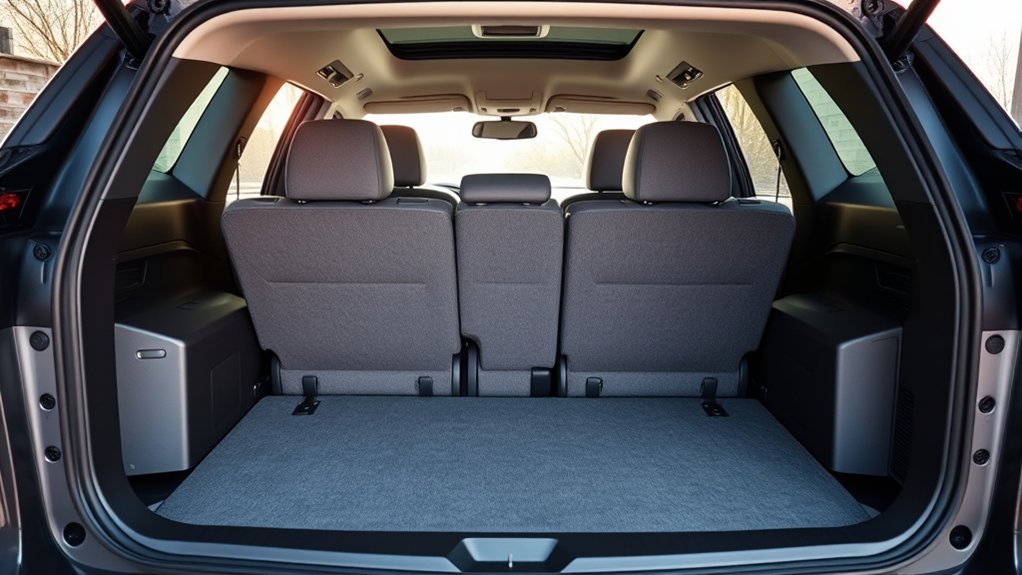
Toyota describes the RAV4 as having a 60/40 split reclining fold-flat rear seat. Each side can fold independently, which gives you three practical arrangements:
- Both seatbacks upright for passengers and normal cargo.
- The smaller section folded for a long item while retaining two rear seating positions.
- Both sections folded for maximum cargo volume.
“Fold-flat” does not always mean the entire surface will feel perfectly horizontal. You may notice a slight incline, seam, or height change between the folded seatbacks and rear cargo floor. The exact result depends on the model year, seat position, floor setting, and items stored beneath the cargo deck.
The 2026 RAV4 provides up to 70.4 cubic feet of cargo space with its second-row seats folded.
RAV4 Cargo Space by Model Year and Configuration
| RAV4 Version | Behind Second Row | Second Row Folded |
|---|---|---|
| 2026 RAV4 | Up to 37.8 cu. ft. | Up to 70.4 cu. ft. |
| 2024–2025 gas and hybrid examples | About 37.5–37.6 cu. ft., depending on trim | 69.8 cu. ft. |
| 2024–2025 RAV4 Prime or Plug-in Hybrid examples | 33.5 cu. ft. | 69.8 cu. ft. |
Note: Cargo figures can vary by trim, powertrain, cargo-floor position, spare-tire arrangement, and measuring method. Confirm your vehicle’s specifications in its owner’s manual or on Toyota’s model-year specification page.
How to Fold the RAV4 Rear Seats
The exact release location can differ by model year, but most RAV4 seatbacks fold through a lever near the outer edge or shoulder of each rear seatback.
- Park on level ground. Shift into Park and apply the parking brake.
- Remove passengers and loose items. Make sure no person or object is resting against the seatback.
- Check child restraints. Remove or reposition any child seat that prevents the seatback from folding. Do not fold a seatback against an attached restraint.
- Stow the center armrest and seat belts. Keep belts and buckles out of the hinge area.
- Lower the rear head restraints if needed. This prevents contact with the front seats.
- Move the front seats forward when necessary. Taller drivers may need to restore their front-seat position after the rear seatback is down.
- Pull the release lever. Guide the selected seatback forward instead of letting it drop onto cargo.
- Repeat on the other side. Fold both sections when you need the maximum load floor.
Some newer or higher-equipped versions may provide powered seat-folding controls. Follow the prompts and operating conditions in the owner’s manual rather than forcing a powered seatback manually.
Warning: Never fold or return a rear seat while the vehicle is moving. Before driving, check that upright seatbacks are securely latched, the red lock indicator is not visible where applicable, and no seat belt is twisted or trapped.
Cargo Space of the Toyota RAV4: Seats Up vs. Seats Down
The best seating arrangement depends on whether you need passenger space, cargo length, or maximum volume. Published cubic-foot figures describe overall volume, but they do not guarantee that a particular item will pass through the hatch or fit between the wheel wells.
Cargo Space With Seats Up
With the second row upright, the current 2026 RAV4 provides up to 37.8 cubic feet behind the seats. Many 2024–2025 gas and hybrid configurations provide about 37.5 to 37.6 cubic feet. Plug-in-hybrid versions from those model years provide less space behind the second row because of their component packaging.
This arrangement works well for groceries, suitcases, folded strollers, sports bags, and normal household errands. Keeping the seatbacks upright also creates a barrier between cargo and passengers.
Use an organizer, cargo net, or reusable bins to stop small items from sliding. Keep heavy objects low and close to the seatbacks rather than stacking them near the hatch.
Cargo Space With Seats Down
Folding both rear seatbacks creates a long load area. The redesigned 2026 model provides up to 70.4 cubic feet, while many 2024–2025 versions provide 69.8 cubic feet.
This setup can accommodate camping equipment, flat-packed furniture, moving boxes, or a bicycle. A large bicycle may require you to remove its front wheel or adjust the front seats. Measure the item and the hatch opening before relying on cargo volume alone.
Place heavier objects on the floor and distribute their weight evenly. Use the vehicle’s tie-down points or suitable straps to keep equipment from moving during acceleration, braking, or turns.
Pro Tip: Measure an item’s length, width, height, and largest diagonal. Then measure the RAV4’s hatch opening, narrowest floor width, and usable length with your normal front-seat position. The hatch opening is often the limiting dimension.
How the RAV4’s Interior Layout Maximizes Storage
The RAV4 combines a wide rear hatch, split-folding seatbacks, door pockets, console storage, cup holders, and a broad cargo floor. This layout lets you carry long items without giving up every rear passenger position.
Some versions include an adjustable rear deck board or small storage areas beneath the cargo floor. Their size and shape depend on the spare tire, battery packaging, audio equipment, and model year. Check beneath the deck before assuming a large hidden compartment is available.
Seatback angle also affects usable cargo space. Reclining the second row can improve passenger comfort, while moving it to a more upright position may create a little more room behind the seats on models that allow the adjustment.
Earlier fifth-generation models list a cargo length of about 40 inches behind the rear seat and a minimum floor width of roughly 39.4 inches between the narrowest points. Those measurements should not be treated as specifications for every RAV4 generation.
How to Use Your RAV4’s Cargo Space for Everyday Adventures
The 60/40 rear-seat split lets you match the interior to the trip instead of folding every seat for every load.
| Activity | Suggested Configuration | Loading Approach |
|---|---|---|
| Sports outing | One or both sections folded | Keep helmets and small equipment in bins; secure bikes or boards. |
| Camping trip | Both sections folded or larger section folded | Place dense equipment low and soft bags around it to reduce movement. |
| Daily errands | Seats upright | Use a cargo net or organizer to keep groceries from tipping. |
| Long furniture package | Smaller or larger section folded | Protect the seatbacks and interior trim, then secure the item against movement. |
An available hands-free power liftgate can make loading easier when your hands are full. It is not included on every RAV4, so check the equipment fitted to your model and trim.
Additional Storage Options in the Toyota RAV4
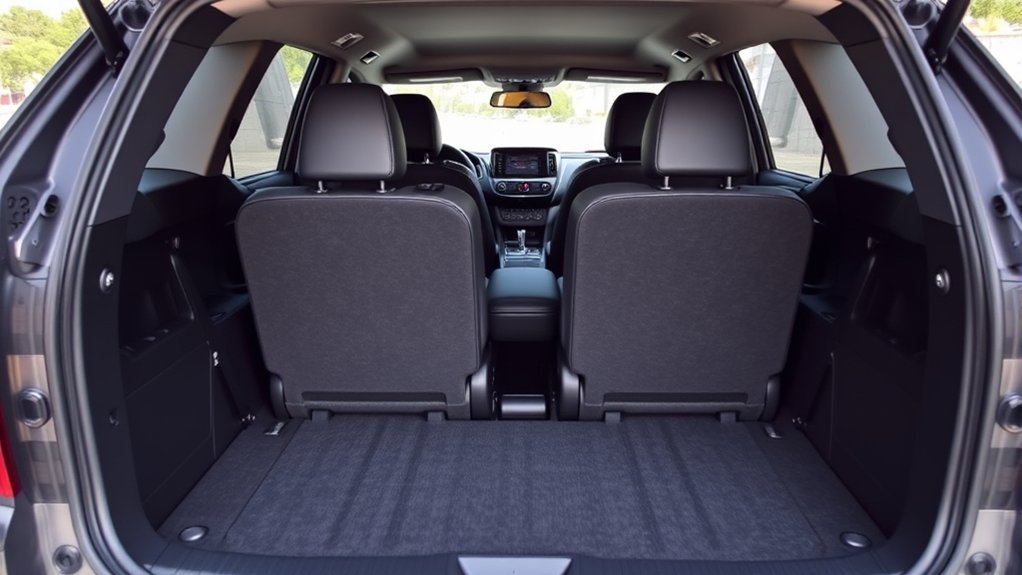
Beyond the folding rear seats, the RAV4 provides several places for everyday items. Depending on the model, these may include front-door bottle holders, rear-door pockets, a center console, dashboard trays, cup holders, seatback pockets, and space beneath part of the rear deck.
Use concealed storage for small, lightweight items rather than heavy tools or unsecured valuables. Even hidden objects can move during a sudden stop if the compartment is not designed to restrain them.
A cargo cover can hide items from casual view, but it is not a load-bearing shelf. Do not place luggage, pets, or heavy equipment on top of it.
Roof crossbars or a roof basket can extend carrying ability, but roof cargo still counts toward the vehicle’s total load. It also raises the center of gravity and can affect handling, wind noise, and fuel use.
Essential Features for Optimizing RAV4 Cargo Space
The most useful cargo features are not always the most visible. The split ratio, load-floor shape, tie-down locations, hatch opening, and vehicle load rating matter more than cubic feet alone.
Cargo Space Dimensions
Toyota’s published cargo-volume figures are useful for comparing vehicles, but measure your own RAV4 before transporting an oversized object. Cargo length changes with the front-seat position, and the narrowest width is usually between interior trim panels or wheel-well areas.
The earlier claim that every RAV4 has a 33.5-inch cargo height is incorrect. Toyota’s 2024 specifications, for example, list a 34.5-inch minimum and 36.6-inch maximum cargo height for most gas and hybrid versions, while RAV4 Prime versions are listed differently.
Current dimensions are available through Toyota’s RAV4 specification page. Select the correct grade before comparing measurements.
Flexible Seating Arrangements
The 60/40 split gives you four useful choices:
- All seats upright: Best for five occupants and routine cargo.
- Smaller section folded: Useful for skis, poles, narrow packages, or fishing equipment.
- Larger section folded: Creates more cargo width while retaining one rear seating position.
- Both sections folded: Provides the longest and largest cargo area.
Never place a passenger beside loose, heavy cargo without securing the load. Objects can shift into the occupied seating area during a sudden maneuver.
Innovative Storage Solutions
Cargo organizers divide groceries and smaller equipment. A fitted cargo liner protects the floor from mud and spills, while a seatback protector helps when both seats are folded.
A cargo net works well for lightweight items but should not be relied upon to restrain heavy equipment. Use suitable straps and the designated tie-down points when carrying denser objects.
The available power or hands-free liftgate improves access but does not change cargo volume. Adjustable opening height can be useful in a low garage where a fully raised hatch might contact the ceiling or door.
How Does RAV4 Cargo Space Compare to Competitors?
The 2026 RAV4 is competitive with other compact SUVs, although several rivals publish a larger maximum cargo figure. These are manufacturer figures for current U.S. models and may differ by trim.
| Vehicle | Published Maximum Cargo Volume | Rear-Seat Configuration |
|---|---|---|
| 2026 Toyota RAV4 | Up to 70.4 cu. ft. | 60/40 split reclining fold-flat |
| 2026 Honda CR-V | Up to 76.5 cu. ft. | 60/40 split fold-down |
| 2026.5 Nissan Rogue | Up to 74.1 cu. ft. | Split-folding second row |
| 2026 Subaru Forester | Up to 74.4 cu. ft.; some trims list less | 60/40 split folding |
The CR-V, Rogue, and selected Forester trims publish more maximum volume. The RAV4 still provides a practical load area and competitive space behind its rear seats. Your decision should also consider hatch shape, floor height, passenger comfort, powertrain, and whether your usual equipment fits.
Maximizing Storage Space in Your RAV4
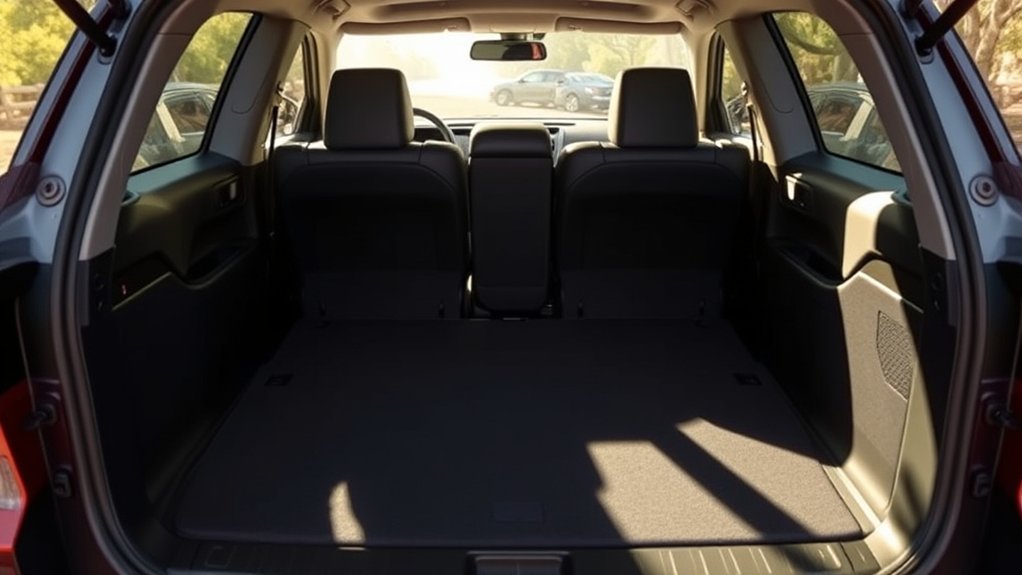
You can make the RAV4’s cargo area safer and easier to use by choosing accessories that solve a specific problem rather than filling the vehicle with unnecessary equipment.
| Accessory Type | Purpose | Best Use |
|---|---|---|
| Cargo organizer | Separates smaller items | Groceries, cleaning supplies, and sports equipment |
| Cargo liner | Protects carpet from dirt and spills | Pets, gardening supplies, boots, and camping gear |
| Seatback protector | Protects folded rear seatbacks | Long or dirty cargo |
| Cargo net | Limits movement of lightweight items | Bags, jackets, and empty containers |
| Roof crossbars | Carries suitable roof-mounted equipment | Approved bike, ski, kayak, or cargo carriers |
Remove unused organizers before carrying large items. Foldable bins and dividers can consume valuable floor width when you need the entire cargo area.
Do Not Confuse Cargo Volume With Payload
Cargo volume measures available space in cubic feet. Payload measures how much combined weight the vehicle can carry. Payload includes the driver, passengers, cargo, accessories, and applicable trailer tongue weight.
Use this calculation:
Available cargo weight = the Tire and Loading Information label’s combined occupant-and-cargo limit minus the actual combined weight of all occupants.
Do not use a generic 1,000-pound figure. The correct limit is the one printed on your vehicle’s label, normally located on the driver-side door jamb.
Warning: Secure every load, keep heavy items low, avoid stacking cargo where it blocks rearward visibility, and never allow a person or pet to ride in the luggage area. Uneven or excessive loading can reduce steering and braking control.
Frequently Asked Questions
Can I access the cargo area from outside the RAV4?
Yes. Open the rear liftgate to reach the cargo area. Depending on the model and trim, the RAV4 may have a manual liftgate, power liftgate, or available hands-free power liftgate.
Are cargo accessories available for the RAV4?
Yes. Common choices include fitted cargo liners, organizers, cargo nets, privacy covers, seatback protectors, crossbars, and approved roof carriers. Check model-year compatibility before buying an accessory.
How much weight can the RAV4 cargo area hold?
Toyota does not provide one universal cargo-floor limit for every RAV4. Check the Tire and Loading Information label on your driver-side door jamb. Its limit includes occupants and cargo, so subtract the combined weight of everyone in the vehicle before calculating the remaining cargo allowance.
Do the rear seats recline for passenger comfort?
Many RAV4 versions have reclining rear seatbacks as part of the 60/40 split design. The adjustment range and release mechanism can vary, so check the instructions for your model year.
Is there a power liftgate option for the RAV4?
Yes. Toyota offers power and hands-free liftgate features on selected RAV4 configurations. Availability varies by model year, grade, package, and market.
Can a bicycle fit inside a Toyota RAV4?
Many bicycles can fit with both rear seatbacks folded, but larger frames may require removal of the front wheel. Measure the bicycle, hatch opening, narrowest cargo width, and usable length with the front seats in your normal position.
Can you sleep in the back of a RAV4?
One or two people may be able to create a sleeping area with the rear seats folded, depending on their height and the model’s interior layout. A fitted platform or firm pad may help level the slight incline or gap. Never sleep in a running vehicle or in an enclosed area.
Conclusion
Toyota RAV4 rear seats fold down in a versatile 60/40 split, creating a useful load floor for daily errands, travel, sports equipment, and longer items. The current 2026 RAV4 offers up to 70.4 cubic feet with the second row folded, while many 2024–2025 versions provide 69.8 cubic feet.
Check the specifications for your exact model before relying on a measurement. Measure oversized cargo, secure every item, and use the door-jamb loading label rather than a generic payload estimate. These steps will help you use the available space without exceeding the vehicle’s limits.
Sources
- Toyota 2026 RAV4 overview — current cargo capacity and available hands-free power liftgate
- Toyota 2026 RAV4 brochure — maximum cargo volume and 60/40 split fold-flat seat design
- Toyota 2024 RAV4 brochure — trim-specific cargo dimensions, cargo volume, and payload figures
- Honda 2026 CR-V comparison — current CR-V maximum cargo-volume figure
- Nissan 2026.5 Rogue features — current Rogue maximum cargo-volume figure
- Subaru 2026 Forester gallery — current Forester maximum cargo-volume figure
