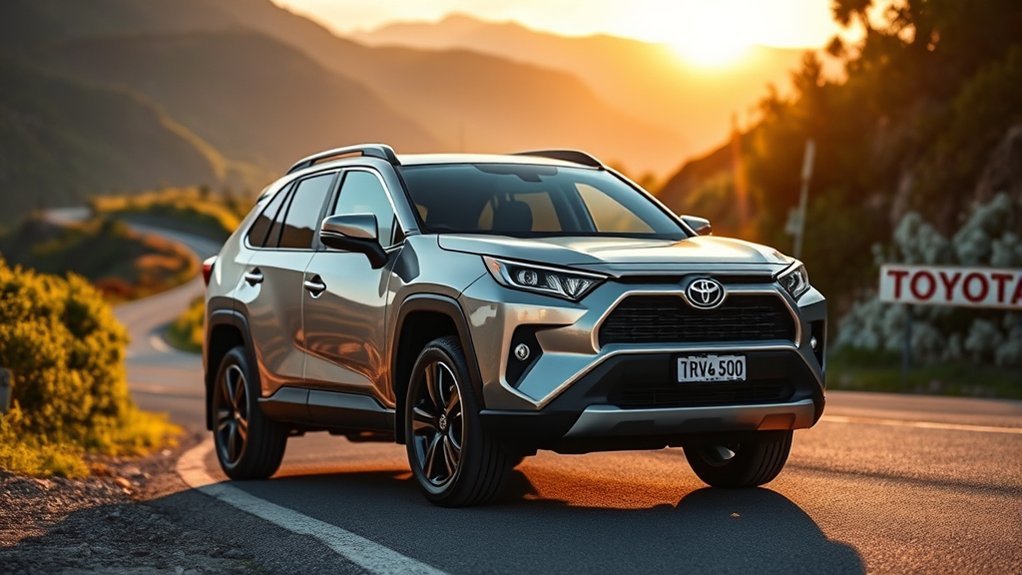
How long does a Toyota RAV4 last? Current third-party longevity data gives a useful benchmark, but not an expiration mileage. iSeeCars currently estimates an average RAV4 lifespan of 175,778 miles (about 282,900 km) and a 33.1% chance of reaching at least 200,000 miles (about 321,900 km). A specific RAV4 can retire much earlier or run much longer depending on maintenance, corrosion, driving conditions, accident history, and repair quality.
Last updated: September 19, 2026
Quick Answer
A Toyota RAV4 has no guaranteed expiration mileage. Current iSeeCars data estimates an average lifespan of 175,778 miles (about 282,900 km), while Canadian Clutch appraisal data shows that some older RAV4s continue well beyond 300,000 km. Treat those figures as population-level evidence, not a promise for one vehicle. Service history, structural rust, overheating history, drivetrain condition, and upcoming repair costs matter more than the odometer alone.
Key Takeaways
- Toyota does not publish a universal retirement mileage for the RAV4; current third-party data provides estimates rather than a manufacturer guarantee.
- Passing 200,000 km (about 124,000 miles) does not automatically make a RAV4 unreliable, but inspection and repair needs become more important.
- A documented service history is usually more valuable than a low odometer reading with missing records.
- Documented oil-consumption, harsh-shift, and slow-roll hesitation bulletins apply to specific engines, model years, and markets—not every RAV4.
- Check the VIN for open recalls and use the maintenance schedule and owner’s manual for your exact year and powertrain.
How Long Does a Toyota RAV4 Last?

What Does Current RAV4 Longevity Data Show?
No official Toyota document states that every RAV4 should last a specific number of kilometres. A vehicle’s useful life ends when its condition, safety, reliability, or repair costs no longer suit its owner.
Two current datasets help put the mileage question in context. iSeeCars estimates the RAV4’s average lifespan at 175,778 miles (about 282,900 km) and gives it a 33.1% chance of reaching at least 200,000 miles. The company says its reliability model uses more than 312 million vehicles. Separately, Clutch reports that among Canadian RAV4s offered to it at age 16 or older, the typical odometer reading is about 235,000 km; 43.1% have passed 250,000 km and 19.7% have passed 300,000 km. Clutch also notes that its sample covers vehicles offered to the company, not every RAV4 ever built.
| Source | What It Reports | How to Use It |
|---|---|---|
| iSeeCars, current 2026 data | 175,778-mile average estimated lifespan; 33.1% estimated chance of reaching 200,000 miles | A broad statistical benchmark, not a mechanical failure point or warranty. |
| Clutch, Canadian appraisal data published August 2026 | For RAV4s age 16+, typical mileage about 235,000 km; 19.7% above 300,000 km | Useful Canadian high-mileage context, but the sample is limited to vehicles offered to Clutch. |
You can still use 200,000 km as a practical high-mileage checkpoint, not an expiration date. At that stage, service records, oil use, transmission behaviour, cooling-system condition, suspension wear, and corrosion tell you more than the odometer alone.
Reaching 300,000 km or more is clearly possible, but it should not be promised for every RAV4. A neglected vehicle can require major repairs much earlier, while a carefully maintained example may remain economical to operate at much higher mileage.
Mileage is the result of maintenance, operating conditions, age, and repairs. It is not a guarantee of how much life remains.
What RAV4 Mileage Can Mean in Years
The same odometer reading can represent very different ownership histories. The examples below are simple calculations, not predictions of how long your vehicle will last.
| Annual Driving | 200,000 km | 300,000 km | 400,000 km |
|---|---|---|---|
| 10,000 km per year | 20 years | 30 years | 40 years |
| 15,000 km per year | About 13 years | 20 years | About 27 years |
| 20,000 km per year | 10 years | 15 years | 20 years |
A 15-year-old RAV4 with low mileage can still have age-related rubber, seal, battery, brake, and corrosion problems. A newer highway-driven vehicle with higher mileage may have less short-trip wear but more accumulated use. You need to assess both age and distance.
Top Factors That Affect the Longevity of Your RAV4
Your RAV4’s lifespan depends on more than oil changes. Climate, trip length, towing, corrosion, repair quality, and the exact powertrain all affect how the vehicle ages.
Regular Maintenance Practices
Start with the schedule for your exact model year. Toyota Canada provides a vehicle-specific maintenance schedule. Its general service guidance commonly uses a 6-month or 8,000-km cadence, but the personalized schedule for your VIN, model year, powertrain, and operating conditions takes priority.
- Use the engine-oil viscosity and specification listed in your owner’s manual.
- Inspect oil, coolant, brake fluid, transmission fluid, and other service items at the correct model-specific intervals.
- Rotate tires and correct alignment problems before uneven wear damages the tires or handling.
- Address leaks, warning lights, unusual noises, and changes in shifting before the condition worsens.
- Keep invoices and record the date and odometer reading for every service.
You can find manuals for many model years through Toyota Canada’s owner’s-manual library. Do not substitute a generic internet interval when the manual gives different instructions for your engine, hybrid system, towing use, or severe operating conditions.
Pro Tip: When you buy a used RAV4 with incomplete records, arrange a baseline inspection before assuming every fluid and wear item is current. A clear starting point makes future maintenance easier to track.
Driving Conditions Impact
Frequent cold starts, short trips, heavy traffic, dusty roads, towing, roof loads, and off-road use can increase wear. Highway travel often involves fewer braking and shifting cycles, but high annual mileage still adds wear to bearings, fluids, tires, and suspension parts.
Winter road salt can speed corrosion on brake lines, fasteners, suspension mounting points, exhaust components, and the body structure. Wash salt from the underbody, repair damaged coatings, and have questionable rust inspected before it becomes structural.
Aggressive acceleration and late braking also increase load on the engine, transmission, brakes, tires, and cooling system. Smooth driving cannot prevent every failure, but it can reduce unnecessary heat and wear.
Age, Corrosion, and Storage
A low-mileage RAV4 is not automatically a long-life vehicle. Rubber hoses, seals, tires, wiper components, batteries, and fluids age even when the vehicle is parked. Long storage periods can also contribute to seized brakes, pest damage, discharged batteries, and fuel deterioration.
Inspect the body and underside for more than surface rust. Structural corrosion near suspension mounts, subframes, brake lines, seat-belt anchor areas, or unibody seams can create a safety problem that ordinary mechanical maintenance cannot solve.
Gasoline, Hybrid, and Plug-In Hybrid Differences
Gasoline, hybrid, and plug-in hybrid RAV4s do not have identical maintenance or inspection needs. Hybrid models add high-voltage components, power electronics, cooling paths, and an electrified transaxle. Plug-in hybrids also add charging hardware and a larger traction battery.
For Canada, Toyota’s 2026 RAV4 family is fully electrified: seven hybrid grades are joined by four RAV4 Plug-in Hybrid grades. Toyota says all 2026 RAV4 hybrid models sold in Canada are assembled at Toyota Motor Manufacturing Canada. Newer ownership guidance therefore needs to include hybrid-system condition rather than focusing only on engines and conventional automatic transmissions. For hybrid-specific longevity checks, see the RAV4 Hybrid lifespan guide.
Do not open or repair high-voltage components yourself. A qualified technician should inspect warning messages, battery-cooling concerns, isolation faults, damaged orange high-voltage cables, or collision-related hybrid-system damage.
What High-Mileage RAV4 Stories Can Tell You
High-mileage owner stories show that a RAV4 can remain operational for a long time. They do not prove that every example will reach the same odometer reading or require the same repairs.
Useful high-mileage accounts include details such as:
- The model year, engine, drivetrain, and market
- How often the vehicle was serviced
- Whether it was driven mainly on highways or short urban trips
- Which major parts were replaced
- Whether the body remained free of structural corrosion
- How much oil or coolant the vehicle used between services
A statement such as “my RAV4 reached 400,000 km” has limited value without that context. The vehicle may have received an engine, transmission, hybrid battery, suspension overhaul, or extensive rust repair along the way.
Note: A vehicle can reach a high odometer reading and still be expensive or unsafe to keep. Longevity should include dependable operation, manageable repairs, and sound structural condition.
How Reliable Is the Toyota RAV4 Compared to Other SUVs?
The RAV4 has a long market history, but no single ranking can prove that every RAV4 is more reliable than every Honda CR-V, Subaru Forester, Mazda CX-5, or Hyundai Tucson. Results can change by model year, engine, drivetrain, maintenance history, and the organization conducting the survey.
How to Read RAV4 Reliability Rankings
Before relying on a ranking, check what it measures. Some studies count owner-reported problems during the first few years. Others estimate repair frequency, resale value, inspection failures, or long-term owner satisfaction. For example, iSeeCars says its current RAV4 lifespan model analyzes more than 312 million vehicles and estimates survival to mileage thresholds; that is different from a survey that simply counts owner complaints.
A useful ranking should identify:
- The exact model years included
- The number of vehicles or owners studied
- Whether minor infotainment faults count the same as powertrain failures
- The country or climate represented
- Whether maintenance history and mileage were considered
Recall counts should not be used as a stand-alone reliability score. A recall addresses a safety or compliance issue, while many age-related mechanical repairs never become recalls.
Comparisons With Competing Models
Compare vehicles from the same model year and price range rather than comparing the RAV4 nameplate with an entire rival lineup. A well-maintained competitor can be a better purchase than a neglected RAV4.
Use the following order when comparing used compact SUVs:
- Check service records and ownership history.
- Inspect for accident repairs and structural corrosion.
- Check the VIN for unrepaired recalls.
- Confirm that warning lights complete their normal self-test.
- Scan all control modules for current, pending, and history codes.
- Test the engine, transmission, AWD system, brakes, steering, and climate control.
- Compare the likely repair list with the purchase price.
In Canada, you can check a Toyota VIN through the Toyota recalls and campaigns lookup. Transport Canada also provides national defect and recall resources.
Common Reliability Issues
Some RAV4 concerns are model-specific. A technical service bulletin does not mean every vehicle in that year will fail, and it is not the same as a safety recall. It gives trained technicians information about a condition that may occur and the applicable diagnostic or repair procedure.
- Some 2001–2003 automatic RAV4s: Toyota U.S. bulletin T-SB-0156-10 covers harsh shifting or a malfunction indicator light with specified diagnostic codes. Its procedure confirms the condition, replaces the ECM, completes relearn/testing, and considers transaxle replacement only if the defined problem remains.
- Some 2006–2008 RAV4s with the 2AZ-FE engine: Toyota U.S. bulletin T-SB-0094-11 covers an engine-oil-consumption condition for specified RAV4 VIN ranges. Do not apply the bulletin to every RAV4 from 2006–2011.
- Some 2019 RAV4s: Toyota U.S. bulletin T-SB-0107-19 Rev1 covers hesitation from a slow roll or rolling stop at 6 mph or below, immediately after a 3–1 downshift and with less than 40% accelerator input. The procedure checks applicability and updates ECM calibration.
Common Issues Found in Older Toyota RAV4 Models

The table below summarizes documented concerns from the original article with corrected model-year scope. It is a screening guide, not a diagnosis or a list of years that every buyer should avoid.
| Model or Engine | Condition to Check | What It Means |
|---|---|---|
| Some 2001–2003 automatic RAV4s covered by U.S. T-SB-0156-10 | Harsh shifting, warning light, or applicable transmission codes | Toyota’s procedure starts with condition/code confirmation and ECM replacement plus relearn/testing; transaxle replacement is considered only if the defined problem remains. |
| Some 2006–2008 RAV4s equipped with the 2AZ-FE engine | Engine-oil consumption | Toyota U.S. T-SB-0094-11 lists specified 2006–2008 RAV4 applications and production cutoffs. Check the oil level, service history, VIN applicability, and any completed repair records. |
| Some 2019 RAV4s | Hesitation from a slow roll or rolling stop | Toyota U.S. T-SB-0107-19 Rev1 defines the low-speed condition and an ECM-calibration update. Confirm market/VIN applicability and whether the update was completed. |
| Any model year | Open safety recall | Recall applicability depends on the VIN and market. Use a current Toyota or government lookup instead of a static recall count. |
Warning: Stop driving and seek professional guidance if you see an oil-pressure warning, repeated overheating, brake-system warning, severe loss of power, uncontrolled harsh shifting, fuel leakage, or structural corrosion near a suspension or seat-belt mounting point.
[Amazon Products Picked for You]

6Qt Genuine 00289-ATFWS 100% brand new and never used Genuine Toyota Lexus automatic transmission fluid Fit Type: Universal Fit
Essential Maintenance Tips to Extend Your RAV4’s Life
You cannot guarantee a target mileage, but you can reduce preventable wear and detect developing problems earlier.
[Amazon Products Picked for You]

GENUINE OEM: Original Toyota/Lexus factory oil filter part number 90915-YZZN1, ensuring perfect fit and optimal performance for your vehicle

Effectively removes contaminants
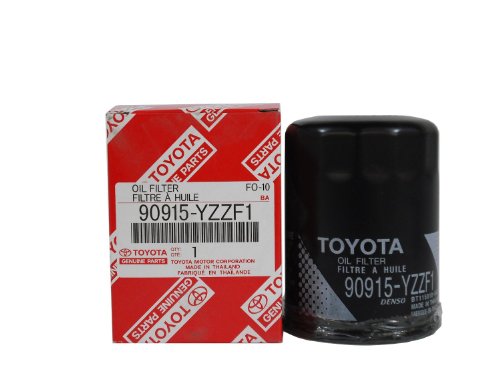
Item Package Dimension: 13.69L x 6.019W x 4.20H inches
Follow the Correct Schedule
Use the schedule for the exact year, engine, drivetrain, and market. Time-based service still matters when you drive few kilometres. Severe operating conditions may also change inspection or replacement needs.
Check the Oil Between Services
Do not wait for the next oil change to discover that the level is low. Park on level ground, follow the manual’s checking procedure, and record any repeated top-ups. A sudden increase in oil use requires diagnosis.
Protect the Cooling System
Overheating can turn a manageable cooling-system repair into major engine damage. Investigate coolant loss, temperature fluctuations, a sweet smell, an inoperative heater, or dried coolant residue.
Service Brakes, Tires, and Suspension
Uneven tire wear can reveal alignment, suspension, or pressure problems. Inspect brake pads, rotors, lines, hoses, wheel bearings, ball joints, bushings, struts, and shocks as mileage increases.
Control Corrosion
Wash winter salt from the body and undercarriage. Inspect drain points, wheel arches, rocker areas, brake lines, subframes, suspension mounts, and repaired collision areas. Cosmetic surface rust and structural corrosion are not the same problem.
Keep a Repair History
A simple record helps you spot patterns. Include the date, mileage, symptoms, diagnostic codes, parts used, fluid specifications, and the shop that completed the work.
How to Estimate Your RAV4’s Remaining Life
No inspection can predict an exact retirement date, but the following process gives you a more useful answer than mileage alone.
- Review the records: Look for consistent service, not only recent work completed before a sale.
- Inspect it cold: A cold start can reveal smoke, timing noise, weak batteries, rough running, and fluid leaks that a warmed engine may hide.
- Scan every module: Check engine, transmission, AWD, ABS, airbag, hybrid, and body-system codes where supported.
- Check fluid condition and leaks: Identify the source instead of assuming every seep is harmless.
- Inspect the structure: Pay close attention to corrosion, collision repairs, subframes, and suspension mounting points.
- Test it at several speeds: Include parking manoeuvres, stop-and-go driving, steady cruising, braking, turns, and safe acceleration.
- Assess upcoming work: Price worn tires, brakes, suspension, leaks, warning lights, and overdue services together.
- Get an independent inspection: A qualified technician can identify problems that are not visible during a short test drive.
Signs a High-Mileage RAV4 May Still Have Useful Life
- Complete or credible service records
- No active overheating, oil-pressure, brake, airbag, AWD, or hybrid warnings
- Stable oil and coolant levels
- Smooth starting, shifting, steering, and braking
- No serious structural corrosion
- No evidence of poorly repaired collision damage
- A manageable list of routine wear repairs
Signs the Odometer May Be the Least of Your Concerns
- Repeated overheating or unexplained coolant loss
- Low oil pressure, heavy smoke, or rapidly rising oil consumption
- Severe transmission slipping or harsh engagement
- Multiple warning systems disabled or recently cleared
- Structural rust or damaged suspension mounting points
- Flood damage, wiring corrosion, or persistent electrical faults
- Several major systems requiring repair at the same time
When to Repair or Replace a High-Mileage RAV4
A large repair does not automatically mean the vehicle is finished. Compare the repair with the condition of the entire RAV4 and the cost of replacing it with a vehicle you trust.
Repair may make sense when the structure is sound, the problem is isolated, the rest of the vehicle has been maintained, and the repair gives you a reasonable period of dependable use.
Replacement becomes easier to justify when structural corrosion affects safety, major problems are multiplying, the vehicle repeatedly overheats, essential parts are unavailable, or repair costs continue without restoring dependable operation.
Do not base the decision only on the vehicle’s resale value. Also consider downtime, safety, expected future repairs, insurance, financing, and how well the RAV4 still meets your needs.
[Amazon Products Picked for You]


[Vehicle Fitment]: Compatible with Ram 1500 SLT 2013 V8 4.7L, 1500 ST 2013 V8 4.7L, 1500 SXT 2013 V8 4.7L, 1500 Tradesman 2013 V8 4.7L --- Suction Line (Low Pressure - Compressor to Evaporator); It fits the model using Flex; SOHC

Frequently Asked Questions
How many miles can a Toyota RAV4 last?
Current iSeeCars data estimates an average RAV4 lifespan of 175,778 miles and a 33.1% chance of reaching at least 200,000 miles. Some vehicles go farther, but those figures are statistical estimates, not a guarantee for an individual RAV4. Maintenance history, corrosion, accident damage, overheating, and repair quality can move the outcome substantially.
How many years can a Toyota RAV4 last?
There is no fixed year limit. iSeeCars currently expresses its RAV4 lifespan estimate as about 15 years, but annual mileage and age-related deterioration vary widely. A low-mileage older RAV4 can still need work because rubber parts, fluids, batteries, brakes, wiring, and corrosion protection age with time.
What is the average cost of maintaining a high-mileage RAV4?
No universal annual figure is reliable. Cost depends on labour rates, location, powertrain, rust, mileage, previous maintenance, and upcoming wear items. Build a useful budget by pricing the next scheduled service, tires, brakes, known leaks, suspension wear, and any current diagnostic faults.
Can I use aftermarket parts for RAV4 maintenance?
You can use suitable aftermarket parts, but quality and fit vary. Match the required specification, confirm compatibility with the VIN and powertrain, and use reputable parts for safety-critical systems. Review the applicable warranty terms before altering a vehicle that remains under warranty.
How does driving style affect a RAV4’s lifespan?
Frequent hard acceleration, late braking, overloading, and aggressive towing add heat and wear. Smooth inputs and correct load management reduce unnecessary strain, although maintenance and vehicle condition remain more important than driving style alone.
Should a high-mileage RAV4 use high-mileage oil?
Use oil that meets the viscosity and specification in the applicable owner’s manual. A product marketed for high-mileage engines is not automatically required and will not repair mechanical wear. Discuss persistent leaks, smoke, or oil consumption with a qualified technician.
What should I inspect when buying a high-mileage RAV4?
Check service records, cold-start behaviour, fluid levels, leaks, warning lights, diagnostic codes, corrosion, accident repairs, tires, brakes, suspension, shifting, AWD operation, climate control, and recall status. Arrange an independent pre-purchase inspection before committing.
Is 200,000 km too much for a used Toyota RAV4?
Not automatically. In Clutch’s 2026 Canadian data, one in three 2010–2012 RAV4s offered to the company had already passed 250,000 km. That does not prove a particular 200,000-km vehicle is a good buy. A documented and structurally sound RAV4 may be a better purchase than a lower-mileage vehicle with neglect, collision damage, overheating history, or missing records. Price the repairs likely to come next and arrange an independent inspection.
Does a gasoline or hybrid RAV4 last longer?
Neither powertrain has a guaranteed lifespan advantage in every situation. Gasoline and hybrid models have different components and repair risks. Compare the exact model year, maintenance history, diagnostic results, battery or charging-system condition, corrosion, and total repair needs.
Conclusion
Current data supports treating the RAV4 as a vehicle with strong high-mileage potential, not a vehicle with a guaranteed mileage target. iSeeCars currently estimates an average lifespan of 175,778 miles (about 282,900 km), while Clutch’s Canadian appraisal sample shows that some older RAV4s continue beyond 300,000 km. Use those numbers as context, then judge the actual vehicle by maintenance records, oil and coolant condition, corrosion, warning lights, powertrain behaviour, and upcoming repair costs.
The best way to extend your RAV4’s life is to follow its model-specific schedule, investigate symptoms early, protect it from corrosion, and keep accurate records. When buying a high-mileage example, pay for a thorough inspection rather than relying on the RAV4 name or a seller’s mileage story.
Sources
- iSeeCars Toyota RAV4 Reliability — current 2026 statistical lifespan estimate and 200,000-mile probability
- Clutch: How Long Can a Toyota RAV4 Last? — 2026 Canadian appraisal and inspection data for high-mileage RAV4s
- Toyota Canada Maintenance Schedule — model-specific service planning and maintenance guidance
- Toyota Canada Owner’s Manuals — oil, fluid, operating, warning, and safety instructions
- Toyota Canada Recalls and Campaigns Lookup — current VIN-specific recall status
- Toyota Canada 2026 RAV4 release — Canadian hybrid lineup and assembly details
- Toyota Canada 2026 RAV4 Plug-in Hybrid release — Canadian plug-in hybrid lineup details
- Toyota T-SB-0094-11 Rev2 — U.S. oil-consumption guidance listing specified 2006–2008 RAV4 2AZ-FE applications
- Toyota T-SB-0107-19 Rev1 — U.S. 2019 RAV4 slow-roll acceleration hesitation and ECM calibration
- Toyota T-SB-0156-10 Rev2 material hosted by NHTSA — U.S. 2001–2003 RAV4 harsh-shift condition, diagnostic codes, ECM procedure, and possible transaxle replacement
