For most Toyota RAV4 Hybrid owners, the safe oil-change plan is simple: follow the oil grade and service interval in your owner’s manual, check the oil level between services, and shorten the interval when you drive in harsh conditions. This guide explains the normal schedule, severe-use schedule, oil-type caveats, oil-level checks, DIY safety, and disposal steps so you can protect your engine without guessing.
Quick Answer
Change your Toyota RAV4 Hybrid oil every 10,000 miles or 12 months under normal driving conditions, unless your owner’s manual says otherwise. Use the oil viscosity listed in your manual, commonly SAE 0W-16 for many U.S. RAV4 Hybrid models. For severe use, shorten service to about 5,000 miles or 6 months.
Key Takeaways
- Use the oil viscosity printed in your Toyota owner’s manual, not a generic online chart.
- Normal driving usually fits a 10,000-mile or 12-month oil-change schedule.
- Towing, dusty roads, heavy idling, short cold-weather trips, and repeated low-speed driving can require a 5,000-mile or 6-month schedule.
- Check the oil level at least every few thousand miles and before long trips.
- Keep oil-change receipts and service records, especially during the warranty period.
At a Glance
| Time Required | 5 minutes to check oil level; about 30–60 minutes for a DIY oil and filter change if you already have the tools. |
| Difficulty | Easy for checking the oil; moderate for a full DIY oil change. |
| Tools Needed | Owner’s manual, lint-free cloth, correct oil, correct oil filter, drain pan, funnel, gloves, wrench, oil-filter wrench, and safe ramps or jack stands for DIY service. |
| Cost | Oil-level checks are free. DIY oil changes cost less if you already own tools, while professional service adds labor and inspection value. |
Recommended Oil Change Interval for the RAV4 Hybrid
Under normal driving conditions, many Toyota RAV4 Hybrid maintenance schedules use a 10,000-mile or 12-month oil-change interval. That means you should not wait beyond the time limit just because you drive fewer miles.
Your exact schedule can vary by model year, market, engine, and maintenance guide. Before you buy oil or reset a reminder, check your Toyota owner’s manual through the official Toyota Manuals and Warranties page or your printed Warranty & Maintenance Guide.
Oil changes matter because fresh oil helps lubricate moving parts, carry away heat, suspend contaminants, and protect internal engine surfaces. Hybrid engines may shut off and restart often, but they still need clean oil and a clean filter on schedule.
Note: Toyota announced an all-new 2026 RAV4 with updated hybrid and plug-in hybrid powertrains. If you own a 2026 or newer RAV4, use the maintenance guide for that exact model year rather than assuming older RAV4 Hybrid guidance applies.
When to Change Your Oil Based on Driving Conditions
The right interval depends on how you drive. Normal commuting, mixed highway driving, and moderate weather often fit the standard schedule. Harder use can age oil faster and may require more frequent service.
Normal Driving Conditions
Use the normal schedule when most of your driving includes fully warmed-up trips, moderate loads, and regular roads. For many RAV4 Hybrid owners, that means changing the oil and filter every 10,000 miles or 12 months, whichever comes first.
Special Operating Conditions
Use the shorter schedule if your RAV4 Hybrid often deals with harsher use. Toyota maintenance guides commonly treat these as special operating conditions:
- Frequent short trips, especially in freezing weather
- Extended idling or long periods of low-speed driving
- Towing, roof loads, or repeated heavy cargo use
- Dusty roads, dirt roads, or off-road driving
- Hot weather, steep grades, or stop-and-go traffic that keeps the engine working hard
If those conditions sound like your routine, change the oil and filter about every 5,000 miles or 6 months, unless your manual gives a different schedule.
Oil Change Frequency Summary
- Normal use: Change oil and filter every 10,000 miles or 12 months.
- Severe use: Change oil and filter every 5,000 miles or 6 months.
- Between services: Check the oil level regularly and before long trips.
- After service: Keep the receipt, mileage, oil grade, filter part number, and service date.
Pro Tip: Save a photo of each oil-change receipt in a phone folder named “RAV4 maintenance.” If you sell the vehicle or need warranty support, organized records make the service history easier to prove.
What Oil Should You Use in a RAV4 Hybrid?
Use the engine oil viscosity and specification listed in your owner’s manual. For many U.S.-market RAV4 Hybrid models, Toyota commonly specifies SAE 0W-16 full synthetic engine oil. Some manuals allow SAE 0W-20 only when the preferred oil is unavailable, often with a return to the preferred viscosity at the next change.
That is why you should avoid treating 0W-20 as a universal RAV4 Hybrid recommendation. The safest wording is this: use the oil your manual specifies for your model year and engine. If the oil cap, manual, and service adviser disagree, follow the owner’s manual and ask a Toyota dealer to verify by VIN.
Also replace the oil filter at each oil change. A fresh filter helps remove particles and keeps the new oil cleaner for the full service interval.
[Amazon Products Picked for You]

Mobil 1 0W-16 is a low viscosity, advanced full synthetic motor oil

Optimum oil pressure under all operating conditions

Especially designed for hybrid gasoline engines requiring an SAE 0W-16 engine oil, compatible with HONDA 08232-P99S1LHE, HONDA 08216-99974HONDA 08215-99974, HONDA ULTRA NEXT, HONDA ULTRA GREENHYBRID ENGINE, NISSAN KLANM-01A04 EXTRA SAVE X ECO, MITSUBISHI MZ102661, MITSUBISHI MZ102662, MITSUBISHI DIAQUEEN ECO PLUS, TOYOTA 08880-11005
Signs Your RAV4 Hybrid Needs an Oil Change
Your maintenance schedule should guide oil changes, but warning signs can tell you not to wait. Check the oil soon if you notice any of these issues:
- Maintenance reminder or oil-change message: A reminder means the vehicle has reached a programmed service point or needs attention.
- Low oil level: Oil below the safe dipstick range needs correction before you keep driving.
- Dark, gritty, or burnt-smelling oil: Oil color alone is not a perfect test, but gritty texture or a burnt smell deserves attention.
- More engine noise than usual: Ticking, knocking, or rough operation can point to low oil, old oil, or another issue.
- Reduced fuel economy or rough running: These can have many causes, but overdue maintenance is one possible factor.
Warning: Do not keep driving if the oil-pressure warning light stays on. Stop safely, shut the vehicle off, and check the manual or contact roadside assistance. Low oil pressure can damage an engine quickly.
Checking Your Oil Level: A Quick Guide
Checking the oil level takes only a few minutes and can help you catch leaks, consumption, or service mistakes early. Do it before long trips and between scheduled services.
Why Regular Checks Matter
Low oil can increase wear, raise engine temperatures, and shorten engine life. Too much oil can also cause problems, so the goal is not simply “more oil.” The goal is the correct level on the dipstick.
How to Check the Oil
- Park your RAV4 Hybrid on a level surface.
- Turn the vehicle off and wait several minutes so oil can drain back into the oil pan.
- Open the hood and locate the dipstick.
- Pull the dipstick out and wipe it clean with a lint-free cloth.
- Reinsert the dipstick fully, then pull it out again.
- Confirm the oil level sits between the low and full marks.
- If the level is low, add a small amount of the correct oil through the oil-fill cap, then recheck.
- Do not overfill. Add slowly and recheck until the level is within range.
If the oil level drops repeatedly between changes, schedule an inspection. A hybrid engine should not need frequent top-offs under normal conditions.
Why Regular Oil Changes Are Crucial for Your RAV4 Hybrid
Regular oil changes help your RAV4 Hybrid run smoothly, but they also protect you from expensive long-term problems. Old oil can carry more contaminants and may not protect engine parts as well as fresh oil.
- Better lubrication: Fresh oil helps reduce friction between moving engine parts.
- Cleaner engine internals: The oil and filter work together to hold and remove contaminants.
- More stable operation: Correct oil helps the engine handle heat, cold starts, and repeated hybrid start-stop cycles.
- Warranty support: Following the maintenance guide and keeping records helps show that you maintained the vehicle properly.
Toyota’s ToyotaCare and maintenance plans explain factory scheduled maintenance coverage for new Toyota vehicles and related service options. Coverage details can vary, so confirm your plan by VIN or with a Toyota dealer.
DIY vs. Professional Oil Changes: What Works Best for You?
You can change RAV4 Hybrid oil yourself if you have the right tools, a safe workspace, and basic experience. You may prefer a professional service if you want a multi-point inspection, dealer records, or help confirming the correct oil and filter.
Choose DIY If
- You already have safe ramps or jack stands.
- You know how to support the vehicle securely.
- You can access the drain plug and filter without forcing parts.
- You will use the exact oil and filter your manual requires.
- You can recycle used oil and filters properly.
Choose Professional Service If
- Your RAV4 Hybrid is still under warranty and you want dealer service records.
- You are unsure about the correct oil viscosity or filter.
- You do not have a safe place to lift or work under the vehicle.
- You want the brakes, tires, fluids, lights, and underbody checked at the same visit.
- You noticed leaks, warning lights, burning smells, or abnormal engine noise.
Warning: Never work under a vehicle supported only by a jack. Use ramps or jack stands rated for the vehicle, park on a flat surface, set the parking brake, and follow the owner’s manual safety instructions.
How to Dispose of Used Oil and Filters
Do not pour used motor oil into the ground, a storm drain, a sink, or household trash. Used oil can pollute soil and water, so collect it in a clean, leak-proof container and take it to an approved recycling point.
The U.S. Environmental Protection Agency says used oil from one oil change can contaminate one million gallons of fresh water. The EPA recommends using leak-proof containers and checking with local automotive service facilities, waste collectors, or government waste officials for recycling options. You can read the EPA’s consumer guidance here: Managing, Reusing, and Recycling Used Oil.
Drain and recycle the used oil filter too. Many collection centers that accept used oil also accept properly drained filters.
Other Key Maintenance Tips for Your RAV4 Hybrid
Oil changes are only one part of keeping your RAV4 Hybrid dependable. Use each oil service as a chance to check related maintenance items.
- Tire rotation: Rotate tires on schedule to promote even wear and better handling.
- Fluid checks: Inspect coolant, brake fluid, washer fluid, and other visible fluid levels.
- Cabin air filter: Replace it more often if you drive in dusty areas or heavy traffic.
- Engine air filter: A clogged filter can hurt performance and efficiency.
- Brake inspection: Hybrid regenerative braking can change brake-wear patterns, so inspections still matter.
- Maintenance reminder reset: Reset the reminder only after the service is complete, not before.
[Amazon Products Picked for You]
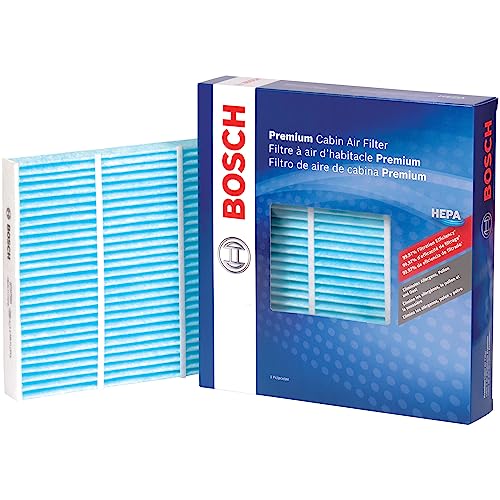
Bosch HEPA Premium Cabin Air Filters are designed and tested to meet High Efficiency Particulate Air (HEPA) standards based on ISO 29463-3:2011 and provide filtration efficiency of 99.97% at 0.3 microns

[Vehicle Fitment]: Replacement for Toyota: Avalon (2019-2022), Camry (2018-2025), Corolla (2019-2025), Corolla Cross (2022-2025), CROWN (2023-2024), C-HR (2018-2022) [IMPORTANT: Fits Japan Built Models ONLY, VIN starts with 'J'],Highlander (2020-2025), Prius (2016-2025), Prius AWD-E (2019-2022), Prius Prime (2017-2024), RAV4 (2019-2025), RAV4 Prime (2021-2024), Sienna (2021-2025), Venza (2021-2024), Grand Highlander (2024-2025), GR Corolla (2023-2025).
High Efficiency Particulate Cabin Air Filters Are Designed To Trap Microscopic Pollutants Including Pollen, Mold And Common Allergens
Frequently Asked Questions
Can I use 0W-20 oil instead of 0W-16 in a Toyota RAV4 Hybrid?
Use the viscosity listed in your owner’s manual. Many RAV4 Hybrid manuals commonly specify SAE 0W-16. If your manual allows 0W-20 as a temporary alternative, switch back to the preferred oil at the next change. Do not use 0W-20 as a blanket replacement unless your manual permits it.
What happens if I miss the oil-change interval?
Missing one interval by a small amount does not always mean immediate engine damage, but repeated delays can increase contamination, reduce lubrication, and make warranty questions harder. Change the oil as soon as practical and return to the correct schedule.
How does oil-change maintenance affect my warranty?
Warranty coverage depends on the warranty terms, the problem, and whether required maintenance was performed. Keep receipts showing the date, mileage, oil type, filter, and service provider. If you do DIY oil changes, save product receipts and a simple service log.
Is it okay to top off oil between changes?
Yes, top off the oil if the dipstick shows the level is low. Use the correct oil and add small amounts at a time. If the level keeps dropping, schedule an inspection because repeated top-offs can point to a leak, consumption issue, or service mistake.
Should I reset the maintenance reminder myself?
Reset the maintenance reminder only after the oil change and required service checks are complete. If a shop performs the oil change, ask them to reset it and record the service. If you reset it early, you may lose track of the real interval.
How can I dispose of used oil after a DIY oil change?
Pour used oil into a clean, leak-proof container and take it to a recycling center, auto-parts store, service facility, or local waste collection site that accepts used motor oil. Do not dump oil into drains, soil, trash, or waterways.
Conclusion
Keeping your Toyota RAV4 Hybrid on the right oil-change schedule protects the engine, supports fuel efficiency, and helps preserve service records. For normal use, plan around 10,000 miles or 12 months. For severe use, use the shorter 5,000-mile or 6-month schedule. Most importantly, follow the oil grade and schedule in your exact owner’s manual, keep records, and recycle used oil properly.
Sources
- Toyota Manuals and Warranties — official owner’s manual and warranty guide lookup for model-specific maintenance details.
- ToyotaCare & Maintenance Plans — Toyota factory scheduled maintenance coverage and plan information.
- Toyota USA Newsroom: All-New 2026 RAV4 — freshness note for 2026 RAV4 hybrid and plug-in hybrid changes.
- U.S. EPA: Managing, Reusing, and Recycling Used Oil — used motor oil handling, recycling, and disposal guidance.
