
The Toyota Tacoma has changed from a compact, relatively simple pickup into a modern midsize truck with turbocharged and hybrid power. Understanding the four Tacoma generations helps you compare size, engines, towing ability, safety technology, off-road equipment, and the ownership risks that matter when you shop for a used or new truck.
Quick Answer
Toyota Tacoma has four generations: 1995–2004, 2005–2015, 2016–2023, and 2024–present. Gen 1 is the smallest and simplest; Gen 2 adds midsize space and a 4.0-liter V6; Gen 3 adds a 3.5-liter V6 and more safety technology; Gen 4 switches to turbo-four and hybrid power.
Key Takeaways
- Gen 1 models are compact, simple, and increasingly dependent on condition rather than model year.
- Gen 2 uses a 2.7-liter four-cylinder or 4.0-liter V6. Toyota did not offer a Tacoma V8.
- Gen 3 has the highest published Tacoma model-line tow rating at up to 6,800 pounds when properly equipped.
- Gen 4 offers turbocharged gas and i-FORCE MAX hybrid engines, but no production battery-electric Tacoma.
- For any used Tacoma, check the VIN, frame, service history, modifications, payload label, and exact towing configuration.
Toyota Tacoma Generations at a Glance

| Generation | Model Years | Main Engines | Maximum Towing | Best Fit |
|---|---|---|---|---|
| Gen 1 | 1995–2004 | 2.4L I4, 2.7L I4, 3.4L V6 | Varies widely by configuration | Compact dimensions, mechanical simplicity, restoration projects |
| Gen 2 | 2005–2015 | 2.7L I4, 4.0L V6 | Up to 6,500 lb when properly equipped | Traditional V6 power, practical used-truck value, varied cab choices |
| Gen 3 | 2016–2023 | 2.7L I4, 3.5L V6 | Up to 6,800 lb when properly equipped | V6 capability, modern infotainment, later safety technology |
| Gen 4 | 2024–present | 2.4L turbo I4, 2.4L turbo hybrid | Up to 6,500 lb when properly equipped | Modern cabin, stronger torque, factory overlanding and advanced safety features |
Which Tacoma Generation Should You Buy?
Choose Gen 1 when compact dimensions and simple mechanical systems matter more than modern comfort. Because every Gen 1 Tacoma is now more than two decades old, frame condition, maintenance, previous repairs, and parts availability matter more than mileage alone.
Gen 2 suits you when you want a traditional 4.0-liter V6, a broad range of cab and bed configurations, and fewer electronic systems than newer trucks. A clean, well-maintained truck can be appealing, but a neglected or heavily modified example can quickly erase any purchase-price advantage.
Gen 3 offers the strongest balance for many used buyers. You get the available 278-horsepower V6, up to 6,800 pounds of towing when properly equipped, established TRD trims, and more technology in later model years.
Choose Gen 4 when you prioritize turbocharged torque, a modern cabin, standard Toyota Safety Sense 3.0, available hybrid power, and specialized trims such as Trailhunter. It is the most advanced Tacoma generation, but it does not automatically provide the highest towing capacity or the lowest ownership cost.
Toyota Tacoma Gen 1 (1995–2004): Compact Origins and Engine Choices
Toyota introduced the Tacoma name for the 1995 model year as the North American successor to the truck commonly marketed as the Toyota Pickup. The globally used Hilux name provides part of the family history, but Tacoma became a distinct North American-focused truck with greater emphasis on everyday ride quality, comfort, handling, and personal use.
First-generation engine choices included a 2.4-liter four-cylinder, a 2.7-liter four-cylinder, and a 3.4-liter V6. Availability depended on drivetrain, cab, trim, and model year, so you should verify an individual truck by VIN and under-hood emissions label rather than assuming its engine from exterior badging.
Regular-cab and extended-cab configurations handled most of the early work, while a four-door Double Cab joined later in the generation. Toyota also offered two-wheel drive, PreRunner, and four-wheel-drive layouts, with selected packages adding equipment such as skid plates or a locking rear differential.
Who Gen 1 Suits
- Drivers who want a smaller pickup than later Tacoma generations
- Owners comfortable maintaining an older vehicle
- Off-road enthusiasts who value low weight and compact dimensions
- Buyers willing to prioritize frame condition over cosmetic appearance
Age is the main concern. Inspect the frame, brake and fuel lines, suspension mounting points, cooling system, timing-belt history on applicable V6 trucks, four-wheel-drive operation, and evidence of accident repairs.
Toyota Tacoma Gen 2 (2005–2015): Midsize Redesign, V6 Power, and Towing
The 2005 redesign moved the Tacoma firmly into the midsize class. It offered more interior space, a wider selection of configurations, improved towing ability, and a more substantial road presence than the compact first generation.
Gen 2 used two main gasoline engines: a 2.7-liter four-cylinder and a 4.0-liter V6. Toyota never sold this Tacoma generation with a 5.7-liter V8. The larger V8 appeared in other Toyota truck and SUV lines, not in the Tacoma.
The 4.0-liter V6 was the stronger choice for towing, passing, larger tires, and heavier configurations. Properly equipped trucks could tow up to 6,500 pounds, but the exact limit depends on the truck’s cab, drivetrain, transmission, axle, equipment, and model year.
Regular Cab, Access Cab, and Double Cab versions gave buyers several passenger and cargo combinations. TRD Sport focused more on street-oriented appearance and tuning, while TRD Off-Road models added equipment intended for low-traction terrain. The TRD Pro joined near the end of the generation as the most specialized factory off-road version.
[Amazon Products Picked for You]
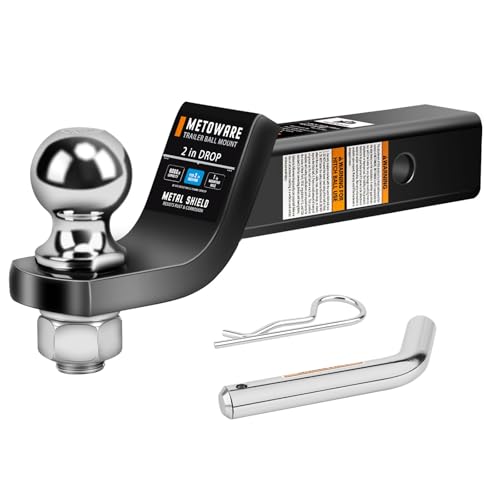
【DEPENDABLE STRENGTH】 - This 2 inch ball hitch delivers dependability for your towing setup, rated to tow 6,000 pounds gross trailer weight and 600 pounds tongue weight.

🚀PRODUCT SIZES: The Triple Ball Hitch with Hook including 1-7/8", 2" and 2-5/16"plating black balls. This three ball hitch is compatible with all standard 2" receivers.

Hitch Cover
Gen 2 Buying Considerations
- Check the frame carefully, especially on trucks used where road salt is common.
- Confirm that four-wheel drive, low range, and any locking differential operate correctly.
- Inspect the composite bed, tailgate, hitch area, and rear frame for towing or impact damage.
- Review transmission, differential, cooling-system, and spark-plug service records.
- Be cautious with lifts, oversized tires, wheel spacers, and unverified tuning changes.
Toyota Tacoma Gen 3 (2016–2023): V6 Performance, Safety Tech, and TRD Trims

The third-generation Tacoma kept the 2.7-liter four-cylinder but replaced the previous V6 with a 3.5-liter unit producing 278 horsepower and 265 pound-feet of torque. Toyota paired the V6 with a six-speed automatic or, on selected configurations, a six-speed manual transmission.
According to Toyota’s 2020 Tacoma specifications, properly equipped V6 trucks could tow up to 6,800 pounds under the SAE J2807 standard. That published maximum is 300 pounds higher than the fourth generation’s 6,500-pound model-line maximum.
Later Gen 3 trucks added more useful cabin and safety technology. For 2020, Toyota listed Toyota Safety Sense P as standard across every Tacoma grade, including a pre-collision system with pedestrian detection, lane-departure alert, automatic high beams, and high-speed dynamic radar cruise control.
The 2020 update also brought Apple CarPlay, Android Auto, Amazon Alexa compatibility, larger touchscreens, and an available power-adjustable driver’s seat on most grades. These changes make later Gen 3 models more convenient for daily use than early 2016–2017 trucks.
[Amazon Products Picked for You]

Genuine NGK Parts

【Automotive Replacement Alternators Part Number】13794N, 13794, 101211-9590, 27060-62160, 27060-62160-84, 27060-62240, 27060-62240-84, 1012119590, 2706062160, 270606216084, 2706062240, 270606224084.【Specifications】① Amperage: 80A; ② Voltage: 12V; ③ Rotation: CW(Clockwise); ④ Number of Grooves: 4-Groove Pulley; ⑤Fan Type: Internal; ⑥Regulator Type: Internal. 【Rigorous standards】Farrme 13794 alternator 80A ensures exact fit, form, and function, adhering to OEM standards for reliability and performance, and is a direct replacement for your original part.

[Application1] Ignition Coil Pack Compatible with Toyota: 2003-2009 4Runner Limited/SR5/Sport 4.0L, 2007-2009 FJ Cruiser Base 4.0L, 2007 FJ Cruiser TRD Special Edition 4.0L, 2008 FJ Cruiser Trail Teams Special Edition 4.0L, 2005-2015 Tacoma Base/Pre Runner 4.0L, 2015 Tacoma TRD Pro 4.0L, 2005-2013 Tacoma X-Runner 4.0L, 2005-2010 Tundra Base/SR5 4.0L
Gen 3 Trim Highlights
- SR and SR5: Practical work and daily-driving configurations with fewer off-road extras
- TRD Sport: Street-focused styling and suspension tuning
- TRD Off-Road: Bilstein shocks, locking rear differential, and available terrain-management tools
- Limited: More comfort, appearance, and convenience equipment
- TRD Pro: Specialized suspension, underbody protection, tires, and trail-focused hardware
A generation badge tells you the basic platform. The VIN, frame condition, configuration, service history, and modifications tell you whether a specific Tacoma is worth buying.
Toyota Tacoma Gen 4 (2024–Present): Turbo and Hybrid Power
The fourth-generation Tacoma moved to Toyota’s TNGA-F body-on-frame platform and replaced the previous naturally aspirated engines with turbocharged 2.4-liter four-cylinder powertrains. It also introduced four-wheel disc brakes, electric power steering, an available coil-spring rear suspension, larger displays, and more advanced towing and trail technology.
Toyota lists several engine outputs. The entry SR gas engine produces 228 horsepower and 243 pound-feet of torque. Other automatic gas models can produce up to 278 horsepower and 317 pound-feet, while manual-transmission versions produce 270 horsepower and 310 pound-feet.
The available i-FORCE MAX hybrid pairs the turbocharged 2.4-liter engine with an electric motor integrated into the eight-speed transmission. Toyota rates the system at 326 horsepower and 465 pound-feet of torque. You can review the complete launch specifications in Toyota’s official fourth-generation Tacoma release.
Note: The fourth-generation Tacoma offers gasoline and gasoline-electric hybrid powertrains. Toyota does not list a production battery-electric Tacoma in this generation’s current powertrain lineup.
The maximum published towing capacity is 6,500 pounds on selected configurations, while maximum payload reaches 1,709 pounds on a specified TRD Off-Road configuration. Hybrid models provide the strongest torque, but the hybrid badge does not mean every hybrid configuration has the highest towing or payload rating.
[Amazon Products Picked for You]

【Custom Fit】Compatible with 2024 2025 2026 Toyota Tacoma and 2025 2026 Toyota 4Runner, this driver's air vent storage tray is designed for the driver's side and fits neatly under the air vent.

Perfect Fitment: Designed according to the 3D Laser scanning data in 1:1 to make sure it fits your 2024 2025 Tacoma & 2025 4Runner perfectly.

Multiple Fitment: This is the most amazing gift you could ever give a truck enthusiast, perfect fit for Toyota Tacoma (N400) 2024-2026 models. Note: Installing this product requires removal of the tailgate bottle opener
What Changed Beyond the Engine?
- Toyota Safety Sense 3.0 is standard across the lineup.
- An eight-speed automatic replaces the previous six-speed automatic.
- A six-speed intelligent manual remains available on selected gas models.
- Four-wheel disc brakes replace the previous rear-drum setup.
- Most upper configurations use a coil-spring rear suspension, while selected work-focused models retain leaf springs.
- Trailhunter adds factory-developed overlanding hardware.
- TRD Pro focuses on higher-speed off-road performance and specialized suspension equipment.
Safety, Recalls, Corrosion, and Long-Term Ownership
Recall status is specific to the VIN, not simply the generation or model year. Use the Toyota recall and service-campaign lookup and the NHTSA recall database before buying a used Tacoma.
Older Tacoma corrosion programs, warranty extensions, and legal settlements covered defined groups of vehicles and had their own eligibility rules. Do not assume a truck still qualifies for free frame work. Ask Toyota to check the VIN, obtain campaign-completion records, and have the frame inspected independently.
Warning: Never use a generation-wide towing number as your truck’s personal limit. Confirm the exact rating in the owner’s manual and towing documentation, then account for passengers, cargo, accessories, tongue weight, payload, axle limits, and trailer-brake requirements.
Safety ratings also vary by cab style, equipment, model year, and test. For example, the IIHS evaluation of the 2022 Tacoma crew cab includes ratings ranging from Good to Poor across different tests. Review the exact body style and model year instead of relying on a broad claim that one generation is uniformly safer.
Used Tacoma Inspection Checklist
- VIN history: Check open recalls, completed campaigns, title status, and available service records.
- Frame and underbody: Inspect rails, crossmembers, suspension mounts, hitch points, brake lines, fuel lines, and skid-plate mounting areas.
- Engine and cooling system: Look for leaks, warning lights, overheating evidence, irregular noises, and missing maintenance records.
- Transmission and four-wheel drive: Test every gear, four-wheel-drive high and low ranges, and the locking differential where equipped.
- Modifications: Examine lifts, spacers, oversized tires, bumpers, winches, lighting, wiring, and engine tuning.
- Towing evidence: Check the receiver, trailer connector, rear suspension, brakes, and cooling system for heavy-use wear.
- Payload label: Read the driver-door label because added accessories and passengers reduce available payload.
- Road test: Check tracking, steering feel, braking, vibration, driveline noise, and tire wear.
Pro Tip: Arrange a pre-purchase inspection with a technician who regularly works on Toyota body-on-frame trucks. A clean exterior cannot reveal internal frame corrosion, poorly installed suspension parts, stored diagnostic codes, or drivetrain damage from oversized tires.
Frequently Asked Questions
What are the four Toyota Tacoma generations?
The four generations are Gen 1 for 1995–2004, Gen 2 for 2005–2015, Gen 3 for 2016–2023, and Gen 4 for 2024–present. The first was a compact pickup, while the later generations are midsize trucks.
What is the best Toyota Tacoma generation?
Gen 2 suits buyers who want a traditional 4.0-liter V6 and simpler technology. Gen 3 offers a strong mix of V6 capability and newer features. Gen 4 is best when turbocharged torque, hybrid availability, modern safety equipment, and a newer cabin matter most.
What is the best year for a used Toyota Tacoma?
No single year is best for every buyer. A clean 2015 may appeal to someone who wants the final Gen 2 model year, while a well-maintained 2023 offers the final version of Gen 3. Condition, configuration, service history, recall completion, rust, and modifications matter more than the year alone.
What was the Toyota Tacoma called before 1995?
Toyota’s compact truck was commonly marketed in North America as the Toyota Pickup before the Tacoma name arrived for 1995. Hilux was the better-known name in many international markets, but the Tacoma was developed specifically around North American buyers.
Did Toyota ever sell a Tacoma with a V8?
No production Tacoma generation was sold with a V8. Gen 1 offered four-cylinder and V6 engines, Gen 2 used a 2.7-liter four-cylinder or 4.0-liter V6, Gen 3 used a 2.7-liter four-cylinder or 3.5-liter V6, and Gen 4 uses turbocharged four-cylinder powertrains.
Is the fourth-generation Tacoma electric?
No. The fourth-generation lineup includes turbocharged gasoline engines and an i-FORCE MAX gasoline-electric hybrid. The hybrid uses an electric motor to assist the gasoline engine, but it is not a battery-electric truck.
Which Tacoma generation has the highest towing capacity?
The third generation has the highest published Tacoma model-line maximum at up to 6,800 pounds when properly equipped. Gen 2 and Gen 4 top out at up to 6,500 pounds in selected configurations. Always verify the rating for the specific truck.
Conclusion
Each Tacoma generation serves a different buyer. Gen 1 offers compact dimensions and mechanical simplicity, Gen 2 provides traditional 4.0-liter V6 capability, Gen 3 combines an available V6 with later safety and infotainment improvements, and Gen 4 adds turbocharged engines, hybrid power, and the most advanced cabin and trail technology.
Do not choose by generation alone. Confirm the VIN, frame condition, service history, drivetrain operation, modifications, payload label, and exact towing rating. A well-maintained truck in the right configuration is usually a better purchase than a newer Tacoma with poor records, hidden rust, or careless modifications.
Sources
- Toyota USA Newsroom: 2024 Tacoma launch — fourth-generation engines, hybrid output, chassis, safety, payload, towing, and trims
- Toyota USA Newsroom: 2020 Tacoma specifications — third-generation V6 output, towing, TSS-P, trims, and technology
- Toyota Owners: Manuals and warranties — model-year-specific operating, maintenance, payload, and towing information
- Toyota recall and service-campaign lookup — VIN-specific Toyota recall and campaign status
- National Highway Traffic Safety Administration recall lookup — federal recall information by VIN
- IIHS: 2022 Toyota Tacoma crew-cab ratings — crashworthiness and crash-avoidance test results
