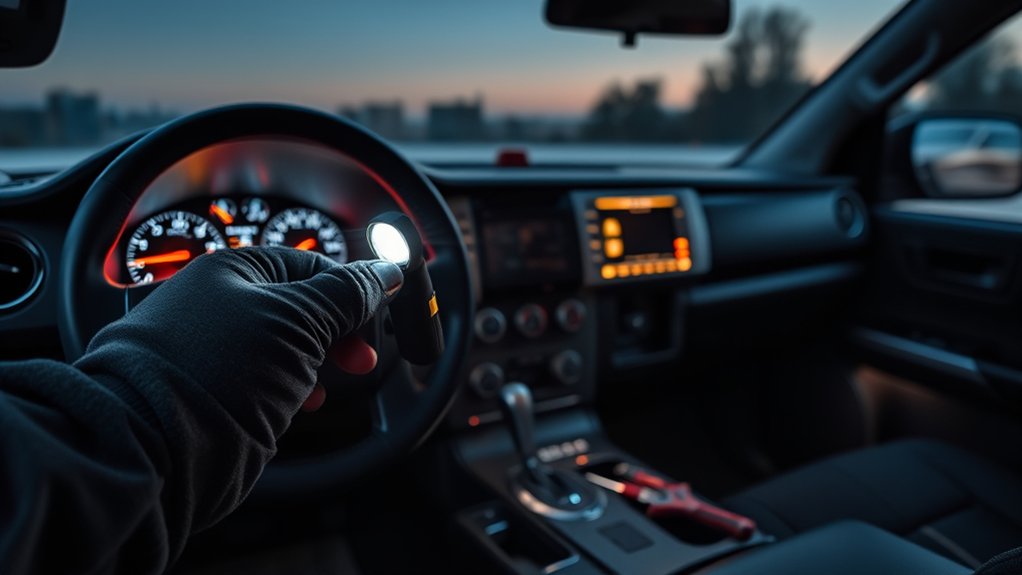
When your Toyota Tundra’s check engine light comes on, the light’s behavior and the truck’s symptoms determine your next step. A flashing light, rough running, knocking, smoke, overheating, or major power loss requires urgent attention. A steady light usually gives you more time to check the gas cap, read the diagnostic codes, and arrange a proper diagnosis.
Quick Answer
A flashing Toyota Tundra check engine light can indicate a severe misfire that may damage the catalytic converter, so reduce engine load and stop safely. A steady light still needs diagnosis, but you can first check for obvious problems, read the OBD-II codes, record the freeze-frame data, and schedule repairs.
Key Takeaways
- A flashing check engine light needs urgent attention, especially if the engine shakes, misfires, knocks, smokes, or loses power.
- A steady light can represent anything from an EVAP leak to a fuel-control, ignition, airflow, turbo, or catalytic-converter fault.
- An OBD-II code identifies the affected system or condition. It does not automatically prove that the named part has failed.
- Do not disconnect the battery or erase codes before saving the codes and freeze-frame data.
- Check your VIN for open Toyota recalls or service campaigns before paying for major repairs.
At a Glance
| Time Required | About 10–20 minutes for initial checks and a basic code scan |
| Difficulty | Beginner for inspection and code retrieval; intermediate or professional for testing and repairs |
| Tools Needed | Compatible OBD-II scanner, flashlight, gloves, notepad or phone, and the correct Tundra owner’s manual |
| Cost | Visual checks may cost nothing; scanner, diagnostic, and repair costs depend on the fault |
Understanding the Check Engine Light in Your Toyota Tundra
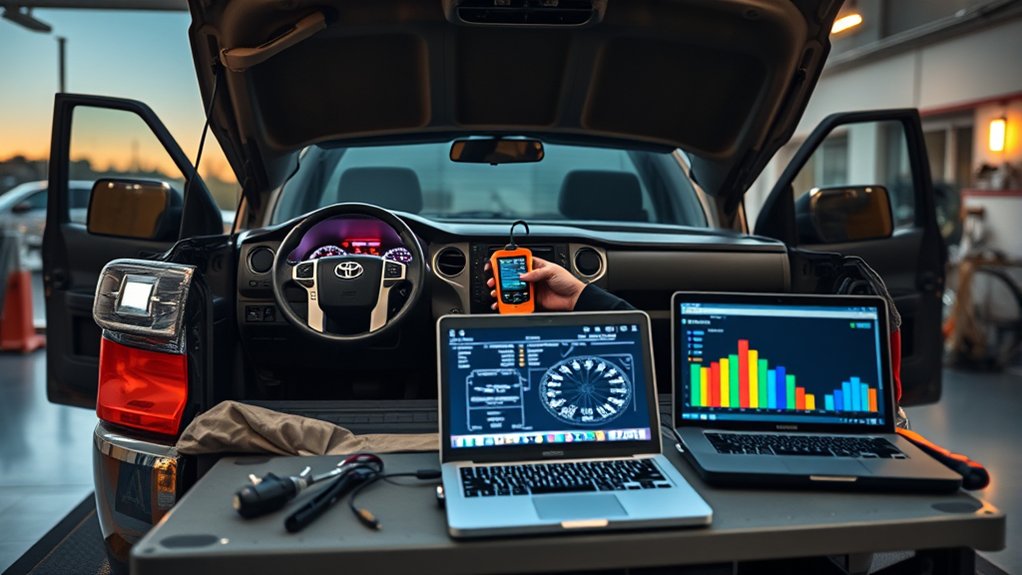
The check engine light is also called the malfunction indicator lamp. Your Tundra’s onboard diagnostic system turns it on when the engine computer detects an emissions-related fault or a problem that prevents the diagnostic system from monitoring the vehicle correctly.
The system normally stores a diagnostic trouble code, often called a DTC. It may also save freeze-frame data showing conditions such as engine speed, coolant temperature, vehicle speed, fuel trim, and engine load when the fault was detected.
The warning light tells you that the computer detected a problem. The stored code and test results help you determine what to inspect next.
A code does not always identify a defective component. For example, an oxygen-sensor code can result from sensor wiring, an exhaust leak, an intake leak, improper fuel pressure, or another condition that changes the sensor reading.
Steady vs. Flashing Check Engine Light
| Light Condition | What It May Mean | Recommended Action |
|---|---|---|
| Flashing | An active severe misfire or another condition that may overheat and damage the catalytic converter | Reduce engine load, avoid hard acceleration, stop in a safe place, and arrange immediate diagnosis |
| Steady | An emissions, fuel-control, ignition, airflow, sensor, EVAP, catalyst, or related fault | Check for severe symptoms, inspect the gas cap, read the codes, and arrange timely diagnosis |
| Turns off by itself | The fault may not have repeated during later self-tests, but a pending, history, or permanent code may remain | Scan for stored information and monitor for recurring symptoms |
A solid light is not automatically minor. Its severity depends on the stored codes, current symptoms, and whether other warning indicators are present.
Immediate Actions for Your Check Engine Light
Follow these steps as soon as you notice the warning:
- Observe the light. Determine whether it is steady or flashing.
- Check how the truck feels. Note shaking, misfiring, knocking, reduced power, smoke, fuel odor, abnormal turbo noise, stalling, or difficulty starting.
- Look for other warning lights. A red oil-pressure warning, overheating warning, charging-system warning, or serious hybrid-system message can require a different and more urgent response.
- Reduce engine load. Stop towing, avoid hard acceleration, and move to a safe location if the engine runs poorly.
- Inspect the fuel cap. After shutting the engine off safely, confirm that the cap is present, correctly installed, and not visibly damaged.
- Read the codes before clearing anything. Save stored, pending, and permanent codes along with freeze-frame data.
- Check for recalls. Search your VIN before authorizing major engine repairs.
Warning: Stop driving as soon as you can do so safely if the light flashes continuously or the truck shakes, knocks, overheats, smokes, stalls, smells strongly of fuel, loses substantial power, or displays a red oil-pressure warning. Continued operation may cause additional damage or create a safety risk.
Common Reasons for a Toyota Tundra Check Engine Light
The exact causes vary by model year, engine, modifications, maintenance history, and operating conditions. These categories provide a practical starting point.
EVAP System Leaks and the Gas Cap
The evaporative-emissions system keeps gasoline vapors from escaping into the atmosphere. A loose, damaged, incorrect, or poorly sealing gas cap can create an EVAP leak and trigger a code.
Other EVAP causes include cracked vapor hoses, a leaking charcoal canister, a faulty purge valve, a faulty vent valve, damaged wiring, or a leak near the fuel tank.
Tightening the cap may not turn the light off immediately. The truck must complete the correct EVAP self-test before the computer can confirm that the leak is gone.
Ignition, Misfire, and Fuel-Delivery Problems
Worn spark plugs, failed ignition coils, damaged wiring, injector problems, vacuum leaks, low fuel pressure, compression loss, or valve-timing faults can cause a misfire.
Misfire codes often fall within the P0300 range. P0300 generally indicates a random or multiple-cylinder misfire, while codes such as P0301 or P0306 identify the cylinder where the computer detected the misfire.
Do not assume that a cylinder-specific code always means the ignition coil is bad. A proper diagnosis may require moving a coil or plug between cylinders, checking injector operation, inspecting wiring, and testing compression or leak-down.
Airflow and Air-Fuel Sensor Faults
A contaminated mass airflow sensor, intake leak, disconnected hose, restricted air filter, exhaust leak, or faulty air-fuel or oxygen sensor can alter the computer’s fuel calculations.
Lean-condition codes such as P0171 or P0174 do not automatically prove that an oxygen sensor needs replacement. They mean the computer has reached a fuel-correction limit and further testing is needed.
Catalytic-Converter and Exhaust-System Problems
Catalyst-efficiency codes, commonly in the P0420 or P0430 family, compare upstream and downstream sensor activity. Possible causes include a degraded converter, exhaust leaks, sensor faults, persistent misfires, oil consumption, coolant entering the cylinders, or incorrect fuel control.
Replacing a catalytic converter without correcting the condition that damaged it can lead to another failure.
Turbo, Boost, and Newer-Tundra Faults
On 2022-and-newer Tundras, the check engine light may also relate to boost pressure, wastegate control, charge-air leaks, fuel-pressure control, electronic throttle operation, or other turbocharged-engine systems.
These systems often require enhanced Toyota data, active tests, pressure checks, or software information beyond what a basic generic code reader provides.
Electrical and Low-Voltage Issues
Low system voltage, weak battery connections, charging faults, corroded grounds, damaged harnesses, or water intrusion can create misleading or multiple codes.
Check battery and charging-system condition when numerous unrelated codes appear together, especially after a weak start, jump-start, battery replacement, or electrical repair.
What an OBD-II Scanner Can Tell You
A basic OBD-II code reader can usually retrieve generic powertrain codes and erase emissions-related information. More capable scanners may display live data, freeze-frame information, readiness monitors, manufacturer-specific codes, misfire counts, fuel trims, sensor graphs, and bidirectional tests.
- Stored code: A fault has met the conditions required to be recorded.
- Pending code: The computer detected a possible fault, but it may not yet have met the conditions needed to illuminate the light.
- Permanent code: An emissions-related code retained until the onboard system confirms through successful self-tests that the problem is no longer present.
- Freeze-frame data: A snapshot of operating conditions when the fault was recorded.
- Readiness monitor: The completion status of an onboard emissions-system self-test.
Note: Generic P0 codes follow standard definitions, while P1 and other enhanced codes may be manufacturer-specific. Confirm definitions using information for your exact Tundra year, engine, and powertrain.
How to Diagnose a Toyota Tundra Check Engine Light at Home
You can complete the initial inspection and code retrieval at home without treating the code as a final diagnosis.
- Park safely. Apply the parking brake, select Park, and let hot components cool before inspecting the engine bay.
- Check the fuel cap. Inspect the cap seal and filler neck. Reinstall the cap correctly.
- Inspect for obvious problems. Look for disconnected intake tubes, loose electrical connectors, damaged hoses, fluid leaks, rodent damage, or components disturbed during recent service.
- Connect a compatible scanner. The OBD-II connector is generally under the driver’s side of the dashboard. Use your Toyota owner’s manual for the exact location and model-specific instructions.
- Follow the scanner’s key-position instructions. Some operations require the ignition on with the engine off, while live-data checks require the engine to run.
- Record all codes. Save stored, pending, and permanent codes rather than writing down only the first result.
- Save freeze-frame data. Engine temperature, load, speed, fuel trim, and RPM can reveal whether the fault occurred during a cold start, idle, acceleration, towing, or highway driving.
- Check readiness status. This helps determine whether the battery was recently disconnected or the codes were recently cleared.
- Research the diagnostic procedure. Use the exact code, model year, engine, symptoms, and Toyota service information.
- Test before replacing parts. Inspect circuits, connectors, hoses, pressures, sensor signals, ignition components, or mechanical condition as the diagnostic procedure requires.
Pro Tip: Take a photo of every code and the freeze-frame screen before touching the Clear Codes button. That information may disappear after clearing the computer or disconnecting the battery.
Common Code Families You May See
| Example Code or Range | General Area | Possible Checks |
|---|---|---|
| P0300–P0308 | Random or cylinder-specific misfire | Plugs, coils, injectors, wiring, air leaks, fuel pressure, compression |
| P0440, P0455, P0456 | EVAP-system leak or malfunction | Fuel cap, purge valve, vent valve, canister, hoses, leak testing |
| P0171, P0174 | Lean air-fuel condition | Intake leaks, airflow data, fuel pressure, exhaust leaks, injector flow |
| P0101 and related codes | Mass-airflow performance or circuit | Sensor contamination, intake leaks, wiring, air-filter housing, live data |
| P0130–P0167 families | Air-fuel or oxygen-sensor circuits and heaters | Sensor response, heater circuits, wiring, exhaust leaks, fuel control |
| P0420, P0430 | Catalyst efficiency | Converter condition, sensor data, exhaust leaks, misfire, oil or coolant consumption |
These examples are starting points, not replacement instructions. Always confirm the code definition and test procedure for your exact truck.
How to Clear the Check Engine Light Correctly
Clear the light only after you have recorded the diagnostic information and repaired or corrected the underlying cause.
- Save the codes and freeze-frame data.
- Complete the repair or correction.
- Use a compatible scan tool to clear the emissions-related information when the repair procedure calls for it.
- Restart the engine and confirm that no immediate code returns.
- Complete normal driving under the conditions needed for the affected readiness monitor.
- Rescan the truck for pending, stored, or permanent codes.
The light may turn off by itself after the fault stops recurring and the computer completes enough successful tests. However, the time and driving conditions vary by monitor. No universal 20-mile reset rule applies.
Avoid disconnecting the battery solely to hide the light. Battery disconnection can erase useful information, reset readiness monitors, and temporarily clear learned values without repairing the cause.
When to Seek Professional Help for Your Check Engine Light
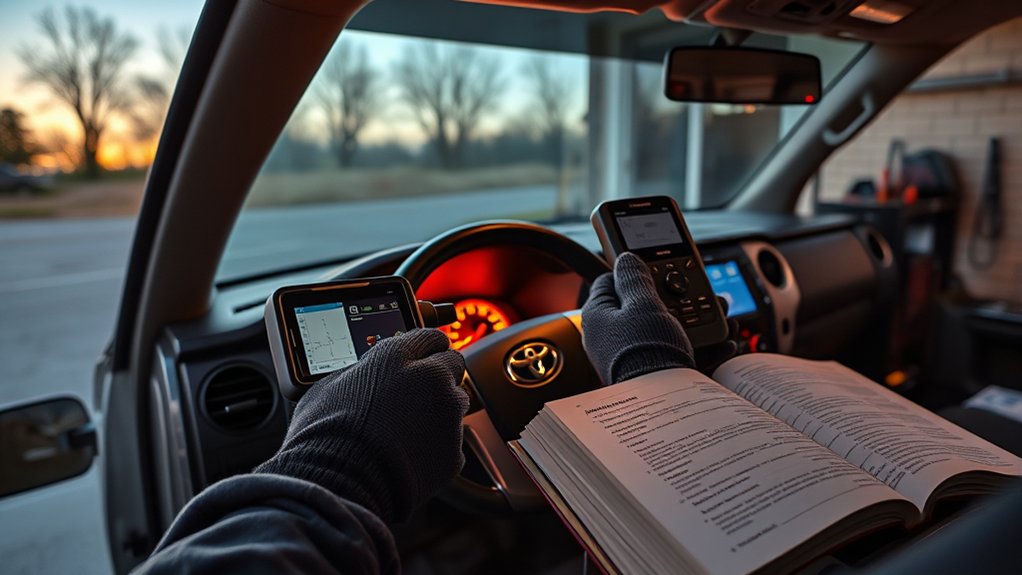
A trained technician should inspect your Tundra when the symptoms, tools, or testing requirements go beyond basic owner checks.
| Condition | Recommended Action | Main Concern |
|---|---|---|
| Flashing light or severe shaking | Stop safely and arrange immediate inspection or towing | Active misfire and catalytic-converter damage |
| Knocking, stalling, no-start, or major power loss | Do not continue normal driving; check recalls and obtain professional diagnosis | Mechanical, fuel, ignition, turbo, or recalled-engine condition |
| Red oil-pressure or overheating warning | Shut the engine down safely and follow the owner’s manual | Rapid engine damage |
| Steady light with normal operation | Read the codes promptly and schedule diagnosis | Developing emissions, drivability, or component fault |
| Light returns after a repair | Rescan and verify the original diagnosis and repair | Incomplete repair, secondary fault, wiring problem, or incorrect part diagnosis |
You do not always need a Toyota dealership for diagnosis. A properly trained independent technician with suitable equipment can service many OBD-II faults. A dealer may be the better choice for warranty repairs, recalls, software updates, hybrid-system concerns, or procedures requiring Toyota-specific tools and information.
Check for Tundra Engine Recalls and Service Campaigns
Before approving an expensive engine repair, check your VIN through the official Toyota recall and service-campaign lookup.
NHTSA recall 25V767, submitted in November 2025, covers selected 2022–2024 Toyota Tundras equipped with a specific V35A engine configuration. The filing states that machining debris may contaminate the engine assembly and contribute to main-bearing failure. Possible symptoms include engine knocking, rough running, a no-start condition, or stalling.
Not every Tundra within the listed model years or production range is affected. Use your VIN to confirm coverage and follow Toyota’s current repair instructions. You can also review the official NHTSA recall report 25V767.
What Happens If You Ignore Your Check Engine Light?
The outcome depends on the fault. Some EVAP leaks mainly increase vapor emissions, while a severe misfire can overheat the catalytic converter quickly. Fuel-control, airflow, boost, sensor, and mechanical faults may also worsen over time.
Increased Repair Costs
Delaying diagnosis can allow one fault to damage another component. Examples include:
- A persistent misfire overheating the catalytic converter
- An intake leak causing poor fuel control and drivability
- A charging fault creating repeated electrical and communication codes
- An unresolved fuel problem damaging spark plugs or the converter
- Oil or coolant consumption contaminating sensors and catalyst materials
Repair costs vary by model year, engine, labor rate, diagnostic time, and the parts involved. A fixed cost estimate cannot accurately describe every check-engine-light repair.
Potential Engine Damage
Some faults can reduce power, trigger protective operating strategies, cause stalling, or contribute to internal damage. Do not rely on the light alone to judge whether continued driving is safe.
Pay attention to sounds, smells, temperature, oil pressure, engine smoothness, and power delivery. These symptoms often reveal urgency more clearly than a steady warning lamp by itself.
How to Prevent Future Check Engine Light Activations
You cannot prevent every sensor, wiring, emissions, or mechanical fault, but consistent maintenance can reduce avoidable problems.
- Follow the correct maintenance schedule. Use the schedule for your model year, engine, mileage, towing use, and operating conditions.
- Install the fuel cap correctly. Replace it if the seal, threads, tether, or housing is damaged.
- Address misfires immediately. Do not continue driving with severe shaking or a flashing light.
- Inspect intake components. Reinstall intake tubes, clamps, connectors, and the air-filter housing correctly after service.
- Maintain the ignition system. Replace spark plugs at the specified interval and diagnose failed coils or wiring rather than replacing parts at random.
- Watch battery and charging health. Low voltage can create misleading codes and module-communication problems.
- Repair exhaust leaks. Leaks near air-fuel or oxygen sensors can affect readings and fuel control.
- Avoid unapproved powertrain modifications. Incorrect tunes, intake changes, exhaust changes, or electrical additions can create faults and complicate diagnosis.
- Check recalls periodically. A VIN search can identify safety recalls and service campaigns related to your specific truck.
- Use the correct warning-light guidance. Toyota directs owners to the model-specific manual because indicator meanings and required actions can vary.
Related Guides
Frequently Asked Questions
How do you clear the check engine light on a Toyota Tundra?
Record the codes and freeze-frame data, repair the cause, and clear the emissions-related information with a compatible OBD-II scanner when appropriate. Do not disconnect the battery merely to hide the light. The warning may also turn off after the fault stops recurring and the required self-tests pass.
How do you diagnose a Toyota Tundra check engine light?
Check whether the light is flashing, note drivability symptoms, inspect the fuel cap and recent repair areas, and scan stored, pending, and permanent codes. Save freeze-frame data, confirm the code definition for your exact model, and test the affected system before replacing parts.
What is the most common reason for a Toyota check engine light?
No single cause applies to every Toyota or Tundra. Loose fuel caps and EVAP leaks are common, but misfires, air-fuel sensor faults, intake leaks, airflow problems, catalyst faults, and fuel-control problems are also frequent. Read the codes before choosing a repair.
Why is my Toyota Tundra check engine light on?
The onboard diagnostic system detected an emissions-related fault or a problem affecting its ability to monitor the truck. Possible areas include the EVAP system, ignition, fuel delivery, airflow, sensors, catalytic converters, turbo controls, wiring, or engine mechanical condition.
Can you drive a Toyota Tundra with the check engine light on?
Limited driving may be reasonable with a steady light when the truck runs normally and no red warnings are present, but prompt diagnosis is still necessary. Stop safely if the light flashes or the truck shakes, knocks, overheats, smokes, stalls, smells of fuel, or loses substantial power.
Will a Toyota Tundra check engine light reset itself?
It can turn off after the fault no longer occurs and the computer completes enough successful checks. The required time and driving conditions vary. A stored, pending, or permanent code may remain even after the dashboard light turns off.
Conclusion
Your Toyota Tundra’s check engine light is a request for diagnosis, not a complete diagnosis by itself. Treat a flashing light or severe symptoms as urgent. For a steady light, check the cap, record all codes and freeze-frame data, inspect obvious causes, and test the affected system before replacing parts.
Clear codes only after correcting the problem, verify the repair through later self-tests, and check your VIN for open recalls or campaigns. These steps help you avoid unnecessary parts, protect the catalytic converters and engine, and make a better repair decision.
Sources
- California Air Resources Board: OBD II Systems Fact Sheet — explains warning-lamp behavior, stored diagnostic information, flashing-light risks, and readiness monitors.
- California Air Resources Board: On-Board Diagnostic Program — explains how onboard systems monitor emissions-related components and store malfunction data.
- Toyota Manuals and Warranties — provides model-specific owner’s manuals, warranty information, and maintenance guidance.
- Toyota Dashboard Warning Lights — provides Toyota’s official warning-light guidance and directs owners to the correct manual.
- Toyota Safety Recall and Service Campaign Lookup — checks current campaigns using a VIN or license plate.
- NHTSA Safety Recall Report 25V767 — documents the selected 2022–2024 Tundra V35A engine recall and possible symptoms.

