The Toyota Tundra wheel bolt pattern is 6×139.7 mm for 2000–2006, 5×150 mm for 2007–2021, and 6×139.7 mm for 2022–2026. Bolt pattern is only the first fitment check: you must also match the center bore, lug thread, wheel width, offset, brake clearance, load rating, tire size, and lug-nut seat before installing a wheel.
Last updated: September 19, 2026 — current-generation wheel offerings and wheel-nut torque guidance rechecked.
Quick Answer
Toyota Tundra wheel fitment changes by generation: 2000–2006 uses 6×139.7 mm with an approximately 106.1 mm center bore and M12x1.5 studs; 2007–2021 uses 5×150 mm with an approximately 110.1 mm center bore and M14x1.5 studs; and 2022–2026 uses 6×139.7 mm with an approximately 95.1–95.2 mm center bore and M14x1.5 studs. Matching the bolt pattern alone is not enough. Confirm wheel width, offset, brake clearance, load rating, tire size, TPMS compatibility, and lug-seat design for the exact wheel before installation.
Key Takeaways
- The Tundra changed from six lugs to five lugs for 2007, then returned to six lugs for the 2022 redesign.
- A matching bolt pattern does not guarantee that a wheel clears the hub, brakes, suspension, or bodywork.
- Factory offset is not one universal number; it varies by generation, wheel width, trim, and wheel part number.
- Do not assume that every 33-inch tire fits a stock truck or that every 35-inch tire fits after adding a leveling kit.
- Use the driver-door placard, applicable Toyota manual, wheel manufacturer’s instructions, and a VIN-based fitment check before buying.
Understanding the Toyota Tundra Wheel Bolt Pattern
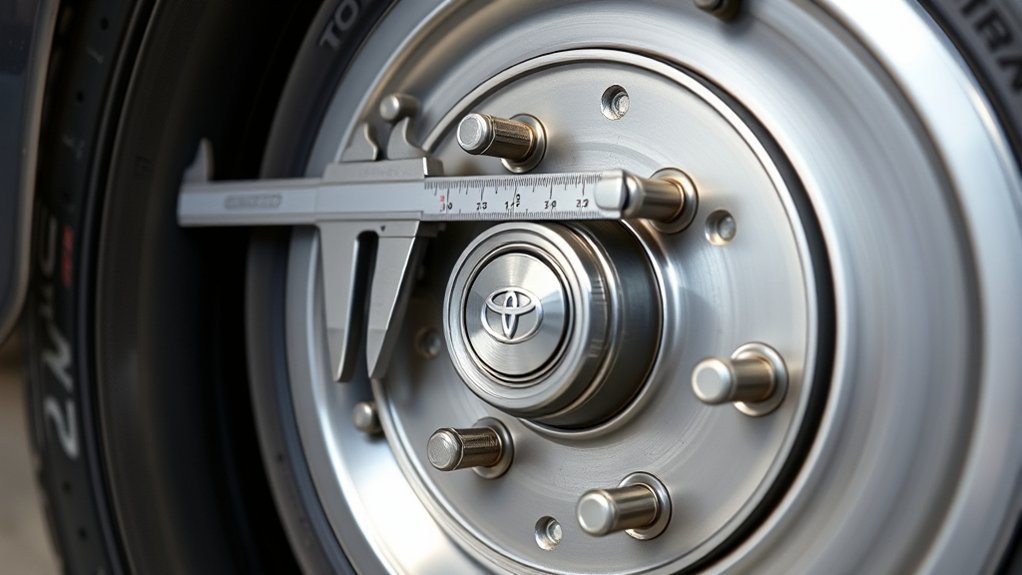
A wheel bolt pattern states the number of wheel studs and the diameter of the circle that passes through their centers. For example, 6×139.7 mm means six studs arranged on a 139.7 mm circle. The same pattern may also be written as 6×5.5 inches.
The Toyota Tundra has used three generation-specific fitment groups:
| Model years | Generation | Bolt pattern | Center bore | Common lug thread |
|---|---|---|---|---|
| 2000–2006 | First generation | 6×139.7 mm | Approximately 106.1 mm | M12x1.5 |
| 2007–2021 | Second generation | 5×150 mm | Approximately 110.1 mm | M14x1.5 |
| 2022–2026 | Third generation | 6×139.7 mm | Approximately 95.1–95.2 mm | M14x1.5 |
Warning: Never force a wheel onto a hub or enlarge a wheel’s center bore with hand tools. A center bore that is too small prevents the wheel from seating correctly. A wheel that does not sit flat against the hub can loosen, vibrate, damage studs, or fail.
The return to a 6×139.7 pattern in 2022 does not make third-generation wheels automatically interchangeable with first-generation Tundra wheels, Tacoma wheels, or other six-lug Toyota wheels. The hub bore, wheel offset, width, load rating, brake clearance, stud diameter, and lug-seat design may differ.
Bolt Pattern, Center Bore, and Lug Thread Are Different Measurements
- Bolt pattern: Determines whether the wheel’s mounting holes align with the studs.
- Center bore: The opening in the middle of the wheel that fits over the hub pilot.
- Lug thread: The stud diameter and thread pitch, such as M14x1.5.
- Lug-seat type: The shape where the lug nut contacts the wheel, such as conical, radius, or flat washer-style.
A wheel can have the right bolt pattern and still be unsafe or impossible to install because one of the other dimensions is wrong.
Why Wheel Offset Matters for Your Tundra
Wheel offset is the distance between the wheel’s centerline and its hub-mounting surface. It is normally shown in millimeters and may be stamped on the back of the wheel as an ET value, such as ET60.
- Positive offset: The mounting surface is toward the street side of the wheel. This usually positions more of the wheel inward.
- Zero offset: The mounting surface aligns with the wheel centerline.
- Negative offset: The mounting surface is toward the suspension side of the centerline, moving more of the wheel outward.
Most factory Tundra wheels use a positive offset, but there is no single factory offset for every Tundra. The correct figure depends on model year, wheel width, trim, brake package, and wheel part number.
Wheel Clearance Considerations
Offset and wheel width work together. Changing either measurement alters the wheel’s inner clearance and outer position.
Too much inward movement can cause contact with:
- Upper control arms
- Tie rods or steering components
- Shock bodies or coilovers
- Brake hoses
- Inner fender liners
Too much outward movement can cause contact with:
- Fender edges
- Mud flaps
- Front bumper or air-dam corners
- Body-mount areas
- Fender liners during steering or suspension compression
Pro Tip: Compare a proposed wheel with your current wheel using both width and offset. Two wheels with the same offset will not sit in the same position when their widths differ.
Worked offset example: Compared with an 18×8 +60 wheel, an 18×9 +25 wheel is 25.4 mm wider and has 35 mm less positive offset. Half the added width is 12.7 mm. The inner lip moves about 22.3 mm away from the suspension, creating about 22.3 mm more inner clearance, while the outer lip moves about 47.7 mm farther toward the fender. This is why wheel width and offset must be calculated together.
Handling and Performance Effects
Moving the tire farther outward can widen the track and change steering feel, but an aggressive offset may also increase steering kickback, bearing leverage, scrub radius, fender spray, and the chance of rubbing. Moving the wheel too far inward can reduce suspension clearance.
Offset should not be selected solely to create a wider stance. The safest target is a wheel position that preserves adequate clearance while keeping the tire’s load path reasonably close to the geometry Toyota designed.
What Does +35 Offset Mean?
A +35 offset means the hub-mounting surface is 35 mm toward the street side of the wheel’s centerline. It does not mean that the entire wheel is mounted 35 mm inward.
When wheel width is unchanged, replacing a +60 wheel with a +35 wheel moves the entire wheel approximately 25 mm farther outward and creates approximately 25 mm more inner clearance. When wheel width also changes, both measurements must be included in the comparison.
Offset Versus Backspacing
Backspacing measures from the wheel’s rear mounting surface to its innermost edge. Offset is measured from the wheel centerline. Wheel retailers may list one or both figures.
A wider wheel can have more backspacing even when its offset is unchanged. That is why backspacing, wheel width, and offset should be reviewed together rather than treated as interchangeable numbers.
How Tire Size Affects Wheel Fitment and Performance
Tire size affects more than appearance. A taller or wider tire changes clearance, effective gearing, braking demand, rotating mass, speedometer accuracy, fuel use, steering effort, and spare-tire compatibility.
For a size such as 275/65R18:
- 275 is the nominal section width in millimeters.
- 65 is the sidewall height as a percentage of the section width.
- R identifies radial construction.
- 18 is the required wheel diameter in inches.
Nominal size does not tell the entire story. Actual mounted diameter and width vary by tire model, rim width, load range, and manufacturer. Compare the tire maker’s published dimensions rather than relying only on labels such as “33-inch” or “35-inch.”
A lift or leveling kit creates ride height; it does not automatically create clearance at every steering angle or every point in the suspension’s travel.
[Amazon Products Picked for You]
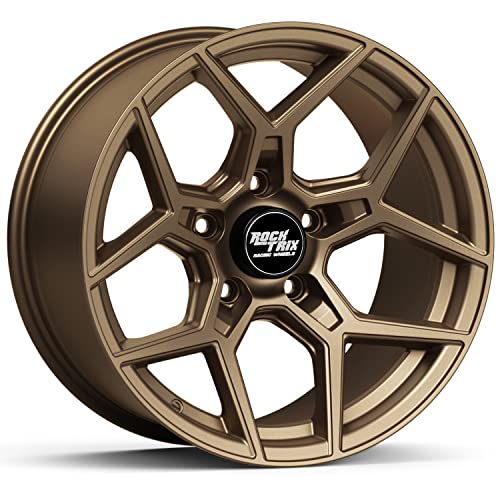
Aggressive Stance and Tire Clearance: These 18x9 wheels feature a +12mm offset that provides up to 1 inch of additional inner clearance for Toyota Tundra or Sequoia, allowing for the installation of larger 33-35 inch tires for superior off-road performance.

Aggressive Stance and Tire Clearance: These 18x9 wheels feature a +12mm offset that provides up to 1 inch of additional inner clearance for Toyota Tundra or Sequoia, allowing for the installation of larger 33-35 inch tires for superior off-road performance.

Aggressive Stance and Tire Clearance: These 18x9 wheels feature a -12mm offset that provides up to 2 inches of additional inner clearance for Toyota Tundra or Sequoia, allowing for the installation of larger 33-35 inch tires for superior off-road performance.
Will 33-Inch Tires Fit a Stock Tundra?
Many Tundra configurations use factory tires near the 32- to 33-inch range, but that does not mean every tire marketed as a 33 will fit every stock truck. Width and wheel offset often determine rubbing before diameter does.
A proposed tire should be checked at:
- Full left and right steering lock
- Forward and reverse movement
- Normal ride height and suspension compression
- The upper control arm and inner sidewall
- Mud flaps, liner edges, bumper corners, and body mounts
Will 35-Inch Tires Fit With a Leveling Kit?
Some owners fit tires in the 35-inch class after leveling or lifting a Tundra, but fitment is configuration-specific. Depending on generation, tire width, wheel offset, and suspension geometry, the installation may require liner reshaping, mud-flap removal, trimming, alignment changes, aftermarket upper control arms, or other modifications.
Do not purchase a tire based only on a claim that “35s fit with a level.” Ask the installer to confirm the exact tire model, measured dimensions, wheel width, offset, suspension setup, and required modifications.
Speedometer, Gearing, and Spare-Tire Effects
A taller tire travels farther per revolution. Without calibration, the truck may travel faster than the displayed speed. Taller and heavier tires can also reduce effective axle gearing, increase braking demand, and make acceleration feel slower.
The spare tire must also be considered. On four-wheel-drive models, using a spare with a substantially different rolling circumference can stress the driveline. Confirm that the replacement spare fits its storage location and is compatible with the installed tire set.
Selecting the Best Wheel Size for Your Tundra
Tundra factory wheel diameters have varied by generation and package. Common factory diameters include approximately 16–18 inches on first-generation trucks, 17–20 inches on second-generation trucks, and 18–22 inches on third-generation trucks.
For 2026, Toyota’s current Tundra lineup uses 18-, 20-, and 22-inch factory wheels depending on trim. The official 2026 Toyota Tundra page lists 18-inch styled-steel wheels on SR, 18-inch alloy wheels on SR5, 20-inch wheels on several upper trims, 18-inch BBS forged-aluminum wheels on TRD Pro, and 22-inch wheels on Capstone. Toyota also publishes a 2026 Tundra brochure for trim- and package-specific equipment.
| 2026 Tundra trim | Factory wheel reference |
|---|---|
| SR | 18-inch styled-steel wheel |
| SR5 | 18-inch alloy wheel |
| Limited | 20-inch alloy wheel |
| Platinum | 20-inch dark-gray-painted alloy wheel |
| 1794 Edition | 20-inch machined-finish alloy wheel |
| TRD Pro | 18-inch BBS forged-aluminum wheel |
| Capstone | 22-inch chrome-and-machined-finish alloy wheel |
Factory equipment can vary by drivetrain, package, and production specification. Use the exact VIN, original wheel part number, and door placard before treating the table as a replacement-parts specification.
The best diameter depends on how the truck is used:
- Smaller wheel with more sidewall: Usually offers better impact absorption and more sidewall flexibility for rough roads and trails.
- Larger wheel with less sidewall: May provide a sharper on-road appearance and steering response but leaves less tire sidewall to absorb impacts.
- Towing and hauling: Requires adequate wheel load capacity, tire load index, correct inflation, and clearance under load.
- Winter or off-road use: Often benefits from additional sidewall, but brake-caliper clearance must be confirmed before downsizing the wheel.
[Amazon Products Picked for You]


Custom fit: Custom fit for Toyota Tacoma 4Runner Tundra. Large-size steering wheels with diameter of 15 1/2 inch to 16 inch (39.5cm to 40cm).

SCALE DETAILS: Authentic 1:64 scale die-cast metal replica of a 2010 Toyota Tundra in sleek black finish, part of the Hot Wheels Silver Series 1/5
Check Brake-Caliper Clearance
A wheel with the correct diameter and bolt pattern can still contact a brake caliper because spoke shape and barrel clearance vary. This is especially important when installing a smaller-diameter wheel or a wheel with a different spoke profile.
Use a manufacturer-provided brake template when available, or test-fit the wheel before mounting a tire. The wheel must rotate without contacting the caliper, balancing weights, brake hose, or suspension.
Check Wheel Load Rating and Tire Load Index
A full-size pickup requires wheels and tires capable of carrying its axle loads. Do not select a wheel solely because it is advertised for the correct bolt pattern.
Confirm that:
- The wheel’s rated load is sufficient for the truck’s axle rating and intended use.
- The tire’s load index and load range meet or exceed the vehicle requirements.
- Cold inflation pressure follows the vehicle placard unless an approved alternative has been calculated for a different tire specification.
- The combined weight of occupants, cargo, accessories, and tongue weight remains within the truck’s ratings.
For help identifying the original tire size, cold-pressure information, and payload-label data, see our Toyota Tundra tire information label guide.
The National Highway Traffic Safety Administration’s tire-safety guidance explains tire labels, inflation, loading, inspection, and replacement basics.
How to Confirm a Tundra Wheel Before Buying
Use this checklist for each exact wheel part number rather than relying on a seller’s statement that it “fits a Tundra.”
- Confirm the model year and generation. A 2006, 2016, and 2026 Tundra use different fitment groups.
- Verify the bolt pattern. Match the stud count and pitch-circle diameter exactly.
- Verify the center bore. The wheel bore must be equal to or larger than the truck’s hub pilot.
- Confirm the lug thread and seat. The thread pitch, seat shape, shank length, and hex clearance must suit the wheel.
- Record the wheel width and offset. Compare inner and outer position with the current wheel.
- Check brake clearance. Use a template or test fit.
- Check load capacity. Confirm the rating is adequate for the truck and its intended payload or towing use.
- Confirm tire compatibility. The tire must be approved for the selected rim-width range.
- Check TPMS compatibility. Confirm sensor style, valve-hole design, and relearn requirements.
- Test the complete assembly. Check full-lock steering, suspension clearance, fender clearance, and lug engagement before regular driving.
Note: A stamping such as “18x8J ET60” identifies an 18-inch wheel, an 8-inch nominal width, a rim-flange profile, and a +60 mm offset. It does not identify the bolt pattern, bore, load rating, or lug-seat type by itself.
[Amazon Products Picked for You]

StanceMagic Hub Centric Rings made of CNC Machined billet aluminum. These hubrings will reduce or eliminate vibrations caused by a gap between your aftermarket wheel's centerbore and your wheel hub. Having a gap will prevent your wheel from centering properly during installation, leading to vibrations.

Outside Diameter (O.D.) 73.1 mm. Must match wheel center bore. Inner Diameter (I.D.)64.15 or 64.1mm. Must match the vehicle hub bore. Select the correct size from the size list above and then click Buy Now.
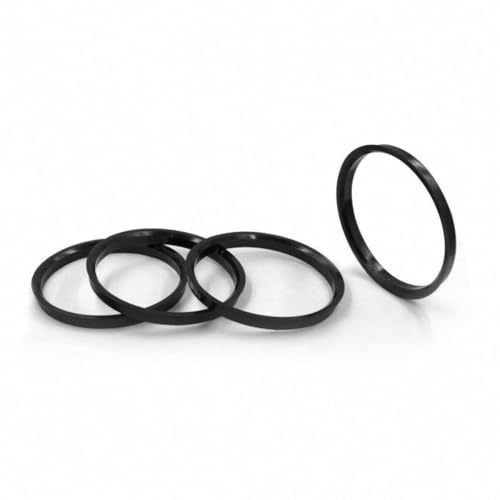
4 Pcs | Fits Hub OD : 108.00mm | Wheel ID : 106.10mm | Material : Poly Carbonate | Color : Black | Fits : Toyota Tacoma Tundra Land Cruiser FJ Cruiser Sequoia Lexus GX460 GX470 GX550 LX450 Vehicles
When Are Hub-Centric Rings Needed?
An aftermarket wheel may have a larger center bore so it can fit several vehicles. A correctly sized hub-centric ring fills the gap between that wheel and the Tundra’s hub pilot, helping center the wheel during installation.
A ring cannot correct an undersized bore, wrong bolt pattern, incorrect offset, inadequate load rating, or incompatible lug seat. Use only rings approved for the wheel and application, and make sure the wheel still seats fully against the hub.
TPMS Compatibility
Later Tundras use tire-pressure monitoring sensors. When replacing wheels, determine whether the original sensors can be transferred or whether compatible new sensors must be installed and registered.
Valve-hole shape, sensor angle, hardware condition, and radio compatibility matter. A tire shop with the correct TPMS equipment should inspect the seals and complete any required registration or relearn procedure. If sensors are replaced or wheel positions are changed, see our Toyota Tundra TPMS relearn and reset guide for model-specific follow-up.
Top Mistakes to Avoid When Choosing Tundra Wheels

Choosing wheels by appearance alone can lead to rubbing, vibration, damaged studs, poor handling, or a wheel that cannot be installed. Avoid these common mistakes:
- Ignoring the model-year change: A 2007–2021 five-lug wheel does not fit a 2022–2026 six-lug truck.
- Matching only the bolt pattern: Center bore, offset, wheel width, load capacity, and brake clearance must also match.
- Using the wrong generation’s center bore: First-, second-, and third-generation Tundras use different hub-pilot dimensions.
- Assuming +60 mm is universal: Factory offset varies by wheel design and trim.
- Buying an aggressive offset without measuring: Moving the tire outward can cause fender, liner, bumper, or body-mount contact.
- Reusing incompatible lug nuts: Factory lug nuts may not match an aftermarket wheel’s conical, radius, or flat seat.
- Ignoring brake clearance: Spoke and barrel shape matter even when wheel diameter is correct.
- Ignoring load rating: Passenger-car-style wheels may not be rated for a full-size pickup’s axle load.
- Assuming a nominal tire diameter guarantees fit: Actual dimensions vary by tire model and approved rim width.
- Using spacers as a universal fix: Spacers alter stud engagement and load geometry and must be application-specific, high quality, and installed exactly as instructed.
Warning: Do not stack wheel spacers, use damaged studs, install a wheel that does not sit flush, or substitute a different lug-seat shape. Stop driving if a newly installed wheel produces clunking, wobbling, severe vibration, or loosening lug nuts.
Tips for Ensuring Proper Fitment and Safety
Before installation, clean rust, dirt, paint buildup, and debris from the hub and wheel mounting surfaces. The surfaces must be flat and dry so the wheel can seat correctly.
Start every lug nut by hand to avoid cross-threading. Tighten the nuts gradually in a star or crisscross sequence, then complete final tightening with a calibrated torque wrench.
Toyota manuals for many second- and third-generation Tundra applications distinguish wheel type: factory aluminum wheels commonly use 97 ft-lb (131 N·m), while steel wheels may use 154 ft-lb (209 N·m). Do not apply either value universally. Verify the exact model year and wheel specification in the applicable Toyota owner’s manual, and follow the wheel or fastener manufacturer’s instructions when aftermarket wheels or hardware are used. Toyota provides model-year manuals through its official owner’s manual portal. For a focused model-year breakdown, see our Toyota Tundra lug-nut torque guide.
Do not apply oil, grease, or anti-seize to wheel studs unless the applicable Toyota procedure or fastener manufacturer specifically requires it. Lubrication changes the clamping force produced at a given torque value and can lead to damaged or overstressed hardware.
After installation:
- Confirm that each wheel sits flush against the hub.
- Check that the lug nuts have adequate thread engagement.
- Rotate each wheel and inspect brake and suspension clearance.
- Turn the steering fully left and right while checking tire clearance.
- Drive slowly at first and listen for rubbing, clicking, or vibration.
- Recheck torque after the distance specified by the wheel or fastener manufacturer.
- Obtain an alignment after suspension-height changes or when fitment alters steering geometry.
Wheel and Tire Specifications Across Tundra Generations
Factory wheel and tire combinations differ by trim, drivetrain, package, market, and model year. The following examples are a starting point, not a substitute for checking the placard and documentation for the specific truck.
2000–2006 Tundra
- Bolt pattern: 6×139.7 mm
- Center bore: Approximately 106.1 mm
- Common lug thread: M12x1.5
- Common factory wheel range: Approximately 16–18 inches, depending on year and package
These wheels should not be assumed to fit a 2022–2026 Tundra merely because both generations use six lugs. The center bore, stud diameter, offset, brake package, and wheel load requirements differ.
2007–2021 Tundra
- Bolt pattern: 5×150 mm
- Center bore: Approximately 110.1 mm
- Common lug thread: M14x1.5
- Common factory wheel range: Approximately 17–20 inches, depending on year and package
The official 2021 Toyota Tundra brochure lists factory combinations including P255/70R18, P275/65R18, and P275/55R20 tires.
2022–2026 Tundra
- Bolt pattern: 6×139.7 mm
- Center bore: Approximately 95.1–95.2 mm
- Common lug thread: M14x1.5
- Common factory wheel range: 18–22 inches, depending on trim and package
Toyota’s 2022 Tundra brochure documents the launch of the third-generation factory wheel lineup. Toyota’s 2026 Tundra page confirms that the current lineup continues to use 18-, 20-, and 22-inch factory wheels depending on trim and package.
Because offset and spoke design vary within each generation, use the original wheel’s stamped specifications, a Toyota wheel part number, or a VIN-based catalog lookup to identify the exact factory setup.
Frequently Asked Questions
What is the factory offset on a Toyota Tundra?
There is no single factory offset for every Toyota Tundra. Offset varies by model year, trim, wheel diameter, wheel width, and wheel part number. Many factory wheels use a relatively high positive offset, but the exact ET marking should be read from the wheel or confirmed through a VIN-based Toyota parts catalog.
What does +35 offset mean?
A +35 offset means the wheel’s mounting surface is 35 mm toward the street side of its centerline. Compared with an otherwise identical +60 wheel, a +35 wheel sits about 25 mm farther outward and provides about 25 mm more inner clearance.
How do I determine what wheel offset I need?
Record the current wheel width and offset, measure inner and outer clearance, and compare those dimensions with the proposed wheel. Include tire width, brake clearance, suspension clearance, steering lock, and body clearance. A reputable wheel supplier should confirm the exact part number for your model year and trim.
What is the factory offset for the 2026 Tundra?
The 2026 Tundra does not have one universal offset because Toyota offers multiple 18-, 20-, and 22-inch wheel designs depending on trim and package. Check the ET marking on the original wheel or use the Toyota wheel part number and VIN to obtain the correct specification for the exact truck.
Will 2007–2021 Tundra wheels fit a 2022 or newer Tundra?
No. The 2007–2021 Tundra uses a 5×150 mm bolt pattern, while the 2022–2026 Tundra uses 6×139.7 mm. The wheels cannot bolt directly to one another’s hubs.
Will Tacoma wheels fit a Toyota Tundra?
Do not assume Tacoma and Tundra wheels interchange just because some model years use a 6×139.7 mm bolt pattern. The 2007–2021 Tundra uses 5×150 mm, so six-lug Tacoma wheels do not directly fit that generation. For six-lug Tundras, the center bore, stud size, offset, wheel width, brake clearance, load rating, and lug-seat design must still match the exact truck and wheel.
Do aftermarket Tundra wheels need hub-centric rings?
They may need rings when the wheel’s center bore is larger than the truck’s hub pilot and the wheel manufacturer approves ring use. The ring must match both diameters. It cannot correct a wrong bolt pattern, undersized bore, unsuitable offset, or inadequate load rating.
Can I fit 35-inch tires on a stock or leveled Tundra?
Fitment cannot be guaranteed from lift height alone. Tire model, measured width and diameter, wheel width, offset, alignment, suspension design, liner shape, mud flaps, bumper clearance, and body-mount clearance all matter. Some combinations require trimming or suspension changes.
Conclusion
The Toyota Tundra’s wheel specifications must be matched by generation. The 2000–2006 truck uses 6×139.7 mm, the 2007–2021 truck uses 5×150 mm, and the 2022–2026 truck returns to 6×139.7 mm. Those numbers are only the first check.
Before installing a wheel, confirm its center bore, lug thread, lug-seat shape, width, offset, brake clearance, load rating, tire compatibility, and TPMS hardware. Use the specific truck’s placard and Toyota manual, then follow the wheel and fastener manufacturers’ instructions. A complete fitment check protects the truck from rubbing, vibration, damaged hardware, poor handling, and wheel-retention problems.
Sources
- 2026 Toyota Tundra — current factory wheel diameters and trim-level wheel equipment.
- 2026 Toyota Tundra eBrochure — current-generation trim and package equipment.
- 2022 Toyota Tundra eBrochure — third-generation factory wheel and tire equipment at launch.
- 2021 Toyota Tundra eBrochure — second-generation factory wheel and tire combinations.
- Toyota Warranty and Owner’s Manuals — model-specific wheel installation, tire, pressure, and torque instructions.
- NHTSA Tire Safety — tire sizing, labeling, inflation, loading, inspection, and replacement guidance.