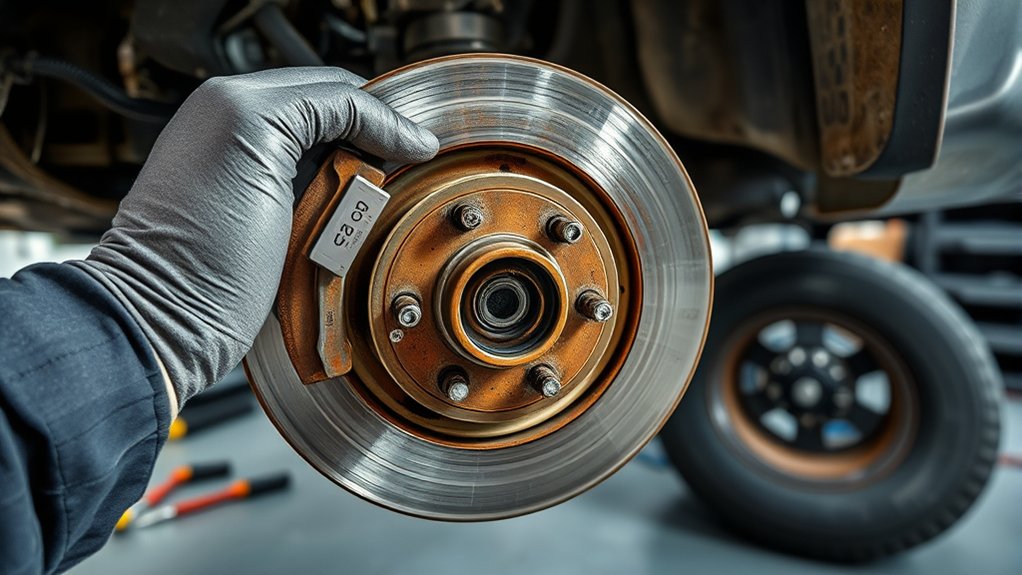
A humming, growling, or grinding sound that rises with road speed can point to a worn Toyota Tundra wheel bearing, but tire cupping, brake contact, CV joints, and driveline noise can sound similar. A careful inspection should confirm the source before any parts are replaced, especially because the correct procedure varies by model year, axle, and drivetrain.
Last updated: September 19, 2026
Quick Answer
Common signs of a bad Tundra wheel bearing include speed-related humming or growling, roughness when the wheel turns, steering vibration, or measurable hub play. Confirm the cause with a road test and raised-wheel inspection. Severe looseness, grinding, heat, smoke, or unstable handling means stop driving and arrange a tow.
Key Takeaways
- Bearing noise usually changes with vehicle speed and may change as cornering shifts weight from side to side.
- Wheel play, vibration, pulling, and uneven tire wear are clues, not proof; tires, brakes, ball joints, tie rods, and CV joints must also be checked.
- Never work under a Tundra supported only by a jack. Use wheel chocks, correctly rated jack stands, and approved lift points.
- There is no universal mileage at which every Tundra wheel bearing must be replaced. Replace a bearing when testing confirms wear or damage.
- Replacing both sides is not automatically required. Inspect the opposite bearing and replace it only when its condition, age, or service history justifies the added work.
At a Glance
| Time Required | Inspection time varies with the checks performed; replacement time varies substantially by axle, generation, corrosion, and whether press work or axle-shaft removal is required. |
| Difficulty | Inspection: intermediate. Replacement: intermediate to advanced, depending on the Tundra’s year, axle, drivetrain, and bearing design. |
| Tools Needed | Wheel chocks, floor jack, rated jack stands, flashlight, gloves, torque wrench, and model-specific sockets; some repairs also require a puller, slide hammer, bearing separator, or hydraulic press. |
| Cost | RepairPal’s September 3, 2026 U.S. estimate is $513–$819 for Toyota Tundra wheel-bearing replacement, before taxes, fees, location adjustments, and related repairs. |
Common Symptoms of Wheel Bearing Wear in Toyota Tundras
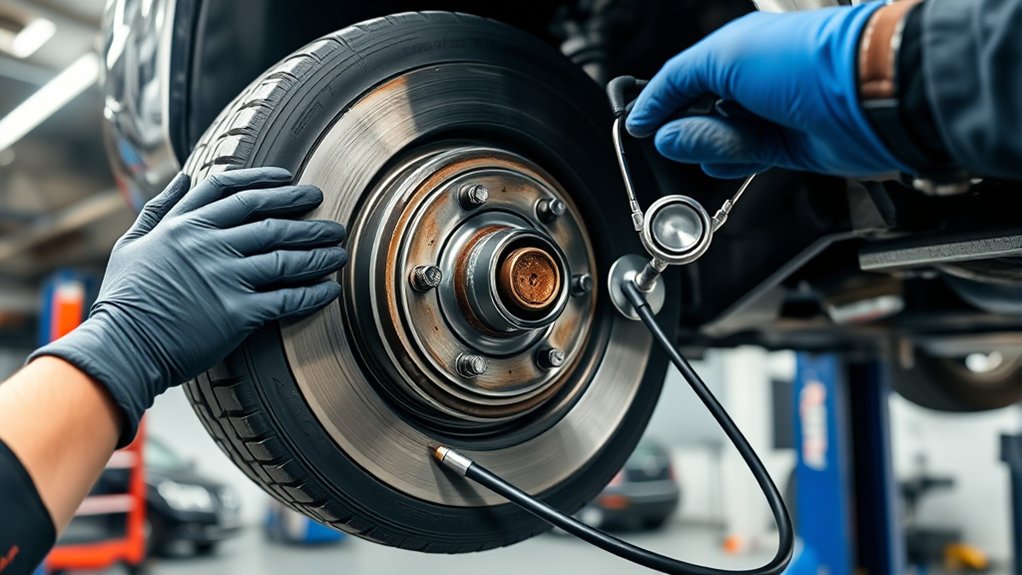
A worn wheel bearing often produces a low hum, rumble, growl, or grinding sound that becomes faster or louder as road speed increases. The sound may seem to come from the tire area, floor, or cabin, and its location can be difficult to judge because vibration travels through the frame and suspension.
Other possible symptoms include steering-wheel vibration, a loose or wandering feel, wheel wobble, uneven tire wear, or pulling. These signs deserve attention, but none of them identifies a wheel bearing by itself.
| Symptom | What to Notice | Common Look-Alikes |
|---|---|---|
| Humming or growling | Changes with road speed and sometimes with cornering load | Cupped tires, differential or transfer-case noise |
| Grinding or roughness | Harsh sound or rough feel while rotating the wheel | Brake shield, rotor, parking-brake hardware |
| Clicking during turns | Repeated clicks that follow wheel speed | CV joint, loose hardware, tire contact |
| Steering vibration or wobble | Changes with speed, braking, or road load | Wheel balance, bent wheel, tire defect, suspension wear |
| Uneven tire wear or pulling | One tire wears differently or the truck drifts | Alignment, tire pressure, brake drag, ball joints or tie rods |
Note: Clicking or squealing is not a wheel-bearing diagnosis. A clicking sound during acceleration or tight turns is often investigated as a CV-joint or driveline issue before the bearing is condemned.
How to Diagnose Toyota Tundra Wheel Bearing Noise
The most reliable diagnosis combines several checks. A bearing can be noisy without obvious looseness, and a loose wheel can be caused by a ball joint, tie rod, control-arm bushing, or improperly tightened hardware rather than the bearing.
Road-Test Clues
On a smooth, low-traffic road, listen for a hum, rumble, or growl that changes with vehicle speed rather than engine speed. Note whether the sound changes while coasting, accelerating, braking lightly, or making a gentle curve. Noise that mainly follows road speed keeps the tire, wheel end, bearing, and driveline on the suspect list; a noise that changes strongly with throttle may justify closer driveline inspection.
A change during a gentle left or right curve can provide a clue because cornering transfers load between the bearings. However, noise can travel through the chassis, so the louder direction does not always identify the failed side with certainty.
Warning: Do not perform abrupt swerves or aggressive lane changes to diagnose a noise. If the truck already feels unstable, wobbles, grinds, or has a loose wheel, stop the road test and have it towed for inspection.
Visual Inspection Techniques
Begin with the tire and wheel. Check tire pressure, tread cupping, missing wheel weights, damaged rims, loose or missing lug nuts, and signs that the tire is rubbing. Inspect the brake rotor, dust shield, caliper area, and parking-brake hardware for contact or debris that could create a scraping sound.
Dirt around the brakes does not prove a bearing problem. Look instead for meaningful evidence such as grease escaping from a damaged seal, corrosion around the hub mounting area, damaged wheel-speed-sensor wiring, or abnormal heat after a brief drive. Bearing-metal discoloration can indicate overheating only when the component is exposed during disassembly; it is not normally visible during an external inspection.
Raised-Wheel Checks
Warning: Work on level, solid ground. Chock the wheels, use Toyota-approved lift points, support the truck with correctly rated jack stands, and never place any part of your body under a vehicle held only by a floor jack.
With the wheel safely off the ground, rotate it by hand and listen for grinding, scraping, or a rough, notchy feel. Compare the suspected side with the opposite side. A mechanic’s stethoscope or chassis-ear equipment can help isolate noise at the steering knuckle or axle housing.
Check for play by holding the tire at the 12 and 6 o’clock positions, then at the 3 and 9 o’clock positions. Watch the hub, steering linkage, and suspension joints while a helper rocks the tire. Movement at a ball joint or tie rod should not be mistaken for bearing play.
Toyota service procedures for multiple second-generation Tundras and later third-generation examples specify a maximum front-hub looseness of 0.05 mm (0.00197 in.) when measured with a dial indicator using the factory procedure. That specification is not a universal substitute for the repair manual because setup and other limits can vary by generation and configuration. Use the exact procedure for your truck in the Toyota Technical Information System.
Pro Tip: Compare both sides under the same conditions. Differences in sound, drag, temperature, or play are often more useful than judging one wheel in isolation.
Why Model Year, Axle, and Drivetrain Matter
Do not assume every Toyota Tundra uses the same bearing, hub, or replacement procedure. Toyota parts and service information for older trucks can list separate hub and bearing components, while later procedures may refer to a front axle hub assembly or sub-assembly. Rear-bearing service can also involve axle-shaft removal, seals, retainers, and press work.
Before ordering parts or following a repair video, confirm the VIN, model year, front or rear axle, 2WD or 4WD configuration, and the exact factory procedure. A part or torque value that fits one Tundra generation may be wrong for another.
Problems That Can Mimic a Bad Wheel Bearing
- Cupped or feathered tires: Can create a rhythmic hum that changes with pavement type.
- Brake contact: A bent dust shield, worn pad, seized caliper, or parking-brake hardware can scrape or grind.
- CV joints: Often click during tight turns or acceleration.
- Ball joints and tie rods: Can produce wheel play, clunks, wandering, and uneven tire wear.
- Differential, axle, or transfer-case noise: May change with throttle rather than only with road speed.
- Loose lug nuts or damaged wheels: Can cause dangerous wobble and must be corrected immediately.
If the movement appears to come from a ball joint, tie rod, bushing, or another chassis component rather than the hub, see the Toyota Tundra suspension wear guide for a broader suspension diagnostic sequence.
Why Do Toyota Tundra Wheel Bearings Fail?
Wheel bearings wear from repeated load cycles, heat, seal deterioration, contamination, impact, corrosion, or incorrect installation. This is not unique to the Tundra, and a noisy truck should not be assumed to have a bearing problem until other causes are ruled out.
Road Conditions, Impacts, and Truck Use
Potholes, curb strikes, washboard roads, and rough off-road use can shock-load the hub and bearing. Frequent towing or hauling within the truck’s ratings does not automatically cause failure, but repeated overloading, severe impacts, oversized wheels, or incorrect wheel offset can increase stress on bearings and suspension components.
After a hard impact, inspect the wheel, tire, alignment, steering, and suspension along with the bearing. A bent wheel or damaged tire may create the same vibration that prompted the inspection.
Contamination, Corrosion, and Installation Errors
Mud, road salt, and water can shorten bearing life if a seal is damaged or corrosion develops around the hub. A sealed bearing is not usually cleaned and repacked as routine maintenance; it is replaced when wear, roughness, looseness, leakage, or damage is confirmed.
Incorrect axle-nut, hub-fastener, or wheel-lug torque can also create problems. Use the procedure and torque values for the exact model year, axle, and drivetrain in the Toyota Technical Information System or an equivalent factory service source rather than relying on a generic specification.
Steps to Inspect and Test Wheel Bearings on Your Tundra
Use this sequence to narrow down the source of the noise without treating any single test as conclusive.
| Step | Action | What the Result Means |
|---|---|---|
| 1. Confirm the pattern | Listen on a smooth road and note changes with speed, throttle, braking, and gentle curves. | Speed-related noise supports a wheel-end, tire, or driveline source; it does not identify the part by itself. |
| 2. Inspect tires and wheels | Check pressure, tread wear, cupping, wheel damage, and lug-nut condition. | Tire or wheel faults may fully explain the noise or vibration. |
| 3. Inspect brakes and nearby parts | Look for a rubbing shield, dragging brake, loose hardware, debris, leaks, or sensor-wire damage. | Scraping or heat may come from the brakes rather than the bearing. |
| 4. Lift and support safely | Chock the truck, use the correct lift point, and place a rated stand before testing. | The wheel must be safely unloaded for the remaining checks. |
| 5. Spin the wheel | Rotate it by hand and compare sound and smoothness with the opposite side. | Roughness or hub-centered grinding raises suspicion, but brake drag must be excluded. |
| 6. Check for play | Rock the tire at 12 and 6, then 3 and 9, while watching the hub and joints. | Hub movement may indicate bearing wear; joint or linkage movement points elsewhere. |
| 7. Verify before replacing | Use a stethoscope, chassis ears, scan data, a dial indicator where the factory procedure specifies one, or a professional inspection when the source remains uncertain. | Confirmation prevents replacing a good bearing while leaving the real fault unresolved. |
If a wheel-speed or stability-control warning is present, scan the relevant modules before replacing a hub. A damaged sensor, wiring problem, tone ring or encoder issue, or bearing-related signal problem may require separate diagnosis. A code identifying one wheel does not by itself prove that the wheel bearing has failed. For a broader warning-light workflow, see the Toyota Tundra traction-control troubleshooting guide.
When to Replace Your Tundra’s Wheel Bearings
Replace a wheel bearing or hub assembly when inspection confirms roughness, abnormal noise from the hub, excessive bearing play, seal failure, overheating, or physical damage. There is no universal Toyota Tundra replacement interval based only on mileage.
A bearing should be replaced because its condition has been confirmed—not simply because the truck reached a certain mileage or because another bearing failed.
| Condition | Recommended Response |
|---|---|
| Faint new hum with no looseness or handling change | Arrange a prompt inspection and avoid heavy towing until the cause is known. |
| Confirmed rough or noisy bearing | Schedule replacement soon; continued driving can damage adjacent parts. |
| Grinding, major play, wobble, smoke, extreme heat, or unstable steering | Stop driving and tow the truck. |
Replacing both bearings on the same axle is not automatically necessary. Because each bearing is evaluated individually, the opposite side can remain in service if it is quiet, smooth, tight, and undamaged. A pair may still make sense when both sides have similar wear, corrosion, mileage, or service conditions, but that is a condition-based decision.
Cost Analysis: Bearing-Only vs. Hub-Assembly Replacement
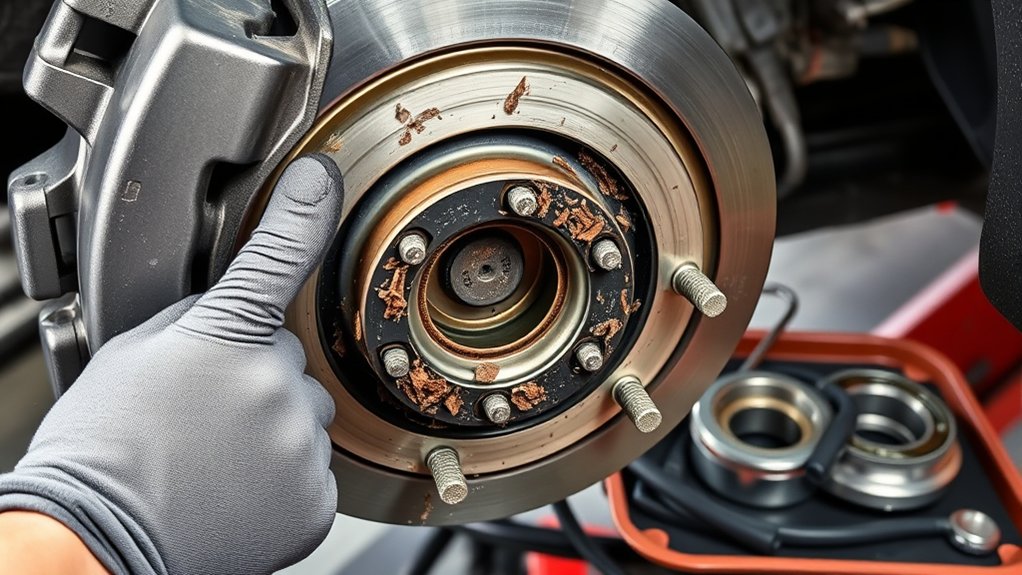
Wheel bearings are generally replaced rather than repaired. The exact job depends on whether the truck uses a hub and bearing arrangement serviced as an assembly, separate components that require press work, or a rear-axle bearing that requires axle-shaft removal. The correct configuration must be confirmed for the exact truck rather than assumed from the Tundra name alone.
As of September 3, 2026, RepairPal estimates an average Toyota Tundra wheel-bearing replacement at $513–$819, including about $263–$386 in labor and $250–$434 in parts. Taxes, fees, location, model year, drivetrain, corrosion, and related repairs can change the final price.
| Cost Factor | Why It Changes the Price |
|---|---|
| Bearing-only service | The part may cost less, but press work, setup, and the risk of damaging reusable components can increase labor. |
| Hub or hub-and-bearing service | Some configurations can reduce separate bearing setup or press work, while the complete assembly itself may cost more. |
| Rear-axle bearing | Axle-shaft removal, seals, retainers, fluid, and press work may add time and parts. |
| Rust or seized hardware | Corrosion can add removal time and may require replacement fasteners or nearby components. |
| Related damage | A damaged hub, axle, brake component, sensor, tire, or steering part increases the total. |
Note: Parts catalogs and quotes must match the VIN, model year, 2WD or 4WD configuration, axle, and option package. A price or repair method for one Tundra generation may not apply to another.
Should You DIY or Seek Professional Wheel-Bearing Repair?
A basic inspection is reasonable for an experienced DIYer with safe lifting equipment. Replacement requires more judgment because the job may involve brakes, axle nuts, CV axles, wheel-speed sensors, seals, one-time-use hardware, a hydraulic press, or model-specific tightening procedures.
DIY May Be Reasonable When
- You can lift and support a full-size truck safely.
- You have the factory procedure and correct torque specifications for the exact Tundra.
- You own a calibrated torque wrench and any required pullers, separators, or press tools.
- You can identify and protect wheel-speed-sensor wiring and brake components.
- The hub is not heavily corroded and the diagnosis is already confirmed.
Use a Professional When
- The noise source is uncertain or several parts show play.
- The bearing must be pressed, the rear axle must be disassembled, or special tools are required.
- There is severe rust, heat damage, ABS or stability-control faults, or damaged steering and suspension parts.
- You do not have safe lifting equipment or model-specific service information.
After replacement, tighten all fasteners exactly as specified, torque the wheel lugs in the proper sequence, confirm that no warning lights remain, and perform a cautious road test. A wheel-bearing or hub replacement does not automatically require a wheel alignment. Check alignment when the repair disturbed alignment-adjusting suspension parts, when the model-specific procedure calls for it, or when pulling, steering-wheel offset, or abnormal tire wear remains. Recheck the truck if noise, heat, or vibration continues.
For the correct owner information, service schedule, and warranty details, select the exact year and model in Toyota’s Manuals and Warranties portal. You can also use the NHTSA recall lookup to check the VIN for open safety recalls. The VIN lookup does not by itself indicate that a wheel-bearing recall exists, and a recall search does not replace mechanical diagnosis.
Frequently Asked Questions
What does a worn Toyota Tundra wheel bearing sound like?
It commonly sounds like a hum, rumble, growl, or grind that changes with road speed. The noise may also change during gentle curves. Tire cupping, brakes, and driveline components can sound similar, so confirm the source before replacing the bearing.
How long do Tundra wheel bearings last?
Toyota does not provide one universal Tundra replacement mileage. RepairPal notes that sealed wheel bearings on many vehicles can last 100,000 miles or more, but impact, contamination, corrosion, overload, wheel modifications, and installation errors can shorten service life. Condition and model-specific inspection results matter more than mileage alone.
How do you check a Tundra wheel bearing?
Confirm the noise on a safe road, inspect the tires and brakes, then lift and support the truck correctly. Spin the wheel, compare both sides, and check for play at 12 and 6 o’clock and at 3 and 9 o’clock while watching the hub and suspension joints. Use the model-specific Toyota procedure for any dial-indicator measurement.
What are three abnormal bearing sounds?
Common descriptions are humming or growling, rumbling, and grinding. Clicking can occur around a wheel end, but it is less specific and often leads technicians to inspect CV joints, brakes, and loose hardware as well.
How can you tell which side has the bad bearing?
A road test may reveal a change as cornering loads one side, but sound can travel through the chassis. Compare both wheels for roughness, play, temperature, and hub-centered noise. Use chassis ears or a professional inspection when the side remains uncertain.
Should Tundra wheel bearings be replaced in pairs?
Not automatically. Replace the failed bearing and inspect the opposite side. Replacing both can be sensible when both show wear or share similar age, mileage, corrosion, and service conditions, but a good bearing does not have to be discarded solely because the other side failed.
Can you drive a Tundra with a bad wheel bearing?
A suspected bearing should be inspected promptly. Do not drive if there is major play, grinding, wobble, smoke, severe heat, or unstable handling. Arrange a tow because continued driving can damage the hub, axle, brakes, tire, or steering and suspension parts.
What is the difference between a wheel bearing and a hub assembly on a Tundra?
The bearing supports low-friction wheel rotation, while the hub is the structure that carries the wheel studs and connects the wheel to the axle or steering knuckle. Depending on the Tundra’s year, axle, and drivetrain, the service parts may be separate or handled as a hub or hub-and-bearing assembly. Confirm the exact configuration by VIN and factory service information.
Can a bad Tundra wheel bearing cause an ABS or traction-control warning?
A hub, encoder, wheel-speed sensor, wiring fault, or excessive bearing movement can affect wheel-speed information on some configurations. Scan the ABS and stability-control modules and inspect the complete circuit before assuming the bearing itself caused the warning.
Does a Tundra need an alignment after wheel-bearing replacement?
Not automatically. Check or perform an alignment when alignment-adjusting suspension components were disturbed, when the exact repair procedure calls for it, or when pulling, steering-wheel offset, or abnormal tire wear remains after the repair.
Conclusion
Speed-related humming or growling, rough wheel rotation, vibration, and hub play can signal a worn Toyota Tundra wheel bearing, but they can also come from tires, brakes, CV joints, driveline components, or suspension parts. Diagnose the source with a safe road test, supported-wheel inspection, comparison of both sides, and model-specific Toyota service information. Replace a confirmed bad bearing promptly, and stop driving if the truck develops major looseness, grinding, smoke, extreme heat, or unstable handling.
Sources
- Toyota Manuals and Warranties — year-specific owner information, maintenance guidance, and warranty resources.
- Toyota Technical Information System — factory repair manuals, service bulletins, diagnostic information, and model-specific procedures.
- National Highway Traffic Safety Administration Recall Lookup — VIN-based open-recall checks and safety-defect resources.
- RepairPal Toyota Tundra Wheel Bearing Replacement Estimate — current U.S. cost range and general diagnostic information.
