If your Toyota Tundra’s windshield wipers are not working, park somewhere safe and do not continue driving in rain, snow, or heavy road spray. Clear ice and debris first, then use the symptom to choose the right diagnostic path. If the motor can be heard but the arms do not move, inspect the arms, pivots, motor crank, and linkage before replacing the motor. If the system is silent, check the correct model-year fuse and electrical supply. If only one arm moves, focus first on that arm, its splines, pivot, and linkage connection.
Last updated: September 11, 2026 — rechecked against Toyota owner information, Toyota technical resources, generation information, and current recall guidance.
Quick Answer
Park safely, switch the wipers off, and clear all snow or ice. If the motor is audible but the arms stay still, inspect the arms and linkage. If the system is silent, check the correct model-year fuse and electrical circuit. If one arm moves and the other does not, inspect the stationary arm, pivot, and linkage. If a replacement fuse blows again, stop replacing fuses and diagnose the continuing overload or electrical fault.
Key Takeaways
- Fuse locations, connector circuits, control logic, and fastener specifications vary by Tundra model year and generation.
- Do not operate wipers that are frozen to the windshield or blocked by packed snow.
- If the motor can be heard but the arms do not move, inspect the arm splines, pivots, motor crank, and linkage before replacing the motor.
- Replace a blown fuse only with the specified amperage. If the replacement fuse blows again, stop and diagnose the continuing electrical or mechanical overload.
- Do not rely on generic ignition or intermittent-mode “reset” tricks. Toyota diagnostic and indexing procedures are model-year-specific, and a reset will not repair a blown fuse, broken linkage, loose arm, or failed motor.
At a Glance
| Time Required | Varies: visible, obstruction, arm, and fuse checks are relatively quick; under-cowl or electrical diagnosis can take substantially longer |
| Difficulty | Beginner for ice, fuse, and arm checks; intermediate or professional for linkage and circuit testing |
| Tools Needed | Flashlight, owner’s manual, fuse puller, plastic trim tool, multimeter, and the correct socket and torque wrench if an arm is removed |
| Cost | Basic inspection may cost nothing; parts and labor vary by model year and whether the fault is a fuse, arm, linkage, switch, wiring circuit, or motor |
Warning: Keep your hands and tools away from the linkage whenever the electrical system is energized. Before placing your hands beneath the cowl, switch the ignition off, remove the key or disable the start system, and disconnect the negative 12-volt battery cable when the applicable Toyota service procedure calls for it. Never install a fuse with a higher amperage than the specified fuse.
i-FORCE MAX safety: Hybrid Tundras also contain a high-voltage system. This guide covers the windshield-wiper and 12-volt diagnostic path only. Disconnecting the 12-volt battery does not make hybrid components safe to service. Never touch orange high-voltage wiring, connectors, the service plug, or other high-voltage components.
Why Are Your Toyota Tundra Windshield Wipers Not Working?
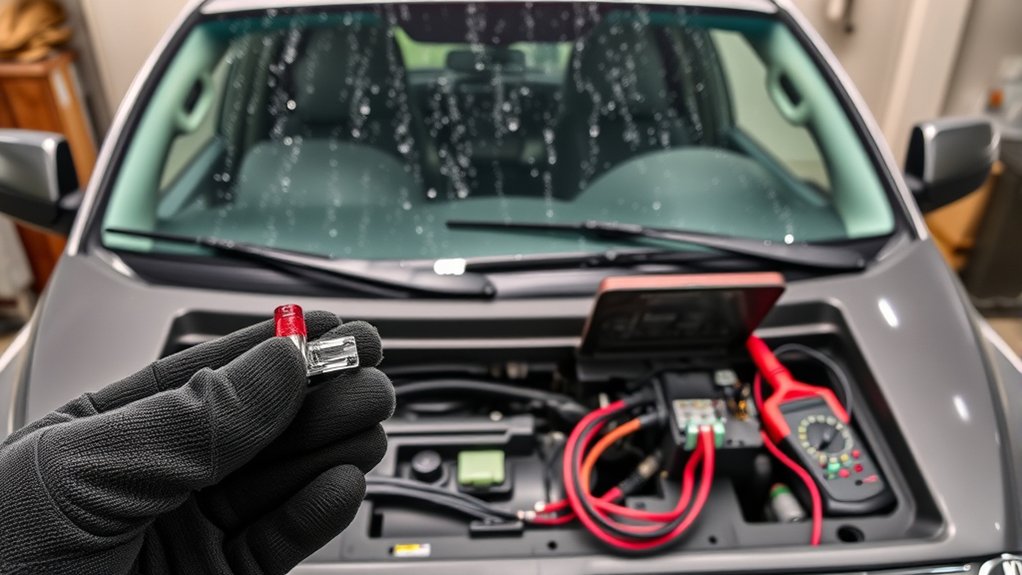
A Toyota Tundra wiper problem is easier to diagnose when you begin with the exact symptom instead of replacing parts at random. First determine whether both arms are affected, whether the motor can be heard, whether the washer pump operates, and whether the fault occurs on every speed.
Fast Triage: Start With What the Wipers Are Doing
- Silent and neither arm moves: Clear ice or snow, then check the correct fuse and electrical supply.
- Motor runs but neither arm moves: Inspect the motor crank, linkage, pivots, and arm splines.
- Only one arm moves: Inspect the stationary arm, retaining fastener, splines, pivot, and linkage connection.
- Only one speed or intermittent mode fails: Use the model-specific diagram to check the switch, motor speed circuit, wiring, relay, or control logic.
- The fuse blows again: Stop replacing fuses and diagnose the short, overload, binding mechanism, or failing component.
| Symptom | Likely Areas to Check | Best First Step |
|---|---|---|
| No sound and neither arm moves | Frozen blades, fuse, power supply, ground, switch command, wiring, control module, or motor | Clear the windshield and check the correct fuse |
| Motor can be heard but neither arm moves | Disconnected motor crank, broken linkage, worn bushings, or stripped arm splines | Inspect the arm attachments and under-cowl linkage |
| Only one arm moves | Loose arm nut, stripped arm splines, damaged pivot, or separated linkage | Inspect the stationary arm and its pivot |
| Wipers move slowly or stop partway | Ice, binding pivots, mechanical obstruction, low system voltage, poor connection, or weakening motor | Remove the load and inspect for binding before testing voltage |
| One speed or intermittent mode does not work | Switch, control circuit, motor speed circuit, relay or body-control logic, depending on model year | Use the applicable wiring diagram and scan data when available |
| Wipers do not return to the parked position | Incorrectly indexed arms, loose linkage, motor park circuit, switch, or control fault | Check arm alignment and confirm the motor completes its park cycle |
| Fuse blows repeatedly | Frozen or seized mechanism, shorted wiring, water intrusion, damaged connector, or failing motor | Stop replacing fuses and diagnose the overload or short |
The sound of the motor is an important clue: an audible motor with stationary arms usually shifts the diagnosis away from a total power-supply failure and toward the linkage, pivots, motor crank, or arm splines.
Distinguish a Wiper Fault From a Washer Fault
The windshield washer pump and the wiper motor are separate components, even though the same steering-column control may command both. If the arms move but no fluid sprays, check the fluid level, frozen or disconnected hoses, blocked nozzles, the washer fuse if separately protected, and the pump circuit. If the washer pump works but the wipers remain still, concentrate on the wiper fuse, motor circuit, arms, and linkage.
Check for Snow, Ice, and Obstructions
Do not switch the wipers on until the blades are free from the glass and packed snow has been removed from the cowl area. Use the defroster, an automotive de-icer, a snow brush, and a plastic ice scraper. Do not force a frozen arm away from the windshield or pour very hot water onto cold glass.
A blade frozen to the glass or heavy snow trapped around the arms can overload the motor, stress a worn linkage, damage an arm spline, or blow a fuse. After clearing the windshield, inspect the blades and arms for bending, tearing, or obvious displacement.
Before You Start: Which Tundra Generation Do You Have?
Tundra fuse locations, fuse names, wiring colors, switch logic, connector terminals, arm positions, and fastener specifications are not universal. Use the exact year and configuration shown on the truck’s registration or VIN information before following a diagram.
| Model Years | Tundra Generation | Why It Matters for Wiper Diagnosis |
|---|---|---|
| 2000–2006 | First generation | Use first-generation fuse, wiring, arm-position, and motor procedures rather than later diagrams. |
| 2007–2021 | Second generation | Service procedures differ from both the earlier truck and the redesigned 2022-and-newer system. |
| 2022–2026 | Third generation | Do not apply older fuse locations, connector pinouts, control assumptions, or arm-indexing procedures without confirming them for the exact truck. |
Toyota identifies 2000–2006 as the first-generation Tundra, 2007 as the start of the second generation, and the all-new 2022 Tundra as the third generation. Do not carry a fuse location, connector pinout, wire color, relay assumption, or motor test from one generation into another unless the applicable Toyota information confirms it.
Download the applicable owner information from Toyota Manuals and Warranties. For connector pinouts, diagnostic procedures, wiring diagrams, and tightening specifications, use Toyota’s Technical Information System or equivalent factory service information.
Note: Do not identify a circuit from wire color alone or diagnose a Tundra from generic failure percentages. A color or circuit design used on one model year may serve a different function on another, and the actual symptom on your truck is more useful than a generalized failure estimate.
How Do You Troubleshoot Toyota Tundra Wipers Step by Step?
- Park and make the truck safe. Stop in a dry, level location, apply the parking brake, switch the wipers off, and turn the ignition off. Do not continue driving if precipitation prevents a clear view.
- Clear the windshield and cowl. Free the blades from the glass and remove snow, leaves, twigs, or ice that could block the arms or pivots.
- Record the symptom. Check low, high, intermittent, mist, washer operation, and whether the arms return to their normal parked position. Perform only brief tests on a wet windshield.
- Listen for the motor. A humming or operating motor with stationary arms indicates that the mechanical connection deserves attention before motor replacement.
- Inspect the arms. Check whether either arm sits unusually high, can be moved independently, or is loose on its pivot. Do not tighten an arm blindly if its splines are stripped or its parked position has shifted.
- Check the correct fuse. Use the exact model-year fuse diagram or fuse-box label, remove the specified wiper-system fuse, and inspect or test it. Install only the specified fuse type and amperage.
- Stop if the replacement fuse fails again. A repeat failure suggests a continuing overload, short circuit, binding or seized mechanism, or failing electrical component. Repeated fuse replacement can leave the underlying fault unresolved.
- Inspect accessible wiring. With the ignition off, look for loose connectors, corrosion, water intrusion, rodent damage, chafed insulation, or heat-discolored terminals.
- Inspect the linkage safely. Follow the model-specific Toyota procedure before removing cowl panels or placing hands near the motor crank and linkage. Disconnect the negative 12-volt battery cable when the applicable procedure requires it.
- Perform model-specific electrical tests. Reconnect the 12-volt system only when controlled voltage, ground, switch-command, or scan-tool testing is required. Follow the applicable wiring diagram and connector view.
- Repair and verify. Reassemble the system, confirm that the arms are correctly indexed and tightened to the exact factory specification, wet the windshield, and test every operating mode.
Pro Tip: Before removing a wiper arm, photograph its parked position and place removable tape on the windshield beside the blade tip. The reference makes correct reinstallation easier without scratching or permanently marking the glass.
How Do You Diagnose Tundra Wiper Motor and Electrical Problems?
Electrical diagnosis should begin only after you have ruled out frozen blades, an obvious mechanical obstruction, and loose arm attachments. A motor circuit can appear defective when the motor is overloaded by a binding pivot or blocked linkage.
Check the Wiper Fuse Correctly
Find the applicable fuse-box diagram in the owner’s manual or on the fuse-box cover. Confirm the specified wiper-system fuse rather than removing unrelated fuses. A fuse can sometimes crack where the break is difficult to see, so use a multimeter or fuse tester when visual inspection is inconclusive.
Install only the specified fuse type and amperage. If the replacement fuse fails when the wipers are commanded, switch the system off. Do not install a larger fuse or continue feeding replacements into the circuit.
Test Power, Ground, and Command Circuits
Use the wiring diagram for the exact Tundra model year to identify the motor’s power supply, ground, switch-command, park, and speed-control circuits. Do not assume that a black, brown, or any other colored wire performs a particular function.
Depending on the model year, diagnosis may involve:
- Checking for power on both sides of the relevant fuse
- Confirming 12-volt battery and charging-system condition
- Testing motor power while the wipers are commanded on
- Performing a voltage-drop test on the ground circuit
- Checking the steering-column switch command
- Inspecting relays or integrated control circuits where equipped
- Reading applicable body-control data and diagnostic codes when the model supports scan-tool diagnosis
If the factory test procedure confirms the correct power, ground, and command at the proper motor terminals, the linkage is free, and the motor still does not operate, the motor becomes a strong suspect. If a required command or power supply is missing, continue upstream through the connector, harness, switch, relay, fuse block, or control module identified in the applicable diagram.
Check the Park Function
Wipers that operate but stop in the middle of the windshield may have incorrectly indexed arms, a loose crank or linkage, an internal motor park fault, or a control-circuit problem. Remove the arms only after recording their original position. Before reinstalling them, follow the applicable procedure so the motor and linkage are in the correct park position.
What Mechanical Problems Can Stop Tundra Wipers?
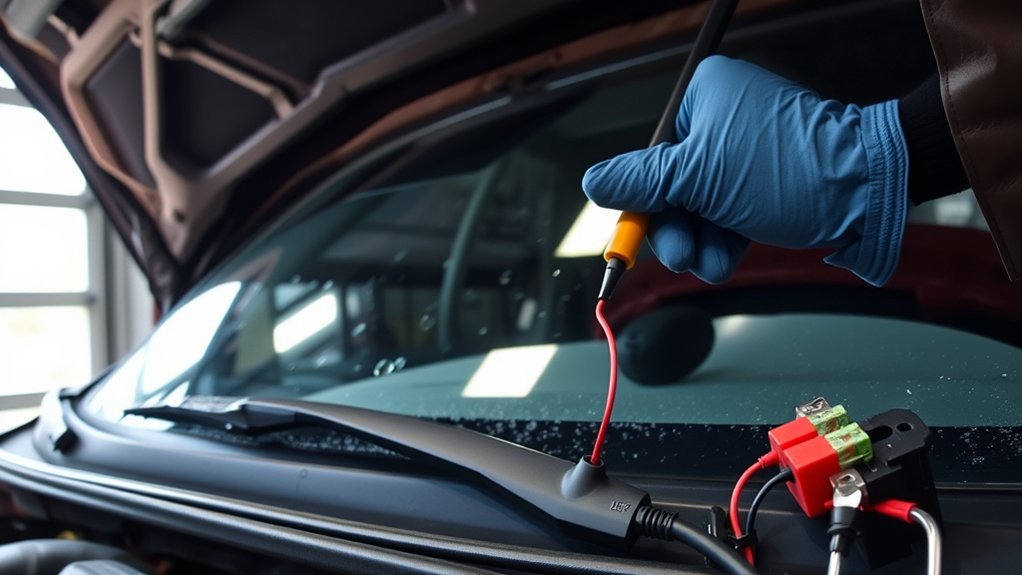
Mechanical failures are especially likely when the motor can be heard, one arm moves while the other remains still, or the arms move unevenly. The Tundra’s wiper motor transfers motion through a crank and linkage to the pivot shafts. Wear or separation anywhere in that path can stop an arm even when the electrical system is functioning.
Common Mechanical Failures
- Loose wiper-arm fastener: The pivot rotates, but the arm slips instead of sweeping the glass.
- Stripped arm or pivot splines: Tightening alone may not restore a secure mechanical connection.
- Separated linkage joint: A worn socket or bushing can allow a linkage connection to separate.
- Bent linkage: Heavy snow, forced movement, or an obstruction can distort a link and alter the sweep.
- Binding pivot: Corrosion or internal wear can make the wipers slow and increase motor load.
- Loose motor crank: The motor shaft turns without moving the linkage correctly.
- Park-system fault: The arms move but stop in the wrong location or do not complete the expected park cycle.
Inspecting Wiper Linkages
Switch the ignition off and follow the applicable Toyota safety and battery-disconnect procedure before removing cowl trim or touching the linkage. Follow the model-specific trim-removal procedure so clips, weather seals, washer hoses, and painted surfaces are not damaged.
Inspect the linkage for disconnected joints, cracked or worn bushings, bent rods, loose fasteners, corrosion, water intrusion, and contact with surrounding panels. Move the linkage only as directed by the repair procedure and never force a binding assembly. Lubricate a joint only when the factory service information calls for a particular lubricant and application point.
If a joint has separated because its socket or bushing is worn, simply reconnecting it without correcting the worn part may provide only a temporary repair.
Wiper Arm Tightness Issues
A loose arm can cause poor movement even when the pivot and motor operate normally. Lift the protective cap, inspect the retaining nut, and compare the arm’s parked position with the opposite side and any applicable windshield or service reference.
If the nut is loose, remove the arm and inspect both mating spline surfaces before tightening it. Damaged or rounded splines require replacement rather than excessive tightening. Reinstall the arm in the correct parked position and use the exact torque specification for that Tundra model year. Do not use a generic 20-ft-lb value or add an arbitrary extra turn.
Caution: Wiper arms are spring-loaded. Support the arm during removal and place a folded towel over the windshield near the pivot area so the metal arm cannot snap down and crack or chip the glass.
Which Fix Matches Each Confirmed Tundra Wiper Fault?
Replace or repair a component only after the symptom and test results point to it. Parts swapping can become expensive and may leave the original wiring or mechanical fault unresolved.
| Confirmed Fault | Appropriate Repair | Important Check |
|---|---|---|
| Blown fuse with no repeat failure | Install the specified same-amperage fuse | Confirm the mechanism is free of ice and obstruction |
| Loose arm with undamaged splines | Re-index and tighten the arm to the exact specification | Verify the parked position before wet testing |
| Stripped arm splines | Replace the damaged arm and inspect the pivot shaft | Do not compensate by overtightening |
| Broken or separated linkage | Replace the worn linkage, bushing, or transmission assembly as specified | Check for binding that may have contributed to the failure |
| Factory tests confirm correct power and ground but motor remains inoperative | Replace the motor after confirming the linkage is not seized | Transfer or align the crank exactly as the service procedure requires |
| Missing switch command or intermittent function | Repair the verified switch, connector, harness, relay, or control fault | Use applicable scan data and the correct diagram before replacing a module |
| Repeatedly blown fuse or overheated connector | Locate and repair the short, overload, seized component, or damaged terminal | Do not bypass circuit protection |
Verify the Repair
After reassembly, confirm that no tool, trim piece, washer hose, or wiring connector remains loose beneath the cowl. Wet the windshield with washer fluid or clean water before operating the wipers. Test mist, intermittent, low, high, washer activation, and automatic parking where those functions are equipped.
Watch for arm-to-arm contact, contact with the cowl or windshield edge, excessive noise, hesitation, or an incorrect parked position. Stop immediately if the linkage binds or the fuse fails.
When Should You Stop DIY Wiper Diagnosis?
Basic checks such as clearing ice, inspecting the arms, and checking the correct fuse are manageable for many owners. Electrical faults beneath the cowl or inside the steering-column or body-control system can require service information, connector test leads, a scan tool, and experience reading wiring diagrams.
Signs of Electrical Failure
Arrange professional diagnosis when you find any of the following:
- The correct replacement fuse blows again
- A connector is melted, discolored, wet, or smells burned
- The wipers operate intermittently when the harness or steering-column area moves
- Power or ground is missing and the circuit passes through integrated relays or a control module
- Applicable scan-tool data or diagnostic codes point to a body-control, communication, or switch-input fault
- The repair requires steering-column disassembly near supplemental-restraint components
Persistent Mechanical Issues
Professional help is also appropriate when a replacement arm will not grip the pivot, the linkage repeatedly separates, the pivots bind, the cowl area is difficult to access, or the arms cannot be aligned without contacting the windshield edge or each other.
If the motor runs but the linkage does not move correctly, do not continue operating it. A loose crank or jammed linkage can damage surrounding parts or allow components to move unexpectedly during inspection.
Professional Diagnostic Services
A qualified technician can perform voltage-drop testing, connector load testing, scan-tool analysis where applicable, switch-input checks, and mechanical inspection using the correct Toyota service procedure. This is more reliable than replacing the motor, switch, relay, or control module based only on a symptom.
Before paying for a repair, review our Toyota Tundra warranty coverage guide, then check the truck’s VIN through the Toyota Safety Recall and Service Campaign lookup and the NHTSA recall lookup. Recall and campaign applicability is VIN-specific, and a general model search does not confirm coverage for an individual truck.
Related Guides
Frequently Asked Questions
Why would Toyota Tundra windshield wipers suddenly stop working?
Sudden failure can result from frozen blades, packed snow, a blown fuse, a separated linkage, a loose arm, damaged wiring, a failed steering-column switch, a control fault, or a failed motor. Whether the motor can be heard and whether one or both arms are affected will narrow the diagnosis.
Which fuse should I check for Toyota Tundra windshield wipers?
Use the fuse-box label and owner information for your exact Tundra model year. Toyota service information for some Tundras identifies a WIPER circuit, but the fuse location, amperage, and circuit design should not be assumed to be identical across all three generations. Replace a blown fuse only with the specified amperage, and stop if the replacement fuse blows again.
How do you reset Toyota Tundra windshield wipers?
Do not rely on a generic ignition, delay, or intermittent-mode reset to repair an inoperative Tundra wiper system. Cycling the ignition will not repair a blown fuse, frozen mechanism, loose arm, damaged linkage, wiring fault, or failed motor. Use the model-specific Toyota procedure when motor, linkage, or arm indexing is required.
What is the most common Toyota Tundra wiper problem?
There is no single failure that should be assumed to be the most common across every Tundra generation. In snowy conditions, frozen blades and overloaded mechanisms are important possibilities. When the motor can be heard, loose arms or linkage faults become more likely. When the system is silent, begin with the obstruction and fuse checks before moving deeper into the electrical circuit.
Why can I hear the motor but the windshield wipers do not move?
The motor’s rotation may not be reaching the arms correctly. Inspect for a loose motor crank, disconnected or broken linkage, worn linkage bushings, a binding pivot, loose arm fasteners, or stripped arm splines. Do not replace an audible motor until the mechanical connection has been inspected.
Why does the wiper fuse keep blowing?
A repeatedly blown fuse can indicate frozen or binding wipers, a seized linkage, a shorted wire, water inside a connector, an internally failing motor, or another continuing overload. Stop installing replacement fuses until the cause has been located, and never use a higher-amperage fuse.
Can I drive my Tundra when the windshield wipers are not working?
Do not drive when rain, snow, road spray, mud, or another condition could obstruct your view. Windshield wipers are essential visibility equipment, and a minor change in weather can make a truck with inoperative wipers unsafe before you reach a repair location.
Conclusion
When Toyota Tundra windshield wipers stop working, diagnose the symptom before replacing parts. Clear ice and debris first. If the motor runs but the arms do not move, inspect the arms, pivots, crank, and linkage. If the system is silent, check the exact model-year fuse and electrical path. If only one arm moves, begin with that arm and its mechanical connection.
Avoid generic wire-color assumptions, generic torque figures, cross-generation fuse diagrams, and unsupported reset procedures. Use the exact Toyota owner and repair information for the truck, replace fuses only with the specified amperage, and seek professional help when a replacement fuse blows again, connectors show heat damage, the linkage binds, hybrid high-voltage work is involved, or model-specific circuit testing is required.
Sources
- Toyota Manuals and Warranties — model-specific owner information, fuse references, operating instructions, and precautions
- Toyota Technical Information System — factory repair manuals, wiring diagrams, diagnostic information, and specifications
- Toyota Safety Recall and Service Campaign Lookup — VIN-based Toyota recall and campaign information
- National Highway Traffic Safety Administration Recall Lookup — VIN-based unrepaired-recall information and safety-complaint resources
- 49 CFR 571.104, Windshield Wiping and Washing Systems — federal windshield wiping and washing system requirements
- Toyota USA Newsroom: 2000–2006 Tundra, First Generation — Toyota generation reference
- Toyota USA Newsroom: 2007–2008 Tundra, Second Generation — Toyota generation reference
- Toyota USA Newsroom: All-New 2022 Tundra — Toyota identifies the 2022 redesign as the third-generation Tundra
- Toyota Tundra i-FORCE MAX Warranty and Maintenance Guide — 12-volt and high-voltage hybrid-system safety precautions
