
Traction control and electronic stability control are closely related safety systems, but they solve different problems. Traction control limits drive-wheel spin when you accelerate, while stability control helps keep the whole vehicle pointed where you intend during a skid, sharp turn, or emergency maneuver. Both are most effective when paired with good tires, safe speed, and smooth driver inputs.
Quick Answer
Traction control prevents excessive wheel spin during acceleration by reducing power or braking a slipping drive wheel. Stability control monitors steering and vehicle movement, then brakes individual wheels and may reduce torque to correct understeer or oversteer. Keep both systems on for normal road driving.
Key Takeaways
- Traction control manages longitudinal grip, mainly while you accelerate.
- Electronic stability control (ESC) manages directional stability when the vehicle does not follow your steering input.
- Both systems commonly share wheel-speed sensors and brake hardware with the anti-lock braking system (ABS).
- A flashing indicator usually means the system is actively intervening; a steady light may mean the system is off or has a fault.
- Turn a system off only when the owner’s manual recommends it, such as briefly freeing a vehicle stuck in deep snow, mud, sand, or gravel.
Traction Control vs. Stability Control at a Glance
| Feature | Traction Control | Stability Control |
|---|---|---|
| Main purpose | Limits drive-wheel spin | Helps maintain the intended path |
| Typical trigger | A powered wheel spins too quickly during acceleration | Actual vehicle rotation differs from steering input |
| Typical response | Reduces motor or engine torque and/or brakes a slipping wheel | Brakes selected wheels and may reduce torque to create a correcting yaw moment |
| Most noticeable | Starting or accelerating on rain, snow, ice, gravel, or loose dirt | Emergency swerves, slippery curves, understeer, or oversteer |
| Normal setting | On | On |
What Is Traction Control and How Does It Work?

When you accelerate on a slippery surface, one or more drive wheels may spin faster than the vehicle is moving. The traction control system (TCS) watches wheel-speed data—often using the same sensors as ABS—and intervenes when it detects excessive slip.
Depending on the vehicle, TCS can reduce engine or electric-motor torque, apply brake pressure to a spinning drive wheel, adjust transmission behavior, or combine these actions. The goal is to restore usable grip so the vehicle can move forward without uncontrolled wheel spin.
The U.S. Department of Transportation describes traction control as a system that reduces power and applies braking to a spinning drive wheel. It improves mobility on slippery surfaces, but it is not a substitute for stability control because it does not provide the same lateral, path-correcting function. See the NHTSA final rule on ESC and traction control.
You may feel a brief reduction in acceleration, a brake pulse, or a vibration when the system activates. Many vehicles also flash the skidding-car indicator, but sounds and indicator behavior vary by manufacturer.
Note: Traction control cannot create grip that the tires do not have. Worn tires, excessive speed, standing water, and ice can still overwhelm the system.
What Is Stability Control and How Does It Work?
Electronic stability control (ESC) monitors whether the vehicle is traveling in the direction you are steering. It compares driver input with the vehicle’s actual movement and can intervene when it detects developing understeer, oversteer, or another loss of directional control.
Under the current U.S. standard, ESC must be able to apply and adjust brake torque at individual wheels, monitor steering input and yaw behavior, limit oversteer and understeer, and modify engine torque when necessary. See 49 CFR 571.126.
ESC does not steer the wheel for you in the way a driver turns the steering wheel. Instead, selective braking creates a turning force around the vehicle’s vertical axis, helping bring the vehicle back toward its intended path. Some systems also reduce available torque until stability improves.
Key Components of ESC
- Steering-angle sensor: Tracks where you intend to go.
- Yaw-rate sensor: Measures how quickly the vehicle is rotating around its vertical axis.
- Wheel-speed sensors: Monitor the rotational speed of individual wheels.
- Lateral-acceleration sensing: Helps the control unit understand side-to-side vehicle motion.
- Brake-control module: Applies or releases pressure at selected wheels.
- Powertrain control: Reduces engine or motor torque when needed.
How It Enhances Safety
ESC is especially valuable during sudden lane changes, slippery curves, emergency avoidance maneuvers, and situations where the front or rear tires begin to slide. It reacts faster than most drivers can individually brake a specific wheel, but it still depends on available tire grip and appropriate steering input.
In its 2007 final rule, NHTSA estimated that ESC would reduce single-vehicle crashes by 34% for passenger cars and 59% for SUVs, based on the data available at that time. The agency did not say that “34% of fatal crashes” would automatically be prevented. Review the official estimates.
Stability control can help prevent a developing skid, but it cannot overcome the laws of physics or replace safe speed, proper tires, and attentive driving.
Understeer vs. Oversteer
Understeer occurs when the front tires lose grip and the vehicle turns less than you intend, often feeling as though it is pushing wide. Oversteer occurs when the rear tires lose grip and the vehicle rotates more than you intend. ESC can brake different wheels and reduce torque to help limit either condition.
Key Differences Between Traction Control and Stability Control
The simplest distinction is acceleration grip versus directional control. Traction control primarily addresses drive-wheel slip along the direction of travel. Stability control evaluates the vehicle’s overall path and rotation.
- Traction control: Focuses on excessive drive-wheel spin, particularly while accelerating.
- Stability control: Focuses on understeer, oversteer, and deviation from the driver’s intended path.
- Activation: TCS responds to wheel slip; ESC responds to a mismatch between steering input and actual vehicle motion.
- Intervention: TCS usually limits torque or brakes a slipping drive wheel; ESC selectively brakes one or more wheels to create a correcting turning force.
- Integration: Modern vehicles commonly combine ABS, traction control, and ESC in one brake-control architecture, even though the functions remain distinct.
- Recommended use: Leave both systems enabled during normal public-road driving.
[Amazon Products Picked for You]


GM-recommended replacement part for your GM vehicle’s original factory component

How Traction Control Enhances Grip on Slippery Surfaces
Traction control helps you accelerate more smoothly on wet pavement, packed snow, ice, gravel, or loose dirt. It does this by limiting excessive wheel slip before the tire spins freely and wastes most of the available traction.
Wheel Spin Detection
Wheel-speed sensors continuously report how fast each wheel is rotating. The control module compares those signals and considers vehicle speed, throttle input, steering, and other data. When a driven wheel spins abnormally fast, the system intervenes within fractions of a second.
- Helps reduce wheel spin during acceleration
- Responds automatically without requiring a separate driver action
- Often shares sensors and hydraulic hardware with ABS
- May flash a dashboard indicator while active
- Works on front-, rear-, all-, and four-wheel-drive vehicles, although calibration differs
Engine Power Regulation
On gasoline vehicles, torque reduction may involve closing the electronic throttle, changing ignition or fuel delivery, or requesting a transmission adjustment. On hybrids and electric vehicles, the system can quickly reduce motor torque. Brake-based traction control may also slow a spinning wheel so the differential can send useful torque to a wheel with better grip.
The intervention can feel like hesitation or reduced acceleration. That sensation is usually normal when the indicator is flashing and the road is slippery. A steady warning light, repeated intervention on dry pavement, or unexpected power reduction deserves further inspection.
What Role Does Stability Control Play in Preventing Skids?
ESC continuously evaluates steering angle, yaw rate, wheel speed, and lateral movement. If the vehicle begins rotating too much or too little for the driver’s steering input, it can brake selected wheels to oppose the skid.
- Helps correct developing understeer and oversteer
- Supports control during emergency swerves and sharp turns
- Can reduce loss-of-control risk in rain, snow, or ice
- Operates automatically when its activation conditions are met
- May reduce power as well as apply individual-wheel braking
ESC works only within the available tire-road friction. During severe hydroplaning, for example, the tires may have too little contact with the road for meaningful correction. Slow down before standing water and avoid abrupt steering or braking.
When to Use Traction Control?

Keep traction control engaged for everyday driving, including rain, light snow, icy patches, gravel, and ordinary acceleration. The system is designed to work in the background and activate only when it detects excessive drive-wheel slip.
Keep traction control engaged during normal driving to improve acceleration control, especially when road grip is reduced.
You may temporarily select a reduced-intervention or off mode when the vehicle is stuck in deep snow, mud, sand, or loose gravel and controlled wheel spin is needed to rock or free it. Some manufacturers also specify different settings for snow chains, off-road modes, dynamometer testing, or track use.
Warning: Do not disable traction or stability control merely to accelerate harder on a public road. Re-enable the normal mode as soon as the vehicle is free, and follow the exact procedure in the owner’s manual because one button may change both systems.
The button is commonly marked with a car and wavy skid lines, but the same symbol can control traction control, ESC, or multiple levels of intervention. A quick press and a long press may produce different results.
When to Use Stability Control?
Stability control should remain on for nearly all public-road driving. It provides an additional layer of protection in the situations where directional control can disappear quickly:
- Rain, snow, or ice: Lower grip makes understeer and oversteer more likely.
- Emergency maneuvers: ESC can help during a sudden lane change or obstacle avoidance.
- Curves and highway ramps: The system can respond if the vehicle starts to push wide or rotate.
- Uneven-grip surfaces: One side of the vehicle may have less traction than the other.
- Daily driving: Leaving ESC on preserves its safety benefit when an unexpected event occurs.
Track, off-road, snow-chain, or stuck-vehicle situations may justify a manufacturer-provided alternate mode, but a full-off setting should not be treated as the default. U.S. rules generally require the system to return to its normal compliant mode at a new ignition cycle, subject to specific drivetrain exceptions.
How Traction and Stability Control Work Together for Safety
Traction control and stability control share information and hardware but watch for different types of instability. During acceleration out of a slippery curve, traction control may limit wheel spin while ESC monitors whether the vehicle is following the intended line. The brake-control module decides which function has priority and coordinates the response.
ESC is required to remain capable of activation even when ABS or traction control is also active. This integration lets the systems address braking slip, acceleration slip, and lateral instability without competing for the same brake hardware.
Since the 2012 model year, covered new U.S. light vehicles have generally been required to meet FMVSS No. 126. The standard applies to passenger cars, multipurpose passenger vehicles, trucks, and buses with a gross vehicle weight rating of 10,000 pounds or less, with limited phase-in exceptions specified in the rule.
How ABS, Traction Control, and Stability Control Differ
| System | Main job | Usually acts during |
|---|---|---|
| ABS | Prevents wheel lock so you can retain steering control under hard braking | Braking |
| Traction control | Limits excessive drive-wheel spin | Acceleration |
| Stability control | Helps the vehicle follow the intended direction | Turning, swerving, or developing skids |
[Amazon Products Picked for You]

Compatible with - 2010 2011 2012 2013 2014 2015 2016 2017 Equinox, 2010-2017 Terrain

Anti-lock brake system (ABS) sensors monitor wheel speed

Compatible with - 2019 2020 2021 2022 Toyota Corolla.
Do AWD and 4WD Replace Traction or Stability Control?
No. All-wheel drive and four-wheel drive distribute drive torque to more wheels, which can improve the ability to start moving on a low-grip surface. They do not automatically prevent wheel lock under braking or correct a vehicle that is rotating away from its intended path.
AWD, 4WD, traction control, ABS, and ESC can complement one another. Your tires remain the only contact with the road, so winter tires, adequate tread depth, and correct pressure may matter more than the drivetrain badge when conditions are severe.
[Amazon Products Picked for You]
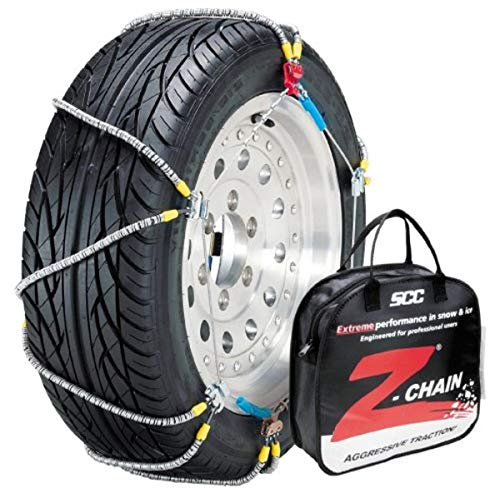
Manganese Alloy Cross Members Provide Superior, All-Around Traction Performance And Greater Durability Compared To Conventional Traction Products

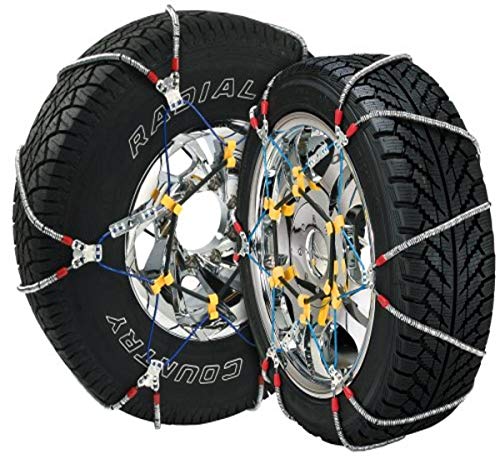
Designed for cars, pickups, and SUVs with very limited operating clearance around the drive tires
What the Traction or Stability Control Light Means
- Flashing while driving: The system is usually active because it detected wheel slip or instability. Ease off the accelerator, steer smoothly, and increase following distance.
- Steady after you pressed the button: A reduced-intervention or off mode may be selected.
- Steady without driver input: A malfunction may be present, especially if the message center says “Service Stabilitrak,” “Check VSC,” “ESC Fault,” or similar.
- ABS, brake, and ESC lights together: Shared sensors or brake-control components may be affected, so the vehicle should be inspected promptly.
Pro Tip: Before booking a repair, confirm that all four tires are the correct size and properly inflated. A temporary spare, mismatched tire, low pressure, damaged wheel-speed sensor wiring, or weak battery voltage can trigger related warnings on some vehicles.
Basic Troubleshooting
- Park safely, restart the vehicle, and check whether the light clears.
- Confirm that you did not accidentally select an off or sport mode.
- Inspect tire pressure and look for a temporary spare or visibly mismatched tire.
- Read the owner’s manual for the exact symbol and message.
- If the light stays on, scan the ABS/ESC module with a capable diagnostic tool; a basic engine-code reader may not access chassis codes.
- Arrange professional diagnosis if warning lights remain, braking feels abnormal, or the vehicle repeatedly cuts power on dry pavement.
Limitations of Traction and Stability Control
These systems reduce risk; they do not make every maneuver safe. They cannot increase the physical friction available between the tire and road, eliminate hydroplaning, compensate for bald tires, or guarantee that a vehicle will stay on the road at excessive speed.
Traction control can also be inconvenient in specific low-speed situations because aggressive torque reduction may prevent a stuck vehicle from building momentum. Brake-based systems can create heat during prolonged wheel slip. Those are reasons to use an approved off-road or stuck-vehicle mode—not reasons to leave the system disabled during normal driving.
Frequently Asked Questions
How Is Stability Control Different From Traction Control?
Traction control limits excessive drive-wheel spin during acceleration. Stability control compares steering input with actual vehicle motion and can brake individual wheels to correct understeer, oversteer, or a developing skid.
What’s the Difference Between ESC and TC?
ESC means electronic stability control, and TC means traction control. TC mainly manages wheel slip along the direction of travel. ESC manages the vehicle’s lateral direction and rotation. Modern vehicles often integrate both functions in the same control module.
What Is the Difference Between Traction Control and StabiliTrak?
Traction control is a specific wheel-slip function. StabiliTrak is General Motors’ name for an electronic stability-control system on many models, and it commonly works with traction control and ABS. Exact button behavior and operating modes vary, so check the manual for the vehicle’s year and model.
What Are the Disadvantages of Traction Control?
Traction control can reduce power when you are trying to rock a vehicle free from deep snow, mud, sand, or gravel, and prolonged brake-based intervention can create heat. It may also feel intrusive during performance driving. These limitations are situation-specific and do not outweigh the safety benefit of leaving it on for normal roads.
Why Is the Traction or Stability Control Light Flashing?
A flashing light usually means the system is actively responding to wheel slip or a developing skid. Reduce throttle, avoid abrupt steering, and slow to match the road conditions. Indicator behavior varies, so confirm the symbol in the owner’s manual.
Can You Drive With the Stability Control Light On?
A steady light may mean the system is switched off or unavailable. The vehicle may still move, but you may not have electronic skid correction. Drive cautiously, avoid poor weather when possible, and arrange diagnosis—especially if ABS or brake warnings are also illuminated.
Conclusion
Traction control and stability control work together, but they are not interchangeable. Traction control manages wheel spin during acceleration, while stability control helps correct the vehicle’s direction during understeer, oversteer, or a developing skid. Keep both systems active for normal driving, respond to flashing indicators by slowing down, and investigate any steady warning light that does not clear.
Sources
- Electronic Code of Federal Regulations: 49 CFR 571.126 — current U.S. requirements and technical definition of electronic stability control.
- NHTSA Final Rule: Electronic Stability Control Systems — system operation, traction-control distinction, effectiveness estimates, and phase-in details.
- National Highway Traffic Safety Administration: Electronic Stability Control — consumer safety information about ESC.
- NHTSA: Preliminary Results Analyzing ESC Effectiveness — federal crash-data research on ESC effectiveness.
- Insurance Institute for Highway Safety: Electronic Stability Control — independent safety research and consumer guidance.
