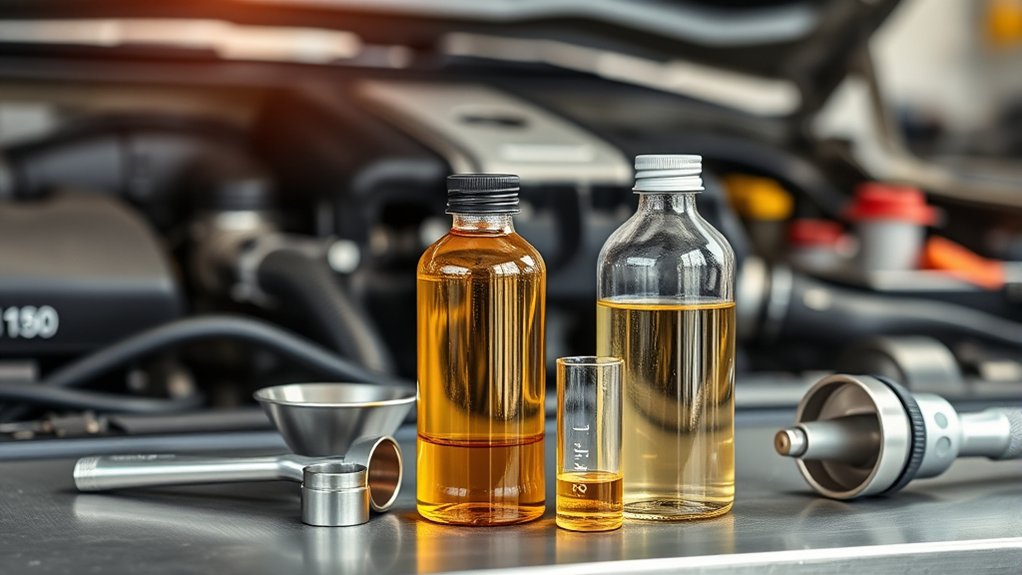
You can use 5W-30 instead of 0W-20 in a Toyota Tacoma only when Toyota specifies 5W-30 for that exact model year, engine, and market. Tacoma requirements have changed substantially over time: some older V6 models specify 5W-30, while newer U.S.-market Tacomas commonly specify 0W-20. For example, the 2024 U.S. Tacoma manual specifies ILSAC GF-6A SAE 0W-20 and allows SAE 5W-20—not 5W-30—as a temporary substitute when 0W-20 is unavailable.
Last updated: September 19, 2026 — Toyota oil guidance, current API/ILSAC standards, and U.S. warranty guidance rechecked.
Quick Answer
Use 5W-30 instead of 0W-20 only when your Tacoma owner’s manual lists 5W-30 for that model year and engine. If your manual specifies 0W-20 and does not approve 5W-30, do not switch just because you tow, drive in hot weather, or have high mileage. A one-time accidental fill usually is not an emergency, but verify the oil level and return to the approved viscosity with a normal oil change.
Key Takeaways
- Check the manual for your exact Tacoma year, engine, and sales market before selecting an oil grade.
- Older Tacomas are not all the same: some four-cylinder and V6 engines from the same model year specify different viscosities.
- For the 2024 U.S. Tacoma, Toyota specifies SAE 0W-20 and permits SAE 5W-20 temporarily if 0W-20 is unavailable.
- 0W-20 meets lower-temperature cranking and pumping limits than 5W-30, while SAE 30 oil is thicker than SAE 20 oil at operating temperature.
- A thicker oil is not automatically safer for towing, heat, or an older engine.
- Using the wrong viscosity does not automatically void an entire U.S. vehicle warranty, but damage caused by improper maintenance may be excluded from coverage.
- If you used an unapproved grade for a full fill, a normal drain-and-fill with the specified oil is generally the appropriate correction.
Toyota’s Recommended Oil for Tacoma: Short Answer
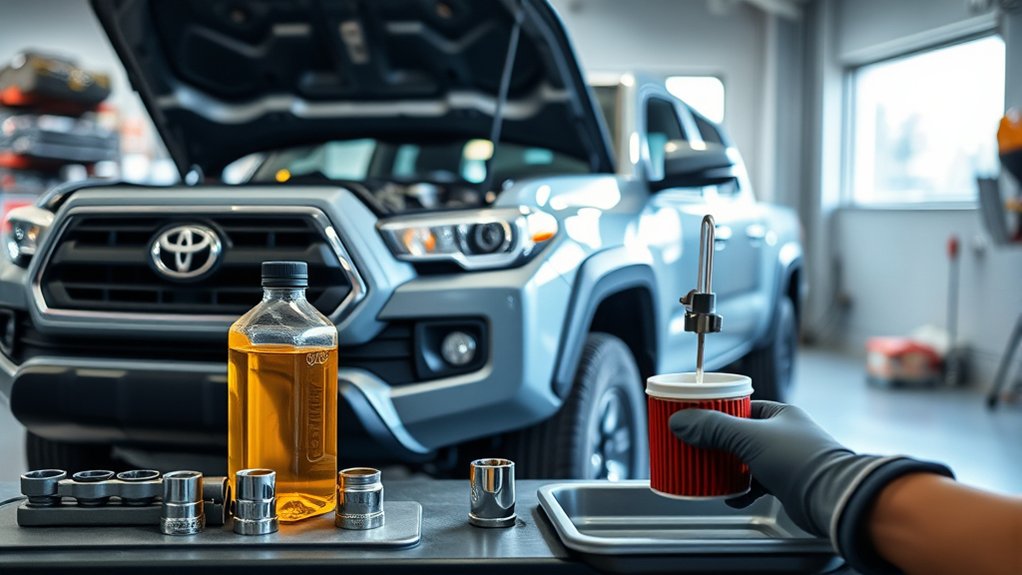
Toyota’s recommendation varies by model year, engine, and sales market. That means a grade that is correct for one Tacoma can be wrong for another. Start with the oil cap, then confirm the viscosity and performance standard in the lubrication section of your owner’s manual.
You can find official manuals through Toyota’s Manuals and Warranties portal. Select the exact model year rather than relying on a forum post, parts-store lookup, or advice for a different engine.
For a broader year-by-year discussion of Tacoma oil grades, see our Toyota Tacoma oil viscosity guide. This page focuses specifically on whether 5W-30 can replace 0W-20 and what to do after using the wrong grade.
Warning: Do not choose a different viscosity only because the weather is hot or the truck tows. Use an alternate grade only when Toyota lists it as acceptable for your truck or a qualified technician recommends it after diagnosing a specific engine condition.
Tacoma Oil Examples by Year and Engine
The examples below show why a universal “Tacomas use 0W-20” or “Tacomas can use 5W-30” rule does not work. These are U.S.-market examples; always verify the manual for your exact truck.
| Tacoma Example | Toyota-Specified Viscosity | What It Shows |
|---|---|---|
| 2009 2.7L 2TR-FE | SAE 5W-20 or 0W-20; Toyota identifies 0W-20 as the preferred choice | Engine matters, not just model year. |
| 2009 4.0L 1GR-FE V6 | SAE 5W-30; SAE 10W-30 may be used temporarily if 5W-30 is unavailable | 5W-30 is the factory-specified grade for some older Tacoma engines. |
| 2015 2.7L 2TR-FE | SAE 0W-20; SAE 5W-20 temporary fallback | A 5W winter rating does not automatically mean 5W-30 is approved. |
| 2015 4.0L 1GR-FE V6 | SAE 5W-30; SAE 10W-30 temporary fallback | Two engines in the same Tacoma generation can require different oil. |
| 2020 2.7L or 3.5L | SAE 0W-20; SAE 5W-20 temporary fallback | Third-generation U.S. Tacoma guidance differs from older 4.0L V6 guidance. |
| 2024 U.S. 2.4L T24A-FTS | SAE 0W-20, ILSAC GF-6A; SAE 5W-20 temporary fallback | Toyota does not list 5W-30 as the temporary U.S. substitute for this application. |
Can a 2024 Tacoma Use 5W-30 Instead of 0W-20?
For a 2024 U.S.-market Tacoma with the T24A-FTS 2.4L turbocharged engine, Toyota specifies ILSAC GF-6A multigrade engine oil and SAE 0W-20. The manual says SAE 5W-20 may be used if 0W-20 is unavailable, but it must be replaced with 0W-20 at the next oil change. It does not identify 5W-30 as that temporary U.S. substitute.
If you have a Tacoma sold in another country, use the manual supplied for that market. Do not assume a viscosity listed for another country automatically applies to your U.S.- or Canadian-market truck.
What 0W-20 and 5W-30 Mean
Engine-oil grades follow the SAE J300 viscosity classification. SAE J300 classifies engine oils by rheological limits. The number before the “W” describes low-temperature cranking and pumping performance, while the second number identifies the oil’s high-temperature viscosity grade.
| Grade | Cold-Start Rating | Operating-Temperature Grade | Practical Meaning |
|---|---|---|---|
| 0W-20 | Meets the 0W low-temperature limits | SAE 20 | Qualifies for lower-temperature cranking and pumping limits and has a lower high-temperature viscosity grade |
| 5W-30 | Meets the 5W low-temperature limits | SAE 30 | Has a higher high-temperature viscosity grade, but is not automatically appropriate for an engine designed around 0W-20 |
Because the two oils have different winter ratings, 0W-20 qualifies for lower-temperature cranking and pumping limits than 5W-30. Their operating grades also differ: 5W-30 is in the SAE 30 range at high temperature while 0W-20 is in the SAE 20 range. Those differences do not establish which oil is correct without the engine manufacturer’s specification.
Quick Comparison: 0W-20 vs. 5W-30
- Cold starts: 0W-20 qualifies for lower-temperature cranking and pumping limits than 5W-30.
- Operating viscosity: SAE 30 oil has a higher high-temperature viscosity range than SAE 20 oil.
- Fuel economy: Lower-viscosity oil can reduce pumping and friction losses, but the real-world difference varies by engine, oil formulation, temperature, and driving conditions.
- Engine protection: Protection depends on using an appropriate viscosity and oil-performance standard for the engine and operating conditions.
- Oil quality: Match the API or ILSAC performance level applicable to the vehicle, not just the large viscosity numbers on the bottle.
The correct Tacoma oil is not automatically the thickest grade. It is the viscosity and performance specification approved for your exact engine, model year, and market.
When 5W-30 May Be Acceptable
5W-30 is appropriate when your Tacoma manual specifies it or lists it as an allowed alternative. This is not merely theoretical: Toyota specified 5W-30 for the 4.0L 1GR-FE V6 in examples such as the 2009 and 2015 U.S.-market Tacoma, while the 2.7L four-cylinder in those years used different guidance.
A technician may also recommend a different viscosity for a worn or abnormal engine after checking oil pressure, oil consumption, leaks, operating temperature, and mechanical condition. That is a diagnosis-based decision, not a routine high-mileage upgrade.
Towing and Heavy Loads
Towing raises engine load and can raise oil temperature, but it does not automatically authorize 5W-30 in a Tacoma specified for 0W-20. Follow Toyota’s viscosity guidance for your truck and use the applicable maintenance schedule for towing or heavy use. If the manual provides an alternate viscosity for extreme load conditions, use that manufacturer guidance rather than a universal “thicker is safer” rule.
Hot Climates
Ambient heat alone is not a reason to ignore the manual. Toyota’s own viscosity instructions account for engine design and operating conditions. If the manual for your exact truck provides a temperature chart or alternate grade, follow it. Otherwise, retain the specified viscosity even in summer heat.
High-Mileage Engines
High mileage by itself does not prove that an engine needs thicker oil. If the engine runs normally and does not have abnormal oil consumption or pressure, stay with the specified viscosity. If consumption, leakage, persistent noise, or low pressure develops, diagnose the cause first. A high-mileage formulation in the correct viscosity may be preferable to changing grades without a diagnosis.
Pro Tip: Save a photo of the oil-cap marking and the manual page for your engine. Keep oil and filter receipts with the mileage and date so you can document what was used and when.
Risks of Using a Non-Recommended Viscosity
One oil change with a nearby viscosity does not guarantee engine damage. However, repeatedly using a grade outside the vehicle manufacturer’s recommendation can change oil-flow behavior, pressure, pumping losses, and film thickness from the range intended for the engine. The practical effect depends on the engine, temperature, oil formulation, and operating conditions.
Cold-Start and Oil-Flow Concerns
A higher winter rating meets different low-temperature cranking and pumping limits. Oil that is too viscous for the application can circulate differently during cold starts and can affect systems that depend on controlled oil flow. Oil with an unsuitable high-temperature viscosity can also change pressure and film behavior compared with the grade around which the engine was calibrated.
Performance, Economy, and Emissions
Changing viscosity can alter friction, oil pressure, variable-valve-timing response, and fuel economy. The size of any change depends on temperature, engine design, oil formulation, and driving conditions. Claims such as a guaranteed one- or two-MPG difference are not reliable without vehicle-specific testing.
Warranty and Liability
Using a different oil brand, an independent repair shop, or an aftermarket part does not automatically cancel a U.S. vehicle warranty. The Federal Trade Commission explains that warranty coverage cannot be denied merely because routine service was performed elsewhere or an aftermarket part was used.
That does not make an incorrect oil grade risk-free. If improper service or an unsuitable product causes damage to a covered component, coverage for that damage can be denied. Follow Toyota’s viscosity, performance-standard, capacity, and maintenance requirements, and keep service records and receipts.
What to Do If You Used 5W-30 Instead of 0W-20
First, confirm that 5W-30 is not an approved grade for your exact Tacoma. Then determine whether you added a small top-off amount or filled the entire crankcase.
- Check the oil level: Park on level ground, let the engine sit as directed by the manual, and verify that the level is within the dipstick’s acceptable range. Overfilling can require more immediate correction than a small viscosity difference.
- Review the exact manual: Confirm the required viscosity, oil-performance standard, oil-change capacity, and maintenance interval for your engine and market.
- Consider how much was added: A small emergency top-off with compatible engine oil is a different situation from a complete fill with an unapproved viscosity.
- Watch for warning signs: Stop and investigate if the oil-pressure warning appears or the engine develops unusual knocking, persistent ticking, poor running, or rapid oil loss.
- Correct an unapproved full fill: Replace it with the specified oil using a normal drain-and-fill procedure. A chemical engine flush is generally unnecessary unless contamination is present or a qualified technician identifies another reason for one.
Note: If you used a small amount of 5W-30 because the engine was dangerously low on oil, restoring the oil level was the immediate priority. Verify the manual afterward and return to the approved viscosity at the next practical service.
Choose the Right Oil by Model Year, Engine, and Use
Use this order of priority instead of choosing oil by climate, mileage, or internet consensus alone:
- Identify the exact truck: Confirm the model year, engine, and whether the Tacoma is a U.S., Canadian, or other-market model.
- Read the oil cap: Treat it as a quick reference, then verify the complete oil instructions in the owner’s manual.
- Match viscosity: Use the listed SAE grade or an alternate grade only when Toyota expressly allows it for that application.
- Match the performance standard: Look for the API or ILSAC category applicable to the vehicle. The API Motor Oil Guide says owners should follow vehicle-manufacturer recommendations. As of September 2026, API lists ILSAC GF-7A as current and states that GF-7A may be used where GF-6A was recommended; GF-6A is scheduled to become obsolete on October 1, 2026.
- Use the correct capacity: Check the drain-and-refill quantity for an oil-and-filter change, then verify the final level with the dipstick rather than treating the published capacity as a substitute for the level check.
- Follow the correct interval: Use Toyota’s maintenance schedule for your model and driving conditions instead of applying a universal oil-change mileage to every Tacoma.
How to Switch Grades Safely and What to Monitor
If Toyota approves both grades for your application, you can switch during a normal oil change. Drain the old oil, replace the filter when due, add the specified amount, run the engine briefly, check for leaks, and recheck the dipstick according to the manual’s procedure. Small residual mixing between compatible engine oils during a normal change is expected.
Afterward, monitor the oil level, warning lights, leaks, unusual noise, and consumption. If the truck shows an oil-pressure warning, abnormal mechanical noise, or rapid oil loss, shut the engine down safely and have the cause diagnosed rather than assuming viscosity alone is responsible.
Frequently Asked Questions
Can I use 5W-30 instead of 0W-20 in a Toyota Tacoma?
Use 5W-30 only when Toyota specifies or approves it for your Tacoma’s model year, engine, and market. Some older Tacoma V6 engines specify 5W-30, but a Tacoma that specifically calls for 0W-20 should not routinely be switched to 5W-30 just because the weather is hot, the truck tows, or the engine has high mileage.
What oil does a 2024 Toyota Tacoma use?
For the 2024 U.S.-market Tacoma with the T24A-FTS 2.4L turbo engine, Toyota specifies ILSAC GF-6A SAE 0W-20. If 0W-20 is unavailable, Toyota permits SAE 5W-20 temporarily and says to return to 0W-20 at the next oil change.
Will one oil change with 5W-30 damage an engine that calls for 0W-20?
Damage is not certain from one fill, especially when the engine has no warning lights or abnormal symptoms, but 5W-30 is still outside the stated recommendation when the manual does not allow it. Verify the oil level and specification, monitor the engine, and replace an unapproved full fill with the specified oil at a practical time.
Can I use 5W-30 instead of 5W-20 in my Toyota?
Only when the manual lists 5W-30 as acceptable for that vehicle. Both oils carry a 5W winter rating, but their high-temperature grades differ: 5W-30 is an SAE 30 oil while 5W-20 is an SAE 20 oil.
Should I use 5W-30 for towing or hot weather?
Not automatically. Towing and high ambient temperatures can increase operating stress, but use a different viscosity only when the manual for your Tacoma allows it or a qualified technician recommends it for a diagnosed condition. Heavy use may also change maintenance requirements without changing the specified viscosity.
Why does Toyota specify low-viscosity oil for some Tacomas?
Oil viscosity is selected as part of the engine’s lubrication and control strategy, including cold-start behavior, oil-pump operation, bearing lubrication, variable valve timing, friction, fuel economy, and emissions. A lower viscosity should not be treated simply as an optional fuel-economy choice when Toyota specifies it for the engine.
Do I need to flush the engine after using the wrong viscosity?
Usually not. If the oil is otherwise compatible and uncontaminated, a normal oil-and-filter change is generally enough to replace an unapproved viscosity. Use a chemical flush only when contamination or another diagnosed condition gives a qualified technician a specific reason to recommend one.
Conclusion
Before replacing 0W-20 with 5W-30 in a Toyota Tacoma, identify the exact model year, engine, and market and check that truck’s manual. Some older Tacoma engines were factory-specified for 5W-30, while newer U.S. models can specify 0W-20. If you accidentally made a complete fill with an unapproved grade, verify the level, watch for warning signs, and return to the specified oil with a normal oil change. Keep the oil and filter receipts with the service date and mileage.
Sources
- Toyota Manuals and Warranties — official model-year owner’s manuals and maintenance guides.
- 2024 Toyota Tacoma Manuals and Warranties — official Tacoma-specific manual access.
- SAE J300 Engine Oil Viscosity Classification — viscosity-grade classification and test limits.
- API Motor Oil Guide — current API and ILSAC service-category guidance, including GF-7A and API SQ.
- Federal Trade Commission: Auto Warranties and Auto Service Contracts — U.S. warranty, maintenance-record, and causation guidance.
