
A whining noise when accelerating your Toyota Tacoma can come from the accessory drive, steering system, transmission, transfer case, differential, tires, or wheel bearings. The correct diagnosis depends on your Tacoma’s model year and whether the sound follows engine speed, vehicle speed, steering input, or gear changes.
Quick Answer
A Toyota Tacoma that whines during acceleration may have a worn belt, tensioner, pulley bearing, hydraulic steering problem, transmission issue, or driveline fault. First note when the sound occurs. Do not run the engine with the drive belt removed unless a qualified technician follows the correct service procedure.
Key Takeaways
- A noise that rises with engine RPM usually points toward the belt drive, alternator, A/C compressor, engine, or transmission input side.
- A noise that follows road speed may come from the transmission, transfer case, differential, driveshaft, wheel bearings, or tires.
- Many older Tacomas use hydraulic power steering, but 2024-and-newer models use electric power steering and have no hydraulic steering-fluid reservoir.
- Do not add transmission or steering fluid until you confirm the correct system, fluid specification, and checking procedure for your model year.
- Stop driving if the whine appears with heavy steering, overheating, smoke, fluid loss, grinding, slipping, or a battery or oil-pressure warning.
At a Glance
| Time Required | About 10–20 minutes for initial listening, visual checks, and recording symptoms |
| Difficulty | Easy for basic observation; moderate to advanced for component testing |
| Tools Needed | Flashlight, gloves, phone for recording, owner’s manual, and an optional OBD-II scanner |
| Cost | Basic observation is free; diagnostic and repair costs depend on the failed component |
Warning: Keep your hands, clothing, tools, and phone away from belts, fans, pulleys, and other moving parts. Never reach into the engine bay while the engine is running. Do not remove the drive belt and run the engine unless the exact Toyota service procedure permits it and a trained technician performs the test.
Top Causes of Whining Noises in Toyota Tacomas
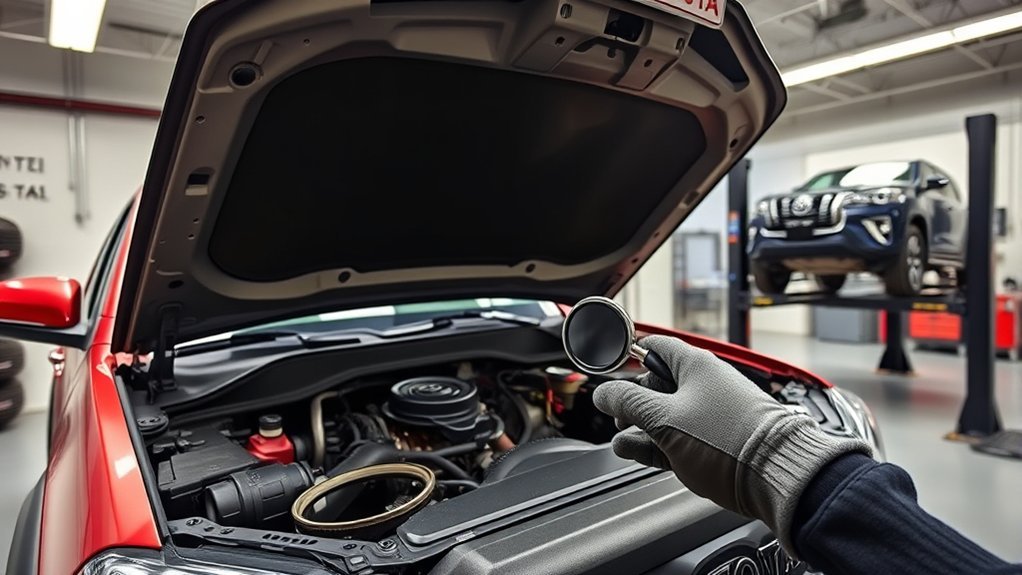
The most likely cause depends on how the sound reacts to engine RPM, road speed, steering, gear selection, and accessory use. A high-pitched noise does not identify a failed part by itself, so avoid replacing components until you reproduce the sound under controlled conditions.
Serpentine Belt, Tensioner, or Pulley Bearings
A worn, contaminated, misaligned, or poorly tensioned drive belt can make a squeal, chirp, or high-pitched whine. A failing tensioner, idler pulley, alternator bearing, water-pump bearing, or A/C compressor pulley can create a similar sound.
The noise usually follows engine RPM and may occur while the truck is parked. It may also change when you switch the air conditioning on or increase the electrical load.
With the engine off and cool, inspect the belt for frayed edges, missing ribs, cracks, glazing, fluid contamination, or an off-center path across a pulley. Do not apply belt dressing because it can hide the symptom without correcting the underlying alignment, tension, or bearing problem.
Hydraulic Power Steering on Applicable Older Tacomas
Many 2023-and-earlier Tacomas use hydraulic power steering. Low fluid, aerated fluid, a hose leak, a restricted line, a worn pump, or a pump-pulley bearing may create a whine that becomes louder while turning at low speed.
Check the fluid only when your owner’s manual identifies a hydraulic reservoir and explains the correct procedure. Use the exact fluid specification listed for your model. A low level usually means fluid has escaped somewhere, so topping it off without repairing the leak is not a complete fix.
Electric Power Steering on 2024-and-Newer Tacomas
Toyota introduced electric power steering on the redesigned 2024 Tacoma. These trucks do not have a hydraulic steering pump or power-steering fluid reservoir.
A faint electric-motor sound during steering may differ from the pump whine heard on older trucks. However, a new loud noise, steering warning, inconsistent assistance, or heavy steering needs professional diagnosis.
Note: Confirm your Tacoma’s model year before following steering advice. Checking hydraulic fluid on a 2024-or-newer Tacoma is not applicable because its steering assistance is electric.
Alternator or A/C Compressor
An alternator bearing or A/C compressor pulley can produce a noise that rises and falls with engine RPM. If the sound changes when the A/C is switched on or off, the compressor, clutch, pulley, or belt load deserves closer inspection.
A whining sound accompanied by a battery warning light, dimming lights, a charging-system message, or an electrical smell requires prompt attention. Do not assume the alternator is faulty based only on sound. A technician should test charging voltage, bearing condition, belt alignment, and tension.
Transmission or Torque-Converter Area
A transmission-related whine may change with gear selection, engine load, transmission temperature, or vehicle speed. Other warning signs can include delayed engagement, slipping, harsh shifts, shuddering, fluid leakage, a burning smell, or a transmission-related diagnostic code.
Do not add automatic-transmission fluid without consulting the correct Toyota procedure. Some Tacoma transmissions require the level to be checked at a specified fluid temperature through dedicated plugs rather than a traditional dipstick.
Transfer Case, Driveshaft, or Differential
On four-wheel-drive Tacomas, bearings or gears in the transfer case, driveshaft, front differential, or rear differential may whine under load. A sound that is strongest during acceleration but changes or disappears while coasting can provide an important clue.
Incorrect fluid level, contaminated lubricant, gear wear, or bearing damage may produce driveline noise. These components require inspection for leaks, play, metal contamination, and correct lubricant specifications.
Tires and Wheel Bearings
Tire tread patterns and uneven wear can create a humming or high-pitched road noise that owners sometimes describe as whining. A wheel bearing may also become louder with road speed and change when the truck’s weight shifts during a gentle turn.
If the sound follows vehicle speed rather than engine RPM, inspect the tires for cupping, feathering, uneven pressure, or damage. A technician can check wheel-bearing play and listen for roughness while the truck is safely raised.
Intake Leak or Turbocharger Sound
An intake or vacuum leak generally creates a hiss or whistle rather than a mechanical whine. Look for rough idle, reduced power, a check-engine light, loose intake clamps, damaged hoses, or lean-condition codes.
The 2024-and-newer Tacoma uses a turbocharged four-cylinder engine. A smooth, faint whistle during boost may be normal, but a new siren-like sound accompanied by smoke, reduced power, oil leakage, or a warning light is not something to ignore.
Troubleshooting Whining Noises
Start by recording exactly when the sound appears. This is more useful than guessing which component has failed.
| When the Noise Occurs | Areas to Investigate | Useful Clues |
|---|---|---|
| While parked and revving gently | Belt, tensioner, pulleys, alternator, A/C compressor, engine intake | Noise follows engine RPM without vehicle movement |
| While turning at low speed | Hydraulic steering on applicable older models, electric steering on newer models, wheel bearing | Noise changes with steering effort or direction |
| Only while accelerating | Transmission, turbocharger, transfer case, driveshaft, differential | Noise appears under load and may fade when the throttle is released |
| While coasting or decelerating | Differential gears, bearings, transmission, transfer case | Sound changes between drive and coast conditions |
| Only with the A/C operating | A/C compressor, clutch, pulley, belt, tensioner | Sound changes when the compressor cycles |
| Proportional to road speed | Tires, wheel bearings, driveshaft, differential, transfer case | Noise remains linked to speed even when engine RPM changes |
The most useful clue is not how loud the whine sounds. It is whether the pitch follows engine RPM, road speed, steering effort, accessory use, or a change between acceleration and coasting.
How to Diagnose the Source of the Whining Noise
1. Record the Operating Conditions
Write down whether the engine is cold or warm, the selected gear, approximate speed, engine RPM, steering position, A/C setting, four-wheel-drive setting, and whether you are accelerating or coasting.
Use your phone to record the sound from inside the cab if you can do so without handling the device while driving. A passenger can record safely. The recording may help a technician reproduce the same condition.
2. Check the Instrument Panel
Look for a check-engine light, battery warning, steering warning, transmission message, high-temperature warning, oil-pressure warning, or four-wheel-drive system alert. Scan for stored diagnostic trouble codes when an OBD-II scanner is available.
A code does not automatically prove that the named component has failed, but it can identify the system that needs testing.
3. Inspect the Engine Bay With the Engine Off
Allow the engine to cool. Inspect the belt, visible pulleys, hoses, wiring, fluid reservoirs, and the ground beneath the truck. Look for leaks, frayed belt edges, missing ribs, loose connectors, damaged hoses, or fluid thrown around a rotating pulley.
Do not place a screwdriver, mechanic’s stethoscope, hose, or other object near moving belts or fans unless you are trained to use that diagnostic method safely.
4. Confirm the Steering System
Check the owner’s manual or under-hood layout to determine whether your truck has hydraulic or electric power steering.
- Hydraulic system: Check the fluid according to the manual and inspect the reservoir, pump, and hoses for foaming or leakage.
- Electric system: Do not search for hydraulic fluid. Check for steering warnings, inconsistent assistance, electrical faults, or unusual motor noise.
5. Compare A/C On and Off
With the truck parked safely, listen from the cabin while switching the A/C off and on. A clear change may point toward compressor load, the compressor pulley, the belt, or the tensioner.
6. Compare Parked and Moving Conditions
If the noise occurs while parked and follows engine RPM, concentrate first on the engine, accessory drive, intake system, and transmission input side.
If it occurs only while the truck moves, road-speed components such as the transmission output, transfer case, driveshaft, differential, wheel bearings, and tires become more likely.
7. Compare Acceleration and Coasting
On a safe road, have a passenger note whether the noise appears under throttle, during steady cruising, or after you release the accelerator. Do not perform abrupt steering or acceleration tests in traffic.
A noise that changes sharply between acceleration and coasting can help a technician evaluate transmission, transfer-case, or differential loading.
8. Let a Technician Isolate Belt-Driven Components
A technician may release or remove the belt with the engine off and hand-spin the pulleys to check for roughness, looseness, binding, or bearing noise. Any brief belt-off engine test must follow the exact service procedure because belt routing and driven accessories vary.
Pro Tip: Before booking service, record the sound and list the exact speed, RPM, gear, temperature, steering position, A/C setting, and throttle condition that reproduce it. This can shorten diagnostic time and reduce unnecessary parts replacement.
When to Get Help for Your Tacoma’s Whining Noise?
Schedule a professional inspection when the noise is new, persistent, becoming louder, or difficult to reproduce safely. Prompt diagnosis is especially important when the sound is accompanied by steering changes, shifting problems, vibration, leakage, warning lights, reduced power, or a burning smell.
Stop Driving and Shut the Engine Off When Appropriate
Pull over safely and stop driving if you notice any of the following:
- Suddenly heavy, jerky, or inconsistent steering
- A high coolant-temperature warning or visible overheating
- A red oil-pressure warning
- A battery or charging warning combined with belt noise
- Smoke, a burning-rubber smell, or a belt that is coming apart
- A large fluid leak beneath the truck
- Grinding, severe vibration, or a wheel that feels loose
- Transmission slipping, loss of drive, delayed engagement, or harsh banging
- A siren-like turbo noise with smoke or major power loss
If the truck still steers, shifts, and maintains normal temperature but the whine is mild, arrange an inspection soon and avoid towing, off-road driving, or heavy acceleration until the cause is known.
You can also check your VIN through the official Toyota recall lookup and the National Highway Traffic Safety Administration recall database.
Preventative Maintenance Tips to Avoid Future Noise Issues
- Follow the correct maintenance guide: Use the schedule for your exact model year, engine, transmission, and driving conditions rather than a universal mileage interval.
- Inspect the drive belt regularly: Replace it when Toyota specifies or when inspection reveals damage, contamination, alignment problems, or tension issues.
- Repair fluid leaks promptly: Low hydraulic steering, transmission, transfer-case, or differential fluid usually indicates a leak or another condition that needs correction.
- Use the specified fluids: Do not substitute a universal product unless it explicitly meets the Toyota specification listed for your truck.
- Service severe-use trucks appropriately: Towing, frequent off-road use, heavy loading, deep water, dust, and extended low-speed operation can increase maintenance needs.
- Keep tires properly inflated and rotated: Uneven pressure and tread wear can create road noise that resembles a bearing or driveline problem.
- Investigate new noises early: A small leak, rough pulley bearing, or damaged belt is usually easier to address before it affects nearby components.
Use Toyota’s owner-manual and maintenance-guide library to confirm the correct inspection steps and fluid specifications for your Tacoma.
Frequently Asked Questions
Why does my Toyota whine when accelerating?
A whine during acceleration may come from a belt-driven accessory, turbocharger, transmission, transfer case, driveshaft, or differential. Note whether the pitch follows engine RPM or road speed and whether it changes after you release the accelerator.
Why is my Toyota Tacoma making a whining sound?
Common areas include the serpentine belt, tensioner, pulley bearings, alternator, A/C compressor, steering system, transmission, transfer case, differential, tires, and wheel bearings. The model year and operating condition determine which areas are most likely.
Why is my truck making a whining sound when I press the gas?
Pressing the accelerator increases engine and driveline load. A noise that appears only under load may involve the turbocharger, transmission, transfer case, driveshaft, differential, or an accessory bearing that becomes louder at higher RPM.
How do I fix a whining noise when accelerating?
First identify when the sound occurs, inspect the belt and visible components with the engine off, check for warning lights and leaks, and confirm whether the noise follows RPM or road speed. Repair the verified failed component rather than replacing parts based only on sound.
Can low transmission fluid cause a whining noise?
An incorrect transmission-fluid level can contribute to abnormal noise or operation, but the checking method varies. Do not add fluid blindly. Use the specified fluid and follow the temperature and level-setting procedure for your exact transmission.
Is it safe to drive a Tacoma that is whining?
A mild stable noise without other symptoms may allow a short trip for inspection. Stop driving if the sound comes with heavy steering, overheating, smoke, severe vibration, a large leak, grinding, transmission slipping, or a red warning light.
Sources
- Toyota USA Newsroom: 2024 Toyota Tacoma Is the Ultimate Adventure Machine — confirms the fourth-generation turbocharged powertrain and electric power steering.
- Toyota 2022 Tacoma Owner’s Manual — model-specific operating, warning, fluid, and maintenance guidance.
- Toyota 2023 Tacoma Owner’s Manual — third-generation system and owner-maintenance reference.
- Toyota Owner’s Manuals and Warranty Guides — source for model-year-specific maintenance schedules and specifications.
- Toyota Recall Lookup — checks a vehicle identification number for applicable Toyota safety recalls and service information.
Conclusion
A whining noise during acceleration does not automatically mean your Tacoma needs a transmission or power-steering pump. Start by determining whether the pitch follows engine RPM, road speed, steering effort, A/C operation, acceleration, or coasting.
Inspect only what you can check safely with the engine off, confirm the truck’s model year and steering system, and use the correct Toyota manual before checking fluids. Seek prompt professional help when the sound becomes louder or appears with heavy steering, warning lights, overheating, leakage, slipping, smoke, grinding, or reduced power.
