
Your 2024 Toyota Tacoma uses two separate air filters with two very different jobs. The engine air filter protects the engine intake from dust and debris, while the cabin air filter cleans air moving through the HVAC system. Knowing where each filter is, when to inspect it, and how to replace it helps prevent airflow problems and unnecessary parts replacement.
Quick Answer
The Tacoma engine air filter sits in the air cleaner housing under the hood and protects the engine intake. The cabin air filter is accessed behind the glove-box area and protects HVAC airflow. For a U.S.-market 2024 Tacoma, follow Toyota’s model-year maintenance guide and inspect either filter sooner when the truck sees heavy dust, off-road use, or noticeably reduced airflow.
Key Takeaways
- The engine filter protects the intake; the cabin filter protects HVAC airflow and passenger comfort.
- Use the maintenance schedule for your exact Tacoma model year instead of a generic interval copied from an older generation.
- A severely restricted engine filter can hurt acceleration, but replacing it does not normally improve fuel economy on a modern computer-controlled gasoline engine.
- Weak vent airflow and a visibly loaded cabin filter are stronger cabin-filter clues than engine-performance symptoms.
- A quality exact-fit aftermarket filter does not automatically void your vehicle warranty.
At a Glance
| Time Required | About 5–10 minutes per filter for a straightforward replacement |
| Difficulty | Beginner-friendly |
| Tools Needed | Usually none for the standard 2024 filter housings; verify your truck if it has an accessory or modified intake |
| Cost | Varies by OEM or aftermarket filter choice; confirm exact fitment before buying |
Understanding the Role of the Engine Air Filter in Your Tacoma
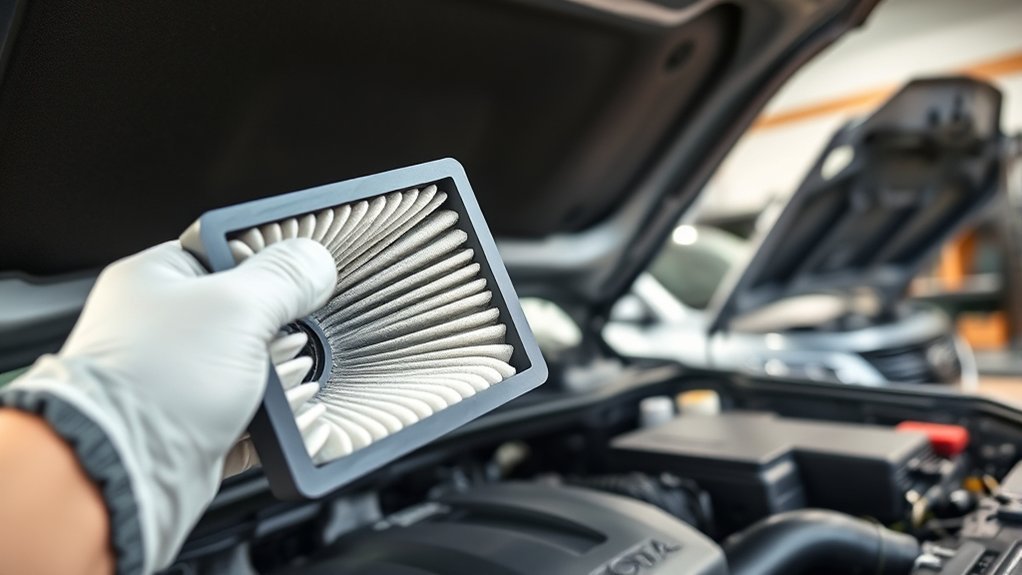
The engine air filter traps dust, sand, insects, and other debris before intake air reaches sensitive engine components. The filter must allow enough airflow for the engine while also sealing around its perimeter so unfiltered air cannot bypass the media.
A heavily restricted filter can reduce airflow when the engine demands a large volume of air, which may make acceleration feel weaker under load. However, replacing a clogged filter should not be treated as a fuel-economy upgrade. Oak Ridge National Laboratory testing found no significant fuel-economy improvement in the modern fuel-injected vehicles it tested, although acceleration improved when severe intake restriction was removed.
Inspect the filter for excessive dirt, torn media, a damaged sealing edge, moisture, deformation, or debris packed deeply into the pleats. Trucks used on unpaved roads, construction sites, farms, or off-road trails deserve more frequent inspection than trucks driven mainly on clean pavement.
Warning: Turn the engine off before opening the air cleaner housing. Do not start or drive the Tacoma with the engine air filter removed, and keep loose dirt away from the clean side of the intake.
Why the Cabin Air Filter Is Essential for Passenger Comfort
The cabin air filter serves the HVAC system rather than the engine. It catches dust, pollen, leaves, and other airborne debris before incoming air reaches the dashboard vents. A clean, correctly installed filter helps the blower move air normally through the heater, air conditioner, and windshield-defogging outlets.
As the filter fills with debris, you may notice weaker airflow even when the fan is set high. A damp or contaminated filter can also contribute to unpleasant odors, although persistent musty smells can have other HVAC causes such as moisture on the evaporator or debris elsewhere in the air-conditioning system.
Toyota’s 2024 Tacoma Owner’s Manual states that the air-conditioning filter should be inspected and replaced according to the maintenance schedule and may need earlier service in dusty areas or heavy traffic.
Recommended Replacement Schedule for Tacoma Air Filters
Use the maintenance guide for your exact Tacoma model year and market. Tacoma filter schedules have changed between generations, so an interval that was correct for an older Tacoma should not automatically be applied to a 2024 truck.
For the U.S.-market 2024 Tacoma, use Toyota’s 2024 Warranty & Maintenance Guide as the controlling source. Under normal service, the factory schedule uses scheduled inspection and replacement checkpoints rather than a vague “change it whenever it looks old” rule.
| Filter | 2024 Tacoma Guidance | Inspect Earlier When |
|---|---|---|
| Engine Air Filter | Factory replacement checkpoint at 30,000 miles / 36 months; continue following the model-year schedule afterward | Driving on dusty or dirt roads, frequent off-road use, visible damage, or heavy debris loading |
| Cabin Air Filter | Follow Toyota’s scheduled inspection and replacement checkpoints for the 2024 Tacoma | Weak vent airflow, heavy dust, frequent dirt-road driving, heavy traffic, moisture, odors, or visible contamination |
Note: Mileage and time recommendations can differ by Tacoma generation and market. If your truck’s Warranty & Maintenance Guide lists a different interval, follow the documentation supplied for your exact vehicle.
Engine Air Filter Frequency
For a 2024 Tacoma, the safest baseline is Toyota’s factory maintenance schedule rather than the broad “15,000 to 30,000 miles” rule often repeated online. Toyota schedules engine-air-filter replacement at its major maintenance checkpoints, including 30,000 miles or 36 months.
That does not mean you should ignore the filter until the odometer reaches a scheduled replacement point. Inspect it sooner when the truck regularly travels on dusty trails, gravel roads, construction sites, or other environments that load the filter quickly.
Replace it early if the media is torn, wet, collapsed, deformed, oil-soaked, or so packed with debris that airflow is clearly restricted. A filter with a damaged sealing edge should also be replaced because dirt may bypass the element.
Cabin Air Filter Timing
The cabin air filter should also be serviced according to Toyota’s 2024 Tacoma maintenance schedule rather than a universal “every two years” recommendation. Toyota specifically notes that dusty areas and heavy traffic can require earlier replacement.
Condition matters. If airflow from all vents becomes noticeably weaker, the filter is heavily loaded with dust, or the media is damp or damaged, replacement can be appropriate before the next normal maintenance checkpoint.
Pro Tip: Write the installation date and mileage on your maintenance record or filter box. That makes it much easier to distinguish a genuinely overdue filter from an unrelated engine or HVAC problem later.
Signs of a Dirty Engine or Cabin Air Filter
A dirty engine air filter and a dirty cabin air filter create different symptoms because they serve separate systems. Do not replace one filter because of symptoms caused by the other.
| Symptom | Most Relevant Filter | What to Check |
|---|---|---|
| Reduced acceleration under heavy load | Engine air filter | Inspect for severe restriction, damage, or a blocked intake |
| Weak airflow from dashboard vents | Cabin air filter | Inspect the filter, filter case, access door, and blower inlet |
| Musty or dusty odor from vents | Cabin air filter / HVAC system | Check for a damp or dirty filter; investigate HVAC moisture if odor remains |
| Visible torn or collapsed filter media | Either filter | Replace the damaged filter |
| Check Engine Light | Not a filter-specific diagnosis | Scan diagnostic trouble codes and inspect the intake installation rather than assuming the filter is responsible |
A warning light, rough idle, or misfire has many possible causes. If one appears immediately after an engine-filter replacement, first check that the air cleaner housing is fully closed, the filter is seated correctly, every latch is secure, and no intake connection or electrical connector was disturbed. If the light remains on, diagnose the stored trouble codes.
The Impact of Clogged Filters on Vehicle Performance and Air Quality

A severely clogged engine filter can limit the maximum air available to the engine, while a clogged cabin filter restricts airflow through the HVAC system. The two problems can feel similar because both involve airflow, but they affect completely different parts of the truck.
Engine Performance Impact
When an engine air filter becomes extremely restricted, acceleration can suffer because the engine cannot draw air as freely at higher demand. That does not mean a new filter automatically creates more horsepower or better gas mileage.
Testing by Oak Ridge National Laboratory found that clogged filters reduced full-power acceleration in the vehicles tested, while modern fuel-injected vehicles showed no measurable fuel-economy improvement from replacing the clogged filter.
For that reason, treat engine-filter replacement as scheduled maintenance and intake protection, not as an MPG modification.
Cabin Air Quality Effects
A clogged cabin filter reduces the amount of air the blower can move through the vents. You may notice weaker cooling, heating, or windshield-clearing airflow. The filter can also collect dust, leaves, moisture, and odor-producing material.
If a new cabin filter does not restore airflow, check that it is installed correctly and that the filter access cover is fully closed. A blower-motor problem, blocked air inlet, HVAC-door problem, or other fault can create similar symptoms.
Maintenance Frequency Importance
Filter condition depends on both mileage and environment. A Tacoma driven almost entirely on clean highways may load its filters slowly, while an off-road or job-site truck may collect substantial dust much sooner.
| Filter Type | Normal Baseline | Reasons to Inspect Early |
|---|---|---|
| Engine Air Filter | Follow the 2024 Tacoma factory maintenance schedule | Dusty roads, off-road driving, damaged media, heavy debris, reduced acceleration |
| Cabin Air Filter | Follow Toyota’s scheduled inspection and replacement guidance | Weak vent airflow, dust, heavy traffic, odor, moisture, visible contamination |
How to Replace Your Tacoma Air Filters
Replacing either filter is beginner-friendly if you have the correct part and work carefully. Confirm the replacement filter matches the removed filter’s dimensions, locating tabs, sealing edge, and application before closing the housing.
How to Replace the Engine Air Filter
- Park and shut the Tacoma off. Set the parking brake and allow hot under-hood components to cool before working near them.
- Locate the air cleaner housing. Find the engine airbox under the hood.
- Clean around the cover. Brush or wipe loose surface dirt away before opening the housing so debris cannot fall into the clean side of the intake.
- Release the airbox retainers. On the standard 2024 Tacoma housing, release the retaining clips and lift the cover only as much as needed. Modified or accessory intake systems may differ.
- Remove the old filter. Note exactly how the filter and sealing edge sit in the housing.
- Inspect the housing. Remove loose debris carefully without pushing dirt into the intake tube.
- Install the new filter. Seat it flat and confirm the sealing edge is even around the full perimeter.
- Close the housing. Make sure the cover is correctly aligned and every retaining clip is locked before starting the engine.
How to Replace the Cabin Air Filter
Toyota provides the cabin-filter procedure in the 2024 Tacoma Owner’s Manual:
- Turn the engine switch off.
- Open and empty the glove box. Loose items can fall behind the dashboard while the panel is open.
- Remove the panel. This exposes the air-conditioning filter area.
- Unlock the filter cover. Release it carefully from the retaining claws rather than forcing the plastic.
- Remove the filter case.
- Remove the old air-conditioning filter. Check how it is positioned before throwing it away.
- Install the new filter. Toyota specifies that the UP marks on the filter and filter case point upward.
- Reinstall the case, cover, and panel. Make sure each piece is completely seated before closing the glove box.
Note: Do not assume every arrow printed on every replacement filter means the same thing. An UP arrow identifies which edge faces upward; an AIR FLOW arrow identifies the direction air travels through the filter. Follow the markings supplied with the exact filter you install.
What to Check After Replacement
After replacing the engine filter, start the truck and listen for an unusual intake whistle or rough operation. If a problem appears immediately, shut the engine off and recheck the airbox seal, retaining clips, intake connections, and any nearby wiring you may have touched.
After replacing the cabin filter, run the blower at several speeds. Airflow should be consistent and the filter cover should not rattle. If airflow remains weak, the restriction may be elsewhere in the HVAC system.
Should You Go OEM or Aftermarket for Your Filters?
Both OEM and aftermarket filters can be reasonable choices. The most important requirement is correct fitment. A filter that is too small, distorted, or unable to seal properly can allow unfiltered air to bypass the media regardless of the brand printed on the box.
Toyota Genuine filters offer straightforward factory fitment and are designed around Toyota specifications. They are also covered by Toyota’s applicable Genuine Parts warranty. A reputable aftermarket filter may offer comparable fit, different filtration media, activated-carbon cabin filtration, or a lower purchase price.
When comparing filters, look at:
- Exact application for the 2024 Tacoma and your engine/configuration
- Correct dimensions and sealing edge
- Filter-media construction and pleat integrity
- Clear installation markings
- Manufacturer warranty and replacement instructions
- Whether the filter is disposable or requires a manufacturer-approved cleaning procedure
Can an Aftermarket Filter Void Your Tacoma Warranty?
No—not simply because it is aftermarket. The Federal Trade Commission states that a vehicle warranty remains in effect when aftermarket or recycled parts are used. However, if a defective part or improper installation causes damage, warranty coverage can be denied for the resulting damage.
Keep receipts and maintenance records, use an exact-fit filter, and install it correctly. Those steps matter whether you choose Toyota Genuine or aftermarket parts.
Related Guides
Frequently Asked Questions
What’s the Difference Between a Cabin and Engine Air Filter?
The engine air filter cleans air entering the engine intake, while the cabin air filter cleans air passing through the HVAC system before it reaches the vents. A dirty engine filter can restrict engine airflow; a dirty cabin filter mainly reduces heating, cooling, and defogging airflow.
Is an Engine Air Filter and a Cabin Air Filter the Same Size?
No. They are separate parts designed for different housings. Their dimensions, sealing edges, filter media, and shape differ. Always select each filter by the exact Tacoma model year and application rather than judging by appearance alone.
Is It Important to Change Cabin Air Filter and Engine Air Filter?
Yes. The engine filter protects the intake from abrasive dirt and debris, while the cabin filter supports normal HVAC airflow. Follow Toyota’s maintenance schedule and replace either filter sooner when it is damaged, heavily contaminated, wet, deformed, or creating noticeable airflow problems.
How Often Should You Change Your Engine Air Filter on a Tacoma?
Use the Warranty & Maintenance Guide for your exact Tacoma model year. For a U.S.-market 2024 Tacoma, Toyota schedules engine-air-filter replacement at major maintenance checkpoints including 30,000 miles or 36 months. Inspect sooner if the truck regularly operates in dusty or off-road conditions.
Can a Dirty Tacoma Engine Air Filter Reduce Gas Mileage?
Not normally on a modern computer-controlled gasoline vehicle. Research from Oak Ridge National Laboratory found that replacing severely clogged filters improved acceleration in the newer vehicles tested but did not produce a measurable fuel-economy improvement.
Will an Aftermarket Air Filter Void My Toyota Warranty?
Using an aftermarket filter by itself does not automatically void the vehicle warranty. According to FTC guidance, warranty coverage can be denied for damage caused by a defective aftermarket part or improper installation, but not simply because an aftermarket part was used.
Conclusion
Your Tacoma’s engine air filter and cabin air filter solve two different problems. The engine filter keeps damaging debris out of the intake, while the cabin filter helps the HVAC system deliver clean, unrestricted airflow through the vents.
For a 2024 Tacoma, use Toyota’s model-year maintenance documentation rather than a generic interval copied from another generation. Inspect sooner when your truck spends time on dusty roads or off-road trails, and replace a filter early if it is torn, wet, deformed, heavily loaded, or causing clear airflow problems.
OEM and quality aftermarket filters can both work when they fit and seal correctly. After installation, verify every cover and latch, record the mileage, and diagnose persistent warning lights or airflow problems instead of assuming a new filter will solve an unrelated fault.
Sources
- Toyota 2024 Tacoma Warranty & Maintenance Guide — factory maintenance schedule and service requirements.
- Toyota 2024 Tacoma Manuals and Warranties — official Toyota owner-documentation hub.
- Toyota 2024 Tacoma Owner’s Manual — cabin air-filter removal, installation, and orientation guidance.
- Oak Ridge National Laboratory: Effect of Intake Air Filter Condition on Vehicle Fuel Economy — evidence on clogged filters, fuel economy, and acceleration.
- Federal Trade Commission: Auto Warranties and Auto Service Contracts — aftermarket-parts and warranty guidance.
