
Toyota Safety Sense in the Toyota Camry is a suite of active-safety and driver-assistance technologies designed to help you detect hazards, maintain a safer following distance, stay aware of lane position, and handle common driving situations with less workload. The exact feature set depends on the Camry’s model year: the 2024 U.S. Camry uses Toyota Safety Sense 2.5+, while the redesigned 2025 and current 2026 Camry use the newer Toyota Safety Sense 3.0 system.
Quick Answer
Toyota Safety Sense helps a Camry driver by combining forward-collision warning and braking support, adaptive cruise control, lane-departure assistance, lane centering, road-sign recognition, and automatic high beams. Current 2025–2026 U.S. Camrys use TSS 3.0, which also includes Proactive Driving Assist and enhanced detection capabilities.
Key Takeaways
- The 2025–2026 U.S. Camry uses Toyota Safety Sense 3.0; the 2024 Camry uses TSS 2.5+.
- TSS 3.0 includes Pre-Collision System with Pedestrian Detection, Full-Speed Range Dynamic Radar Cruise Control, Lane Departure Alert with Steering Assist, Lane Tracing Assist, Road Sign Assist, Automatic High Beams, and Proactive Driving Assist.
- Blind Spot Monitor and Rear Cross-Traffic Alert are useful Camry safety features, but they are separate from the Toyota Safety Sense package itself.
- These systems assist the driver; they do not make the Camry self-driving or remove the need to watch the road.
Warning: Toyota Safety Sense is driver assistance, not autonomous driving. Camera and radar performance can be affected by road, weather, lighting, lane markings, sensor obstruction, vehicle condition, and other factors. Keep control of the vehicle and follow the Owner’s Manual for your exact Camry.
What Is Toyota Safety Sense in the Toyota Camry?
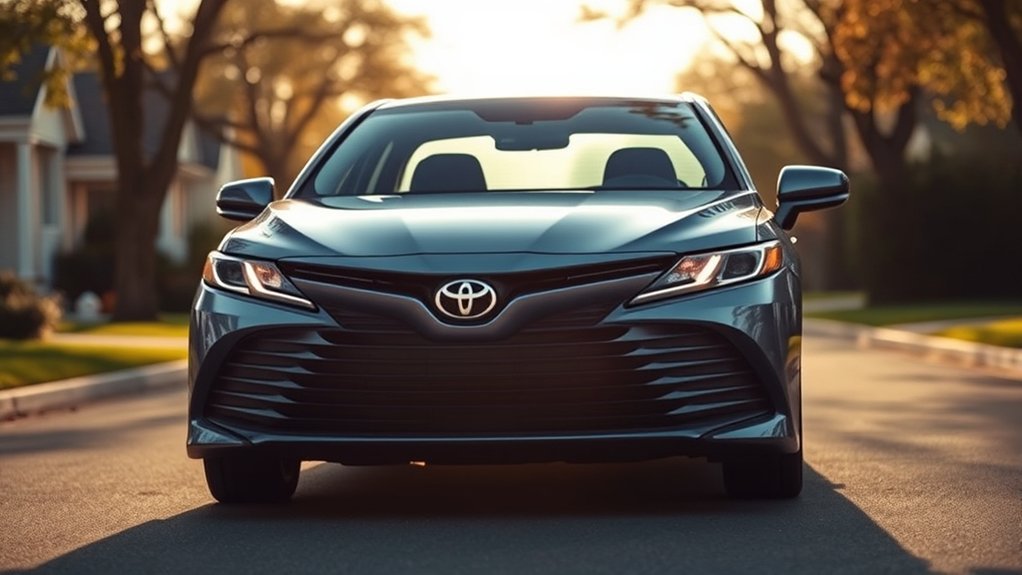
Toyota Safety Sense, or TSS, combines a forward-facing camera, radar, vehicle controls, and software to support the driver in situations such as approaching another vehicle, drifting from a lane, following traffic on the highway, or driving after dark.
On the current U.S.-market Camry, Toyota identifies Toyota Safety Sense 3.0 as the active-safety suite. The system can warn you about certain potential frontal collisions and, under qualifying conditions, provide braking assistance or automatic emergency braking.
Full-Speed Range Dynamic Radar Cruise Control can automatically adjust vehicle speed to help maintain a selected following distance. Lane Departure Alert with Steering Assist can warn about an unintended lane departure and provide gentle steering assistance under qualifying conditions.
Lane Tracing Assist works differently. When Dynamic Radar Cruise Control is operating and the necessary road or vehicle information can be detected, LTA can provide steering assistance to help keep the Camry centered in its lane.
Automatic High Beams can switch between high and low beams when the system detects relevant surrounding traffic, while Road Sign Assist can recognize certain signs and display them in the vehicle’s Multi-Information Display.
Which Toyota Safety Sense Version Does Your Camry Have?
The answer depends on model year. This matters because a feature described for a new Camry may not exist or may operate differently on an older car.
| Camry model year | U.S. Toyota Safety Sense generation | Important point |
|---|---|---|
| 2024 | TSS 2.5+ | Uses the previous-generation Camry safety suite. |
| 2025 | TSS 3.0 | Redesigned Camry adds the newer TSS generation and Proactive Driving Assist. |
| 2026 | TSS 3.0 | Current U.S. Camry continues with TSS 3.0. |
If you own an earlier Camry, check the Owner’s Manual or Toyota’s vehicle-specific safety information instead of assuming the newest feature list applies to your car.
Note: Feature names can sound similar across TSS generations, but detection capabilities, operating conditions, cruise-control behavior, and available assistance can change. Always match information to your model year.
[Amazon Products Picked for You]

Applicable Models: According to the original car design. Compatible with Toyota Camry 2018 2019 2020 2021 2022 2023 2024 2025 2026. Compatible with Toyota Corolla 2019 2020 2021 2022 2023 2024 2025 2026 (Not fit for Corolla GR). Compatible with Toyota Corolla Cross 2022 2023 2024 2025 2026. Compatible with Toyota Avalon 2019 2020 2021 2022. Please confirm the car model and gear shift knob shape before place the order

【Compatible Vehicles】Child Seat Anchor Cover Compatible with Toyota For Camry after December 2017,for Avalon After March 2019.OEM:7371706250C0

Fit For Toyota Accessories: Our Center Console Tray Anti-slip Mat is specifically designed for Toyota Camry Accessories 2018 2019 2020 2021 2022 2023 2024
Key Features of Toyota Safety Sense Explained
On the 2025–2026 U.S. Camry, Toyota Safety Sense 3.0 covers several different driving situations rather than relying on one all-purpose safety system.
Pre-Collision System With Pedestrian Detection
The Pre-Collision System with Pedestrian Detection uses camera and radar information to help detect certain vehicles and vulnerable road users ahead. When the system determines that a frontal collision may occur, it can provide audible and visual warnings. Depending on the situation and driver response, it can also provide brake assistance or automatic emergency braking.
TSS 3.0 expands detection capabilities compared with earlier generations. Toyota states that it can detect vehicles, pedestrians, bicyclists, and motorcyclists in certain circumstances and provides enhanced support in some intersection situations.
The Pre-Collision System is designed to help reduce the severity or likelihood of certain frontal collisions, but it cannot detect every hazard or prevent every crash.
Full-Speed Range Dynamic Radar Cruise Control
Full-Speed Range Dynamic Radar Cruise Control is an adaptive cruise-control system intended primarily for highway use. After you set your cruising speed and following-distance preference, the system can adjust the Camry’s speed when it detects a slower vehicle ahead.
Unlike ordinary cruise control, you do not have to cancel and reset the system every time normal traffic speed changes. You still need to monitor traffic and be ready to brake or steer when conditions require it.
Lane Departure Alert With Steering Assist
Lane Departure Alert monitors detectable lane markings or road-edge information. If the Camry appears to leave its lane unintentionally, the system can provide a visual and audible warning. Steering Assist can provide gentle corrective steering under qualifying conditions if the driver does not respond.
Lane Tracing Assist
Lane Tracing Assist is designed to provide lane-centering support while Dynamic Radar Cruise Control is engaged and the required lane or preceding-vehicle information can be detected. It does not mean you can remove your hands from driving responsibility or stop paying attention.
Road Sign Assist
Road Sign Assist uses the forward-facing camera to identify certain traffic signs, such as speed-limit, stop, yield, and Do Not Enter signs, and can display recognized information on the Multi-Information Display.
It is an awareness aid, not a replacement for looking at roadside signs. Signs can be missed, obscured, changed, or incorrectly interpreted.
Automatic High Beams
Automatic High Beams are designed to improve nighttime convenience by detecting the headlights of oncoming vehicles and the taillights of vehicles ahead, then switching between high and low beams when operating conditions are met.
You remain responsible for selecting appropriate lighting whenever weather, traffic, visibility, or system limitations require manual control.
Proactive Driving Assist
Proactive Driving Assist is an important TSS 3.0 feature that was missing from the original explanation. Using camera and radar information, PDA can provide gentle braking and/or steering support during normal driving when its operating conditions are met.
For example, it may help manage distance from a preceding vehicle, pedestrian, or bicyclist, and it can provide gentle deceleration when entering certain curves. Toyota specifically distinguishes PDA from the Pre-Collision System: PDA supports routine driving situations, while PCS is aimed at potential collision situations.
Pro Tip: If you are comparing a 2024 Camry with a 2025 or 2026 Camry, do not compare only the phrase “Toyota Safety Sense.” Compare the generation number as well. Moving from TSS 2.5+ to TSS 3.0 changes the capabilities available to the driver.
How Each Feature Enhances Safety
Each Toyota Safety Sense function addresses a different type of driving risk or workload.
- Pre-Collision System: Adds another layer of hazard detection and can provide warnings, braking assistance, or automatic braking under applicable conditions.
- Full-Speed Range Dynamic Radar Cruise Control: Helps manage following distance and routine speed changes during suitable highway driving.
- Lane Departure Alert with Steering Assist: Helps alert you when the vehicle appears to leave a detected lane unintentionally.
- Lane Tracing Assist: Provides lane-centering support when DRCC is operating and necessary conditions are met.
- Automatic High Beams: Automates some high-beam switching to help nighttime visibility while responding to detected traffic.
- Road Sign Assist: Adds a dashboard reminder of certain detected road signs.
- Proactive Driving Assist: Can provide gentle steering or braking support during some routine driving situations before they become emergencies.
These systems work best as additional layers around attentive driving. They are not a replacement for safe following distances, mirror checks, turn signals, proper speed, or active steering and braking.
Real-World Applications of Safety Features in Amherst

If you commute in Amherst or another busy city, Toyota Safety Sense can be useful in several ordinary situations without requiring the road itself to be unusual.
On a multilane commute, Lane Departure Alert can provide an extra warning if the Camry begins moving out of a detected lane unintentionally. On faster roads, Full-Speed Range Dynamic Radar Cruise Control can reduce the need for repeated manual cruise-speed adjustments when traffic changes.
When a potential frontal hazard develops, the Pre-Collision System can provide another layer of warning and braking support. At night, Automatic High Beams can reduce the amount of manual switching between high and low beams when surrounding traffic is detected.
Daily Commutes Safety Benefits
The greatest everyday benefit is not that the Camry drives for you. It is that several systems can watch for different conditions at the same time while you remain responsible for the vehicle.
The Pre-Collision System monitors for certain frontal hazards. Lane Departure Alert watches lane position. Lane Tracing Assist can provide centering assistance under the proper conditions, and Dynamic Radar Cruise Control can respond to a detected vehicle ahead.
Road Sign Assist can also display certain recognized signs in the instrument display, giving you a secondary reminder while you continue to watch the road.
Emergency Situations Response Time
There is no single universal response time for Toyota Safety Sense. Detection and intervention depend on factors such as vehicle speed, relative speed, target position, lighting, weather, road geometry, sensor condition, and the specific feature involved.
The Pre-Collision System can issue visual and audible warnings and, under qualifying conditions, provide braking assistance or automatic emergency braking. Lane Departure Alert can provide warnings and gentle steering assistance if an unintended departure is detected.
On TSS 3.0 Camrys, Lane Tracing Assist is also associated with an Emergency Driving Stop System. When the required systems are active, EDSS is designed to monitor driver inputs. If it determines the driver is nonresponsive and the driver fails to respond to system prompts, it can decelerate and stop the vehicle under certain conditions.
That function is intended for an emergency in which a driver becomes unable to continue driving. It should never be treated as permission to drive while sleepy, distracted, ill, or inattentive.
Benefits of Lane Support Technology for Safe Driving
Lane support in the Toyota Camry combines two related but different technologies: Lane Departure Alert with Steering Assist and Lane Tracing Assist.
Lane Departure Alert focuses on an unintended departure from a detected lane. It can provide audio and visual warnings, with gentle steering assistance under the proper conditions.
Lane Tracing Assist is primarily a lane-centering function. When Dynamic Radar Cruise Control is in use and road conditions allow the system to identify the travel path, LTA can provide steering assistance to help maintain the Camry’s position in the lane.
The distinction matters. LDA is mainly an alert and correction system for lane departure; LTA provides more continuous lane-position support during qualifying DRCC operation.
Neither system should be used as a reason to relax your attention. Faded markings, road construction, snow, heavy rain, glare, unusual road geometry, camera blockage, and other conditions can reduce system performance.
[Amazon Products Picked for You]

[Universal for 12V Vehicles]: Universal compatibility with all standard 12V vehicles, easy installation that won’t disrupt your car’s lighting or electrical system

Reliable Quality: Crafted with high-quality quartz and enhanced filament, these halogen bulbs have excellent ability of light concentration and heat dissipation. Compared to ordinary halogen bulbs, they can withstand greater vibration and ensure longer lifespan.

Reliable Quality: Crafted with high-quality quartz and enhanced filament, these halogen bulbs have excellent ability of light concentration and heat dissipation. Compared to ordinary halogen bulbs, they can withstand greater vibration and ensure longer lifespan.
Nighttime Visibility Solutions: Automatic High Beams and Road Sign Assist
Night driving reduces the time you have to identify hazards, so both lighting and driver awareness matter. Automatic High Beams and Road Sign Assist address different parts of that problem.
Automatic High Beams manage some high-to-low-beam switching when the system detects relevant surrounding traffic. Road Sign Assist uses the forward-facing camera to recognize certain traffic signs and display them inside the vehicle.
Neither feature removes the need to watch the road, verify signs yourself, or control the headlights manually when necessary.
Enhanced Nighttime Visibility
Automatic High Beams can reduce the amount of manual headlight switching you perform on a dark road. When system conditions are met, the Camry can use high beams for greater illumination and switch to low beams when appropriate traffic is detected.
| Feature | Benefit |
|---|---|
| Automatic High Beams | Automates some high/low-beam switching |
| Road Sign Assist | Displays certain recognized road signs |
| Driver awareness | Adds useful visual information without replacing direct observation |
| Night driving | Can reduce workload when system conditions are suitable |
Together, the systems can make nighttime driving more convenient, but their effectiveness still depends on visibility, sensor condition, traffic, and other environmental factors.
Sign Recognition Technology
Road Sign Assist uses an intelligent forward-facing camera to identify certain signs. Depending on the system and conditions, these can include speed-limit, stop, yield, and Do Not Enter signs.
The recognized sign can then appear in the Multi-Information Display, which can help remind you about road restrictions you have already passed.
RSA should be treated as supplemental information. A dirty camera area, damaged or obscured sign, temporary construction sign, unusual sign design, poor weather, or other conditions may affect recognition.
Driver Assistance Benefits
Automatic High Beams and Road Sign Assist can reduce small but repetitive driving tasks while adding useful information to your field of awareness.
| Feature | Benefit | Contribution to Safety |
|---|---|---|
| Automatic High Beams | Automates appropriate beam switching when conditions are met | Supports nighttime visibility while responding to detected traffic |
| Road Sign Assist | Displays certain recognized signs | Provides an additional reminder of traffic information |
| Nighttime driving support | Reduces some routine workload | Helps the driver focus on active observation and control |
The Contribution of Toyota Safety Sense to Accident Prevention
Toyota Safety Sense is designed around crash avoidance and mitigation rather than a promise that collisions will never occur.
The Pre-Collision System can warn about certain detected frontal hazards and provide braking support. Dynamic Radar Cruise Control can help maintain a selected following distance during suitable driving. Lane Departure Alert and Lane Tracing Assist can support lane awareness and lane positioning.
- Pre-Collision System adds forward-collision warning and braking support under qualifying conditions.
- Dynamic Radar Cruise Control can help reduce routine following-distance and speed-management workload.
- Lane Departure Alert can warn about an unintended departure and provide gentle corrective steering.
- Lane Tracing Assist can provide centering assistance while DRCC and required detection conditions are active.
- Automatic High Beams support nighttime visibility.
- Road Sign Assist provides an additional reminder of certain traffic signs.
- Proactive Driving Assist can provide gentle braking or steering support during some routine situations.
Independent IIHS testing gives the 2025–2026 Camry’s standard Toyota Safety Sense 3.0 system a “Good” rating in its vehicle-to-vehicle front crash-prevention evaluation and a “Good” rating in its pedestrian front crash-prevention evaluation.
Those test results provide more useful evidence than a broad claim that driver-assistance technology reduces all crashes by a fixed percentage. Real-world outcomes vary with the crash type, driver behavior, environment, system condition, and many other factors.
[Amazon Products Picked for You]

【OEM Replacement】 The Acc Dynamic Radar Cruise Control Sensor Reaplaces# 36801-TET-H14 36801TETH14

For Nissan Altima 2.5L 2017-2020
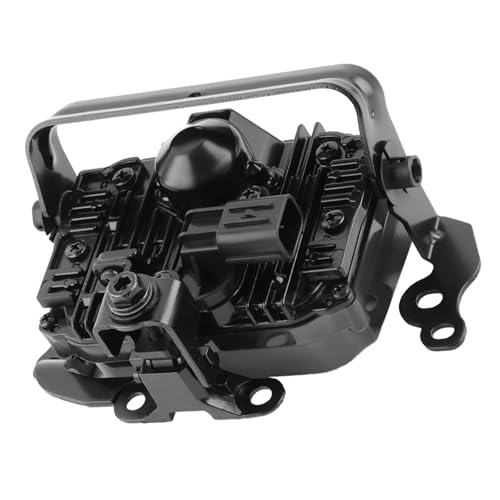
【COMPATIBLE WITH】The Cruise Control Unit for Toyota Lexus 2015-2020, for Toyota Corolla 2016-2019, for Highlander 2016-2019
How Dynamic Radar Cruise Control Makes Driving Easier
Traditional cruise control holds a chosen speed until you brake, cancel it, or change the setting. Dynamic Radar Cruise Control adds vehicle-to-vehicle distance control.
On the 2025–2026 Camry, Toyota lists Full-Speed Range Dynamic Radar Cruise Control as part of TSS 3.0. When the system detects a slower vehicle in your path, it can reduce speed to help maintain the selected following distance. As traffic conditions allow, it can accelerate again toward the preset speed.
This can reduce repeated accelerator and brake adjustments during suitable highway driving. It does not replace attentive driving, and you should take over whenever traffic, road conditions, weather, merging vehicles, construction, or another situation requires your judgment.
How Toyota Safety Sense Enhances Family Vehicle Safety
For a family vehicle, Toyota Safety Sense adds several layers of active assistance around the driver’s normal responsibilities.
- The Pre-Collision System can provide warnings and braking support when certain frontal hazards are detected.
- Full-Speed Range Dynamic Radar Cruise Control can reduce workload on longer highway trips.
- Lane Departure Alert and Lane Tracing Assist provide different forms of lane-position support.
- Automatic High Beams can reduce repetitive headlight switching at night.
- Road Sign Assist can display certain recognized signs in the driver’s information display.
- Proactive Driving Assist can provide gentle steering or braking support in some routine situations.
These technologies complement rather than replace passive safety equipment, seat belts, child-restraint systems, airbags, correct tire maintenance, safe speeds, and attentive driving.
Note: Blind Spot Monitor with Rear Cross-Traffic Alert is also standard on the 2025 U.S. Camry and Toyota continues to promote standard Blind Spot Monitor on the 2026 Camry. These are valuable Camry safety features, but Toyota lists them separately from the Toyota Safety Sense 3.0 package.
Toyota Safety Sense Limitations You Should Know
No camera- and radar-based driver-assistance system works perfectly in every situation. Toyota specifically warns that Safety Sense effectiveness depends on factors including road, weather, lighting, vehicle condition, speed, and the size and position of detectable objects.
Situations that may reduce performance include:
- A camera or radar sensor that is dirty, blocked, damaged, misaligned, or covered.
- Heavy rain, snow, fog, spray, glare, darkness, or other difficult visibility conditions.
- Faded, obscured, unusual, or temporarily changed lane markings.
- Sharp curves, steep grades, construction zones, or unusual road edges.
- Vehicles or pedestrians entering the Camry’s path suddenly.
- Nonstandard tires, low tire pressure, vehicle damage, or modifications that affect system operation.
Keep the windshield area around the forward camera clean, avoid obstructing sensors, maintain the car correctly, and investigate any dashboard warning that indicates a driver-assistance feature is unavailable or malfunctioning.
The Future of Safety Tech in Toyota
Toyota continues to develop its active-safety technology, but several capabilities that once sounded like future enhancements are already present in Toyota Safety Sense 3.0.
TSS 3.0 expands the capabilities of the Pre-Collision System, improves sensor performance, adds Proactive Driving Assist on applicable vehicles, and enhances lane-related assistance. Toyota also states that certain TSS 3.0-equipped vehicles have the capability to receive future software improvements over the air.
That does not mean every new function will automatically become available on every Camry. Hardware, software, model year, trim, region, and Toyota’s release decisions can all affect availability.
Advancements in Safety Technology
The move from TSS 2.5+ in the 2024 Camry to TSS 3.0 in the redesigned 2025 Camry shows how quickly the system can evolve.
- Broader Pre-Collision System detection: TSS 3.0 can detect vehicles, pedestrians, bicyclists, and motorcyclists in certain situations and includes enhanced intersection-support capabilities.
- Proactive Driving Assist: Provides gentle braking and/or steering support during some normal driving situations, including distance management and certain curves.
- Improved lane recognition: TSS 3.0 improves the information available to Lane Departure Alert and related assistance systems.
- Full-Speed Range Dynamic Radar Cruise Control: Helps manage following distance through a broader range of traffic conditions than conventional fixed-speed cruise control.
- Emergency Driving Stop System: Works with the required active systems to respond when a driver appears nonresponsive and does not answer system prompts.
Future Enhancements and Innovations
Future Toyota systems will likely continue building on cameras, radar, software, connectivity, and improved object detection, but it is better to rely on announced features than predict what a future Camry will include.
Toyota’s published TSS 3.0 documentation notes that some vehicles equipped with the system can support over-the-air software updates. That creates a path for certain future improvements without a dealer visit, but availability must be confirmed for the specific vehicle and update.
For owners, the practical rule is simple: check Toyota documentation for your exact model year rather than assuming a feature announced for another Toyota or a future model applies to your Camry.
Frequently Asked Questions
What Is the Safety Sense on a Toyota Camry?
Toyota Safety Sense is Toyota’s suite of active-safety and driver-assistance systems. In the 2025–2026 U.S. Camry, Toyota Safety Sense 3.0 combines collision-warning and braking support, adaptive cruise control, lane assistance, road-sign recognition, automatic high beams, and Proactive Driving Assist.
What Are the Features of Toyota Safety Sense?
For the 2025–2026 U.S. Camry, TSS 3.0 includes Pre-Collision System with Pedestrian Detection, Full-Speed Range Dynamic Radar Cruise Control, Lane Departure Alert with Steering Assist, Lane Tracing Assist, Road Sign Assist, Automatic High Beams, and Proactive Driving Assist. Blind Spot Monitor and Rear Cross-Traffic Alert are separate Camry features rather than components of TSS itself.
What Are the Safety Features of the Toyota Camry?
The Camry combines Toyota Safety Sense with passive and supplemental systems such as airbags, seat belts, stability and braking technologies, a backup camera, and Blind Spot Monitor with Rear Cross-Traffic Alert on current models. Some additional systems, including parking assistance and Traffic Jam Assist, depend on trim, package, subscription, and model year.
What Happens if I Press SOS in My Toyota?
On a Toyota equipped with active Safety Connect service, pressing the SOS button can connect you with a Toyota response-center agent. The agent can confirm the vehicle’s location, assess the situation, and contact appropriate emergency assistance when necessary. Availability depends on the vehicle, activation, network coverage, and applicable trial or subscription status.
Does Toyota Safety Sense Make the Camry Self-Driving?
No. Toyota Safety Sense provides driver assistance only. You remain responsible for steering, braking, monitoring traffic, maintaining a safe speed, and responding when the systems cannot detect a hazard or operate correctly.
Does Every Toyota Camry Have the Same Toyota Safety Sense Features?
No. Toyota Safety Sense has changed over time. For example, the 2024 U.S. Camry uses TSS 2.5+, while the redesigned 2025 and 2026 Camrys use TSS 3.0. Check the Owner’s Manual and Toyota specifications for the exact model year you are considering.
Conclusion
Toyota Safety Sense adds useful layers of collision warning, braking support, adaptive cruise control, lane assistance, sign recognition, and nighttime-driving support to the Camry. The key is matching the information to your model year: the 2024 U.S. Camry uses TSS 2.5+, while the 2025–2026 Camry uses the more capable TSS 3.0 system with Proactive Driving Assist.
Independent IIHS testing also gives the standard TSS 3.0 system in the 2025–2026 Camry strong front crash-prevention evaluations. Even so, these systems have operating limits. Treat them as backup assistance while you remain fully responsible for observing traffic and controlling the vehicle.
Sources
- Toyota — 2026 Camry — current Camry technology, Toyota Safety Sense 3.0, and Blind Spot Monitor information.
- Toyota — 2025 Camry eBrochure — TSS 3.0 feature list, Proactive Driving Assist, and separate Blind Spot Monitor/Rear Cross-Traffic Alert equipment.
- Toyota — Toyota Safety Sense 3.0 Overview — feature operation, TSS 3.0 enhancements, limitations, and Proactive Driving Assist.
- Insurance Institute for Highway Safety — 2025 Toyota Camry — independent crashworthiness and front crash-prevention evaluations applying to 2025–2026 models.
- Toyota — Camry Safety Connect — SOS emergency assistance, automatic collision notification, roadside assistance, and service requirements.
