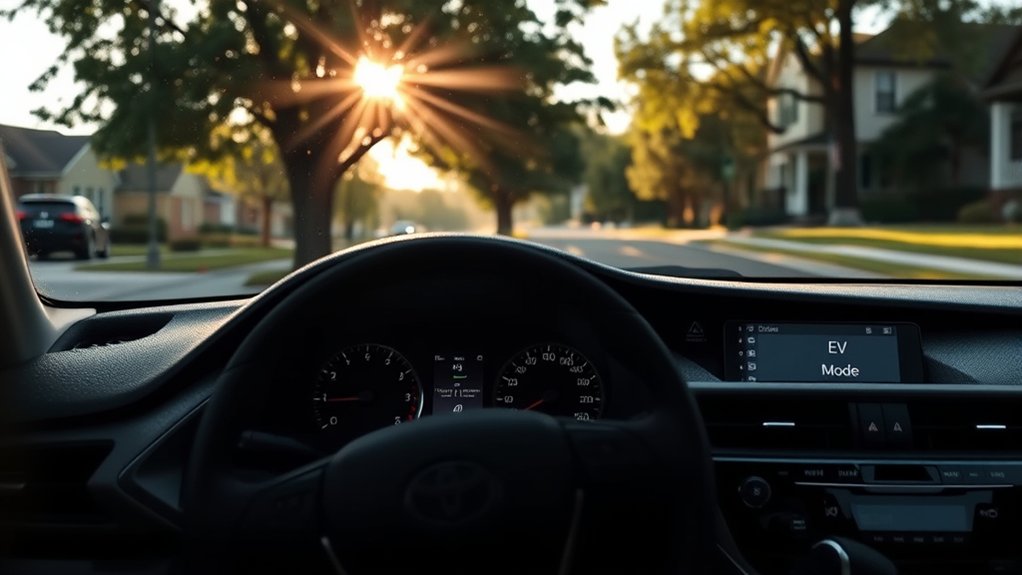
Toyota Camry Hybrid EV Mode lets the car request electric-only propulsion for short, low-speed driving when the hybrid system decides conditions are suitable. It can make parking lots, garages, drive-thrus, and quiet residential streets more comfortable, but it is not a long-range electric setting and the gasoline engine can start at any time.
Quick Answer
Press the EV MODE or EV drive mode switch while the Camry Hybrid is ready, moving slowly, and operating under suitable conditions. The car may use only its electric motor briefly, but EV Mode can be rejected or canceled because of speed, acceleration, battery charge, temperature, engine warm-up, climate-control demand, or other system needs.
Key Takeaways
- EV Mode is intended for brief, low-speed operation rather than normal highway driving.
- Its availability, speed range, switch location, messages, and indicators vary by Camry model year.
- The gasoline engine may start automatically for power, heating, emissions control, battery management, or system warm-up.
- Selecting EV Mode does not guarantee better fuel economy over the complete trip.
- The Camry Hybrid is not a plug-in vehicle; its traction battery is charged automatically by the hybrid system and regenerative braking.
At a Glance
| Time Required | About 10–20 seconds to select the mode |
| Difficulty | Easy |
| Tools Needed | None |
| Cost | $0 |
What Is EV Mode in the Toyota Camry Hybrid?
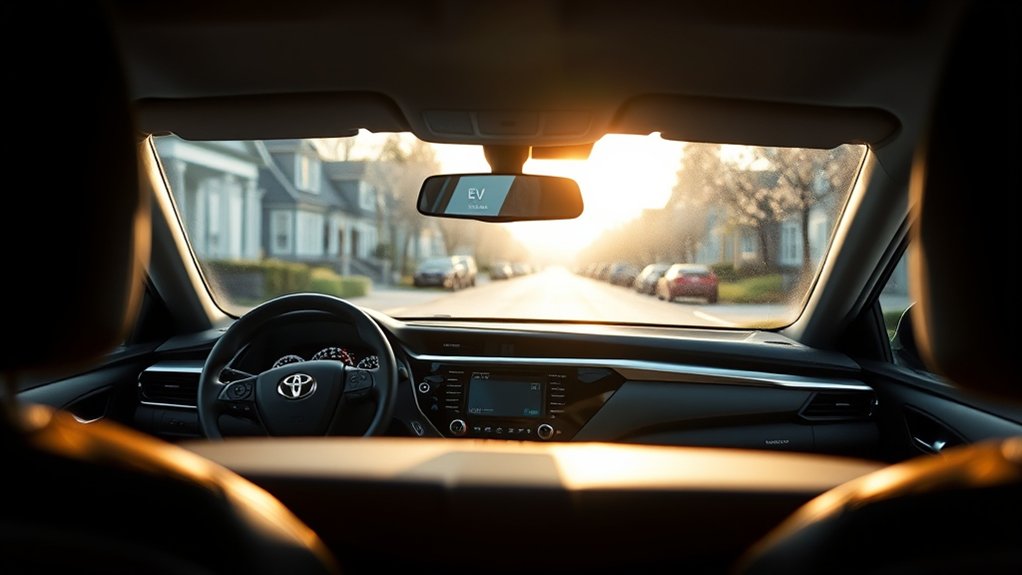
EV Mode is a driver-selectable request for the Toyota Camry Hybrid to move using electric-motor power without running the gasoline engine. It is designed for short periods when vehicle speed, accelerator demand, traction-battery charge, system temperature, and other conditions permit.
The feature is most useful during gentle, low-speed maneuvers. Even after EV Mode has been selected, the hybrid control system remains in charge. It can start the gasoline engine whenever doing so is necessary to protect the system, warm the engine, provide cabin heat, operate the windshield defogger, recharge the battery, or deliver more power.
EV Mode is different from owning a battery-electric or plug-in hybrid vehicle. A conventional Camry Hybrid has no external charging port. Its traction battery receives energy from regenerative braking and, when required, from the gasoline engine.
Note: Controls and operating limits vary by model year and market. Some Camry manuals describe an approximate low-speed range near 25 mph, but this is not a guaranteed universal cutoff. Check the Toyota owner’s manual portal for the instructions that match your vehicle.
For the U.S. market, Toyota changed the Camry to an exclusively hybrid lineup beginning with the 2025 model year. Older Camry generations were sold in both gasoline-only and hybrid versions, so make sure the instructions you follow apply to the hybrid powertrain in your specific car.
EV Mode is a short, conditional operating mode—not a promise that the Camry will remain electric-only for a fixed speed or distance.
Key Advantages of Driving in EV Mode
When the hybrid system accepts the request, EV Mode can provide quieter low-speed movement and prevent immediate gasoline use while the engine remains off. Its practical value is greatest during brief maneuvers rather than long trips.
Quieter Low-Speed Operation
Electric-motor propulsion produces less powertrain noise than running the gasoline engine. This can make it more pleasant to move through a parking garage, leave a driveway early in the morning, approach a charging or pickup area, or travel briefly through a quiet neighborhood.
The vehicle should be described as quieter, not completely silent. Hybrid and electric vehicles may produce an external pedestrian-alert sound at low speeds, and tire, road, fan, and accessory noise may still be present.
| Feature | Practical Benefit |
|---|---|
| Quieter powertrain operation | More comfortable low-speed maneuvering in noise-sensitive areas |
| Gasoline engine temporarily off | No tailpipe emissions during the period when electric-only operation is maintained |
| Smooth electric-motor response | Gentle, controlled movement in parking lots, garages, and drive-thrus |
Warning: Do not concentrate on keeping the EV indicator illuminated while driving. Watch traffic, pedestrians, cyclists, and obstacles, and accelerate normally whenever safety or traffic flow requires it.
Immediate Fuel Use Versus Overall Fuel Economy
While the engine is off, the car is not burning gasoline at that moment. However, selecting EV Mode does not create free energy or guarantee higher fuel economy for the complete trip. The electricity came from regenerative braking or from gasoline previously used by the hybrid system, and the engine may run later to restore the battery’s target charge.
The most dependable ways to support hybrid efficiency are smooth acceleration, anticipating stops, maintaining proper tire pressure, limiting unnecessary accessory demand, and using gentle or moderate braking when conditions allow. The U.S. Department of Energy and EPA hybrid-driving guidance notes that gentle braking gives regenerative braking more opportunity to recover energy.
EV Mode is therefore best viewed as a useful low-speed feature rather than an MPG-boost button. In many situations, leaving the car in its normal hybrid mode lets the control system choose the most efficient mix of gasoline and electric power.
Best Situations for Activating EV Mode
EV Mode is most likely to be useful when the car needs little power and will travel only a short distance. Suitable situations can include:
- Moving through a parking lot or parking structure
- Entering or leaving a residential driveway
- Advancing slowly in a drive-thru or pickup lane
- Repositioning the vehicle in a garage
- Creeping forward in light stop-and-go traffic
- Traveling briefly through a quiet, low-speed area
It is less likely to remain available during strong acceleration, steep climbing, highway entry, high-speed travel, very cold starts, hot battery conditions, or heavy climate-control demand. These conditions require more power or different system management, so the engine may start immediately.
An enclosed garage may seem like an ideal place for EV Mode, but never rely on the mode to guarantee that the gasoline engine will stay off. The engine can start automatically, so follow normal ventilation and carbon-monoxide precautions whenever the vehicle is in the READY state.
How Does EV Mode Activate and Deactivate?
How to Activate EV Mode
- Start the hybrid system. Press the brake pedal and start the car. Confirm that the READY indicator is illuminated.
- Keep power demand low. EV Mode is most likely to be accepted while stopped or moving slowly with gentle accelerator input.
- Locate the EV control. Look for a switch labeled EV MODE or EV drive mode near the drive-mode controls. The exact location varies by model year.
- Press the switch once. Watch the instrument display for an EV MODE indicator, confirmation message, or unavailable message.
- Accelerate gently. A firm accelerator input can cause the gasoline engine to start and cancel electric-only operation.
You can usually request EV Mode while the vehicle is moving slowly, but the system will accept it only when all required conditions are met. Consult the applicable manual before using the control while driving.
Why EV Mode Automatically Deactivates
Automatic cancellation is normal and does not usually indicate a fault. Depending on model year, the engine may start or EV Mode may cancel when:
- The traction-battery charge is outside the permitted operating range
- The accelerator is pressed firmly
- Vehicle speed becomes too high for the current conditions
- More power is required for a hill, merging, or acceleration
- The gasoline engine or emissions system needs to warm up
- The hybrid system or traction battery is too cold or too hot
- The windshield defogger, cabin heater, or another high-demand accessory requires engine operation
- The hybrid control system determines that engine operation is more appropriate
Cold temperatures can affect battery performance and increase engine, heater, and defogger use. The government’s cold-weather fuel-economy guidance notes that hybrids are often affected more than conventional vehicles during short winter trips.
Pro Tip: If EV Mode is unavailable immediately after a cold start, drive normally and gently. Once the engine and hybrid system reach suitable temperatures, electric-only operation may become available automatically without pressing the EV button again.
Dashboard Indicators for EV Mode
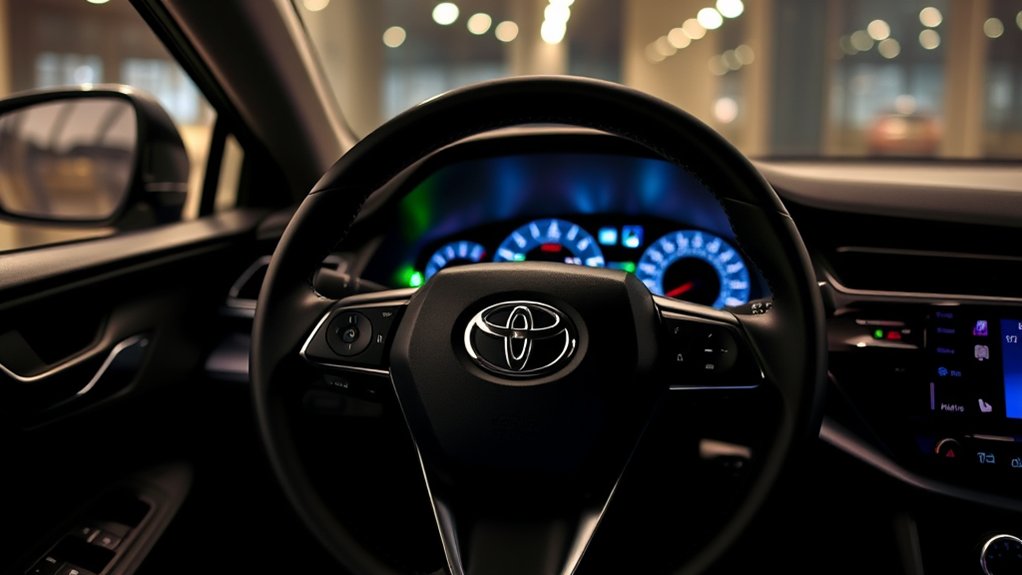
The dashboard may show more than one electric-driving indicator, and they do not always mean the same thing.
- EV MODE indicator or message: On equipped models, this confirms that the driver-selected EV Mode request has been accepted.
- EV-operation indicator: Some Camrys display an EV symbol whenever the gasoline engine is off and the car is moving or ready to move electrically. This can appear during ordinary hybrid operation even when you did not press the EV Mode switch.
- EV Mode unavailable message: This means one or more operating conditions are not satisfied. It is usually informational rather than a malfunction.
- Eco indicator or Eco Mode indicator: This relates to economical accelerator use or the selected Eco drive mode. It does not guarantee electric-only propulsion.
- Hybrid-system warning light: A persistent warning light, warning message, reduced-power condition, or abnormal behavior should be checked according to the owner’s manual.
The wording, color, location, and availability of these indicators differ across Camry generations. Identify them from the instrument-cluster section of your vehicle’s manual rather than relying on a color description from another model year.
EV Mode Versus Eco Mode
EV Mode and Eco Mode serve different purposes. Confusing them can lead to unrealistic expectations about how the hybrid system should behave.
| Mode | What It Does | Can the Engine Run? |
|---|---|---|
| EV Mode | Requests brief electric-only operation when conditions permit | Yes. The engine can start automatically and cancel the mode. |
| Eco Mode | Softens accelerator response and may adjust climate-control operation to support economical driving | Yes. Normal hybrid engine operation continues. |
| Normal Mode | Balances response, comfort, and efficiency for everyday driving | Yes, whenever the hybrid system determines it is appropriate. |
For most trips, Normal or Eco Mode allows the hybrid computer to manage electric and gasoline power without driver intervention. EV Mode is more specialized and temporary.
Why EV Mode Will Not Activate
If the display says EV Mode is unavailable, use the following checks:
- Reduce speed. EV Mode is intended for low-speed operation.
- Ease off the accelerator. Strong power demand prevents electric-only driving.
- Allow the vehicle to warm up. The engine may need to run after a cold start.
- Check climate settings. Windshield defogging or high cabin-heat demand may require engine operation.
- Drive normally for a while. The traction battery may need to gain or release charge before the system accepts EV Mode.
- Consider outside conditions. Extreme heat or cold can restrict electric operation.
- Read the displayed message. Some model years explain the reason directly in the instrument cluster.
Do not attempt to force the battery gauge to full by accelerating and braking unnecessarily. The hybrid computer intentionally maintains the traction battery within a protected operating range rather than keeping it fully charged.
If EV Mode remains unavailable during otherwise normal low-speed conditions but no warning lights are present, the behavior may still be normal. If a hybrid-system warning, check-engine light, reduced-power message, unusual noise, or drivability problem appears, follow the manual’s warning instructions and arrange professional diagnosis.
How to Maximize EV Mode Efficiency
The goal should not be to stay in EV Mode for as long as possible. The better approach is to drive smoothly and let the hybrid system use electric operation when it is beneficial.
- Accelerate progressively. Gentle pedal input lowers power demand and makes engine-off operation more likely.
- Anticipate stops. Release the accelerator early and brake smoothly when traffic conditions permit.
- Use regenerative braking effectively. Gentle to moderate braking can recover energy, while abrupt stops may require more friction-brake use.
- Avoid unnecessary climate demand. High heat, defogging, or aggressive cooling can increase energy use or start the engine.
- Combine short winter trips. Repeated cold starts reduce the opportunity for electric operation.
- Keep tires correctly inflated. Excess rolling resistance increases the power needed to move the car.
- Do not chase the EV indicator. Smooth, safe driving matters more than forcing one operating state.
EV Mode may be useful during a short maneuver, but ordinary hybrid operation can also shut off the engine automatically. In many cases, the most efficient action is simply to drive gently and allow the vehicle’s control system to decide when to use the engine.
Frequently Asked Questions
When should I use EV Mode in a Toyota Camry?
Use it for brief, gentle, low-speed movement such as parking, leaving a driveway, advancing through a drive-thru, or moving inside a parking garage. It is not designed for highway cruising, strong acceleration, or long electric-only trips.
How does Toyota Camry Hybrid EV Mode work?
Pressing the EV MODE switch asks the hybrid control system to use the electric motor without running the gasoline engine. The request is accepted only when battery charge, speed, temperature, accelerator demand, climate settings, and other conditions are suitable.
How fast can a Toyota Camry Hybrid travel in EV Mode?
There is no single guaranteed speed for every Camry Hybrid. Some generations describe an approximate low-speed range near 25 mph, but EV Mode may cancel sooner because of acceleration, battery charge, temperature, hills, climate demand, or another operating condition. Follow the manual for your model year.
Can I switch to EV Mode while driving?
On equipped models, you can generally request EV Mode while moving slowly, but only when it is safe to operate the control and the system’s conditions are satisfied. The display will confirm whether the request was accepted.
How far can a Camry Hybrid drive in EV Mode?
Only a short distance should be expected. The actual distance can range from a brief maneuver to a short low-speed stretch and depends on battery charge, temperature, terrain, accessories, speed, and accelerator input. Toyota does not present it as a fixed electric driving range.
Does selecting EV Mode always save gas?
No. It prevents gasoline use only while the engine remains off. The battery energy must come from regenerative braking or previous engine operation, and the engine may run later to restore battery charge. Smooth driving and regenerative braking usually matter more to total-trip fuel economy.
Is the Toyota Camry Hybrid a plug-in vehicle?
No. A standard Camry Hybrid does not plug into an external charger. Its traction battery is automatically charged through regenerative braking and the gasoline-powered hybrid system.
Conclusion
Toyota Camry Hybrid EV Mode is most useful as a brief low-speed convenience feature. Select it when you want quieter movement in a parking area, driveway, garage, drive-thru, or similar setting, but expect the gasoline engine to start whenever the hybrid system needs more power, heat, battery management, or warm-up.
Do not treat an approximate speed figure or electric-driving distance as a guarantee. Your Camry’s model year, battery condition, temperature, climate settings, and driving demand all affect how the mode behaves. For everyday efficiency, accelerate smoothly, brake progressively, maintain the vehicle properly, and let the hybrid controller choose the most appropriate power source.
Sources
- Toyota Manuals and Warranties — model-year-specific controls, indicators, operating conditions, warnings, and limitations
- Toyota USA Newsroom: 2025 Toyota Camry — current-generation Camry and the transition to an exclusively hybrid U.S. lineup
- Toyota Camry Official Product Page — current Camry hybrid-powertrain information
- U.S. DOE and EPA: Tips for Hybrids, Plug-in Hybrids, and Electric Vehicles — regenerative braking, model-specific guidance, and economical driving practices
- U.S. DOE and EPA: Fuel Economy in Cold Weather — cold-temperature effects on hybrid batteries, warm-up, accessories, and fuel economy
- 49 CFR §571.141 — federal minimum-sound requirements for hybrid and electric vehicles
