
The Tire Pressure Monitoring System in a Toyota Camry can warn you about significant underinflation before a low tire becomes obvious from the driver’s seat. However, the warning light does not replace regular pressure checks, and the correct pressure and reset procedure depend on the Camry’s model year, trim, tires, and instrument display.
Quick Answer
Toyota Camry TPMS uses wheel-mounted transmitters to warn when a tire is significantly underinflated. Check all tires cold against the driver’s-door placard, repair leaks, and inflate them before attempting a reset. A solid light usually means low pressure; a light that flashes for about a minute and then stays on usually indicates a system fault.
Key Takeaways
- Use the cold-tire pressures on the Camry’s Tire and Loading Information label, not a generic 32–35 psi range or the maximum pressure molded into the tire.
- A steady TPMS light normally points to low pressure; flashing for approximately one minute before staying on normally indicates a malfunction.
- Inflating the tires and repairing leaks comes before resetting or initializing the system.
- Older Camrys may use a physical reset switch, while newer models use the Multi-Information Display.
- New sensors or a second wheel set may require sensor-ID registration with Toyota-compatible equipment.
At a Glance
| Time Required | About 10–20 minutes, plus driving time if the system needs to update |
| Difficulty | Easy for pressure checks; professional diagnosis may be needed for sensor faults |
| Tools Needed | Accurate tire-pressure gauge and an air source or portable inflator |
| Cost | Usually no cost if you already have a gauge and air source; diagnostic or sensor-replacement costs vary |
What Is the Tire Pressure Monitoring System in a Toyota Camry?

The Toyota Camry uses a direct Tire Pressure Monitoring System, commonly shortened to TPMS. Toyota may also label the related settings as TPWS, meaning Tire Pressure Warning System. Wheel-mounted pressure transmitters send information to the vehicle so it can illuminate the warning symbol when one or more monitored tires becomes significantly underinflated.
Under the U.S. Federal Motor Vehicle Safety Standard for TPMS, the system must warn when pressure reaches 25% below the vehicle manufacturer’s recommended cold pressure or the standard’s minimum activation pressure, whichever is higher. A manufacturer may design the system to warn sooner.
This threshold is an emergency-warning level, not the point at which you should begin maintaining the tires. A tire can be several pounds low, affect handling or wear, and still remain above the warning threshold.
TPMS is a warning system, not a substitute for checking every tire with an accurate gauge.
How Does the Camry TPMS Monitor Tire Pressure?
Each monitored wheel contains a tire-pressure warning valve and transmitter. The transmitter measures pressure and sends an identifying signal to the vehicle’s TPMS receiver and control system. Because the sensors have unique identification codes, replacement sensors may have to be registered before the vehicle can recognize them.
Sensor Operation and Pressure Display
The sensors do not necessarily send a constantly changing dashboard reading while the Camry is parked. Their transmission behavior is designed to conserve the sealed sensor battery, and the system may need driving time before it updates after pressure adjustments or wheel service.
Whether the dashboard identifies a specific tire depends on the model year, trim, and display. The 2025 Toyota Camry Quick Reference Guide confirms that detected tire pressures can be displayed on that model’s Multi-Information Display. Some older Camrys provide only the warning symbol, so all four tires must be checked manually.
What the TPMS Warning-Light Pattern Means
| Warning pattern | Likely meaning | What to do |
|---|---|---|
| Stays on steadily | One or more tires may be significantly underinflated. | Stop safely, inspect every tire, check pressure with a gauge, and repair any leak. |
| Flashes for about one minute, then stays on | The TPMS has detected a malfunction, such as an unrecognized, damaged, or nontransmitting sensor. | Check pressures manually and arrange TPMS diagnosis if the pattern repeats. |
| Blinks slowly three times during initialization | The vehicle has accepted an initialization command. | Allow the system to finish learning according to the owner’s manual. |
Note: Three slow confirmation blinks during a deliberate reset are different from a warning light that flashes for approximately one minute every time the vehicle is started.
How to Find the Correct Toyota Camry Tire Pressure
Do not assume that every Camry uses the same pressure. Many versions list pressures in the low-to-mid 30-psi range, but the exact specification may differ between model years, wheel sizes, front and rear axles, or tire configurations.
- Open the driver’s door and locate the Tire and Loading Information label on the door edge or door jamb.
- Read the listed front and rear cold tire inflation pressures.
- Check the tires before driving or after the Camry has been parked for at least three hours.
- Remove each valve cap, press the gauge firmly onto the valve, and compare the reading with the placard.
- Add or release air as needed, recheck the reading, and reinstall the valve cap.
The number molded into a tire’s sidewall is generally its maximum permissible inflation pressure under specified conditions. It is not the normal target pressure for the vehicle. Toyota also provides a practical overview in its official guide on how to check and adjust tire pressure.
Pro Tip: Keep a quality pencil, dial, or digital gauge in the glove box. Gas-station inflator gauges can be convenient, but a personal gauge lets you verify the final pressure consistently.
What to Do If the TPMS Warning Light Is On
- Reduce speed and assess the Camry’s handling. If the car pulls sharply, vibrates, or a tire appears flat, stop in a safe place and do not continue driving normally.
- Inspect all four tires. Look for a visibly low tire, puncture, cut, bulge, cracked valve stem, or wheel damage.
- Measure each tire with a gauge. Do not rely on appearance alone; a radial tire can be low without looking flat.
- Inflate to the placard pressure. If the tires are warm, treat the adjustment as temporary and recheck them cold later.
- Repair the cause. A tire that repeatedly loses air needs inspection for a puncture, valve leak, bead leak, or wheel damage.
- Drive and recheck. The solid light may turn off after the system receives updated readings. Do not initialize the system merely to conceal a warning that returns.
Warning: Do not keep driving on a visibly flat, damaged, or rapidly deflating tire. Underinflation can create heat, damage the tire and wheel, and affect steering and braking. A reset cannot repair an air leak.
If the warning flashes for approximately one minute and then remains illuminated, check the pressures manually because the system may not be able to provide a reliable warning until the malfunction is repaired.
[Amazon Products Picked for You]
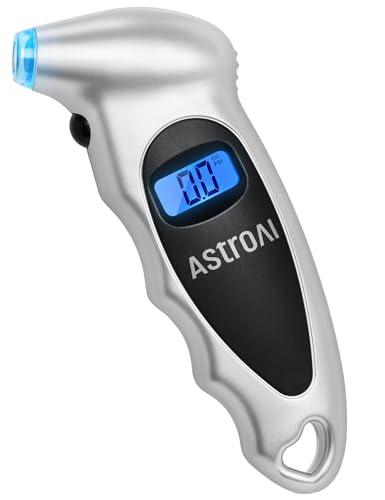
Accurate, Dependable Readings: Factory‑calibrated to ±1 PSI, so you can confidently match your vehicle’s recommended PSI (check the door jamb sticker). Ideal for monthly checks and road trips — consistent results every time, cold or warm.

RUGGED DESIGN: The stainless steel components prevent rust and corrosion while the precision-crafted nozzle seamlessly seals onto the valve stems for highly accurate readings (±2% span). We also provide 4 valve stem caps for convenient replacement.

HIGH ACCURACY: Every ETENWOLF's pencil tire gauge is calibrated to ANSI B40.1 Grade B, it is accurate to 2% of span in the middle 50% of range and 3% of span in the lower and upper 25% of range. Each ETENWOLF pencil tire pressure gauge is manually calibrated and has its unique calibration number printed on the pencil
Common Causes of Toyota Camry TPMS Alerts
- Normal air loss: Tires gradually lose pressure even when there is no obvious puncture.
- Cold weather: Lower temperatures reduce measured tire pressure and can expose a tire that was already near the warning threshold.
- Puncture or valve leak: A nail, damaged valve core, cracked stem, bead leak, or bent wheel can cause recurring pressure loss.
- Incorrect initialization: Initializing the system while the tires are improperly inflated can establish an unsuitable pressure reference.
- Unregistered replacement sensor: A new transmitter may not communicate correctly until its ID is registered.
- Second wheel set: Winter wheels may have no sensors, incompatible sensors, or IDs that have not been selected or registered.
- Sensor or receiver fault: A depleted sealed sensor battery, damaged transmitter, radio interference, or system fault may cause the malfunction pattern.
How Tire Rotation Affects TPMS
Rotating equal-size tires does not reduce their pressure by itself. A warning after rotation is more likely to result from a pressure adjustment, an existing leak, a damaged sensor, different specified front and rear pressures, or a model that needs initialization or position relearning.
| Action taken | Possible TPMS effect |
|---|---|
| Rotate equal-size tires without changing pressure | Often no reset is needed, but the exact owner’s-manual procedure controls. |
| Move tires between axles with different specified pressures | Pressure adjustment and initialization may be required. |
| Install new sensors or a second wheel set | Sensor IDs may need registration, selection, or relearning. |
| Damage a valve-mounted transmitter during tire service | The warning may flash for approximately one minute and then remain on. |
Temperature and Seasonal Pressure Changes
Tire pressure changes with temperature. A cold snap can lower all four readings enough to illuminate the light, while daytime warming may make the warning disappear temporarily. That does not mean the system is faulty or that the tires should be ignored.
Check and adjust the tires when they are cold. Do not bleed air from a warm tire simply because its reading is higher than the placard’s cold specification. Recheck it after the vehicle has been parked long enough for the tires to cool.
How to Reset or Initialize Toyota Camry TPMS
In Toyota documentation, “reset” usually means initializing the tire-pressure warning system so it can learn the applicable pressure setting. This is different from repairing a low tire or registering a new sensor ID.
Before initialization, park safely and adjust every tire to the cold pressure shown on the driver-side placard. Never initialize TPMS with a known low tire.
| Step | Action | Important note |
|---|---|---|
| 1 | Confirm the tire size and placard pressures. | Front and rear specifications may differ. |
| 2 | Check and adjust all tires cold. | Repair a leak before initialization. |
| 3 | Use the physical switch or MID menu specified for the model year. | Do not assume the controls are in the same place on every Camry. |
| 4 | Wait for the confirmation message or three slow blinks. | Do not confuse confirmation blinks with a one-minute malfunction sequence. |
| 5 | Allow the system to complete its learning process. | The manual may require waiting, driving, or both. |
[Amazon Products Picked for You]
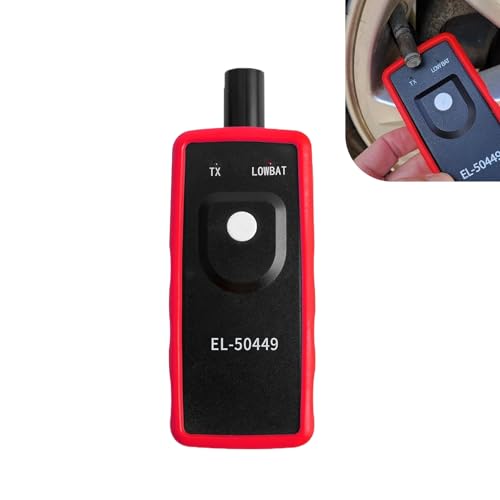
Key Functions: The battery not included. This tpms relearn tool is for vehicles with direct TPMS. It activates sensors, clears dashboard warning lights, and checks for bad or low-power sensors. It is compatible with many major vehicle brands.
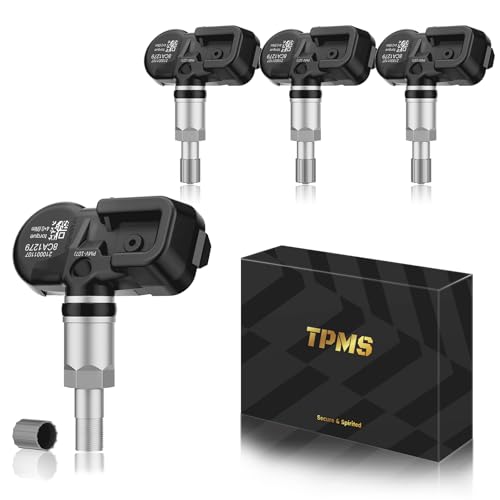
🚗 【315MHz Tire Pressure Sensor-Vehicle Fitment,Year Range,OE Number】 ★:-TOYOTA 4 Runner (2006-2025) | Prius (2007-2022) | Camry (2007-2025) | Corolla (2007-2025). ★:-Other Compatible Models,2004-2025:TOYOTA Highlander.RAV4.Tacoma.Avalon.Lander Cruiser.Matrix.Venza.FJ Cruiser.Sequoia.Tundra.Yaris.LEXUS RX350.RX450H.ES350.ES350H.NX300.NX350.IS250.IS350.GX460.UX250H.GS350.GS450H.LX570. ⚙ 【OE Number】PMV-107J.42607-06011.42607-0C020.42607-30030.42607-33011.42607-33021.42607-35010 etc. ⚠️Please Refer to The Main Image for The Complete Vehicle Fitment List.
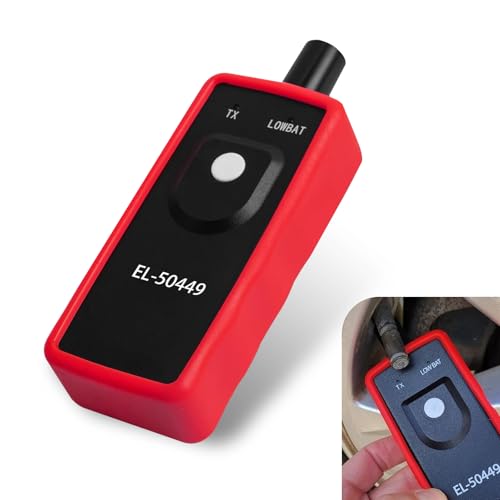
Note: Universal tire pressure monitoring system tire sensors will not work properly. Do not hold the reset button for more than 3 seconds, otherwise the tool will shut down and cannot be used normally. Press and release the reset button to activate the tire sensor, and hold the reset button to turn the tool off or on. If the TX indicator light does not flash after pressing and releasing the reset button, it means that the tool has been turned off.
Camrys With a Physical TPMS Reset Switch
Many earlier Camrys use a physical SET or TPMS reset switch under the dashboard or near the glove box. A typical procedure is to place the ignition in the required ON mode, press and hold the switch until the warning light blinks slowly three times, and then wait while the system stores the setting.
The required ignition mode, switch location, waiting time, and driving procedure can differ. Follow the manual for the exact year rather than relying on a generic “start the engine and hold the button” instruction.
Camrys With Multi-Information Display Settings
Many newer models place initialization under a menu such as Vehicle Settings → TPWS → Set Pressure. Button labels and menu wording vary with the instrument display.
On the 2025 Camry, Toyota directs the driver to open Vehicle Settings, select TPWS setting, choose Tire Pressure Setting, and then select either a specified pressure or the current pressure. The warning light slowly blinks three times when the setting is accepted.
Note: If your menu does not match these labels, stop and consult the owner’s manual for that exact model year. Do not experiment with unrelated vehicle settings.
Why Regular Tire-Pressure Checks Still Matter

The National Highway Traffic Safety Administration recommends checking all tires at least once a month when cold. TPMS activates only after significant underinflation, so a tire can need adjustment before the dashboard warning appears.
Correct pressure helps tires carry the vehicle’s load as designed. It also supports predictable steering and braking, limits excess heat and shoulder wear, and can improve fuel economy and tire life. Government fuel-economy guidance supports maintaining proper inflation, but it does not support the claim that every 1 psi of pressure loss reduces fuel economy by 3%.
- Check pressure monthly and before a long trip.
- Inspect the tread and sidewalls while checking pressure.
- Recheck after major seasonal temperature changes.
- Investigate any tire that repeatedly needs air.
- Check the spare separately according to the owner’s manual; many compact spares are not monitored by TPMS.
Best Practices for Maintaining Toyota Camry TPMS
- Tell the tire technician the vehicle has TPMS. The valve-mounted transmitter can be damaged during tire removal or installation.
- Use compatible replacement parts. Sensors must operate on the correct system and frequency and may require ID registration.
- Do not initialize at the wrong pressure. The system may then warn too late or illuminate when pressures are normal.
- Use caution with replacement wheels. Wheel design and sensor compatibility can affect operation.
- Verify operation after service. Watch for the one-minute flashing malfunction pattern after tires, wheels, or sensors are replaced.
- Diagnose sensor batteries rather than replacing by mileage alone. Sensor life varies, and Toyota does not publish one universal Camry replacement interval.
Sensor Registration, Replacement Tires, and Winter Wheels
Initializing pressure does not automatically register every new transmitter. When a sensor is replaced, its unique ID may need to be programmed into the Camry. A second wheel set may also require ID registration, selection of a second set where supported, or relearning after each seasonal change.
A qualified tire shop can usually scan each sensor to confirm its ID, pressure reading, signal, and battery status. Dealer or Toyota-capable diagnostic equipment may be needed when IDs cannot be registered, the receiver reports a fault, or the vehicle has model-specific wheel-set functions.
Troubleshooting a TPMS Light That Will Not Go Away
| Symptom | Possible cause | Next step |
|---|---|---|
| Solid light remains after adding air | Another tire is low, a warm reading was used, a leak remains, or the system has not updated. | Recheck every tire cold, inspect for leaks, and follow the manual’s driving or initialization instructions. |
| Light goes off and returns the next day | Slow puncture, valve leak, bead leak, wheel damage, or falling overnight temperature. | Record the cold readings and have the leaking assembly inspected. |
| Flashes for about one minute after startup | Unregistered or failed sensor, depleted sensor battery, incompatible wheel set, or TPMS fault. | Check pressures manually and request a TPMS sensor scan and fault diagnosis. |
| Warning remains after fitting a compact spare | The removed road wheel is still low, and the compact spare may not contain a monitored transmitter. | Repair and reinstall the correct road tire as soon as practical. |
| Individual tire location appears wrong after rotation | Sensor positions may need relearning on that model. | Follow the model-specific position-relearn procedure or visit a qualified shop. |
[Amazon Products Picked for You]
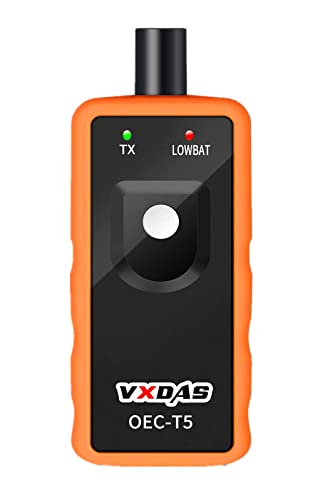
🚗2023 UPDATED FOR WIDER COMPATIBILITY: Specifically designed to work with most GM vehicles 2006-2023 (Chevy / Buick / GMC / Opel /Cadillac and more) equipped with 315/433 MHz. Your vehicle deserves the best tire pressure sensor reset tool.(It is not suitable for heavy trucks with more than 4 tires or vehicles with an external TPMS system.)Tip:Based on factory and customer-tested models shown in A+, please refer to the car model list to confirm compatibility with the VXDAS TPMS tool.
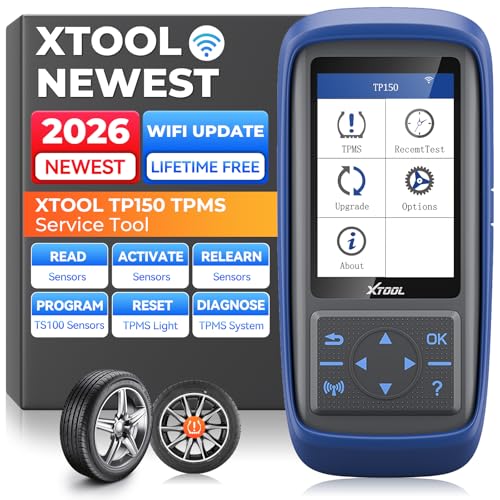
Why XTOOL TP150 TPMS Relearn Tool Stands Out: Perfect for DIYers and professional technicians, the XTOOL TP150 TPMS Reset Tool combines TPMS diagnostics, sensor activation, relearn, reset and sensor programming with XTOOL TS100 Sensors in one portable tool, making common TPMS service easier in one device. Its durable physical button interface is easy to operate with greasy gloves, making it ideal for garages, workshops, or roadside use. Check tire pressure, reset TPMS warning lights, and simplify sensor service with simple, easy-to-use controls. Supports the newest car models with frequent lifetime software updates and 13+ languages. 𝐍𝐎𝐓𝐄: TPMS Programming for XTOOL Sensors Only.

Warm Note: 1.TP150 tpms tool is not for all sensors, but only works for pre-programmed sensors or XTOOL TS100/ TS100 PRO sensors. 2. Need to update the TP150 tire pressure sensor reset tool but shows system configuration error? Please follow the user maual first install "TP200 software" from xtooltech, and connect TP150 with Windows PC(ios cannot be supported), go "settings – About" to check the SN and pasword required, and click the TP150 disk and the mouse right button to format it and then upload the software again. Any issue you can find XTOOL for help
Where to Get Help With Toyota Camry TPMS Problems
A reputable tire shop can check inflation, inspect for leaks, scan the wheel sensors, replace damaged valve-mounted transmitters, and perform many registration or relearn procedures. A Toyota dealer is appropriate when the system has stored faults, menu initialization repeatedly fails, sensor IDs cannot be registered, or Toyota-specific diagnostic access is required.
Depending on your area, dealer groups such as Longo Toyota of El Monte or Toyota of Orlando and tire chains such as Discount Tire may offer TPMS checks, inflation, resets, or sensor service. Availability, pricing, and complimentary services can change, so confirm the service before visiting.
DIY assistance is reasonable for reading the door placard, measuring cold pressure, and adding air. Tire dismounting, sensor replacement, and transmitter registration should be handled with the correct tools to avoid damaging the wheel, tire, valve, or sensor.
Related Guides
Frequently Asked Questions
How does the Toyota Camry TPMS work?
Wheel-mounted pressure transmitters send readings and identification data to the vehicle. The system illuminates the TPMS symbol when a monitored tire becomes significantly underinflated. Newer Camrys may also show individual tire pressures on the Multi-Information Display.
Why does my Camry say “Check Tire Pressure Monitoring System”?
That message can indicate a TPMS malfunction rather than ordinary low pressure. Check every tire manually. If the warning light flashes for approximately one minute and then remains on, a sensor, sensor ID, wheel set, receiver, or related component may need diagnosis.
How do I know which Camry tire is low?
Check the tire-pressure screen if your Camry displays individual readings. If it provides only the warning symbol, use a gauge on all four tires. Even with a pressure display, verify the reading manually before adding air or repairing a tire.
What tire pressure should I use for a Toyota Camry?
Use the front and rear cold pressures printed on the Tire and Loading Information label inside the driver’s door area. Do not assume every Camry uses 32–35 psi, and do not use the maximum pressure molded into the tire sidewall as the normal target.
Do I need to reset TPMS every time I add air?
Not necessarily. Correcting the pressure may allow the light to turn off after the system updates. Initialize TPMS only when the owner’s manual calls for it, such as after certain pressure, tire-size, rotation, or wheel changes. Never reset it to mask a leak.
Why did the TPMS light come on during cold weather?
Cold air lowers tire pressure. A seasonal temperature drop can push one or more tires below the warning threshold, especially if they were already slightly low. Measure and adjust the tires cold rather than waiting for warmer weather to make the light disappear.
Does the Toyota Camry spare tire have a TPMS sensor?
Many compact Camry spare tires do not have a monitored transmitter. If a low road tire is removed and replaced with the compact spare, the warning may remain until the repaired road wheel is reinstalled and the system receives a valid reading. Check the manual for the exact year.
Conclusion
Your Toyota Camry’s TPMS provides an important warning, but safe tire care still starts with an accurate gauge and the cold-pressure specifications on the driver-side placard. Treat a steady light as a reason to inspect and inflate the tires, and treat a one-minute flashing sequence as a possible system fault. Use only the reset procedure specified for your Camry’s exact model year, and have recurring pressure loss or sensor problems diagnosed rather than repeatedly clearing the warning.
Sources
- 2025 Toyota Camry Quick Reference Guide — TPMS menu initialization, pressure display, warning-light behavior, and placard guidance
- Toyota: How to Check Tire Pressure — pressure inspection, inflation, and seasonal temperature guidance
- 49 CFR 571.138, Tire Pressure Monitoring Systems — federal warning threshold and malfunction-indicator requirements
- NHTSA TireWise — cold-pressure checks, monthly inspection, placard use, and tire-safety guidance
- FuelEconomy.gov: Keeping Your Car in Shape — fuel-economy effects of maintaining proper tire inflation
