
When your Toyota Tacoma’s traction control or slip indicator stays on, the light does not identify one specific failed part. The meaning depends on whether the indicator is flashing, steadily illuminated, paired with TRAC OFF, ABS, or the Check Engine light, and whether the truck has any braking or handling symptoms. Start with the exact model-year owner’s manual, then inspect the tires and visible wiring before scanning the ABS/VSC system for stored codes.
Quick Answer
A flashing slip indicator usually means traction or stability control is actively limiting wheelspin. A light that stays on may mean the system is switched off or has detected a fault. Check the tires and related warning lights, then use a scanner that can read Toyota ABS/VSC codes before replacing parts or clearing codes.
Key Takeaways
- A flashing slip indicator during wheelspin can be normal system operation; a steady light needs further checking.
- TRAC OFF, ABS, VSC, and Check Engine lights change the diagnosis, so record every light and message before clearing anything.
- Common causes include a damaged wheel-speed sensor or harness, a contaminated tone ring, mismatched tires, low system voltage, or a calibration issue after wheel or suspension work.
- Do not use a universal wheel-speed sensor resistance range. Tacoma sensor designs and specifications vary by model year and system.
- Repair the cause before resetting the light. Disconnecting the battery or jumping diagnostic pins can erase useful information without fixing the fault.
At a Glance
| Time Required | About 15–30 minutes for basic checks; longer for scan-tool diagnosis or repair |
| Difficulty | Beginner for tire and visual checks; intermediate or professional for electrical diagnosis |
| Tools Needed | Owner’s manual, tire-pressure gauge, flashlight, and an OBD-II scanner with ABS/VSC capability |
| Cost | Basic inspection may cost nothing; diagnostic and repair costs depend on the stored code and failed component |
Understanding Your Tacoma’s Traction Control
Your Tacoma’s traction control system helps reduce drive-wheel spin. Depending on the model year and equipment, Toyota may group traction control with Vehicle Stability Control (VSC), anti-lock braking (ABS), Active Traction Control (A-TRAC), or other off-road systems.
The systems share information from components such as wheel-speed sensors. Stability control may also use steering-angle, yaw-rate, and acceleration data. When intervention is needed, the truck can reduce engine torque and apply brake pressure to one or more wheels.
The dashboard symbol does not always mean a failure. Toyota uses indicators for system operation, manual deactivation, and malfunctions. Because symbols and messages vary across Tacoma generations, confirm the exact meaning in the owner’s manual for your model year.
What the Traction Control Light Means
Note the light’s behavior before turning off the truck. A photo of the instrument panel can help a technician identify the original combination of warnings.
| What You See | Likely Meaning | What to Do |
|---|---|---|
| Slip indicator flashes briefly on a slick surface | The system is probably intervening to control wheelspin or vehicle slip | Ease off the accelerator and drive for the conditions |
| Slip, VSC, or traction light stays on | The system may be switched off, unavailable, or storing a fault | Check the owner’s manual, related lights, and ABS/VSC codes |
| TRAC OFF light is on | Traction control may have been disabled by the driver or by another detected fault | Confirm the switch setting and scan all relevant modules |
| ABS and slip/VSC lights are on together | A shared sensor, circuit, calibration, or brake-control fault may be affecting both systems | Arrange diagnosis soon and drive cautiously |
| Check Engine and TRAC OFF lights are on | An engine or powertrain fault may have caused traction or stability functions to be limited | Read engine codes as well as ABS/VSC codes |
Warning: Stop driving and arrange a tow if a red brake warning appears with a soft brake pedal, fluid leak, severe pulling, grinding, smoke, or noticeably reduced braking. A traction-control article cannot rule out a base-brake failure.
Common Symptoms of a Traction Control Light Activation
A traction-control warning can appear without any noticeable driving symptom. When symptoms do occur, they help narrow the diagnosis but do not identify a failed part by themselves.
Loss of Power
Brief torque reduction while the slip indicator flashes can be normal when a tire loses grip. Persistent low power, stalling, or a true limp mode is different. Those symptoms may come from an engine, throttle, transmission, or communication fault that also disables traction control.
Record whether the Check Engine light is on and whether the power loss happens only on loose or slippery surfaces. Do not assume a wheel-speed sensor is responsible until you read the stored codes.
Warning Light Activation
The combination of warning lights matters more than one symbol alone. ABS, VSC, TRAC OFF, tire-pressure, brake, and Check Engine indicators can point to separate systems or a shared electrical problem.
A light that appears immediately after tire, wheel-bearing, brake, alignment, suspension, or battery work deserves special attention. A connector may be loose, a harness may be stretched, a sensor may be damaged, or a calibration may be incomplete. Note whether downhill-assist or other brake-based functions also stopped working.
Vehicle Handling Issues
Pulling, vibration, unusual tire wear, or a crooked steering wheel can indicate tire, alignment, wheel-bearing, brake, or suspension problems. These conditions may exist alongside a traction-control fault, but alignment alone does not prove why the warning light is on.
If the truck behaves unpredictably, reduce speed and avoid wet, icy, or loose surfaces until the cause is diagnosed.
Common Causes of a Tacoma Traction Control Light
- Wheel-speed sensor or tone-ring problem: Damage, rust, metal debris, excessive wheel-bearing play, or a poor signal can affect ABS and stability calculations.
- Damaged wiring or connector: Harnesses near the wheel are exposed to water, road debris, steering movement, and previous repair work.
- Mismatched tires or pressures: A tire with a different size, severe wear, or incorrect pressure can rotate at a different rate. Low pressure normally has its own TPMS warning, so confirm the stored code before linking it to traction control.
- Steering-angle or yaw-sensor calibration: Some model years may require calibration after alignment, steering, suspension, battery, or control-module work.
- Low 12-volt system voltage: A weak battery, charging problem, or poor connection can create multiple warning lights or communication codes.
- Brake-switch or stop-lamp circuit issue: The control system needs reliable brake-pedal information.
- Engine or powertrain fault: Some faults can cause Toyota’s control system to limit or disable traction and stability functions.
- ABS actuator, skid-control ECU, or network fault: These are less suitable for guesswork and usually require factory-level diagnostic information.
- Aftermarket changes: Lift kits, altered tire sizes, wheel spacers, or electrical accessories can create sensor, wiring, calibration, or compatibility problems.
Troubleshooting Your Tacoma’s Traction Control Light
- Identify the exact light pattern. Note whether the indicator flashes or stays on and record every accompanying warning.
- Restart once in a safe location. A restart may show whether the warning was temporary, but it is not a repair.
- Check all four tires. Confirm pressure against the driver-door label. Look for a temporary spare, mixed sizes, major tread-depth differences, damage, or a recently replaced tire.
- Review recent work. Consider tire rotation, wheel-bearing replacement, brake service, alignment, suspension work, battery replacement, or accessory wiring.
- Inspect visible sensor wiring. Look behind each wheel for loose connectors, stretched wires, rubbing, corrosion, or impact damage. Do not pull on the harness.
- Check battery condition. Loose terminals or low voltage can produce several unrelated-looking warnings.
- Scan the correct modules. Use a tool that can read Toyota ABS, VSC, and skid-control codes. A basic engine-code reader may show no codes even when the brake-control module has stored a fault.
- Use codes and live data to guide testing. Compare wheel-speed readings at low speed and follow the model-year repair manual before testing resistance, voltage, or continuity.
Pro Tip: Save the diagnostic codes, freeze-frame information, and a dashboard photo before clearing anything. That evidence can turn an intermittent fault from a guessing exercise into a targeted repair.
How to Check Your Wheel Speed Sensors and Wiring
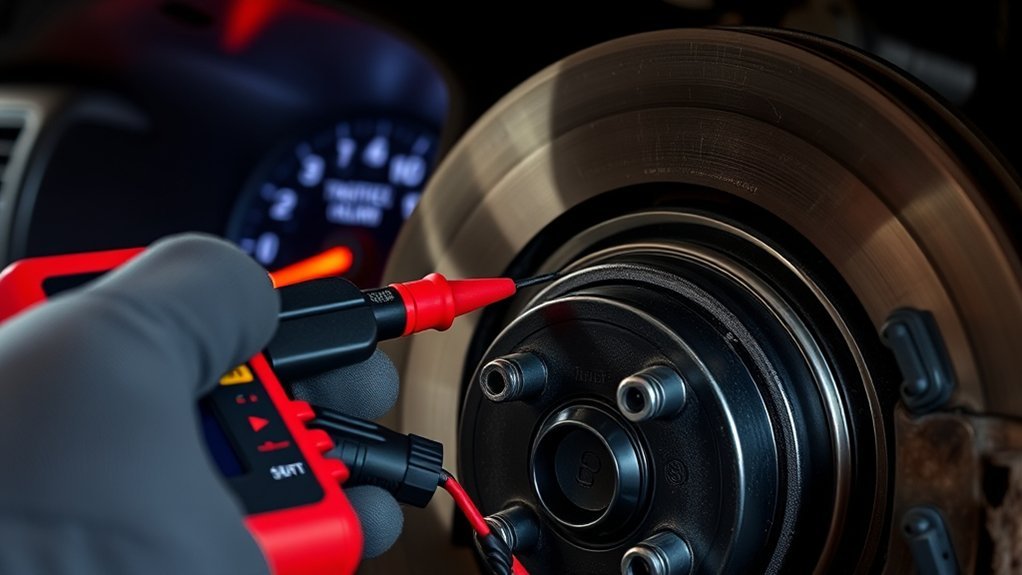
Wheel-speed sensors are common suspects because ABS, traction control, and stability control depend on accurate wheel-speed information. However, the sensor itself is only one part of the circuit. Wiring, connectors, tone rings, wheel bearings, power supply, and control-module inputs can produce similar codes.
Visual Inspection Techniques
- Park on a level surface, switch the ignition off, set the parking brake, and secure the truck before working near a wheel.
- Locate the sensor harness near the hub or steering knuckle. The exact routing varies by generation and axle.
- Check the harness for cuts, chafing, melted insulation, stretched sections, broken clips, or signs of impact.
- Inspect accessible connectors for moisture, corrosion, bent terminals, or an incomplete latch.
- Confirm the sensor and its mounting point are secure and not visibly cracked, bent, or displaced.
- Look for wheel-bearing looseness, heavy rust, or debris near the sensor and tone-ring area. Do not pry against the sensor or clean it with aggressive tools.
Testing Sensor Functionality
Start with diagnostic codes and live wheel-speed data. On a safe, low-speed test, one wheel that drops to zero, spikes, or differs sharply from the others can point toward that wheel’s sensor circuit. A technician may then test the circuit with a digital multimeter or oscilloscope using the correct wiring diagram and specifications.
Do not rely on a universal 800-to-2,000-ohm or 1,000-to-2,000-ohm range. Passive and active sensor designs are tested differently, and an incorrect resistance test can misdiagnose a good sensor. Use the Tacoma’s model year, drivetrain, axle, connector pinout, and factory procedure.
Why ABS Matters for Your Traction Control
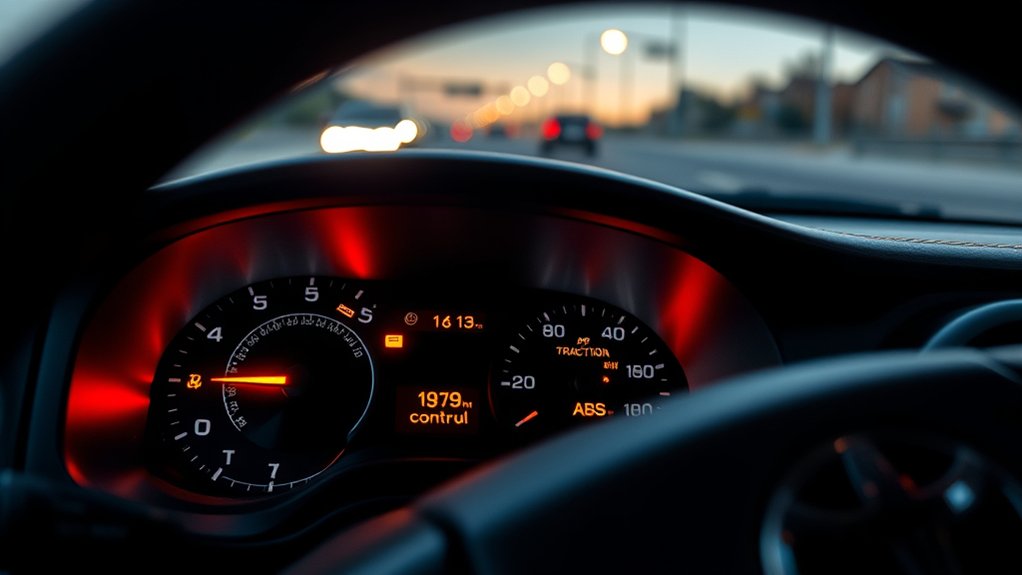
ABS helps prevent wheel lock during braking. Traction control and VSC use related wheel-speed information and brake-control hardware to manage wheelspin and vehicle stability. A fault in a shared sensor, harness, actuator, power supply, or control module can therefore illuminate more than one warning light.
A traction-control warning is often a system-level clue, not proof that the traction-control button or one wheel-speed sensor has failed.
If the ABS warning is also on, anti-lock braking and related assistance may be unavailable even if the basic hydraulic brakes still work. Follow the owner’s manual, leave extra stopping distance, and arrange diagnosis promptly.
How to Reset the Traction Control Light Correctly
The correct reset is to repair the cause and then clear the relevant diagnostic code with an appropriate scan tool, if the repair procedure calls for it. Some warnings turn off after the system completes a successful self-check or drive cycle. Others require calibration or code clearing.
A battery disconnect is not a dependable traction-control repair. It can erase useful fault information, reset learned settings, and leave the original problem unchanged. Do not jump OBD-II connector pins unless the exact factory procedure for your model year instructs a trained technician to do so.
After tire, steering, suspension, sensor, or control-module work, confirm whether the factory repair manual requires steering-angle, yaw-rate, acceleration-sensor, or other initialization. Toyota’s Technical Information System provides model-specific repair manuals, wiring diagrams, and diagnostic information.
Note: Clearing a code before recording it can make an intermittent problem harder to diagnose. A code is a starting point for testing, not an automatic instruction to replace the named component.
Know When to Get Professional Help
Arrange professional diagnosis when the light returns after basic checks, the ABS or brake warning is also on, the truck loses power, the steering or braking feels abnormal, or the problem began after a collision or major repair.
A qualified shop should be able to scan the ABS/VSC system, read live wheel-speed and sensor data, inspect wiring under load, test charging voltage, check calibration status, and follow Toyota’s model-specific diagnostic tree. This is more reliable than replacing the most commonly mentioned sensor.
Seek immediate help instead of driving when you notice a soft pedal, brake-fluid leak, red brake warning, grinding, smoke, severe pulling, or a major loss of braking or steering control.
Preventive Tips to Avoid Future Traction Control Issues
- Maintain tire pressure using the driver-door label, not the maximum pressure printed on the tire sidewall.
- Use matching tire sizes and keep tread depth reasonably even across the axle and drivetrain as specified for your Tacoma.
- Protect wheel-speed sensor wiring during brake, bearing, suspension, and tire work.
- Address wheel-bearing noise or looseness before it damages a sensor or creates unstable wheel-speed data.
- Keep the 12-volt battery terminals clean and secure, and test the battery and charging system when several warning lights appear together.
- Complete required calibrations after alignment, steering, suspension, or control-module repairs, and verify that alignment hardware such as cam bolts is secure.
- Use a VIN-correct Toyota part or a verified equivalent when replacing a sensor or related component.
- Apply software updates only when Toyota service information identifies an applicable calibration or campaign.
- Check open recalls and service campaigns by VIN before paying for a repair.
Sources
- Toyota Owners: Warning Lights — explains that warning-light details are vehicle-specific and directs owners to the correct manual.
- Toyota Owners: Manuals and Warranties — provides model-year owner’s manuals and vehicle-specific operating guidance.
- Toyota Technical Information System — factory repair manuals, wiring diagrams, service bulletins, diagnostics, and Techstream information.
- National Highway Traffic Safety Administration: Driver Assistance Technologies — explains the limits of driver-assistance systems and the need to follow the vehicle owner’s manual.
- National Highway Traffic Safety Administration: Tires — tire-pressure and tire-safety guidance.
Frequently Asked Questions
How do you reset the traction control light on a Toyota Tacoma?
Read and save the ABS/VSC diagnostic codes, repair the cause, complete any required calibration, and clear the code with a compatible scan tool if the factory procedure requires it. Do not treat battery disconnection as a repair.
What causes the traction control system light to come on?
Possible causes include normal intervention on a slippery surface, manual deactivation, a wheel-speed sensor or wiring fault, a damaged tone ring, mismatched tires, low voltage, a calibration problem, an ABS/VSC fault, or an engine fault that disables traction assistance.
Why are the Check Engine and TRAC OFF lights on together?
On some Toyota systems, an engine or powertrain fault can cause traction or stability functions to be limited. Read the engine codes and the ABS/VSC codes before replacing a traction-control component.
Can you drive with the traction control light on?
A steady amber light may mean traction or stability assistance is unavailable. If the truck brakes and steers normally, drive cautiously in good conditions and arrange diagnosis soon. Stop driving if a red brake warning or any braking, steering, smoke, leak, or severe handling symptom appears.
Why did the light appear after tire, brake, or suspension work?
A connector may be loose, a sensor harness may be stretched or damaged, tire sizes or pressures may differ, or a steering or stability sensor may need calibration. Recheck the recent work and scan the ABS/VSC module.
Will a basic OBD-II scanner read a traction control fault?
Not always. Many inexpensive readers access engine emissions codes only. You need a scanner that specifically supports Toyota ABS, VSC, skid-control, and live-data functions for your Tacoma’s model year.
Conclusion
A Toyota Tacoma traction control light is best treated as a diagnostic clue, not a parts-replacement instruction. First determine whether the indicator is flashing normally, showing that the system is off, or staying on with another warning. Check the tires and visible wiring, save the codes, and use model-year repair information to test the affected circuit.
Prompt diagnosis matters because ABS, traction control, and stability control may share sensors and brake-control hardware. Repairing the actual cause, rather than disconnecting the battery or guessing at a sensor, restores the safety feature and prevents the warning from returning.
