
A vibrating steering wheel in your Toyota Tacoma is a symptom, not a normal truck characteristic. The timing of the shake gives you the best clue. A speed-related vibration often starts at the tires or wheels, while shaking during braking, acceleration, or idling points toward different systems. Start with safe visual checks, then match the repair to the symptom.
Quick Answer
A Toyota Tacoma steering wheel usually vibrates because of tire or wheel imbalance, tire damage, a bent wheel, brake vibration, or worn steering and suspension parts. Note when the shake occurs, check cold tire pressure and visible damage, and have the wheels balanced. Seek professional help for severe, braking-related, or persistent vibration.
Key Takeaways
- A shake that rises with road speed most often directs the diagnosis toward the tires, wheels, or wheel mounting.
- Vibration mainly while braking needs a brake inspection, not just another tire balance.
- Check tire pressure when the tires are cold and use the driver-door placard or your Tacoma owner’s manual, not the tire sidewall maximum.
- Wheel alignment can explain pulling, an off-center steering wheel, and uneven wear, but alignment alone does not fix every vibration.
- Sudden or severe shaking, a tire bulge, grinding, steering looseness, or suspected loose lug nuts calls for immediate professional attention.
At a Glance
| Time Required | 10 to 20 minutes for basic owner checks; shop diagnosis takes longer |
| Difficulty | Beginner for inspection and pressure checks; professional service for balancing, alignment, brakes, steering, suspension, or driveline repairs |
| Tools Needed | Accurate tire-pressure gauge, flashlight, and optional tread-depth gauge |
| Cost | Visual checks cost nothing; balancing, alignment, brake work, and component repairs vary by location and diagnosis |
Warning: Reduce speed and pull over safely if the vibration becomes sudden or severe. Do not continue driving with a tire bulge, exposed cords, a loose-wheel sensation, grinding, major steering play, or suspected loose lug nuts. Arrange a tow when the truck does not feel safe to control.
Signs and Symptoms: How to Identify the Issue

Pay attention to exactly when the vibration starts, where you feel it, and what makes it change. That information can prevent unnecessary parts replacement.
The timing of the vibration is often more useful than its intensity: speed, braking, acceleration, and idle each point toward a different diagnostic path.
| When It Happens | Likely Areas to Check | Best Next Step |
|---|---|---|
| At a certain road-speed range | Wheel balance, tire uniformity, bent wheel, tire damage, mud, snow, or debris | Inspect the tires and wheels, then request a professional balance |
| Only or mainly while braking | Brake rotor runout or thickness variation, uneven friction material, sticking caliper, or loose or worn front-end parts | Schedule a brake and front-end inspection |
| During acceleration | Driveshaft, U-joints, CV axles where fitted, engine or transmission mounts, or driveline angles after a lift | Have the driveline inspected |
| While stopped or idling | Engine operation or engine and transmission mounts | Request an engine and mount diagnosis |
| With pulling or an off-center steering wheel | Alignment, tire pull, unequal pressure, or steering and suspension wear | Check pressure, tire condition, and professional alignment measurements |
Also inspect the tread for cupping, scalloping, flat spots, cuts, bulges, or exposed cords. Look for a missing wheel weight, packed mud, ice, or stones, and visible wheel damage. If the shake began immediately after tire service, pothole impact, off-road driving, or suspension work, tell the technician.
Identifying the Causes of Your Tacoma’s Steering Wheel Vibration
Several faults can create a similar feeling through the steering wheel. Start with the condition that best matches your symptoms instead of assuming the tires are always responsible.
| Cause | Common Clues | Typical Correction |
|---|---|---|
| Wheel imbalance | Speed-related shake that may fade above or below a certain range | Dynamic wheel balancing and correct wheel centering |
| Tire uniformity problem or damage | Persistent vibration after balancing, visible bulge, flat spot, irregular wear, or out-of-round rotation | Road-force diagnosis, match-mounting, or tire replacement when defective or damaged |
| Bent or contaminated wheel | Vibration after a pothole, curb strike, mud, ice, or off-road use | Clean the assembly and measure wheel runout |
| Alignment or tire pull | Truck drifts, steering wheel sits off-center, or tread wears unevenly | Correct tire issues first, then perform a measured alignment |
| Brake-system variation | Shake or pulsation appears when the brakes are applied | Measure the brake components and repair the confirmed cause |
| Worn or loose steering or suspension parts | Clunks, wandering, looseness, abnormal tire wear, or shake over bumps | Replace worn parts and align the truck afterward when required |
| Wheel bearing or driveline fault | Growling, vibration that changes while turning, or shake under load | Professional bearing or driveline diagnosis |
Why Tire Balancing Matters for Your Tacoma
Wheel imbalance creates a repeating force as the wheel rotates. That force can travel through the front suspension and steering system, producing a shake that becomes noticeable at road speed. The National Highway Traffic Safety Administration recommends qualified tire balancing and wheel alignment as part of tire care and states that balancing helps prevent vehicle shake or vibration.
New tires should be balanced when installed. A tire rotation does not automatically require rebalancing, but a new vibration, lost wheel weight, tire repair, or uneven wear justifies another check. The technician should also confirm that the wheel is centered correctly on the balancing machine and on the truck.
If a conventional balance shows acceptable readings but the vibration remains, a road-force balance can place a load on the tire and help identify tire uniformity, rim runout, bead-seating, and tire-pull problems that a basic spin balance may miss.
Pro Tip: Ask the shop for the balance and road-force readings for each wheel. Measured results make it easier to identify one problem assembly instead of replacing parts by guesswork.
[Amazon Products Picked for You]

Product Specifications: Includes 1 wheel balancer spring with a size of 40mm Premium Material: Made of stainless steel, resistant to bending, meets rust-proof requirements,...
Checking Suspension and Steering Components for Vibration Issues
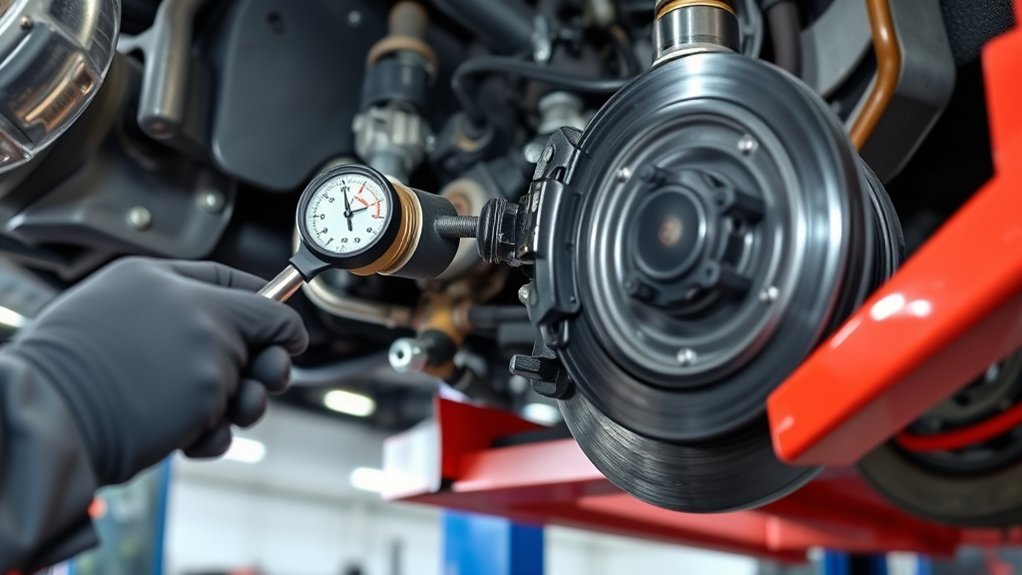
Worn steering and suspension parts may cause vibration directly or allow a smaller tire or brake problem to feel worse. A technician may inspect tie-rod ends, ball joints, control-arm bushings, shocks or struts, wheel bearings, steering-rack mounts, and related fasteners.
Do not crawl under a truck supported only by a jack, and do not tighten suspension or steering fasteners by feel. Many fasteners require a model-specific torque, tightening sequence, vehicle position, or replacement hardware. Use the Toyota manuals portal to locate information for your exact model year, and leave structural steering or suspension repairs to a qualified technician unless you have the correct service procedure and equipment.
Alignment should come after damaged or loose parts are repaired. An alignment rack measures wheel angles precisely. A tape measure may show a large toe difference, but it cannot verify camber, caster, thrust angle, steering-wheel centering, or whether the truck meets Toyota specifications.
[Amazon Products Picked for You]


Original Accessories and Qaulity Guarantee]It compatible with MJX Hyper Go H14BM 14210 and other poplular brand JC14EP HP474 HP141S RC Cars Trucks;
How to Fix Steering Wheel Vibration Yourself
You can safely complete several checks at home, but most vibration repairs need tire-service or mechanical equipment. Use this order to avoid paying for the wrong service.
[Amazon Products Picked for You]
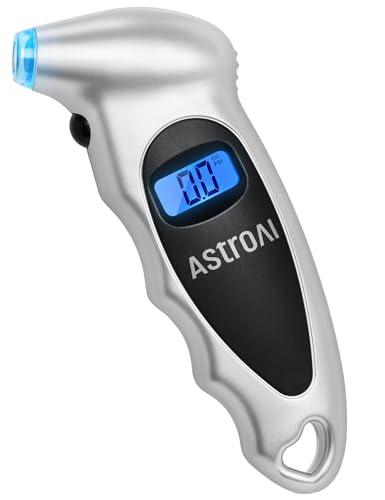
Accurate, Dependable Readings: Factory‑calibrated to ±1 PSI, so you can confidently match your vehicle’s recommended PSI (check the door jamb sticker). Ideal for monthly checks and road trips — consistent results every time, cold or warm.

EXPERT-GRADE CALIBRATION: Each AstroAI Tire Pressure Gauge is calibrated with professional-grade tools, ensuring quick and accurate measurement results within plus-minus 1PSI. Stay prepared for any roadside emergency and travel with peace of mind.

RUGGED DESIGN: The stainless steel components prevent rust and corrosion while the precision-crafted nozzle seamlessly seals onto the valve stems for highly accurate readings (±2% span). We also provide 4 valve stem caps for convenient replacement.
1. Record When the Vibration Occurs
Write down whether the shake appears at a certain speed, during braking, under acceleration, while turning, over bumps, or while idling. Note recent tire work, wheel removal, pothole impacts, off-road trips, suspension lifts, collisions, or brake repairs.
2. Inspect the Tires, Wheels, and Wheel Mounting
Park on a level surface, set the parking brake, and inspect all four tires. Look for cuts, bulges, exposed cords, abnormal tread wear, packed debris, a missing wheel weight, or a visibly bent rim. If a wheel was recently installed and you suspect loose lug nuts, do not continue driving. Have the wheel mounting checked and tightened to the exact specification for your Tacoma and wheel.
3. Check Cold Tire Pressure
Measure pressure before driving or after the truck has been parked long enough for the tires to cool. Use the pressure shown on the driver-door Tire and Loading Information label or in the owner’s manual. Do not use the maximum pressure molded on the tire sidewall as the vehicle setting. NHTSA also advises checking pressure regularly because the tire-pressure monitoring system may not warn you until a tire is already significantly underinflated.
4. Inspect Tire Balance
A home inspection cannot measure wheel balance. Ask a qualified tire shop to dynamically balance all four assemblies and inspect wheel centering, tire seating, wheel runout, and tire condition. If the vibration remains after a correct standard balance, request road-force testing rather than repeating the same procedure without additional measurements.
5. Check Wheel Alignment
Schedule a professional alignment check if the Tacoma pulls on a straight, level road, the steering wheel is off-center, or the tires show one-sided or feathered wear. Alignment may be part of the repair, but it should not replace tire, wheel, brake, or worn-part diagnosis when the main symptom is vibration.
6. Check the Brakes, Suspension, and Driveline
Vibration during braking needs brake measurements. Vibration during acceleration needs a driveline and mount inspection. Clunks, looseness, growling, or shaking over bumps justify a steering, suspension, and wheel-bearing inspection. Tell the technician exactly when the symptom occurs.
Note: Avoid replacing tires, rotors, shocks, or wheel bearings solely because they are common suspects. Ask for measurements or visible evidence that confirms the failed part.
Signs You Need a Mechanic for Steering Wheel Vibration
Basic pressure and visual checks are useful, but stop the DIY process when the truck needs lifting, wheel removal, brake measurements, alignment equipment, or steering and suspension disassembly.
Persistent Vibration Symptoms
Book a diagnosis when the vibration remains after a documented four-wheel balance, returns soon after service, worsens with time, or appears with unusual tire wear. Persistent vibration may involve tire uniformity, wheel runout, incorrect wheel fitment, brake variation, a worn component, or more than one fault.
If previous repairs did not solve the issue, bring the invoices and measurement sheets to another qualified shop. A second opinion is more useful when the technician can see what was already tested and replaced.
Difficulty Steering Control
Seek immediate help if the Tacoma wanders, pulls sharply, feels loose, makes grinding or clunking noises, or becomes difficult to steer. Shaking during braking also deserves prompt attention because the cause may affect braking stability. Severe symptoms are not a condition to monitor over several weeks.
Should You Upgrade Your Tacoma Tires to Reduce Vibration?
Do not buy upgraded tires as the first response to vibration. A balanced, undamaged tire in the correct size and load rating should run smoothly, whether it is original equipment or a compatible replacement. New tires may solve the problem only when the existing tires are damaged, unevenly worn, flat-spotted, improperly sized, poorly mounted, or outside acceptable uniformity limits.
Before changing tire size, confirm the approved size, load capacity, and cold inflation guidance for your exact Tacoma. NHTSA advises using the original tire size or another size recommended by the vehicle manufacturer. Oversized tires, heavy wheel-and-tire packages, spacers, and suspension lifts can add variables such as fitment, balance sensitivity, altered driveline angles, and alignment changes.
Choose tires for your actual use, including highway driving, towing, winter conditions, or off-road travel. Then have them mounted and balanced by a shop that can diagnose runout and road-force variation if a vibration appears.
Do All Tacoma Models Have Steering Wheel Vibration?
No. Steering wheel vibration is not an expected feature of every Tacoma model or trim. A truck may transmit more road texture than a passenger car, especially with all-terrain tires, but a repeating shake, brake pulsation, or worsening vibration still deserves diagnosis.
The cause depends more on the individual truck’s tires, wheels, brakes, maintenance history, modifications, impacts, and component condition than on a broad claim about one Tacoma generation. If you suspect a safety defect or model-specific campaign, check your VIN through the NHTSA recall lookup and ask a Toyota dealer to review applicable service information for your vehicle.
How to Prevent Future Vibration Problems

A simple maintenance routine can reduce tire wear and help you catch developing problems before the steering wheel begins to shake.
- Check cold tire pressure regularly with an accurate gauge and follow the driver-door placard.
- Inspect tread wear, sidewalls, and wheel condition after pothole strikes or demanding off-road trips.
- Rotate tires according to the schedule and pattern for your exact Tacoma, then investigate any new vibration.
- Balance new tires when installed and rebalance when symptoms, repairs, or lost wheel weights justify it.
- Request alignment measurements after steering or suspension repairs, significant impacts, or signs of pull and uneven wear.
- Clean packed mud, snow, or ice from the wheels before assuming a mechanical failure.
- Use compatible wheels, tires, spacers, and lift components, and have modified driveline angles checked when vibration appears under acceleration.
- Keep service records, including balance, road-force, runout, brake, and alignment measurements.
Related Guides
Frequently Asked Questions
What is the most common cause of steering wheel vibration?
For a vibration tied to road speed, tire and wheel problems are common starting points. These include imbalance, tire uniformity, damage, irregular wear, debris, or a bent wheel. The most likely cause changes when the shake happens only during braking, acceleration, turning, or idling.
What is the most common problem with a Toyota Tacoma?
No single problem applies to every Tacoma model year. Reliability concerns, recalls, and service information vary by generation, engine, drivetrain, use, and maintenance history. Check your VIN for recalls and diagnose the truck’s actual symptoms instead of relying on a broad “most common problem” claim.
Why does my steering wheel shake around 65 mph?
A shake near one highway-speed range often points toward wheel imbalance, tire uniformity, a bent wheel, or debris on the wheel. Inspect the tires and request a measured four-wheel balance. If standard balancing does not solve it, road-force and runout testing can narrow the cause.
What is the probable cause of vibration in the steering wheel?
The probable cause depends on timing. Speed-related vibration suggests tires or wheels. Braking vibration suggests the brake system or front-end looseness. Acceleration vibration suggests a driveline or mount issue. Vibration while stopped points away from the wheels and toward engine operation or mounts.
Why does my Tacoma steering wheel vibrate only when braking?
Braking-only vibration may come from brake rotor runout or thickness variation, uneven friction material, a sticking caliper, hub or wheel mounting issues, or loose front-end parts. A technician should measure the brake and hub components before recommending replacement.
Why did the vibration start after new tires were installed?
Possible causes include an incorrect balance, poor centering on the balancer or truck, improper bead seating, a tire uniformity problem, wheel damage, or incompatible fitment. Return promptly and ask the shop to document balance, road-force, runout, pressure, and wheel-mounting checks.
Is it safe to drive with steering wheel vibration?
A mild, stable vibration still needs timely inspection. Stop driving and arrange help when the shake is sudden or severe, control is difficult, a tire is damaged, the wheel feels loose, braking is unstable, or grinding and clunking occur. Do not test a serious vibration at higher speed.
Conclusion
Start with the vibration pattern, not a guessed part. Check the tires, wheels, and cold pressure, then use professional measurements for balance, road force, runout, alignment, brakes, steering, suspension, and driveline components. A smooth Tacoma should not have a repeating steering-wheel shake. Prompt diagnosis protects tire life, prevents unnecessary repairs, and helps keep the truck stable and predictable.
Sources
- NHTSA Tire Safety and Maintenance — tire pressure, inspection, balance, alignment, sizing, and vibration guidance
- Toyota Manuals and Warranties — model-year-specific owner information and maintenance guidance
- NHTSA Recall Lookup — VIN-based recall checks and manufacturer communications
- Hunter Road Force Wheel Balancing — diagnostic balancing, tire uniformity, rim runout, bead seating, and tire-pull testing
- SAE Technical Paper 972027: Brake Judder Analysis — technical background on brake-related vibration
