
Your Toyota Tacoma’s transfer case sends power to the front and rear axles when four-wheel drive is engaged. Its oil protects gears, bearings, shafts, and other internal parts, but the correct service interval depends on your model year and how you use the truck. Before buying fluid or loosening a plug, verify the exact requirements for your Tacoma.
Quick Answer
Do not apply one universal transfer case fluid interval to every Tacoma. For a 2023 4WD Tacoma, Toyota lists replacement at 30,000-mile or 36-month increments when most driving involves dirt or dusty roads, towing, a roof carrier, or heavy loading. Under normal use, inspect the unit and follow your exact model-year guide.
Key Takeaways
- A 2WD Tacoma does not have a transfer case, so this service applies only to trucks equipped with four-wheel drive or another transfer-case-based system.
- Toyota’s 2023 guide lists 30,000-mile replacement under specified special operating conditions, not as a blanket interval for every driver.
- Fluid type, capacity, plug tool, sealing washers, and torque specifications can vary by model year and transfer case.
- Loosen the fill plug before draining the old oil so you know the case can be refilled.
- Milky oil, large metal pieces, repeated leakage, or continuing 4WD problems require professional diagnosis.
At a Glance
| Time Required | About 45 to 90 minutes, excluding time needed to verify specifications or free a seized plug |
| Difficulty | Moderate; the vehicle must remain level, plugs must be removed without damage, and the correct refill level must be set |
| Tools Needed | Correct plug tool, torque wrench, drain pan, fluid pump, gloves, eye protection, rags, and approved ramps or jack stands if extra clearance is required |
| Cost | Varies by model year, fluid specification, quantity, sealing washers, and whether you already own the required tools |
Understanding the Importance of Transfer Case Fluid
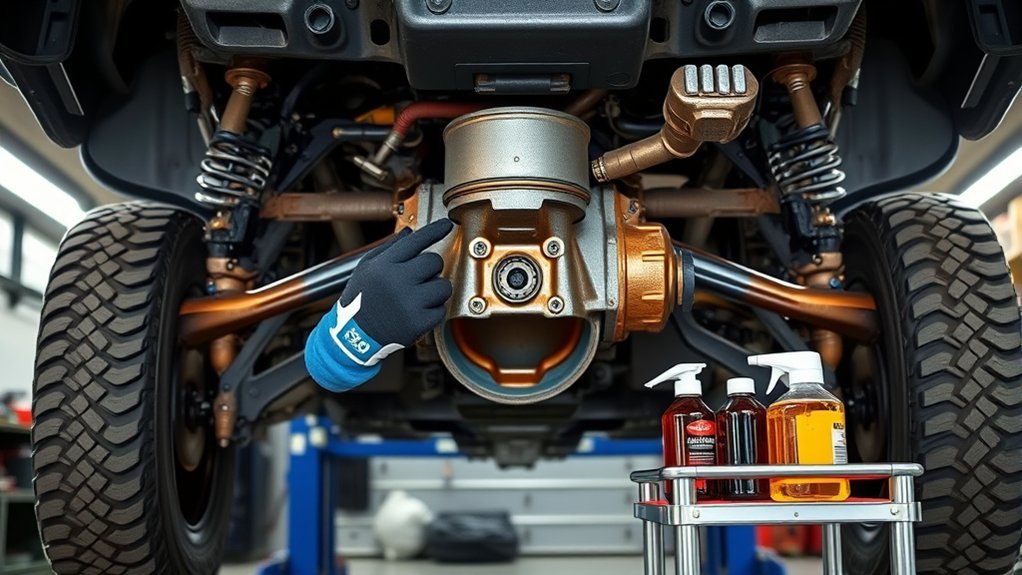
Transfer case oil creates a protective film between moving internal parts. It also helps carry heat away from gears, bearings, chains, shafts, and contact surfaces. When the oil level falls or the lubricant becomes contaminated, those parts may run hotter and wear faster.
A transfer case is separate from the transmission and the front and rear differentials. Each unit may use a different lubricant, capacity, fill procedure, and service specification. Fluid that is correct for a Tacoma differential or manual transmission is not automatically correct for its transfer case.
Note: A 2WD Tacoma does not use a transfer case. Confirm that your truck is equipped with one before purchasing parts or planning this service.
Fluid Change Intervals for Tacoma Models
The correct interval comes from the Warranty and Maintenance Guide for your model year. Avoid relying on a single mileage figure that is repeated across unrelated Tacoma generations.
For example, the official 2023 Toyota Tacoma Warranty and Maintenance Guide treats normal inspection and special-condition replacement differently:
| Truck use | Practical guidance |
|---|---|
| 2WD Tacoma | No transfer case is fitted, so no transfer case fluid service is required. |
| 2023 4WD Tacoma under normal use | Toyota lists inspections for leakage and fluid condition at scheduled maintenance points. The guide does not present a blanket 30,000-mile replacement requirement for normal use. |
| 2023 4WD Tacoma primarily used on dirt or dusty roads | Replace the transfer case oil at 30,000 miles or 36 months and at later 30,000-mile special-condition intervals while that use continues. |
| 2023 4WD Tacoma primarily used for towing, roof-carrier use, or heavy loading | Toyota also lists transfer case oil replacement at the 30,000-mile special-condition interval. |
| Other Tacoma model years | Use the exact guide for your year and drivetrain. Do not assume that the 2023 schedule or specifications apply. |
Toyota states that special-condition maintenance applies when the majority of your driving occurs under the listed conditions. Occasional dirt-road driving or occasional towing does not automatically place the truck on every severe-use service item.
You can select your year and vehicle through Toyota’s official manuals and warranties portal. A Toyota dealer can also match the correct maintenance guide and service data to your VIN.
Common Factors That Degrade Transfer Case Fluid
Transfer case oil does not normally contact combustion byproducts, but it still ages through heat, load, moisture, wear debris, and contamination. The rate depends heavily on how the truck is operated.
High Operating Temperatures
Heavy towing, long grades, deep sand, low-range trail work, and extended operation under high load can raise drivetrain temperature. Repeated heat cycles can reduce the oil’s protective properties and accelerate oxidation.
If the drivetrain develops an unusual odor, warning message, new vibration, or abnormal noise during demanding use, reduce the load and stop in a safe location. Let the system cool and inspect the truck instead of attempting to solve the problem by driving faster.
Contaminants and Debris
Several contaminants can shorten fluid life or reveal a developing problem:
- Fine metallic paste: A light coating on a magnetic drain plug can occur through normal wear.
- Large flakes or fragments: Chips, needles, or pieces may indicate internal damage.
- Water: Milky, cloudy, or foamy oil can indicate water entry through a vent, seal, or submerged component.
- Dirt: Dirt around a loose plug, damaged seal, or vent may enter the housing.
- Incorrect lubricant: The wrong viscosity or additive package may reduce lubrication or affect seal compatibility.
- Low fluid level: Leakage can expose internal parts to inadequate lubrication and excess heat.
Toyota’s 2023 guide calls for daily off-road inspection of transfer case oil after driving through deep sand, mud, or water. Check for leakage, contamination, and changes in fluid appearance after those conditions.
Signs Your Transfer Case Needs Inspection or Service
A mileage interval is only one reason to inspect the transfer case. Leaks, contamination, noise, or 4WD problems may require attention sooner.
Unusual Noises During Operation
Grinding, growling, whining, or repeated clunking can indicate low fluid, internal wear, bearing damage, driveline play, or another mechanical problem. A fluid change may help only when lubricant condition or level is the cause.
Do not continue driving if the noise is severe, rapidly worsening, or accompanied by binding, loss of drive, or visible leakage. Replacing the oil will not repair broken gears, bearings, shafts, chains, or mounts.
Difficulty Engaging 4WD
Old or low fluid can contribute to poor operation in some cases, but engagement trouble may also involve an actuator, switch, sensor, wiring circuit, control module, linkage, or internal component.
If a 4WD indicator flashes continuously, the system refuses to shift, or the problem remains after the fluid level is corrected, have the truck diagnosed. Avoid repeatedly forcing the system between modes.
Fluid Appearance, Odor, and Leaks
Inspect the case and nearby underbody for fresh oil, damp plug areas, wet seals, and oil thrown onto surrounding parts. Fluid that smells sharply burnt, looks unusually dark, appears milky, or contains visible fragments deserves closer inspection.
Warning: Milky fluid or substantial metal debris can indicate water intrusion or internal damage. Do not simply refill the case and assume the problem is resolved.
Checking Your Transfer Case Fluid Level
The vehicle must be level for an accurate check. If you raise the truck, lift the front and rear evenly and support it at approved points so the transfer case remains level.
- Confirm the truck has a transfer case. Verify that it is a 4WD model or another configuration equipped with a transfer case.
- Find the correct procedure. Check your model-year owner documentation or Toyota service information for fluid temperature, plug location, tool, and level requirements.
- Park securely. Use a level surface, apply the parking brake, place the transmission in Park or in gear as appropriate, and chock the wheels.
- Let the case cool. Slightly warm oil may flow more easily, but the housing and fluid must be cool enough to handle safely.
- Clean the fill-plug area. Remove mud and dirt before opening the case.
- Remove the fill plug. Use the correct, fully seated tool to avoid rounding the plug.
- Check the level using the specified method. Many manually filled transfer cases are checked near the lower edge of the fill opening, but the exact procedure for your model controls.
- Inspect the oil. Look for water contamination, excessive metal, burnt odor, or unexpected discoloration.
- Reinstall the plug correctly. Use the specified sealing washer and torque value for your model year.
Do not judge the level by comparing the amount inside the case with a published capacity. Capacity is a refill reference, while the fill-opening procedure establishes the installed level.
Step-by-Step Guide to Changing Transfer Case Fluid
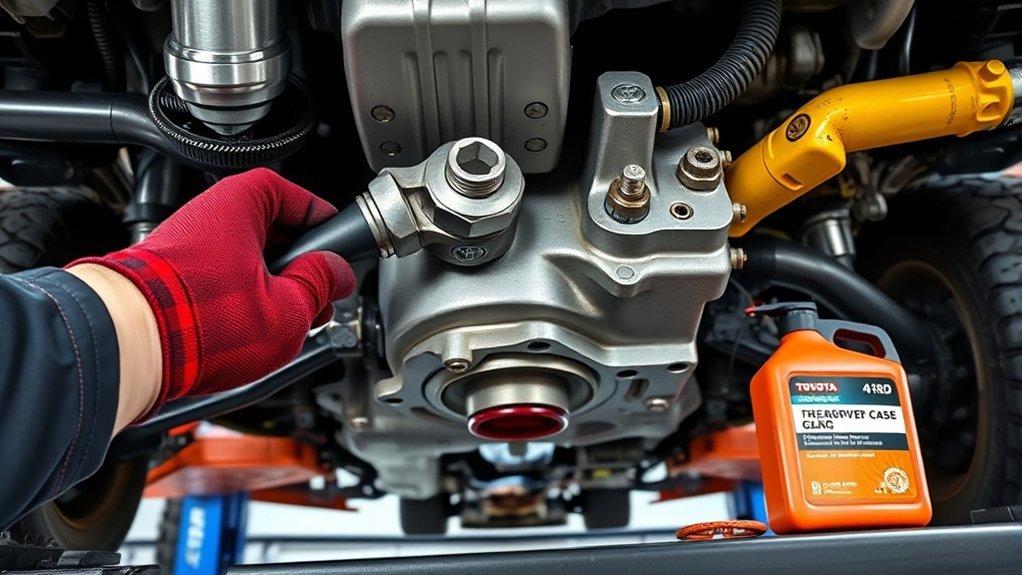
This process applies broadly to transfer cases with separate drain and fill plugs. Plug styles, skid-plate removal, fluid requirements, refill level, and torque specifications can differ, so confirm those details before starting.
Warning: Never work under a vehicle supported only by a hydraulic or emergency jack. Use rated ramps or jack stands at approved support points, chock the wheels, and keep the truck level.
Required Tools and Materials
- The exact Toyota-specified transfer case oil or a verified equivalent meeting the same specification
- Enough fluid for the model-specific refill quantity, with a small allowance for pump and container loss
- New drain-plug and fill-plug sealing washers when specified
- The correct socket, hex, or other plug tool for your transfer case
- A calibrated torque wrench covering the required torque range
- A hand pump or hose that fits the fluid container and fill opening
- A drain pan with enough capacity and a secure pouring edge
- Nitrile gloves, safety glasses, absorbent pads, and shop towels
- Wheel chocks and rated lifting equipment if additional clearance is needed
Drainage and Refill Process
- Verify every specification. Confirm the fluid, quantity, fill-level procedure, plug tool, washer type, and torque values for your exact year and drivetrain.
- Position the truck on a level surface. Apply the parking brake, chock the wheels, and allow hot drivetrain parts to cool.
- Remove any required shield carefully. Support a heavy skid plate before removing its final fastener.
- Clean both plug areas. Prevent dirt from falling into the transfer case.
- Loosen and remove the fill plug first. Confirm that the case can be refilled before opening the drain.
- Place the drain pan and remove the drain plug. Keep your hands away from the initial stream and allow the old fluid to drain fully.
- Inspect the drained oil and plug. Note fluid color, odor, water contamination, and the size and quantity of metal debris.
- Clean the plug and sealing surface. Replace the sealing washer when required. Do not apply sealant unless the model-specific procedure calls for it.
- Install and torque the drain plug. Start it by hand to avoid cross-threading, then use the exact specification for your transfer case.
- Pump in the specified fluid. Keep the vehicle level and follow the model-specific level or measured-fill procedure.
- Install the fill plug. Fit the correct washer, start the plug by hand, and torque it to the verified specification.
- Clean the housing. Remove spilled oil so any later seepage is easy to identify.
- Reinstall shields or skid plates. Tighten their fasteners according to the appropriate procedure.
- Operate the truck normally and recheck. After a short drive, inspect both plugs, the case, and nearby seals for fresh oil.
Pro Tip: Always loosen the fill plug before the drain plug. A seized or damaged fill plug discovered after draining can leave the transfer case empty and the truck unsafe to drive.
Safety Precautions to Follow
- Wear eye protection and gloves when working below the case.
- Keep your face and arms away from hot fluid and exhaust components.
- Use a stable, level work area with adequate lighting.
- Do not crawl under a vehicle resting only on a jack.
- Use the correct plug tool and keep it squarely seated.
- Stop if a plug begins to round, a thread feels damaged, or the housing shows a crack.
- Clean spills promptly and keep oil away from tires, brakes, driveways, soil, and drains.
Choose the Correct Fluid, Capacity, Plugs, and Torque
“75W” or another viscosity marking alone does not prove that a fluid is correct. Transfer case oils can differ in base oil, viscosity range, friction characteristics, additive chemistry, and material compatibility.
Use one of these verification methods before purchasing fluid:
- Check the lubrication or specifications section of the owner documentation for your exact model year.
- Select the truck through Toyota’s manuals and warranties portal.
- Ask a Toyota parts or service department to verify the specification by VIN.
- Use the official Toyota Technical Information System when repair-manual-level data is needed.
Record the fluid specification, quantity, drain-plug torque, fill-plug torque, washer part information, and any skid-plate fastener requirements before the service begins. Do not substitute figures copied from another generation simply because the housings look similar.
Top Mistakes to Avoid When Changing Transfer Case Fluid
- Assuming every Tacoma uses the same interval: Normal and special-use schedules differ, and model-year documents may change.
- Buying fluid by viscosity alone: The lubricant must meet the complete Toyota specification for the transfer case.
- Draining before opening the fill plug: A seized fill plug can leave the truck unable to be refilled.
- Using nominal capacity as the level check: Follow the specified fill-opening or measured-fill procedure.
- Guessing plug torque: Too little torque may leak, while too much can damage threads or the housing.
- Reusing a damaged washer: A flattened, cracked, or incorrect washer may seep after service.
- Cross-threading a plug: Begin each plug by hand before applying a wrench.
- Working with the truck tilted: An uneven vehicle can produce an incorrect fluid level.
- Ignoring the drained fluid: Milky oil, large fragments, or heavy metal accumulation may reveal a problem that new oil cannot fix.
- Skipping the leak check: Clean the case and inspect it again after driving.
Benefits of Using the Correct Toyota-Specified Fluid

Toyota Genuine fluid is one way to meet the specified requirement. A non-Toyota product may also be suitable when its manufacturer clearly confirms that it meets the exact Toyota specification for your transfer case.
Using the correct fluid supports:
- Proper lubrication at expected operating temperatures
- Compatibility with seals and internal materials
- Correct protection against wear and oxidation
- Predictable operation under towing and off-road loads
- Accurate maintenance documentation
Toyota’s warranty guide explains that damage caused by improper maintenance or fluids other than those specified in the owner documentation may not be covered. The safest approach is to keep the fluid receipt, product specification, date, mileage, washer information, and service notes.
How to Keep a Consistent Maintenance Schedule
Build the transfer case into your normal maintenance record instead of relying on memory. A useful log includes:
- Date and mileage of each inspection or fluid change
- Model-year maintenance interval used
- Driving conditions, including towing, dusty-road use, mud, sand, or water crossings
- Fluid brand, product name, and specification
- Quantity used
- Drain and fill washer information
- Verified plug torque values
- Condition of the old fluid and magnetic plug
- Any leaks, noises, warning lights, or 4WD concerns
Perform a quick visual leak check during routine underbody inspections. After demanding off-road use, inspect the case, vent area, plugs, and nearby seals sooner, especially after deep mud or water.
When to Get Professional Help
Have a Toyota dealer or qualified drivetrain technician inspect the truck when:
- The fill or drain plug is seized, rounded, cross-threaded, or leaking through damaged threads.
- The housing is cracked or a sealing surface is damaged.
- The fluid is milky, foamy, or clearly mixed with water.
- The drain pan contains large flakes, chips, rollers, needles, or other fragments.
- Grinding, binding, clunking, or vibration continues after the correct level is restored.
- The 4WD indicator keeps flashing or the truck will not enter or leave a drive mode.
- A leak returns after replacing the plug washer and torquing the plug correctly.
- You cannot keep the truck level and safely supported during service.
A fluid change is preventive maintenance. It is not a substitute for diagnosis when the transfer case or 4WD control system has already developed a fault.
Related Guides
Frequently Asked Questions
How often should you change Toyota Tacoma transfer case fluid?
Use the Warranty and Maintenance Guide for your model year. For a verified 2023 4WD Tacoma, Toyota lists replacement at 30,000 miles or 36 months when most driving involves dirt or dusty roads, towing, a roof carrier, or heavy loading. Normal-use guidance emphasizes scheduled inspection rather than one universal replacement interval.
Does a 2WD Tacoma need transfer case fluid service?
No. A conventional 2WD Tacoma does not have a transfer case. It may still require transmission and rear differential maintenance, but those are separate services using their own specifications.
What fluid should I use in a Tacoma transfer case?
Use Toyota Genuine fluid or a verified equivalent that meets the exact specification listed for your model year and transfer case. Do not choose fluid from viscosity alone or copy a product recommendation from a different Tacoma generation.
Can old transfer case fluid cause 4WD engagement problems?
Low, incorrect, or badly degraded fluid may contribute to poor operation, but engagement problems can also come from actuators, switches, sensors, wiring, control modules, linkage, or internal damage. Continuing trouble should be diagnosed rather than treated with repeated fluid changes.
Can I change Tacoma transfer case fluid without lifting the truck?
Some Tacoma configurations provide enough clearance without lifting, while skid plates or accessories may restrict access. The truck must remain level. When lifting is necessary, raise and support it evenly with rated equipment at approved points.
What should I do if the old fluid is milky or contains metal pieces?
Milky fluid suggests water contamination, while large metal pieces may indicate internal damage. Save a sample if practical, avoid heavy driving, and have the transfer case inspected. Fresh oil alone will not correct a failed seal, vent, bearing, gear, shaft, or chain.
Conclusion
A safe Tacoma transfer case service starts with the correct model-year information, not a universal mileage, fluid, capacity, or torque value. Check the official maintenance guide, account for towing and off-road use, loosen the fill plug first, refill on level ground, inspect the drained oil, and recheck for leaks. Seek professional help when contamination, metal fragments, damaged plugs, recurring leakage, or continuing 4WD faults appear.
Sources
- Toyota 2023 Tacoma Warranty and Maintenance Guide — maintenance intervals, special operating conditions, off-road inspections, and warranty-related fluid guidance
- Toyota Manuals and Warranties — model-year owner manuals and maintenance-guide lookup
- Toyota Technical Information System — official repair and service information for model-specific procedures and specifications
- U.S. Environmental Protection Agency Used Oil Guidance — used-oil contamination, storage, spill control, and recycling practices
