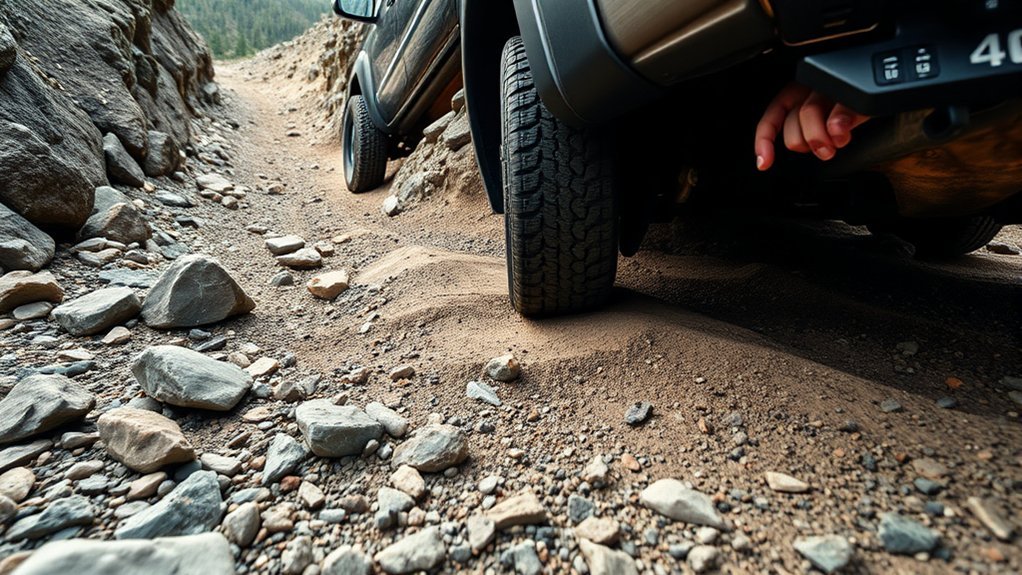
Use 4LO in a Toyota Tacoma equipped with low-range four-wheel drive when you need maximum low-speed control and torque on steep, loose, or technical terrain. Toyota’s 2024 Tacoma guidance lists 4L for climbing or descending steep hills, off-road driving, and hard pulling in sand, mud, or deep snow. It is not the right mode for normal dry pavement, highway driving, or routine city use on a part-time 4WD Tacoma.
Last updated: September 11, 2026 — reviewed against Toyota Tacoma owner-manual guidance, current National Park Service low-range guidance, and Tread Lightly! 4×4 recommendations.
Quick Answer
Use 4LO in a Toyota Tacoma when normal high-range gearing feels too fast for the terrain and you need low-speed torque, finer throttle control, or stronger engine braking. Typical uses include rock crawling, steep loose climbs or descents, deep mud, deep snow, difficult sand, and very slow pulling or trailer positioning on loose ground. Avoid 4LO on dry, high-traction pavement with a part-time 4WD system, and follow the owner’s manual for your exact model year.
Key Takeaways
- Use 4LO for slow, difficult terrain, especially when steep grades, rocks, deep mud, sand, or snow require low-range gearing.
- 4LO changes gearing, not tire grip: it multiplies torque at low speed and improves control, but traction still depends on the tires and surface.
- 4H and 4LO are not interchangeable: use 4H when you need four-wheel traction without low-range crawling speed.
- Shift by the procedure for your model year and never force the selector while an indicator is flashing or the drivetrain is loaded.
At a Glance
| Use 2H | Normal dry, hard-surfaced roads on a part-time 4WD Tacoma |
| Use 4H | Loose or slippery surfaces where you need four-wheel traction but still need normal trail or road speed |
| Use 4LO | Slow technical terrain, steep loose grades, rocks, deep mud, deep snow, difficult sand, or controlled low-speed pulling |
| Avoid 4LO | Normal dry pavement, highway driving, or situations where low-range gearing is unnecessary |
Understanding 4LO: What It Is and Why Use It
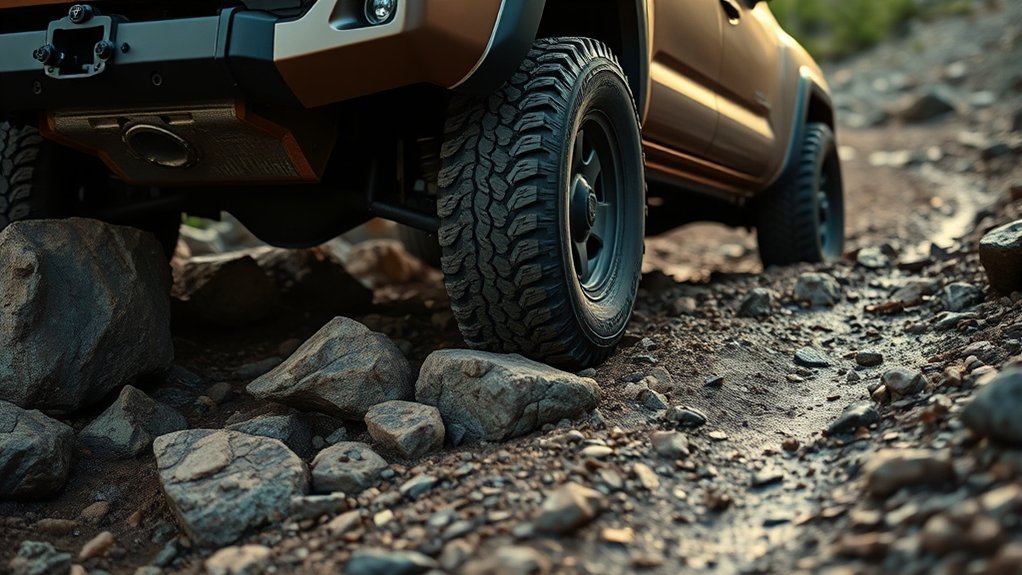
4LO, also called four-wheel drive low, 4WD Low, or 4L, uses low-range transfer-case gearing. On Toyota’s 2024 part-time 4WD Tacoma, the selectable ranges are 2H, 4H, and 4L. Toyota specifies 4L for maximum power and traction during steep climbs or descents, off-road driving, and hard pulling in sand, mud, or deep snow.
Low range reduces vehicle speed for a given engine speed and multiplies torque through the drivetrain. That lets you use smaller, smoother throttle inputs when crawling over rocks or climbing a loose grade. It also increases the drivetrain’s engine-braking effect on a descent. It does not create additional tire grip; tires, surface conditions, loading, and driver input still determine how much traction is available.
Warning: Do not use part-time 4LO on dry pavement, normal highways, parking lots, or other high-traction surfaces unless the owner’s manual for your exact drivetrain specifically permits it. A locked part-time four-wheel-drive system needs some tire slip to release driveline tension during turns.
When to Use 4LO in a Toyota Tacoma
Use 4LO when you need the truck to move slowly and the terrain requires more low-speed torque, finer throttle control, or stronger engine braking than high range provides. The goal is controlled progress rather than speed.
- Steep loose climbs: Use 4LO on steep dirt, gravel, rocky, or sandy grades where low-range gearing helps you climb without relying on excessive wheel speed.
- Rocky trails: Use 4LO when crawling over rocks, ledges, deep ruts, or uneven sections where precise tire placement matters.
- Deep mud: Use 4LO for slow, difficult mud where controlled pulling power is more useful than momentum. Shallower or faster muddy sections may be better suited to 4H.
- Soft or difficult sand: 4H often works better when you need steady momentum, while 4LO is useful for slow, steep, heavily loaded, or bogged-down sections where low-range control is more important.
- Deep snow or unplowed tracks: Use 4LO when the snow is deep enough that the Tacoma needs slow, controlled pulling power. For many snow-covered roads where normal driving speed is still appropriate, 4H is the better choice.
- Steep downhill descents: Low-range gearing can help keep the truck from accelerating too quickly down a rough or loose slope. You still need to brake smoothly when required.
- Slow pulling or trailer positioning on loose ground: 4LO may help with very slow movement on a steep dirt ramp, campsite, or similar low-traction surface if your owner’s manual permits it. It does not increase the Tacoma’s rated towing capacity and is not for normal road towing.
Practical decision rule: Think about 4LO when ordinary high-range gearing makes the Tacoma feel too fast for the obstacle, you need more controlled pulling force at low speed, or you want stronger engine braking on a steep descent. If you mainly need extra traction while maintaining normal road or trail speed, 4H is usually the more appropriate starting point.
A real-world example is Canyonlands National Park. The National Park Service requires a high-clearance four-wheel-drive vehicle with low range on the White Rim Road because the route includes rough slickrock, loose rocks, deep sand, and steep switchbacks.
How to Shift Into 4LO Safely
The exact procedure depends on the Tacoma’s model year, transmission, and four-wheel-drive system. For a 2024 part-time 4WD Tacoma, Toyota instructs drivers to shift from 4H to 4L with the vehicle stopped and the brake held. Automatic-transmission models are shifted to Neutral; manual-transmission models use the clutch. Your model-year owner’s manual overrides any general sequence.
- Start from the correct high-range 4WD mode. On the 2024 part-time system, the low-range shift is made from 4H to 4L.
- Stop in a safe, stable place. Do this before the difficult obstacle rather than while the truck is climbing, sliding, or stuck against a rock.
- Keep the brake applied. Hold the vehicle stationary while the transfer case changes range.
- Follow the transmission-specific step. On a 2024 automatic, shift to Neutral. On a 2024 manual, depress and hold the clutch pedal. Other model years can differ.
- Select 4LO or 4L. Use the Tacoma’s 4WD control and follow any instructions shown in the instrument display.
- Wait for confirmation before moving. Do not assume low range is engaged while the 4LO indicator is still flashing or the display says the shift is incomplete.
For a more detailed shifting procedure and indicator troubleshooting, see how to shift into 4LO on a Toyota Tacoma.
Pro Tip: Select low range before you reach the hardest part of the obstacle. Trying to change ranges while the truck is already spinning, sliding, or heavily loaded against an obstacle can make engagement more difficult.
[Amazon Products Picked for You]

Plug and play, yank out the defective switch and slide the new a/c switch replacement into position, done
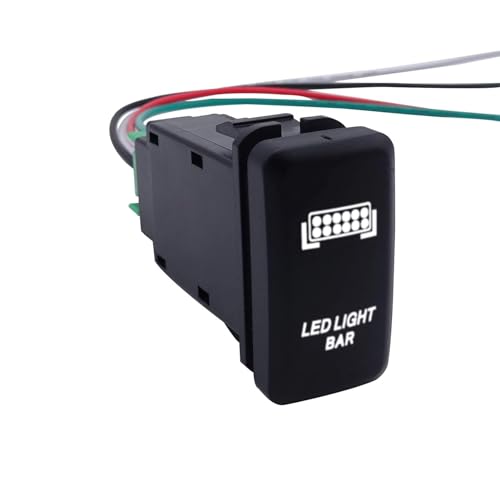
Application: Fit Toyota Vehicles
4H vs 4LO vs 2H: Which Mode Should You Use?
This table shows the general pattern for a part-time 4WD Tacoma. Some newer configurations use different four-wheel-drive systems, so check the controls and manual for your exact truck.
| Mode | Best Use | Avoid When |
| 2H | Normal dry roads, daily driving, and other high-traction paved conditions on a part-time 4WD Tacoma | Rear-wheel traction is insufficient on a loose or slippery surface |
| 4H | Snow-covered roads, ice, loose gravel, dirt, mild trails, or other surfaces that permit tire slip when low range is unnecessary | Dry high-traction pavement on a part-time 4WD system, or technical terrain that requires low-range crawling control |
| 4LO | Slow technical terrain, steep loose climbs or descents, rock crawling, deep mud, deep snow, difficult sand, or controlled low-speed pulling | Normal roads, highway driving, dry high-traction pavement, or any situation where low-range gearing is unnecessary |
For a broader explanation of the drivetrain modes, see Toyota Tacoma 2HI, 4HI, and 4LO basics.
[Amazon Products Picked for You]

Jack Base Function: Designed with unique jack base in the center of the traction board is for emergency work, compatible with offroad jack.And a bunker recovery boards could be placed under it to provide a solid surface for lifting

Dimensions: The size of one traction board L 41.7 inches (106 cm), W 11.8 inches (30 cm), H 2.8 inches (7 cm); The thickness of the two pieces is 4.3 inches (11cm)

Each traction mat is 41.7 inches long, 12.2 inches wide, and weighs 11.2 lbs together.Mounts easily to most available roof racks with optional mounting pins.A sturdy carry bag serves as an added benefit, bring more convenient for daily use.Lifetime service available.
What 4LO Changes: Gearing, Torque, and Engine Braking
4LO changes the transfer-case gearing so the Tacoma can move more slowly for a given engine speed. The reduction ratio multiplies torque through the drivetrain, which makes small throttle inputs easier to control on steep or technical terrain.
Low range also increases the drivetrain’s braking effect during a descent. That can help keep speed down without relying entirely on the service brakes. It still does not replace careful braking, safe line selection, or adequate tire traction.
Current Tacoma models can also offer off-road systems such as Multi-Terrain Select, CRAWL Control, Downhill Assist Control, and an electronically locking rear differential, depending on configuration. These systems do different jobs. Low Range changes gearing; CRAWL Control manages low-speed propulsion and braking; a rear locker changes how the rear wheels share torque. For the distinction between the first two, see Crawl Control vs Low Range on a Tacoma.
Safety Tips for Driving With 4LO
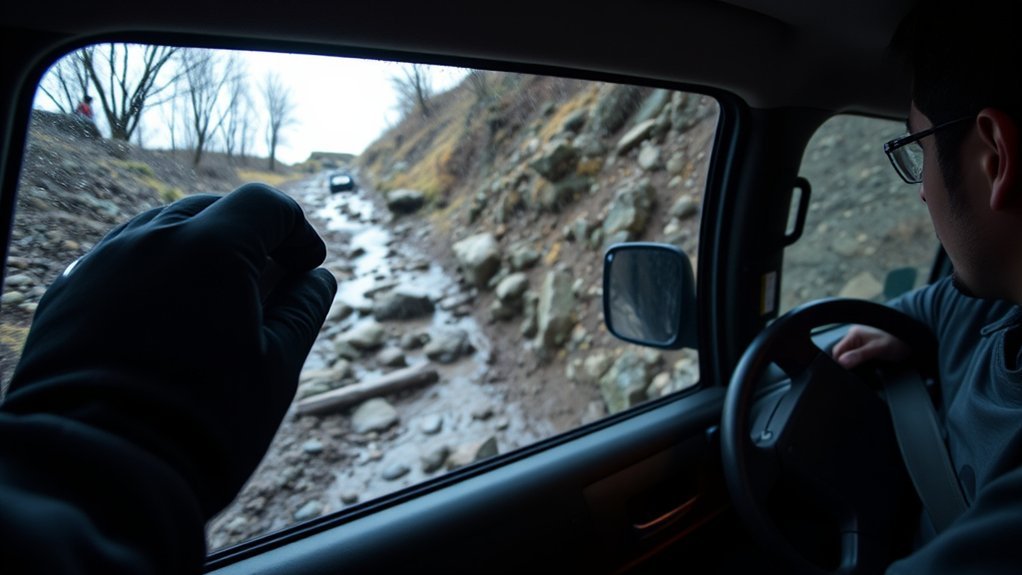
4LO gives you more low-speed control, but the truck still depends on tire grip, ground clearance, driver judgment, and a safe route.
- Keep your speed low. Low range is intended for situations where control matters more than speed. Follow the limits in your model-year manual.
- Keep part-time 4LO off dry pavement. High-traction surfaces can prevent the tires from releasing driveline tension in turns.
- Steer smoothly. Sudden steering can upset tire placement and increase driveline load.
- Use controlled throttle. Excessive wheelspin can dig the truck deeper into soft ground and damage trails.
- Scout difficult obstacles first. Stop safely and inspect rocks, ledges, drop-offs, and clearance before committing when the route is unclear.
- Watch the dashboard. A flashing 4LO light, warning message, buzzer, or abnormal noise means you should follow the manual rather than assuming the range change is complete.
- Protect the trail. Stay on designated routes, drive over rather than around obstacles where appropriate, and avoid unnecessary wheelspin or muddy routes.
Note: Low-range engine braking can help control a descent, but it does not eliminate the need for the brakes. Keep your speed conservative and brake smoothly when necessary.
When Not to Use 4LO
Do not select 4LO simply because the road or trail is slippery. Use low range only when the situation actually benefits from slower gearing and increased low-speed control.
- Do not use part-time 4LO on dry pavement or other high-traction surfaces unless the exact owner’s manual permits it.
- Do not use 4LO for highway driving or normal commuting.
- Do not use 4LO simply because the pavement is wet. Routine rain does not normally require low-range gearing.
- Do not force a range change if the system does not engage. Restore the conditions required by the owner’s manual and follow any display message.
- Do not rely on 4LO to compensate for poor tires. Low-range gearing cannot create grip where the tires cannot hold the surface.
Debunking Myths About 4LO Usage
Myth 1: 4LO is only for extreme rock crawling. False. Toyota also identifies low range for steep climbs or descents and hard pulling in sand, mud, or deep snow.
Myth 2: 4LO gives you unlimited traction. False. Low range changes gearing and torque delivery. Tire condition, surface, loading, suspension, and driver input still determine whether the truck can maintain traction.
Myth 3: You should use 4LO regularly just to keep the system healthy. Not specifically. Toyota’s 2024 Tacoma manual recommends driving in four-wheel drive for at least 10 miles (16 km) each month to help lubricate front-drive components, but that does not mean driving in 4LO on unsuitable surfaces. Use the appropriate four-wheel-drive mode on a surface that permits it, and follow your own model-year manual.
Myth 4: 4H and 4LO do the same job. False. 4H provides four-wheel traction in high range. 4LO adds reduction gearing for slow, controlled movement.
Myth 5: 4LO increases the Tacoma’s towing capacity. False. Low range may help with controlled movement on a steep or loose surface, but it does not raise the truck’s published tow rating.
Troubleshooting: If 4LO Will Not Engage
If your Tacoma will not complete the shift into 4LO, do not keep twisting the selector or applying heavy throttle. Indicator behavior and corrective procedures vary by model year.
- Stop in a safe place and keep the truck controlled.
- Restore the required shift conditions. For example, a 2024 automatic part-time 4WD Tacoma requires a complete stop, brake applied, and Neutral when changing between 4H and 4L.
- Watch the indicators and display. A flashing light normally means the requested range change has not fully completed.
- Follow the exact manual procedure for a flashing indicator. Some Toyota manuals instruct the driver to move the vehicle slowly in a particular gear or direction under certain indicator conditions; do not assume the same corrective step applies to every Tacoma.
- Check for drivetrain or 4WD warnings. A rapidly flashing warning, persistent message, abnormal noise, or repeated failure can indicate a fault.
- Arrange service when necessary. Stop repeated attempts if the system will not engage correctly after you have followed the model-specific procedure.
If you are evaluating a used Tacoma, use the VIN to check for open recalls, review its maintenance history, and test the four-wheel-drive system according to the owner’s manual before depending on it for remote travel.
[Amazon Products Picked for You]

【Package Includes】4WD Transfer Case Shift Actuator Motor

VEHICLE FITMENT: Compatible with select 2012-2020 Toyota 4Runner, 2005-2017 Toyota Tacoma and 2000-2006 Toyota Tundra 4WD models. Use as a Tacoma transfer case actuator or Tundra transfer case actuator only when the OE number, connector layout, housing shape and transfer case configuration match the original part.

【Vehicle Fitment】Compatible with Toyota 4Runner 2004-2009 V6 4.0L(4000CC 1GRFE 24-VALVE), 2014-2019 V6 4.0L(4WD or RWD), Tacoma 2002 L4 2.4L/L4 2.7L/V6 3.4L(4700CC 2UZFE 32-VALVE DOHC), 2005-2010 L4 2.7L(2700CC 16-VALVE 2TRFE / 4000CC 24-VALVE 1GRFE), 2011-2015 L4 2.7L/V6 4.0L(4WD, M/T RWD, RWD), 2016 V6 3.5L (4WD, RWD, M/T 4WD), Tundra 2000-2001 2003-2006 V8 4.7L (4700CC 2UZFE 32-VALVE DOHC)
Frequently Asked Questions
When should I use 4LO in my Toyota Tacoma?
Use 4LO when you need low-range gearing for slow, difficult terrain. Typical situations include steep loose climbs or descents, rock crawling, deep mud, deep snow, difficult sand, and controlled low-speed pulling on loose ground.
When should I not use 4WD Low?
Do not use part-time 4WD Low for normal dry-pavement driving, highway travel, or situations where low-range gearing is unnecessary. Your exact owner’s manual is the final authority because Tacoma four-wheel-drive systems vary.
Should I use 4H or 4LO on snowy roads?
Use 4H for many snow-covered roads where you still need normal driving speed. Use 4LO when the snow is deep or unplowed and the Tacoma needs slow, controlled low-range pulling power.
Can I tow in 4LO with a Tacoma?
4LO may be useful for very slow pulling or trailer positioning on a steep or loose low-traction surface if your owner’s manual permits it. It is not intended for normal road towing and does not increase the Tacoma’s rated towing capacity.
How fast can you drive a Toyota Tacoma in 4LO?
There is no single speed limit that should be applied to every Tacoma model year. 4LO is intended for low-speed operation where control matters more than speed. Follow the maximum-speed and gear instructions in the owner’s manual for your exact truck.
Do I have to stop before shifting a Tacoma into 4LO?
For the 2024 Tacoma part-time 4WD system, Toyota instructs drivers to stop completely and hold the brake when shifting between 4H and 4L. Automatic models use Neutral, while manual models use the clutch. Procedures on other model years can differ, so follow your truck’s manual.
Are some Tacoma years more likely to have 4LO problems?
Do not judge a used Tacoma by model year alone. Check its VIN for open recalls, review maintenance records, test the four-wheel-drive system using the correct procedure, and have drivetrain faults inspected before relying on the truck for remote travel.
Conclusion
Use 4LO when your Toyota Tacoma needs low-range gearing rather than simply more traction. Rocks, steep loose climbs and descents, deep mud, deep snow, difficult sand, and carefully controlled pulling are the situations where low range earns its place.
For routine dry driving, stay out of part-time 4LO. For slippery surfaces where you still need normal speed, 4H is usually the more appropriate mode. Before changing ranges, follow the procedure in the owner’s manual for your exact year, transmission, and four-wheel-drive system, and never treat a flashing indicator as confirmation that the shift is complete.
Sources
- Toyota Owners Manuals and Warranties — model-specific manual lookup and operating instructions
- Toyota 2024 Tacoma Manuals and Warranties — 2H, 4H, 4L operating guidance and model-specific documentation
- Toyota USA Newsroom: 2024 Toyota Tacoma — Multi-Terrain Select, CRAWL Control, Downhill Assist Control, and locking rear differential context
- National Park Service: White Rim Road — real-world low-range four-wheel-drive requirement and backcountry safety context
- Tread Lightly!: 4×4 Tips — responsible four-wheeling, trail protection, and wheelspin guidance
- NHTSA Recall Lookup — VIN-based open-recall checks