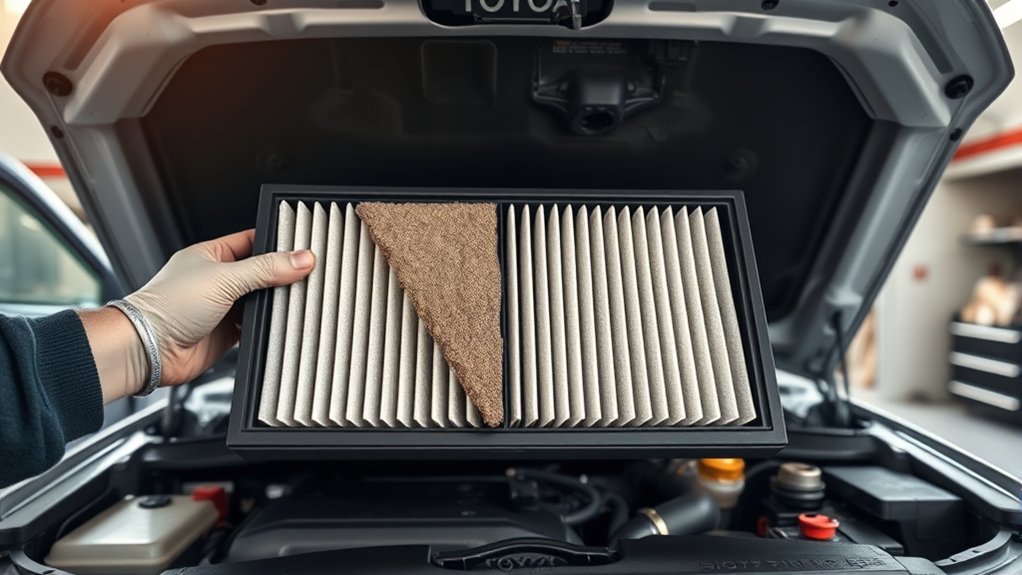
For a 2026 U.S. Toyota Tacoma, Toyota schedules the engine air filter for replacement at 30,000 miles under the normal maintenance schedule. If you mainly drive on dirt or dusty roads, Toyota calls for inspection every 5,000 miles and still lists replacement at 30,000 miles. Older Tacoma model years can use different maintenance documentation, so confirm the schedule for your exact truck.
Last updated: September 11, 2026 — 2026 Toyota Tacoma and Tacoma i-FORCE MAX maintenance schedules rechecked.
Quick Answer
For a 2026 U.S. Tacoma, replace the engine air filter at 30,000 miles under Toyota’s normal schedule. If the truck is mainly driven on dirt or dusty roads, inspect the filter every 5,000 miles and replace it at 30,000 miles. Toyota also tells owners to check the filter during off-road daily maintenance after operation through deep sand, mud, or water. For earlier Tacoma model years, use the maintenance guide assigned to that truck rather than assuming the same interval.
Key Takeaways
- Toyota’s 2026 U.S. Tacoma and Tacoma i-FORCE MAX maintenance charts list engine-air-filter replacement at 30,000 miles.
- For primarily dirt- or dusty-road driving, Toyota lists filter inspection every 5,000 miles and replacement at 30,000 miles.
- Replace a filter sooner if it is torn, wet, deformed, incorrectly seated, heavily contaminated, or no longer sealing correctly.
- A heavily restricted filter can reduce maximum airflow and acceleration, but replacing it does not guarantee better fuel economy on a modern fuel-injected vehicle.
- Older Tacoma schedules can differ, so verify the maintenance guide for your exact model year.
At a Glance
| 2026 Normal Interval | Replace at 30,000 miles |
| Dusty-Road Use | Inspect every 5,000 miles; replace at 30,000 miles in the 2026 schedule |
| Time Required | About 5 to 15 minutes for many Tacoma models |
| Difficulty | Beginner, with model-year differences in housing access |
| Tools Needed | Gloves, flashlight, clean lint-free cloth or vacuum, and any tool required by your housing fasteners |
| Typical Shop Cost | RepairPal’s July 2026 Tacoma estimate is $65–$86; local prices vary |
Why the Engine Air Filter Matters in a Toyota Tacoma
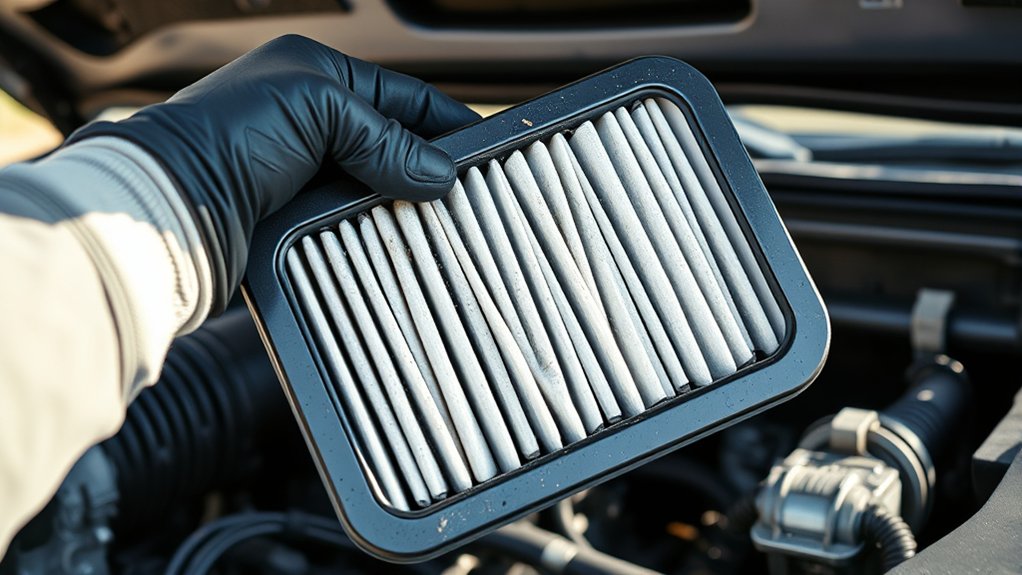
The engine air filter sits in the air-cleaner housing before the engine’s intake. Its job is to trap airborne debris while allowing enough air to pass through for normal engine operation.
A filter that fits correctly also helps prevent unfiltered air from bypassing the sealing edge. That seal is as important as the filter material. A torn element, warped frame, open housing clip, or incorrect filter can allow dirt to enter the clean side of the intake.
Airflow restriction and filtration failure are different problems. A heavily restricted filter can limit maximum airflow and reduce acceleration under load. A damaged or poorly seated filter can allow contamination past the filter, which creates a more direct risk to intake and engine components.
On modern fuel-injected vehicles, a heavily restricted air filter is more likely to limit maximum power than to produce a large, guaranteed improvement in fuel economy after replacement.
What Is the 2026 Toyota Tacoma Engine Air Filter Schedule?
Toyota’s 2026 Tacoma Warranty & Maintenance Guide and 2026 Tacoma i-FORCE MAX Warranty & Maintenance Guide both list the engine air filter for replacement at 30,000 miles under the regular maintenance chart.
| Driving Condition | 2026 Toyota Schedule | What You Should Do |
|---|---|---|
| Normal service | Replace at 30,000 miles | Replace at the scheduled mileage unless condition requires earlier service |
| Primarily dirt or dusty roads | Inspect at 5,000-mile intervals; replace at 30,000 miles | Inspect the media, frame, seal, and housing more often and replace early if damaged or excessively contaminated |
| Off-road through deep sand, mud, or water | Toyota includes the engine air filter in off-road daily maintenance | Check it after this severe off-road use and make sure water, mud, or debris has not reached the intake |
The 30,000-mile figure is therefore a verified 2026 Tacoma factory interval, not a universal rule for every Tacoma ever built. If you own an earlier model, use Toyota’s manuals and maintenance-guide system to select the correct model year. You can also review the site’s broader Toyota Tacoma maintenance schedule guide.
Signs Your Engine Air Filter May Need Replacement
You do not need to replace a filter merely because its exposed surface looks dusty. Use its physical condition, service history, operating environment, and fit to make the decision.
- Torn or punctured material: Any hole can allow debris to pass through the filter.
- Damaged sealing edge: Replace a filter with a cracked, flattened, twisted, or deformed seal.
- Moisture or oil contamination: A wet or oil-soaked disposable filter may restrict airflow and should also prompt a check for the source of contamination.
- Heavy embedded debris: Thick dirt, seeds, leaves, insects, or sand throughout the pleats can justify replacement.
- Reduced acceleration at higher load: Severe intake restriction can limit the engine’s maximum airflow, although other faults can cause the same symptom.
- Replacement is due in the maintenance guide: Follow the schedule for the exact Tacoma model year rather than a generic interval.
Note: A check-engine light, misfire, rough idle, whistle, or hiss does not prove that the filter is clogged. These symptoms can come from an intake leak, loose housing, disconnected sensor, ignition fault, or another problem that requires diagnosis.
What a Clogged Engine Air Filter Actually Does
A restriction creates a pressure drop as air moves through the filter. Light surface dirt may have little noticeable effect, while severe loading can reduce the amount of air available when the engine demands maximum power.
A U.S. Department of Energy and Oak Ridge National Laboratory study tested three newer closed-loop, fuel-injected vehicles—a 2003 Toyota Camry, 2006 Dodge Charger, and 2007 Buick Lucerne—and found no significant fuel-economy change from the simulated clogged filters under the tested driving cycles. The study did find better acceleration performance with clean filters. That makes airflow and full-load performance a stronger reason for timely replacement than promising a guaranteed MPG increase.
| Condition | Likely Effect | Recommended Action |
|---|---|---|
| Light surface dust | Often little noticeable change | Continue monitoring and follow the maintenance guide |
| Heavy restriction | Reduced maximum airflow, power, or acceleration | Replace the filter and inspect the housing and intake path |
| Torn or unseated filter | Possible debris bypass on the clean side | Replace it, clean the housing carefully, and verify the seal |
| Warning light or misfire | Not specific to the air filter | Read stored diagnostic codes and inspect the complete intake system |
| Whistle or hiss | Possible loose lid, duct, seal, or intake leak | Check installation before assuming the filter is clogged |
How to Inspect Your Toyota Tacoma Engine Air Filter
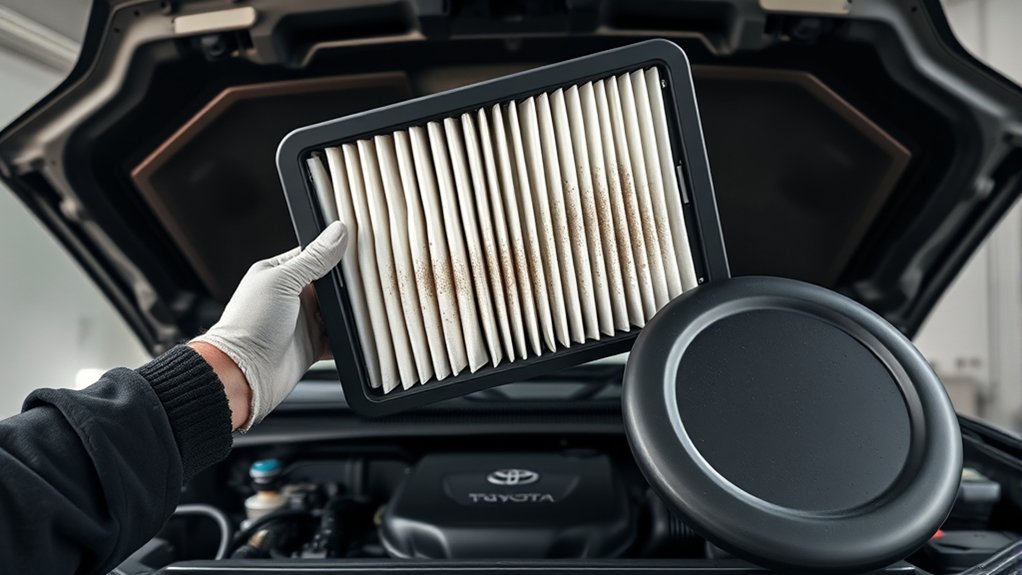
Park on a level surface, switch off the engine, remove the key or turn off the ignition, and allow hot under-hood components to cool. Use your owner’s manual to identify the air-cleaner housing if its location is not obvious.
- Inspect the outside of the housing. Look for loose clips, missing fasteners, cracked plastic, disconnected ducts, or gaps around the lid.
- Release the housing carefully. Open the clips or remove only the fasteners required for access. Do not pull on wiring, hoses, or sensor connectors.
- Note the filter’s orientation. Take a quick photo before removal so you can reproduce the position and sealing direction.
- Lift out the filter. Keep loose dirt from falling into the clean side of the housing or intake opening.
- Examine the pleats and frame. Check for tears, moisture, oil, crushed pleats, heavy debris, deformation, or damaged sealing material.
- Inspect the housing. Look for debris below the filter, an uneven sealing surface, broken tabs, or signs that dirt has bypassed the element.
- Reinstall or replace the filter. Seat it evenly with no folded edges or trapped debris.
- Close every fastener. The lid should sit flush without being forced.
Pro Tip: Compare the old and new filters before installation. The overall dimensions, frame shape, seal thickness, and airflow orientation must match. A filter that is only slightly wrong can prevent the housing from closing correctly.
When to Change Your Toyota Tacoma Engine Air Filter
For the 2026 U.S. Tacoma, the factory schedule gives you a clear baseline: replace the engine air filter at 30,000 miles. For primarily dirt- or dusty-road driving, inspect it every 5,000 miles and replace it at 30,000 miles unless condition requires earlier replacement.
For an older Tacoma, start with the Warranty & Maintenance Guide for the exact model year. Toyota publishes model-specific documents because engine configurations and maintenance requirements can change between generations.
Inspect the filter sooner when your truck regularly encounters:
- Dusty, sandy, or unpaved roads
- Off-road trails
- Construction, farming, or quarry environments
- Heavy airborne seeds, leaves, or insects
- Long periods of operation in smoke or blowing debris
Replace the filter before its normal scheduled point when it is torn, wet, oil-contaminated, deformed, incorrectly fitting, heavily loaded with debris, or no longer sealing against the housing.
Note: An oil change is a convenient opportunity to inspect the air filter, but the oil-change interval does not automatically become the air-filter replacement interval.
How to Replace Your Tacoma’s Engine Air Filter
The exact housing design varies by generation, so this interval guide keeps the procedure brief. For a more detailed walkthrough, see how to replace the engine air filter on a Toyota Tacoma.
- Confirm the exact filter. Match the model year, engine application, and part number.
- Park and shut down the truck. Set the parking brake and let hot under-hood parts cool.
- Open the air-cleaner housing. Release the required clips or fasteners without pulling on wiring, hoses, ducts, or sensors.
- Remove the old filter carefully. Keep loose dirt from falling into the clean side of the intake.
- Clean loose debris. Use a clean lint-free cloth or careful vacuuming without pushing contamination toward the engine.
- Seat and seal the new filter. Close every clip or fastener, verify disturbed connections, then start the engine and listen for a new hiss or whistle.
Warning: Never run the engine with the filter removed, and do not let dirt fall into the clean side of the intake. Do not blast a disposable paper filter with compressed air or wash it. Replace it unless its manufacturer specifically identifies it as a serviceable reusable filter and provides cleaning instructions.
What Does a Tacoma Engine Air Filter Replacement Cost?
RepairPal’s July 2026 estimate puts the average Toyota Tacoma air-filter replacement at $65 to $86, including an estimated $30 to $35 for parts and $35 to $52 for labor. Taxes, local labor rates, model year, filter brand, and additional repairs can change the final bill.
A DIY replacement normally costs only the filter itself. Compare value using these factors:
- Correct application: Verify the part number against the exact truck instead of shopping by appearance alone.
- Seal and construction quality: The frame should remain flat and seal evenly in the housing.
- Disposable or reusable design: Follow the manufacturer’s maintenance instructions rather than cleaning a disposable element.
- Labor: A straightforward filter change should require little labor unless access parts are damaged or another fault needs diagnosis.
- Service records: Save the receipt and record the date and mileage.
Toyota Genuine filters provide a direct factory-specified option. A correctly specified, good-quality aftermarket filter can also be suitable. Under general Federal Trade Commission warranty guidance, a company generally cannot require a particular branded item merely to keep warranty coverage unless an applicable exception applies. Damage caused by an unsuitable part or incorrect installation can still affect coverage for the resulting damage.
Engine Air Filter vs. Cabin Air Filter
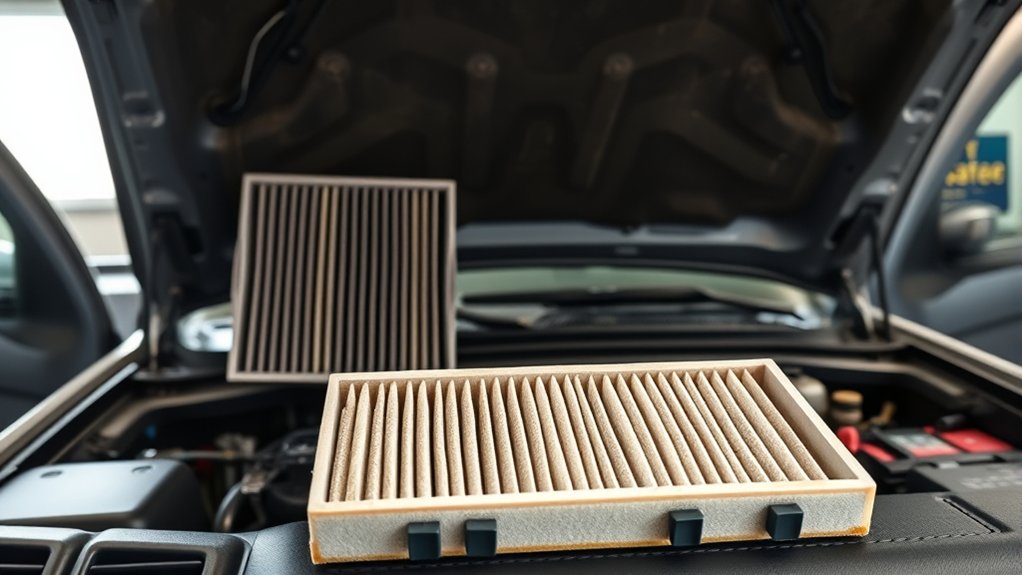
The engine and cabin filters protect different systems and use separate maintenance schedules. For a deeper comparison, see the dedicated Tacoma engine air filter vs. cabin air filter guide.
Filter Functionality Differences
| Feature | Engine Air Filter | Cabin Air Filter |
|---|---|---|
| Primary job | Filters air entering the engine | Filters outside air entering the passenger compartment through the HVAC system |
| Main concern | Airflow, sealing, and protection from intake debris | Cabin airflow, dust, pollen, odor, and HVAC performance |
| Typical location | Under the hood in the air-cleaner housing | Usually behind or near the glove compartment, depending on model year |
| Schedule | 30,000 miles for the 2026 Tacoma normal schedule; verify other model years | Follow the model-year cabin-filter schedule and operating conditions |
Maintenance Importance Comparison
A damaged engine filter or failed seal can allow dirt toward the intake, while a heavily restricted element can reduce maximum airflow. A clogged cabin filter usually affects blower airflow, window defogging performance, cabin dust, or odor rather than engine operation.
Inspect and replace each filter according to its own condition and schedule. Do not assume that both filters must be replaced together or at every oil change.
Effective Maintenance Tips for Your Tacoma’s Air Filter
Use a Condition-Based Inspection Routine
Use Toyota’s scheduled interval as the baseline, then increase inspection frequency when the truck operates in heavy dust, sand, debris, or severe off-road conditions. Record every inspection and replacement so you know exactly how long the filter has been in service.
Check more than the visible filter face. Examine the frame, sealing edge, housing clips, lower air box, intake duct, and any connection moved during access.
Use Proper Replacement Techniques
- Confirm the filter application before removing the old element.
- Photograph the old filter’s orientation.
- Prevent dirt from falling into the clean side of the intake.
- Clean the sealing channel without leaving cloth fibers or debris.
- Seat the replacement evenly without forcing the housing shut.
- Reconnect every duct, clamp, hose, clip, fastener, and sensor connector that was moved.
- Keep the receipt and maintenance record.
Recognize Useful Signs of Wear
Useful inspection findings include torn media, crushed pleats, a warped frame, a damaged seal, moisture, oil contamination, excessive embedded debris, or evidence that dirt passed around the filter.
A vague sound or subjective appearance alone is not a reliable diagnostic test. Use visible condition, fit, maintenance history, diagnostic codes, and verified performance symptoms together.
Troubleshooting After Engine Air Filter Replacement
A correctly installed filter should not cause a new warning light, rough idle, or loud intake noise. When a problem starts immediately after replacement, recheck the work before buying more parts.
- The lid will not close: Confirm the part number, filter orientation, sealing channel, and hinge or locating tabs. Do not force the housing.
- A whistle or hiss appears: Check the lid, clips, intake duct, clamps, hoses, and filter seal for a gap.
- The engine runs roughly: Switch it off and inspect any electrical connector, hose, or intake duct disturbed during access.
- The check-engine light appears: Read the stored diagnostic code. Do not assume that the new filter itself is defective.
- Dirt is visible on the clean side: Stop and inspect the filter fit, housing damage, and intake path. Seek professional help when contamination may have traveled farther into the system.
- The new filter becomes wet or oily: Diagnose the source instead of repeatedly replacing the element.
Related Guides
Frequently Asked Questions
How often should you change the air filter in a Toyota Tacoma?
For a 2026 U.S. Tacoma, Toyota lists engine-air-filter replacement at 30,000 miles under normal service. Other model years should be checked against their own Warranty & Maintenance Guide.
What is the 2026 Tacoma engine air filter interval?
Toyota’s 2026 Tacoma and Tacoma i-FORCE MAX maintenance charts list the engine air filter for replacement at 30,000 miles under the regular schedule.
How often should you inspect a Tacoma air filter on dusty roads?
For a 2026 Tacoma mainly driven on dirt or dusty roads, Toyota lists engine-air-filter inspection every 5,000 miles. The same chart lists replacement at 30,000 miles.
Should you change the air filter every 10,000 miles?
Not automatically. For the 2026 Tacoma, Toyota’s normal replacement point is 30,000 miles. Dirt- or dusty-road use calls for more frequent inspection, not automatic replacement every 10,000 miles.
Can a dirty Tacoma air filter reduce fuel economy?
A severely restricted filter can limit maximum airflow and acceleration. However, a DOE and Oak Ridge National Laboratory study of newer closed-loop, fuel-injected vehicles did not find a significant fuel-economy effect under the tested driving cycles, so routine replacement does not guarantee an MPG increase.
Do you have to use a Toyota Genuine engine air filter?
No particular brand is automatically required simply to preserve warranty coverage. Toyota Genuine filters provide a straightforward factory-specified option, while a correctly specified quality aftermarket filter can also be suitable. Proper fit and installation still matter.
Can you clean and reuse a Tacoma engine air filter?
Do not wash or blast a standard disposable paper filter with compressed air. Replace it. Clean and reuse a filter only when its manufacturer explicitly identifies it as reusable and provides a service procedure compatible with your application.
Conclusion
For a 2026 Toyota Tacoma, the clearest factory answer is 30,000 miles for engine-air-filter replacement under normal service. Primarily dirt- or dusty-road use calls for inspection every 5,000 miles, and severe off-road operation deserves an additional filter check.
Use your exact model-year maintenance guide as the final authority. Replace a damaged, wet, deformed, badly contaminated, or poorly sealing filter early, keep dirt out of the clean side of the intake, and verify the housing seal after installation.
Sources
- Toyota 2026 Tacoma Warranty & Maintenance Guide — normal, special-operating-condition, and off-road maintenance schedules
- Toyota 2026 Tacoma i-FORCE MAX Warranty & Maintenance Guide — hybrid model maintenance schedule
- Toyota Manuals and Warranties — model-specific owner and maintenance documentation
- U.S. Department of Energy and Oak Ridge National Laboratory: Effect of Intake Air Filter Condition on Vehicle Fuel Economy — fuel-economy, restriction, and acceleration findings
- Federal Trade Commission: Businessperson’s Guide to Federal Warranty Law — branded-parts and tie-in warranty guidance
- RepairPal: Toyota Tacoma Air Filter Replacement Cost — July 2026 parts-and-labor estimate
