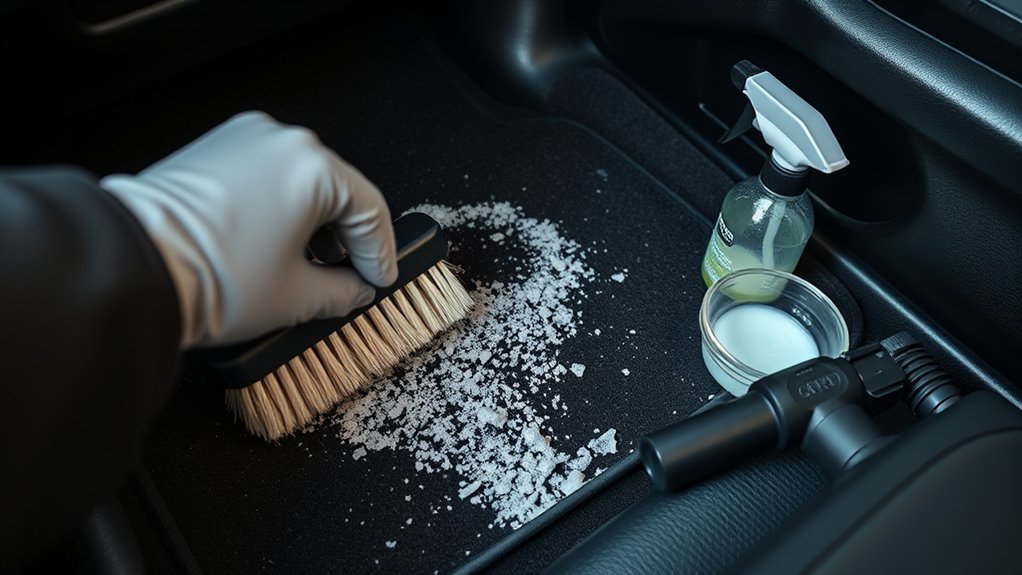
White, crusty marks on your Toyota Tacoma carpet usually come from winter road salt carried inside on wet shoes. You can remove most deposits at home, but the best method depends on whether the residue is loose, deeply embedded, or mixed with mud. Careful moisture control matters because soaking the carpet may wet the padding beneath it.
Quick Answer
Loosen dry salt with a carpet brush, vacuum the debris, and test your chosen cleaner in a hidden area. Apply an automotive carpet or salt-stain cleaner according to its label, gently agitate the fibers, then blot or wet-extract the residue. Keep air moving until the carpet and padding are completely dry.
Key Takeaways
- Remove as much dry salt as possible before adding liquid.
- Test every cleaner on a hidden section of carpet before treating the visible stain.
- Follow the cleaner’s current label rather than using one fixed dwell time for every stain.
- Use microfiber towels or a wet-rated extractor to remove moisture. Do not collect liquid with a standard dry vacuum.
- Dry the carpet fully and secure the driver’s floor mat before driving.
At a Glance
| Time Required | 30 to 60 minutes of cleaning, plus drying time |
| Difficulty | Easy for surface stains; moderate if the padding is wet |
| Tools Needed | Vacuum, carpet brush, microfiber towels, automotive carpet cleaner or salt remover, gloves, and a fan; wet extractor optional |
| Cost | Low to moderate, depending on the cleaner and tools you already own |
Understanding the Cause of Salt Stains in Tacoma Carpets
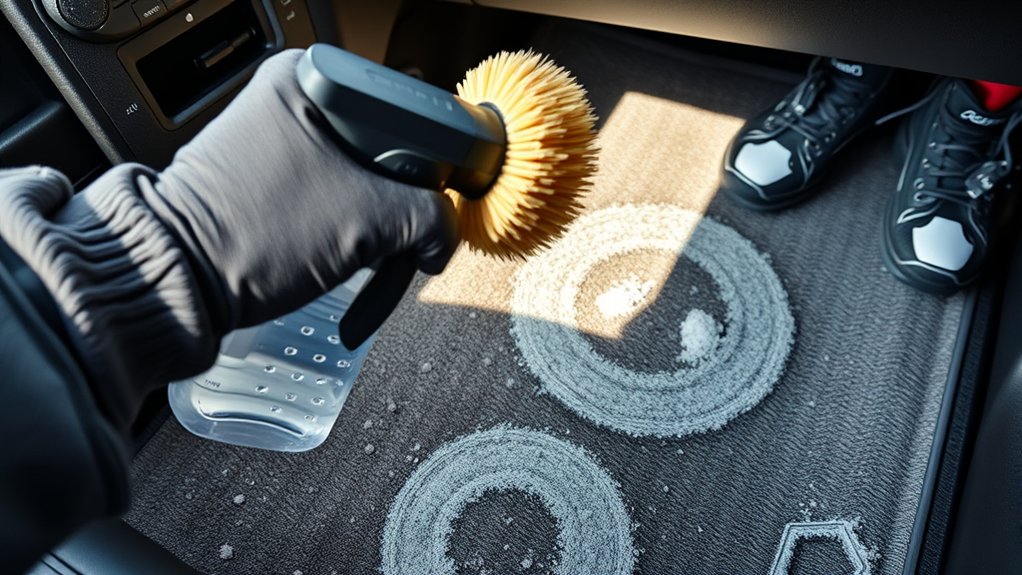
Winter deicing products reach your Tacoma carpet through wet footwear, melting snow, and contaminated floor mats. According to the U.S. Environmental Protection Agency, sodium chloride is the most common road deicer. Calcium chloride, magnesium chloride, sand, and other materials may also be used.
As the moisture evaporates, dissolved minerals remain in the carpet fibers. The residue may appear as a white outline, powdery film, or hard crust. Repeated wetting can dissolve the deposit again and spread it beyond the original spot, which is why a stain may look larger after an incomplete cleaning.
Mud and old detergent can resemble road-salt residue. Salt usually feels gritty or stiff and becomes less visible when lightly dampened. Permanent color loss, rust-colored marks, grease, or a musty odor may indicate a different problem that needs another treatment.
Salt stains often return because dissolved residue remains in the carpet or padding and moves back toward the surface as the area dries.
Essential Tools for Cleaning Your Tacoma Carpet
Start with tools that let you remove dry debris before using moisture. You do not need professional detailing equipment for a light surface stain, although a wet extractor can help with repeated or deeply embedded deposits.
- Vacuum: Use it on dry carpet to collect loosened salt, sand, and dirt.
- Carpet brush: Choose soft or semi-stiff bristles that can loosen crust without fraying the fibers.
- Microfiber towels: Use several clean towels so you do not spread dissolved residue back onto the carpet.
- Automotive carpet cleaner or salt remover: Confirm that the product is suitable for automotive carpet and follow its label.
- Gloves: Wear them when the cleaner’s label recommends skin protection.
- Fan or ventilation: Keep air moving across the cleaned area until it is fully dry.
- Wet extractor: This is optional, but it can rinse and recover moisture more effectively than towels.
Note: Toyota interior materials and trim can differ by model year. Use the official Toyota manual selector to check your Tacoma’s model-year instructions before using an unfamiliar chemical near carpet, seats, wiring, or trim.
How to Effectively Remove Salt Stains From Your Tacoma Carpet
Work in a shaded, well-ventilated area. Remove loose objects from the floor and take out removable carpeted mats so you can clean them separately. Keep towels, brushes, and bottles away from the brake and accelerator pedals.
Tools Needed for Cleaning
| Tool | Purpose | Important Detail |
|---|---|---|
| Dry vacuum | Removes loose salt and grit | Use before adding liquid and again only after the carpet dries |
| Carpet brush | Breaks up hardened residue | Brush gently to avoid damaging the pile |
| Salt remover or automotive carpet cleaner | Dissolves or releases embedded residue | Spot-test first and follow the current label |
| Microfiber towels | Blots dissolved salt and moisture | Switch to a clean section as the towel becomes soiled |
| Wet extractor | Recovers liquid from carpet | The machine must be rated for wet pickup |
| Fan | Speeds drying | Aim airflow across the surface, not into exposed electronics |
Step-by-Step Cleaning Process
- Inspect the area. Check whether you are treating a removable mat or the fixed floor carpet. Look for wiring, seat connectors, vents, trim gaps, and pedal components that should stay dry.
- Let loose moisture dry enough to vacuum safely. If the carpet is dripping wet, blot it first. Do not use a normal dry vacuum on liquid.
- Break up the crust. Use short, gentle brush strokes to loosen the hardened white deposit. Avoid aggressive scrubbing, which can spread the stain or roughen the fibers.
- Vacuum thoroughly. Move the nozzle in several directions until you stop collecting visible crystals and grit.
- Perform a spot test. Apply a small amount of cleaner to a hidden section. Let it dry and check for color change, stiffness, or damage before treating the visible area.
- Apply the cleaner. Follow the product label. Wet the stained fibers evenly without pouring enough liquid to flood the carpet padding or nearby trim.
- Allow the product to work. Use the label’s dwell guidance rather than assuming every stain requires the same amount of time. Keep the area from drying prematurely unless the directions say otherwise.
- Agitate gently. Brush the treated fibers only as needed to release the residue.
- Remove the dissolved material. Blot firmly with clean microfiber towels or recover the liquid with a wet-rated extractor. Do not rub back and forth with a dirty towel.
- Repeat when necessary. A hard deposit may need several light treatments. Multiple controlled applications are safer than flooding the carpet once.
- Dry the carpet. Press with a dry towel, open the doors in a safe location, and use a fan or dehumidified air. Do not reinstall a damp floor mat.
- Inspect after drying. Check for returning white residue, stiffness, discoloration, odor, or moisture in the padding. Vacuum the fully dry carpet to restore the pile.
Warning: Never use a standard dry vacuum to collect liquid. Use microfiber towels or equipment specifically rated for wet extraction. Avoid spraying electrical connectors, switches, seat wiring, vents, and pedal components. Follow every chemical label and stop if the carpet changes color.
Pro Tip: Clean from the outside edge of the stain toward the center. This limits spreading and makes it easier to see whether each treatment is removing the white boundary.
How Salt Chisel Works and When to Reapply It
Dr. Beasley’s Salt Chisel is designed for salt-contaminated automotive carpet and upholstery. The manufacturer says the product targets sodium-based stains and may foam as it reacts with the deposit.
The current manufacturer directions are to spray the contaminated material, allow the product to break down the salt, brush if needed, and wipe away the excess with a fresh microfiber towel. The manufacturer also warns against application in direct sunlight and says multiple treatments or a longer dwell time may be necessary.
Because some winter residue contains other deicers, sand, mud, or old cleaning product, a sodium-focused remover may not solve every mark. If the carpet stays discolored after the mineral residue is gone, use a compatible automotive carpet cleaner or consult a detailer rather than repeatedly saturating the same area.
Common Mistakes to Avoid When Cleaning Carpets
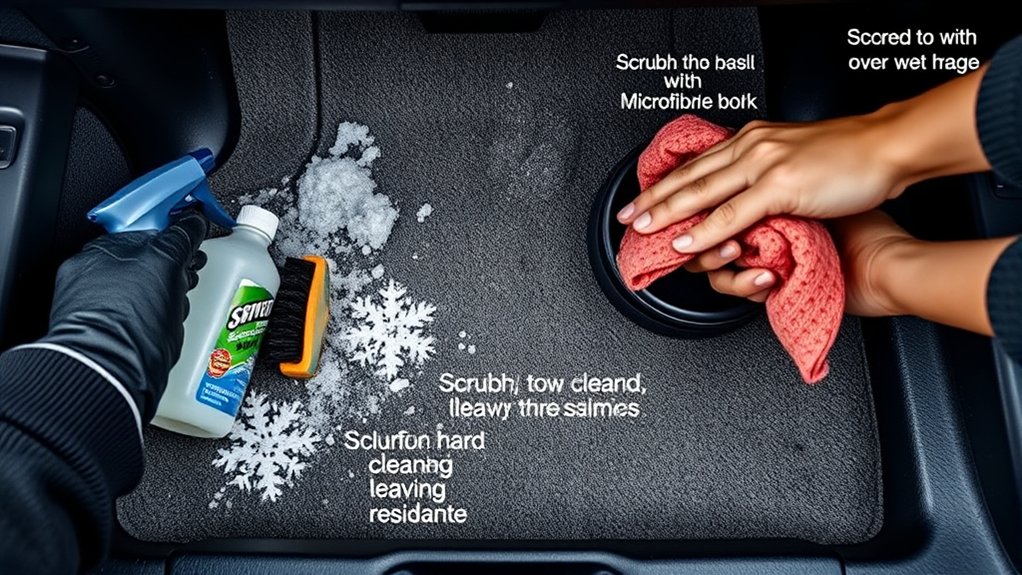
Most disappointing results come from adding too much liquid, leaving dissolved residue behind, or judging the stain before the carpet dries. A controlled process is more effective than aggressive scrubbing.
Overusing Cleaning Products
More cleaner does not always remove more salt. Excess product can soak the padding, extend drying time, and leave detergent residue that attracts dirt. Use only the amount needed to wet the affected fibers and repeat the treatment after extracting or blotting the first application.
- Follow the label: Use the recommended application and safety directions.
- Avoid flooding the floor: Do not pour cleaner directly onto the carpet.
- Do not mix products: Combining cleaners can damage materials or create harmful fumes.
- Use clean towels: A saturated towel can redeposit salt and dirt.
Ignoring Proper Drying Techniques
Drying is part of the cleaning process, not an optional final step. The EPA recommends drying wet materials within 24 to 48 hours to reduce the chance of mold growth. Although that guidance addresses buildings, the moisture-control principle is useful for wet automotive carpet and padding.
Blot or extract as much liquid as possible, then move air across the surface. If the carpet still feels cool, damp, or spongy after extended ventilation, moisture may remain underneath. A persistent musty odor also suggests that the padding needs inspection.
Using the Wrong Vacuum
A dry household or shop vacuum that is not configured for wet pickup should never be used on liquid. Use it only before cleaning and after the carpet has dried. For wet recovery, use an extractor or wet/dry vacuum that the manufacturer specifically approves for liquid collection.
Skipping the Spot Test
Automotive carpet, dyes, protectants, and replacement upholstery can react differently to a cleaner. Test a hidden section, let it dry, and inspect it under good lighting. Do not continue if the color transfers to your towel or the fibers become rough, faded, or sticky.
Best Practices to Prevent Salt Stains on Your Tacoma Carpet
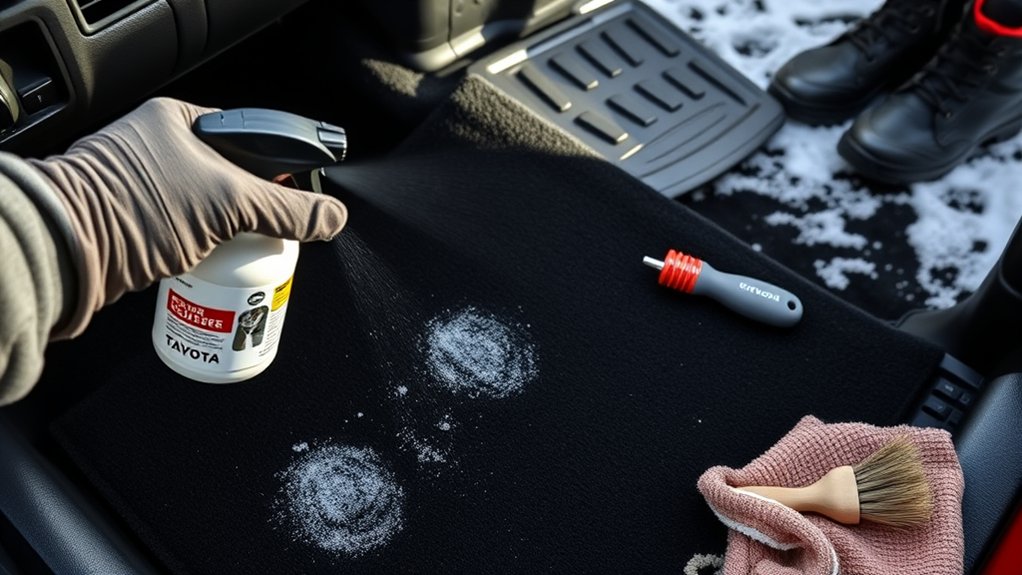
Prevention reduces both cleaning time and the amount of moisture you need to introduce into the cabin. Focus on capturing salty water before it reaches the fixed carpet.
- Use properly fitted all-weather mats. Choose mats designed for your Tacoma and make sure the driver’s mat uses the factory retention points.
- Do not stack floor mats. Multiple layers can shift or interfere with pedal movement.
- Empty pooled water promptly. Remove rubber liners carefully so the salty water does not spill onto the carpet.
- Knock snow from your shoes. Removing packed snow before entering the truck limits the amount that melts inside.
- Vacuum visible crystals early. Dry salt is easier to collect before repeated moisture carries it deeper into the fibers.
- Dry removable mats outside the truck. Reinstall them only when both the mat and carpet beneath it are dry.
- Check pedal clearance. After every cleaning, confirm that the driver’s mat is secure and cannot touch the brake or accelerator pedal.
Troubleshooting Recurring Salt Stains
| Problem | Likely Cause | What to Do |
|---|---|---|
| White outline returns after drying | Dissolved residue remained below the surface and moved upward | Lightly re-treat, then blot or extract more thoroughly |
| Carpet feels stiff | Salt or cleaner residue remains in the fibers | Use a controlled rinse if the cleaner permits it, extract the moisture, dry, and brush gently |
| Dark ring appears around the stain | The liquid spread dirt toward the edge | Clean a slightly wider area from the outside toward the center |
| Color looks lighter after drying | Possible dye loss, chemical damage, or permanent wear | Stop applying cleaner and ask an automotive interior specialist to inspect it |
| Musty odor or damp padding | Moisture remains under the surface | Remove the mat, increase airflow, inspect the padding, and seek professional help if it does not dry promptly |
When to Get Help From the Pros for Tough Salt Damage
A professional detailer or interior-restoration technician can help when the stain extends into the padding, repeated cleaning has failed, or you cannot dry the floor safely. Professional help is also appropriate when you find mold, a strong musty odor, electrical problems, significant discoloration, or water entering from a leak.
| Sign of a Larger Problem | How a Professional May Help |
|---|---|
| Deep or widespread white residue | Controlled rinsing and extraction across a larger section |
| Stain returns after several careful treatments | Inspection of the backing and padding for trapped residue |
| Carpet remains wet or smells musty | Padding removal, drying, odor treatment, or mold assessment |
| Cleaner caused fading or texture damage | Color repair, fiber assessment, or carpet replacement advice |
| Water keeps entering the cabin | Diagnosis of a door seal, drain, windshield, or body leak before further cleaning |
| The stain is near wiring or electrical modules | Safer disassembly and moisture inspection |
The EPA notes that porous materials such as carpet can be difficult to clean completely after mold develops. Do not keep adding cleaner to a damp floor while an underlying moisture problem remains.
Related Guides
Frequently Asked Questions
How do you clean winter salt off Toyota Tacoma carpet?
Brush and vacuum the dry deposit first. Spot-test an automotive carpet or salt-stain cleaner, apply it according to the label, gently agitate the fibers, and blot or wet-extract the dissolved residue. Keep the area ventilated until the carpet and padding are dry.
How do you remove salt left by snowy shoes?
Let the loose surface moisture dry enough for safe vacuuming, break up the crust with a carpet brush, and vacuum the crystals. Treat any remaining white film with a compatible automotive carpet cleaner, then remove the dissolved residue with towels or a wet-rated extractor.
How do you remove hard salt stains from car carpet?
Use several light treatments instead of one heavy soaking. Loosen the crust, vacuum it, apply the cleaner, allow it to work according to its label, brush gently, and extract or blot the residue. Repeat after checking the results rather than flooding the carpet.
Can you remove light salt residue without Salt Chisel?
Yes. For a light surface deposit, remove the dry material first and use a manufacturer-approved automotive carpet cleaner. A small, controlled amount of clean water may help dissolve water-soluble residue when it is immediately blotted or extracted, but avoid soaking the padding.
Why does the white salt stain return after the carpet dries?
The first treatment may dissolve the visible deposit without removing all of it. As the moisture evaporates, residue from deeper fibers or padding can move back to the surface. Repeat with less liquid and stronger blotting or wet extraction.
How long should Tacoma carpet take to dry?
Drying time depends on how much liquid entered the carpet, the weather, and the airflow. The surface may dry within several hours, but the padding can remain damp longer. EPA moisture guidance recommends drying wet materials within 24 to 48 hours to reduce mold risk.
Conclusion
You can remove most winter salt stains from Toyota Tacoma carpet by working in stages: loosen and vacuum the dry deposit, test the cleaner, treat the fibers without flooding them, remove the dissolved residue, and dry the area fully. Following the product label is more reliable than using one fixed dwell time for every stain.
Inspect the carpet again after it dries. Returning white residue usually means more salt remains below the surface, while discoloration, musty odor, or persistent dampness may require professional attention. Before driving, reinstall the floor mat securely and confirm that it cannot interfere with either pedal.
Sources
- U.S. Environmental Protection Agency: Winter Is Coming! And With It, Tons of Salt on Our Roads — common road-salt materials and environmental effects.
- Dr. Beasley’s: Salt Chisel — current product purpose, application directions, dwell guidance, and direct-sunlight warning.
- U.S. Environmental Protection Agency: A Brief Guide to Mold, Moisture and Your Home — drying wet materials and managing mold risk.
- Toyota Manuals and Warranties — model-year-specific owner manuals and interior-care guidance.
