Your Toyota Tacoma’s serpentine belt may look simple, but it helps keep several engine accessories working. The correct maintenance plan depends on the truck’s model year and engine, so a fixed replacement rule can be misleading. Follow the maintenance guide for your Tacoma, inspect the complete accessory-drive system, and respond quickly to damage, noise, or warning indicators.
Last updated: September 19, 2026. This guide was rechecked against Toyota maintenance guidance, Toyota’s fourth-generation Tacoma information, and Toyota/NHTSA service-bulletin data.
Affiliate disclosure: GoMyReview earns from qualifying purchases made through affiliate links on this page.
Quick Answer
Toyota does not publish one universal scheduled serpentine-belt replacement mileage for every Tacoma. For the 2023 Tacoma, Toyota schedules the first drive-belt inspection at 60,000 miles or 72 months and another inspection every 15,000 miles or 18 months afterward. Toyota says to replace the belt if inspection finds damage, so the inspection interval should not be mistaken for an automatic replacement deadline.
Key Takeaways
- Use the maintenance guide for your Tacoma’s exact model year instead of relying on a universal replacement-mileage estimate.
- Replace the belt when it has confirmed damage such as torn or missing rib material, severe fraying, cord exposure, contamination, or another defect.
- A belt can be worn even without obvious cracking, so inspect rib condition, tracking, tension, and the surrounding pulleys as well.
- Squealing or chirping may come from the belt, tensioner, idler pulley, misalignment, or a failing accessory bearing.
- Some 2016–2020 Tacomas with the 2GR-FKS engine are covered by Toyota service bulletin T-SB-0098-20 Rev1 for a main accessory-drive-belt chirp.
- The accessories driven by the belt vary by engine and generation. Fourth-generation Tacomas use electric power steering.
- Inspect the belt only with the engine off, cool, and secured against accidental starting.
What Is a Serpentine Belt and Why Is It Important for Your Tacoma?
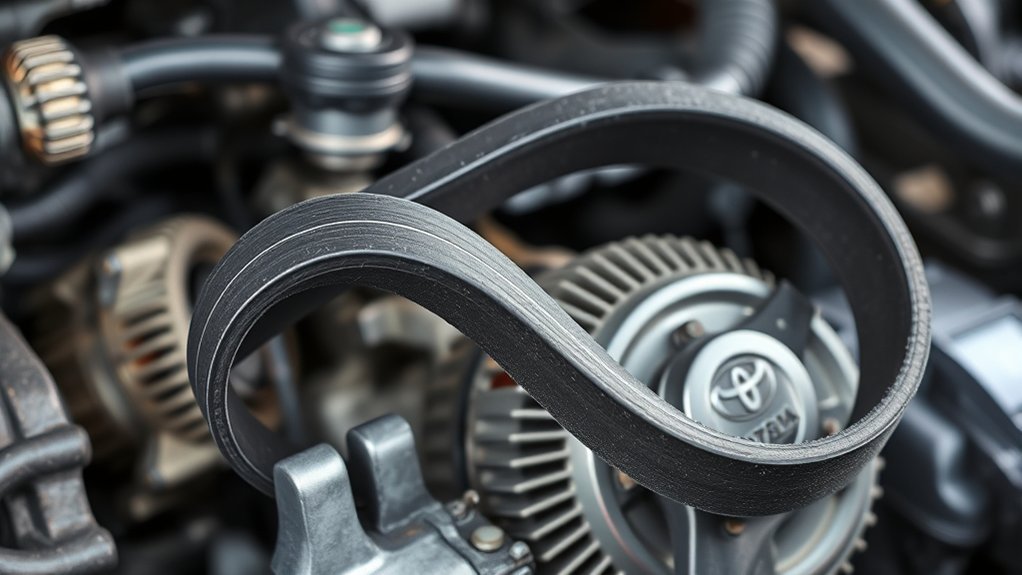
The serpentine belt, also called an accessory drive belt, transfers engine rotation from the crankshaft pulley to one or more accessories. Its ribbed surface grips matching pulley grooves, while a tensioner helps keep the belt tight enough to operate without slipping.
Depending on your Tacoma’s year and engine, the belt may drive the alternator, air-conditioning compressor, coolant pump, hydraulic power-steering pump, or other equipment. You should not assume that every Tacoma uses the same routing or drives the same accessories.
A damaged or loose belt can reduce accessory performance and may eventually come off the pulleys or break. Because the belt is part of a larger drive system, its condition should be assessed together with the tensioner, idler pulleys, accessory pulleys, and nearby fluid leaks.
Note: Toyota introduced electric power steering on the redesigned fourth-generation Tacoma. On these trucks, the accessory belt does not power a hydraulic steering pump. Earlier configurations may differ, so check the manual and belt-routing information for your exact vehicle.
Key Functions of the Serpentine Belt in Your Toyota Tacoma
The belt’s exact workload depends on the engine. The following table explains common accessory-drive functions without assuming that each one applies to every Tacoma.
| System | What the Belt May Do | Important Tacoma Caveat |
|---|---|---|
| Alternator | Turns the alternator so it can supply electrical power and recharge the battery. | A slipping or broken belt can trigger a charging warning and eventually drain the battery. |
| Air-conditioning compressor | Drives the compressor when the air-conditioning system requests cooling. | Poor cooling can also have refrigerant, electrical, clutch, or compressor causes. |
| Coolant pump | May circulate coolant on engines that use a belt-driven pump. | Pump design varies. Do not assume every Tacoma will overheat immediately after belt failure. |
| Power steering | May drive a hydraulic pump on configurations equipped with hydraulic steering assist. | Fourth-generation Tacomas use electric power steering instead. |
How Long Should a Toyota Tacoma Serpentine Belt Last?
No single mileage accurately predicts the life of every Toyota Tacoma serpentine belt. Belt material, engine design, age, operating temperature, pulley condition, contamination, and tension all affect service life.
Toyota’s maintenance requirements also vary by model year. As one documented example, the 2023 Tacoma Warranty & Maintenance Guide schedules the first drive-belt inspection at 60,000 miles or 72 months. It then schedules another inspection every 15,000 miles or 18 months. Toyota instructs technicians to replace a damaged belt rather than naming a universal replacement mileage.
For the 2023 Tacoma, 60,000 miles or 72 months is the first scheduled drive-belt inspection point, not an automatic replacement deadline. Inspection continues every 15,000 miles or 18 months afterward.
Your Tacoma may have a different schedule. Select the exact year and model through Toyota’s Manuals and Warranties portal before deciding when inspection or replacement is due.
How Many Miles Can a Tacoma Serpentine Belt Last?
There is no Toyota-approved mileage that automatically means every Tacoma belt must be replaced. On a 2023 Tacoma, for example, 60,000 miles is the first scheduled inspection point. The decision to replace the belt is then based on its condition and the condition of the accessory-drive system.
A belt can remain usable for many years when the pulleys are aligned, the tensioner works correctly, and no fluid reaches the rubber. Another belt can fail much sooner because of a leak, seized bearing, damaged pulley, incorrect installation, or long-term heat exposure.
Mileage is therefore a reminder to inspect, not proof that a belt is safe or worn out. Age also matters because the belt flexes and heats during every engine cycle, even when annual mileage is low. Gates also notes in its belt-inspection guidance that modern EPDM serpentine belts can lose rib material without developing the obvious cracking associated with older belt compounds. A crack-free surface alone should not be treated as proof that a belt is healthy.
Factors Affecting Durability
Common conditions that can shorten belt life include:
- Engine oil, coolant, power-steering fluid, or another chemical contaminating the belt
- A weak or binding automatic tensioner
- Worn idler-pulley bearings
- Pulley misalignment or physical pulley damage
- A seized or difficult-to-turn accessory
- Incorrect belt size, routing, or installation
- Repeated exposure to heavy mud, debris, or severe under-hood heat
If fluid has reached the belt, replacing the belt alone is not enough. The leak should be repaired first, or the new belt may become damaged or begin slipping.
What Should You Inspect on a Tacoma Serpentine Belt?
Warning: Never inspect the serpentine belt while the engine is running. Park on a level surface, switch the vehicle fully off, remove the key or secure the smart key, allow the engine to cool, and keep your hands clear of the fan and pulleys.
Use a light to inspect as much of the belt as you can see. Toyota’s 2023 guidance specifically calls for checking cracks, excessive wear, oiliness, and belt tension. Do not stop at surface cracking: rib-material loss, tracking problems, contamination, or a faulty tensioner can matter even when the exposed belt surface still looks acceptable.
- Missing pieces of rib material
- Frayed or separating edges
- A shiny or glazed surface
- Uneven wear across the belt width
- A belt riding near the edge of a pulley
- Rubber dust collecting around the pulleys
- Movement, wobble, or visible damage at the tensioner
A belt may need professional inspection even when its exposed surface looks acceptable. Some defects occur on the ribbed side or result from a pulley and tensioner problem that is difficult to confirm visually.
Signs Your Toyota Tacoma Serpentine Belt Is Worn
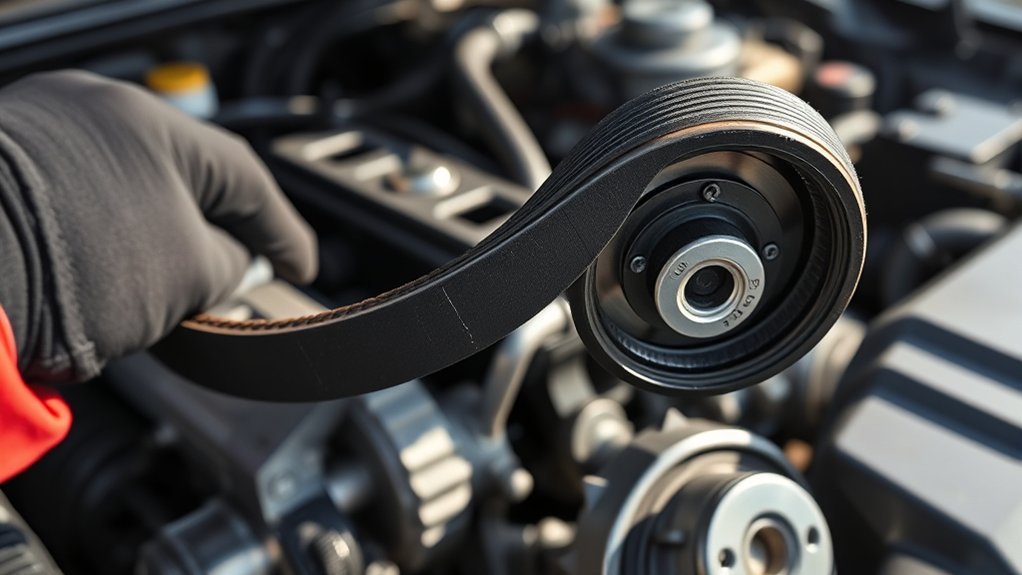
A worn belt may produce visible damage, noise, accessory problems, or warning indicators. However, these symptoms do not prove that the belt itself is the only faulty part.
Visible Cracks or Tears
Replace the belt promptly when you find torn ribs, missing chunks, cord exposure, severe fraying, separation between belt layers, or another confirmed structural defect. A belt coated with oil or coolant should also be evaluated for replacement after the source of contamination is repaired.
Cracks still matter, and Toyota includes them in its inspection criteria, but the absence of cracks does not automatically make a belt serviceable. Material loss from the ribs, heavy glazing, abnormal tracking, or uneven edge wear can identify problems that a simple crack check misses. Heavy glazing can indicate heat or slipping, while uneven edge wear may point to pulley misalignment rather than ordinary belt aging.
Squealing or Chirping Noises
Squealing often occurs when the belt slips, but the underlying cause may be low tension, contamination, a weak tensioner, or excessive resistance from an accessory. A rhythmic chirp can indicate misalignment, pulley damage, or belt tracking problems.
Do not apply belt dressing as a permanent repair. It can hide the symptom without correcting the mechanical cause. A technician may need to remove the belt and check each pulley, tensioner, and accessory for smooth movement and correct alignment.
Is There a Toyota Tacoma Serpentine-Belt Chirp TSB?
Yes. Toyota service bulletin T-SB-0098-20 Rev1 covers some 2016–2020 Tacoma vehicles equipped with the 2GR-FKS 3.5-liter V6 that may exhibit a chirp from the main accessory drive belt. The bulletin instructs technicians to confirm the condition, make sure the pulleys are clean, dry, and correctly aligned, and install the updated V-ribbed belt when the bulletin applies. Toyota lists 90916-A2037 as the updated belt part number in the bulletin.
A technical service bulletin is not the same as a recall, and T-SB-0098-20 does not mean every Tacoma chirp is caused by the belt. If your truck is outside the listed engine/model-year range, or the noise remains after belt-related causes are ruled out, continue diagnosis instead of assuming the bulletin applies.
| Symptom | Possible Cause | Recommended Response |
|---|---|---|
| Squeal during startup or acceleration | Slipping belt, weak tensioner, contamination, or accessory resistance | Inspect the full drive system rather than replacing the belt blindly. |
| Rhythmic chirp | Pulley misalignment, damaged rib, tracking problem, or the documented belt condition on an applicable 2016–2020 2GR-FKS Tacoma | Check pulley alignment, belt routing, edge wear, and whether Toyota T-SB-0098-20 Rev1 applies. |
| Charging-system warning | Alternator is not being driven correctly or has another fault | Reduce electrical load and stop safely for inspection. |
| Rising engine temperature | Possible cooling-system interruption on an affected engine | Stop the engine safely before overheating causes damage. |
| Suddenly heavy steering | Possible loss of hydraulic steering assist on an equipped model | Slow down and stop safely. This symptom does not apply to electric-steering systems in the same way. |
What Could Go Wrong If You Ignore Your Serpentine Belt?
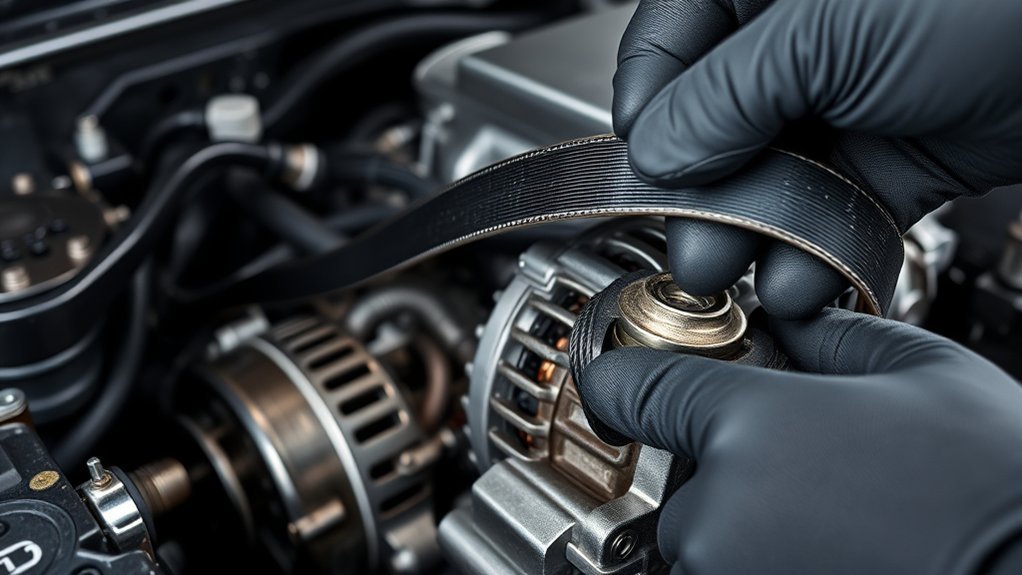
Ignoring damage or persistent accessory-drive noise can allow a minor problem to become a roadside breakdown. Possible consequences include:
- Loss of battery charging: The alternator may stop turning, leaving the truck to run briefly on stored battery power.
- Loss of air conditioning: The compressor may stop operating when it is driven by the failed belt.
- Increased steering effort: This may occur on a Tacoma equipped with belt-driven hydraulic steering assist.
- Engine overheating: This is possible when the engine’s coolant circulation depends on a belt-driven component.
- Additional component damage: A failing tensioner, pulley, or accessory bearing can damage a replacement belt if the root cause is ignored.
- Stranding: A broken or displaced belt can make continued driving unsafe or impractical.
Warning: If a charging warning appears, the temperature rises, steering effort changes suddenly, or you hear severe mechanical noise, move out of traffic and stop safely. Continuing to drive can drain the battery or overheat an affected engine.
A check-engine light by itself is not a reliable serpentine-belt diagnosis. Read the warning message, observe the vehicle’s symptoms, and have diagnostic trouble codes checked when the light remains on.
When Is It Time to Replace Your Serpentine Belt?
Replace the belt when inspection confirms that it is damaged or no longer operating correctly. Do not replace it solely because the odometer has reached the first inspection mileage in a maintenance guide. Common replacement reasons include:
- Deep cracks, tears, missing ribs, cord exposure, or severe fraying
- Meaningful rib-material loss or another confirmed wear condition
- Oil or coolant contamination that has damaged the rubber
- Glazing or heat damage associated with confirmed slipping
- Uneven wear caused by a corrected alignment problem
- A belt that cannot maintain proper tension
- Persistent noise traced to the belt after other causes are ruled out
- A replacement requirement listed in the maintenance information for your exact model year
Do not judge the system by belt appearance alone. The tensioner should move smoothly and maintain force, idler pulleys should rotate without roughness or play, and each driven accessory should turn as designed.
Pro Tip: Whenever the belt is replaced, inspect the tensioner, idler pulleys, pulley alignment, and accessory bearings. Correcting the underlying fault can prevent the new belt from wearing out early.
Essential Maintenance Tips for Your Toyota Tacoma’s Serpentine Belt
You can reduce the chance of an unexpected belt failure with a few practical habits:
- Follow the inspection schedule in the maintenance guide for your exact Tacoma year and engine.
- Perform a quick visual check during routine service, especially before a long trip.
- Inspect rib condition as well as surface cracks; a belt can wear without developing obvious cracking.
- Inspect again after severe mud, debris, or fluid exposure.
- Repair engine oil, coolant, or power-steering-fluid leaks before installing a new belt.
- Use the correct belt size and routing for the vehicle’s engine and equipment.
- Do not use belt dressing to hide squealing.
- Record the replacement date and mileage in your maintenance history.
- Have persistent noise, wobble, or misalignment diagnosed by a qualified technician.
You should also confirm the routing before a belt is removed. A routing label may be present under the hood, but the applicable repair information should be used when the label is missing or unclear. If you are preparing to replace the belt rather than diagnose its condition, see our Toyota Tacoma serpentine belt replacement overview for the separate DIY procedure and routing precautions.
Frequently Asked Questions
What are the functions of a serpentine belt?
The belt transfers rotation from the crankshaft to selected engine accessories. These commonly include the alternator and air-conditioning compressor. Some Tacoma engines may also use it for a coolant pump or hydraulic power-steering pump, but the exact layout varies by model year and engine.
How often should I change the serpentine belt on my Toyota Tacoma?
Use the maintenance guide for your exact model year rather than a universal replacement mileage. Toyota’s 2023 guide calls for the first drive-belt inspection at 60,000 miles or 72 months and another inspection every 15,000 miles or 18 months afterward. Toyota directs owners to replace damaged belts, so 60,000 miles is an inspection point rather than an automatic replacement deadline.
What happens when a serpentine belt goes bad?
You may hear squealing or chirping, see visible damage, lose battery charging, or notice that a belt-driven accessory has stopped working. Depending on the engine, failure can also affect coolant circulation or hydraulic steering assist. Stop safely when charging, temperature, or steering symptoms appear.
Does the serpentine belt run the air conditioning?
It commonly drives the air-conditioning compressor on gasoline-powered Tacoma configurations. However, warm air does not automatically prove that the belt is faulty. Refrigerant, electrical, clutch, control, and compressor problems can produce similar symptoms.
Can I drive my Tacoma with a squealing serpentine belt?
A brief squeal should still be inspected because slipping, contamination, a weak tensioner, misalignment, or a failing accessory may be involved. Avoid unnecessary driving when the noise is severe, persistent, or accompanied by a charging warning, rising temperature, burning smell, or steering change.
Is there a Toyota Tacoma serpentine-belt chirp TSB?
Yes. Toyota T-SB-0098-20 Rev1 addresses a main accessory-drive-belt chirp on some 2016–2020 Tacoma vehicles equipped with the 2GR-FKS 3.5-liter V6. The bulletin lists an updated V-ribbed belt, part number 90916-A2037, when its diagnostic procedure confirms that the bulletin applies. A TSB is not a recall and does not mean every Tacoma chirp has the same cause.
Is a serpentine belt the same as a timing belt?
No. A serpentine belt operates external engine accessories. A timing belt synchronizes internal engine operation on engines that use one. They have different functions, locations, maintenance requirements, and failure consequences.
Conclusion
Your Toyota Tacoma’s serpentine belt should be maintained according to the schedule and accessory-drive layout for its exact model year and engine. For the 2023 Tacoma, Toyota’s 60,000-mile/72-month figure is the first inspection point, not a universal replacement deadline.
Inspect the belt safely for structural damage, rib wear, contamination, tracking, and tension problems. When you find noise or abnormal accessory operation, check the tensioner, pulleys, alignment, and driven components as well. Owners of applicable 2016–2020 2GR-FKS Tacomas should also be aware of Toyota T-SB-0098-20 Rev1 when diagnosing a persistent belt chirp. Timely diagnosis can prevent a damaged belt or pulley from turning into a charging failure, overheating event, or roadside breakdown.
Sources
- 2023 Toyota Tacoma Warranty & Maintenance Guide — supports the drive-belt inspection schedule, inspection criteria, and condition-based replacement guidance.
- Toyota Manuals and Warranties — provides model-year-specific owner and maintenance information.
- Toyota USA Newsroom: 2024 Tacoma — confirms the fourth-generation Tacoma’s electric power-steering system.
- Toyota T-SB-0098-20 Rev1 via NHTSA — documents the accessory-drive-belt chirp condition on applicable 2016–2020 2GR-FKS Tacomas and the updated V-ribbed belt.
- Gates Belt Inspection Changes — explains why rib-material loss can be an important wear indicator on modern EPDM serpentine belts even when obvious cracking is limited.
